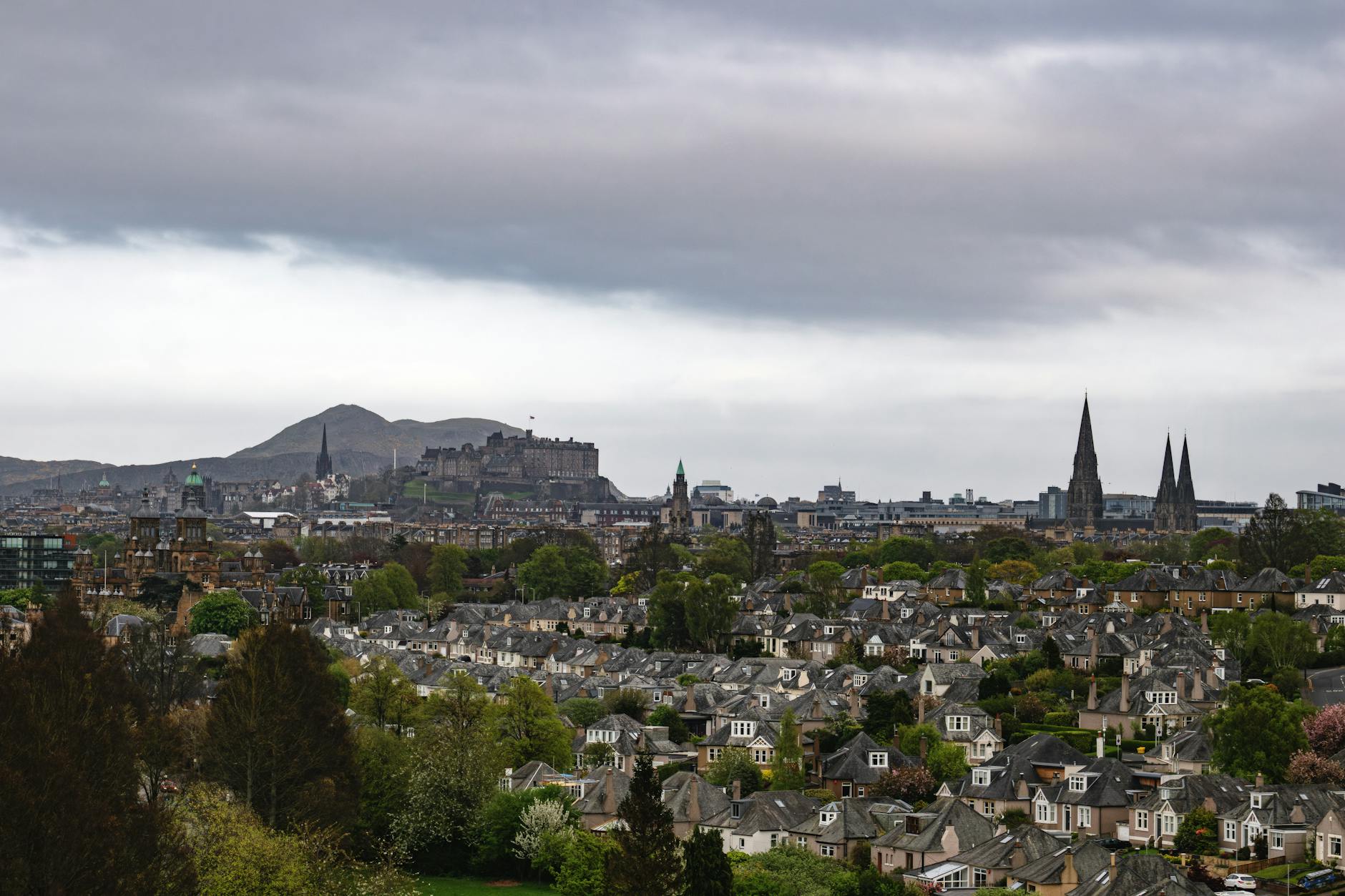
Edinburgh has one of the most dangerous first impressions in European travel because it is so strong. The ridge of the Old Town, the castle on volcanic stone, the closes, the dark masonry, the sudden views, and the wind moving down the street can make the place feel instantly complete. People arrive, look around, and assume the city will carry the rest of the trip for them. Sometimes it does. More often, it does not.
Start Here
The problem is not that Edinburgh is overrated. The problem is that it is too easy to visit lazily. Travelers choose the most atmospheric-looking hotel without considering slope, noise, or crowd pressure. They confuse Old Town exposure with convenience. They book August without understanding what August actually does to movement, prices, and fatigue. They try to make every day a maximum-drama day and end up spending half the trip climbing, queueing, or fighting the same crowded spine over and over.
Edinburgh is better when it is treated as a city of competing versions. There is ceremonial Edinburgh: castle, Royal Mile, Holyrood, skyline, and all the heroic stone. There is elegant Edinburgh: New Town squares, broad Georgian lines, a cleaner urban rhythm, and a calmer route back to the hotel at the end of the day. There is weather Edinburgh: damp staircases, sudden brightness, sharp wind, and the understanding that indoor refuge is part of the city, not a concession. There is festival Edinburgh, which can be thrilling and exhausting in the same afternoon. And there is pub Edinburgh, which may be the version visitors remember most fondly when the trip is built well.
The strong Edinburgh trip is never about seeing the most. It is about choosing the right gradient of the city for your temperament. One base that keeps the daily climb under control. One serious pass through the Old Town and castle zone. One day that allows New Town, museums, and a slower pace to correct the gothic compression. One evening where the city is experienced through food, whiskey, music, and shelter rather than panoramic effort. One moment where the city feels not just picturesque, but inhabited.
Edinburgh is dramatic, yes. But its real value is not drama alone. It is the way the city turns topography, weather, architecture, and history into a lived urban experience. When travelers get that right, Edinburgh becomes more than beautiful. It becomes exact.
The city in one sentence: Edinburgh is a compact but physically demanding city where the best first trip comes from balancing Old Town grandeur, New Town ease, weather logic, and festival or crowd pressure instead of chasing nonstop gothic intensity.
Quick Verdict
Best for: couples, solo travelers, first-time Scotland trips, architecture travelers, pub-and-food city breaks, festival travelers who plan carefully, walkers, and anyone who likes cities with real atmosphere and clear physical identity.
Not ideal for: travelers with serious mobility limits who insist on an Old Town-heavy stay, people who want flat effortless walking at all times, or anyone who thinks August in Edinburgh behaves like a normal month.
Ideal first visit: 3 full days.
Minimum worthwhile stay: 2 full days, if both are city-led and you are not trying to attach too many day trips.
Best overall months: May, June, September, and early October.
Best winter case: December for mood, lights, pubs, and museum time, or late winter for a quieter city break.
Biggest planning mistake: choosing an over-romantic hotel location that makes every day steeper, louder, and more tiring than it needed to be.
One thing to prioritize: the base. In Edinburgh, the right district changes the whole emotional and physical cost of the trip.
One thing to leave flexible: viewpoint ambition. Arthur's Seat, Calton Hill, and skyline walking all depend heavily on weather, energy, and timing.
The blunt version: Edinburgh is one of Europe's strongest short city breaks if you use its terrain intelligently, and one of the easiest cities to romanticize into avoidable exhaustion if you do not.
Who Will Love Edinburgh?
Edinburgh suits travelers who want a city to feel unmistakably itself. You know within minutes that you are not in a generic historic center with interchangeable church towers and pedestrian lanes. The city has edge, mass, wind, verticality, and a kind of urban theatricality that remains intact even when the streets are busy. That physical confidence is part of its power.
It is especially good for couples because it offers a rare combination of scenic drama and manageable scale. A strong Edinburgh day might include a serious historical site in the morning, a long walk that shifts from Old Town to New Town, an afternoon museum or cafe reset, and an evening in a pub or restaurant where the city contracts into warmth rather than spectacle. Few places do that transition from exposed stone grandeur to indoor refuge quite as well.
Solo travelers also do well here. Edinburgh is legible, transit-light for the visitor, and full of routes that feel like they are telling you something. A solo traveler can spend half a day moving between the castle, Grassmarket, Victoria Street, the Mound, Princes Street Gardens, and the New Town and still feel fully occupied rather than vaguely wandering.
The city is also excellent for travelers who care about urban form. Edinburgh is one of the clearest examples in Europe of a city where geology, planning, class history, and civic identity visibly shaped the map. Old Town and New Town are not just different neighborhoods. They are different urban philosophies sitting side by side.
It is less ideal for visitors who need everything to remain frictionless. Edinburgh asks something from the body. Hills, wind, stairs, crowd pockets, and weather are all real. That is part of why the city works. But anyone who hates those factors may experience them as burden rather than character.
Edinburgh at a Glance
| Question | Practical Answer |
|---|---|
| Main airport | Edinburgh Airport |
| Best public airport move | Tram or Airlink 100 depending where you stay |
| Airport-to-center tram time | About 30 minutes to the city centre[1] |
| Airport-to-Waverley Airlink time | About 25 minutes to Waverley Bridge[2] |
| Best first-time base | New Town edge or a calmer part of the Old Town edge |
| Best evening district | Old Town fringe, New Town dining streets, or Stockbridge-adjacent plans |
| Public transport backbone for visitors | Walking plus selective bus or tram use |
| Signature historical anchor | Edinburgh Castle |
| Signature royal axis | Royal Mile to Holyroodhouse |
| Best all-weather cultural anchor | National Museum of Scotland |
| Biggest practical variable | Terrain and crowd density |
| Car needed? | No |
| Currency | Pound sterling |
| Emergency number | 999 or 112 |
| Tap water | Safe to drink |
| Power plugs | Type G |
2026 Visitor Notes
The Tram Arrival Is Clean And Strong
Edinburgh Airport's official tram guidance says services run fast and frequently, with journeys between the airport and the city centre taking about 30 minutes.[1] The airport stop sits right outside the main terminal.[1] For many first-time visitors, this is the cleanest arrival the city offers.
Airlink Is Better Than Many Airport Buses
Lothian's official Airlink page describes it as a 24/7 express service between Edinburgh Airport and the city centre, with departures up to every 10 minutes through most of the day.[2] The same page lists an airport single at £6.00 and an adult open return at £8.50.[2] This matters because Edinburgh is one of those cities where a clean arrival helps the whole trip start at the right speed.
The Castle Is Not A Casual Walk-Up In Peak Periods
Edinburgh Castle's official planning page explicitly warns that tickets often sell out far in advance, especially during summer, and recommends online advance booking for guaranteed entry.[3] This is exactly the sort of obvious sight people still somehow fail to plan.
Holyroodhouse Is More Than A Photo At The End Of The Mile
The Royal Collection Trust describes Holyroodhouse as the official residence of the monarchy in Scotland and notes that it is open to visitors all year round.[6] The complimentary multimedia guide lasts about one hour.[7] That is long enough that the palace should be scheduled, not merely glanced at.
The National Museum Is A Real Anchor, Not A Rainy-Day Afterthought
The National Museum of Scotland is free to enter, open daily from 10:00 to 17:00, and sits exactly where a good Edinburgh itinerary needs it: close enough to support the Old Town, substantial enough to reset a day.[5]
August Is A Different City
The official Fringe site states that the 2026 Edinburgh Festival Fringe runs from 07 to 31 August 2026.[8] That window changes the city materially. Hotel prices, crowd movement, street noise, spontaneity, and even your tolerance for the Royal Mile all behave differently. August Edinburgh is not just Edinburgh with extra shows.
How to Understand Edinburgh
Edinburgh works through five forces.
The first is the ridge. This is a city shaped by elevation and exposure. Streets rise, fall, split, and reveal themselves in ways that make the body part of the reading.
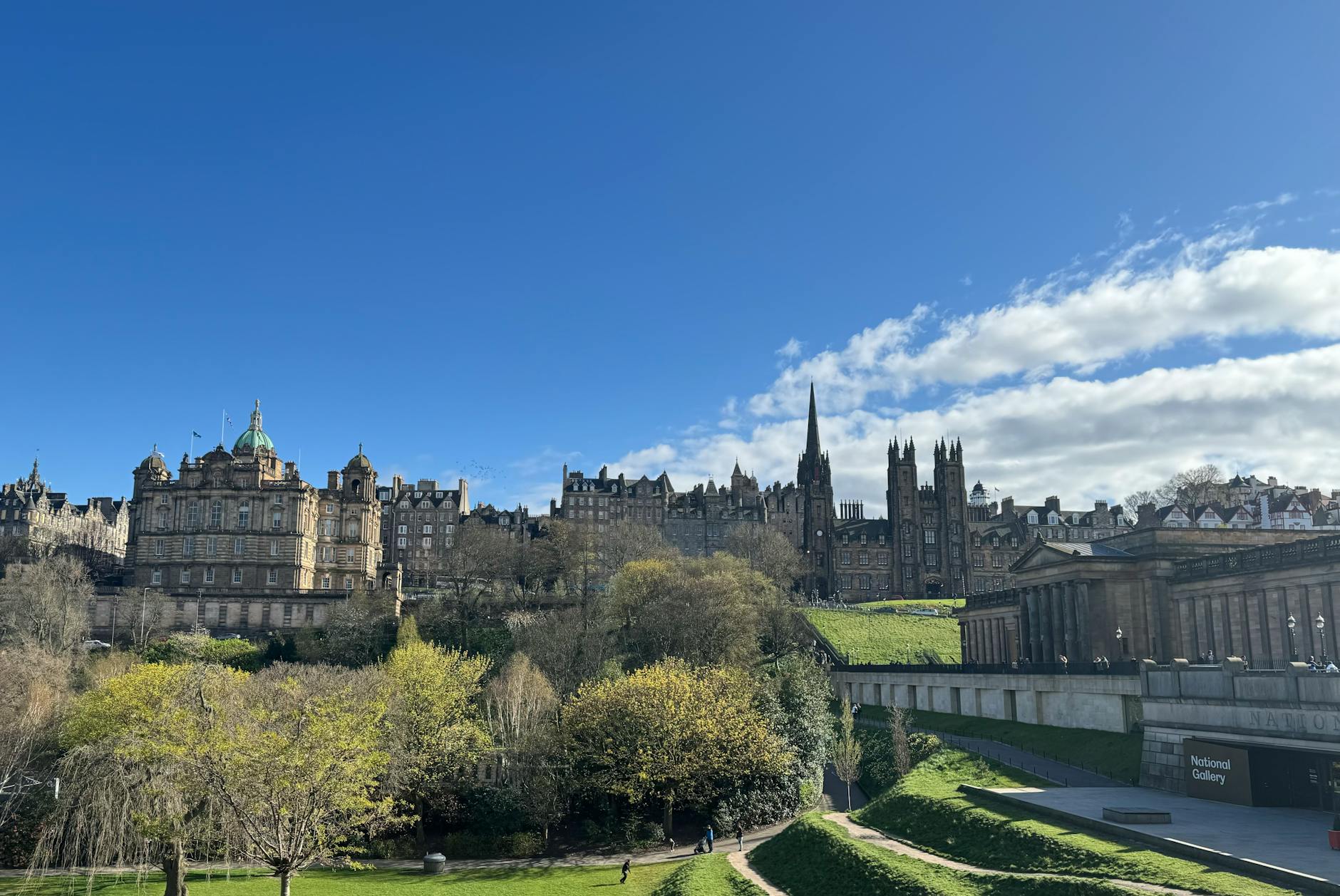
The second is the double city. Old Town and New Town are not merely convenient labels. One feels compressed, vertical, medieval, irregular, theatrical. The other feels planned, broad, lucid, and composed. Their relationship explains a great deal about the city's balance.
The third is weather. Light, wind, rain, and cold affect not only comfort but perception. Edinburgh's stone can look cinematic or punishing depending on the conditions.
The fourth is performance. The city performs Scottishness, history, and literary mood unusually well, and sometimes too well. This is part of why first-time visitors must distinguish between what is atmospheric and what is merely overexposed.
The fifth is retreat. Pubs, museums, restaurants, and interior spaces are not secondary here. They are structural. A city with this much exposure needs places of shelter to complete itself.
The Five Edinburghs A Visitor Actually Meets
Ceremonial Edinburgh: castle, Royal Mile, Holyrood, and the city of national theater.
Elegant Edinburgh: New Town terraces, gardens, broader streets, and a calmer urban rhythm.
Weather Edinburgh: the city of wind tunnels, wet steps, bright breaks, and the feeling that conditions are part of the text.
Festival Edinburgh: alive, crowded, expensive, comic, exhausting, thrilling, and absolutely not neutral.
Pub Edinburgh: warm interiors, low light, conversation, whiskey, and the version of the city that often rescues a damp or overfull day.
The Main Mental Shift
Do not ask, "What are the must-sees in Edinburgh?" Ask, "Which Edinburgh do I want to inhabit most of the day?" The ceremonial one, the elegant one, the festival one, the pub one. That question produces better hotel choices, better walking routes, and much better pacing.
What Edinburgh Does Better Than People Think
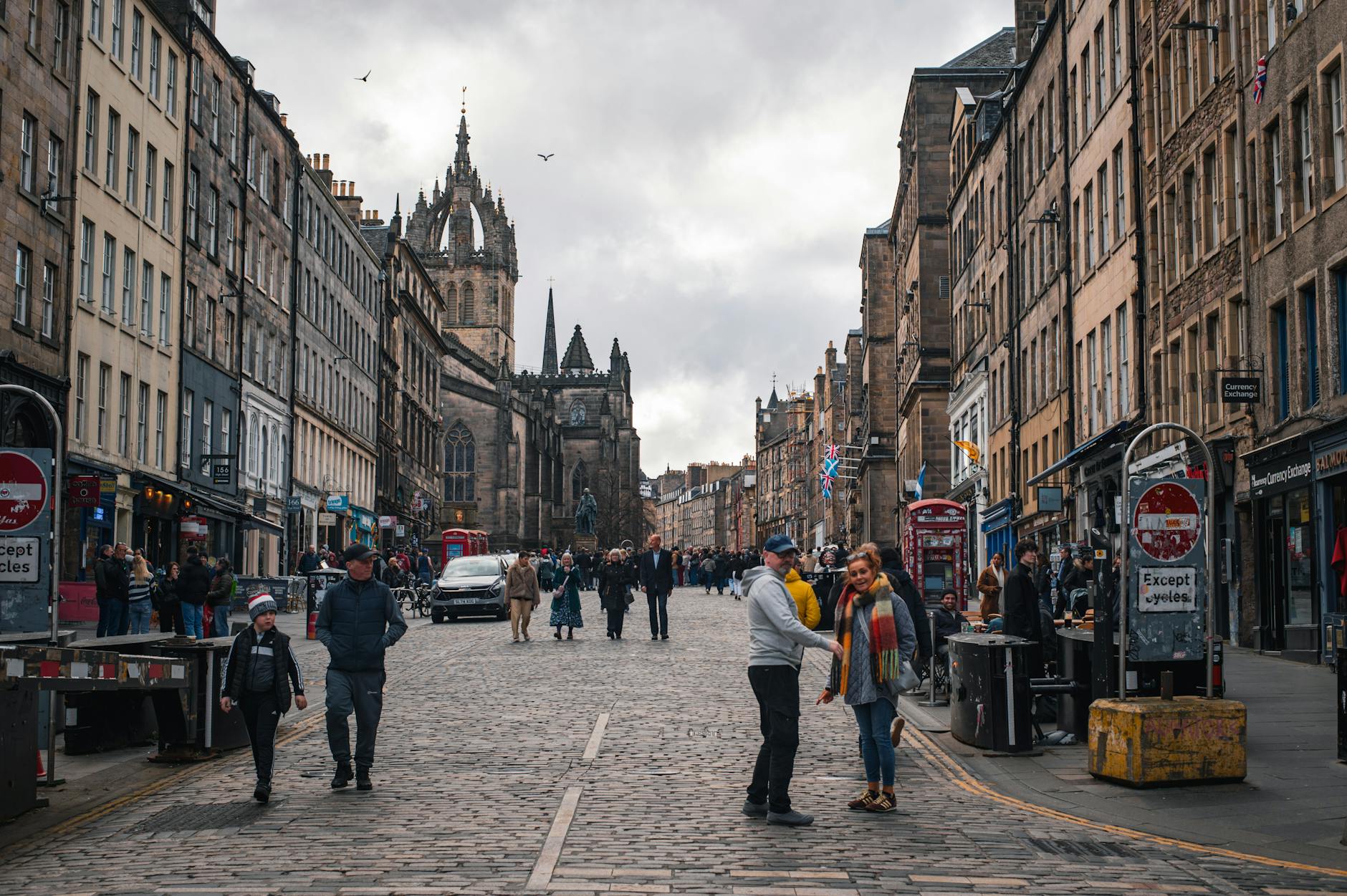
Edinburgh is unusually good at turning inconvenience into atmosphere without losing coherence. Hills, wind, and crowd compression could easily make the city feel annoying. Instead, when handled well, they sharpen its identity. The city feels earned.
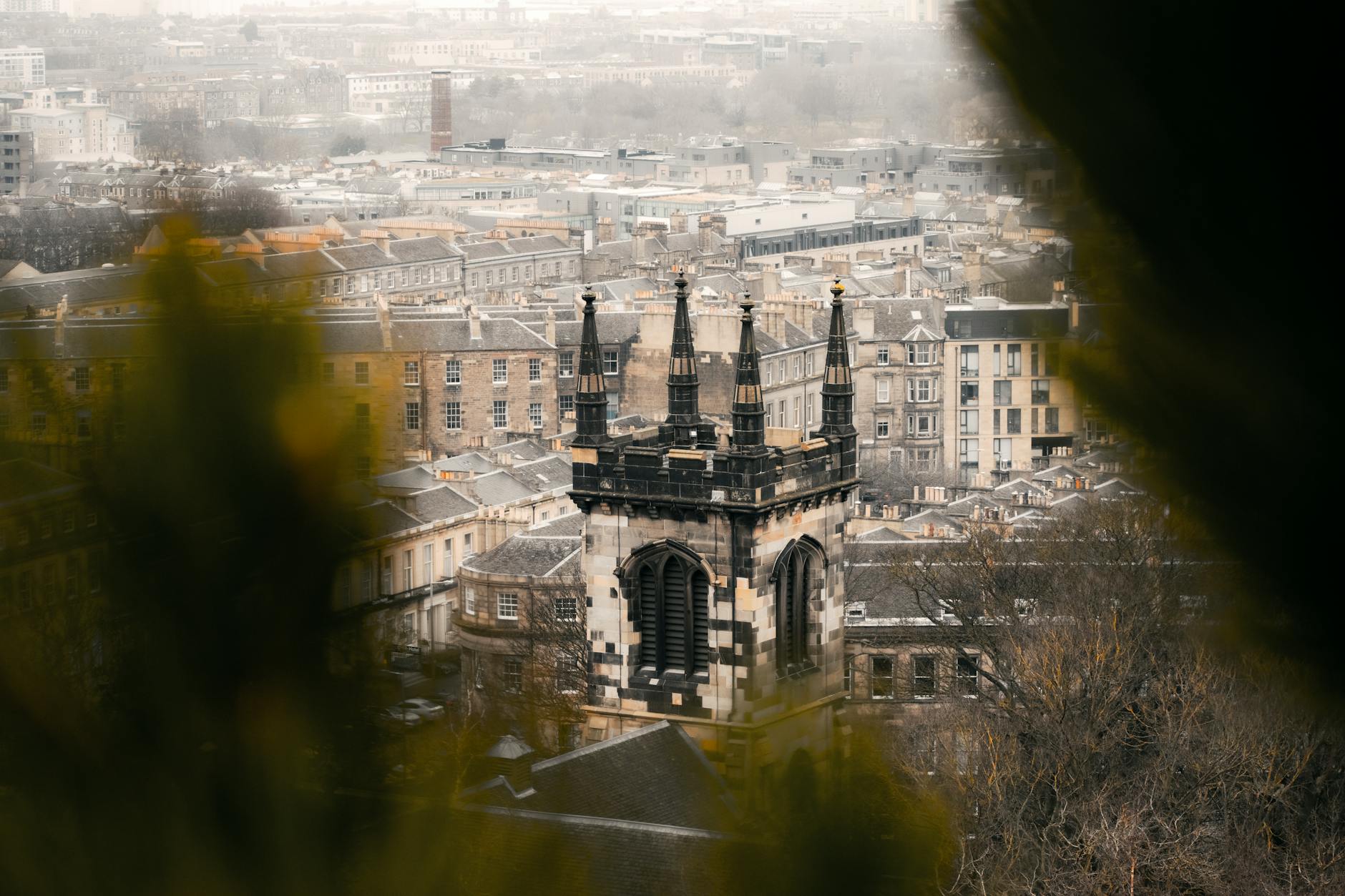
It is also better than many first-time visitors expect at providing relief from itself. New Town order, museum calm, gardens, and good interiors stop Edinburgh from becoming a single-note gothic performance. This matters because too much Old Town intensity without relief can flatten the trip.
Another underrated strength is scale-adjusted grandeur. Few cities of this size deliver such a strong skyline, such a memorable central spine, and such a reliable sense of historical weight.
Edinburgh is also very good at indoors after weather. The best pubs and restaurants here do more than feed you. They complete the day's logic. The city would be weaker if every pleasure were outdoors and panoramic.
Finally, Edinburgh does repeat walks well. A city that is worth rewalking is usually a strong city. Morning Royal Mile, dusk Royal Mile, festival Royal Mile, rainy Royal Mile, nearly empty winter Royal Mile: these do not feel like the same route.
Best Time to Visit Edinburgh
Edinburgh is a year-round city, but never a season-neutral one. Light, crowds, hotel pricing, wind, and event pressure all meaningfully change the trip.
Best Overall Months
May, June, September, and early October are the strongest first-visit windows for many travelers. The city is alive, the light helps, and you are less likely to pay August prices for August fatigue.
Summer
Summer gives Edinburgh long days, better outdoor conditions, and easier skyline moments. It also brings the strongest visitor pressure. July can feel lively but still usable. August becomes its own ecosystem. If you actively want the Fringe, excellent. If you want ordinary city clarity, choose another month.
Autumn
Early autumn is one of Edinburgh's best seasons. The city keeps its texture, often regains some breathing room, and can feel more itself once the peak festival crush recedes.
Winter
Winter condenses Edinburgh into lights, pubs, museums, hotel bars, and dark-stone atmosphere. This can be extremely good if you lean into it. The mistake is arriving in winter still expecting a panorama-first trip.
Spring
Spring is attractive because the city begins to open back up without becoming fully overrun. You get better walking, longer evenings, and a still-manageable rhythm if you choose well.
Month-by-Month Guidance
January: cold, dark, atmospheric, and best for city purists. February: still wintry, but often more usable than people assume. March: transitional and changeable. April: better light, still mixed weather. May: one of the best overall choices. June: excellent for a first visit. July: lively and rewarding, with increasing crowd pressure. August: thrilling if deliberate, draining if casual. September: one of the smartest months to go. October: moody and often ideal early in the month. November: subdued, darker, and more interior-led. December: festive and strong for atmosphere seekers.
How Many Days You Need
One Day
Enough for a strong impression, not enough for a proper reading of the city.
Two Days
The minimum respectable stay. One day should be Old Town and castle-led. The other should correct that intensity with New Town, museums, and a broader city rhythm.
Three Days
Ideal for a first visit. This gives you one serious historical day, one balance-and-neighborhood day, and one looser day for views, food, shopping, or weather adjustment.
Four To Five Days
Very good if you want Edinburgh with one Scottish extension without hollowing out the city itself.
One Week
Excellent if Edinburgh anchors a wider Scotland route, provided the city still gets enough uninterrupted time to become more than a transit capital.
Where to Stay in Edinburgh
Where you stay matters more here than in many comparably sized cities. Edinburgh can look walkable on a map while still being physically draining in practice.
Fast Answer
For most first-time visitors, stay on the New Town edge, the Old Town edge, or a well-chosen central seam between the two. Choose deeper Old Town lodging only if maximum atmosphere matters more to you than sleep, gradients, and luggage ease.
Neighborhood Decision Table
| Traveler Type | Best Area |
|---|---|
| First-time couple | New Town edge or central seam |
| Maximum atmosphere traveler | Old Town edge |
| Better sleep and easier returns | New Town |
| Festival-first traveler | depends on venue cluster, but book very early |
| Pub-and-food traveler | Old Town fringe or New Town dining corridors |
| Repeat visitor | Stockbridge, West End, or calmer New Town pockets |
Old Town
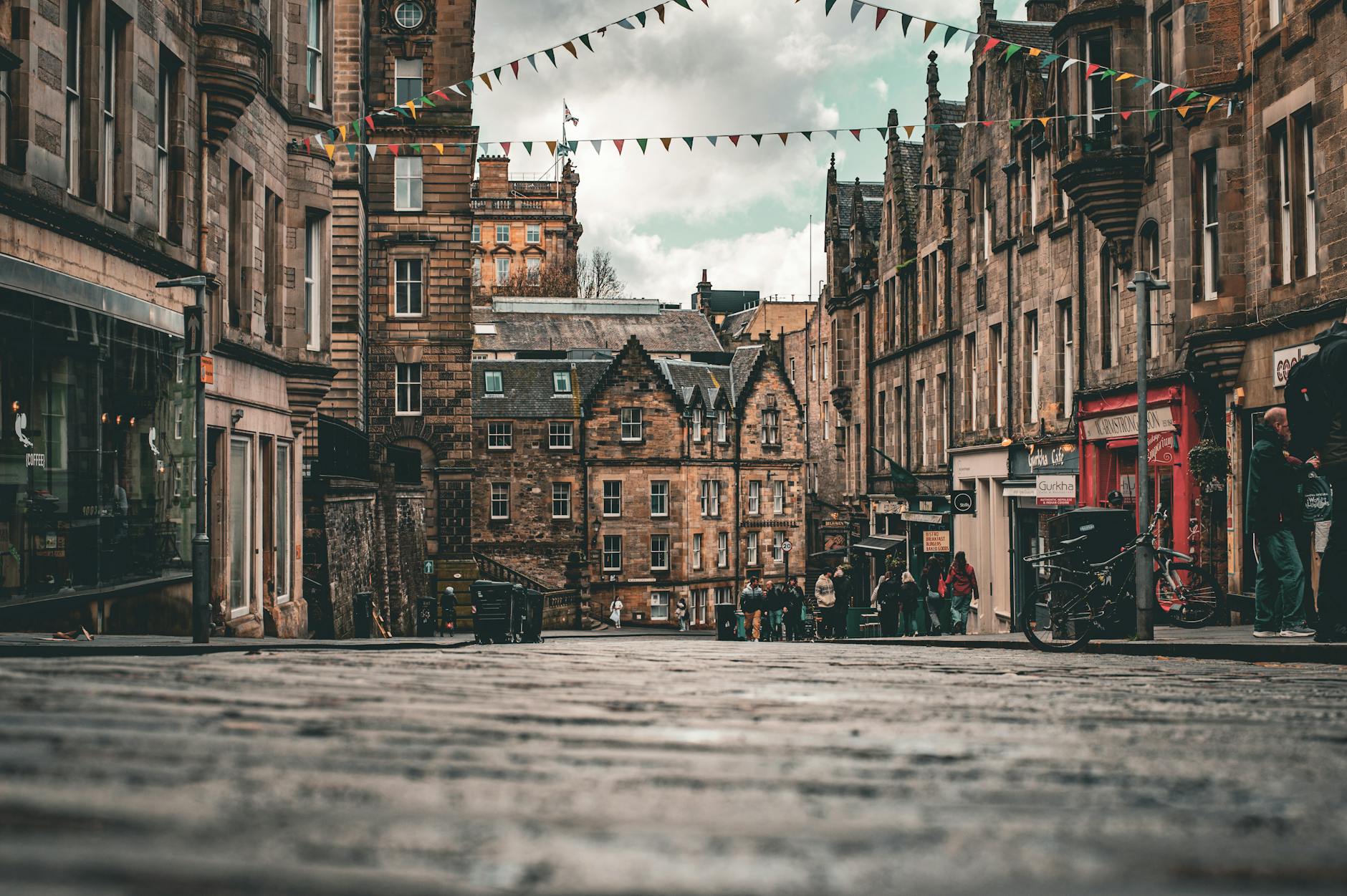
This is the high-drama answer and sometimes the right one. You are inside the city's strongest visual and historical zone. The cost is noise, steep movement, and the fact that "atmosphere" can become repetitive if you never escape it.
New Town
For many first-time travelers, New Town is actually the smartest base. It is elegant, practical, better for sleep, and still close enough to the Old Town that the city remains fully felt rather than merely accessed.
The Seam Between Them
This is often the sweet spot. You get quick access to both worlds without having to overcommit to either the steep theatricality of Old Town or the calmer polish of New Town.
Area Profiles
Old Town
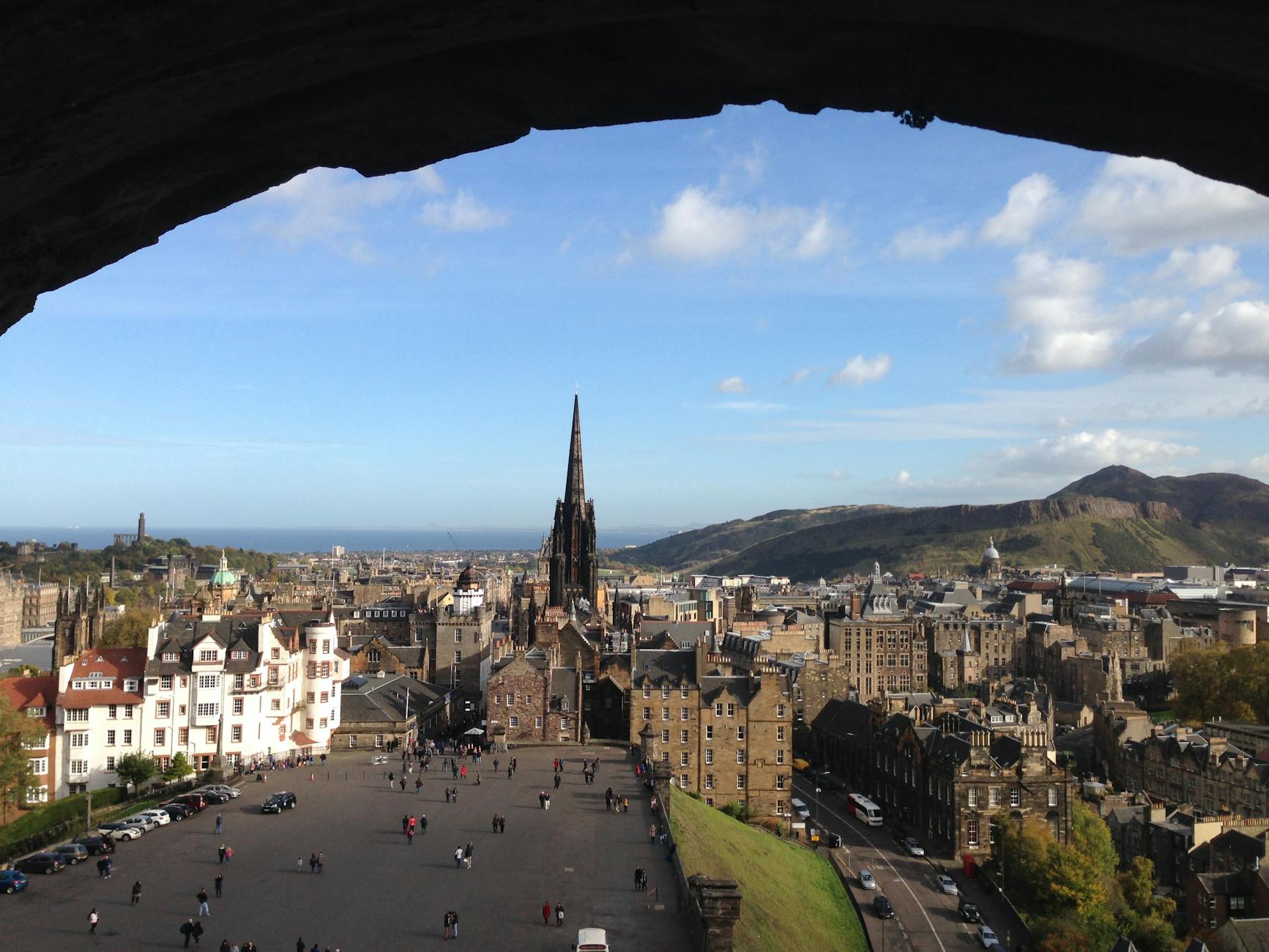
Compressed, historic, beautiful, crowded, dramatic, and physically demanding. This is the city people imagine before they arrive.
New Town
Order, breadth, Georgian confidence, and a calmer, more breathable version of central Edinburgh.
West End and Haymarket Side
A practical choice for some travelers, especially if rail access or slightly easier logistics matter. Less mythic, sometimes more functional.
Holyrood and the Eastern End
Royal, exposed, and useful for understanding how the symbolic axis of the city actually resolves.
Neighborhood Guide: Where to Explore, Not Just Sleep
Castle and upper Royal Mile: see it early before the heaviest compression sets in.
Grassmarket and Victoria Street area: lively, scenic, and one of the places where theatrical Edinburgh risks becoming overconsumed if you only see it at crowd peak.
Princes Street Gardens and the Mound: essential for understanding how the two central Edinburghs meet.
New Town lanes and squares: the needed counterweight to Old Town compression.
Canongate and the lower Royal Mile: a more spacious and often more readable end of the spine than first-timers expect.
The Best Things to Do in Edinburgh
Do Edinburgh Castle Properly
The castle is the city's most obvious sight and still worth the seriousness. The official site warns about ticket sellouts for good reason.[3] It is not a place to leave to accidental timing.
Walk The Royal Mile More Than Once
You do not understand this route after one pass. Its mood changes with light, crowd density, and your own level of fatigue.
Use The National Museum To Reset The City
The National Museum of Scotland is one of the best strategic institutions in the city because it is both substantial and well-placed.[5] On a wet or overfull day, it is exactly the right kind of counterweight.
Give Holyroodhouse Real Time
Holyrood is not just the punctuation mark at the end of the Royal Mile. It is one of the places that helps the royal and state Edinburgh story cohere.[6][7]
Let New Town Correct Your First Impression
A lot of people visit Edinburgh and remember only its most compressed historic drama. That is incomplete. New Town is part of why the city works.
Choose One Viewpoint Well
Do not turn the trip into a manic hunt for every elevated angle. Pick the right viewpoint for the weather, your energy, and the day.
Itineraries
The Best First 48 Hours
Day 1: castle and upper Old Town, a slower Royal Mile descent, Holyrood or museum depending energy, then dinner and pub time.
Day 2: New Town, gardens, a museum or gallery block, a less compressed lunch and shopping rhythm, and one final evening in the part of town you liked most.
The Best First 72 Hours
Day 1: ceremonial Edinburgh. Day 2: elegant Edinburgh. Day 3: weather-adaptive Edinburgh, with one viewpoint or side district plus a long indoor-social finish.
If You Only Have One Full Day
Stay central, do the castle or Holyrood seriously but not both in exhaustive depth, walk the Mile once with attention, and give the evening to food and pubs rather than one more queue.
Itineraries By Traveler Type
For History Travelers
Anchor the trip around the castle, Royal Mile, Holyrood, and one museum or literary-historical layer, but build in pauses so the day does not become one long march through stone.
For Couples
Choose a better base than your instincts first suggest, protect one good dinner, and let one part of the trip belong to New Town calm rather than nonstop scenic exertion.
For Festival Travelers
Book far earlier than feels reasonable, accept that August rewrites the city, stay near your likely venue geography, and do not expect spontaneous serenity.
For Repeat Visitors
Spend less time proving you saw the icons and more time on pacing, neighborhoods, interiors, and weather-aware wandering.
Food and Drink
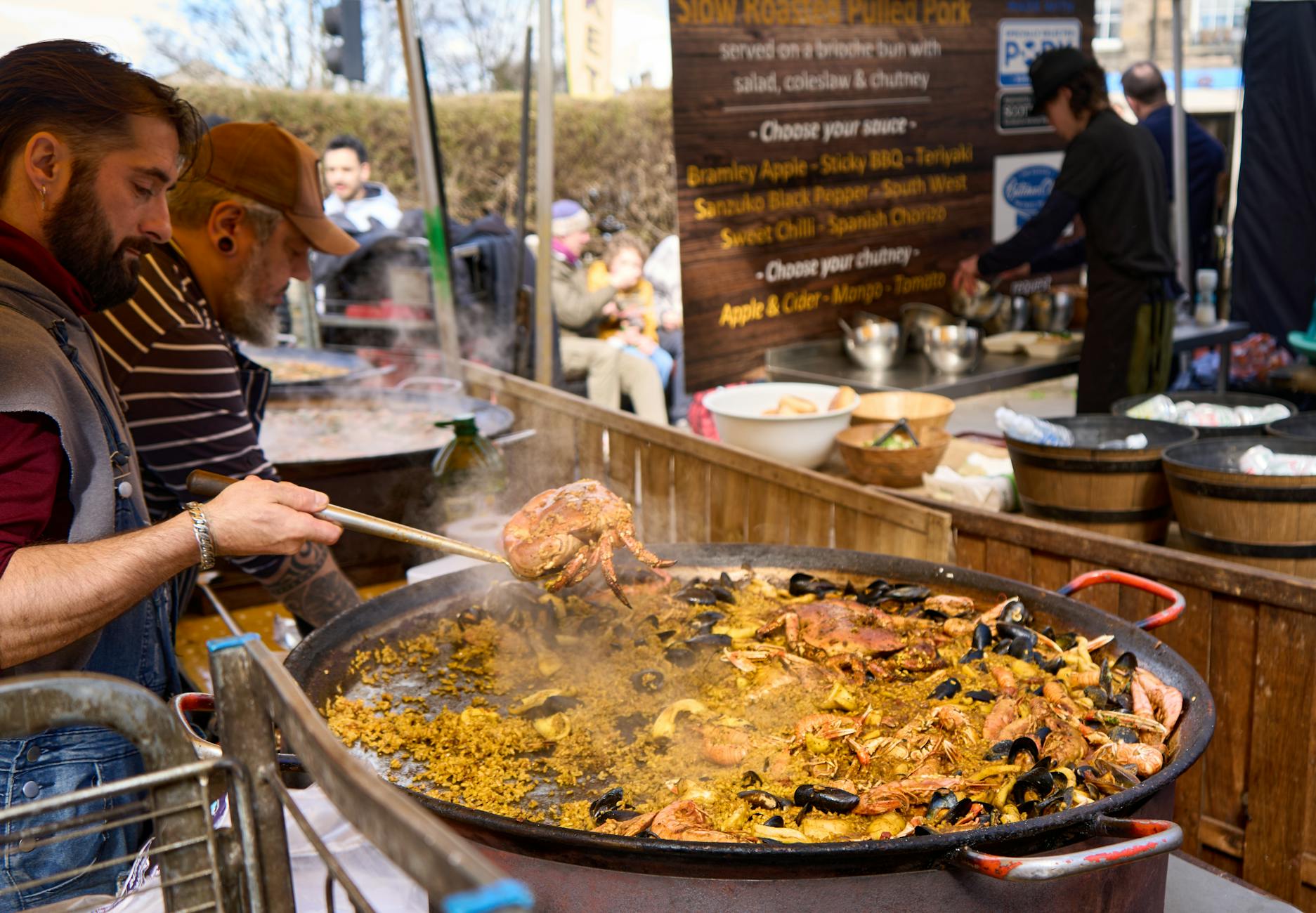
Edinburgh eats and drinks best when you stop demanding postcard views from every meal. The strongest city experience often comes from a pub, dining room, or bar that feels sheltered against the conditions outside. This is not a compromise. It is one of the city's great pleasures.
The best food-and-drink version of Edinburgh is not maximal or performative. It is paced. A long lunch after a wet morning. A pub where the room matters as much as the pint. A dinner in a part of town where you do not step straight back into the most exhausted tourist current. The city's interiors are part of its emotional architecture.
That also means resisting the idea that every meal should happen on the Royal Mile or directly beside it. Some of the city's most memorable hours come once you step slightly sideways from the hottest route and let comfort matter.
Getting Around
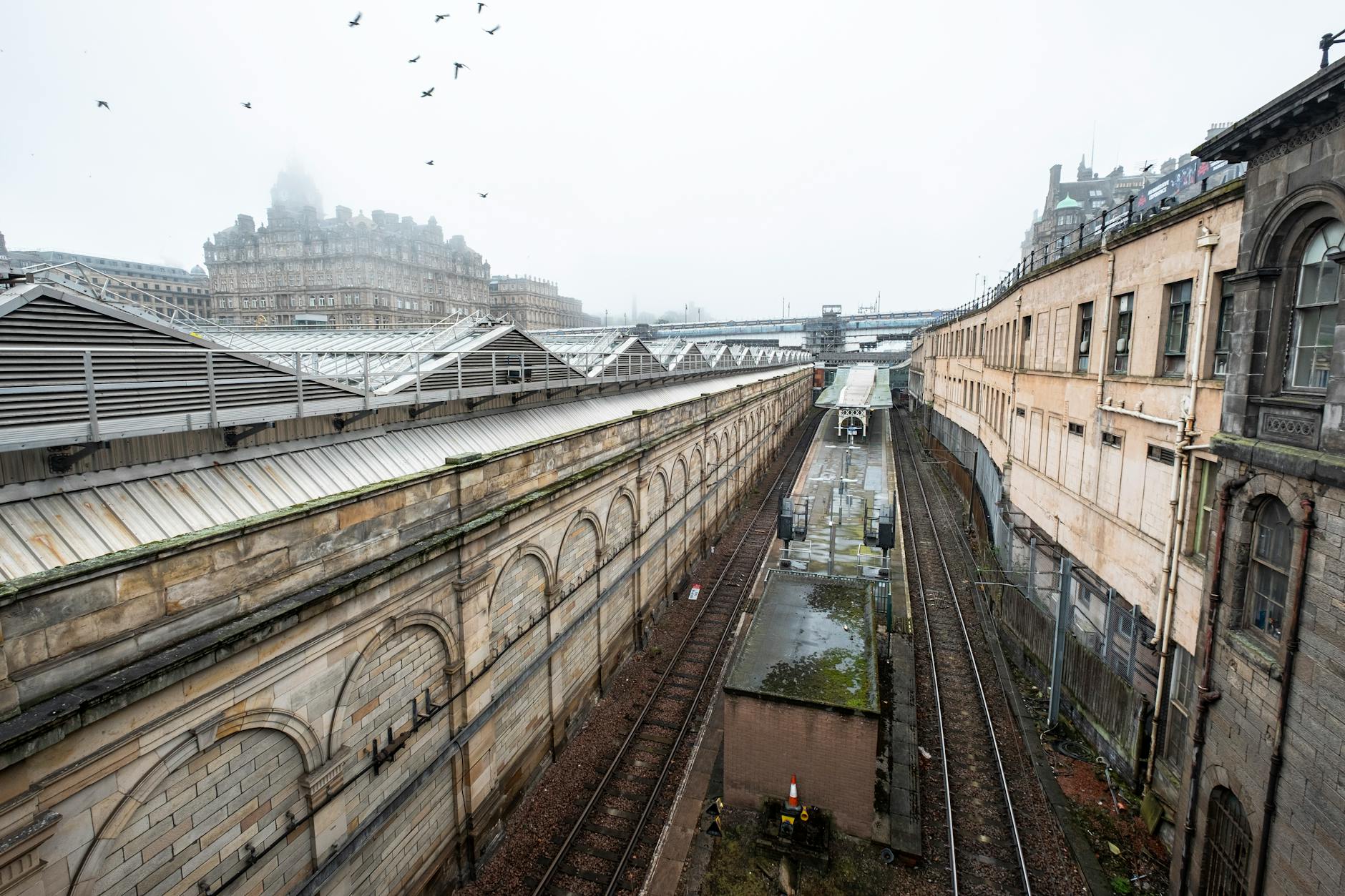
Edinburgh is mostly a walking city, but not a frictionless one. A short distance on the map can contain enough slope, steps, and headwind to change the whole texture of an afternoon.
That is why the airport connection matters. Official airport guidance puts the tram at about 30 minutes to the city centre, while the castle's own getting-here page says the Airlink 100 takes about 25 minutes to Waverley Bridge.[1][4] Both are strong. The right one depends mostly on where you are sleeping.
Within the city, the question is not whether you can walk. You usually can. The better question is whether walking remains graceful. A short bus ride or tram hop is often the difference between a city that feels atmospheric and one that feels like a stair-based endurance exercise.
August, Festivals, And The Problem Of Overexposure
Edinburgh in August is not a simple "best time to go" or "avoid at all costs" question. It is a different city with a different metabolism. The official Fringe window for 2026 runs from 07 to 31 August.[8] That means crowds, higher rates, more street life, more energy, more noise, and less slack in almost every decision.
For some travelers, that is the whole point. The city becomes exuberant, global, temporary, and electrically alive. For others, it distorts too much of what makes Edinburgh good in ordinary time. Both reactions are valid. What is not valid is pretending the difference is minor.
The weak August trip is casual. The strong August trip is deliberate: book earlier, walk earlier, reserve more, tolerate more noise, and understand that the city's theatricality will be turned all the way up. If that sounds appealing, wonderful. If not, choose September and thank yourself later.
Common Mistakes
- Booking a romantic Old Town stay without thinking about slopes, noise, and luggage.
- Treating New Town as a mere hotel district instead of part of the city's meaning.
- Leaving the castle for same-day improvisation in peak season.
- Using August prices and August crowds without actually wanting the Fringe.
- Overloading the trip with viewpoints and climbs.
- Eating only on the most obvious tourist corridors.
- Walking purely because the map says you can.
My Blunt Advice
Stay where the city remains usable. Give Old Town its full due, but do not let it monopolize the trip. Let New Town calm you down. Use the museum strategically. Book the castle ahead. If you come in August, come because you want August. If you do not, avoid it. Finish your days indoors somewhere warm and well chosen.
That is the real Edinburgh rhythm: exposure, then refuge; spectacle, then control; stone, then shelter. When the trip follows that rhythm, the city becomes something richer than a gothic postcard. It becomes one of the most exact urban experiences in Britain.
Where Edinburgh Fits in a Scotland Trip
Edinburgh works best in Scotland itineraries when you let it stand not just as the capital but as the city's most formal and theatrically composed introduction to the country. It is not Glasgow's cultural looseness, not the Highlands' landscape drama, and not a generic British old town with better stone. Edinburgh is a city of ridgelines, ceremony, literature, royal history, weather, and very controlled visual authority.
For first-time Scotland visitors, Edinburgh is often the cleanest place to begin because it teaches several things quickly: how important weather is, how much urban terrain affects energy, how central pub culture is to the daily rhythm, and why Scottish historical identity can feel both staged and lived at once. It also gives the traveler a useful anchor before any train north or west into very different parts of the country.
For repeat visitors, Edinburgh often becomes more attractive once the castle and Royal Mile no longer need to carry the entire stay. Then the city can be used for what it is especially good at: long New Town walks, museum resets, weather-based improvisation, festival or non-festival contrast, neighborhood dinners, and nights that feel composed rather than simply scenic.
The wrong use of Edinburgh is as a one-day medieval performance before moving on. The right use is as a city that can hold several different versions of Scotland at once and reward a slower, more intelligent reading.
Edinburgh Versus Glasgow, York, And Prague-Fantasy Expectations
Edinburgh versus Glasgow is the internal Scottish comparison that matters most. Edinburgh usually wins on immediate beauty, symbolic density, and short-break legibility. Glasgow often wins on cultural looseness, music, social spontaneity, and modern-city energy. If Edinburgh gives you Scotland arranged into image and form, Glasgow gives you Scotland in conversation with itself. For first-timers, Edinburgh is often easier. For repeat visitors, the right answer depends more on temperament.
Edinburgh versus York is useful because both can attract travelers seeking atmospheric historic urbanism. York is flatter, easier, smaller, and more fully centered on a compact preserved core. Edinburgh is grander, steeper, more topographically dramatic, and more structurally various. If York is a beautifully scaled historic city, Edinburgh is a capital with geology and weather amplifying everything.
The most damaging comparison, though, is to a kind of vague Central European gothic fantasy. Visitors sometimes arrive expecting permanent postcard enchantment, as if Edinburgh were all castle silhouettes and candlelit closes. That expectation usually leads to bad lodging choices, overpacked days, and disappointment when wind, steepness, buses, and ordinary modern life assert themselves. The city is better when you let it be a real capital, not a costume.
That is the practical conclusion. Edinburgh is one of Britain's strongest short city breaks when you accept that its beauty depends on proportion as much as on scenery.
First-Time Visitors Versus Repeat Visitors
First-time visitors often experience Edinburgh through its most obvious symbolic coordinates: the castle, the Royal Mile, one big viewpoint, Holyrood, one museum, and a pub or two that confirm the city's indoor warmth. That can already make a very good trip, but first-timers often still overcommit to the exposed, crowded, heroic version of Edinburgh.
Repeat visitors tend to shape the city better. They choose more intelligent bases, give New Town more respect, use museums strategically, understand when not to climb, and accept that one rainy afternoon in a good room can be more faithful to Edinburgh than one more forced panoramic march. They also tend to stop demanding that every route be photogenic.
This matters because Edinburgh is not a city that improves by being attacked harder. It improves by being read more precisely.
Why the Base Matters More Than It First Seems
In many cities, the most atmospheric hotel is simply the best hotel. Edinburgh is trickier. The most atmospheric-looking room can come with noise, endless stair negotiation, and a daily tax on the body that slowly degrades the entire stay. A better-positioned, less romantically obvious base can make the city far more graceful.
The best base is not only about centrality. It is about what kind of return you want at the end of the day. New Town often wins because it gives air, sleep, and an easier re-entry into the city. The seam between Old and New Town is often excellent because it preserves both drama and control. Deeper Old Town can be magical, but the traveler needs to want its costs consciously.
This matters especially for first-timers, August visitors, and anyone staying more than two nights. Edinburgh reveals bad hotel logic quickly.
Why One Proper Edinburgh Day Matters
Edinburgh is easy to sample and easy to flatten. A few hours can produce castle views, Royal Mile atmosphere, one church, one pub, and enough weather to feel that the city has already "happened." But without one properly shaped full day, the place often remains a scenic sequence rather than a complete urban experience.
A proper Edinburgh day needs three chapters. Morning should usually belong to the ceremonial city while energy and patience for crowds are highest. Midday and afternoon should widen the reading, often through New Town, a museum, or a less compressed part of the center. Evening should belong to shelter, food, and the city's interior life rather than to one more exposed walk for its own sake.
Without that whole-day arc, Edinburgh can become exhausting before it becomes exact. With it, the city starts making a much stronger case for itself.
Day Edinburgh Versus Evening Edinburgh
Daytime Edinburgh is when the city performs its image most clearly. The skyline reads strongly, the castle dominates, the closes work visually, and the city often seems to prove every cliché true within minutes. This is exciting, but it can also cause visitors to mistake scenic exposure for full understanding.
Evening Edinburgh often delivers the necessary correction. The city contracts indoors. Rooms matter more. Pubs and dining rooms take over from viewpoints. Stone and weather become backdrops to warmth rather than the whole experience. That is often when the city stops feeling like a set piece and starts feeling lived.
That is why at least one evening should be protected from overambitious sightseeing. Edinburgh wants one period of time in which you are no longer trying to conquer it.
Why the Old Town Should Not Own the Whole Trip
The Old Town is one of Europe's great urban stages, and there is no point downplaying it. But if every decision stays trapped inside its logic, the trip weakens. The Old Town can become loud, crowded, steep, and self-repeating much faster than first-time visitors expect.
What makes Old Town Edinburgh powerful is its relationship to what surrounds it. New Town gives proportion and breath. Museums give quiet and scale. Gardens and lower corridors make the ridge feel more dramatic by contrast. Even a well-chosen West End or Stockbridge diversion can restore the city to itself. Old Town can open the trip brilliantly; it should not be asked to do every job.
That means the correct discipline is not to avoid the famous spine. It is to keep letting other Edinburghs interrupt it.
Why Edinburgh Often Improves on the Second Visit
Edinburgh improves on return because it is not only a city of revelation. The first visit proves the skyline is real, the ridge is real, the weather matters, and the castle dominates. The second visit often proves something more important: that the city is much better once you stop treating every hour as if it must justify the myth.
Repeat visitors usually choose better districts, skip weaker crowd windows, pace the Royal Mile more strategically, and use interiors with more confidence. They also begin to value the city beyond pure iconography. New Town stops being a hotel district and becomes a real urban pleasure. A rainy museum block stops feeling like lost time and starts feeling exact.
That is the second-visit reward. Edinburgh moves from impressive to inhabitable.
How Edinburgh Changes Over the Course of a Stay
On arrival, Edinburgh often feels almost aggressively itself. The stone, the ridge, the wind, the skyline, and the ceremonial axis all announce the city with unusual confidence. During the first major walk, though, the place begins to split into functions: ceremonial Edinburgh, pub Edinburgh, weather Edinburgh, elegant Edinburgh, festival Edinburgh.
By the first evening, the city usually becomes more convincing because the need for exposure fades. The Edinburgh that seemed all spectacle by day starts revealing how much it depends on refuge and pacing.
By the second day, the different versions of the city start to link. Old Town grandeur, New Town calm, museum intelligence, and pub warmth all become necessary parts of the same place. This is where many first-time visitors finally understand why Edinburgh stays in the mind so strongly.
By the third day, if you stay that long, the city often feels surprisingly controllable. You know which slope you are willing to repeat, which viewpoint is worth the effort, and which version of Edinburgh best suits your mood. That is usually the point at which admiration turns into attachment.
Source Notes
- 1. Edinburgh Airport, "By Tram." https://www.edinburghairport.com/transport-links/trams
- 2. Lothian Buses, "Airport Buses." https://www.lothianbuses.com/our-services/airport-buses/
- 3. Edinburgh Castle, "Plan your visit." https://www.edinburghcastle.scot/plan-your-visit/
- 4. Edinburgh Castle, "Getting here." https://www.edinburghcastle.scot/plan-your-visit/getting-here/
- 5. National Museums Scotland, "National Museum of Scotland." https://www.nms.ac.uk/national-museum-of-scotland
- 6. Royal Collection Trust, "The Palace of Holyroodhouse today." https://www.rct.uk/visit/palace-of-holyroodhouse/the-palace-of-holyroodhouse-today
- 7. Royal Collection Trust, "Practical Information for visiting the Palace of Holyroodhouse." https://www.rct.uk/visit/palace-of-holyroodhouse/practical-information-for-visiting-the-palace-of-holyroodhouse
- 8. Edinburgh Festival Fringe, "What is the Edinburgh Festival Fringe?" https://www.edfringe.com/experience/explore-the-fringe/what-is-the-edinburgh-festival-fringe/