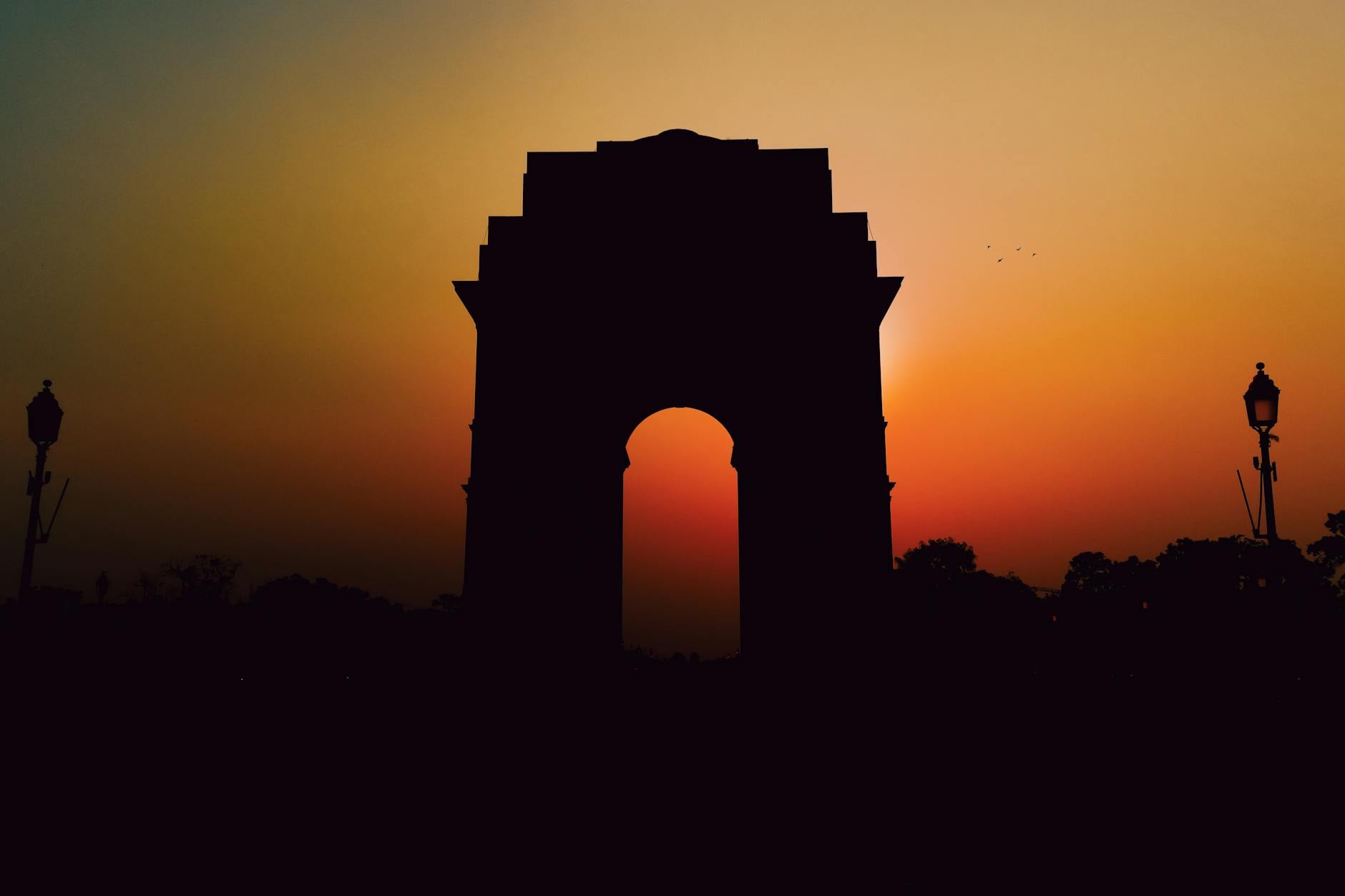
Delhi is not a city you “finish.” It is a city you learn to read.
Start Here
At first, Delhi can feel like too much: the traffic, the heat, the honking, the security gates, the crush of Old Delhi lanes, the sudden calm of Mughal gardens, the sweep of New Delhi’s imperial avenues, the scent of frying bread and cardamom tea, the deep red sandstone of forts and tombs, the evening call to prayer, the glow of wedding lights, the hard edge of modern urban life. But once you stop trying to treat it like a tidy European capital, Delhi becomes one of the most rewarding cities in Asia: layered, contradictory, ancient, political, hungry, and alive.
This guide is designed for travelers who want more than a checklist. It tells you where to stay, how to plan your days, what to eat, how to move around, what to skip, how to handle heat and air quality, and how to understand the city’s rhythm without being flattened by it.
Delhi in one sentence: Delhi is a city of empires and appetites, where the best trips balance big monuments with markets, gardens, food, and deliberate pauses.
Quick Verdict
| Question | Answer |
|---|---|
| Best for | History, Mughal architecture, food, markets, photography, museums, political history, street life, gateway travel to Agra and Jaipur |
| Not ideal for | Travelers who dislike heat, traffic, crowds, dust, visible inequality, assertive street selling, or sensory overload |
| Ideal first visit | 3 full days in Delhi, or 4–5 days if you want Agra, deeper food, museums, and slower pacing |
| Best months | October to March is the official broad recommendation for pleasant sightseeing weather.[1] February, March, late October, and November are especially good when air quality cooperates. |
| Hardest months | May and June for extreme heat; late October through January can bring serious air pollution episodes; July to September is humid monsoon season. |
| Best first-timer base | Connaught Place/Janpath for convenience, Khan Market/Lodhi Road for a calmer central base, or South Delhi for food, greenery, and a less chaotic feel. |
| Biggest planning mistake | Trying to cover Old Delhi, Qutub Minar, Humayun’s Tomb, India Gate, Akshardham, and a food crawl in one heroic day. Delhi punishes overplanning. |
| One thing to book ahead | A good guide for Old Delhi, a major dinner reservation, and any official visit requiring advance booking, such as Rashtrapati Bhavan circuits. |
| One thing to leave unscheduled | A late afternoon in Lodhi Garden, Khan Market, Nizamuddin, Mehrauli, or a neighborhood café after the city has worn you down. |
The Move
Build each day around one anchor neighborhood and one major monument or museum. Delhi is too large and traffic-prone for pinball sightseeing. The best days feel like a sequence, not a scavenger hunt.
Who Will Love Delhi?
Delhi rewards travelers who like cities with texture: old bazaars, big history, layered food traditions, powerful architecture, neighborhoods with distinct personalities, and enough friction to make the trip feel real.
You will probably love Delhi if you want:
- Mughal tombs, forts, mosques, gardens, and Indo-Islamic architecture.
- Serious food: kebabs, chaat, paratha, nihari, chole bhature, butter chicken, dal makhani, regional Indian canteens, contemporary Indian tasting menus, and café culture.
- A base for the Golden Triangle: Delhi, Agra, Jaipur.
- A city that forces you to think about empire, independence, partition, migration, democracy, urban growth, and inequality.
- A travel experience that is not frictionless but is memorable.
You may struggle with Delhi if you need:
- Clean sidewalks, predictable quiet, simple wayfinding, and low-stress street crossings.
- Mild air year-round.
- A compact historic center where everything is walkable.
- A city where you can improvise every detail without consequences.
Delhi is worth visiting. But it is much better when you approach it with respect, patience, and a plan.
Delhi at a Glance
| Practical | Detail |
|---|---|
| Country | India |
| Region | National Capital Territory of Delhi, in North India |
| Capital note | New Delhi is the capital of India and sits within the broader territory/city of Delhi.[2] |
| Language | Hindi and English are widely used in visitor-facing contexts; Punjabi, Urdu, and many other Indian languages are part of daily life. |
| Currency | Indian rupee, written as ₹ or INR |
| Cards vs cash | Cards and UPI-style digital payments are common in formal businesses; cash is still useful for small vendors, auto-rickshaws, tips, and markets. |
| Main airport | Indira Gandhi International Airport, usually abbreviated DEL or IGI |
| Airport-to-city default | Airport Express Metro to New Delhi Station for many central trips; taxi/ride-hail is easier with heavy luggage or late arrivals. The airport’s own guidance points visitors to the Airport Express Line and ticket machines at T3/T2 arrivals.[3] |
| Main rail stations | New Delhi Railway Station, Hazrat Nizamuddin, Old Delhi, Anand Vihar Terminal, Sarai Rohilla, Delhi Cantt |
| Best transit tool | Delhi Metro app/website plus Google Maps; ride-hailing apps for door-to-door trips |
| Emergency number | 112 is India’s national emergency number; India’s tourism helpline is 1363 / 1800 11 1363.[4] |
| Tap water | Do not drink untreated tap water. Use sealed bottled water or filtered/boiled water. CDC guidance for India advises travelers to avoid tap water and use boiled, bottled, or filtered water.[5] |
| Air quality | Check AQI daily, especially from late autumn through winter. India’s CPCB AQI scale labels 201–300 “Poor,” 301–400 “Very Poor,” and 401–500 “Severe.”[6] |
| Best first-timer mode | Metro for long hops, car/ride-hail for awkward connections, guided walking in Old Delhi, and a lot less rushing than you think. |
First-Timer Mistake
Assuming Delhi is one city center. It is not. Delhi is a spread-out metropolis with several historic layers and many practical centers: Old Delhi, Connaught Place, Lutyens’ Delhi, Lodhi/Nizamuddin, South Delhi, Aerocity, and the wider NCR.
How to Understand Delhi
Delhi is easiest to enjoy when you stop thinking of it as a single destination and start thinking of it as a sequence of cities layered on top of one another.
1. Old Delhi: Shahjahanabad, Markets, Mosques, and Food
Old Delhi is the city most visitors imagine before they arrive: Red Fort walls, Jama Masjid, Chandni Chowk, spice markets, food lanes, rickshaws, wedding-card shops, tangled wires, and a density that can feel thrilling or exhausting.
It is not where most first-time visitors should stay, but it is where many first-time visitors should spend one guided morning or late afternoon.
The move: Go early with a guide. Do not turn Old Delhi into your first jet-lagged solo mission after a midnight arrival.
2. New Delhi: Imperial Avenues and National Institutions
New Delhi, planned under British rule and later absorbed into independent India’s capital identity, has a very different scale: ceremonial roads, India Gate, Kartavya Path, government buildings, bungalows, embassies, museums, and broad lawns.
This is where Delhi suddenly feels monumental rather than medieval.
Pair it with: National Museum, India Gate, Gurudwara Bangla Sahib, Connaught Place, or Lodhi Garden.
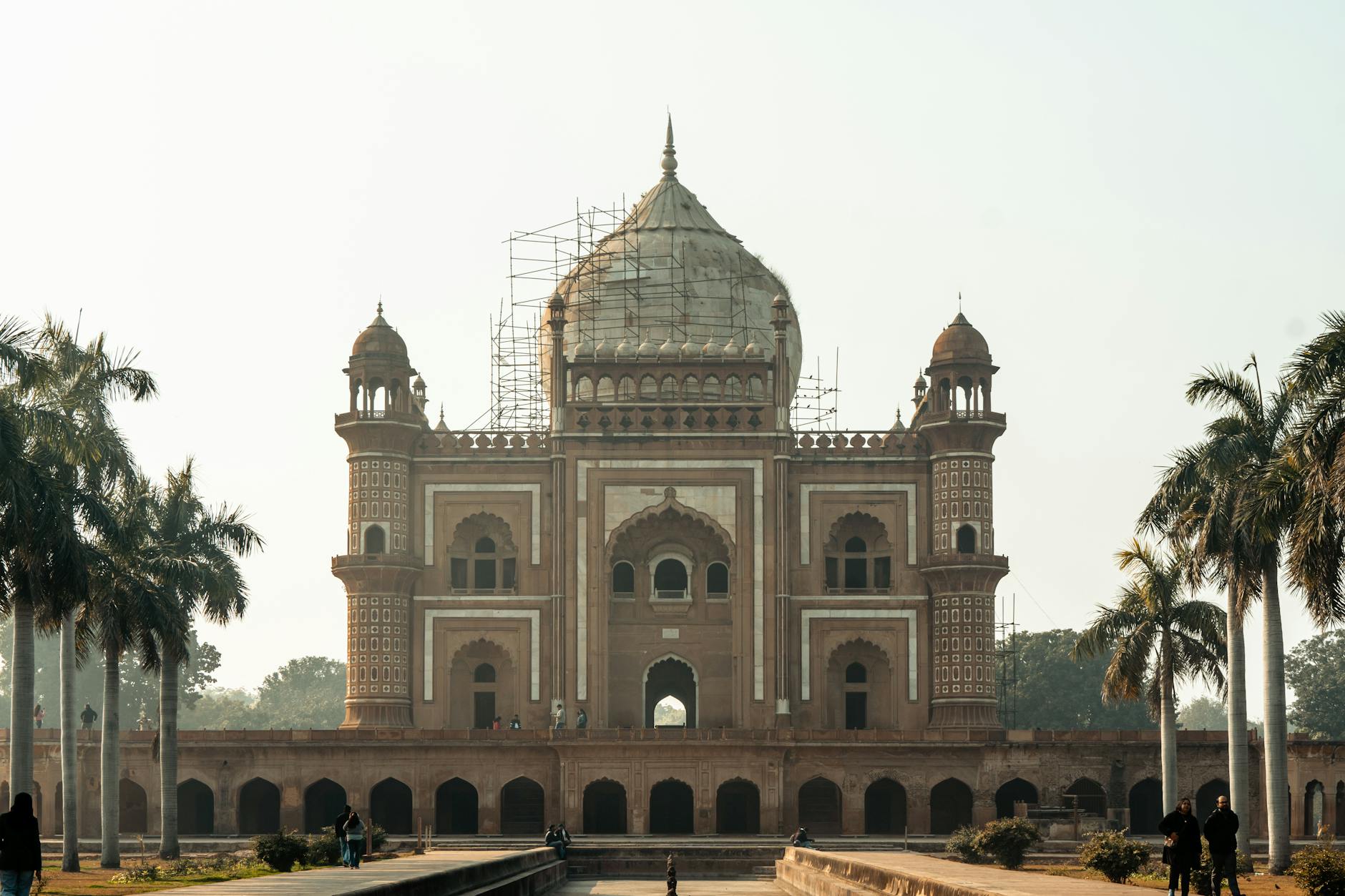
3. Mughal Garden Delhi: Humayun’s Tomb, Nizamuddin, Lodhi, Safdarjung
This is the Delhi of tomb gardens, Sufi music, old water systems, and sandstone geometry. Humayun’s Tomb is one of the city’s great anchors: UNESCO describes it as the first garden-tomb on the Indian subcontinent and a precursor to later Mughal architectural innovations, including the Taj Mahal.[8]
The move: Visit Humayun’s Tomb in the morning or golden late afternoon, then shift into Nizamuddin or Lodhi Garden rather than crossing the whole city.
4. South Delhi: Neighborhood Life, Cafés, Ruins, Parks, and Markets
South Delhi is where many visitors find breathing room: Hauz Khas, Green Park, Safdarjung, Saket, Mehrauli, Greater Kailash, Defence Colony, Lajpat Nagar, and surrounding neighborhoods. It has ruins, restaurants, shops, malls, residential lanes, parks, and cafés. It is less theatrically “Delhi” than Old Delhi, but more livable.
First-timer note: South Delhi is not always the most convenient for Old Delhi sightseeing, but it is a strong base for travelers who prefer calm evenings.
5. Aerocity and the Airport Belt
Aerocity is practical, polished, hotel-heavy, and close to the airport. It is not the Delhi you came to experience. But for a late arrival, early departure, business trip, or one-night transit, it is useful.
Skip if: You want to walk out of your hotel into historic Delhi.
6. The Wider NCR: Gurgaon, Noida, Faridabad, Ghaziabad
Travelers often hear “Delhi” used loosely to include the National Capital Region. Gurgaon has corporate offices, malls, restaurants, cocktail bars, and luxury hotels; Noida has business districts and some arts/event venues. These can be useful for business travelers but are not ideal bases for a first cultural trip unless you have a specific reason.
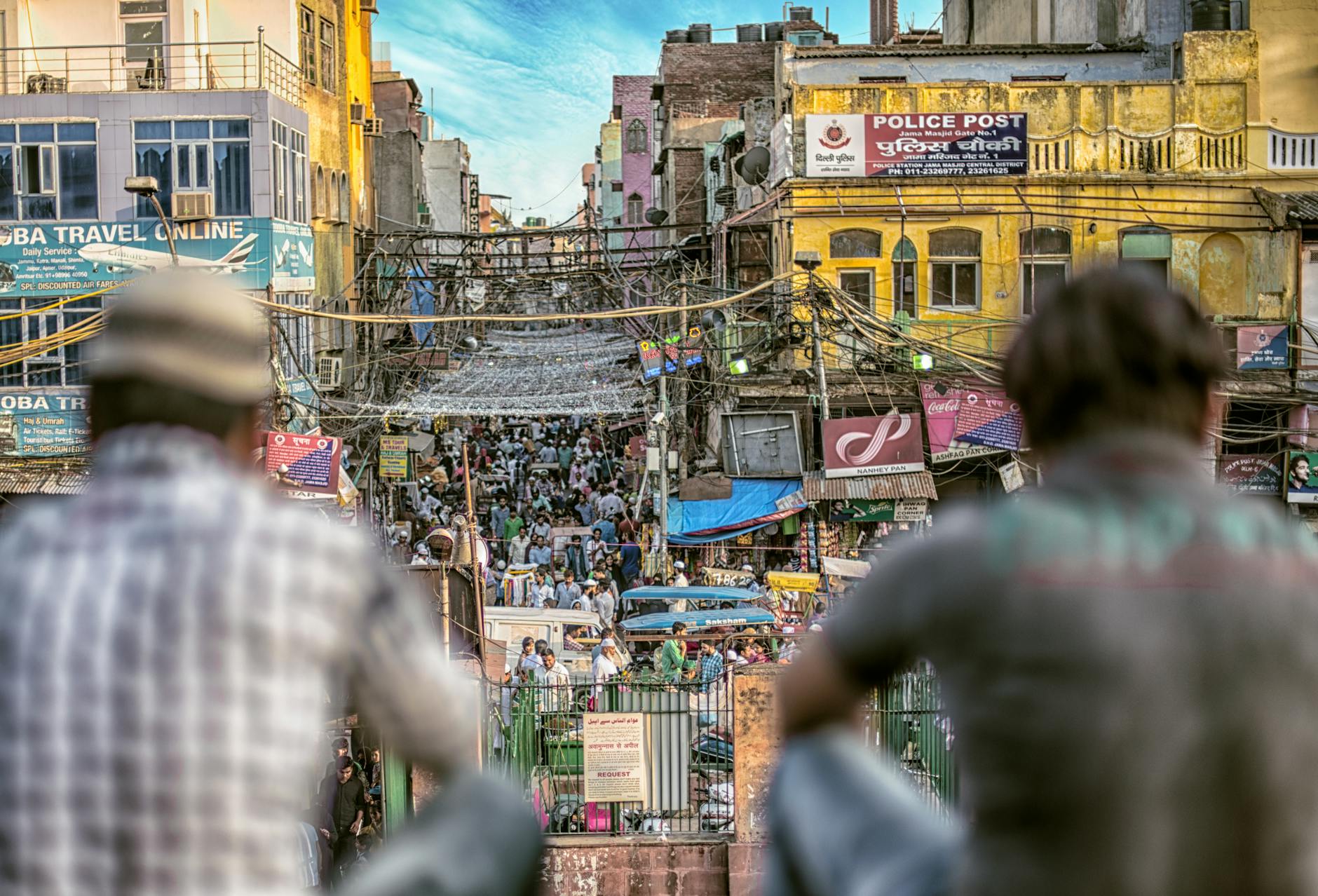
Delhi’s Rhythm
Delhi is a city of late starts, long lunches, hot afternoons, and big evenings.
Morning
Mornings are best for monuments, Old Delhi, markets, parks, and photography. In hot months, morning is not optional; it is survival.
Afternoon
Afternoons are for museums, hotel downtime, cafés, shopping, or car-based transfers. From April to June, do not plan an exposed monument-heavy afternoon unless you enjoy poor decisions.
Evening
Evening is Delhi’s reward: families in parks, dinner reservations, markets coming alive, monuments glowing in soft light, and the day’s heat finally loosening its grip.
Weekly Closures
Monday closures are common at museums and some major sites. Akshardham is closed Mondays according to its official visitor information, and the National Museum is open Tuesday to Sunday and closed Mondays and national holidays.[11][13] Always check before setting an itinerary.
Local Logic
Delhi’s best day is not the day with the most pins. It is the day with the least backtracking.
Best Time to Visit Delhi
Delhi Tourism recommends October to March as the best overall period for pleasant weather and sightseeing.[1] That is a useful starting point, but the best time depends on your tolerance for air quality, heat, crowds, and festival pricing.
Best Overall Months
February and March are often the sweet spot: cooler mornings, warmer afternoons, flowering parks, and generally easier sightseeing than winter smog season or summer heat.
Late October and November can be beautiful, but air quality can deteriorate sharply around this season, especially after Diwali and during crop-burning/pollution episodes in the wider region. Check AQI, not just temperature.
Season-by-Season
| Season | What It Feels Like | Best For | Watch Out For |
|---|---|---|---|
| December–January | Cool to cold, foggy mornings possible | Museums, food, parks, lower heat stress | Air pollution, flight/train delays, chilly nights |
| February–March | Pleasant, often the best sightseeing weather | First-timers, gardens, long days outside | Hotel demand, Holi travel dates |
| April–June | Hot to brutally hot | Short business trips, hotel-based luxury, early morning sightseeing | Heat exhaustion, exposed monuments, dehydrating days |
| July–September | Monsoon humidity, intermittent heavy rain | Lower prices, green parks, museum days | Flooded roads, humidity, traffic delays |
| October–November | Post-monsoon transition into high season | Festivals, sightseeing, food | AQI, festival closures/crowds, price spikes |
Month-by-Month Verdict
| Month | Verdict |
|---|---|
| January | Good for culture and food, risky for smog/fog. Pack layers and check AQI. |
| February | One of the best months. Great for first-timers. |
| March | Excellent, especially early March. Watch Holi dates and rising heat late month. |
| April | Still possible, but the heat begins to dominate. Start early. |
| May | Avoid for leisure unless necessary. Heat can be severe. |
| June | Very hot before the monsoon breaks. Not ideal. |
| July | Humid and rainy; better for repeat visitors or low-price trips. |
| August | Wet, humid, lush in places; roads can be messy. |
| September | Improving but still humid. |
| October | Often good, but air quality can worsen. Festival energy is high. |
| November | Culturally rich, but AQI risk is real. |
| December | Cool, festive, atmospheric; pollution and fog can disrupt plans. |
Heat Plan
In April–June, build days like this:
- 6:30–10:30 am: monument, market, or walk.
- 11:00 am–3:30 pm: museum, lunch, hotel rest, spa, or car transfer.
- 4:00–7:00 pm: garden, neighborhood, shopping, or second monument.
- 8:00 pm onward: dinner.
Air Quality Plan
When AQI is poor:
- Move outdoor walks to short, essential segments.
- Choose museums, cafés, hotel restaurants, galleries, and indoor markets.
- Use a well-fitted N95/FFP2 mask if pollution is high.
- Avoid outdoor exercise.
- Pick accommodation with good filtration if visiting in winter.
How Many Days You Need
One Day
One day is enough for a taste, not enough to understand Delhi. Choose either Old Delhi + New Delhi highlights or Mughal garden Delhi + India Gate. Do not attempt everything.
Best one-day plan: Humayun’s Tomb, Lodhi Garden, India Gate/Kartavya Path, Connaught Place, and one excellent dinner. Add Old Delhi only if you have a guide and energy.
Two Days
Two days gives you one “classic Delhi” day and one “South/Mughal Delhi” day.
Best for: Golden Triangle travelers who need a serious but efficient Delhi stop.
Three Days
Three full days is the best first-timer length. You can do Old Delhi, New Delhi, Humayun’s Tomb, Qutub Minar, a museum, food, a market, and one slower neighborhood.
Four to Five Days
This is the sweet spot if you like food, photography, history, and unhurried exploring. It also gives you space to adapt around heat, AQI, jet lag, or traffic.
One Week
A week works if Delhi is a base for Agra, Jaipur, work, family visits, shopping, or deep food/culture. For casual leisure travelers, one week entirely inside Delhi may feel heavy unless you pace it well.
Where to Stay in Delhi
The Short Answer
For a first visit, stay in Connaught Place/Janpath if you want central convenience, Khan Market/Lodhi Road if you want a calmer and more elegant base, South Delhi if you want food, greenery, and neighborhood life, and Aerocity if airport convenience matters more than atmosphere.
Avoid staying in Old Delhi unless you are an experienced traveler, have a specific heritage hotel in mind, and understand the trade-off: atmosphere and proximity to markets in exchange for noise, congestion, and difficult access.
Neighborhood Decision Table
| Area | Best For | Why Stay Here | Why Not |
|---|---|---|---|
| Connaught Place / Janpath | First-timers, short stays, transit convenience | Central, Metro-connected, easy access north/south, lots of hotels | Can feel commercial and traffic-heavy; not the prettiest by night in every pocket |
| Khan Market / Lodhi Road / Jor Bagh | Calm central base, food, parks, embassies, upscale stay | Near Lodhi Garden, Humayun’s Tomb, India Gate, Khan Market | Pricier; fewer budget options |
| South Delhi: Hauz Khas / Green Park / Safdarjung / Saket | Food, cafés, repeat visitors, longer stays | Leafier, more residential, strong restaurant access | Longer rides to Old Delhi and Connaught Place |
| Chanakyapuri | Luxury hotels, embassies, business, quiet | Secure, green, close to airport road and Lutyens’ Delhi | Not very walkable for casual wandering |
| Aerocity | Late arrivals, early flights, business, one-night stays | Polished, close to IGI Airport, hotels and restaurants | Not atmospheric; far from most cultural sightseeing |
| Old Delhi | Hardcore atmosphere seekers, photographers, food obsessives | Maximum historic intensity | Noise, crowds, access, sanitation variability, limited calm |
| Gurgaon | Corporate travel, nightlife/malls, business in Gurgaon | Modern hotels, restaurants, offices | Not Delhi sightseeing-friendly; traffic can be brutal |
Best Area for a First Visit
Connaught Place/Janpath is the easiest default. It puts you near the Yellow and Blue Metro lines, New Delhi Railway Station, India Gate, museums, and a reasonable path to both Old Delhi and South Delhi.
But if your trip style is less “see everything” and more “eat well, sleep well, decompress,” choose Khan Market/Lodhi Road or South Delhi.
Neighborhood Profiles
Connaught Place / Janpath
Vibe: Commercial, central, colonial-era circular plan, bookstores, cafés, office crowds, Metro access.
Best for: First-timers with limited time.
Why stay here: You are not in the most charming Delhi, but you are in one of the easiest parts of Delhi to use.
Why not: Some blocks feel worn, loud, and chaotic; traffic circles can be confusing.
Perfect local-ish half day: Coffee or breakfast near CP, National Museum or Gurudwara Bangla Sahib, India Gate at dusk, dinner in Connaught Place or Khan Market.
First-timer mistake: Booking a “central Delhi” hotel that is technically near CP but actually tucked into a noisy or awkward lane without easy ride-hail pickup.
Khan Market / Lodhi Road / Jor Bagh
Vibe: Green, upscale, diplomatic, restaurant-friendly, close to tombs and gardens.
Best for: Couples, older travelers, food-focused visitors, travelers who want calm after busy days.
Why stay here: Lodhi Garden, Humayun’s Tomb, India Gate, Khan Market, and Nizamuddin are all manageable.
Why not: Hotels can be expensive; nightlife is more restrained than Gurgaon or some South Delhi pockets.
The move: Visit Humayun’s Tomb, then spend late afternoon in Lodhi Garden and dinner near Khan Market.
South Delhi
Vibe: Residential, leafy in parts, restaurant-rich, scattered with ruins and markets.
Best for: Longer stays, food lovers, repeat visitors, remote workers, people who do not need to be right beside Old Delhi.
Why stay here: Better evenings, more neighborhood texture, plenty of cafés and restaurants.
Why not: Delhi’s main historic north/south split means some sightseeing days involve long rides.
Areas to know: Hauz Khas, Green Park, Safdarjung Enclave, Greater Kailash, Saket, Defence Colony, Lajpat Nagar, Mehrauli.
Perfect day: Qutub Minar in the morning, Mehrauli Archaeological Park or Sanjay Van if conditions are good, lunch in Saket/Mehrauli, afternoon rest, Hauz Khas or GK dinner.
Aerocity
Vibe: Clean, hotel-heavy, airport-adjacent, corporate.
Best for: Arrival/departure nights, business travel, travelers who value predictability.
Why stay here: Fast access to IGI Airport and the Airport Express Metro.
Why not: It is not where you feel Delhi’s soul.
Worth it? Yes for one night. No for a first cultural trip of three days unless logistics require it.
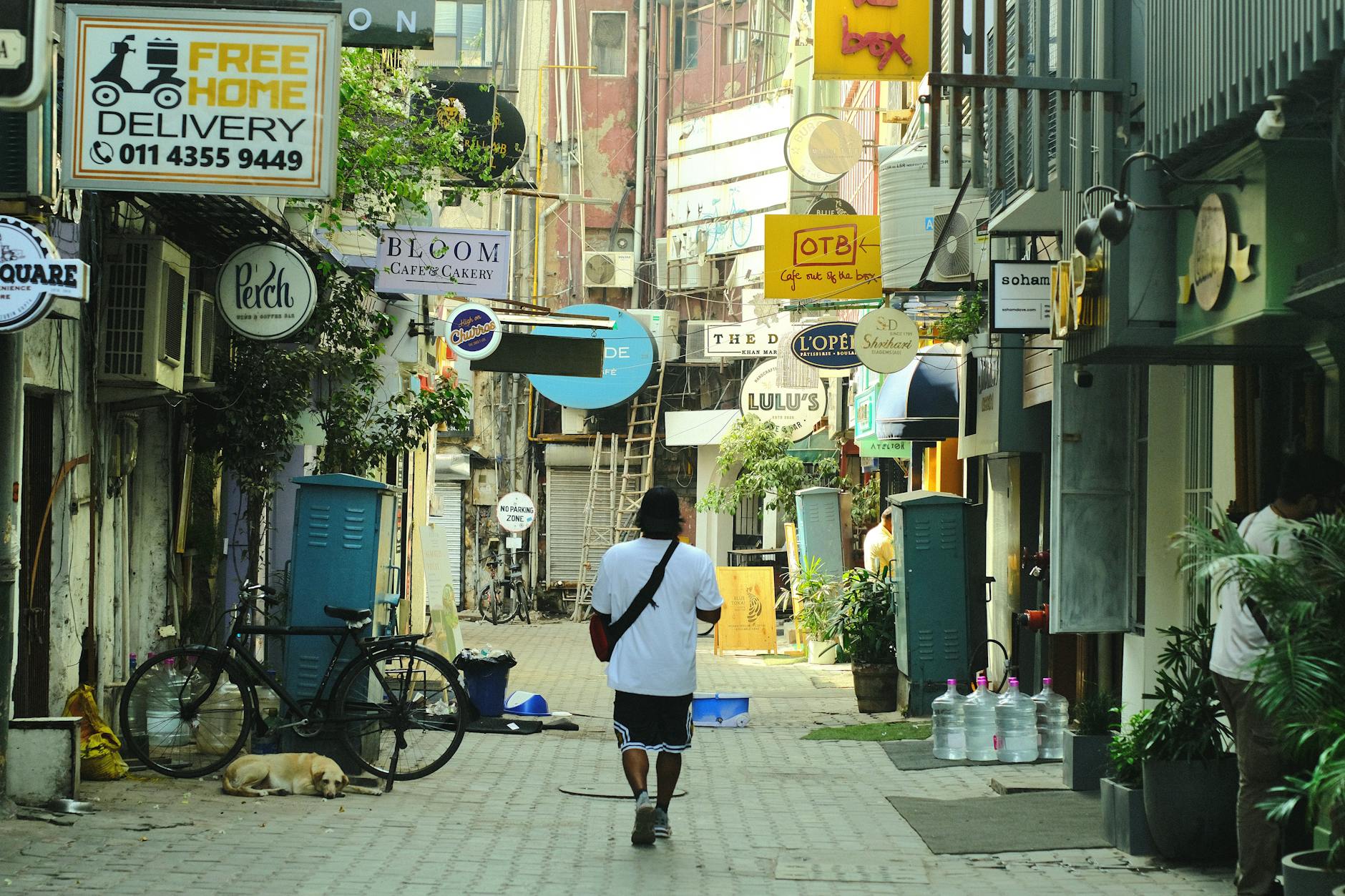
Neighborhood Guide
Old Delhi / Chandni Chowk
One-sentence identity: The beating, overwhelming heart of Shahjahanabad, best handled with a guide and a hungry stomach.
Best things to do:
- Jama Masjid exterior/interior visit.
- Chandni Chowk walk.
- Spice market lanes around Khari Baoli.
- Red Fort from inside or at least outside.
- Street food tour.
- Wedding, jewelry, and paper markets if you have a guide.
Best time: Early morning for atmosphere and less chaos; late afternoon for energy and food. Avoid peak heat.
How long: 3–5 hours.
Pair it with: Red Fort, Jama Masjid, Raj Ghat, or a food-focused lunch.
Skip if: You are severely jet-lagged, heat-sensitive, or uncomfortable in dense crowds.
The move: Hire a local guide and let them decide the route. Old Delhi is where a good guide changes the day from “chaos” to “story.”
Nizamuddin
One-sentence identity: Sufi shrines, Mughal tombs, food lanes, and a sense of living history beside some of Delhi’s most beautiful architecture.
Best things to do:
- Humayun’s Tomb.
- Nizamuddin Dargah area.
- Sunder Nursery.
- Isa Khan’s Tomb.
- Nearby food lanes, with sensitivity to local customs.
Best time: Late afternoon into evening. Check dargah customs and timing before visiting.
How long: 3–4 hours.
Local logic: Dress modestly and move respectfully. This is not just a tourist quarter.
Lodhi / Khan Market
One-sentence identity: Delhi’s easiest elegant afternoon: gardens, tombs, cafés, bookshops, and dinner.
Best things to do:
- Lodhi Garden.
- Khan Market browsing.
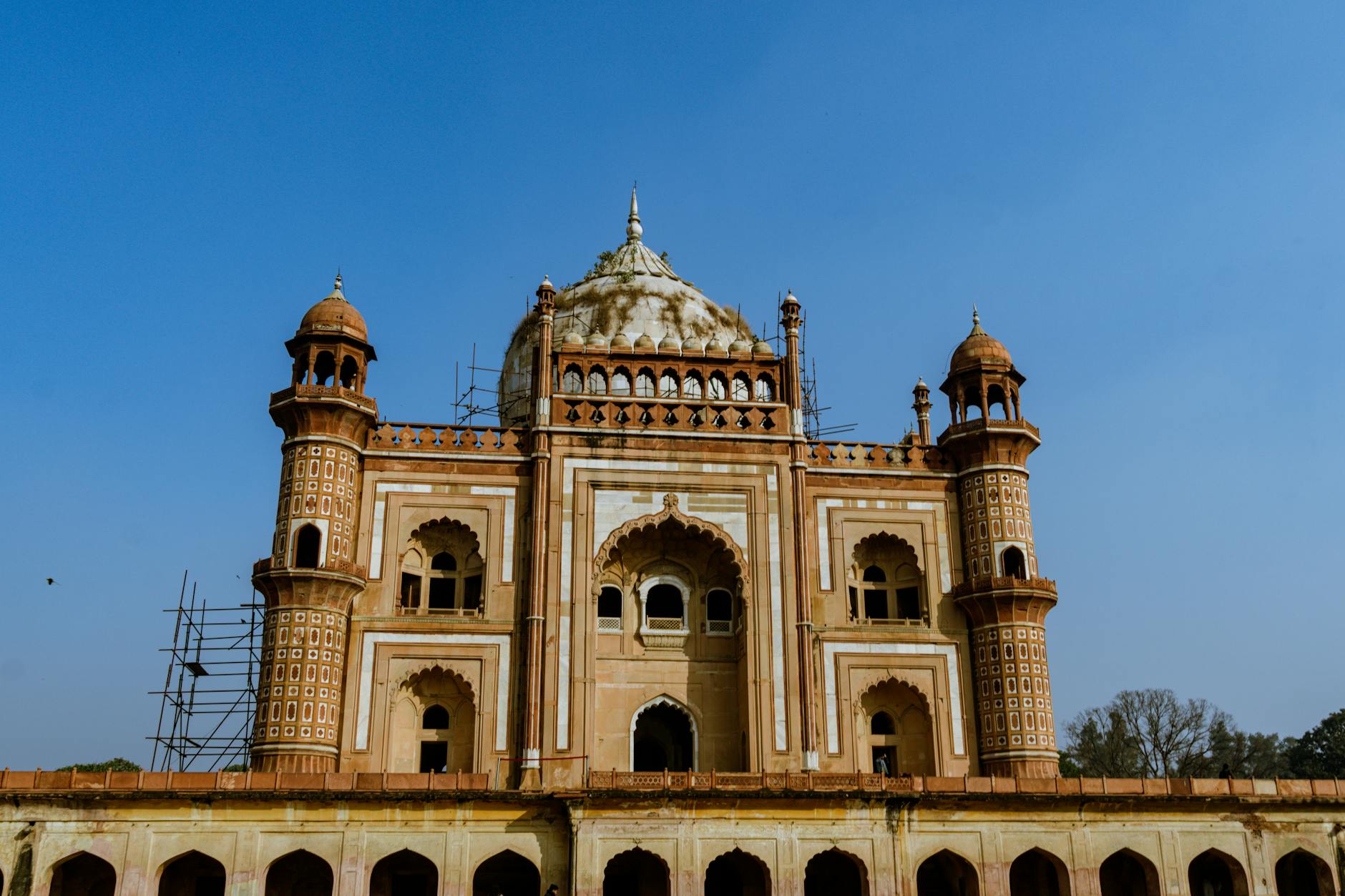
- Safdarjung Tomb nearby.
- India Habitat Centre events.
- Dinner or drinks.
Best time: Late afternoon, especially in cooler months.
How long: 2–5 hours.
The move: Use Lodhi Garden as a pressure valve after Old Delhi.
Mehrauli / Qutub
One-sentence identity: The southern historic layer where Delhi’s Sultanate-era past sits beside modern neighborhoods and forested ruins.
Best things to do:
- Qutub Minar complex.
- Mehrauli Archaeological Park.
- Garden of Five Senses.
- Mehrauli restaurants.
Delhi Tourism describes Qutub Minar as India’s highest tower and gives its height as 72.5 meters.[9]
Best time: Morning or late afternoon.
How long: 2–4 hours.
First-timer mistake: Going to Qutub at noon in May.
Connaught Place / Janpath
One-sentence identity: Delhi’s central commercial hub, useful more than magical, but important for logistics.
Best things to do:
- Bookstores and cafés.
- Janpath Market.
- Nearby Gurudwara Bangla Sahib.
- Quick access to National Museum, India Gate, and New Delhi Station.
Best time: Late morning or evening.
How long: 2–3 hours.
Worth it? Worth using. Not worth romanticizing.
Hauz Khas / Green Park / Safdarjung
One-sentence identity: South Delhi’s mix of ruins, restaurants, deer park, cafés, boutiques, and residential lanes.
Best things to do:
- Hauz Khas complex.
- Deer Park.
- Green Park cafés.
- Shahpur Jat boutiques nearby.
- Dinner in Safdarjung/Defence Colony/GK depending on your plan.
Best time: Late afternoon and evening.
How long: 2–5 hours.
Lajpat Nagar / Defence Colony
One-sentence identity: Shopping, snacks, neighborhood food, and a more everyday Delhi rhythm.
Best things to do:
- Lajpat Nagar Central Market.
- Street snacks and textiles.
- Defence Colony restaurants.
- Nearby South Delhi cafés.
Best for: Shoppers, repeat visitors, people who want a break from monuments.
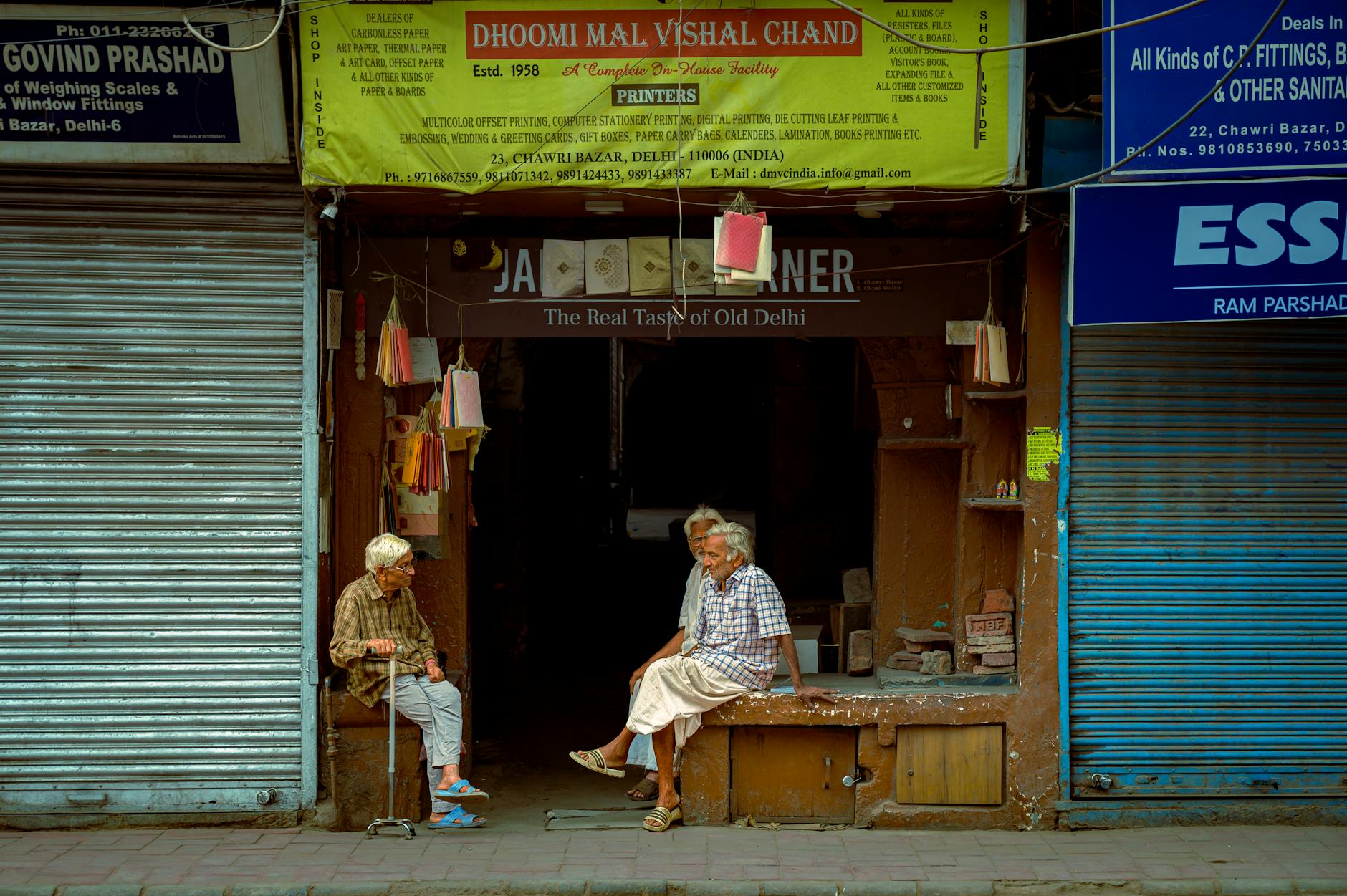
Best Things to Do
This is not a ranked list because Delhi should not be planned like a trophy hunt. Choose by mood, geography, weather, and energy.
Red Fort
What it is: Shah Jahan’s 17th-century Mughal citadel in Old Delhi, now one of Delhi’s UNESCO-listed heritage anchors. ASI notes that Shah Jahan transferred his capital from Agra to Delhi in 1638 and laid the foundations of Shahjahanabad; the Red Fort was begun in 1639 and completed after nine years.[10]
Why go: Scale, history, symbolism, and the transition from Mughal power to colonial and independent Indian memory.
Time needed: 90 minutes to 3 hours.
Best time: Morning.
Worth it? Yes if you care about history. If you are short on time and already visiting Agra Fort, Humayun’s Tomb, and Qutub, the Red Fort can be seen from outside and paired with Old Delhi instead.
Pair it with: Jama Masjid and Chandni Chowk.
First-timer mistake: Expecting the Red Fort to feel as intact or intimate as smaller tomb complexes. It is grand but uneven; a guide helps.
Humayun’s Tomb
What it is: A 16th-century Mughal garden tomb and UNESCO World Heritage Site. UNESCO identifies it as the first garden-tomb on the Indian subcontinent and a major precursor to later Mughal architecture.[8]
Why go: It is one of Delhi’s most beautiful and legible monuments: symmetrical gardens, red sandstone, marble details, and a calm that feels miraculous after traffic.
Time needed: 90 minutes to 2 hours; 3 hours if you include nearby Isa Khan’s Tomb and Sunder Nursery.
Best time: Morning or late afternoon.
Worth it? Absolutely. This is one of Delhi’s highest-priority sights.
Pair it with: Nizamuddin, Sunder Nursery, Lodhi Garden, Khan Market.
Qutub Minar Complex
What it is: A major Sultanate-era complex anchored by the 72.5-meter Qutub Minar, which Delhi Tourism calls the highest tower in India.[9]
Why go: Delhi’s deeper pre-Mughal Islamic history, intricate stonework, the Iron Pillar, mosque remains, and a powerful sense of layered architecture.
Time needed: 90 minutes to 2.5 hours.
Best time: Morning or late afternoon.
Worth it? Yes, especially for architecture and history.
Pair it with: Mehrauli Archaeological Park or South Delhi dinner.
Jama Masjid and Chandni Chowk
What it is: One of India’s great mosques beside one of India’s great market districts.
Why go: Atmosphere, scale, food, street life, and one of the most vivid urban experiences in Delhi.
Time needed: 2–4 hours with a walk and food.
Best time: Morning or late afternoon.
Worth it? Yes, but with caveats: dress modestly, go with a guide if you are new to India, and do not expect calm.
First-timer mistake: Treating Chandni Chowk like a casual self-guided shopping street. It is a living commercial ecosystem, not a sanitized attraction.
India Gate and Kartavya Path
What it is: Ceremonial New Delhi: lawns, avenues, public space, and national symbolism.
Why go: It helps you understand Delhi as capital, not just Delhi as historic city.
Time needed: 45–90 minutes.
Best time: Early evening.
Pair it with: National Museum, Rashtrapati Bhavan exterior/circuit, Connaught Place, or Gurudwara Bangla Sahib.
Worth it? Yes at dusk, not necessarily as a midday standalone stop.
Gurudwara Bangla Sahib
What it is: A prominent Sikh gurdwara near Connaught Place, with a pool, devotional atmosphere, and community kitchen tradition.
Why go: It is one of the city’s most moving spiritual spaces, especially for visitors who enter respectfully and slowly.
Time needed: 45–90 minutes.
Best time: Morning or evening.
Etiquette: Cover your head, remove shoes, dress modestly, and follow instructions.
The move: Combine it with Connaught Place or India Gate, not Old Delhi.
Lodhi Garden
What it is: A large, beloved park filled with tombs, paths, joggers, couples, families, and birds.
Why go: It shows Delhi breathing.
Time needed: 1–2 hours.
Best time: Early morning or late afternoon.
Worth it? Yes, especially after a heavy sightseeing day.
Pair it with: Khan Market, Safdarjung Tomb, India Habitat Centre.
Lotus Temple / Bahá’í House of Worship
What it is: A Bahá’í House of Worship famous for its lotus-like marble structure. The official visitor page says it is open Tuesday to Sunday, 8:30 am to 6:00 pm, and closed Mondays.[12]
Why go: Architecture, silence, and contrast with the surrounding city.
Time needed: 45–90 minutes, depending on queues.
Worth it? Worth it if you are nearby or interested in modern religious architecture. Not essential if you have only two days.
Pair it with: South Delhi, Kalkaji, or Nehru Place.
Swaminarayan Akshardham
What it is: A large modern Hindu temple complex with gardens, exhibitions, a food court, and an evening water show. The official visitor page lists Tuesday–Sunday entry, Monday closure, 10:00 am first entry, and 6:30 pm last entry.[11]
Why go: Monumental scale, craftsmanship, organized visitor facilities, and evening show.
Time needed: 3–5 hours if doing exhibitions and water show.
Worth it? Yes for families, spiritual architecture, and spectacle. Less essential for travelers focused on older Delhi.
Important: Security is strict. Check camera/phone/bag rules before going.
National Museum
What it is: One of India’s major museums, with collections spanning archaeology, sculpture, manuscripts, textiles, arms, and more. The official site lists Tuesday–Sunday hours of 10:00 am to 6:00 pm, closed Mondays and national holidays.[13]
Why go: Context. Delhi’s monuments are richer when you understand the civilizations behind them.
Time needed: 2–4 hours.
Best time: Midday, especially in heat or poor AQI.
Worth it? Yes for history-minded travelers. If you dislike museums, keep it to 90 minutes.
National Crafts Museum
What it is: A museum and craft-focused cultural space near Pragati Maidan. Its official site says it is open Tuesday to Sunday, 10:00 am to 6:00 pm.[14]
Why go: Textiles, folk traditions, craft objects, and a more tactile view of Indian culture.
Time needed: 1.5–3 hours.
Pair it with: Purana Qila, India Gate, National Gallery of Modern Art, or lunch at Café Lota.
Nizamuddin Dargah
What it is: A revered Sufi shrine complex associated with Hazrat Nizamuddin Auliya.
Why go: Devotional atmosphere, music traditions, and a living sacred site.
Time needed: 1–2 hours.
Best time: Evening, especially for music nights, but verify locally and go respectfully.
Etiquette: Dress modestly, cover your head where required, remove shoes, ask before photographing people, and avoid treating worship as performance.
Dilli Haat
What it is: A paid-entry open-air craft and food market concept with stalls from different Indian states.
Why go: Easy souvenir shopping, regional snacks, and a calmer alternative to bargaining-heavy markets.
Time needed: 1–2 hours.
Worth it? Good for first-time shoppers. Serious craft buyers should also look beyond it.
Delhi Itineraries
One Perfect Day in Delhi
This is for travelers with one full day and decent energy.
Morning: Humayun’s Tomb
Start with Humayun’s Tomb before the light gets hard. Walk the gardens slowly. Add Isa Khan’s Tomb if you have time.
Late Morning: Lodhi Garden
Take a short ride to Lodhi Garden. Walk, breathe, and let the city calm down.
Lunch: Khan Market or Café Lota
Choose Khan Market for convenience and choice, or Café Lota if pairing with the Crafts Museum.
Afternoon: National Museum or Gurudwara Bangla Sahib
If it is hot or polluted, go to the National Museum. If you want a spiritual/cultural stop, visit Gurudwara Bangla Sahib.
Sunset: India Gate / Kartavya Path
Go at dusk, not midday.
Dinner: Modern Indian or classic North Indian
Choose Indian Accent for a splurge, Bukhara for iconic North-West Frontier-style dining, or a strong neighborhood restaurant closer to your hotel. Indian Accent’s own site notes its awards and Asia’s 50 Best recognition; Bukhara’s official ITC page emphasizes its 45-year legacy and North-West Frontier culinary identity.[23][24]
What to cut if tired: National Museum.
Two-Day First-Timer Delhi
Day 1: Old Delhi + New Delhi
- Morning: Guided Old Delhi walk.
- Late morning: Jama Masjid and Chandni Chowk food.
- Lunch: Old Delhi or Connaught Place.
- Afternoon: Hotel rest.
- Late afternoon: Gurudwara Bangla Sahib.
- Sunset: India Gate.
- Dinner: Connaught Place/Khan Market.
Day 2: Mughal and Sultanate Delhi
- Morning: Qutub Minar.
- Late morning: Mehrauli Archaeological Park if weather allows.
- Lunch: South Delhi.
- Afternoon: Humayun’s Tomb.
- Late afternoon: Sunder Nursery or Lodhi Garden.
- Dinner: Lodhi/Khan Market/South Delhi.
The move: Keep Old Delhi and Qutub on separate days. They are emotionally and geographically different trips.
Three-Day Delhi
Day 1: Orientation and New Delhi
- Connaught Place.
- Gurudwara Bangla Sahib.
- National Museum.
- India Gate at dusk.
- Dinner near Khan Market or CP.
Day 2: Old Delhi
- Guided walk through Chandni Chowk.
- Jama Masjid.
- Red Fort.
- Lunch or food tour.
- Afternoon rest.
- Light evening: Lodhi Garden or hotel dinner.
Day 3: South and Mughal Delhi
- Qutub Minar.
- Mehrauli or Hauz Khas.
- Lunch in South Delhi.
- Humayun’s Tomb.
- Nizamuddin or Sunder Nursery.
- Splurge dinner.
Five-Day Delhi
Day 1: Arrival and gentle orientation
Connaught Place, Gurudwara Bangla Sahib, early dinner.
Day 2: Old Delhi deeply
Guided walk, Jama Masjid, Red Fort, food crawl.
Day 3: Mughal garden Delhi
Humayun’s Tomb, Sunder Nursery, Nizamuddin, Lodhi Garden, Khan Market.
Day 4: South Delhi
Qutub Minar, Mehrauli Archaeological Park, lunch in Saket/Mehrauli, Hauz Khas, dinner.
Day 5: Choose your lane
- Museum day: National Museum + Crafts Museum.
- Food day: regional canteens + market snacks + fine dining.
- Day trip: Agra if you start early.
- Shopping day: Dilli Haat, Khan Market, Janpath, Lajpat Nagar, Shahpur Jat.
Rainy-Day Delhi
- National Museum.
- National Crafts Museum.
- Café Lota lunch.
- Gurudwara Bangla Sahib.
- Khan Market.
- Dinner near your hotel.
Avoid low-lying market walks in heavy rain; traffic can snarl quickly.
Heat-Wave Delhi
- Sunrise: Lodhi Garden or Humayun’s Tomb.
- Late morning: Hotel breakfast and rest.
- Midday: National Museum or mall/café.
- Late afternoon: Short, shaded neighborhood walk.
- Evening: Dinner reservation.
Do not be stubborn. Delhi heat is not a character test.
Food and Drink
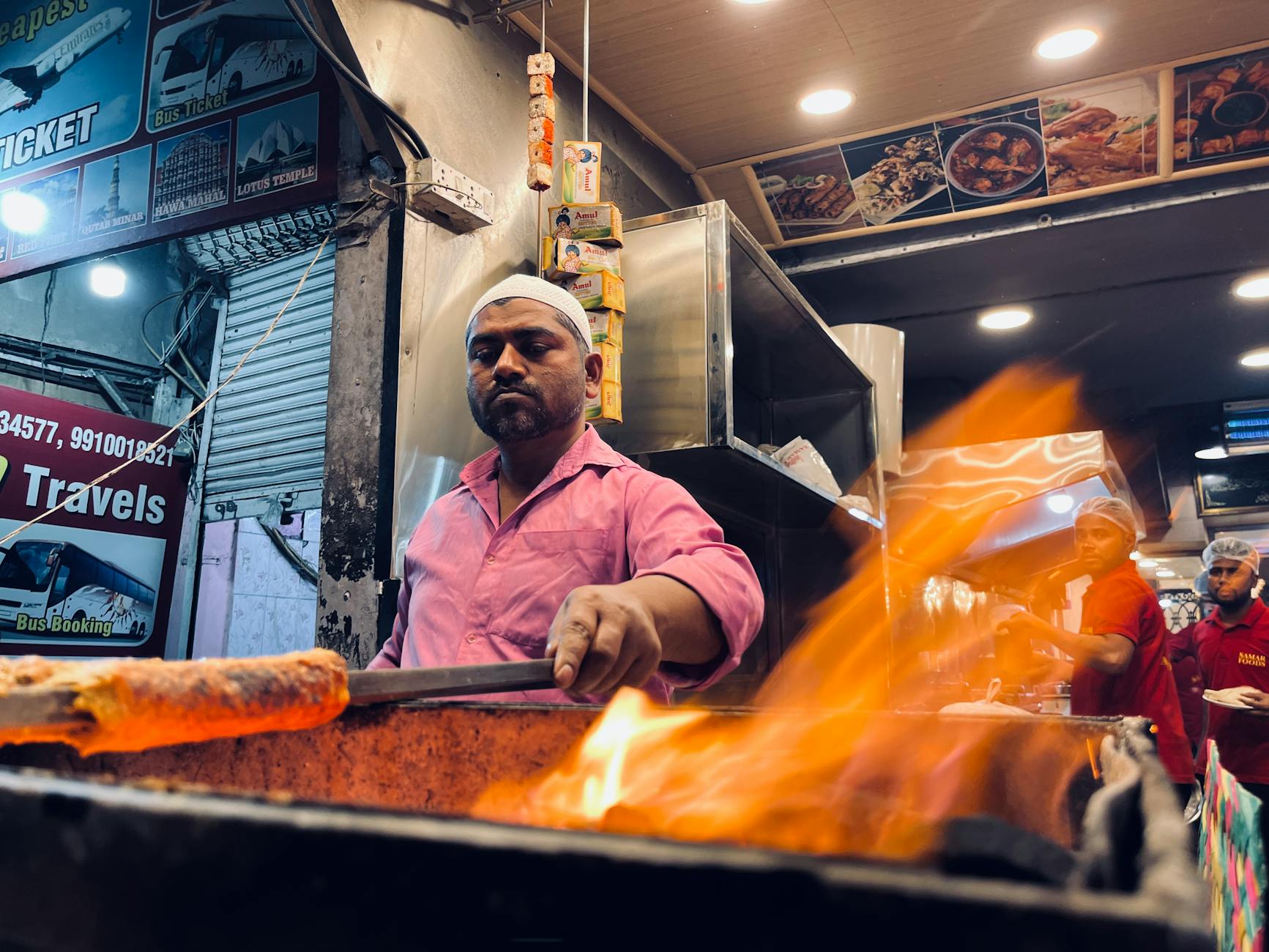
Delhi is one of the world’s great eating cities, but it is not one cuisine. It is Mughal, Punjabi, street-food obsessed, migrant-driven, regional, bureaucratic, elite, everyday, nostalgic, and experimental.
What Delhi Tastes Like
Delhi’s food identity comes from:
- Mughal and Old Delhi cooking: kebabs, korma, nihari, biryani, breads.
- Punjabi and post-Partition food culture: butter chicken, dal makhani, chole bhature, tandoori cooking.
- Street snacks: chaat, golgappe, aloo tikki, kachori, jalebi, kulfi.
- Regional Indian migration: South Indian, Bengali, Andhra, Tibetan, Northeastern, Kashmiri, Bihari, and more.
- Contemporary dining: modern Indian tasting menus, cocktails, bakeries, cafés, and global restaurants.
Eater’s Delhi guide is a useful example of how the city’s best food spans Old Delhi street vendors, classic institutions, regional restaurants, and fine dining rather than one narrow “must-eat” list.[25]
What to Eat
| Dish / Category | What It Is | Where It Fits |
|---|---|---|
| Chole bhature | Spiced chickpeas with deep-fried bread | Breakfast/brunch, especially in North Indian neighborhoods |
| Paratha | Stuffed or layered flatbread | Old Delhi, home-style restaurants, breakfast |
| Kebabs | Grilled meat, often Mughlai or North Indian styles | Old Delhi, fine dining, hotel restaurants |
| Nihari | Slow-cooked meat stew | Early morning or traditional Old Delhi meals |
| Butter chicken | Tomato-rich, butter-heavy chicken curry | Post-Partition Delhi classic |
| Dal makhani | Slow-cooked black lentils | North Indian restaurants; Bukhara’s Dal Bukhara is particularly famous on its official page.[24] |
| Chaat | Tangy, spicy, sweet, crunchy snack category | Markets and specialist shops |
| Momos | Dumplings popular across Delhi | Street stalls and Tibetan/Northeastern-influenced pockets |
| Kulfi / jalebi | Sweets | Old Delhi, markets, dessert stops |
| South Indian meals | Dosa, idli, thali, filter coffee | Regional canteens and specialist restaurants |
How to Eat Delhi Without Getting Sick
- Start gently for the first day if you are new to India.
- Choose busy vendors with fast turnover.
- Avoid raw chutneys or cut fruit if hygiene looks doubtful.
- Drink sealed bottled water or filtered water.
- Avoid ice unless you trust the source.
- Use hand sanitizer, but do not treat it as magic.
- Be careful with “famous” street stalls if your stomach is not ready.
- Consider a reputable food tour for Old Delhi.
Restaurant Shortlist by Situation
This is a editorial list; verify hours and reservations before publication.
| Situation | Ideas |
|---|---|
| Big splurge | Indian Accent for inventive modern Indian cooking; Bukhara for classic North-West Frontier-style tandoor dining.[23][24] |
| Old Delhi classic | Karim’s, Al Jawahar, specialist kebab/nihari/paratha/sweet shops with a guide. |
| Museum lunch | Café Lota near the Crafts Museum. |
| Regional canteen meal | Andhra Bhavan, state bhavans/canteens, or South Indian specialists. |
| South Indian comfort | Carnatic Café, Saravana Bhavan, Naivedyam-style restaurants, depending on neighborhood. |
| Market-and-snack day | Lajpat Nagar, INA, Dilli Haat, Chandni Chowk with care. |
| Calmer café stop | Khan Market, Lodhi, Green Park, Greater Kailash, or Defence Colony. |
| Cocktail evening | South Delhi, Khan Market, or Gurgaon depending on where you are staying. |
Food Neighborhoods
Old Delhi
Best for dense food history, but not the easiest casual meal. Go with a guide or a very specific plan.
Connaught Place
Useful for classic restaurants, central meetups, and easy access.
Khan Market / Lodhi
Good for traveler-friendly restaurants, cafés, bookstores, and low-stress evenings.
South Delhi
Best overall for repeated dinners: Greater Kailash, Defence Colony, Safdarjung, Hauz Khas, Green Park, Saket, Mehrauli.
Gurgaon
Best for modern restaurants, bars, and corporate nightlife, but not convenient for sightseeing-focused visitors staying in Delhi.
Drinks
- Chai: everywhere; quality varies, pleasure does not.
- Lassi: excellent in traditional sweet shops.
- Filter coffee: South Indian restaurants and modern cafés.
- Cocktails: strongest in upscale restaurants, hotel bars, South Delhi, and Gurgaon.
- Alcohol rules: Legal age and availability vary by jurisdiction; do not assume late-night service everywhere.
The Move
Make lunch your adventurous meal and dinner your controlled meal. Delhi is easier when you do street food and markets while alert, then sit down somewhere calm at night.
Getting Around
Delhi is huge. Use the Metro when it makes sense, but do not be ideological about it. A good Delhi transport day often combines Metro, ride-hail, auto-rickshaw, and walking.
Airport to City
Airport Express Metro
The Airport Express Line is often the cleanest, fastest way from IGI Airport to New Delhi Station if you are traveling light and staying near a Metro-connected area. The Delhi airport’s own transportation page lists the Airport Express Line and notes ticket machines at Terminal 3 and Terminal 2 arrivals.[3]
Best for: Solo travelers, light luggage, daytime arrivals, Connaught Place/New Delhi Station access.
Not ideal for: Heavy luggage, late arrivals, hotels far from Metro, families after long flights.
Taxi / Ride-Hail
Use prepaid taxi counters, hotel transfers, or app-based services. Confirm terminal pickup points and license plates. Delhi airport pickup zones can be confusing when tired.
Hotel Transfer
Worth it for first-time visitors arriving late at night, families, or travelers carrying expensive equipment.
Delhi Metro
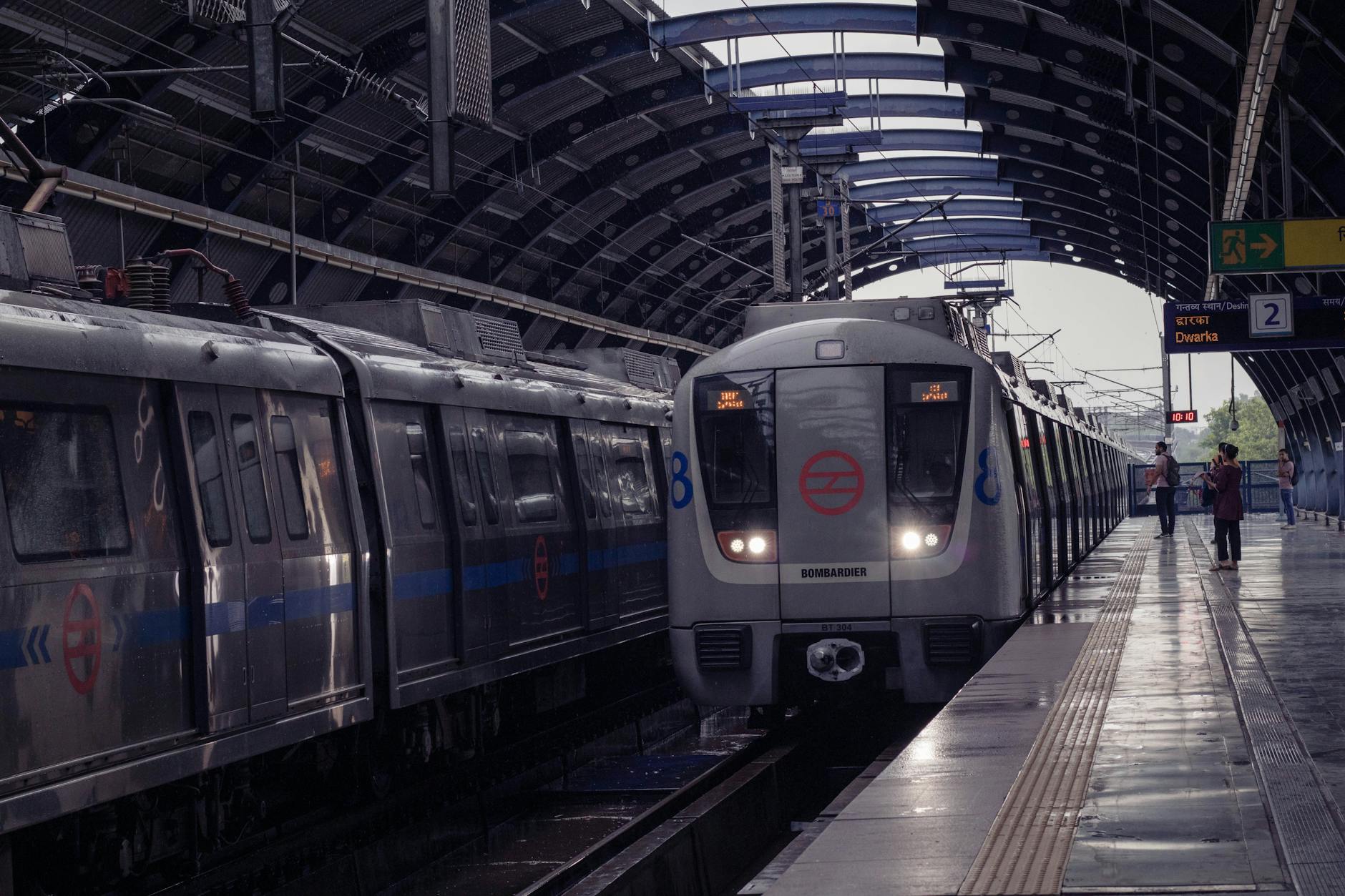
Delhi Metro is one of the best things about moving through the city. It is especially useful for long cross-city hops, avoiding peak traffic, and reaching stations near Qutub Minar, Old Delhi, Connaught Place, and the airport line.
DMRC’s tourist card page lists one-day and three-day tourist cards, priced at ₹200 and ₹500 respectively, including refundable security deposit; its FAQ notes that tourist cards are valid on DMRC lines but not the Airport Express Line.[15][16] The DMRC fare page lists standard fare slabs from ₹11 to ₹64 depending on distance and day.[17]
The move: Use the Metro for distance, then auto/ride-hail for the last mile.
Auto-Rickshaws
Useful for short hops, especially from Metro stations to monuments. Use app-based autos when possible or agree on a price before departure if not using a meter.
Ride-Hailing
Uber and local equivalents are practical, especially at night or in heat. Expect cancellations, traffic, and occasional calls from drivers to confirm pickup.
Walking
Delhi is walkable in pockets, not as a whole.
Best areas for walking:
- Lodhi Garden.
- Humayun’s Tomb/Sunder Nursery.
- Khan Market area.
- Select South Delhi markets.
- Inside monuments.
- Guided Old Delhi routes.
Worst walking assumptions:
- “It is only 20 minutes on the map.”
- “There will be sidewalks.”
- “We can cross that road easily.”
- “We will just wander between neighborhoods.”
Do You Need a Car?
No, not for most city sightseeing. A car with driver can be useful for families, older travelers, heat-sensitive travelers, day trips, or awkward multi-stop days. Self-driving in Delhi is not recommended for most international visitors.
Budget and Costs
Delhi can be cheap, expensive, or both in the same day. A plate of excellent food may cost little; a luxury hotel dinner can cost more than a full budget day.
Daily Budget Ranges
These are sample planning ranges, not live quotes.
| Style | Daily Estimate, Excluding Flights | What It Looks Like |
|---|---|---|
| Shoestring | ₹2,000–₹4,000 | Hostel/guesthouse, Metro, street food, limited paid sights |
| Budget comfort | ₹4,000–₹8,000 | Simple hotel, Metro/auto mix, casual restaurants, several attractions |
| Mid-range | ₹8,000–₹18,000 | Good hotel, ride-hailing, guided Old Delhi walk, strong meals |
| Comfortable | ₹18,000–₹40,000 | Better hotel, private guide/driver days, polished restaurants |
| Luxury | ₹40,000+ | Top hotels, fine dining, car/driver, private guides, spa, shopping |
Where to Save
- Use Metro for long routes.
- Eat regional and casual food, not hotel buffets every day.
- Choose one splurge dinner instead of three mediocre “fancy” meals.
- Stay near a useful Metro line rather than a famous hotel address.
- Visit free/low-cost parks and sacred sites respectfully.
Where to Splurge
- A good Old Delhi guide.
- A comfortable, well-located hotel.
- A car/driver on a hot or complicated day.
- One standout meal.
- A private guide for Mughal and Sultanate architecture if history matters to you.
Not Worth the Money
- Bad “same day Delhi everything” tours.
- Long taxi rides at rush hour when Metro is direct.
- Generic souvenir shops attached to low-quality tours.
- A luxury hotel far from everything you want to do.
Safety, Health, and Scams
Delhi is not a city to fear, but it is a city to take seriously. The goal is not paranoia. The goal is alert, practical behavior.
General Safety
Most visitor problems involve overcharging, scams, harassment, stomach illness, pickpocketing, transport friction, and getting overwhelmed. Serious incidents are less common but possible.
The U.S. Department of State advises travelers to exercise increased caution in India and includes specific safety guidance for women travelers, including using women-only transport where available, avoiding isolated areas, and using reliable cars/drivers at night.[18] The UK FCDO also flags safety and security concerns, including sexual assault risk for women travelers in tourist areas and cities.[19]
Practical Safety Rules
- Use ride-hailing or trusted taxis at night.
- Avoid isolated areas after dark.
- Keep valuables inside zipped bags.
- Be cautious at railway stations, crowded markets, and major tourist sites.
- Do not accept unsolicited “help” from strangers who steer you to a shop, travel office, or “closed” attraction.
- Share live location with someone you trust when going out late.
- Solo women travelers should choose central, well-reviewed accommodation and avoid arriving at obscure locations late at night.
Common Scams
| Scam | What It Looks Like | Better Move |
|---|---|---|
| “Your hotel is closed” | Driver or stranger says your booking is invalid and offers another hotel | Call your hotel directly; do not change plans through a stranger |
| Fake tourism office | Someone near a station or CP leads you to an unofficial agency | Use official websites, your hotel, or vetted operators |
| Overpriced auto/taxi | No meter, inflated quote, confusing route | Use apps or agree price beforehand |
| Forced shopping stop | Tour includes “craft demonstration” that becomes hard sell | Decline firmly; book guides who state no shopping stops |
| Pickpocket distraction | Crowds, bumping, staged commotion | Secure phone/wallet before entering crowds |
| Ticket confusion | Unofficial sellers or “skip-line” claims | Use official ticket channels when available |
Food and Water Health
CDC’s India guidance advises travelers to avoid tap water and drink boiled, bottled, or filtered water; it also recommends thoroughly cooked foods and hand hygiene.[5]
Practical version:
- Drink sealed bottled water or filtered hotel water.
- Brush teeth with bottled/filtered water if you are sensitive.
- Avoid raw salads at questionable places.
- Eat hot food cooked fresh.
- Bring oral rehydration salts and basic stomach medication.
- Have travel insurance.
Air Quality
Delhi’s air can become unhealthy, especially in winter. CPCB’s AQI categories note that “Poor” air can cause breathing discomfort to most people on prolonged exposure, “Very Poor” can cause respiratory illness on prolonged exposure, and “Severe” affects healthy people and seriously impacts people with existing diseases.[6]
Do this:
- Check AQI every morning.
- Carry N95/FFP2 masks if visiting in late autumn/winter.
- Avoid outdoor runs on bad AQI days.
- Choose hotels with good filtration if you have asthma or lung/heart conditions.
- Keep children and older travelers indoors during severe episodes.
Emergency Numbers
Accessibility and Mobility
Delhi is mixed for accessibility. Some parts are flat and manageable; others are punishing because of broken sidewalks, crowding, steps, security bottlenecks, and inconsistent curb cuts.
Better for Mobility
- Lodhi Garden paths, though not perfect everywhere.
- Major hotel districts.
- Newer Metro stations with elevators, if working.
- Museums with formal entrances.
- Sunder Nursery and some restored heritage sites.
- Car-and-driver sightseeing.
Harder for Mobility
- Old Delhi lanes.
- Chandni Chowk crowds.
- Jama Masjid steps and surrounding congestion.
- Older monuments with uneven stone.
- Markets with broken pavements.
- Last-mile routes from Metro stations.
Wheelchair and Stroller Notes
- Do not assume step-free access simply because a place is famous.
- Call hotels and attractions directly.
- Use a car/driver for multi-stop days.
- Choose fewer, better sites.
- Avoid peak heat and peak market hours.
Accessible First-Timer Day
- Private car/driver.
- Humayun’s Tomb exterior/garden sections as manageable.
- Lodhi Garden short path.
- Lunch at accessible restaurant in Khan Market/Lodhi.
- National Museum.
- India Gate from an accessible drop-off point.
Families, Solo Travelers, and Special Considerations
Families with Kids
Delhi can be wonderful with children if paced properly.
Best family-friendly picks:
- Lodhi Garden.
- National Rail Museum.
- National Crafts Museum.
- Akshardham, if your children handle security and crowds well.
- Sunder Nursery.
- Dilli Haat.
- Hotel pool/rest time in hot months.
Avoid with young kids:
- Long Old Delhi food walks in heat.
- Overloaded monument days.
- Late-night taxi-heavy itineraries.
- Crowded market trips without a clear exit plan.
Solo Travelers
Delhi is manageable solo, but plan carefully.
Good solo bases:
- Connaught Place/Janpath.
- Khan Market/Lodhi.
- South Delhi near strong transport.
- High-quality hostel/guesthouse if budget-focused.
Solo rules:
- Arrive during daylight if possible.
- Avoid isolated late-night wandering.
- Use guided tours for Old Delhi if nervous.
- Do not let helpful strangers redirect your plans.
Solo Women Travelers
Delhi requires more caution than many global cities. That does not mean women should not visit; it means the plan matters.
- Stay in well-reviewed, central accommodation.
- Use trusted transport at night.
- Use women-only Metro coaches where useful.
- Avoid isolated streets after dark.
- Dress for context, especially in religious and traditional areas.
- Trust your discomfort quickly.
- Consider private guides or group tours for dense areas.
LGBTQ+ Travelers
Delhi has LGBTQ+ communities and queer-friendly spaces, but public displays of affection can attract attention, and social attitudes vary widely. Research current venues, choose accommodation carefully, and use discretion in conservative settings.
Older Travelers
Delhi is best with:
- Private transfers.
- Fewer sights per day.
- Good hotel location.
- Midday rest.
- Monuments in morning and late afternoon.
- Avoiding Old Delhi at the busiest times.
Shopping and Souvenirs
Delhi is excellent for shopping, but you need to know what kind of shopping you want.
Best Shopping Types
| Want | Go To |
|---|---|
| Easy souvenirs | Dilli Haat, Central Cottage Industries Emporium, museum shops |
| Textiles and clothes | Khan Market, Shahpur Jat, Lajpat Nagar, boutiques in South Delhi |
| Budget market shopping | Janpath, Sarojini Nagar, Lajpat Nagar |
| Books | Connaught Place, Khan Market, independent bookstores |
| Crafts | Dilli Haat, Crafts Museum shop, state emporia |
| Food gifts | Tea, spices, sweets from reputable packaged shops |
| Luxury | Hotel boutiques, Khan Market, malls, designer stores |
What to Buy
- Textiles, scarves, block prints.
- Tea and spices from reputable packaged sellers.
- Brassware and small decorative items.
- Miniature paintings or craft objects.
- Books on Indian history, food, architecture, or politics.
- Handmade paper, stationery, and cards.
What Not to Buy
- “Antiques” without proper documentation.
- Wildlife products.
- Unlabeled food products you cannot import.
- Fake pashmina sold at miracle prices.
- Anything from a shop you were pressured into entering.
Bargaining
Bargaining is normal in many markets but not in fixed-price shops, malls, state emporia, or most modern boutiques. Bargain calmly. Walking away is more effective than arguing.
Day Trips from Delhi
Delhi is a launchpad, but not every “nearby” place is a good day trip. Distances in North India are deceptive because traffic, station logistics, and weather can eat hours.
Best Overall Day Trip: Agra
Why go: Taj Mahal, Agra Fort, Mughal history.
How to do it: Fast train or private car/driver. Train is efficient if you book correctly; car is easier if you want door-to-door control.
Important timing: The official Taj Mahal site says it opens 30 minutes before sunrise and closes 30 minutes before sunset on normal days, and it is closed Fridays for general viewing.[22]
Best plan: Leave Delhi very early, visit the Taj Mahal first, add Agra Fort, lunch, optional Mehtab Bagh or Itmad-ud-Daulah, return by evening.
Common mistake: Trying to combine Agra and Fatehpur Sikri in a rushed same-day trip from Delhi. It can be done, but it is a long day.
Jaipur
Best as: Overnight or two-night trip, not a casual day trip.
Why go: Amber Fort, City Palace, Hawa Mahal, bazaars, crafts, Rajasthan architecture.
Common mistake: Doing Jaipur as a day trip and spending more time in transit than in the city.
Neemrana
Best for: Heritage hotel lunch/overnight, couples, a break from Delhi.
The Neemrana Fort-Palace official site describes it as a 15th-century fort-palace and weekend getaway from Delhi, built on the Aravalli hills.[27]
Best as: Overnight or relaxed day with private car.
Mathura / Vrindavan
Best for: Devotional travel, Krishna-related sites, Holi season if prepared.
Caution: Festival crowds can be intense; go with a plan.
Surajkund / Faridabad
Best for: Craft fair season or specific events.
Responsible and Respectful Travel
Delhi is not a backdrop. It is home to millions of people, many of whom are dealing with heat, pollution, housing pressure, long commutes, and relentless tourism in certain areas.
Travel well:
- Ask before photographing people.
- Dress respectfully in religious places.
- Remove shoes and cover your head where required.
- Do not turn poverty into content.
- Support guides, vendors, and businesses that treat workers fairly.
- Avoid exploitative slum tours.
- Use public transit when practical.
- Carry a refillable bottle if your hotel provides filtered water.
- Do not litter.
- Respect quiet inside temples, mosques, gurdwaras, churches, and shrines.
- Do not block lanes for photos in working markets.
Local Logic
The most respectful traveler in Delhi is not the one who sees the most. It is the one who notices when to slow down, step aside, cover up, ask permission, and listen.
What to Skip
This is not a list of “bad” places. It is a list of places or choices that are often wrong for the wrong traveler.
Skip a Giant Same-Day Delhi Checklist
If a tour promises every major Delhi landmark in one day, expect windshield sightseeing and fatigue.
Better alternative: Two focused half-days.
Skip Old Delhi Without a Plan
Old Delhi is not impossible solo, but a first visit is better with a guide.
Better alternative: Guided morning walk plus one meal.
Skip Midday Monument Hopping in Summer
You will remember the heat more than the history.
Better alternative: Early monument, indoor afternoon, late garden.
Skip Staying Far Outside the City to Save Money
You may save on the room and lose the trip to traffic.
Better alternative: Smaller room, better location.
Skip Generic Tourist Shops
Especially if a driver or guide pushes you there.
Better alternative: Dilli Haat, state emporia, museum shops, researched boutiques.
Skip “One More Day Trip” If You Are Already Tired
Delhi plus Agra plus Jaipur can become a blur.
Better alternative: One slow Delhi day before moving on.
Common Mistakes
- Underestimating distance. Delhi is large, and traffic changes everything.
- Booking the wrong base. Cheap and far is often expensive in time.
- Ignoring AQI. Especially in late autumn and winter.
- Planning exposed sightseeing at noon. This is miserable in hot months.
- Going too hard on street food immediately. Your stomach may need a day.
- Assuming attractions are open every day. Monday closures are common; check.
- Not booking key meals/guides. Good guides and top restaurants fill up.
- Trying to walk between disconnected neighborhoods. Use transit.
- Relying only on cashless payment. Carry small bills.
- Believing “closed today” from a stranger outside a station or monument. Verify yourself.
- Treating sacred spaces casually. Cover, remove shoes, ask, observe.
- Not resting. Delhi rewards intensity, then demands recovery.
Packing List
Essentials
- Comfortable closed-toe walking shoes.
- Light breathable clothing.
- Modest layer/scarf for religious sites.
- Sunscreen, sunglasses, hat.
- Reusable bottle if you have access to filtered water.
- Hand sanitizer and tissues.
- N95/FFP2 masks for pollution season.
- Basic stomach medication and oral rehydration salts.
- Power adapter.
- Portable charger.
- Small crossbody or anti-theft day bag.
- Photocopy/photo of passport and visa/ETA.
- Small cash bills.
Winter Additions
- Light jacket or fleece.
- Scarf.
- Warm sleepwear if staying in budget accommodation.
- Pollution mask.
Summer Additions
- Electrolytes.
- Sun umbrella or cap.
- Sweat-wicking clothing.
- Extra socks.
- Patience.
What Not to Pack
- Heavy formal clothes unless required.
- Revealing clothing for religious sites.
- Too many “just in case” items; Delhi has pharmacies and shops.
- Expensive jewelry for market days.
FAQ
Is Delhi worth visiting?
Yes, especially if you care about history, food, architecture, and urban culture. It is not always easy, but it is one of India’s most important and rewarding cities.
Is Delhi safe for tourists?
Many tourists visit Delhi without serious problems, but you should take sensible precautions around transport, scams, sexual harassment, food/water safety, pickpocketing, and air quality. Women travelers, especially solo women, should plan more carefully and use reliable transport at night.[18][19]
How many days should I spend in Delhi?
Three full days is the best first-timer length. Two days is workable. Four or five days is better if you want food, museums, and slower neighborhoods.
What is the best area to stay in Delhi?
Connaught Place/Janpath for convenience, Khan Market/Lodhi Road for calm central access, South Delhi for restaurants and longer stays, Aerocity for airport logistics.
What is the best time to visit Delhi?
October to March is the broad official recommendation for pleasant weather.[1] February and March are often the easiest months for first-time visitors. Winter can bring pollution and fog; summer can be dangerously hot.
Can I drink tap water in Delhi?
No. Use sealed bottled water or properly filtered/boiled water. CDC guidance for India advises avoiding tap water and using boiled, bottled, or filtered water.[5]
Do I need a visa for India?
Most international visitors need a visa or e-Visa/ETA before travel. The official Government of India e-Visa portal says the e-Visa service is online, warns travelers not to use unauthorized intermediaries, and lists passport validity, onward/return ticket, and application timing rules.[7] Check your nationality’s rules directly.
Is the Delhi Metro useful for tourists?
Yes. It is often the fastest way to cross the city. DMRC tourist cards can be useful for short stays, though the Airport Express Line is excluded from tourist-card validity.[15][16]
Should I visit Agra from Delhi?
Yes, if you have a full extra day and can start early. Do not go on Friday if the Taj Mahal is your main goal; the official Taj Mahal site says it is closed Fridays for general viewing.[22]
What should I absolutely not miss?
For most first-timers: Humayun’s Tomb, Qutub Minar, Old Delhi with Jama Masjid/Chandni Chowk, India Gate/Kartavya Path at dusk, Lodhi Garden, and at least one serious food experience.
What is overrated?
Trying to see everything. Delhi is much better when you choose fewer places and give them time.
Final Planning Shortcuts
Best First-Timer 3-Day Plan
- Day 1: Gurudwara Bangla Sahib, National Museum, India Gate, Connaught Place/Khan Market dinner.
- Day 2: Guided Old Delhi, Jama Masjid, Red Fort, food walk, rest.
- Day 3: Qutub Minar, South Delhi lunch, Humayun’s Tomb, Lodhi Garden, splurge dinner.
Best Food-Focused Plan
- Old Delhi guided food walk.
- Chole bhature or paratha breakfast.
- South Indian/regional canteen lunch.
- Chaat and sweets.
- Indian Accent or Bukhara splurge.
- Khan Market/South Delhi café day.
- Pack stomach medicine.
Best Low-Stress Plan
- Stay Khan Market/Lodhi or a good South Delhi hotel.
- Use private car for two sightseeing days.
- Do only one major sight each morning.
- Lunch indoors.
- Rest daily.
- Dinner within 20 minutes of hotel.
Best Budget Plan
- Stay near a useful Metro line.
- Use Metro and app autos.
- Eat casual/regional.
- Prioritize free/low-cost spaces: Lodhi Garden, Gurudwara Bangla Sahib, India Gate, markets, select sacred sites.
- Pay for one guided Old Delhi walk.
Best Luxury Plan
- Stay Lodhi/Chanakyapuri/Khan Market zone.
- Use private guides for Mughal and Old Delhi.
- Book Indian Accent and/or Bukhara.
- Add spa/pool time.
- Do Agra as a private or premium rail day with a guide.
Source Notes
- 1. Delhi Tourism, “Best Time to Visit,” stating October to March as the best period for Delhi sightseeing: https://delhitourism.gov.in/aboutus/best_time_to_visit.html
- 2. Encyclopaedia Britannica, “Delhi,” explaining Delhi as a city/national capital territory and distinguishing Old Delhi and New Delhi: https://www.britannica.com/place/Delhi
- 3. Delhi Airport, “Delhi Airport Metro – Timings, Fares & Stations,” including Airport Express Line guidance and ticket machines at T3/T2 arrivals: https://www.newdelhiairport.in/to-and-from-airport/metro/
- 4. Incredible India, “Emergency,” listing the national emergency number 112 and tourist helpline 1363: https://www.incredibleindia.gov.in/en/emergency
- 5. CDC Yellow Book, “India,” advising travelers to avoid tap water and drink boiled, bottled, or filtered water: https://www.cdc.gov/yellow-book/hcp/asia/india.html
- 6. Central Pollution Control Board, National Capital Region AQI page, including AQI categories and health impact descriptions: https://airquality.cpcb.gov.in/AQI/
- 7. Government of India official e-Visa portal, including application timing, official-site warning, passport validity, onward-ticket, and validity rules: https://indianvisaonline.gov.in/evisa/tvoa.html
- 8. UNESCO World Heritage Centre, “Humayun’s Tomb, Delhi,” describing it as the first garden-tomb on the Indian subcontinent and an influence on later Mughal architecture: https://whc.unesco.org/en/list/232/
- 9. Delhi Tourism, “Qutab Minar,” listing the tower’s height and historical context: https://delhitourism.gov.in/tourist_place/qutab_minar.html
- 10. Archaeological Survey of India, “World Heritage Site – Red Fort, Delhi,” describing Shah Jahan’s transfer of capital, Shahjahanabad, and the Red Fort’s construction: https://asi.nic.in/pages/WorldHeritageRedFort
- 11. Swaminarayan Akshardham New Delhi, “Visitor Information,” listing opening days, Monday closure, entry timings, mandir timings, and water-show details: https://akshardham.com/visitor-info/
- 12. Bahá’í House of Worship, New Delhi, “Plan a Visit,” listing Tuesday–Sunday visiting hours and Monday closure: https://bahaihouseofworship.in/plan-a-visit/
- 13. National Museum, New Delhi official site, listing Tuesday–Sunday 10:00 am–6:00 pm hours and Monday/national holiday closure: https://www.nationalmuseumindia.gov.in/
- 14. National Crafts Museum & Hastkala Academy official site, listing Tuesday–Sunday 10:00 am–6:00 pm opening: https://nationalcraftsmuseum.nic.in/
- 15. Delhi Metro Rail Corporation, “Tourist Card,” listing one-day and three-day tourist card prices: https://delhimetrorail.com/tourist-card
- 16. Delhi Metro Rail Corporation, “FAQ Tickets & Fare,” noting tourist-card applicability on DMRC lines and not Airport Express Line: https://delhimetrorail.com/faq-tickets-fare
- 17. Delhi Metro Rail Corporation, “Fare,” listing distance-based fare slabs: https://delhimetrorail.com/fare
- 18. U.S. Department of State, “India Travel Advisory,” including increased-caution guidance and safety advice for women travelers: https://travel.state.gov/en/international-travel/travel-advisories/india.html
- 19. UK FCDO, “India travel advice: Safety and security,” including warnings related to sexual assault risk: https://www.gov.uk/foreign-travel-advice/india/safety-and-security
- 20. UK FCDO, “India travel advice: Getting help,” listing 112 emergency services and the Indian Ministry of Tourism helpline: https://www.gov.uk/foreign-travel-advice/india/getting-help
- 21. District New Delhi, Government of NCT of Delhi, “Helpline,” listing disaster, women, child, police, fire, and ambulance numbers: https://dmnewdelhi.delhi.gov.in/helpline/
- 22. Official Taj Mahal site, “Visiting Hours,” stating the Taj Mahal opens 30 minutes before sunrise, closes 30 minutes before sunset, and is closed Fridays for general viewing: https://www.tajmahal.gov.in/visiting-hours.aspx
- 23. Indian Accent New Delhi official site, noting its awards and Asia’s 50 Best recognition: https://www.indianaccent.com/newdelhi
- 24. ITC Hotels, “Bukhara,” describing the restaurant’s North-West Frontier culinary identity, 45-year legacy, and signature dishes: https://www.itchotels.com/in/en/dining/bukhara
- 25. Eater, “The 38 Best Restaurants in New Delhi, India,” updated March 17, 2025, showing the breadth of Delhi dining from street food to fine dining: https://www.eater.com/maps/best-restaurants-new-delhi-india
- 26. Official Taj Mahal site, “Ticketing,” noting child entry and Friday closure: https://www.tajmahal.gov.in/ticketing.aspx
- 27. Neemrana Fort-Palace official site, describing the 15th-century fort-palace as a weekend getaway from Delhi: https://www.neemranahotels.com/fort-palace-neemrana/