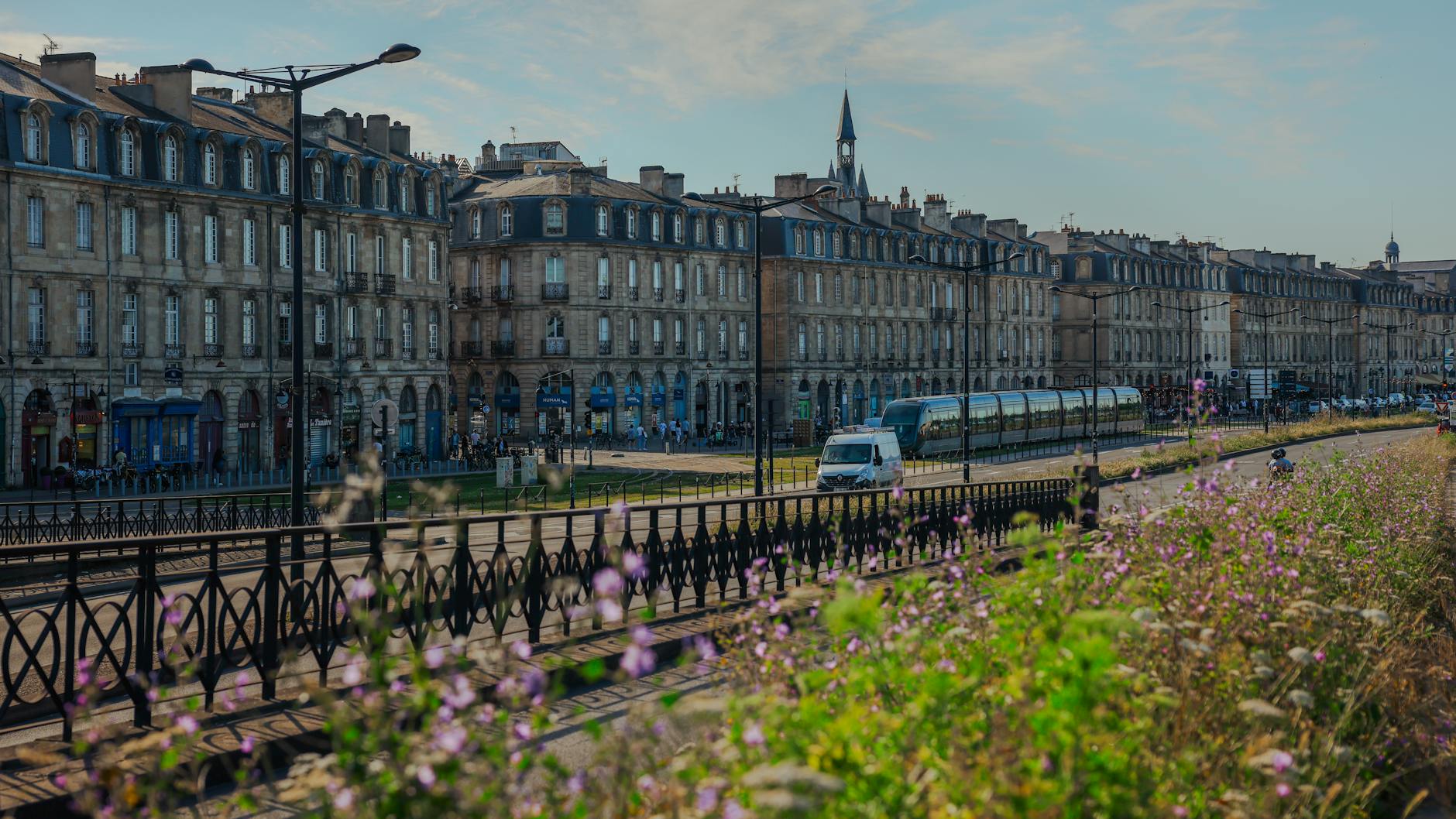
Bordeaux is one of Europe's easiest cities to praise vaguely and use badly. People know it is elegant. They know the wine is famous, the stone facades are handsome, the riverfront is broad, and the city has somehow become fashionable again. Then they arrive and make the same mistake over and over: they treat Bordeaux as if it were only a polished staging ground for the vineyards. The city gets one partial day, perhaps an evening, and the rest of the trip is swallowed by regional ambition.
Start Here
That is the first thing to correct. Bordeaux is not merely where you sleep before Saint-Émilion or Médoc. It is one of France's most complete short urban stays in its own right: a city of long facades, generous public space, river light, good food, strong hotels, neighborhoods with different emotional temperatures, and a pace that feels richer the less you force it. The surrounding wine country matters, obviously. But a stronger trip separates the city from the region instead of trying to make every day perform both functions at once.
This is not a city of sudden shock. Bordeaux builds conviction through proportion. The streets are broad enough to breathe. The facades have confidence without theatrical strain. The quays give the city an unusual amount of horizontal calm. Even the famous sites, like Place de la Bourse and the Miroir d'eau, work not because they are isolated monuments but because they sit inside a larger urban composition that makes sense almost immediately once you begin walking it.
The second mistake travelers make is assuming polish means passivity. Bordeaux can appear smooth enough to suggest that any route will work. That is not quite true. The city changes depending on whether you stay in the historic center, around the Golden Triangle, in Chartrons, or in a more functional station-facing zone. It changes depending on whether you let the river define your movement or only use it as backdrop. It changes depending on whether you give the city one full urban day of its own or break it into fragments around tastings and transport.
Bordeaux is also a city of controlled appetite. Yes, wine matters. Yes, oysters, markets, pastry, and southwestern France all press on the itinerary. But the best Bordeaux trip is not an endless string of "important" consumption. It is an edited experience of urban refinement: one strong base, one day centered on the classical core and riverfront, one day that perhaps introduces wine culture through Cité du Vin or a measured regional extension, and evenings that let the city contract into food, bars, and light rather than more obligations.
When used properly, Bordeaux offers something that many major destinations cannot: elegance without strain. The city does not demand that you conquer it. It asks that you sequence it well. On those terms, it is excellent.
The city in one sentence: Bordeaux is a river-and-facade city with a wine-country halo where the best first trip comes from letting the classical center, neighborhoods, food, and waterfront breathe on their own terms instead of turning every day into an urban-regional hybrid.
Quick Verdict
Best for: couples, solo travelers, first-time southwest France trips, food-and-wine travelers, polished short city breaks, and anyone who likes cities that feel composed rather than noisy.
Not ideal for: travelers who need nonstop dramatic landmarks, people who only want wine-country scenery, or anyone who mistakes urban elegance for lack of substance.
Ideal first visit: 2 to 3 full days.
Minimum worthwhile stay: 2 full days, if one day belongs mostly to Bordeaux itself rather than to out-of-town logistics.
Best overall months: May, June, September, and October.
Best winter case: a dining-led city break with museums, river walks, and lower-pressure urban time.
Biggest planning mistake: trying to make the city and the region happen fully every day.
One thing to prioritize: the base. In Bordeaux, slight improvements in district choice change the whole tone of the stay.
One thing to leave flexible: river and evening time. Bordeaux often looks better and feels more itself as the light changes.
The blunt version: Bordeaux is one of France's strongest polished city breaks if you let it be a city first, and one of the easiest places to flatten into generic wine-tour infrastructure if you do not.
Who Will Love Bordeaux?
Bordeaux suits travelers who enjoy cities that reveal quality through consistency. There are destinations that hit you with one or two unforgettable icons. Bordeaux is not that kind of place. It persuades by accumulation: one broad square, one handsome quay, one quiet hotel arrival, one glass of wine handled without ceremony, one neighborhood that feels wealthier or softer or more local than the last.
Couples often do especially well here because Bordeaux supports a very clean short-break structure. The city offers room to walk without overexertion, to eat well without overperforming, and to enjoy a generally high level of urban comfort. It is easy to build a day that feels elegant in Bordeaux even when you do not do very much.
Solo travelers also tend to do well because the city is highly legible. The waterfront gives orientation, the central districts connect cleanly, and the transit is good enough that you do not feel trapped by geography. A solo day of coffee, riverfront walking, one museum or cultural anchor, one market or neighborhood chapter, then wine and dinner works very naturally here.
Bordeaux is also strong for people who care about how prosperity shapes a city visually. The facades, the civic spaces, the mercantile memory of the port, and the relationship to the Garonne all make Bordeaux feel like a place that understood wealth as urban composition. That gives it a different register from more romantic or more bohemian French cities.
The city is less ideal for someone who wants every hour to feel surprising. Bordeaux is subtler than that. Its rewards are durable rather than explosive.
Bordeaux at a Glance
| Question | Practical Answer |
|---|---|
| Main airport | Bordeaux Airport |
| Best airport public move | Tram line F |
| Airport-to-center timing | about 35 minutes to Hôtel de Ville, 45 minutes to Saint-Jean[1] |
| Best first-time base | historic center or center-adjacent district with river access |
| Best atmospheric first-time base | Golden Triangle / central historic core or Chartrons edge |
| Public transport backbone | tram, walking, selective bus or river shuttle |
| Signature waterfront landmark | Place de la Bourse and the Miroir d'eau |
| Signature cultural wine anchor | Cité du Vin |
| Best card worth knowing | Bordeaux CityPass |
| Best practical day-trip warning | keep city time and vineyard time separate |
| Car needed? | No |
| Currency | Euro |
| Emergency number | 112 |
| Tap water | Safe to drink |
| Power plugs | Type C and E |
2026 Visitor Notes
The Airport Tram Is Now The Obvious Default
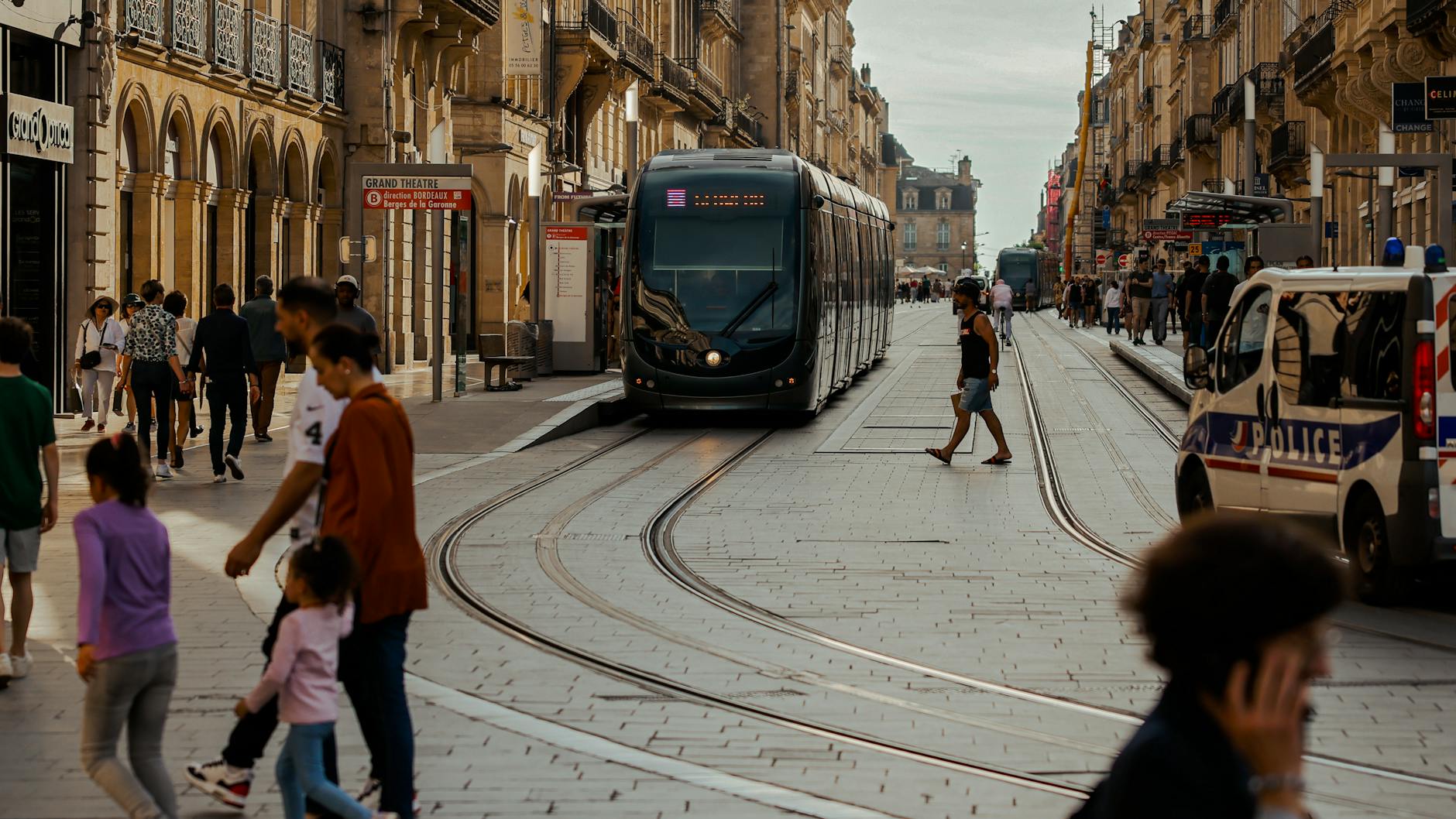
Bordeaux Airport's official page says tram line F connects the airport to Hôtel de Ville in about 35 minutes and to Gare Saint-Jean in 45 minutes, with frequent service from early morning to late evening.[1] That is strong enough that most first-time visitors should treat the tram as the default airport move unless luggage or timing creates a real exception.
Single Transit Pricing Is Easy Enough To Understand
The same airport page notes a single TBM ticket at €1.90 and a pack of ten at €15.70.[1] Bordeaux is not a city where you need a sophisticated transport strategy. You just need to know whether you are walking-heavy or pass-heavy.
The Bordeaux CityPass Is Substantial, Not Token
Visit Bordeaux describes the CityPass as including unlimited public transport plus entry to major museums, monuments, and flagship experiences like La Cité du Vin and Les Bassins des Lumières, in 24h, 48h, 72h, and 96h versions.[2] That makes it worth real consideration for first-timers who plan to do more than wander and dine.
Bordeaux’s UNESCO Status Is A Whole-City Statement
Visit Bordeaux's highlights page notes that the Port de la Lune is a UNESCO World Heritage site and that Bordeaux is unusual in being listed at the scale of an entire urban ensemble rather than a single monument.[3] That matters because Bordeaux is best understood as composition, not as isolated icons.
The Miroir d’eau Is More Than A Photo Stop
Visit Bordeaux's own material on the Miroir d'eau emphasizes its scale, its relationship to the reworked quays, and its role as the central feature opposite Place de la Bourse.[4] That is a useful reminder not to treat it as only a social-media backdrop.
Cité du Vin Deserves Real Time If You Choose It
The official Cité du Vin information page lays out substantial opening-hour blocks through 2026 and says the permanent exhibition typically takes two to three hours.[5] That means it should be treated as a real chapter of the trip, not a quick add-on.
How to Understand Bordeaux
Bordeaux works through five forces.
The first is the riverfront. The Garonne gives the city breadth, reflection, and composure. It is not decorative background. It is the city’s organizing edge.
The second is classical continuity. Much of central Bordeaux persuades through consistent urban form rather than through singular spectacle.
The third is prosperity with restraint. Bordeaux feels affluent, but it usually expresses that through finish and proportion rather than ostentation.
The fourth is wine pressure. The surrounding region is so famous that it constantly tries to pull attention outward. Good trip design resists that pull just enough.
The fifth is district nuance. The difference between the Golden Triangle, Saint-Pierre, Chartrons, and more functional edges of the center matters more than first-timers initially think.
The Five Bordeauxs A Visitor Actually Meets
Waterfront Bordeaux: quays, Place de la Bourse, the Miroir d'eau, and the city seen in broad, reflective perspective.[4]
Classical Bordeaux: elegant facades, squares, and the version of the city that justifies all the adjectives about polish.
Food-and-wine Bordeaux: markets, bars, bistros, and the urban side of the region’s appetite.
Chartrons Bordeaux: a calmer, more design-forward, slightly more local-feeling register of the city.
Cultural Bordeaux: Cité du Vin, museums, temporary exhibitions, and the city beyond pure strolling.[5]
The Main Mental Shift
Do not ask, "What are the top things to do in Bordeaux?" Ask, "Is this a city day or a region day?" Then ask, "Which Bordeaux am I using inside the city?" Waterfront Bordeaux, classical Bordeaux, market Bordeaux, Chartrons Bordeaux. That change improves the trip immediately.
What Bordeaux Does Better Than People Think
Bordeaux is better than many first-time visitors expect at urban calm. Plenty of beautiful cities feel overcompressed or overthemed. Bordeaux often feels spacious enough to let the beauty settle.
It is also stronger than people think at making refinement feel easy. The city can deliver a very polished short stay without requiring extreme effort or luxury spending at every step.
Another underrated strength is how complete a 48-hour trip can feel. You can get architecture, riverfront, food, wine, one major cultural move, and a genuinely finished urban impression in a short window.
The city is also very good at absorbing appetite into ordinary life. Food and wine are clearly important, but they rarely need to overwhelm the whole urban experience.
Finally, Bordeaux does regional prestige without losing city identity better than many wine capitals. It can be itself even with vineyards looming over every itinerary.
Best Time to Visit Bordeaux
Bordeaux is a year-round city, but not a season-neutral one. The quays, terraces, river light, and regional temptation all change with weather.
Best Overall Months
May, June, September, and October are the strongest first-visit windows. The city is active, comfortable to walk, and still well positioned for a measured regional extension if you want one.
Summer
Summer is attractive, but Bordeaux can feel flatter if the trip becomes too heat- and terrace-dependent. A stronger hotel and slightly slower pacing help a lot.
Autumn
Early autumn suits Bordeaux extremely well. The city feels rich, appetite becomes even more central, and the riverfront still works beautifully.
Winter
Winter Bordeaux can be elegant: museums, bars, dining rooms, and lower-pressure daytime wandering. It is less about scenic abundance and more about urban finish.
Spring
Spring is probably the easiest time to understand why Bordeaux has become such a strong city-break candidate. The riverfront, squares, and central districts all feel naturally usable.
Month-by-Month Guidance
January: calm, dining-led, and good for city-only focus. February: still subdued, often very usable. March: transitional, increasingly attractive. April: strong and opening outward. May: one of the best overall choices. June: excellent. July: lively and attractive, but more heat-aware. August: works, though some travelers may prefer slower pacing. September: one of the smartest months to go. October: often ideal. November: moodier, more interior-led, still elegant. December: atmospheric and strong for a refined urban break.
How Many Days You Need
One Day
Enough for a clear first impression of the classical center and waterfront. Not enough for Bordeaux to feel complete.
Two Days
The minimum respectable stay. One day should belong almost entirely to Bordeaux itself. The second can either deepen the city or introduce a measured wine chapter.
Three Days
Ideal for a first visit. This gives you room for one major cultural anchor, one fuller neighborhood day, and either a region excursion or a slower city rhythm.
Four To Five Days
Very good if you want both Bordeaux proper and wine-country logic without rushing either.
One Week
Excellent for a wider southwest France route, provided Bordeaux itself still receives multiple dedicated urban days.
Where to Stay in Bordeaux
Where you stay matters because Bordeaux can feel either quietly luxurious or slightly overfunctional depending on the district.
Fast Answer
For most first-time visitors, stay in the historic center, the Golden Triangle, Saint-Pierre, or a carefully chosen Chartrons-edge stay. Stay near Saint-Jean only if the exact hotel quality justifies the more functional location.
Neighborhood Decision Table
| Traveler Type | Best Area |
|---|---|
| First-time couple | Golden Triangle or polished center |
| Food-and-bar traveler | Saint-Pierre or central historic zone |
| Design-and-river traveler | Chartrons edge |
| Rail-dependent traveler | center or stronger Saint-Jean-adjacent property |
| Quiet polished stay | center edge with river access |
| Repeat visitor | Chartrons or a slightly less obvious central quarter |
Golden Triangle
Usually the strongest all-purpose first answer if the budget fits. You get polish, walkability, and a version of Bordeaux that makes immediate sense.
Saint-Pierre / Historic Core
More intimate, more restaurant-forward, and often excellent for people who want the center to feel active underfoot.
Chartrons
A very attractive choice for travelers who want a softer, more local-feeling Bordeaux with access to the river and contemporary city life.
Saint-Jean Side
Sometimes useful, often more practical than beautiful. Choose it knowingly.
Area Profiles
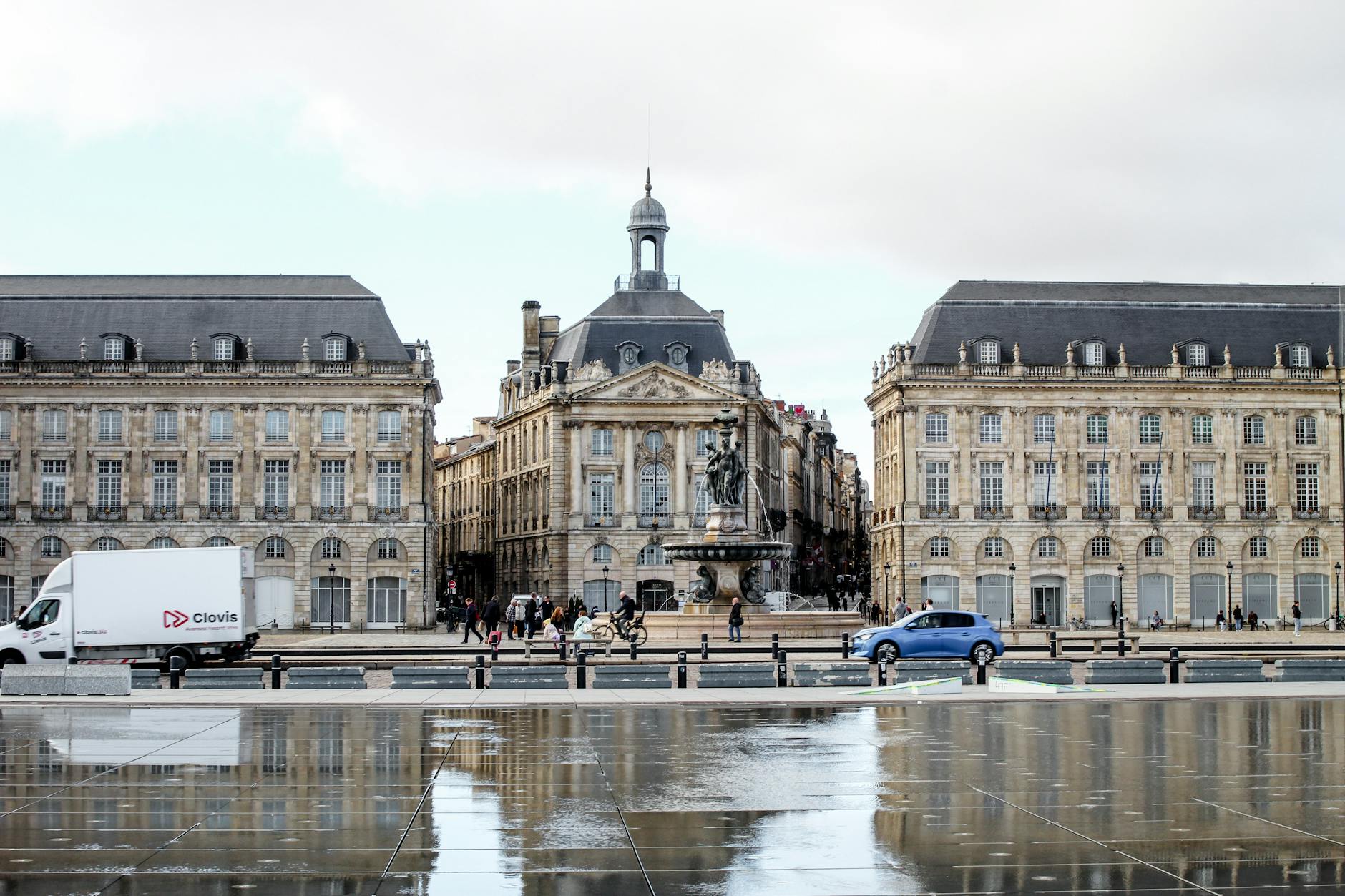
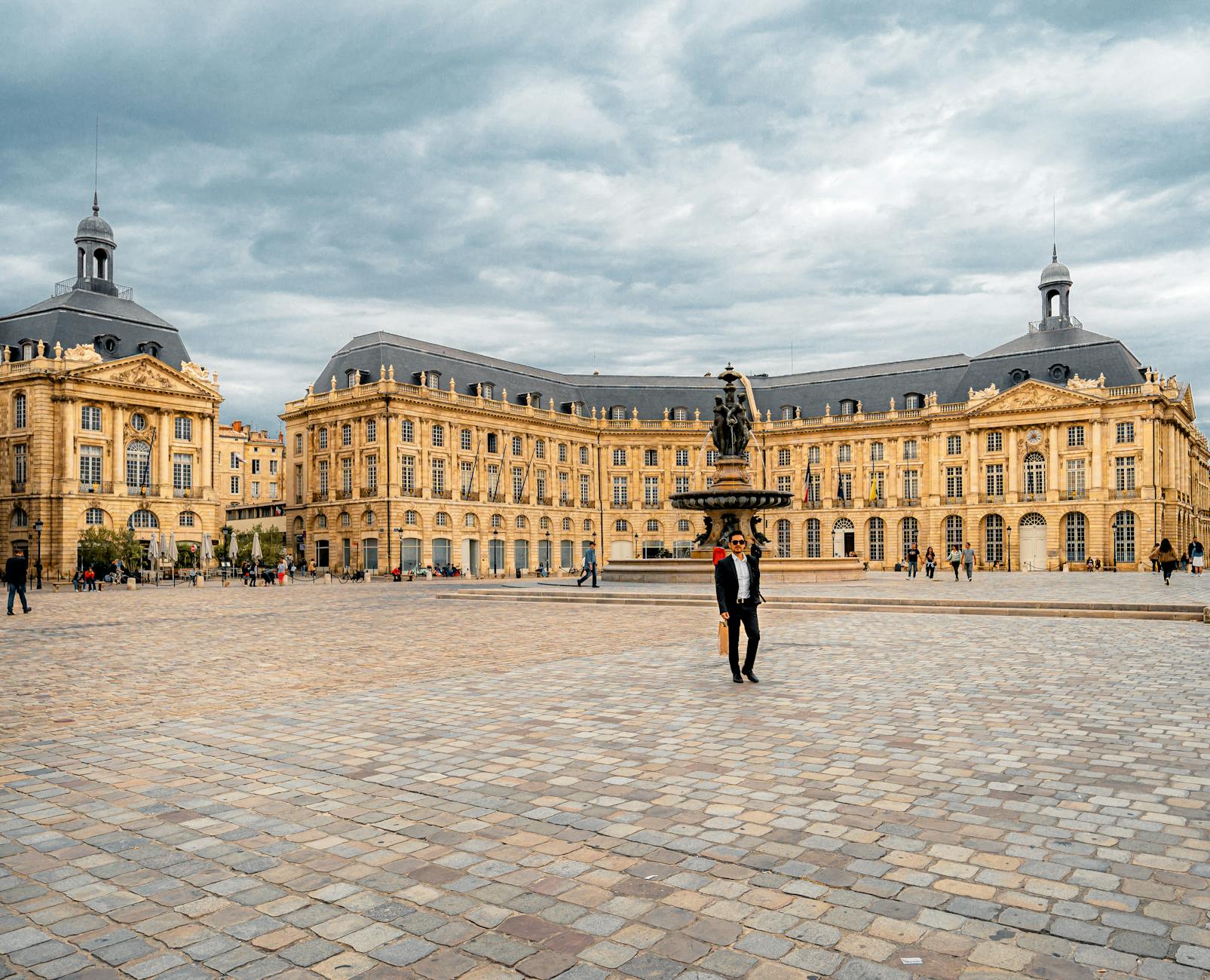
Place de la Bourse And The Quays
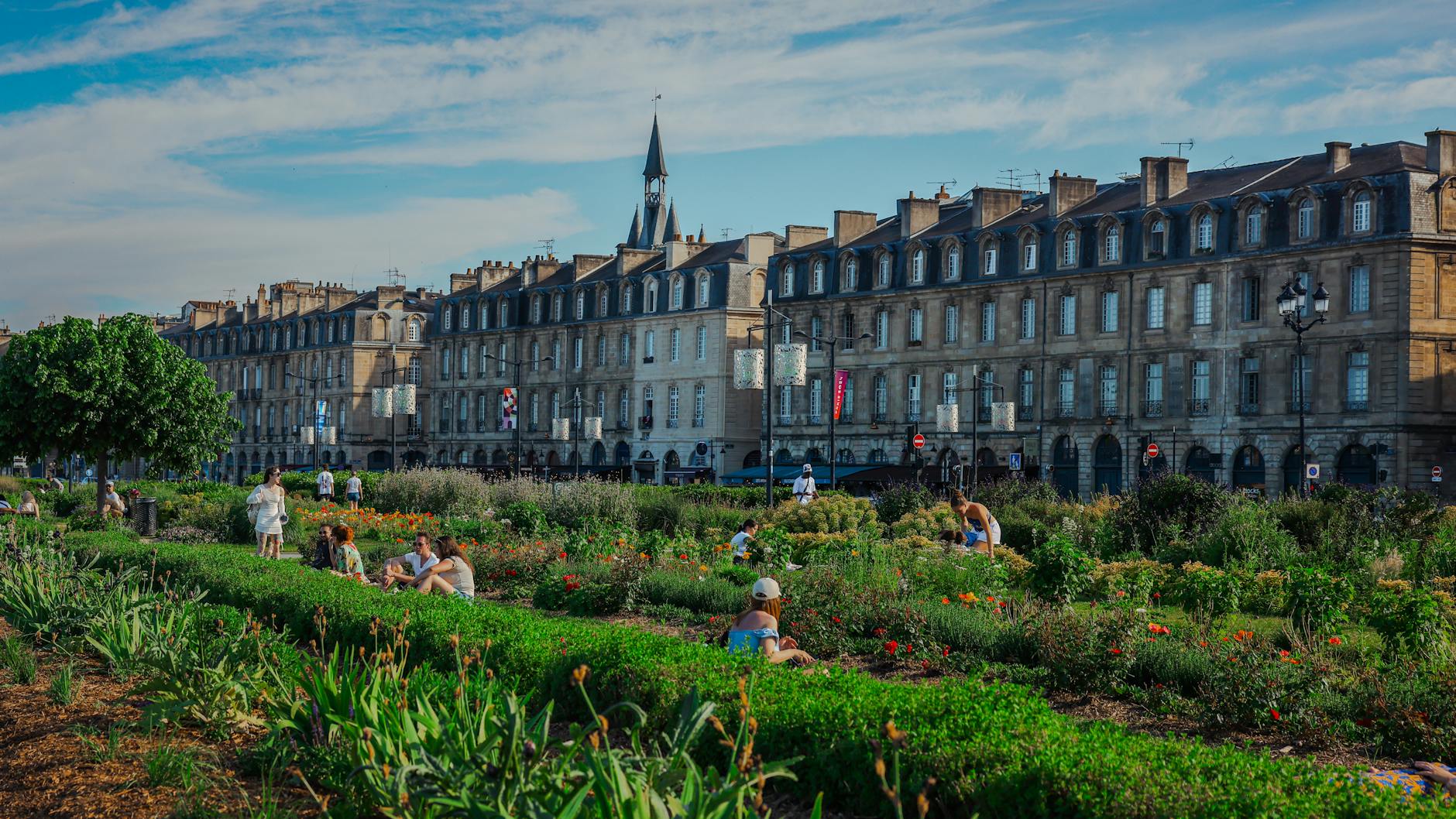
The essential opening image of Bordeaux and still one of the clearest explanations of the city’s scale and self-confidence.[4]
Golden Triangle
The polished, affluent, classically composed Bordeaux that many first-timers imagined without quite knowing the name for it.
Saint-Pierre
Food, walking, old-city energy, and one of the best places to feel Bordeaux at a more human scale.
Chartrons
A slightly more relaxed, design-conscious, and contemporary-feeling version of the city.
Bacalan / Cité du Vin Side
A useful reminder that Bordeaux is not only heritage facades; it also continues to modernize its waterfront identity.[5]
Neighborhood Guide: Where to Explore, Not Just Sleep
Place de la Bourse and quays: the essential first walk, especially in changing light.[4]
Saint-Pierre: one of the strongest food-and-evening districts for first-timers.
Golden Triangle: polished shopping, boulevards, and a more formal version of the city.
Chartrons: galleries, wine bars, calmer streets, and a more local rhythm.
Bacalan: modern waterfront Bordeaux, useful when you want to understand the city beyond its postcard center.
The Best Things to Do in Bordeaux
- Walk the quays and let the riverfront explain the city’s scale.[3]
- See Place de la Bourse and the Miroir d'eau more than once, ideally in different light.[4]
- Give the classical center enough time to work gradually rather than rushing from square to square.
- Use the Bordeaux CityPass if your itinerary genuinely includes several major sights and transit use.[2]
- Treat Cité du Vin as a real half-day urban chapter if wine culture matters to you.[5]
- Build in at least one evening that belongs mostly to dining and bars rather than more sightseeing.
- Use Chartrons or another adjacent district to keep Bordeaux from becoming too formally central.
- If you do a vineyard day, let Bordeaux itself keep a separate day of dignity.
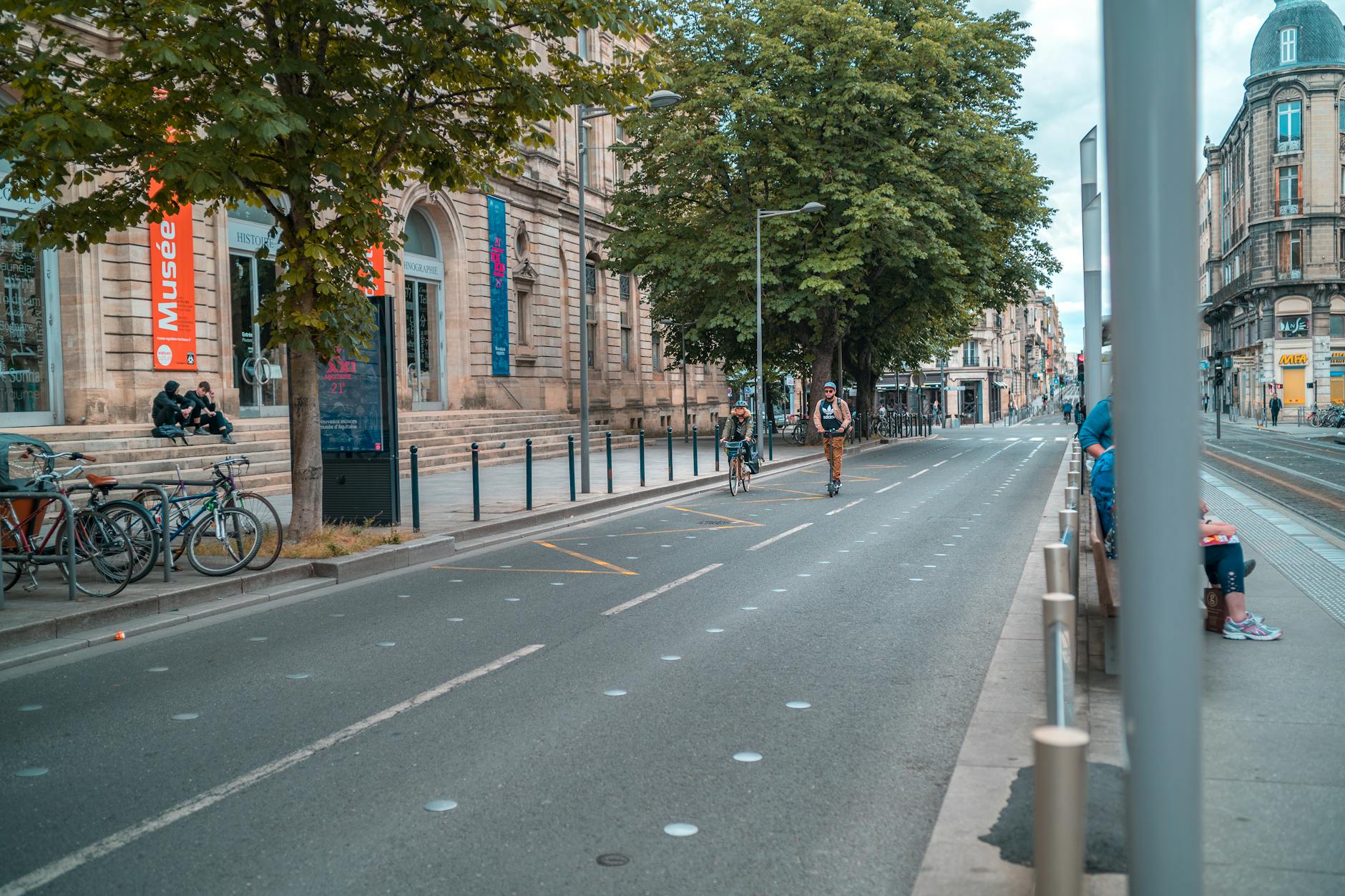
Itineraries
One Excellent Day
Start with the classical center, move toward the quays, spend time around Place de la Bourse and the Miroir d'eau, extend the walk through the riverfront, then spend the evening in a stronger dining district rather than overcomplicating the day.
Two Days
Day one should belong mostly to Bordeaux itself: classical center, waterfront, and neighborhood food. Day two can be either a deeper city day including Cité du Vin or a carefully measured wine-country extension.
Three Days
Use the extra day to separate city and region cleanly: one full Bordeaux day, one region day if desired, and one slower district-and-food day in the city.
Itineraries By Traveler Type
For The Food-And-Wine Traveler
Treat Bordeaux and wine country as separate pleasures. The city is not just a prelude to tasting rooms.
For The First-Time France Visitor
Use Bordeaux as your lesson in French urban refinement outside Paris. Let the city’s polish and ease speak in their own register.
For The Couple Weekend
Prioritize a strong base, one long river walk, one major cultural anchor, and two serious meals rather than trying to “cover” the region.
For The Repeat Europe Traveler
Lean harder into Chartrons, waterfront timing, and the city’s subtler variations instead of only replaying the obvious center.
Food and Drink
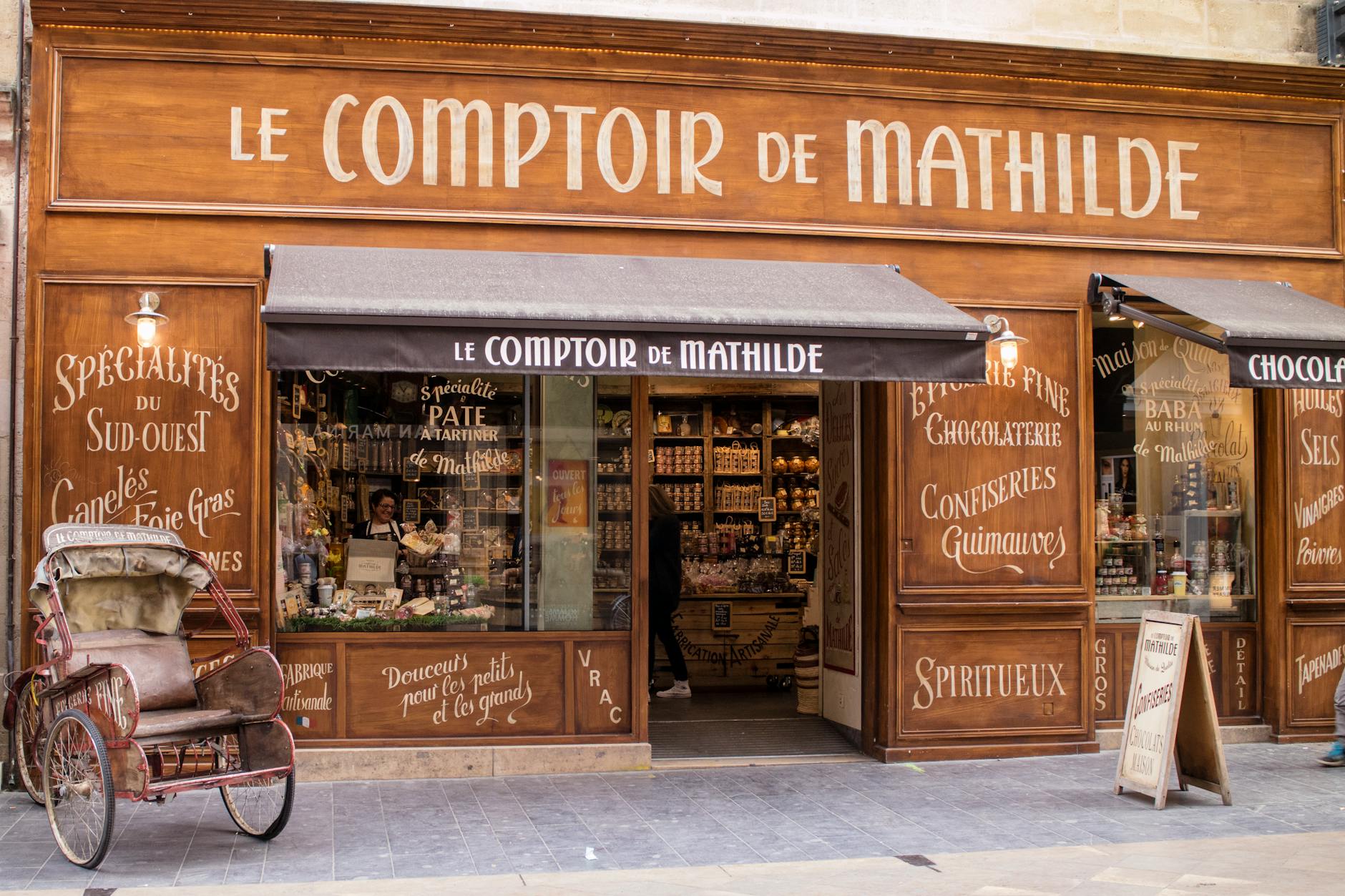
Bordeaux’s food and wine reputation is strong enough to distort the trip if you let it. The best approach is not to chase importance at every sitting. It is to use the city’s very high baseline well. One more ambitious dinner, one strong lunch, one good bar, one market or pastry move, and the rest left loose enough for the city to breathe.
Wine also works best in Bordeaux when it stays contextual. A glass at the right hour in the city can sometimes do more for your understanding than a badly timed rushed chateau day.
Getting Around
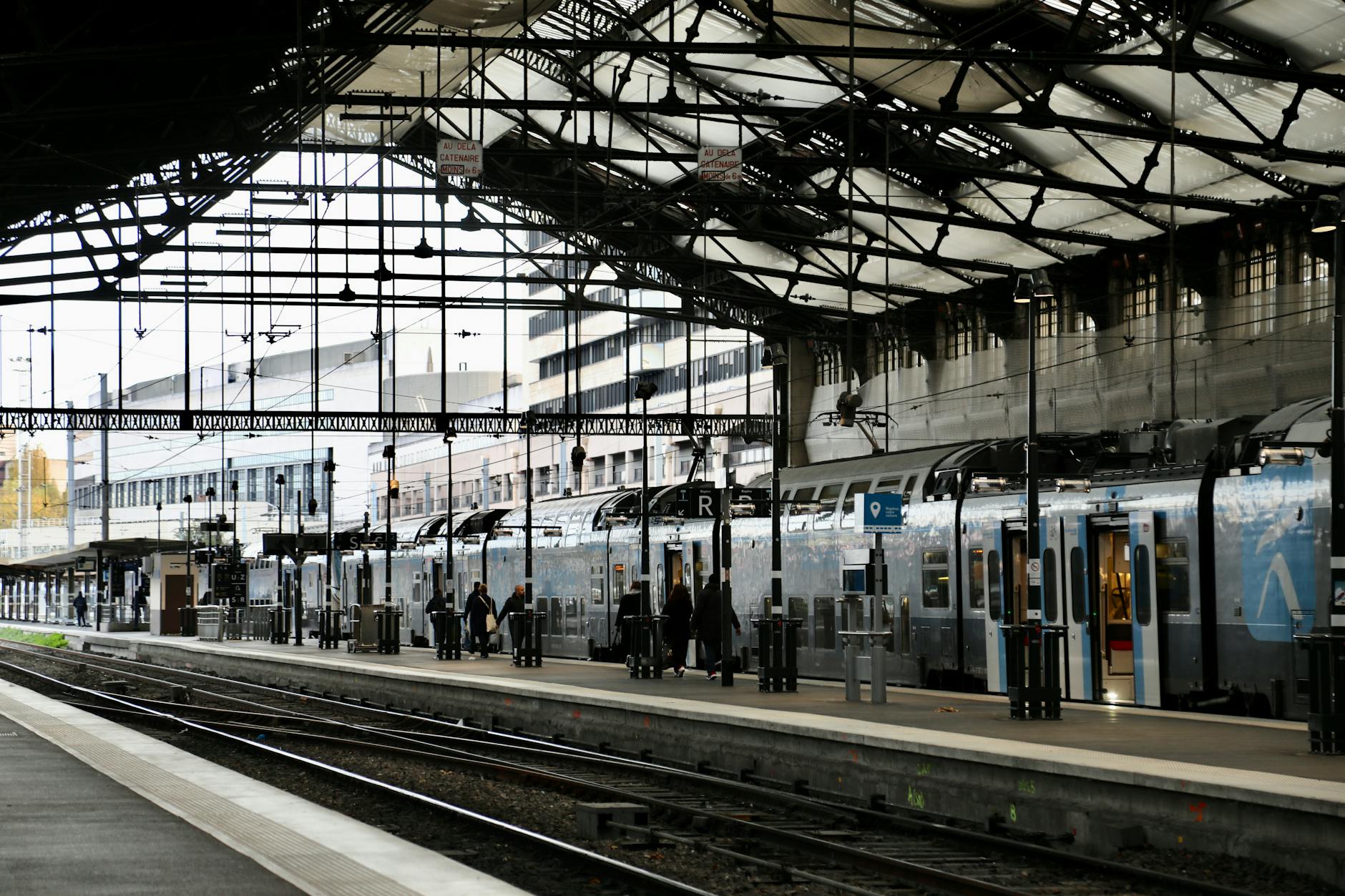
Bordeaux is an easy city to combine with trams and walking. The airport tram now makes arrival simple.[1] The CityPass includes unlimited transport, which may be useful depending on your sightseeing density.[2] But the deeper point is that central Bordeaux wants to be walked. Transit should support the city, not replace it.
Bordeaux The City, Bordeaux The Region, And Why Mixing Them Too Aggressively Weakens Both
Bordeaux suffers from a very specific planning mistake: travelers try to experience it as city and region at the same time. Morning museum, afternoon vineyard, evening back in town, maybe one more bar because the city seems easy. What actually happens is dilution. The city loses its atmosphere, the region loses its depth, and the traveler ends up with a string of transitions.
The better solution is separation. Give Bordeaux a full city day. Give wine country its own day if you care enough. Let dinner in Bordeaux be dinner in Bordeaux, not the coda to a logistical marathon. Once you do that, both experiences improve.
That is the real key to Bordeaux. It is not a weak city made valuable by its surroundings. It is a strong city whose surroundings require discipline.
Common Mistakes
- Treating Bordeaux as only a wine base.
- Staying in a functional district without a real reason.
- Trying to merge city sightseeing and vineyard touring into one overfilled day.
- Seeing the waterfront once and moving on too quickly.
- Underusing Chartrons or other softer-edged districts.
- Overinvesting in “important” meals instead of letting the city’s baseline quality work.
- Mistaking composure for thinness.
My Blunt Advice
Give Bordeaux a full day of its own. Walk the quays twice if you can, in different light. Stay somewhere a little better than your functional instincts first suggest. Use the tram from the airport. If wine country matters deeply, give it a separate day and stop trying to make Bordeaux multitask. Let the city be elegant, steady, and sufficient.
Bordeaux does not usually win through one dramatic reveal. It wins because, by the second day, you realize almost every part of it has been quietly working in your favor. That is a serious strength.
Where Bordeaux Fits in a France Trip
Bordeaux is one of the best cities in France for travelers who want polish without Paris scale. That matters because many routes through the country become top-heavy very quickly. Paris can dominate attention. The south can pull the trip toward scenery. The coast can flatten everything into leisure. Bordeaux gives you a different center of gravity: urban, elegant, food-literate, and regionally important without behaving like a capital.
In a broader France itinerary, Bordeaux works best as either a western anchor or a rebalancing chapter. If you have already done larger, more demanding cities, Bordeaux can feel like an exhale that is still culturally serious. If you are moving through the southwest, it can be the point where food, architecture, and regional identity come into sharper urban form. If you are pairing cities rather than building a grand tour, Bordeaux often combines well with either Paris for contrast or the Basque/southwestern corridor for continuity.
It is less useful if you want a city whose whole value lies in famous single monuments. Bordeaux is not built that way. The UNESCO ensemble, the river edge, the dining rooms, the market life, and the hotel logic all matter together.[3] You do not come here to stand beneath one world-defining icon and feel done. You come here to inhabit quality.
This is also why Bordeaux is stronger than travelers sometimes expect in the middle or late stages of a long trip. It knows how to restore standards without exhausting you. A good hotel, a coherent center, a tram that works, and a city that looks better the more calmly you use it: those are powerful virtues once constant novelty starts to lose its force.
Bordeaux Versus Lyon
The comparison many travelers need is Bordeaux versus Lyon. Both cities are strongly associated with food, both carry a sense of urban wealth and seriousness, and both are often chosen by travelers who want French city life outside Paris. But they are satisfying in different ways.
Lyon is denser, more topographically dramatic, and more explicitly historical in the way it presents itself. It feels like a place that wants you to understand its layers. Bordeaux is smoother. The facades align, the riverfront stretches, and the city persuades less by contrast than by continuity. If Lyon can feel like a city of chapters stacked on top of each other, Bordeaux often feels like one long beautifully controlled sentence.
Food culture also lands differently. Lyon can feel more forcefully gastronomic, almost pedagogical in the way it asks to be eaten. Bordeaux is more mercantile and liquid. Wine hovers over everything, but good trip design prevents it from swallowing everything. Meals in Bordeaux often succeed not through maximal intensity but through fit with the day.
Travelers who love Lyon because it feels layered, substantial, and urban may still love Bordeaux, but they should not expect the same type of revelation. Bordeaux is quieter. Its power comes from finish. It often improves the more you stop asking it to be dramatic.
First-Time Visitors Versus Repeat Visitors
Bordeaux is an excellent first-visit city because it is so immediately readable. You can arrive, orient to the river, understand the center, and begin enjoying yourself fast. That is a real advantage, especially for shorter trips. But the ease of entry creates a subtle risk: first-timers often confuse early clarity with total understanding.
On a first trip, people naturally focus on the central visual argument. The quays, Place de la Bourse, the Miroir d'eau, the old core, a nice dinner, perhaps Cité du Vin, perhaps a tasting or regional extension.[4][5] That is already a strong trip. But repeat visitors usually discover that Bordeaux has more internal variety than the postcard reading suggests.
That is when Chartrons starts to matter more. That is when hotel placement becomes more than a practical detail. That is when the difference between a city-first day and a wine-first day starts to feel like the defining quality of the trip rather than a scheduling question. Repeat visitors also learn that Bordeaux’s pleasures are cumulative. A second walk matters. A second evening matters. The city gets better when you stop assuming you must be somewhere else tomorrow morning.
The best first-time traveler can borrow this mindset immediately. Do not overbuild the trip just because Bordeaux makes movement easy. Let some of the quality come from returning, not only from advancing.
Cooler-Season Bordeaux Versus Summer Bordeaux
Summer makes Bordeaux easy to admire and slightly harder to pace. The riverfront is full, the terraces are attractive, the long facades glow, and wine-country temptation increases because the weather seems to justify everything. That can produce a beautiful trip, but it can also lead to overprogramming and a shallower city reading.
Cooler-season Bordeaux often clarifies what the city really is. Without relying on warm-weather riverside sociability, the urban composition has to stand on its own. Usually it does. The center feels sharper, museum time feels natural, lunches become more important, and evening dining can take on greater weight because it is no longer competing with the endless lure of outdoor wandering.
Autumn is especially strong because Bordeaux is one of those places where appetite and atmosphere intensify together. The city can feel richer in cooler air. Winter works too, particularly for travelers who like composed city breaks with less pressure to maximize scenic abundance.
Shoulder season remains the easiest recommendation because it lets the city and the river stay visible without pushing the trip too far toward heat or terrace dependency. But travelers who can only go in winter should not assume they are getting a lesser Bordeaux. They are often getting a more legible one.
Why One Proper Bordeaux Day Matters
Bordeaux is extremely vulnerable to partial use. Because it is tidy, elegant, and easy to move through, many visitors treat it as if half-days will somehow add up to a whole impression. Arrival afternoon plus departure morning plus a post-tour dinner, perhaps. That almost always undersells the city.
One proper Bordeaux day changes everything. A real city day means you are not treating the center as filler around vineyard movement. It means the waterfront can function as structure rather than scenery. It means the classical core has time to persuade. It means lunch can belong to the city instead of to convenience. It means evening can arrive naturally rather than as the exhausted end of a logistics marathon.
This matters because Bordeaux’s strength is not concentrated in one sight. Its strength lies in how the pieces support each other. The calm of the quays, the measured grandeur of the center, the shift toward a softer district like Chartrons, the better restaurant decision because you are not rushing, the second look at the river in later light. Those are not add-ons. They are the city.
Travelers who protect one proper Bordeaux day usually leave with a much stronger sense of place. They understand that the city was not merely handsome. It was coherent.
Why the Base Matters More Than Visitors Expect
Bordeaux is not huge, but it is one of those cities where small differences in hotel position change the emotional register of the whole stay. This is why "central enough" is not really a sufficient standard. A room near the right part of the center can make Bordeaux feel polished, quiet, and deeply easy. A room chosen only for price or station convenience can make the same trip feel functional and oddly thin.
The ideal base in Bordeaux lets you do several things without strain. It makes the river easy to revisit. It keeps good evening streets within relaxed walking distance. It preserves the option of a slower morning. It gives you some insulation from noise without severing you from the center’s urban pleasure.
This is also a city where a slightly better hotel often pays off more than one extra attraction. The reason is not luxury for its own sake. It is that Bordeaux is a city of finish. If your room, block, and return path support the city’s tone, the whole trip becomes more convincing.
Poor base logic in Bordeaux usually takes one of three forms: staying too functionally near Saint-Jean without a compelling reason, staying in a technically central but emotionally flat stretch, or paying for prestige without ensuring that the actual hotel quality matches the address. The right base removes all of those problems before the trip really begins.
Day Bordeaux Versus Evening Bordeaux
By day, Bordeaux can feel almost textbook in its elegance. The stone reads clearly, the quays open the city out, the center feels prosperous without aggression, and the whole place is easy to respect. This is when first impressions form, and they are often favorable immediately.
By evening, the city usually becomes more persuasive. The riverfront softens, facades hold light differently, dinners feel more integral, and the wealth of the city seems less formal and more lived in. Bordeaux’s emotional register often improves as the day loses sharpness.
This is important because some travelers give almost all of their attention to Bordeaux’s daylight beauty and then treat the evening as an afterthought. That wastes one of the city’s strengths. Bordeaux is not a place where night obliterates day, but it is a place where evening completes the argument.
The ideal evening here is rarely overcomplicated. A return to the river, a drink in the right district, a serious dinner, and a second walk are often enough. Bordeaux does not require theatrical nightlife to feel fulfilled. It requires a clean finish to the day.
Why Wine Country Should Not Own the Whole Trip
Wine country is the most obvious external pressure on a Bordeaux itinerary. The fame is real. The possibilities are real. The temptation to build the whole trip around excursions is real. But the strongest Bordeaux stays resist letting the region become the sole source of prestige.
A city that exists only as the place you come back to after vineyards is not really being used as a city. It is being used as infrastructure. That may still be pleasant, but it is a weaker use of one of France’s most complete urban short breaks.
The issue is not whether to do a wine-country day. The issue is whether the city keeps enough dignity in the schedule. If every day starts early, ends late, and treats Bordeaux as a corridor between tastings, then the city’s actual virtues never get time to accumulate. The quays become ornamental. The center becomes background. Dinner becomes recovery rather than urban pleasure.
The better approach is clean separation. One city day. One region day if desired. Another city day if you have it. Bordeaux becomes stronger, and so does the wine experience, because neither has to impersonate the other.
Why Food Is Structural, Not Decorative
Bordeaux is a city where food and wine can either sharpen the whole stay or turn it into a self-important blur. The difference lies in whether they are treated structurally.
Used well, food and drink set the city’s tempo. A good lunch can preserve the afternoon. A proper wine bar can make the evening feel specifically Bordelais rather than generically chic. A market or pastry stop can help the day feel inhabited instead of managed. Dining is not separate from Bordeaux’s elegance; it is one of the ways that elegance becomes usable.
Used badly, food and wine become obligation. Too many "must-do" places, too much emphasis on importance, too much pressure to turn every meal into a statement. That is how travelers end up tired in a city that is actually built to make them feel composed.
One of Bordeaux’s real gifts is its high baseline. You do not need every meal to be monumental. A few well-chosen moments, allowed to sit inside a coherent day, usually work better than a parade of prestige.
Why Bordeaux Often Works Better Than It Sounds
Bordeaux sometimes suffers from its own reputation for elegance. Because people expect it to be polished, they assume it will also be somewhat generic. Because wine is so famous, they assume the city will be secondary. Because it photographs beautifully, they assume the experience may not run much deeper than the image.
Then the city often exceeds the summary. It turns out to be more complete, more walkable, and more satisfying as a place to stay than the reputation suggested. The elegance is real, but it is not empty. The wine halo is real, but it does not erase the city. The riverfront is beautiful, but it also works.
This is one reason Bordeaux can pleasantly surprise even experienced travelers. It does not need to be messy or difficult to feel substantial. Its virtues are quieter, but they are very durable.
Why Bordeaux Often Improves on the Second Visit
First visits to Bordeaux are often very successful, but they can also be a little obvious. Travelers do the right riverfront walk, the right central streets, the right dinner, maybe one cultural anchor, maybe one regional tasting. They leave impressed. Then, on a return, they often discover that the city has more subtle room than they realized.
The second visit is where people tend to stay better, move less, and divide city and region more intelligently. They become more selective about where to eat, more interested in district feel, and less concerned with symbolic coverage. Chartrons can matter more than another pass through the most famous square. A slower quay walk can matter more than another famous glass.
This does not mean Bordeaux is weak on a first trip. It means that the city belongs to the class of destinations whose second visit often feels more personal because the first visit already established trust. Once the obvious value is settled, the quieter value can surface.
How Bordeaux Changes Over the Course of a Stay
On arrival, Bordeaux usually feels exactly as refined as promised. That is reassuring, but it can also make the city seem a little too easily grasped. Beautiful facades, good tram, broad quays, competent hotel arrival, dinner in a polished room: all of that lands quickly.
The real change usually comes on the second full day or the second strong walk. The city starts feeling less like an attractive set and more like a place with internal balance. You know how to use the waterfront. You know which district suits your evenings. You know whether you want more formal center or softer Chartrons. You know whether wine country is clarifying the trip or distracting from it.
That is when Bordeaux stops reading merely as elegant and starts reading as sufficient. It does not need to shout. It needs a little time. The best stays allow exactly that.
Source Notes
- 1. Bordeaux Airport, "Tram." https://www.bordeaux.aeroport.fr/en/tram
- 2. Visit Bordeaux, "Bordeaux CityPass" and "The Bordeaux CityPass: Your Best Companion for a City Break." https://www.visiter-bordeaux.com/en/bordeaux-citypass.html and https://www.visiter-bordeaux.com/en/bordeaux-citypass-your-best-companion-city-break.html
- 3. Visit Bordeaux, "Highlights of Bordeaux." https://www.visiter-bordeaux.com/en/discovering-bordeaux/highlights-bordeaux
- 4. Visit Bordeaux, "Visite guidée des sous-sols du Miroir d'eau." https://www.visiter-bordeaux.com/fr/decouvrir-bordeaux/les-dessous-du-miroir-deau.html
- 5. Cité du Vin, "Opening hours, access and prices." https://www.laciteduvin.com/en/info
- 6. TBM, "Tarifs et abonnements." https://webviews.infotbm.com/fr/tarifs-et-abonnements.html