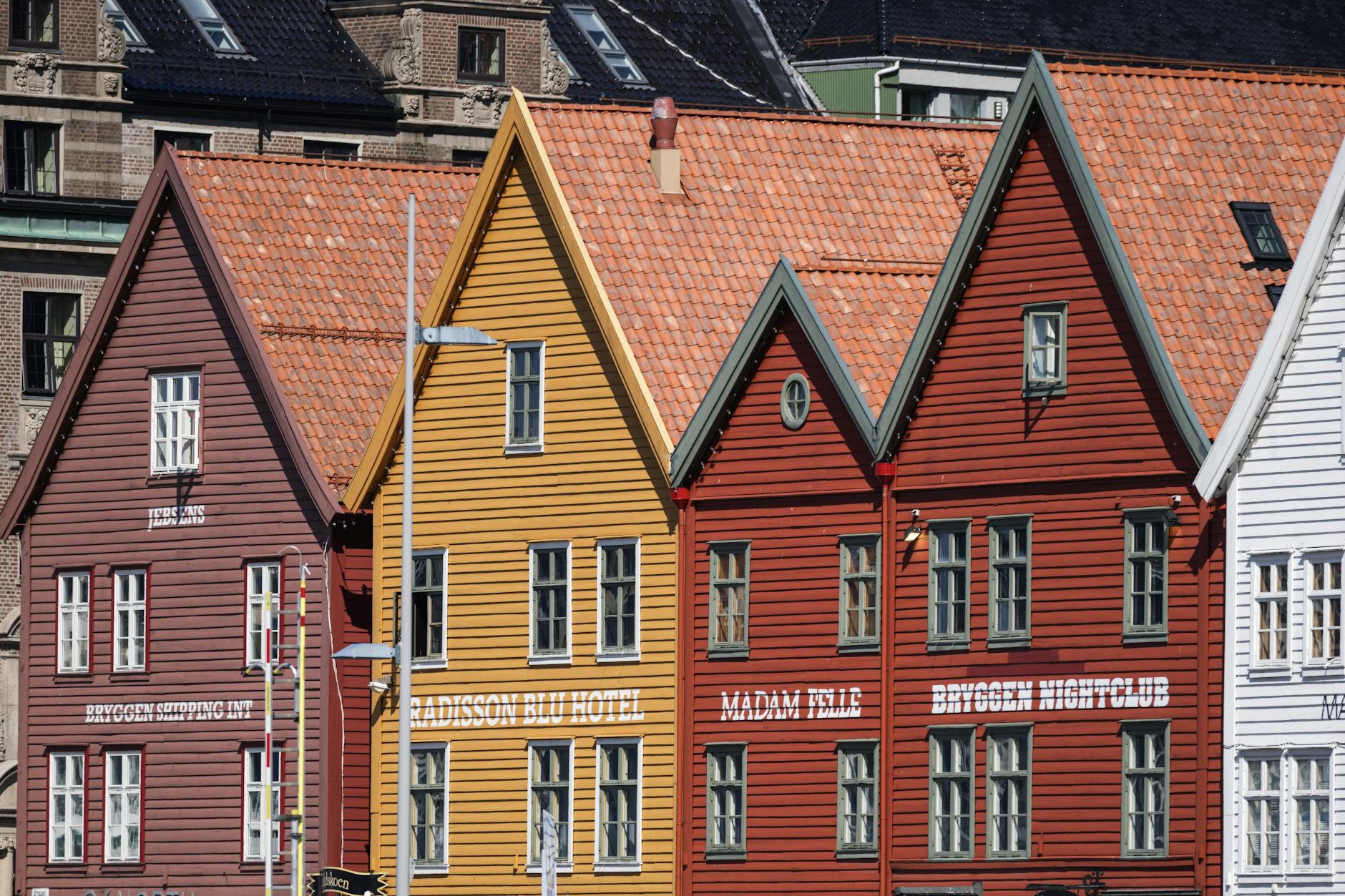
Bergen is one of Europe's easiest cities to use badly. The first reason is visual. The harbor, the timber facades, the mountain walls, and the wet northern light all create an immediate sense that the city has already explained itself. The second reason is commercial. Bergen is constantly sold as a fjord gateway, which is true, but dangerous. Once a city gets described mainly as the jumping-off point to somewhere else, travelers start treating it like a waiting room with scenery.
Start Here
That is not what Bergen deserves. This is one of northern Europe's most satisfying smaller-city stays when the visitor understands what kind of city it actually is. Bergen is a harbor city, a rain city, a hillside city, and a city built out of medieval trade memory, maritime wealth, and daily life that still feels shaped by water and weather. It can be beautiful in sunshine, but it does not depend on sunshine. Some of its strongest moods arrive with cloud, slick stone, sea air, and a feeling that the city is being read through weather rather than despite it.
The weak Bergen trip is very easy to recognize. Someone walks Bryggen once, scans the fish market, rides one viewpoint if the weather behaves, maybe squeezes in a fjord excursion, and leaves feeling vaguely pleased but not deeply changed. The stronger Bergen trip is slower, more harbor-aware, more district-aware, and less obsessed with "covering" things. It uses the city as a real place: one strong base, one weather-smart rhythm, one or two substantial cultural stops, one serious meal, one proper waterfront walk, and enough time for the city to feel inhabited rather than merely admired.
Bergen is not large, but it is not negligible. Hills, rain, cruise timing, district choice, and your relationship to the harbor all matter. It is a city where atmosphere is not an extra reward. Atmosphere is the main event.
The city in one sentence: Bergen is a compact but consequential harbor city where the best trip comes from respecting weather, topography, and maritime history instead of treating the city as a postcard between airport transfer and fjord excursion.
Basic data
| Population | About 290,000 |
|---|---|
| Area | 465 km2 |
| Major religions | Christian heritage with a strongly secular contemporary public culture |
| Political system | Municipality inside a parliamentary constitutional monarchy |
| Economic system | High-income mixed economy led by maritime industries, energy services, tourism, education, and culture |
Quick Verdict
Best for: couples, solo travelers, shorter Norway routes, maritime-history travelers, food travelers who like seafood and cold-water atmosphere, photographers, walkers who can handle slopes, and first-time Scandinavia visitors who want a city with personality rather than scale.
Not ideal for: travelers who need big-city cultural density every hour, people who hate rain enough that it ruins their mood, or anyone who thinks Bergen should function like a flat, easy promenade city.
Ideal first visit: 2 to 3 full days.
Minimum worthwhile stay: 2 full days, if one of them is centered on Bergen itself and not entirely surrendered to a fjord day trip.
Best overall months: May, June, September, and the brighter parts of early October.
Best winter case: December for moody harbor atmosphere and lights, or late winter for a quieter museum-and-city break.
Biggest planning mistake: acting as though the city is so small that hotel location, weather timing, and district logic barely matter.
One thing to prioritize: the base. In Bergen, the right hotel district can make the city feel graceful; the wrong one can make it feel colder, hillier, and more inconvenient than it really is.
One thing to leave flexible: mountain time. A viewpoint in the right conditions can define the trip. The same move in poor visibility can become a shrug with a queue attached.
The blunt version: Bergen is one of the highest-return smaller cities in Europe if you let it be a city, and one of the easiest places to flatten into tourist wallpaper if you do not.
Who Will Love Bergen?
Bergen suits travelers who respond to cities with a strong physical identity. You feel this place almost immediately through the harbor basin, the mountain walls, the damp air, and the way streets seem to tuck themselves between water and slope. If you like cities that remain aware of landscape, Bergen has a lot to give.
It is especially good for couples because it offers one of the cleanest combinations in northern Europe of scenery, walkability, hotels, seafood, and atmosphere. A very good Bergen day is easy to imagine: breakfast in a strong hotel, harbor walking under shifting light, one serious museum or historical site, a mountain move if the weather allows, and dinner in a room that feels warmed against the weather rather than detached from it.
It also works well for solo travelers. Bergen is legible, compact, and emotionally generous. There is enough to do, enough terrain change, and enough public-space texture that walking alone rarely feels thin. A city can be small without being socially awkward, and Bergen clears that bar comfortably.
Travelers interested in history also do well here, because the Hanseatic layer is not abstract. Bryggen is not just picturesque timber frontage. It is the visible residue of trade networks, fire, rebuilding, and a maritime-commercial culture that shaped the city for centuries. Travelers who want to understand why Bergen looks and feels the way it does have a lot to work with.
The city is less ideal for travelers who need nonstop acceleration. Bergen has nightlife, culture, and strong restaurants, but it is not trying to overpower you. It is not Oslo on a smaller scale and not Copenhagen in rainy miniature. Its pace is steadier, more harbor-led, and more dependent on mood than on constant novelty.
Bergen at a Glance
| Question | Practical Answer |
|---|---|
| Main airport | Bergen Airport, Flesland (BGO) |
| Best public airport move | Bybanen light rail for many central stays |
| Approximate airport-to-center timing | About 45 minutes by light rail |
| Best first-time base | Vågen / Bryggen edge or central Bergen near the harbor |
| Best atmospheric base | Bryggen side, harbor edge, or Nordnes-adjacent central stay |
| Best food-and-evening zone | Central Bergen with easy access to Skostredet and harbor-side streets |
| Car needed? | No |
| Public transport operator | Skyss |
| Signature historic district | Bryggen |
| Signature easy mountain move | Fløyen |
| Best all-weather cultural anchor | KODE or the Bryggen museum cluster |
| Biggest practical variable | Weather |
| Emergency number | 112 |
| Tap water | Safe to drink |
| Currency | Norwegian krone |
| Power plugs | Type C and F |
2026 Visitor Notes
The Airport Arrival Is Better Than Many Small-City Arrivals
Bergen Airport is connected to the city by the Bybanen light rail, and official guidance puts the trip to the city center at roughly 45 minutes.[1][2] That is good enough that many first-time visitors do not need to begin with taxi arithmetic. It also means the value of a central hotel is real, because a clean airport-to-tram-to-hotel arrival is one of the quiet pleasures of using Bergen well.
The Bergen Card Can Be Smart, But Only On The Right Trip
The Bergen Card covers public transport in the city area and includes admission or discounts across a range of museums and attractions.[3] That can be very useful, but only for a museum-forward or transport-active day. Like many city cards, it is best used deliberately, not purchased out of vague civic optimism.
Fløyen Is Easy, Which Means Timing Matters
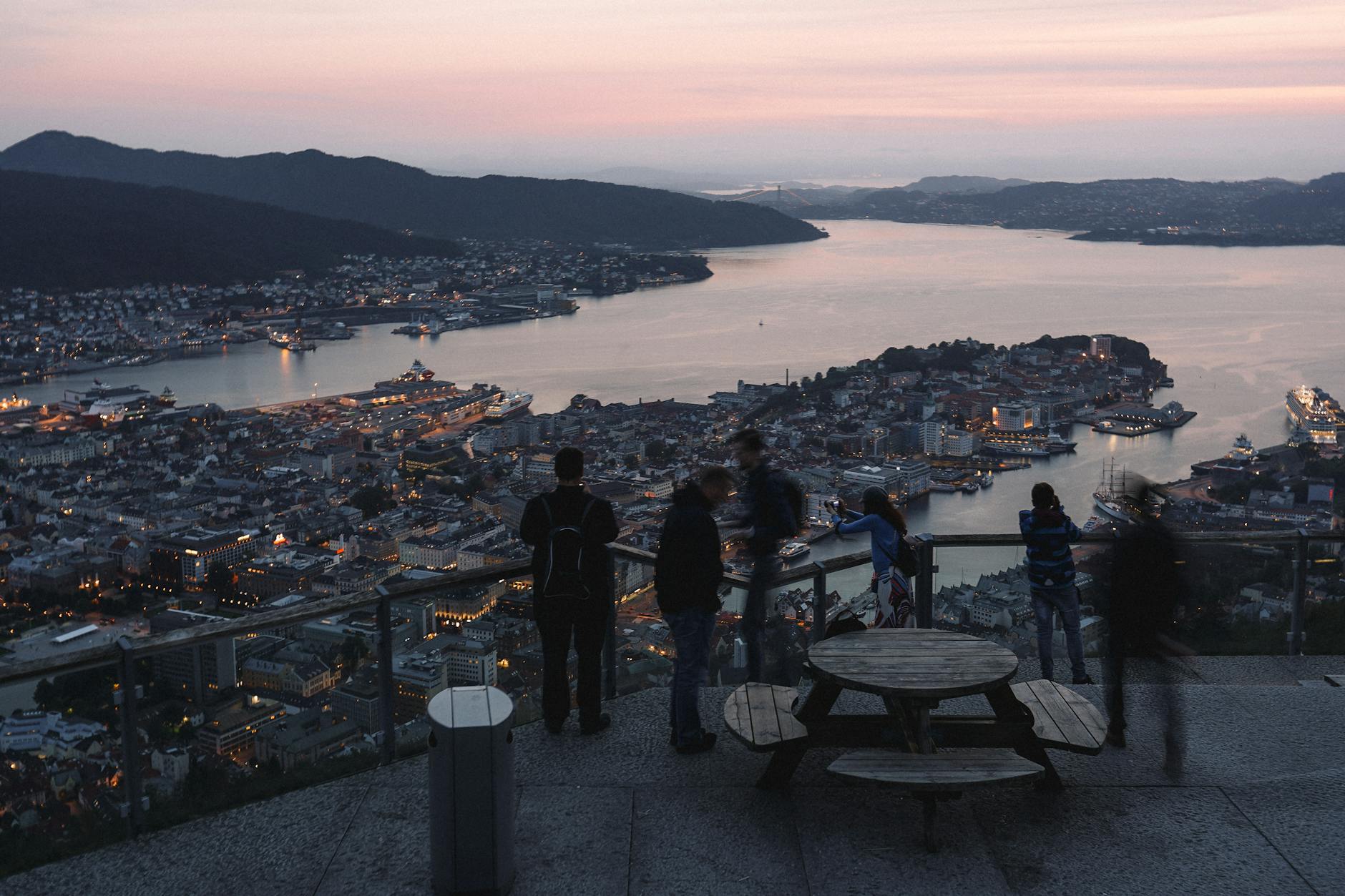
The Fløibanen funicular is one of Bergen's simplest signature moves, and that simplicity is part of the problem. Everyone knows it, so queues and timing matter.[4] Go early, go later, or go in weather that filters out casual indecision. The right Fløyen moment can be excellent. The wrong one can feel over-obvious.
Bryggen Is Not Just The Picture
Bryggen is a UNESCO World Heritage site and still the city's most recognizable visual identity, but it rewards more than surface-level admiration.[5] If you only photograph the facades and keep moving, you miss much of the point. The lanes, the sense of trade history, and the feeling of repeated rebuilding matter.
KODE Is Stronger Than Many First-Timers Expect
KODE is not a minor rain plan. It is one of the more serious cultural reasons to give Bergen real city time, with art, design, music, and several museum buildings spread across central Bergen.[6] On a wet day, this matters a lot.
The Fish Market Is Better As A Scene Than As A Strategy
The fish market remains one of Bergen's most obvious central attractions and one of the easiest places to mistake visibility for value.[7] It is worth seeing as part of the harbor atmosphere. It is not automatically the best place to organize your food life.
Rain Is Not Bad Luck Here
Official tourism material does not hide Bergen's relationship to rain, and neither should you.[8] The city can be excellent in wet weather if you plan accordingly. The mistake is not getting rained on. The mistake is building a trip that collapses emotionally the moment the pavement shines.
How to Understand Bergen
Bergen works through five forces.
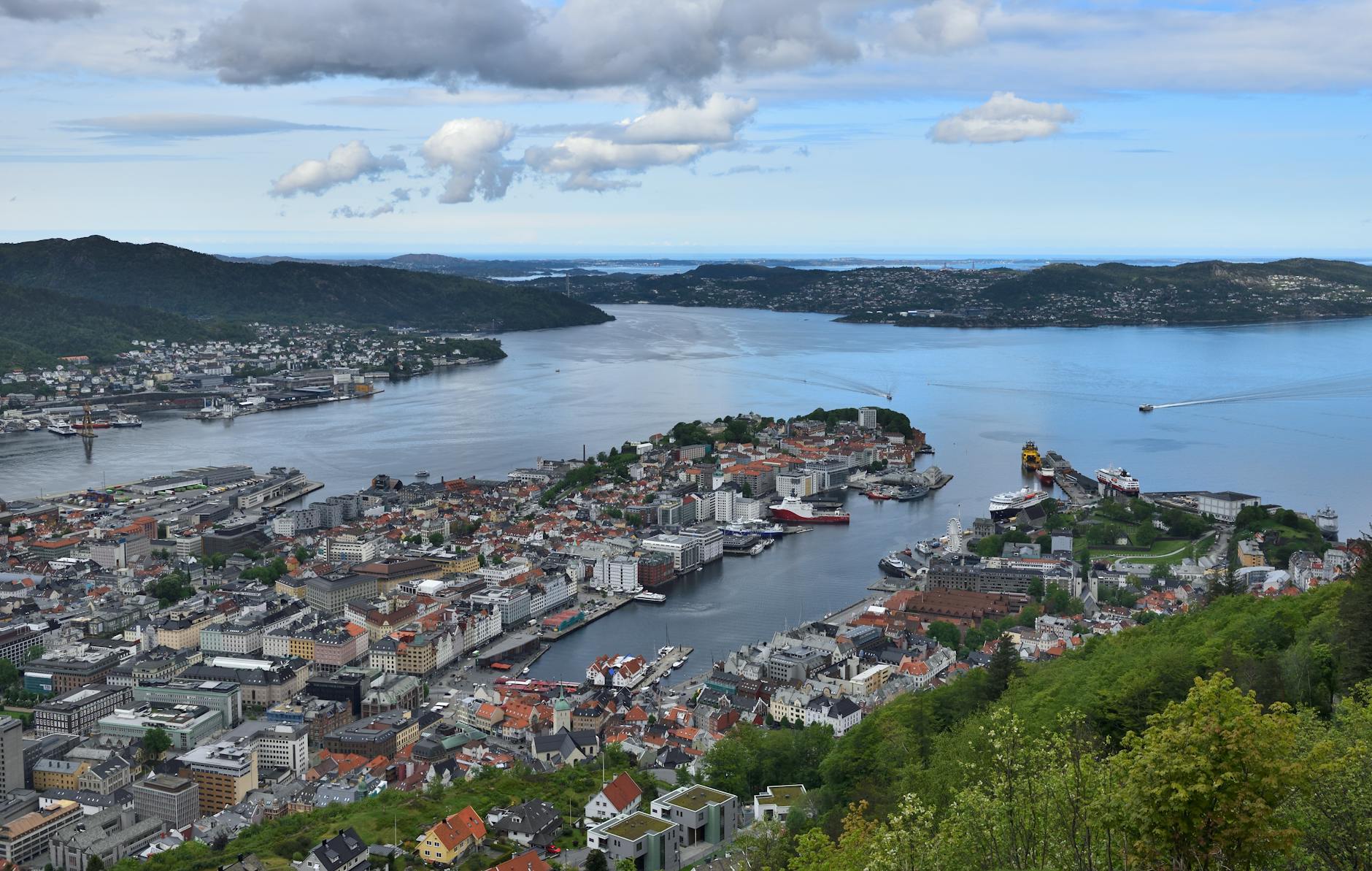
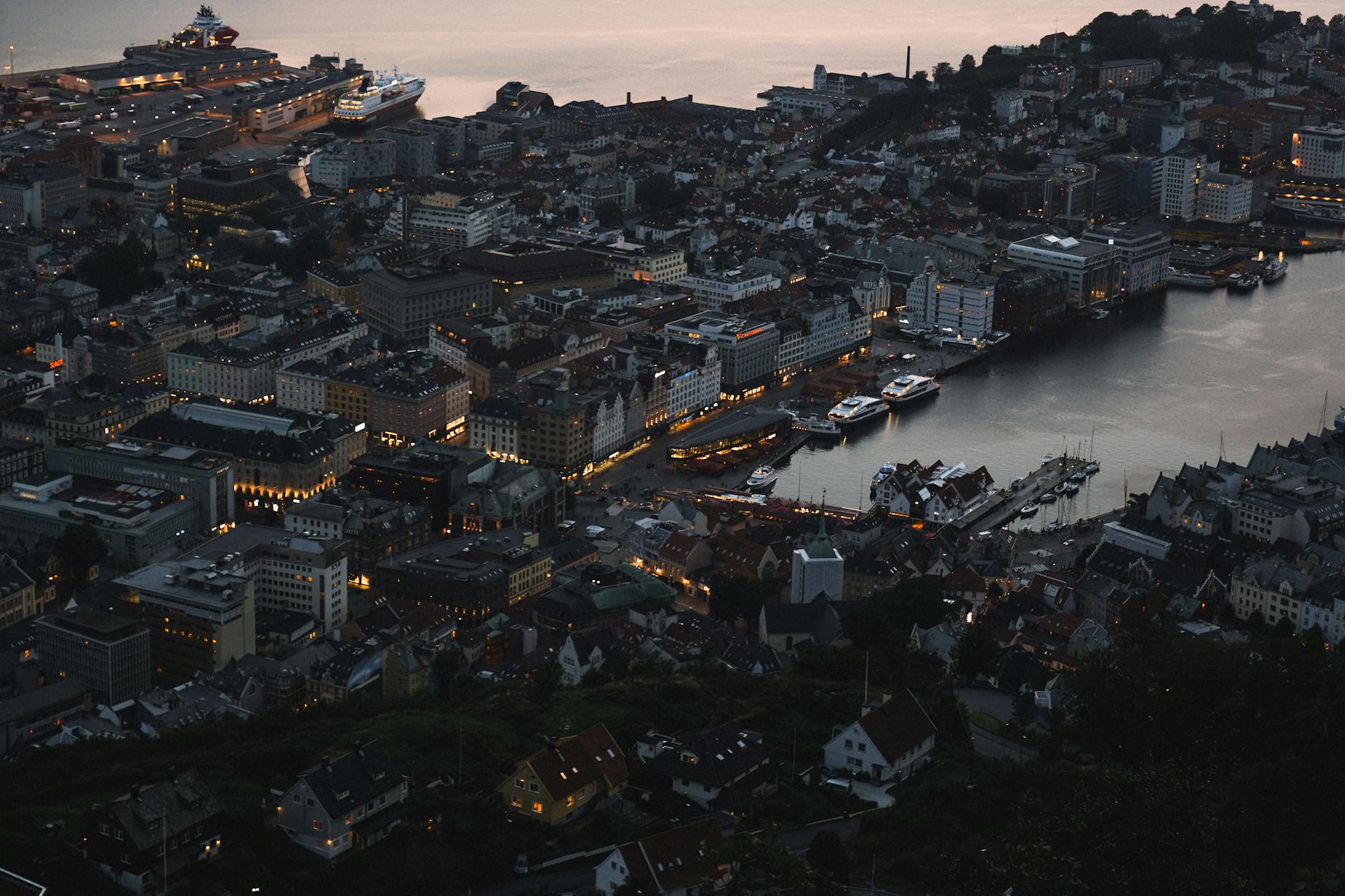
The first is the harbor. This is not only a pretty waterfront. It is the city's operating identity. The water explains orientation, wealth, maritime memory, cruise traffic, seafood culture, and the way the city still feels turned toward the sea.
The second is the slope. Bergen is not mountainous in a heroic alpine sense from within the center, but the hills and mountains frame everything. They affect views, weather, walking, and the feeling that the city is both held and watched.
The third is the Hanseatic layer. Bergen's old trade history is not a museum fact floating above the present. It is physically legible in Bryggen and psychologically present in the city's whole harbor-facing self-understanding.
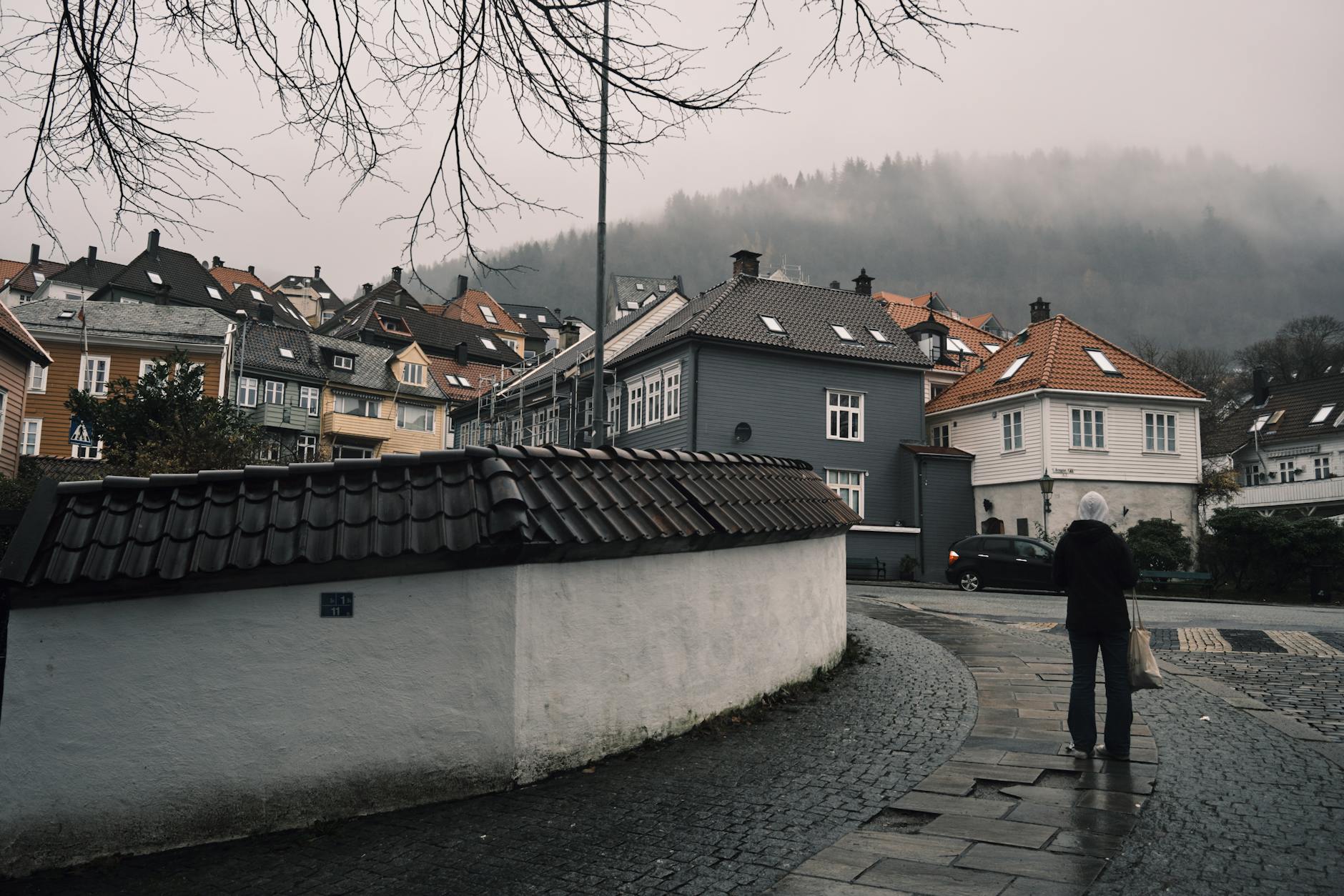
The fourth is weather. Rain, cloud, reflected light, wind, and fast shifts do not merely change the look of the city. They change its rhythm. Bergen can feel cozy, severe, cinematic, or tender depending on conditions, often in the same day.
The fifth is gateway pressure. Fjords, scenic rail routes, and wider western Norway all pull on Bergen. This gives the city strategic value but also creates the risk that visitors outsource too much meaning to excursions.
The Five Bergens A Visitor Actually Meets
Harbor Bergen: Bryggen, the fish market, ferry movement, harbor-edge hotels, and the version of the city most travelers meet first.
Historic Bergen: timber lanes, old trade spaces, church and fortress traces, and the part of the city that still feels most entangled with medieval and early modern memory.
Local Bergen: Nordnes, residential streets, quieter corners, cafés, ordinary daily life, and the version of Bergen that softens the tourist face without losing atmosphere.
Cultural Bergen: KODE, Grieg associations, museums, design, music, and the city's quieter intellectual confidence.
Weather Bergen: wet stone, shifting visibility, cloud over the heights, harbor light, and the part of the city that most clearly separates people who are inhabiting Bergen from people merely enduring it.
The Main Mental Shift
Do not ask, "What are the top attractions in Bergen?" Ask, "What kind of harbor city am I in, and how should I move through it?" That question produces better choices. It leads you toward district logic, weather logic, and mountain timing rather than checklist consumption.
What Bergen Does Better Than People Think
Bergen is unusually good at concentrated atmosphere. Some small cities look attractive but run out of emotional depth quickly. Bergen usually does not. The harbor, timber facades, mountain frame, and weather give the place enough structural force that a short stay can still feel rich.
It is also better than many travelers expect at handling bad weather gracefully. This matters because too many travelers judge rain-city destinations by a bright-sky fantasy standard that makes no sense. Bergen can remain compelling in wet conditions because the built environment, the harbor, the cafés, and the museum culture still hold.
Another underrated strength is museum quality relative to scale. Bergen is not only a scenic city. KODE and the historical museum layer give it enough cultural seriousness that a city-only Bergen stay can justify itself.
The city is also very good at being a scenic destination without becoming silly about scenery. Yes, there are viewpoints. Yes, there are mountains. But Bergen's best visual experience usually comes from how the whole place holds together: wharf, hill, harbor, weather, roofs, and water.
Finally, Bergen is better than people think at short-break completeness. A lot of smaller cities need a region around them to feel substantial. Bergen can support a full, coherent 2- or 3-day city break before you add the region.
Best Time to Visit Bergen
Bergen is a year-round city, but not a season-neutral one. Weather, daylight, cruise activity, and your appetite for atmosphere all change the experience meaningfully.
Best Overall Months
May, June, September, and early October are the strongest first-visit windows for many travelers. You often get workable daylight, a city that feels active, and conditions that let both harbor and hillside moves make sense without the full compression of peak summer.
Summer
Summer is the easiest season in which to love Bergen quickly. Long days, brighter harbor life, and smoother conditions for wider Norway travel help a lot. The tradeoff is obvious: more visitors, more cruise pressure, and higher competition for the rooms everyone actually wants.
Autumn
Early autumn is one of Bergen's best seasons. The city can feel more composed, more local, and more genuinely atmospheric. If you like weather as part of the text rather than as a flaw, this is a very strong window.
Winter
Winter sharpens Bergen into a smaller, moodier version of itself. The harbor becomes darker and more reflective, indoor spaces matter more, and mountain moves become more conditional. This can be excellent for the right traveler and underwhelming for anyone expecting easy scenic abundance every hour.
Spring
Spring can be beautiful but remains unstable. That instability is not necessarily a drawback. Bergen often gains texture from transitional conditions. It simply means the traveler should plan with flexibility rather than with entitlement.
Month-by-Month Guidance
January: moody, dark, compact, good for city purists. February: still wintry, but often easier psychologically than midwinter. March: transitional and variable, attractive if expectations are calibrated. April: improving light, still weather-led. May: one of the best overall choices. June: excellent for a first visit if booked intelligently. July: bright and lively, but busier and less forgiving of weak planning. August: still strong, though weather can pivot quickly. September: one of the smartest months to go. October: atmospheric and often elegant, especially early in the month. November: subdued and damp, best for travelers who actually like that. December: festive lights, strong hotel-and-harbor mood, short daylight.
How Many Days You Need
One Day
Enough to see Bryggen, ride or walk a mountain move, and get a feel for the harbor. Not enough to understand the city properly.
Two Days
The minimum respectable stay. One day should be firmly city-led. The other can include a viewpoint, museum focus, or a carefully chosen extension.
Three Days
Ideal for a first visit. This gives Bergen enough room for weather adaptation, district reading, and one slower half-day that is not purely functional.
Four To Five Days
Very good if you want Bergen plus one or two regional excursions without demoting the city into a transit node.
One Week
Excellent for a western Norway route anchored by Bergen, but only if the city itself remains an active part of the trip rather than just the place where your luggage sleeps.
Where to Stay in Bergen
Where you stay matters more than many first-timers expect. Bergen is compact, but rain, slopes, luggage, and harbor orientation all make bad location choices feel more consequential.
Fast Answer
For most first-time visitors, stay around Vågen, Bryggen, or the central harbor-facing core. Choose Nordnes-adjacent central lodging if you want a slightly calmer, more local-feeling atmosphere. Stay near the station only if you know why convenience outweighs harbor immediacy.
Neighborhood Decision Table
| Traveler Type | Best Area |
|---|---|
| First-time visitor | Harbor core / Vågen / Bryggen edge |
| Couple weekend | Bryggen side, harbor edge, or refined central stay |
| Food-led trip | Central Bergen with easy access to Skostredet and the harbor |
| Quiet-but-central trip | Nordnes side |
| Rail-focused itinerary | Station-to-center corridor |
| Without a car | Central harbor-facing Bergen |
Bryggen and the Inner Harbor
Best for: first-timers, atmospheric stays, short breaks, and anyone who wants Bergen to feel like Bergen the moment they step out. Why it works: visual identity, proximity to the historic harbor, easy scenic walking, strong evening atmosphere. Tradeoff: more obvious tourist flow, some cruise pressure, and not every property is equally quiet. Best use: the classic first-time Bergen stay.
Central Bergen Around Torgallmenningen and the Harbor Spine
Best for: travelers who want balance, hotel choice, shops, dining access, and easy movement. Why it works: close enough to the harbor to feel connected, central enough to make the city easy. Tradeoff: slightly less instantly atmospheric than the Bryggen edge itself. Best use: all-purpose first or second stays.
Nordnes Side
Best for: calmer city breaks, repeat visitors, people who like residential texture and harbor adjacency. Why it works: more local rhythm, pleasing walks, easier sense of inhabiting the city rather than just touring it. Tradeoff: less direct for some transport movements and not always the most practical in heavy weather if your routing is sloppy. Best use: travelers who want Bergen to feel lived-in.
Nygardshoyden / University Side
Best for: museum-minded travelers, lower-key central stays, and people who do not need the harbor outside the lobby door. Why it works: still central, culturally strong, often a little less tourist-forward. Tradeoff: the emotional payoff is not as immediate as the harbor districts. Best use: travelers prioritizing value, museums, and calm.
Station Corridor
Best for: very short stays with onward rail plans or airport-transfer efficiency. Why it works: practical, straightforward, easy for arrival and departure. Tradeoff: convenience can come at the cost of atmosphere if you drift too far from the harbor logic. Best use: a functional stay where transit simplicity is genuinely important.
Area Profiles
Bryggen
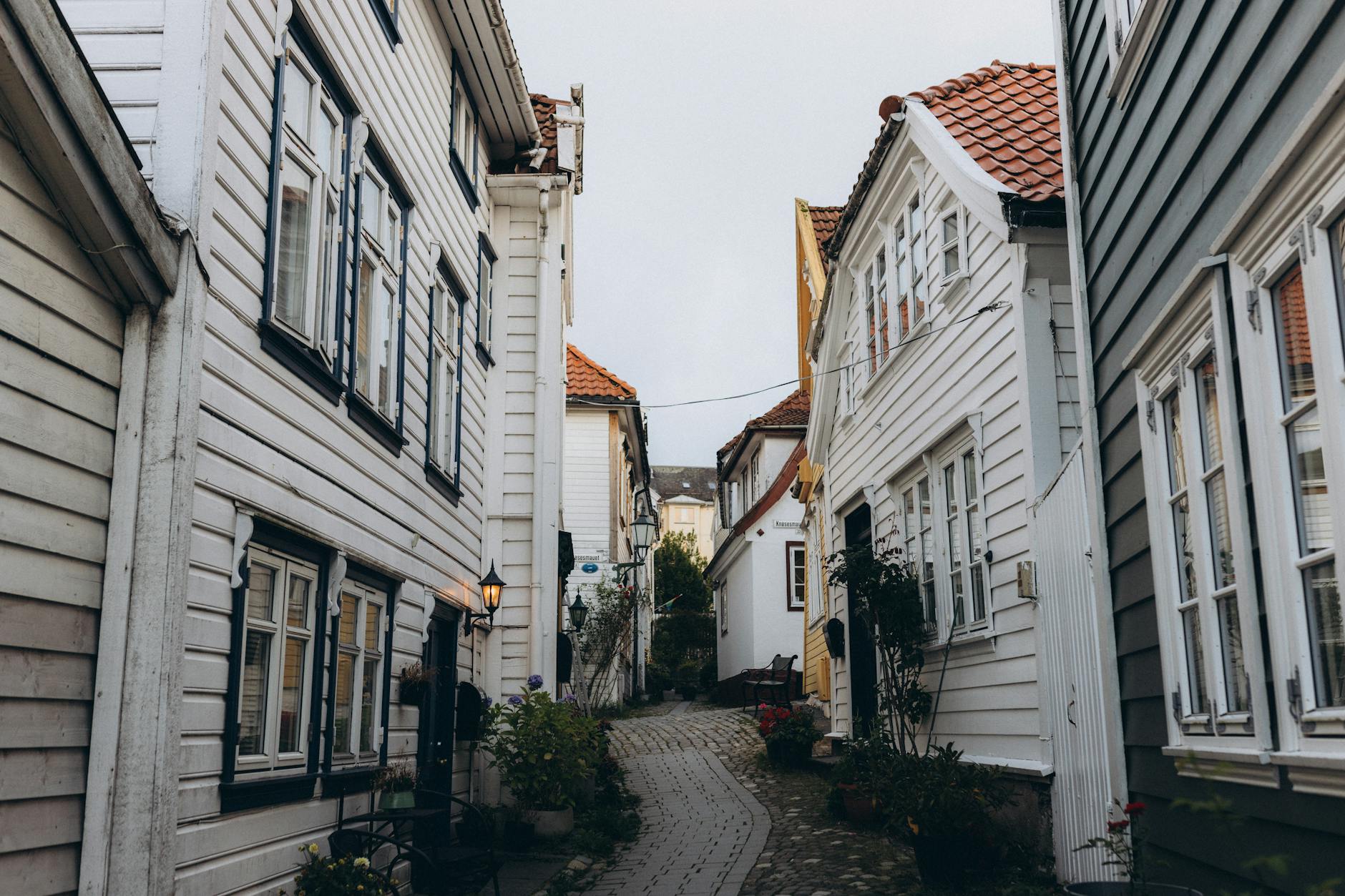
This is the iconic Bergen image, and for good reason. But it works best when used beyond the obvious camera angle. The side passages, timber structures, and slight irregularity of the built fabric matter as much as the waterfront facade.
The Fish Market and Harbor Front
This is one of the easiest parts of the city to dismiss as purely touristy and one of the easiest parts to use well if you read it as civic theater rather than as the whole city. Go for atmosphere, orientation, and movement, not as the only expression of Bergen.
Nordnes
Nordnes softens Bergen. It gives you houses, quieter streets, and a more residential relationship to the water. This is useful if the central harbor feels a little too performative by the middle of the trip.
Skostredet and the Central Dining Core
This is one of the areas that helps Bergen feel contemporary rather than merely heritage-rich. A strong dinner or bar evening here does a lot to round out the city.
The Mountain Edge
Whether you reach it through Fløyen, Ulriken, or simply through visible topographic pressure, the mountain edge is one of the reasons Bergen feels spatially richer than many cities of similar size.
Neighborhood Guide: Where to Explore, Not Just Sleep
Bryggen Proper
Go more than once. Morning is cleaner. Late afternoon can be gentler. Damp weather can actually help. One brisk pass is rarely enough to understand how the district sits in the city.
The Fortress Side
If you move beyond the most photographed harbor frontage, the fortress side helps the city feel older and broader. This is where Bergen begins to read as more than postcard timber.
Torgallmenningen and the Civic Center
This is not the prettiest face of Bergen, but it is a useful one. It shows the city functioning rather than posing, and it helps connect the harbor identity to normal urban life.
Skostredet
Skostredet and nearby streets are where a lot of travelers suddenly realize Bergen can support a proper evening. Eat here or at least pass through with attention.
Nordnes
Walk Nordnes when you want the city to exhale. It gives you houses, edges, water, and a quieter version of Bergen's relationship to daily life.
The University and Museum Side
This part of the city rewards museum travelers and anyone who wants Bergen to feel like more than scenic infrastructure. It gives the city intellectual weight.
The Best Things to Do in Bergen
1. Read Bryggen Slowly
Do not only photograph it. Walk it. Re-enter it. Look at how the district narrows, darkens, and opens. Bergen is telling you what kind of city it is here.
2. Use Fløyen Intelligently
Go when visibility and crowd logic make sense, not merely because the funicular exists. If conditions are right, this is one of the cleanest ways to understand the city's shape.
3. Give KODE Real Time
KODE is one of the reasons Bergen can carry a city-first itinerary. It is especially valuable when the weather turns the city inward.
4. Walk The Harbor More Than Once
Morning harbor and evening harbor are not the same place. Bergen improves when you let the city repeat itself under changing light.
5. Use The Fish Market As Context, Not As The Whole Meal
See it, smell it, understand its place in the city. Then decide whether you actually want to eat there or somewhere stronger.
6. Spend One Hour In A Quieter District
Nordnes or an adjacent residential patch gives the city human scale. It prevents Bergen from becoming only surface atmosphere.
7. Build One Day Around History
Bryggen, a museum, the fortress side, and old harbor reading together can create a much deeper city day than random attraction hopping.
8. Build One Day Around Weather
If the city is bright, go up or out. If the city is wet, go inward with style: museums, cafés, bars, and a proper dinner.
9. Consider Ulriken Only If You Mean It
Ulriken can be excellent, but it asks for more intention than Fløyen. Do it because you want the mountain experience, not because you feel obliged to collect the city's second viewpoint.
10. Let Evening Matter
Bergen after dinner, with reflected light or even mild drizzle on the stones, is often one of the strongest parts of the trip. Do not treat evenings as dead transit time between daytime sightseeing and bed.
Itineraries
One Excellent Day In Bergen
Start early around the harbor and Bryggen before the city fully fills. Take a weather-smart mountain move, preferably Fløyen if conditions are clear enough to justify it. Have lunch somewhere stronger than the most obvious tourist traps. Spend the afternoon with KODE or a historical museum cluster. Use the evening for a proper harbor walk and one serious dinner.
Two Days
Day 1: harbor, Bryggen, one mountain move, central walking, and a strong dinner. Day 2: museum-and-history Bergen, Nordnes or a quieter district, and a second evening that uses the city differently from the first.
Three Days
Day 1: iconic Bergen used well. Day 2: cultural and historical Bergen, slower and deeper. Day 3: weather-flex day for Ulriken, a regional extension, or a long urban day with food and neighborhood time.
Four To Five Days
This is the length at which Bergen can support both city identity and one or two scenic outward moves without feeling cannibalized by them.
One Week
A week works very well for travelers building Bergen into a wider western Norway route, but the city should still get at least two days of genuine central attention.
Itineraries By Traveler Type
First-Timer
Prioritize Bryggen, one mountain, one museum cluster, one serious dinner, and enough central walking to let the city stop feeling theoretical.
Couple Weekend
Spend more on the room, less on frantic coverage. Harbor views, weather-aware walking, and one or two strong meals will do more for the trip than maximal attraction count.
Food Traveler
Use seafood intelligently, but do not reduce the city to seafood. Bergen needs one refined meal, one simpler local-feeling stop, and one day where the weather helps choose the restaurant mood.
History Traveler
Build the trip around Bryggen, the Hanseatic layer, fortress-side material, and the harbor's longer trade memory.
Norway Route Starter
Use Bergen as the beginning of a western Norway route only after you have given the city at least one full day to become real on its own terms.
Food and Drink
What To Prioritize
Prioritize seafood, yes, but prioritize judgment more than seafood itself. Bergen is not improved by eating every meal in a place that exists mainly because the harbor is nearby. The city is best used when you combine one classic seafood expression with one more contemporary or intimate meal elsewhere in the center.
The Real Food Logic
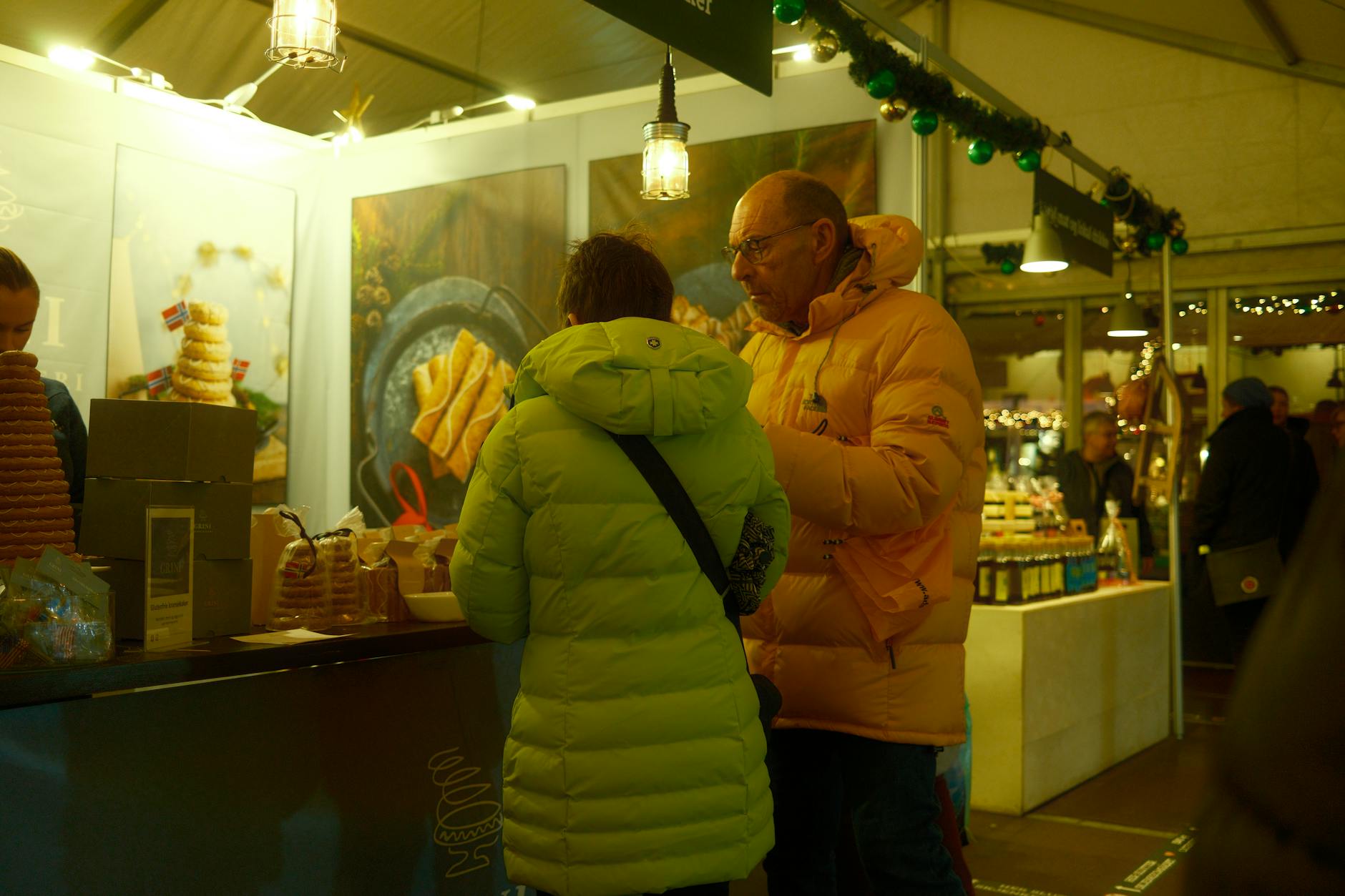
The strongest Bergen food trip usually includes three things: one harbor-adjacent meal for context, one better-chosen central dinner that reflects how the city eats now, and one bakery or café stop that makes bad weather feel like part of the plan rather than a setback.
Seafood Without Cliche
Fish soup, shellfish, and cold-water seafood make obvious sense here, but quality and setting matter. Bergen deserves at least one meal where the maritime identity feels grounded rather than performed.
Drink And Evening Rhythm
Bergen is not a pure nightlife city, but it can produce very good evenings. The right bar, rain on the streets, and a strong central district can make a short night feel complete.
Getting Around
The Core Rule
Bergen is a walking city first, but only in the correct sense. Walking works brilliantly in the center as long as you respect weather and slope. It stops being elegant when you pretend the city is flatter or drier than it is.
Public Transport
Skyss is useful for airport arrival, selected city movements, and keeping the trip composed when weather turns.[2] It is not usually necessary to overcomplicate local transport planning for a short central stay.
Taxis And Rideshare Logic
There are moments when paying for the easy move is correct: late-night rain, luggage on a slope, or a short-stay schedule that would be visibly worsened by stubborn thrift.
Car Logic
Do not rent a car for Bergen itself unless the wider route truly requires it. Cars solve fewer city problems here than travelers imagine.
Fjord Trips, Mountains, And What Not To Outsource
The Fjord-Gateway Problem
The region around Bergen is magnificent. That is not in dispute. The problem is that some visitors hand the entire meaning of the trip to the region before Bergen has even had a chance to become a place.
The Better Rule
Earn your fjord trip by first understanding the city you are leaving from. One full Bergen day before a major excursion is usually the right discipline.
Fløyen Versus Ulriken
Fløyen is easier, more obvious, and often exactly right. Ulriken is stronger for travelers who actually want the mountain experience rather than simply the signature city move. Choose based on appetite, not on completionism.
Where Bergen Fits In A Norway Trip
Bergen is one of the most important cities in Norway because it stops the country from being read only through Oslo and landscape. Oslo is the capital, the administrative and museum-heavy center, and for many travelers the first proof that Norway can do serious urban life. Bergen answers with a different Norwegian argument: maritime rather than governmental, weather-led rather than boulevard-led, historically mercantile rather than formally national, and far more visibly compressed between water and mountain.
That role matters in itinerary design. A Norway trip without Bergen can become a sequence of scenic transfers punctuated by one capital. A Norway trip with Bergen gains a second urban anchor that still feels completely of the west coast. It is the city that makes western Norway feel inhabited rather than merely toured.
Bergen is also crucial because it protects the region from becoming only a scenic product. If you use the city well before a fjord route, the landscapes that follow feel connected to a real harbor culture and trading history instead of just to transport logistics and viewpoint marketing.
Bergen Versus Oslo, Alesund, And Tromso
Compared with Oslo, Bergen is smaller, wetter, and more atmospherically concentrated. Oslo has more institutional range, more contemporary capital energy, and more neighborhoods that announce their importance differently. Bergen wins on immediate harbor identity and on the way weather and topography still organize the whole experience. Oslo often asks to be understood intellectually. Bergen often asks to be felt physically first.
Compared with Alesund, Bergen is broader and deeper as a stand-alone city break. Alesund can be visually striking and very rewarding, but Bergen offers a fuller museum layer, stronger dining depth, more district variation, and a more convincing sense of a real daily city under the scenery.
Compared with Tromso, Bergen is less Arctic, less dependent on excursion logic, and usually easier to use as a genuine city-first trip. Tromso can feel more dramatic as a threshold destination. Bergen is stronger as an everyday harbor city with enough internal substance to support repetition.
This is why Bergen matters so much. It is not only a pretty west-coast city. It is one of the cities that teaches you how Norway differs from itself.
First-Time Visitors Versus Repeat Visitors
First-time visitors usually arrive with two competing instincts: to photograph the city immediately and to get out into the region as soon as possible. Both instincts are understandable. Neither should control the whole trip. The first visit works best when you allow Bryggen and the harbor to impress you, but then keep going until Bergen starts to feel like more than the image that made you book it.
Repeat visitors often do better because they stop asking the city to perform in postcard mode. They know weather may partially close the visual script, and they stop treating that as a betrayal. One return trip may focus on museums and dining. Another may be almost entirely about harbor mood and neighborhood walking. Another may use Bergen as an urban base inside a larger western Norway route while still preserving real city time.
This is one reason Bergen ages well as a destination. It is not exhausted by first-sight beauty. In fact, the first-sight beauty can distract from how much better the city becomes once you start moving through it with less urgency.
Why One Proper Bergen Day Matters
A rushed Bergen stay often produces a deceptively complete memory: Bryggen, fish market, a funicular, perhaps a short walk, then onward. Because the city is visually strong, that can feel sufficient. Usually it is not. One proper Bergen day is what turns the city from an image into a place.
That full day gives the harbor more than one light condition. It gives Bryggen enough time to move from façade to fabric. It makes room for one serious museum or historical layer. It lets the traveler discover whether the city is behaving like a mountain day, a museum day, a harbor day, or a weatherproof walking day. That flexibility is one of Bergen's central strengths.
Most importantly, one proper day gives the city a chance to be used rather than consumed. Bergen improves the moment you stop trying to finish it quickly.
Why Bryggen Should Not Own The Whole Trip
Bryggen is essential and absolutely worthy of attention. The problem is not that travelers spend time there. The problem is that some let it stand in for Bergen entirely. Once that happens, the city risks becoming a single strip of gorgeous timber with weather attached.
The rest of Bergen is what gives Bryggen proportion. KODE and the museum side give cultural seriousness. Nordnes gives quieter residential texture. Skostredet and the central dining core show the present-tense city. The mountain edge gives the harbor scale. Even the more functional central corridors matter because they keep Bergen from becoming a heritage stage set.
Bryggen should start the story, not finish it. Bergen is stronger once the city begins pressing back against its most famous image.
How Bergen Changes Over The Course Of A Stay
On arrival, Bergen often feels instantly specific. The mountain walls, the harbor, the timber facades, and the damp air do so much explanatory work that the traveler can think the city has already yielded everything important. By the second day, Bergen usually becomes more nuanced. You start seeing which parts are still civic and lived, which parts are primarily representational, and how weather keeps reorganizing the whole place.
By the third day, many travelers start trusting the city enough to stop chasing perfect conditions. They return to the harbor at a better hour, choose a smarter museum block, or let a wet afternoon become part of the trip rather than a failed version of it. That is when Bergen often becomes most persuasive.
This is one of Bergen's deepest advantages. It often ends stronger than it begins because repetition reveals more than spectacle alone can.
Common Mistakes
- Treating Bergen as a prelude instead of a destination.
- Assuming the harbor front alone is the city.
- Thinking rain automatically ruins the stay.
- Choosing a hotel for price while ignoring topography and harbor access.
- Eating too obviously just because the fish market is visible.
- Taking one mountain move in poor conditions and concluding the city is overrated.
- Handing both full days to excursions and then wondering why Bergen feels thin.
My Blunt Advice
Bergen is not a city that needs endless explanation. It needs correct use. Stay central. Accept the weather. Read Bryggen properly. Do not confuse the fish market with a food philosophy. Give KODE or the historical museum layer real attention. Use one mountain intelligently, not performatively. Let one evening belong to the harbor. If you do those things, Bergen usually works.
The city becomes disappointing mainly when travelers try to force a cleaner, flatter, sunnier, more generic urban script onto it. Bergen is better than that script. It is older, wetter, steeper, and more atmospheric. Let it remain all four.
Source Notes
- 1. Avinor, "Bergen Airport." https://avinor.no/en/airport/bergen-airport/
- 2. Skyss, "Use public transportation to and from the airport." https://www.skyss.no/en/travel/Airports/
- 3. Visit Bergen, "Bergen Card." https://en.visitbergen.com/bergen-card
- 4. Fløyen, "Prices and ticket types." https://www.floyen.no/en/floibanen/prices-and-ticket-types
- 5. Visit Bergen, "Bryggen in Bergen." https://en.visitbergen.com/things-to-do/attractions/bryggen-in-bergen
- 6. KODE, "Kode - Museum of art, crafts, design and music in Bergen." https://www.kodebergen.no/en
- 7. Visit Bergen, "Fish Market in Bergen." https://en.visitbergen.com/things-to-do/fish-market-in-bergen-p824303
- 8. Visit Bergen, "The Weather in Bergen." https://en.visitbergen.com/visitor-information/weather-in-bergen