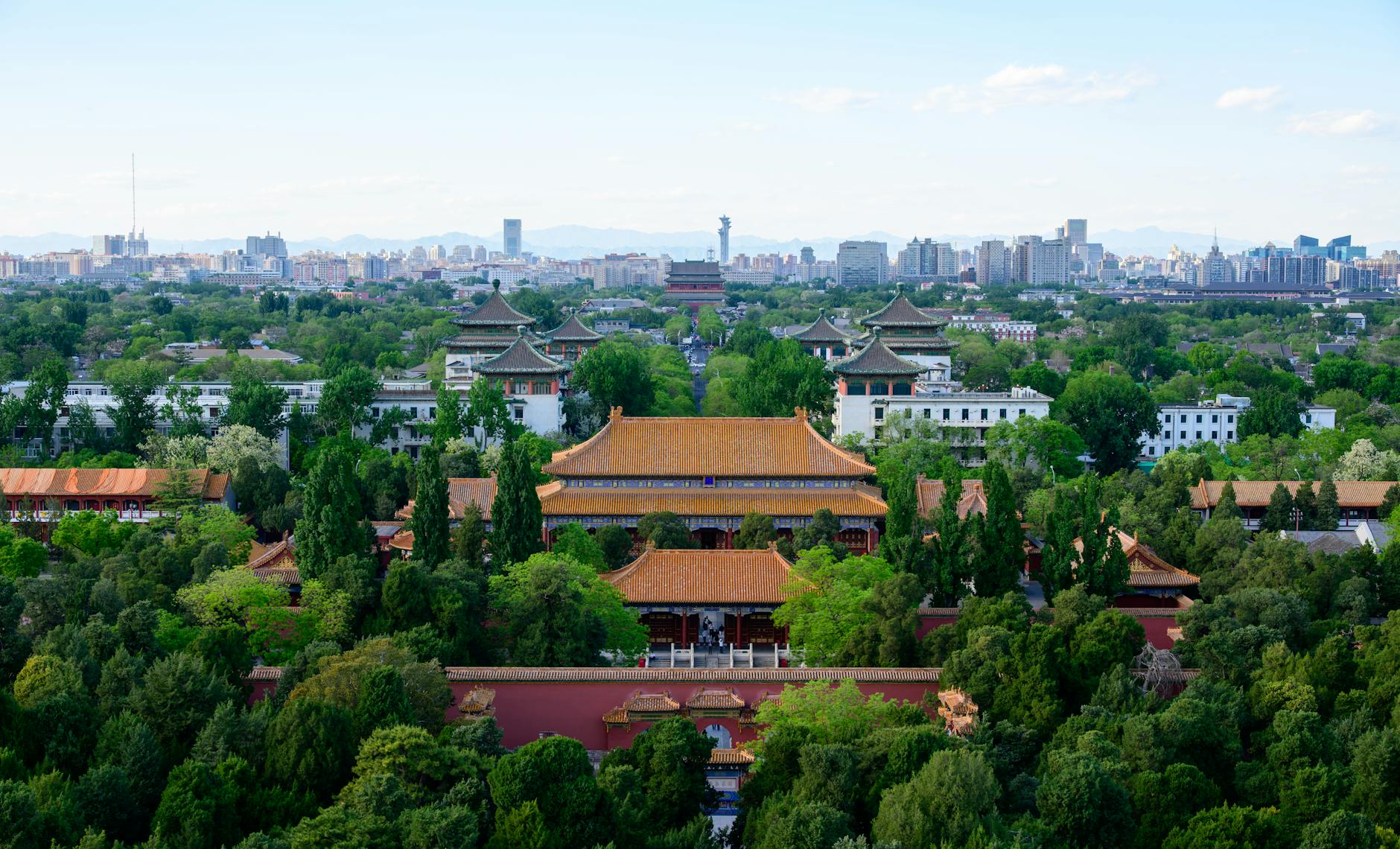
Beijing is not a gentle city at first glance. It is enormous, formal, dry, ceremonial, traffic-heavy, guarded, and built on a scale that can make a first-time visitor feel small. But that first impression is only the outer gate.
Start Here
The reward comes when you learn the city’s layers: the north-south imperial axis, the courtyards hidden behind gray hutong walls, the drumbeat of morning exercises in public parks, the precise geometry of the Forbidden City, the vast calm of the Temple of Heaven, the lakeside evenings around Shichahai, the smell of sesame paste and mutton hotpot, the sudden flare of a red palace wall against winter trees, the brutalist edges of socialist architecture, the glass towers of Guomao, the art warehouses of 798, and the mountains beyond the city where the Great Wall rides the ridgelines like an idea made of stone.
Most visitors come for three things: the Forbidden City, the Great Wall, and Peking duck. All three are worth your time. But a great Beijing trip cannot stop there. Beijing is the political, historical, and symbolic capital of modern China, and one of the best cities in the world for understanding how imperial order, revolutionary memory, socialist planning, commercial modernity, and ordinary neighborhood life sit beside each other.
The first-timer mistake is treating Beijing like a list of monuments. The better way is to treat it as a city of axes, rings, gates, walls, compounds, lakes, hutongs, work-unit districts, universities, expressways, museums, food traditions, and state power. Once you understand the structure, the trip becomes easier and much more interesting.
This guide is designed for travelers who want more than “top things to do in Beijing.” It explains where to stay, how to think about neighborhoods, how to plan around attraction reservations, how to eat well, how to choose the right Great Wall section, how to use transit and payments, what to skip, how to avoid common mistakes, and how to experience Beijing with enough context that the city stops feeling like a puzzle and starts feeling like a place.
Beijing in one sentence: Beijing is a monumental capital of gates, walls, ritual spaces, hutong lanes, state memory, northern food, and mountain horizons, where the best trip balances imperial-scale planning with slow attention to everyday life.
Basic data
| Population | About 22 million |
|---|---|
| Area | 16,410 km2 |
| Major religions | Largely secular public life with Buddhist, Daoist, Muslim, and Christian communities |
| Political system | Direct-administered municipality inside a socialist one-party state |
| Economic system | Upper-middle-income mixed economy led by government, technology, finance, culture, and services |
Quick Verdict
| Question | Answer |
|---|---|
| Best for | Imperial history, the Great Wall, architecture, political history, museums, food, photography, urban planning, Chinese culture, parks, hutongs, temples, families with older kids, and travelers who like cities with depth and weight. |
| Not ideal for | Visitors who want an effortless resort-style city, late-night Western-style spontaneity, easy access to every global app, soft urban scale, beach weather, or a trip where you can ignore planning. Beijing rewards preparation. |
| Ideal first visit | 4 full days is the minimum satisfying first trip. Five days is much better. Six or seven days lets you add a less-rushed Great Wall day, deeper hutong time, museums, 798, the Summer Palace, and a slower food plan. |
| Best months | April, May, late September, October, and early November. Spring and autumn are the clear winners for walking, parks, palace walls, and the Great Wall. Winter can be beautiful but cold. Summer is hot, humid, rainy, and often crowded. |
| Best first-timer base | Wangfujing/Dongcheng for central sightseeing; Qianmen/Dashilar for historic texture near Tiananmen; Shichahai/Gulou for hutongs and evening atmosphere; Sanlitun/Chaoyang for restaurants, nightlife, and international comfort; Guomao/CBD for business and polished hotels. |
| Biggest planning mistake | Assuming you can simply show up at major sights. Beijing’s top attractions often involve passport-based reservations, time slots, security checks, WeChat mini-programs, ticket-release windows, and holiday crowd spikes. |
| One thing to book ahead | The Forbidden City, Tiananmen Square access if needed for your route, National Museum of China, top Great Wall transport/tours, Peking duck dinner on weekends, and hotels during public holidays. |
| One thing to leave unscheduled | A hutong walk, a public-park morning, a lakeside evening, an extra hour after the Forbidden City at Jingshan Park, or a long lunch built around noodles, dumplings, duck, or hotpot. |
| Best free or low-cost pleasures | Jingshan views, hutong wandering, parks at dawn, Qianmen backstreets, Shichahai at night, 798 browsing, Olympic Green exterior views, local snack shops, subway people-watching, and the slow reveal of the city’s central axis. |
| Most important warning | Beijing is logistically manageable, but China-specific friction is real: payments, app access, passport checks, online reservations, accommodation registration, internet restrictions, and language barriers require advance setup. Do the boring prep before you land. |
The Move
Build the trip around one major anchor per day, then pair it with nearby atmosphere. Forbidden City plus Jingshan and Qianmen. Temple of Heaven plus hutong food. Summer Palace plus university district or parks. Great Wall plus an easy dinner. Beijing punishes overloading and rewards thoughtful pairings.
Who Will Love Beijing?
You will probably love Beijing if you want:
- A city where history is spatial. Gates, axes, walls, courtyards, temples, squares, lakes, and ring roads all tell you how power organized itself.
- A trip that feels culturally specific rather than interchangeable. Beijing is not trying to be a generic global city for visitors; it remains strongly itself.
- Big-ticket sights that truly matter: the Forbidden City, Temple of Heaven, Summer Palace, Tiananmen Square, National Museum, Lama Temple, and the Great Wall.
- Northern Chinese food with substance: roast duck, zhajiangmian, jianbing, dumplings, hotpot, lamb skewers, sesame paste, Muslim-Chinese snacks, soy milk, baozi, Beijing yogurt, and old-school snack shops.
- A city where public parks are living theaters: tai chi, dancing, calligraphy with water brushes, card games, shuttlecock, opera singing, stretching, and old men arguing with real commitment.
- The thrill of standing on a Great Wall section in mountain air after days inside a monumental capital.
You may struggle with Beijing if you want:
- A soft, pretty, low-effort urban vacation.
- Every transaction to work with a foreign credit card.
- Every website and app from home to function normally.
- An attraction experience without security checks or passport requirements.
- Mild weather year-round.
- A compact old center like Rome, Paris, or Kyoto.
- A city where English is widely spoken outside hotels, major attractions, and international restaurants.
Beijing is not impossible. That reputation is exaggerated. But Beijing is not frictionless either. The trick is to prepare for the friction and then let the city be magnificent.
Beijing at a Glance
| Category | Details |
|---|---|
| Country | People’s Republic of China |
| Region | Northern China; municipality directly under the central government |
| Language | Mandarin Chinese. English is common in major hotels and some tourist settings but should not be assumed. |
| Currency | Chinese yuan / renminbi, usually written as CNY or RMB. |
| Best payment setup | Alipay plus WeChat Pay, both linked to international cards if possible, plus some cash as backup. Overseas visitors can link international cards to Alipay and WeChat Pay for many merchant payments, but not every function works like a local Chinese account.[6] |
| Main airports | Beijing Capital International Airport (PEK) and Beijing Daxing International Airport (PKX). Check which airport you are using; they are in different parts of the city. |
| Main rail stations | Beijing Railway Station, Beijing West, Beijing South, Beijing North, Beijing Chaoyang, Qinghe. High-speed train departures are station-specific. Do not assume “Beijing Station” means your station. |
| Transit | Extensive subway, buses, taxis, ride-hailing, airport rail, high-speed rail, bikes, and walking within neighborhoods. Beijing has introduced broad tap-and-go subway payment support for major international card networks, but app setup remains useful.[7] |
| Best transit apps | Baidu Maps or Amap/Gaode for local navigation; Apple Maps can be useful for transit; Didi inside its own app or through Alipay/WeChat; translation app downloaded before arrival. |
| Visa / entry | Depends heavily on nationality, itinerary, passport type, and dates. China has expanded visa-free entry and 240-hour visa-free transit, but rules are specific and should be checked through official sources.[1][3] |
| Accommodation registration | Hotels register foreign guests. If staying somewhere other than a hotel, foreigners or hosts must complete accommodation registration with public security authorities within 24 hours.[5] |
| Emergency numbers | Police 110, ambulance 120, fire 119. Many visitors should also save their embassy/consulate number and hotel address in Chinese. |
| Tap water | Do not drink tap water unless boiled or properly filtered. Hotels usually provide bottled water or kettles. |
| Tipping | Not customary in ordinary restaurants and taxis. High-end hotels and private guides/drivers are exceptions where international habits may appear. |
| Electricity | 220V, 50Hz. China uses several plug types; bring a universal adapter. |
| Best first-timer phrase | “Bù hǎo yìsi” — roughly “excuse me / sorry to trouble you.” It helps. |
Local Logic
Beijing looks wide and car-oriented, but many of its best experiences are not along the grand avenues. They are behind walls, inside parks, down hutongs, in courtyards, around lakes, or on mountains outside the city. The grand city gives you the headline. The side street gives you the memory.
2026 Visitor Notes
China Entry Rules Are More Flexible Than They Used to Be, But More Complicated Than a Slogan
China has expanded visa-free access and transit options in recent years. The National Immigration Administration says eligible citizens of dozens of countries can use the 240-hour visa-free transit policy if they hold valid international travel documents and confirmed onward tickets to a third country or region, entering through designated ports and staying within permitted areas for up to 10 days.[1] Beijing’s official portal describes the process for applying at the 240-hour visa-free counter on arrival.[2]
That is not the same thing as “everyone can visit China without a visa.” Transit visa-free rules require a genuine onward itinerary to a third country or region, and ordinary visa-free entry depends on nationality, passport type, trip purpose, and dates. China has also been expanding unilateral visa-free policies for ordinary passport holders from selected countries, including time-limited arrangements that can change.[3]
The move: Check your passport against an official Chinese embassy, consulate, MFA, or NIA source before you book. If you are using 240-hour visa-free transit, your route matters: origin → China → third country/region. A simple round trip in and out of Beijing usually does not qualify as transit.
Digital Arrival and Accommodation Procedures Are Part of the Trip
The NIA provides an online arrival card service that covers foreign nationals arriving in China, including certain transit categories.[4] Separately, China requires foreign visitors to register their accommodation. Hotels do this as part of check-in; if you stay with a friend, in a private apartment, or in other non-hotel lodging, the visitor or host is responsible for registration within 24 hours.[5]
The move: Stay in a hotel or licensed accommodation for at least your first night if you do not want to deal with police registration yourself. Always carry your passport or a secure passport copy plus hotel card, but know that certain attractions and checkpoints require the original passport.
Payments Are Easier for Foreigners, But You Still Need a Backup Plan
China is highly mobile-payment-driven. Government payment guidance for overseas visitors says Alipay and WeChat Pay allow foreign users to link international credit cards, including Visa and Mastercard, and that visitors may also use bank cards, cash, and other options.[6] In practice, payment success can vary by card issuer, merchant category, verification level, app behavior, and connectivity.
The move: Set up Alipay before arrival, set up WeChat as backup, link two different cards if possible, bring a small amount of RMB cash, and keep your hotel name/address in Chinese for taxi or help situations. Do not land in Beijing with only a physical Visa card and optimism.
The Subway Has Become More Visitor-Friendly
Beijing’s official portal announced full-network subway tap-and-go coverage for five major card networks in 2026, making it easier for inbound travelers to use international bank cards at subway gates.[7] Beijing also promotes visitor-focused ticketing options such as the Beijing Pass and QR-code ticketing via Alipay.[8]
The move: Even with tap-and-go, keep Alipay ready. It helps with metro QR codes, Didi, restaurants, mini-program tickets, and emergency payment backup.
Attraction Reservations Are Not Optional Background Noise
The Palace Museum’s English site lists the Forbidden City’s core opening time and ticket price, and directs visitors to official ticket booking.[9] The National Museum of China allows reservations up to seven days in advance through official channels.[10] Beijing’s official hotline FAQ says Tiananmen Square reservations are best made by foreign visitors through the WeChat mini-program, and that some other reservations can cover square access during specific sessions.[11]
The move: Treat your passport number as your ticket identity. The name and passport number used for booking must match the passport you bring. Save screenshots, but expect ID checks.
Public Holidays Can Transform Beijing Overnight
China’s official 2026 public-holiday schedule includes major travel periods such as Spring Festival, Labour Day, and National Day.[21] During these periods, hotel prices rise, trains sell out, highways clog, and famous sights become extremely crowded.
The move: Avoid National Day week around October 1 if you dislike crowds. Avoid Spring Festival unless you specifically want that atmosphere and understand closures, transport demand, and family-travel patterns. Labour Day in early May can also be intense.
Internet Access Requires Planning
Australian government travel advice notes that China limits access to many foreign websites and social media services, and that visitors may be unable to access banking, popular phone apps, calls, or messages through normal internet-based services.[22] This is not a minor convenience issue if your maps, messaging, email, authentication, banking, or reservation systems depend on blocked services.
The move: Download maps, translation tools, payment apps, hotel addresses, ticket confirmations, and messaging alternatives before departure. Talk to your employer, bank, and mobile provider before relying on work systems, two-factor authentication, or cloud accounts in China.
How to Understand Beijing
Beijing is easier when you stop thinking of it as a conventional tourist city and start reading it as a planned capital.
It is a city of ritual space. A city of walled compounds. A city of ring roads. A city where old maps still matter. A city where imperial design, socialist planning, and modern commercial development did not erase each other so much as stack over one another.
The Central Axis Is the Spine
The most important mental map in Beijing is the north-south axis running through the old city. The Beijing Central Axis was inscribed as a UNESCO World Heritage Site in 2024; UNESCO identifies it as “A Building Ensemble Exhibiting the Ideal Order of the Chinese Capital.”[17] Beijing’s official portal describes it as a 7.8-kilometer line through the heart of the old city, with 15 components stretching from the Bell and Drum Towers in the north to Yongdingmen Gate in the south.[18]
For visitors, this axis is not academic. It links many of the places you are likely to visit:
- Bell and Drum Towers
- Shichahai and nearby hutongs
- Jingshan Park
- Forbidden City
- Tiananmen
- Tiananmen Square complex
- Zhengyangmen / Qianmen
- Temple of Heaven area
- Yongdingmen
Local Logic
Beijing is not merely “big.” It is ceremonially big. Distances, gates, courtyards, plazas, and walls were designed to communicate hierarchy. That is why the Forbidden City feels like a sequence of thresholds, not a single palace. It is why Tiananmen Square feels exposed and monumental. It is why the Temple of Heaven feels spatially different from a neighborhood temple. In Beijing, space has ideology.
The Ring Roads Explain Modern Movement
Modern Beijing is often described by ring roads: 2nd Ring, 3rd Ring, 4th Ring, 5th Ring, and beyond. The 2nd Ring roughly traces the old city-wall footprint. Inside or near the 2nd Ring you find much of historic Beijing: Dongcheng, Xicheng, hutongs, lakes, palace sites, and central institutions. The 3rd and 4th Rings bring you into larger commercial, diplomatic, residential, university, and business districts. Beyond that, Beijing spreads widely.
For visitors, this matters because map distance lies. A hotel “only 7 kilometers away” can be a poor choice if it is awkwardly placed relative to subway lines, ring-road traffic, or the sights you want.
The Five Beijings a First-Timer Actually Meets
| Beijing | Where you feel it | What it gives you |
|---|---|---|
| Imperial Beijing | Forbidden City, Jingshan, Temple of Heaven, Summer Palace, Beihai, central axis | Palaces, ritual architecture, gates, courtyards, parks, dynastic history, spatial grandeur. |
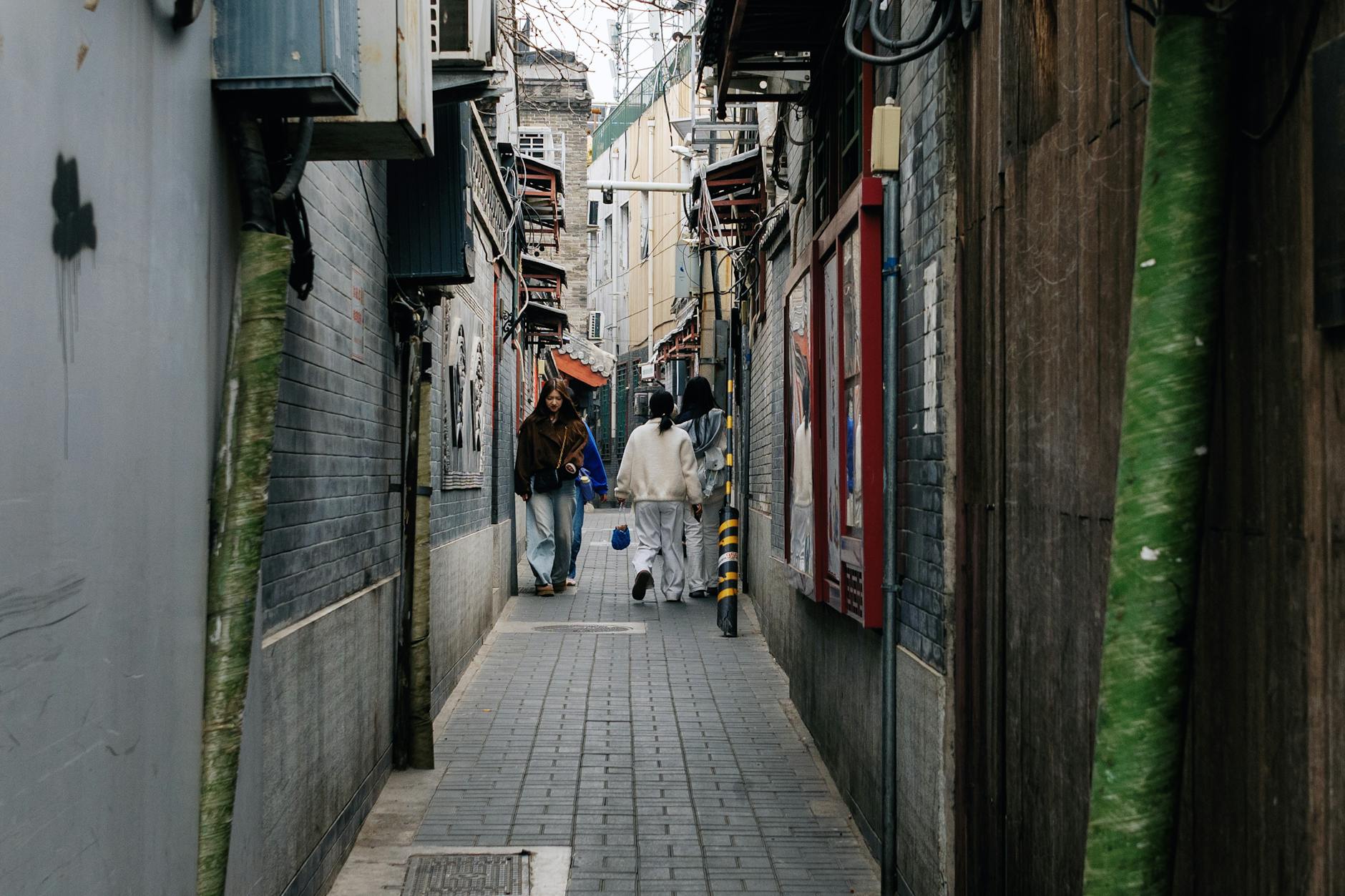
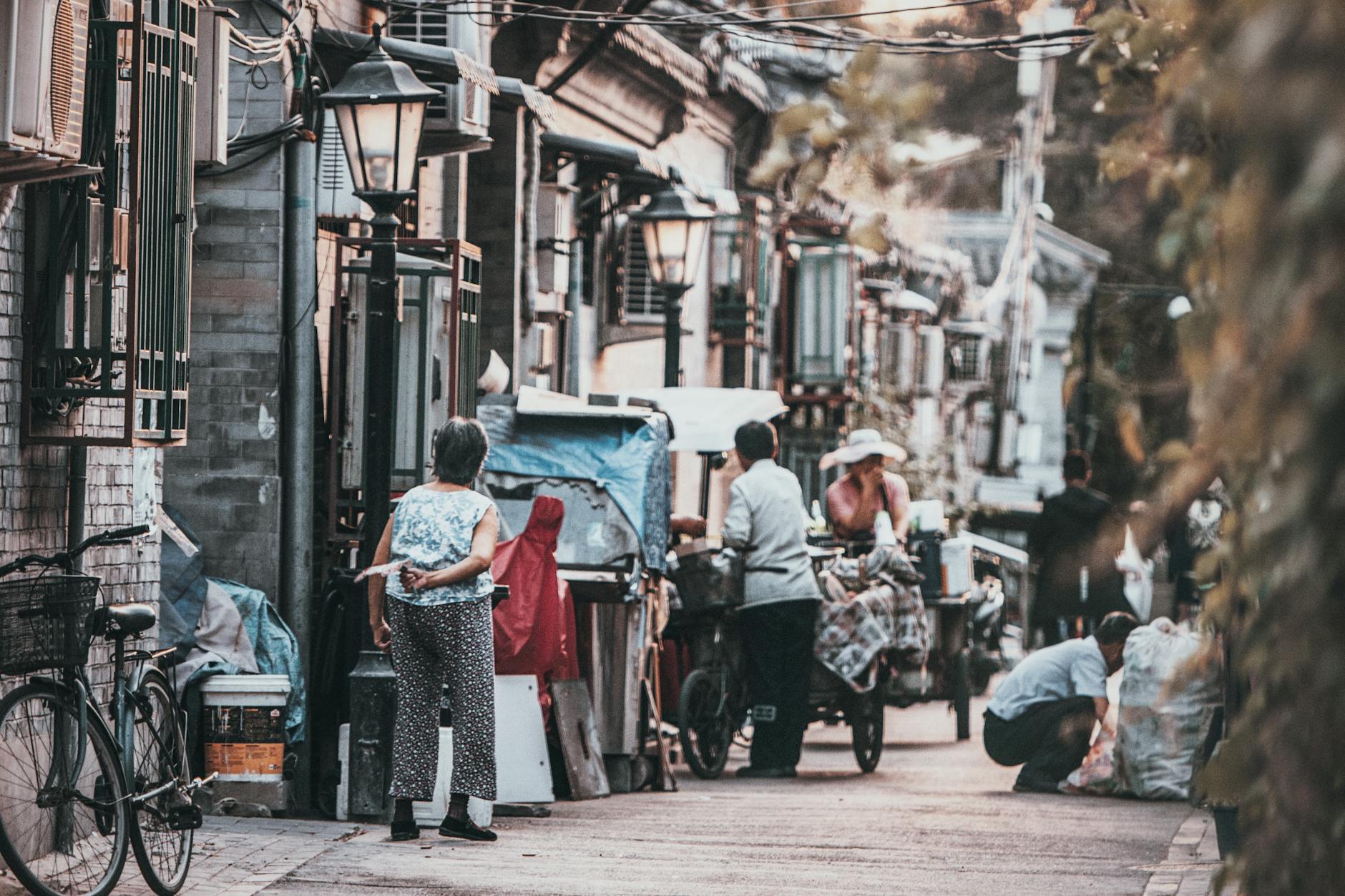
| Hutong Beijing | Shichahai, Gulou, Dongsi, Dashilar, Guozijian, parts of Xicheng and Dongcheng | Courtyard lanes, neighborhood life, snack shops, cafés, old homes, bicycles, slow walking. |
| State Beijing | Tiananmen, National Museum, Great Hall surroundings, Chang’an Avenue, monumental avenues | Political symbolism, security, ceremony, museums, national history, scale. |
| Modern Beijing | Sanlitun, Guomao/CBD, Wangjing, Liangma River, Olympic Green, Daxing Airport, Universal | Skyscrapers, malls, nightlife, expat restaurants, business hotels, new infrastructure, spectacle. |
| Mountain Beijing | Mutianyu, Badaling, Jinshanling, Gubeikou, Simatai, Ming Tombs, Huairou, Yanqing | Great Wall landscapes, cleaner air, seasonal color, day trips, the relief of leaving the city grid. |
The City’s Rhythm
Beijing rewards early starts more than almost any major city. Parks are alive at dawn. Major attractions are easier before tour groups build. Summer heat is more tolerable early. Security lines are less punishing. Morning light is better on red walls and yellow roofs.
The city does not peak late in the same way as Bangkok, Madrid, or Seoul. There is nightlife, especially in Sanlitun, Gulou, and around certain bar streets, but much of Beijing’s essential life is daylight and early evening: parks, palaces, museums, meals, markets, lakes, and walking routes.
The move: Use mornings for parks, palaces, temples, and the Great Wall. Use afternoons for museums, neighborhoods, cafés, 798, or shopping. Use evenings for duck, hotpot, hutong bars, Shichahai, Sanlitun, or a performance. Do not make your first full day a 14-hour monument marathon.
The City’s Central Contrasts
Beijing is fascinating because its contradictions are visible:
- Imperial order vs urban sprawl: perfect palace axes surrounded by huge modern roads.
- State formality vs neighborhood improvisation: grand security zones minutes from alley life.
- Ancient ritual vs everyday exercise: temples and parks now used by locals for dancing, tai chi, and social life.
- Northern austerity vs culinary warmth: dry air, hard edges, and deeply comforting food.
- Global capital vs local systems: international hotels and embassies beside app ecosystems, payment norms, and procedures unfamiliar to many visitors.
- Monumental scale vs courtyard intimacy: some of Beijing’s most memorable moments happen behind modest gray walls.
The job of a good Beijing itinerary is to let you experience both scales.
Best Time to Visit Beijing
Beijing is a seasonal city. The same itinerary can feel brilliant in October, punishing in July, luminous in winter, or impossible during National Day crowds.
Best Overall Months
April and May are excellent for spring flowers, palace walls, park life, and comfortable walking. April can bring dust and pollen, and Qingming holiday crowds affect early April. May is gorgeous but Labour Day can be extremely crowded.
Late September, October, and early November are often the best overall. Autumn air can be crisp, the sky can be blue, ginkgo leaves turn gold, and the Great Wall is at its most photogenic. Avoid National Day week if possible.
Season by Season
| Season | What it is like | Best for | Watch out for |
|---|---|---|---|
| Spring: March–May | Variable, windy, increasingly beautiful. Blossoms, park life, and mild days. | First trips, walking, parks, Temple of Heaven, Summer Palace, Great Wall, photography. | Dust, pollen, temperature swings, Qingming and Labour Day crowds. |
| Summer: June–August | Hot, humid, sometimes rainy, with strong sun and school-holiday crowds. | Families tied to school calendars, evening lake walks, Universal Beijing, shaded parks. | Heat exhaustion, thunderstorms, packed attractions, sweaty subway transfers. |
| Autumn: September–November | Drying, cooling, often beautiful. Best Great Wall season. | Everything: palaces, parks, food walks, day trips, photography, first-timers. | National Day crowds around October 1; late November gets colder. |
| Winter: December–February | Cold, dry, sometimes beautifully clear. Lakes may freeze. Fewer international tourists. | Museums, duck, hotpot, winter palace walls, Great Wall snow if lucky, cheaper hotels. | Bitter wind, early darkness, icy steps, Spring Festival closures/crowds depending dates. |
Month-by-Month Snapshot
| Month | Verdict |
|---|---|
| January | Very cold, often dry, sometimes clear. Good for museums, duck, hotpot, and low crowds. Pack seriously. |
| February | Cold and affected by Spring Festival dates. Atmospheric but logistically tricky. Some restaurants and shops close around the holiday. |
| March | Transitional and windy. Plum and early blossoms appear, but weather can be raw. Good value if you pack layers. |
| April | One of the best months. Flowers, parks, palaces, and Great Wall walks are strong. Watch Qingming crowds and dust. |
| May | Beautiful, green, and warm. Avoid Labour Day if possible. Book major sights and hotels early. |
| June | Warmer, sometimes humid. Good before peak summer if you handle heat. |
| July | Hot, humid, rainy, crowded. Start early, plan shade, use museums, and avoid overambitious walking. |
| August | Still hot and busy. Better for travelers with high heat tolerance. Great Wall trips need water and sun protection. |
| September | Improves through the month. Late September is often excellent, but watch Mid-Autumn holiday timing. |
| October | Potentially superb after National Day week. One of the best months for the Great Wall and city walking. |
| November | Crisp and increasingly cold. Ginkgo color can be lovely. Good for serious travelers who do not mind layers. |
| December | Cold, dry, and atmospheric. Excellent for museums, hotpot, duck, and clear winter views if weather cooperates. |
The Move
For a first Beijing trip, choose mid-April to late May or mid-October to early November if you can. If you must travel in summer, design the trip around mornings, air-conditioned museums, taxis for long hops, and evening food rather than midday endurance.
How Many Days You Need
One Day
One day in Beijing is a layover, not a real visit. You can choose one of two plans:
- Imperial city day: Tiananmen area, Forbidden City, Jingshan, Qianmen/Dashilar.
- Great Wall day: Mutianyu or Badaling with transport arranged, then duck dinner.
Do not try to do the Forbidden City and the Great Wall properly in one day unless you are on a very efficient private tour and accept that it will be rushed.
Two Days
Two days gives you a powerful taste:
- Day 1: Tiananmen, Forbidden City, Jingshan, hutong evening.
- Day 2: Great Wall, duck or hotpot dinner.
This is enough to say you have seen Beijing, not enough to understand it.
Three Days
Three days is the minimum good first visit:
- Day 1: Forbidden City/Jingshan/Qianmen.
- Day 2: Great Wall.
- Day 3: Temple of Heaven, hutongs, Lama Temple or Summer Palace.
This still leaves out museums, deeper food, 798, and slower neighborhood time.
Four Days
Four days is the minimum satisfying trip. Add:
- Summer Palace or National Museum.
- A proper hutong walk.
- A less rushed food day.
- 798 or Sanlitun depending your interests.
Five Days
Five days is the ideal first visit for many travelers. You can cover the essentials without turning the trip into a checklist:
- Central axis and Forbidden City.
- Great Wall.
- Temple of Heaven, Qianmen, hutongs.
- Summer Palace and Haidian or Beihai/Shichahai.
- National Museum, 798, Sanlitun, or a food-focused day.
One Week
A week lets Beijing become a city instead of a set of monuments. You can add:
- A second Great Wall section or overnight Wall stay.
- 798 and Caochangdi/modern art.
- Deeper hutong wandering.
- More food exploration.
- Day trips such as Chengde or Tianjin.
- Rest time, which matters in a city this large.
Local Logic
Beijing days are slower than they look on paper. Security lines, passport checks, wide roads, subway transfers, taxi traffic, attraction size, and language friction all add time. Plan less. Enjoy more.
Where to Stay in Beijing
Your hotel area matters enormously. Beijing is too big to choose lodging casually. The right base reduces friction; the wrong one makes every day feel like a commute.
The Short Answer
For most first-time visitors, stay in Dongcheng, especially around Wangfujing, Dengshikou, Dongsi, Qianmen, or the hutong zones north of the Forbidden City, if the hotel quality works for your budget.
Stay in Sanlitun/Chaoyang if you prioritize restaurants, nightlife, international comforts, embassies, business, and modern Beijing over walking to historic sights.
Stay in Qianmen/Dashilar if you want historic atmosphere near Tiananmen and do not mind tourist intensity.
Stay near Shichahai/Gulou if you want hutong atmosphere, lakes, bars, cafés, and an old-city feel, but check taxi access and luggage logistics.
Stay in Guomao/CBD for business, luxury hotels, skyline, polished malls, and easy airport/taxi access, not for old Beijing romance.
Neighborhood Decision Tree
| Want this? | Stay here |
|---|---|
| First-time sightseeing convenience | Wangfujing, Dengshikou, Dongsi, Qianmen, central Dongcheng |
| Historic atmosphere | Qianmen/Dashilar, Shichahai/Gulou, Dongsi hutongs |
| Hutong charm | Shichahai, Gulou, Dongsi, Guozijian/Lama Temple area |
| Nightlife and international restaurants | Sanlitun, Liangma River, Chaoyang |
| Luxury and business | Guomao/CBD, Wangfujing, Financial Street, Sanlitun |
| Family convenience | Wangfujing, Dongcheng near subway, Sanlitun for larger hotels, CBD for polished hotels |
| Budget lodging | Qianmen edges, Dongsi, Gulou, some Haidian areas, but check subway access |
| Art and design | 798/Lido if you do not mind being away from the historic core |
| University visits | Haidian/Zhongguancun/Wudaokou |
| Airport stopover | Near PEK or PKX only for late arrivals/early departures, not for sightseeing |
Wangfujing / Dengshikou / Central Dongcheng
Best for: First-timers who want convenience, centrality, hotels, subway access, and straightforward logistics.
Vibe: Polished, commercial, central, slightly touristy, efficient.
Why stay here: You are close to the Forbidden City, Tiananmen area, Jingshan, major shopping, and many hotel options. It is easy to explain to drivers and has enough restaurants for tired evenings.
Why not: It can feel generic compared with hutong areas, and some restaurants are designed for tourists. The main shopping street is not the most soulful part of Beijing.
The move: Stay here if it is your first China trip and you want fewer logistical risks. Use it as a practical base, then explore hutongs and parks during the day.
Qianmen / Dashilar
Best for: Historic atmosphere, first-time sightseeing, Qianmen Street, easy access to Tiananmen/Forbidden City approaches, old commercial Beijing.
Vibe: Restored old streets, snack shops, tourists, time-honored brands, hutong edges, photogenic lanes.
Why stay here: You are near the central axis south of Tiananmen. It is atmospheric, walkable in parts, and useful for early access to core sights.
Why not: It can be crowded and somewhat staged on the main streets. Traffic restrictions and security patterns around Tiananmen can complicate taxi movement.
The move: Choose a good boutique hotel or reliable chain off the busiest strip. Use early mornings and evenings; midday can feel touristic.
Shichahai / Gulou / Houhai
Best for: Hutong atmosphere, lakes, bars, cafés, evening strolls, old-city texture.
Vibe: Atmospheric, low-rise, gray-brick lanes, lake views, cafés, small bars, some tourist overload around Nanluoguxiang and Houhai.
Why stay here: This is one of the most emotionally appealing bases. You can walk to the Drum and Bell Towers, lake areas, hutongs, cafés, and small restaurants.
Why not: Some hutong hotels have small rooms, limited taxi access, stairs, or tricky luggage logistics. Noise varies. Subway access depends on exact location.
The move: Do not book a hutong hotel without checking recent reviews for bathroom quality, heating/air-conditioning, luggage access, and noise.
Sanlitun / Chaoyang
Best for: Dining, bars, nightlife, embassies, international comfort, shopping, families who want modern hotels, business travelers.
Vibe: Global, fashionable, mall-heavy, restaurant-rich, diplomatic, young, nightlife-oriented.
Why stay here: It is easy for restaurants, cafés, bars, supermarkets, malls, and international food. Many foreigners find it less intimidating.
Why not: It is not old Beijing. You will commute to the Forbidden City, Temple of Heaven, and Summer Palace. Some travelers spend too much time here and miss the city’s deeper layers.
The move: Stay here if you know you want comfort and food/nightlife. Pair it with disciplined daytime sightseeing so the trip does not become mall Beijing.
Guomao / CBD
Best for: Luxury, business, skyline hotels, polished infrastructure, taxis, high-end restaurants, travelers who like modern city energy.
Vibe: Tall towers, broad roads, malls, office life, international hotels, dramatic skyline.
Why stay here: Hotels can be excellent. Airport access by car may be straightforward depending traffic. Dining and shopping are convenient.
Why not: It is not walkable in the same charming way as old Beijing. You will rely on subway/taxis for historic sights.
The move: Good for business travelers adding sightseeing, or luxury travelers who do not need to sleep in the old city.
798 / Lido / Wangjing
Best for: Art, design, longer stays, repeat visitors, travelers with business in northeast Beijing.
Vibe: Galleries, converted industrial spaces, cafés, creative businesses, residential/international pockets.
Why stay here: Good if 798, Wangjing, or northeast Beijing is central to your trip. Lido/Wangjing have international services and Korean restaurants.
Why not: Too far from classic first-timer sights for most short trips.
The move: Visit 798; sleep here only if you have a specific reason.
Haidian / Zhongguancun / Wudaokou
Best for: Universities, tech, students, summer palace access, longer stays, Beijing academic life.
Vibe: Campus zones, tech districts, student food, bookstores, late-night casual life.
Why stay here: Useful for Peking University, Tsinghua, Zhongguancun, Summer Palace, and some language-study or business trips.
Why not: Not ideal for a classic short tourist trip.
The move: Great for a second or specialized visit; not the default for first-timers.
Neighborhood Guide
Beijing’s neighborhoods are not always neat in the way travel guides imply. Many are administrative districts, commercial zones, historical areas, or loose clusters around subway stations. Think in zones and routes rather than fixed borders.
Tiananmen / Forbidden City / Jingshan
One-sentence identity: Beijing’s ceremonial heart: monumental, political, imperial, highly controlled, and essential.
Best for: First-timers, history, architecture, photography, museums, understanding the city’s axis.
Best time: Early morning for Tiananmen/security logistics; morning or early afternoon for Forbidden City; late afternoon for Jingshan views.
How long: Half day minimum, full day if adding National Museum or deep palace exploration.
Do: Forbidden City, Jingshan Park, Tiananmen area, National Museum, Zhengyangmen/Qianmen after.
Skip: Trying to “pop in quickly.” These spaces are huge and process-heavy.
Pair it with: Qianmen/Dashilar for food and historic commercial streets.
First-timer mistake: Booking Forbidden City tickets but not understanding access routes, security lines, or whether you need separate Tiananmen-area reservations for your approach.
Qianmen / Dashilar
One-sentence identity: Old commercial Beijing, partly restored, partly rough-edged, full of shops, snacks, signs, tourists, and side-lane surprises.
Best for: Walking after Tiananmen/Forbidden City, snacks, photography, old brands, hutong lanes.
Best time: Morning for quieter lanes; evening for lights and food.
How long: 1.5 to 3 hours, longer if eating and browsing.
Do: Walk Qianmen Street but escape into Dashilar side streets. Look for old signs, snack shops, tea, shoes, silk, and theater history.
Skip: Eating only on the most obvious tourist stretch if you care about quality.
The move: Use Qianmen as the decompression zone after a formal morning around Tiananmen.
Shichahai / Houhai / Gulou
One-sentence identity: Lakes, hutongs, towers, cafés, courtyard hotels, old Beijing mood, and tourist-nightlife spillover.
Best for: Evening walks, hutong texture, cafés, bars, Drum and Bell Towers, lake views.
Best time: Late afternoon into evening; early morning for quiet hutongs.
How long: Half day.
Do: Drum Tower, Bell Tower, Yandai Xiejie, lakeside walk, hutong wandering, coffee/tea stops, simple dinner.
Skip: Assuming every hutong here is “authentic and quiet.” Some areas are heavily commercialized.
The move: Go one or two streets away from the busiest lakefront bars and Nanluoguxiang crowds. The better Beijing is usually one lane over.
Dongsi / Beixinqiao / Lama Temple / Guozijian
One-sentence identity: A strong old-city zone of hutongs, temples, food, cafés, and manageable walking.
Best for: Hutong walks, Lama Temple, Confucius Temple, casual food, cafés, a less monumental day.
Best time: Morning for temples, lunch for local restaurants, afternoon for hutongs.
How long: Half day to full day.
Do: Lama Temple, Guozijian Street, Confucius Temple, hutong strolls, local lunch, coffee/tea break.
Skip: Treating Lama Temple as just another photo stop. It is an active religious site; behave accordingly.
The move: Pair Lama Temple with a slow lunch and hutong walk instead of racing across town afterward.
Wangfujing
One-sentence identity: Central commercial Beijing: useful, polished, convenient, but not the whole city.
Best for: Hotels, shopping, food courts, easy evenings, families, first-timer convenience.
Best time: Evening if staying nearby; daytime if combining with central sights.
How long: 1 to 2 hours unless shopping.
Do: Use it as a base, stock up, find easy meals, visit nearby side streets.
Skip: Mistaking it for Beijing’s best food or deepest culture.
The move: Stay here if it solves logistics, then go elsewhere for soul.
Temple of Heaven / Tiantan
One-sentence identity: One of Beijing’s greatest ritual landscapes and one of the best places to see morning park life.
Best for: Architecture, parks, photography, tai chi, history, calm.
Best time: Early morning. The buildings are beautiful later, but the park life is the point.
How long: 2 to 3 hours.
Do: Hall of Prayer for Good Harvests, Circular Mound Altar, Echo Wall area, slow park wandering.
Skip: Visiting only the main hall and leaving immediately.
The move: Arrive early, watch locals use the park, then see the main ritual buildings. This is one of the best mornings in Beijing.
Summer Palace / Haidian
One-sentence identity: Imperial garden landscape on a vast scale, with lake, hill, pavilions, corridors, bridges, boats, and long views.
Best for: Gardens, photography, slower travel, families, imperial leisure, warm-weather walks.
Best time: Morning or late afternoon; avoid summer midday.
How long: Half day minimum.
Do: Kunming Lake, Longevity Hill, Long Corridor, Tower of Buddhist Incense, Seventeen-Arch Bridge, boat if operating.
Skip: Trying to combine it casually with too many faraway sights.
The move: Give the Summer Palace room. It is not a small garden; it is a landscape.
Sanlitun / Liangma River / Chaoyang
One-sentence identity: Beijing’s international dining, nightlife, embassy, and modern lifestyle zone.
Best for: Bars, restaurants, boutiques, malls, expat-friendly evenings, contemporary Beijing.
Best time: Evening.
How long: 2 to 4 hours, or longer for dinner/drinks.
Do: Dinner, cocktails, craft beer, cafés, shopping, Liangma River walk.
Skip: Spending your whole trip here unless your goal is modern international Beijing.
The move: Use Sanlitun as a comfort valve after heavy sightseeing. There is no shame in one easy evening.
798 Art District
One-sentence identity: Industrial-art Beijing: galleries, design shops, cafés, murals, converted factories, and a calmer break from palace circuits.
Best for: Contemporary art, design, photography, cafés, repeat visitors, rainy days.
Best time: Afternoon. Check gallery closure days.
How long: 2 to 4 hours.
Do: Wander, check current exhibitions, visit galleries, browse design stores, eat or drink coffee.
Skip: Expecting every space to be cutting-edge; some areas are commercial and uneven.
The move: Pair 798 with Sanlitun or Liangma River, not with a rushed Forbidden City morning unless you have serious stamina.
Olympic Green
One-sentence identity: Monumental 2008/2022 Olympic legacy space with big architecture and broad plazas.
Best for: Architecture, sports history, families, evening lights, photos.
Best time: Evening for illuminated exteriors.
How long: 1.5 to 2.5 hours.
Do: Bird’s Nest, Water Cube/Ice Cube exteriors, Olympic Park walk.
Skip: Making it a top priority if you have only three days and do not care about Olympic architecture.
The move: Visit at night after a lighter day rather than sacrificing prime daylight from imperial sights.
Best Things to Do
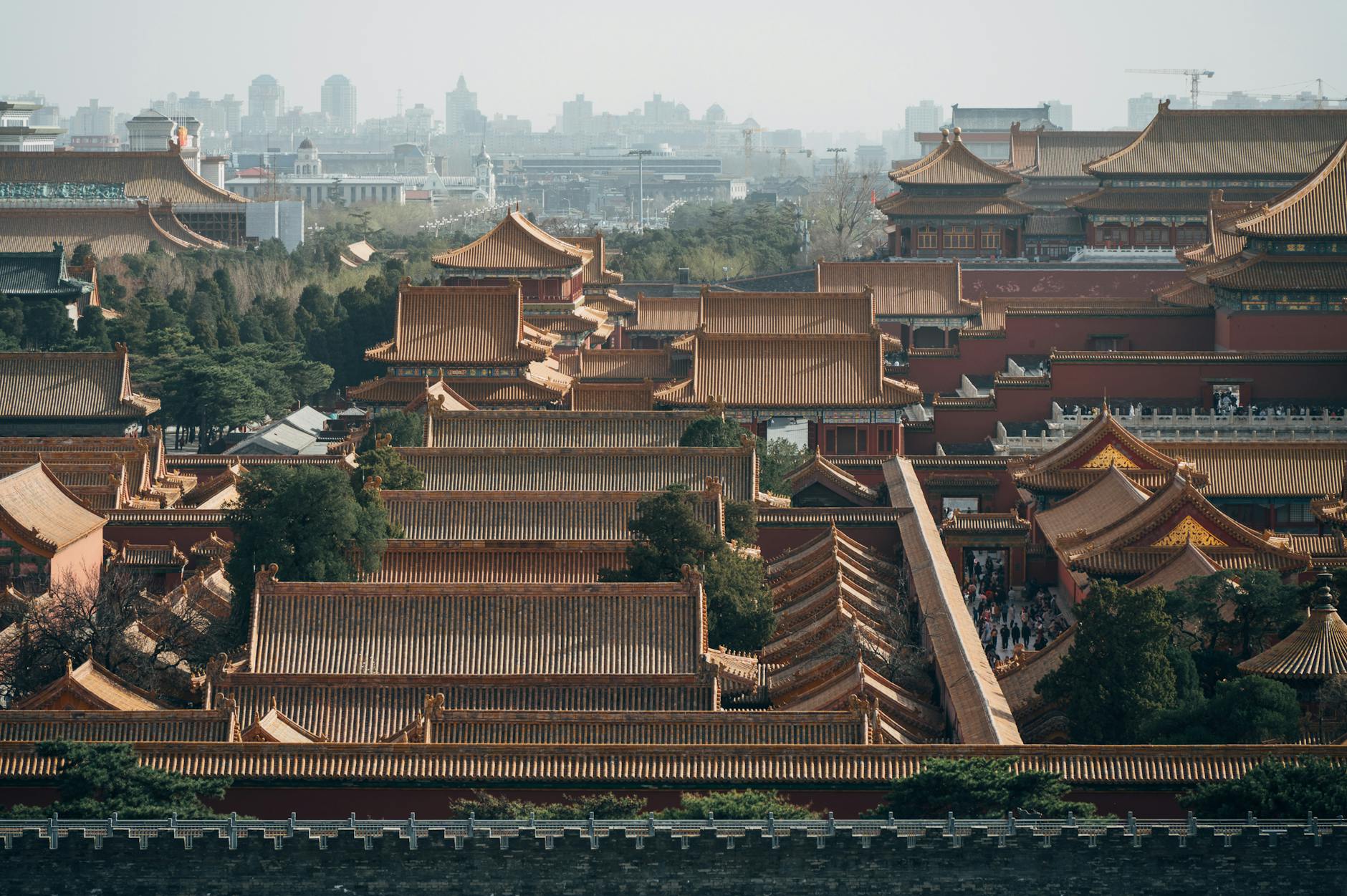
1. Spend Half a Day in the Forbidden City
What it is: The former imperial palace of the Ming and Qing dynasties, now the Palace Museum.
Why it matters: It is not just “a palace.” It is one of the great architectural statements of state power anywhere in the world: gates, courtyards, halls, axial order, ceremonial space, residential quarters, collections, and hidden side routes.
Who will love it: History lovers, architecture people, photographers, first-timers, museum travelers, anyone trying to understand Beijing.
Who can skip it: Almost nobody on a first visit. If you dislike crowds and formal sites, do a shorter visit but still go.
Time needed: 3 to 5 hours. More for serious museum visitors.
Book ahead: Yes. Use official booking or a reputable channel, and bring your passport.
Best pairing: Jingshan Park immediately after for the overhead view.
Common mistake: Walking only down the central axis with the crowd. Some of the best moments are side courtyards and quieter galleries.
Worth it? Absolutely. It is the essential Beijing sight.
2. Climb Jingshan Park for the Classic View
What it is: A park directly north of the Forbidden City, with a hill offering the city’s most famous palace panorama.
Why it matters: Beijing’s layout snaps into place from above. The Forbidden City becomes legible as a sequence of roofs, courtyards, gates, and walls.
Time needed: 45 to 90 minutes.
Best time: Late afternoon if skies are clear; after the Forbidden City is the classic move.
Book ahead: Foreign visitors may need to follow current reservation procedures; check before going.[16]
Common mistake: Skipping it because you are tired after the Forbidden City. This is the payoff.
3. Visit the Temple of Heaven Early
What it is: A vast ritual complex where emperors performed ceremonies connected to heaven, harvests, and cosmic order.
Why it matters: Architecturally, it is one of Beijing’s greatest sites. Socially, it is one of the best windows into local morning life.
Time needed: 2 to 3 hours.
Best time: Early morning.
Book ahead: Foreign visitors can book through official channels; check current requirements.[14]
The move: Do not rush straight to the Hall of Prayer for Good Harvests. Spend time with the park life first.
4. Choose the Right Great Wall Section
What it is: The famous defensive wall system across northern China, with several accessible sections from Beijing.
Why it matters: The Great Wall is both globally iconic and genuinely moving when experienced in mountain landscape.
Best first-timer section: Mutianyu for scenery and manageable crowds; Badaling for accessibility and train connections; Jinshanling for serious walkers and photographers if you can handle the logistics.
Time needed: Half day to full day depending section.
Book ahead: Transport at minimum; entry/tour depending section and season.
Common mistake: Picking the cheapest tour without understanding shopping stops, timing, or how much actual wall time you get.
5. Walk the Summer Palace Slowly
What it is: A vast imperial garden built around Kunming Lake and Longevity Hill.
Why it matters: The Summer Palace shows imperial leisure rather than imperial ceremony. It is a landscape of pavilions, corridors, bridges, boats, and long views.
Time needed: Half day.
Best time: Morning or late afternoon.
Book ahead: Check official procedures and seasonal opening times.[15]
The move: Treat it as a half-day landscape, not a quick stop.
6. Explore Hutongs Without Turning Them into a Theme Park
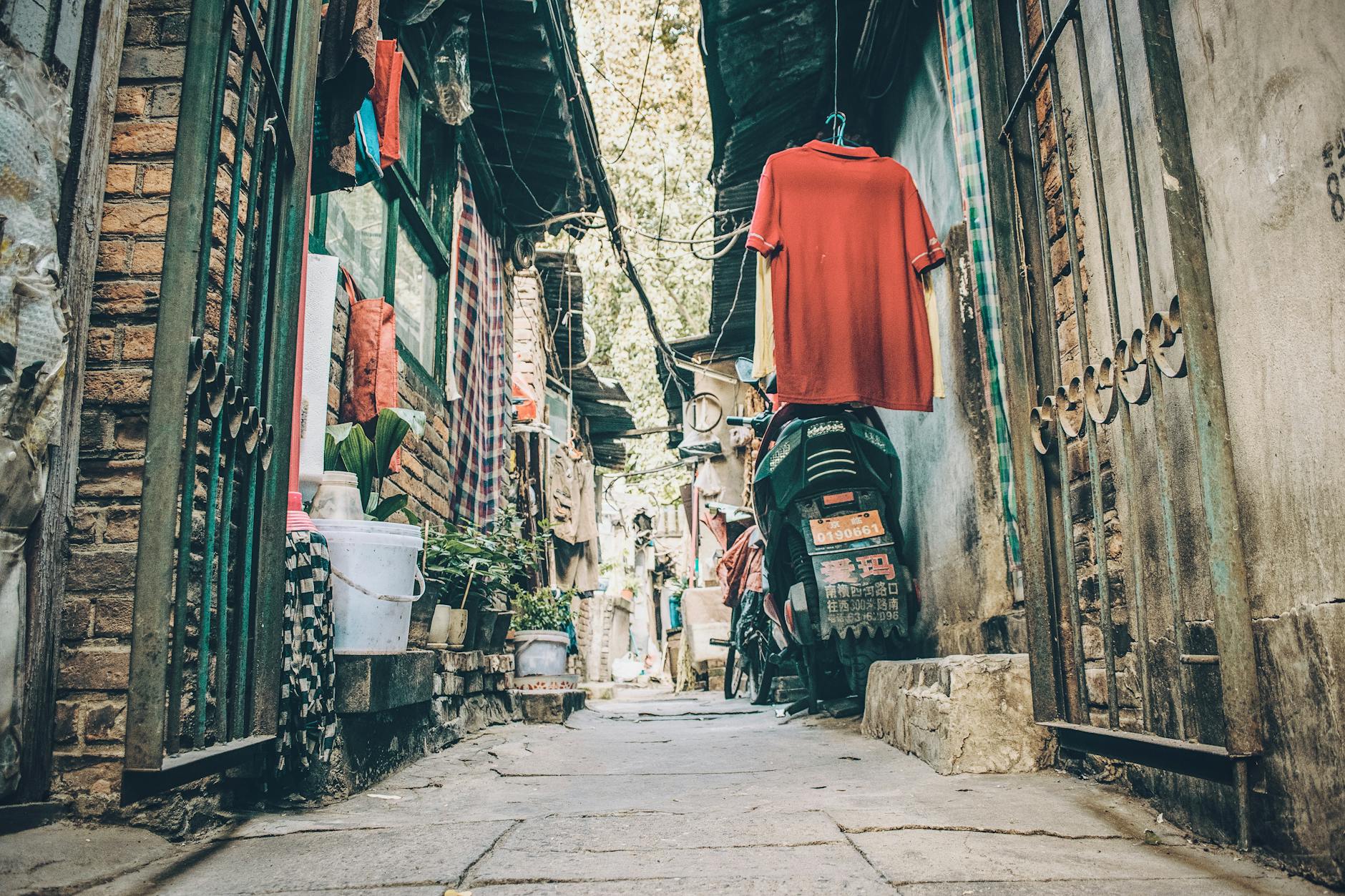
What they are: Traditional lanes associated with courtyard residential life, now ranging from lived-in neighborhoods to tourist corridors to gentrified café streets.
Why they matter: Hutongs are where Beijing’s monumental city becomes human-scale.
Best areas: Shichahai/Gulou, Dongsi, Guozijian, parts of Dashilar, quieter Xicheng lanes.
Time needed: 2 hours to half day.
The move: Pick one area and walk slowly. Do not photograph people’s doorways or courtyards like a safari. These are homes.
7. Visit the National Museum of China
What it is: A huge national museum on the east side of Tiananmen Square.
Why it matters: It provides a state-framed sweep of Chinese history and modern national narrative. It is important both for what it shows and how it shows it.
Time needed: 2 to 4 hours, more if you are serious.
Book ahead: Yes, through official channels, up to seven days in advance.[10]
Skip if: You have only two days and already have the Forbidden City and Great Wall booked. Otherwise it is valuable.
8. See the Lama Temple and Guozijian Area
What it is: Beijing’s most famous Tibetan Buddhist temple, near the Confucius Temple and Imperial College area.
Why it matters: It brings living religious practice into a city itinerary that can otherwise become too imperial and state-heavy.
Time needed: 1.5 to 3 hours including nearby streets.
Etiquette: Be quiet, do not treat worship as a performance, and follow photography restrictions.
The move: Pair it with lunch and a slow Guozijian/Dongsi walk.
9. Eat Peking Duck Properly
What it is: Beijing’s most famous celebratory dish: roast duck, crisp skin, pancakes, scallions, cucumber, sauce, sometimes sugar for dipping skin.
Why it matters: It is theatrical, historic, delicious when done well, and a major part of Beijing’s culinary identity.
Where to consider: Siji Minfu is a strong visitor favorite; Da Dong is polished and modern; Made in China is hotel-refined; Quanjude is historic but unevenly beloved. Verify current status and book ahead for popular branches.
The move: Do not leave duck for your last exhausted night if you care about it. Book a proper dinner and enjoy the ritual.
10. Watch Beijing Wake Up in a Park
What it is: Morning social life in public parks: tai chi, dancing, stretching, singing, chess, shuttlecock, water calligraphy, group exercise.
Best parks: Temple of Heaven, Jingshan, Beihai, Ritan, Ditan, local neighborhood parks.
Why it matters: This may teach you more about everyday Beijing than another museum.
The move: Go early, observe respectfully, and do not shove a camera into people’s routines.
11. Spend an Afternoon in 798
What it is: A former industrial zone turned art district with galleries, cafés, design shops, and public art.
Why it matters: It gives the trip contemporary texture and breaks the imperial-history rhythm.
Time needed: 2 to 4 hours.
The move: Check what is actually on before going. The district is better when you have a few target galleries plus time to wander.
12. See Beihai Park and the Lakes
What it is: A historic imperial park northwest of the Forbidden City, near the Shichahai lake system.
Why it matters: Beihai is one of Beijing’s best balances of history, water, pavilions, trees, and local life.
Time needed: 1.5 to 3 hours.
Best pairing: Jingshan, Shichahai, or hutong walks.
The move: Use Beihai as a softer counterpoint after a heavy palace/museum morning.
The Great Wall from Beijing
The Great Wall is not one place. For Beijing travelers, the main question is not whether to go. It is which section and how.
Which Section Should You Choose?
| Section | Best for | Pros | Cons |
|---|---|---|---|
| Mutianyu | Most first-time international visitors | Beautiful mountain setting, restored but scenic, cable car/chairlift/toboggan options, usually less crowded than Badaling. | Public transport is less direct; tours/private drivers are easier. |
| Badaling | Easiest logistics, families, mobility needs, train access | Most famous, well restored, accessible infrastructure, easiest independent route. Beijing’s official ticketing page lists seasonal hours and ticket prices.[13] | Can be very crowded, especially holidays and weekends. |
| Jinshanling | Hikers, photographers, repeat visitors | Dramatic views, more varied wall, excellent for walking. | Farther away; needs full day and better planning. |
| Gubeikou | Adventurous walkers, less restored atmosphere | Wild, historic feel. | Not for casual visitors; requires route knowledge and transport planning. |
| Simatai / Gubei Water Town | Overnight atmosphere, night wall experience | Scenic, especially with Gubei Water Town. | Commercialized, farther, better as overnight. |
| Jiankou | Experienced hikers/photographers only | Wild and spectacular. | Dangerous in parts, unrestored, not appropriate for casual tourists. |
The Best First-Timer Choice
For most visitors: Mutianyu.
It has the mountain drama you want, fewer crowds than Badaling on many days, and enough infrastructure to make the visit manageable. The official Mutianyu site lists seasonal opening hours and ticketing information.[12]
When Badaling Is the Better Choice
Badaling is often dismissed as too crowded, but that is lazy advice. Badaling can be the right choice if:
- You want the easiest logistics.
- You are traveling with children or older relatives.
- You care about accessibility.
- You prefer public transport.
- You are visiting in winter and want reliable infrastructure.
- You have limited time and want a straightforward visit.
The problem is not Badaling itself. The problem is Badaling at peak crowd times.
Tour, Driver, or Public Transport?
Private driver: Best balance of comfort and control if budget allows. Make sure tickets/cable-car arrangements are clear.
Small-group tour: Good value if no forced shopping stops and enough wall time. Read reviews carefully.
Public transport: Possible, especially for Badaling, but can be stressful for first-time China visitors if language and payment systems are not ready.
The move: Pay for clean logistics. The Great Wall is too important to ruin with a bad bus tour or a confusing transfer chain.
How Much Time Do You Need?
- Badaling: Half day possible, longer with crowds.
- Mutianyu: Half day to full day depending transport and lunch.
- Jinshanling: Full day.
- Simatai/Gubei: Full day or overnight.
What to Bring
- Passport.
- Water.
- Sun protection.
- Layers; the Wall can be windy.
- Shoes with grip.
- Snacks.
- Cash backup.
- Payment apps.
- Motion-sickness meds if you struggle with mountain roads.
Common Great Wall Mistakes
- Visiting during National Day or Labour Day without understanding crowd levels.
- Wearing fashion shoes.
- Underestimating stairs.
- Booking a tour with shopping stops.
- Assuming “Great Wall from Beijing” means one simple attraction.
- Going in summer midday without enough water.
- Spending more time in traffic than on the Wall.
- Taking a risky wild-wall hike without proper preparation.
Worth It?
Yes. Even if you normally avoid bucket-list sights, the Great Wall is worth it. The key is choosing the right section and not reducing it to a rushed photo stop.
Beijing Itineraries
One Perfect Day in Beijing
This is not enough time, but it can be memorable.
Morning: Tiananmen area and Forbidden City. Start early, with reservations sorted and passport ready.
Lunch: Qianmen/Dashilar or a simple nearby restaurant. Do not get trapped in a tourist-menu restaurant beside the most obvious route.
Afternoon: Jingshan Park for the view over the Forbidden City, then walk or taxi to Shichahai/Gulou.
Evening: Peking duck dinner or a hutong dinner, then lakeside walk.
Cut if tired: Shichahai. Keep Forbidden City + Jingshan + dinner.
Rain plan: National Museum or a longer palace/museum-focused day.
Two Days
Day 1: Imperial Beijing
- Tiananmen area.
- Forbidden City.
- Jingshan Park.
- Qianmen/Dashilar.
- Duck dinner.
Day 2: Great Wall
- Mutianyu or Badaling.
- Return to city.
- Easy hotpot, noodles, or Sanlitun dinner.
The move: Do not add Summer Palace to the Great Wall day unless you are on an efficient private route and accept a long day.
Three Days
Day 1: Tiananmen, Forbidden City, Jingshan, Qianmen.
Day 2: Great Wall, relaxed dinner.
Day 3: Temple of Heaven morning, Lama Temple/Guozijian afternoon, hutong evening.
This is a good short first trip. It leaves the Summer Palace for next time, unless you swap it in for Lama Temple/hutongs.
Four Days
Day 1: Forbidden City/Jingshan/Qianmen.
Day 2: Great Wall.
Day 3: Temple of Heaven, Dongsi hutongs, Lama Temple, Sanlitun evening.
Day 4: Summer Palace, Beihai or Shichahai evening.
Five Days
Day 1: The Central Axis
Tiananmen, Forbidden City, Jingshan, Qianmen/Dashilar.
Day 2: The Great Wall
Mutianyu or Badaling. Return for duck or hotpot.
Day 3: Ritual and Neighborhood Beijing
Temple of Heaven at dawn, local breakfast/snacks, Dongsi or Guozijian hutongs, Lama Temple, dinner near Gulou or Sanlitun.
Day 4: Imperial Leisure
Summer Palace half day. Optional Haidian/university area, Beihai, or a calmer afternoon. Evening around Shichahai.
Day 5: Modern Beijing or Museum Beijing
Choose National Museum, 798, Olympic Green, Sanlitun/Liangma River, or a food-focused day.
One Week
Add:
- A second Great Wall section or overnight Gubei/Simatai.
- 798 plus deeper contemporary art.
- National Museum and Capital Museum.
- More hutong walking.
- A serious food itinerary.
- Day trip to Tianjin or overnight Chengde.
- Rest. Beijing with rest is much better than Beijing without rest.
Itinerary Philosophy
- One anchor per day.
- Group by geography.
- Start early.
- Do not cross the city repeatedly.
- Leave time for security checks.
- Leave time for meals.
- Leave time for tiredness.
- Use taxis/Didi strategically, not stubbornly.
- Keep passports accessible on attraction days.
- Put the Great Wall on a weather-flexible day if your schedule allows.
Modular “Build Your Own Day” Blocks
| Block | Good pairing |
|---|---|
| Forbidden City + Jingshan | Qianmen dinner or Beihai/Shichahai walk |
| Temple of Heaven morning | Dashilar lunch or Lama Temple afternoon |
| Summer Palace | Haidian, university area, or relaxed evening |
| Lama Temple + Guozijian | Dongsi hutongs, Gulou dinner |
| 798 afternoon | Sanlitun/Liangma River evening |
| National Museum | Qianmen, Tiananmen, or a low-key dinner |
| Great Wall | Nothing ambitious afterward |
Food and Drink
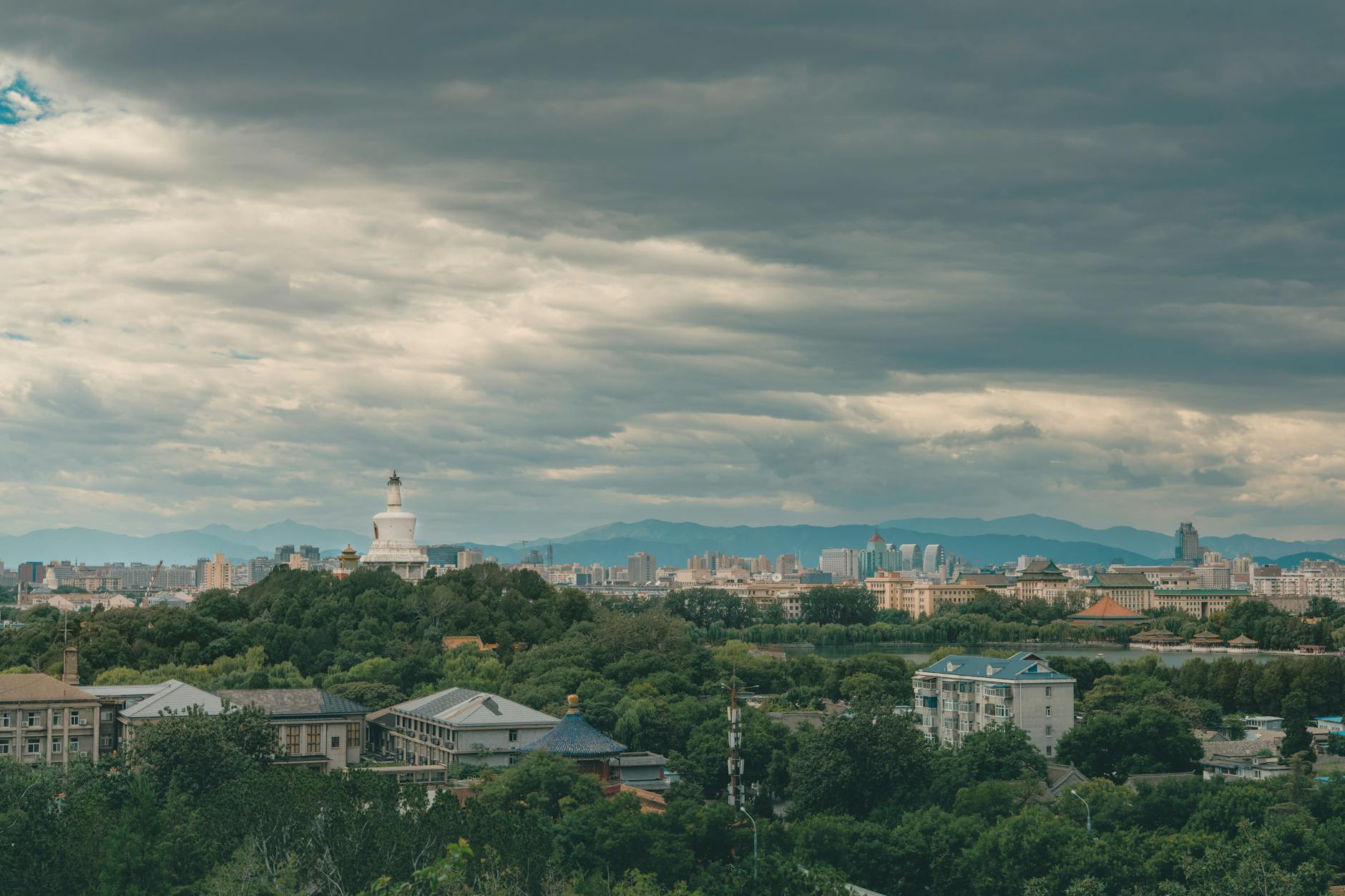
Beijing food is hearty, northern, wheat-forward, sesame-rich, mutton-friendly, and deeply satisfying when you stop chasing only the most famous names.
It is also more diverse than first-timers expect. Beijing has imperial cuisine, street snacks, Muslim-Chinese food, regional Chinese restaurants from all over the country, international dining in Chaoyang, Korean food in Wangjing, student food in Wudaokou, hotpot, barbecue, dumplings, noodles, and a strong café/craft beer scene.
What to Eat
| Dish / food | What it is | Why try it |
|---|---|---|
| Peking duck | Roast duck served with pancakes, scallions, cucumber, sauce, sometimes sugar. | The signature meal. Book a good version and enjoy the ritual. |
| Zhajiangmian | Wheat noodles with fermented soybean paste, pork, and vegetables. | Classic Beijing comfort food. Better than it sounds in translation. |
| Jianbing | Savory breakfast crepe with egg, crisp cracker, sauce, scallions, herbs, sometimes sausage. | One of China’s great portable breakfasts. |
| Dumplings / jiaozi | Boiled, steamed, or pan-fried dumplings. | Reliable, comforting, good for groups. |
| Mutton hotpot | Thin-sliced lamb cooked in a copper pot, often with sesame dipping sauce. | Essential cold-weather Beijing eating. |
| Lamb skewers | Cumin-heavy grilled lamb, often associated with northwest/Xinjiang-style restaurants. | Great casual evening food. |
| Baozi | Steamed buns with meat or vegetable filling. | Simple, cheap, ideal breakfast or snack. |
| Douzhi | Fermented mung-bean drink, famously polarizing. | A deep-cut old Beijing taste. Approach with humility. |
| Lüdagun | Glutinous rice roll with sweet bean paste and soybean flour. | Classic Beijing sweet snack. |
| Beijing yogurt | Thick yogurt often sold in small ceramic-style jars/cups. | Easy snack, nostalgic local association. |
| Muslim-Chinese snacks | Niujie-area sweets, beef/lamb dishes, sesame pastries. | One of Beijing’s most rewarding food subcultures. |
Food Neighborhoods and Situations
| Situation | Where to look |
|---|---|
| First duck dinner | Wangfujing/Dongcheng, Sanlitun, hotel restaurants, popular duck specialists |
| Hutong food walk | Gulou, Dongsi, Guozijian, Shichahai edges |
| Muslim food | Niujie and nearby areas |
| International restaurants | Sanlitun, Liangma River, Guomao, Chaoyang |
| Student/value food | Wudaokou, Haidian |
| Korean food | Wangjing |
| Cafés and bars | Gulou, Sanlitun, Liangma River, 798, Dongsi |
| Easy family meals | Malls in Wangfujing, Sanlitun, Guomao, and Solana/Liangma River area |
Restaurants and Food Names to Research
treat specific restaurant names as editorial leads, not freshness-guaranteed listings. Verify current hours, branches, booking rules, and reviews.
Duck: Siji Minfu, Da Dong, Made in China, Quanjude, Bianyifang.
Old Beijing snacks: Huguosi Xiaochi, Yaoji Chaogan, local baozi/noodle shops, snack counters in Dashilar and hutong areas.
Hotpot: Donglaishun for old-school mutton hotpot; many local chains and independent restaurants for spicy Sichuan/Chongqing-style hotpot.
Craft beer / casual drinks: Great Leap Brewing, Jing-A, Slow Boat, plus newer bars around Gulou/Sanlitun/Liangma River.
Coffee/cafés: Look around Gulou, Dongsi, 798, Sanlitun, and Liangma River; Beijing’s café scene changes quickly.
How to Eat Well in Beijing
- Book duck ahead, especially weekends.
- Use translation tools for menus.
- Do not judge a place only by English signage.
- Bring cash backup for tiny places, but expect QR payment dominance.
- Eat breakfast. Beijing breakfast is a real pleasure.
- Use malls for easy meals when tired; there is no need to suffer for authenticity every night.
- Try one local snack you might not love. That is part of travel.
- Order less than you think at first; portions can be substantial.
- If traveling with dietary restrictions, prepare translated allergy cards.
Vegetarian, Vegan, Halal, and Gluten-Free Notes
Vegetarian: Possible but requires attention. Many “vegetable” dishes use meat stock, lard, oyster sauce, or small amounts of pork. Buddhist vegetarian restaurants and international restaurants are easier.
Vegan: More difficult outside specialized restaurants. Use clear translated phrases.
Halal: Beijing has a significant Muslim food tradition, especially around Niujie, and halal restaurants can be very rewarding.
Gluten-free: Challenging. Soy sauce, wheat noodles, dumplings, pancakes, and cross-contamination are common. Bring translation cards and choose simple rice-based meals when needed.
Drinks and Nightlife
Beijing has several nightlife modes:
- Hutong bars around Gulou and Shichahai.
- International bars and clubs around Sanlitun.
- Craft beer taprooms.
- Hotel bars in CBD/Sanlitun/Wangfujing.
- Tea houses and quieter evening cafés.
- KTV for groups.
- Live music in selected venues, changing often.
The move: For a first visit, do one lakeside/hutong evening and one Sanlitun or Liangma River evening. That gives you two versions of the city.
Getting Around
Beijing’s transport is extensive, but the city is large enough that bad route planning still hurts.
Airport Arrival: PEK vs PKX
Beijing Capital International Airport (PEK): Northeast of the city. Often convenient for Dongcheng, Chaoyang, Sanlitun, and CBD depending traffic. Airport rail connects to urban subway transfer points, and airport shuttle buses serve multiple city destinations.[19]
Beijing Daxing International Airport (PKX): South of the city in a dramatic modern terminal. Daxing Airport Express and airport buses connect to the city; Beijing’s official PKX service page notes that tickets for airport buses and the airport express line can be purchased at service counters with staff assistance.[20]
The move: Do not book flights into one airport and out of another without checking transfer time. PEK and PKX are not interchangeable.
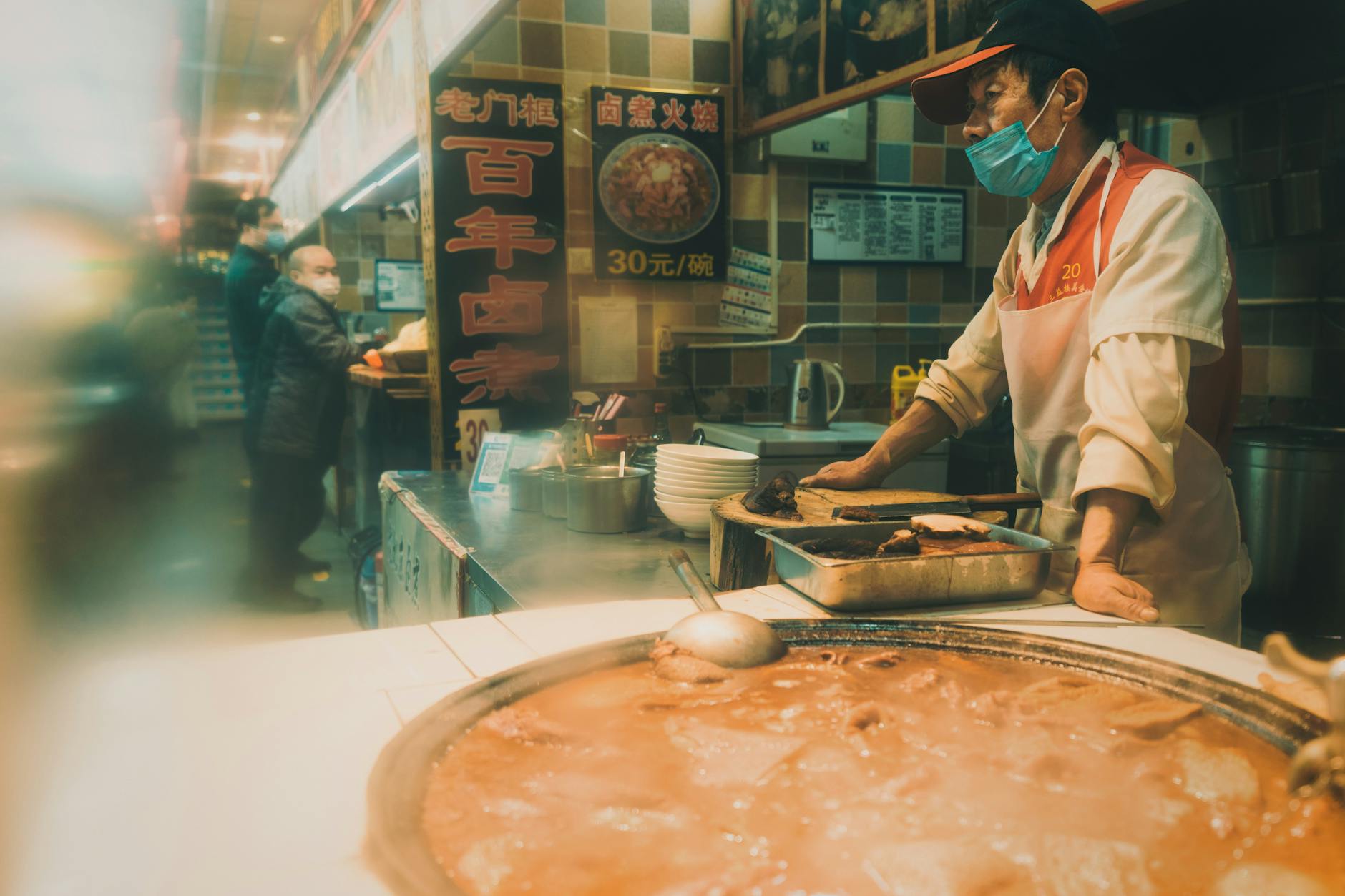
Subway
Beijing’s subway is usually the best way to cross the city without traffic. It is extensive, affordable, and increasingly visitor-friendly. It can also involve long walks inside stations, security screening, rush-hour crowds, and transfer complexity.
Good for: Forbidden City area, Temple of Heaven, Summer Palace, Lama Temple, Olympic Park, railway stations, many neighborhoods.
Less good for: Door-to-door travel with heavy luggage, late nights after subway closing, some hutong hotels, some Great Wall logistics.
Payment: Beijing now supports broad tap-and-go card networks on the subway, and official guidance also describes the Beijing Pass, Alipay QR code, vending machines, and manned counters as ticketing options.[7][8]
The move: Use subway for predictable cross-town travel. Use Didi/taxi for awkward short hops, luggage, late nights, or when the transfer is more exhausting than the ride.
Taxis and Didi
Taxis are useful, but language and payment can be barriers. Didi is the practical solution for many travelers, especially if set up inside Alipay or WeChat.
Tips:
- Keep your destination in Chinese.
- Have your hotel card or Chinese address.
- Do not expect drivers to speak English.
- Seat belts may be less consistently used than you expect; use them.
- Traffic can be brutal near ring roads, government areas, and rush hour.
Walking
Beijing is excellent for walking inside neighborhoods and exhausting for walking between neighborhoods. Roads are wide, blocks can be huge, and underpasses/overpasses may be required.
Best walking zones:
- Shichahai/Gulou hutongs.
- Dongsi and Guozijian.
- Qianmen/Dashilar.
- Temple of Heaven park.
- Summer Palace.
- Beihai and Jingshan.
- 798.
- Liangma River.
Less pleasant walking:
- Along major ring roads.
- CBD superblocks.
- Long routes beside high-traffic avenues.
- Summer midday.
- Winter windy evenings without proper layers.
Bikes
Shared bikes can be useful for confident riders in hutong and park-adjacent zones, but traffic norms may intimidate visitors. Use caution, avoid major roads at first, and do not assume bike lanes are calm.
Trains
Beijing has multiple major train stations. Always confirm the exact station in English and Chinese. Arrive early for high-speed trains because stations involve security, ID checks, and large halls.
The move: For day trips, build station time into your plan. A “30-minute train ride” can still require a 90-minute door-to-door process.
Driving and Car Rental
Do not rent a car for Beijing sightseeing. Driving restrictions, traffic, parking, language, licensing, and road norms make it a poor visitor choice. Use subway, taxis, Didi, trains, drivers, or tours.
Budget and Costs
Beijing can be good value compared with Tokyo, London, Paris, or New York, but the total trip can still climb quickly if you choose luxury hotels, private drivers, guided tours, and high-end restaurants.
Daily Budget Ranges
| Traveler style | Daily estimate excluding long-haul flights | Notes |
|---|---|---|
| Shoestring | CNY 300–600 | Hostel/budget room, subway, local food, limited paid attractions. Harder if you need English support. |
| Budget comfort | CNY 600–1,000 | Simple hotel, subway/Didi mix, local meals, major sights. |
| Mid-range | CNY 1,000–1,800 | Good hotel, duck dinner, some taxis, guided day trip to Great Wall. |
| Comfortable | CNY 1,800–3,500 | Strong hotel, private driver/tours, better restaurants, flexible transport. |
| Luxury | CNY 3,500+ | Five-star hotels, private guides, high-end dining, premium transfers. |
What Is Surprisingly Affordable
- Subway rides.
- Many park tickets.
- Local noodles, dumplings, baozi, breakfast foods.
- Some museums and public spaces.
- Tea, snacks, and casual meals outside tourist strips.
What Gets Expensive
- Luxury hotels in central areas.
- Private Great Wall drivers/tours.
- International restaurants and hotel dining.
- High-end duck restaurants.
- Last-minute bookings during public holidays.
- Premium shopping and antiques.
Best Value Moves
- Stay near a useful subway line rather than chasing the cheapest room.
- Use Didi/taxis strategically instead of constantly.
- Make lunch your experimental meal and dinner your planned meal.
- Pay for good Great Wall logistics.
- Use parks as low-cost cultural experiences.
- Book hotels early for spring/autumn and holidays.
- Avoid weak tours with shopping stops.
Splurge-Worthy
- A good centrally located hotel.
- A high-quality guide for the Forbidden City or historical day.
- A private or excellent small-group Great Wall trip.
- A proper Peking duck dinner.
- A room with strong air-conditioning in summer or heating comfort in winter.
Usually Not Worth It
- A far-flung hotel that saves little but costs time.
- A bargain Great Wall tour with forced shopping.
- Overpriced souvenir markets selling obvious mass goods.
- Generic view restaurants with mediocre food.
- Rushing two major distant attractions in one day just to “save time.”
Safety, Health, and Scams
Beijing is generally low in street crime for a city of its size. Violent crime against tourists is not a common travel concern. The bigger issues are legal/political sensitivity, documentation, traffic, scams around tourist areas, air quality, heat/cold, internet access, and payment/logistics friction.
General Safety
- Carry your passport on major sightseeing days, especially for ticketed attractions and security zones.
- Keep a secure copy of passport/visa/entry stamp separately.
- Use official taxis, Didi, or hotel-arranged cars.
- Be careful crossing roads; turning vehicles and scooters can surprise pedestrians.
- Avoid political demonstrations, sensitive photography, and arguments with security personnel.
- Do not photograph military/police/government-sensitive areas casually.
- Follow drone rules. China regulates drones; do not bring or fly one without understanding current requirements.
The U.S. State Department currently advises increased caution in China due to arbitrary enforcement of local laws, including exit bans.[23] The UK FCDO maintains detailed current travel advice for China, including safety, entry, legal differences, and regional risks.[24]
The move: For ordinary tourism, Beijing can feel very safe on the street. But “safe from mugging” is not the same as “no legal or procedural risks.” Respect local laws and sensitivities.
Common Scams and Friction Points
| Situation | What it looks like | What to do |
|---|---|---|
| Tea house / art student scam | Friendly strangers invite you for tea, art, or language practice, then a huge bill appears. | Be polite and decline invitations from strangers near tourist areas. |
| Unofficial taxi | Driver approaches inside airport/station offering ride. | Use official taxi queue, Didi, airport transport desk, or hotel transfer. |
| Bad Great Wall tour | Cheap tour includes shopping stops, vague itinerary, little Wall time. | Book reputable operators and read recent reviews. |
| Ticket reseller confusion | Third-party tickets with unclear access or pickup rules. | Use official channels when possible, or reputable platforms with clear passport-based booking. |
| Currency/payment friction | App fails, card declined, vendor cannot take foreign card. | Carry cash backup and two payment apps/cards. |
| Overpriced souvenirs | “Antique” or “handmade” goods at inflated prices. | Buy for pleasure, not investment; be skeptical of antiques. |
Health Practicalities
- Tap water should be boiled or filtered.
- Summers can be hot and humid; plan hydration and shade.
- Winters are cold and dry; moisturize and layer.
- Air quality varies. Check AQI and adjust outdoor plans if sensitive.
- Pharmacies are common, but bring critical medication and prescriptions.
- Food hygiene is generally manageable in established places, but use judgment with street food.
- Travel insurance should cover medical care, cancellations, and delays.
Air Quality
Beijing air has improved compared with its worst years, but AQI still matters, especially in winter or during certain weather patterns. Sensitive travelers should bring masks, check AQI apps, and avoid heavy outdoor activity on poor-air days.
Internet and Digital Security
Many foreign websites and apps may not work normally on local networks. Do not assume you can access Gmail, Google Maps, WhatsApp, Instagram, Facebook, YouTube, Slack, or your bank app the same way you do at home. Government travel advice from Australia specifically warns that internet restrictions may affect banking, popular apps, calls, and internet-based messaging.[22]
The move: Set up what you need before arrival, including payment apps, maps, translation, offline documents, and backup communication.
Accessibility and Mobility
Beijing can be difficult for travelers with mobility limitations, but not impossible with planning.
Challenges
- Long walking distances inside attractions.
- Huge squares and wide roads.
- Subway stations with long corridors and not always convenient elevators.
- Security checks and queues.
- Uneven hutong surfaces.
- Palace thresholds, steps, and stone paving.
- Great Wall stairs and steep gradients.
- Winter ice and summer heat.
Easier Choices
- Badaling Great Wall is generally more accessible than wilder sections.
- Major hotels in Wangfujing, CBD, and Sanlitun offer better accessibility than hutong hotels.
- Private drivers reduce fatigue.
- Museums and modern malls provide restrooms, elevators, and climate control.
- The Temple of Heaven park is large but can be paced slowly.
- Summer Palace has accessible areas but also hills, steps, and long distances.
Mobility-Conscious Itinerary
Day 1: Forbidden City with a guide and planned route, then Jingshan only if stairs are manageable or skip for Beihai.
Day 2: Badaling Great Wall with private transfer and accessible route research.
Day 3: Temple of Heaven park in the morning, rest, then Sanlitun or Wangfujing dinner.
Day 4: National Museum or 798, depending interests.
The move: Do not book a charming hutong hotel if you need elevators, taxi-door access, wide bathrooms, or predictable mobility support. Charm can become a trap.
Families, Solo Travelers, LGBTQ+ Travelers, Muslim Travelers, and Special Considerations
Families with Kids
Beijing can be excellent for families if paced well. Children often enjoy:
- Great Wall cable car/toboggan options at Mutianyu.
- Temple of Heaven park life.
- Hutong rickshaw/walking experiences if not too staged.
- Summer Palace boats when operating.
- Beijing Zoo/pandas if the family wants animals.
- Universal Beijing Resort.
- Olympic Green.
- Dumplings, noodles, duck pancakes, baozi, and snacks.
Family mistakes: Too many museums, too much walking in heat, no downtime, hutong hotel without practical facilities, Great Wall tour with too much bus time.
Solo Travelers
Beijing is generally comfortable for solo travelers who prepare digitally. Counter meals, noodle shops, cafés, parks, museums, and long walks work well. The main challenges are language, payment, and lonely logistics at night if staying far from active areas.
The move: Stay central, set up Didi/Alipay, save hotel address in Chinese, and do a guided food walk or group Great Wall tour if you want social time.
Solo Women Travelers
Street harassment is not usually a major Beijing issue compared with many global cities, but normal city caution applies. Use Didi/taxis at night if routes feel empty, avoid excessive drinking in unfamiliar nightlife settings, and keep your hotel address/payment backup secure.
LGBTQ+ Travelers
Beijing has LGBTQ+ communities and some queer-friendly spaces, but public visibility and legal/social context differ from many Western cities. Discretion is advisable in public, especially around official spaces. International hotels are usually straightforward for couples, but travelers should consider personal comfort and current local context.
Muslim Travelers
Beijing can be rewarding for Muslim travelers because of its Hui Muslim communities and halal food traditions, especially around Niujie. Look for halal signage and Muslim-Chinese restaurants. As always, verify ingredients and kitchen practices if you require strict compliance.
Business Travelers Adding Tourism
Stay in CBD, Sanlitun/Chaoyang, or near your meetings, then add focused sightseeing blocks. Do not underestimate traffic between business districts and old-city sights.
Remote Workers
China internet restrictions can make remote work difficult if you rely on foreign cloud tools, messaging apps, VPNs, or company authentication systems. Get employer approval, test access, and do not assume work systems will function normally.
Shopping and Souvenirs
Beijing shopping ranges from luxury malls to tea shops, bookstores, ceramics, textiles, calligraphy supplies, snacks, antiques, design objects, and tourist markets.
What to Buy
- Tea, if you buy from reputable shops and taste before purchasing.
- Cloisonné, especially if you understand quality differences.
- Calligraphy brushes, ink, paper, seals, and stationery.
- Silk or textiles, with skepticism about quality claims.
- Beijing snacks and packaged sweets.
- Chinese cookbooks, art books, or design books if language works for you.
- Ceramics, cups, and small household objects.
- Museum shop items from the Palace Museum and major institutions.
- Local craft beer or coffee beans if you enjoy contemporary food culture.
Where to Shop
| Interest | Areas |
|---|---|
| Museum gifts | Palace Museum shops, National Museum, major galleries |
| Traditional commercial streets | Dashilar, Qianmen, Liulichang |
| Books/culture | Wangfujing bookstores, university areas, art district shops |
| Design/art | 798, Caochangdi-type galleries when relevant, boutique stores |
| Luxury | SKP, China World, Sanlitun, Wangfujing malls |
| Tea | Maliandao tea market area or reputable city shops |
| Snacks | Daoxiangcun-style pastry shops, supermarket food gifts |
What Not to Buy Casually
- “Antiques” without proper expertise and export documentation.
- Wildlife products.
- Cultural relics.
- Tea sold through high-pressure tourist setups.
- Fake luxury goods.
- Anything that could create customs problems on departure or arrival home.
The Move
Buy souvenirs from museum shops, reputable tea shops, food stores, and small design retailers. Do not let a taxi driver, “student,” or tour stop decide where you shop.
Arts, Culture, History, and Context
A Short History for Travelers
Beijing’s importance comes from its role as a capital. The city has deep earlier history, but for visitors the major shape is imperial and modern.
The Yuan dynasty made the area a capital of Mongol-ruled China. The Ming dynasty rebuilt and formalized the imperial city, including the Forbidden City, and the Qing dynasty continued to rule from Beijing. The city’s central axis, palace compounds, altars, gates, and walls expressed a worldview in which political authority, ritual order, and cosmic order were spatially connected.
In the 20th century, Beijing became the capital of the People’s Republic of China. Tiananmen Square and surrounding structures took on enormous political and symbolic significance. Later reform-era growth brought ring roads, skyscrapers, universities, tech districts, shopping malls, embassies, contemporary art zones, Olympic architecture, and huge new infrastructure.
To visit Beijing well, you need to see all of these layers: imperial, republican, socialist, reform-era, global, and neighborhood.
Museums and Cultural Institutions
| Museum / institution | Best for | Notes |
|---|---|---|
| Palace Museum / Forbidden City | Imperial architecture, collections, palace life | Essential; book ahead. |
| National Museum of China | Chinese history and national narrative | Huge; reserve ahead. |
| Capital Museum | Beijing history | Useful context, often less overwhelming. |
| National Art Museum of China | Chinese art | Check current exhibitions. |
| 798 galleries | Contemporary art/design | Gallery quality varies; check what is on. |
| Prince Kung’s Mansion | Qing aristocratic residence and gardens | Interesting if you like courtyard architecture. |
| Confucius Temple / Imperial College | Education, Confucian tradition | Pairs well with Lama Temple. |
| Military Museum | Military history | Best for specialists. |
Books, Films, and Preparation
A city like Beijing rewards pre-reading. Consider:
- A concise history of China or late imperial China.
- A book on Beijing’s urban form and hutongs.
- Memoirs or fiction set in Beijing across different eras.
- Documentaries on the Forbidden City or Chinese imperial architecture.
- Food writing on northern Chinese cuisine.
- Maps of the old city and central axis.
The goal is not to become an expert. The goal is to arrive with enough context that palaces, squares, and hutongs are not just scenery.
Etiquette and Cultural Norms
- Speak softly in temples and museums.
- Follow security instructions immediately.
- Do not photograph guards, police, military, or sensitive checkpoints.
- Queue where people are queueing, but expect some pushing in crowded transit.
- Use both hands or a respectful gesture when giving/receiving important items.
- Do not stick chopsticks upright in rice.
- Tipping is not expected in ordinary situations.
- Avoid political arguments or sensitive topics with strangers.
- Carry tissues; public restrooms may not provide toilet paper.
- Bring hand sanitizer.
- Dress modestly but practically; Beijing is not especially formal for sightseeing.
Seasonal and Month-by-Month Guide
Spring
Spring is one of Beijing’s best seasons, but it has mood swings. March can be windy and dusty. April can be glorious. May can feel close to perfect except during Labour Day crowds.
Best activities: Temple of Heaven, Forbidden City, Jingshan, hutongs, Summer Palace, Great Wall, parks, photography.
Packing: Layers, wind protection, allergy meds, comfortable shoes.
Book ahead: Forbidden City, Great Wall transport, hotels during holiday periods.
Summer
Summer is not Beijing at its easiest. It can be hot, humid, stormy, and crowded. But if this is when you can go, the trip can still work.
Best activities: Early morning parks, museums, shaded hutongs, evening lakes, hotel pools, Universal Beijing if planned carefully.
Packing: Breathable clothes, sun hat, sunscreen, water bottle, umbrella, quick-dry layers.
Strategy: Start early, rest midday, go out again late afternoon.
Autumn
Autumn is Beijing’s champion season. Skies can be beautiful, temperatures comfortable, and the Great Wall superb. Ginkgo trees add color, and walking becomes a pleasure.
Best activities: Everything, especially Great Wall, Summer Palace, Temple of Heaven, hutongs, Jingshan, Beihai.
Watch out: National Day week.
Packing: Layers, light jacket, comfortable shoes.
Winter
Winter Beijing is cold, dry, and sometimes magnificent. The city’s red walls and gray skies can feel cinematic. Hotpot and duck make more sense. Crowds thin outside major holidays.
Best activities: Museums, Forbidden City, Jingshan if clear, hotpot, duck, hutong cafés, winter parks, Great Wall if prepared.
Packing: Serious coat, hat, gloves, scarf, warm socks, moisturizer, lip balm.
Watch out: Wind chill, icy steps, Spring Festival closures and crowds.
Day Trips and Side Trips
Great Wall
The obvious day trip and the one most visitors should prioritize. See the dedicated Great Wall section above.
Ming Tombs
Best for: Ming dynasty history, pairing with Badaling or private-route Great Wall trips.
Worth it? Good with a guide; less essential than the Great Wall or core Beijing sights.
Tianjin
Best for: Architecture, riverfront, food, a different northern city feel.
Logistics: High-speed trains make it manageable, but you need to choose the right station and plan transport in Tianjin.
Worth it? Good for longer stays or repeat visitors; not essential on a first four-day Beijing trip.
Chengde
Best for: Imperial summer resort, temples, Qing history, overnight side trip.
Worth it? Excellent for history travelers with extra time. Better overnight than rushed day trip.
Gubei Water Town / Simatai
Best for: Overnight scenery, night Wall views, couples, photographers.
Worth it? Good if you understand it is a developed scenic resort area, not a hidden ancient village.
Datong
Best for: Yungang Grottoes, Hanging Temple, Buddhist art, serious cultural travelers.
Worth it? Excellent as an overnight or longer side trip; too much for a casual Beijing day trip for most visitors.
Universal Beijing Resort
Technically inside Beijing but functionally a full-day trip for many tourists.
Best for: Families, theme-park fans, Harry Potter/Universal fans.
Worth it? Yes if you like theme parks; no if your first Beijing trip is short and history-focused.
What to Skip
This section is not about being cynical. It is about protecting time.
Skip or Deprioritize If Time Is Short
- Overstuffed Great Wall + Summer Palace + Olympic Park tours: They often become more bus time than experience.
- Nanluoguxiang at peak times: Famous hutong commercial street, but crowds can overwhelm. Go early or explore nearby lanes instead.
- Wangfujing snack street-style tourist food: The area is useful, but not the pinnacle of Beijing eating.
- Shopping stops on bargain tours: Usually not worth your limited time.
- Remote hotels near no useful subway line: False economy.
- Too many palace-style sites in a row: Forbidden City, Summer Palace, Temple of Heaven, Prince Kung’s Mansion, and Beihai all have value, but fatigue is real.
- Universal Beijing on a three-day first trip: Unless theme parks are a priority, use that day for Beijing itself.
- Jiankou wild-wall hiking as a casual tourist: Beautiful but risky; not a simple sightseeing choice.
Better Alternatives
| Instead of | Try |
|---|---|
| Peak-hour Nanluoguxiang | Dongsi, Guozijian, quieter Shichahai lanes |
| Generic tourist duck | A well-reviewed branch booked ahead |
| Bargain Great Wall tour | Small group/private driver with clear wall time |
| Midday summer palace marathon | Morning Temple of Heaven + afternoon museum/rest |
| Only Wangfujing | Qianmen/Dashilar, Gulou, Sanlitun, 798, parks |
| A hotel far outside the core | Smaller room near a good subway line |
Common Mistakes
- Not setting up payments before arrival. Fix Alipay/WeChat Pay before you need them.
- Forgetting passport-based ticketing. Attractions often require original passport.
- Underestimating security lines. Build time around Tiananmen, Forbidden City, museums, and stations.
- Booking the wrong train station. Beijing has multiple major stations.
- Choosing a hotel by price only. Location and subway access matter more.
- Overloading every day. Beijing’s scale punishes greed.
- Doing the Great Wall badly. Pay for clean logistics.
- Ignoring public holidays. National Day, Spring Festival, and Labour Day change everything.
- Expecting Google/WhatsApp/etc. to just work. Prepare for internet restrictions.
- Visiting only monuments. Add parks, hutongs, food, and neighborhoods.
- Going to Temple of Heaven too late. Morning park life is half the point.
- Skipping Jingshan after the Forbidden City. It is the view that explains the palace.
- Wearing bad shoes. Palaces, parks, and the Great Wall are step-heavy.
- Assuming taxis accept foreign cards. Use apps or cash backup.
- Treating hutongs as a photo set. People live there.
Packing List
Essentials
- Passport and visa/entry documents.
- Printed and digital hotel address in Chinese.
- Payment apps set up before arrival.
- International cards linked to Alipay/WeChat Pay if possible.
- Some RMB cash.
- Universal adapter.
- Portable charger.
- Translation app downloaded for offline use.
- Offline maps or local map apps.
- Comfortable walking shoes.
- Tissues and hand sanitizer.
- Medication and prescriptions.
- Travel insurance details.
Spring / Autumn
- Layers.
- Light jacket.
- Sunglasses.
- Allergy medication if sensitive.
- Wind-resistant outer layer.
Summer
- Breathable clothing.
- Hat.
- Sunscreen.
- Umbrella.
- Water bottle.
- Electrolytes.
- Quick-dry clothes.
Winter
- Warm coat.
- Hat, gloves, scarf.
- Thermal layers.
- Warm socks.
- Lip balm and moisturizer.
- Shoes with grip.
Great Wall Additions
- Extra water.
- Snacks.
- Sun protection.
- Layers.
- Good shoes.
- Motion sickness medicine if needed.
- Backpack that leaves hands free.
What Not to Bring
- Drone unless you fully understand current rules and restrictions.
- Too much luggage for hutong hotels.
- Expensive jewelry you do not need.
- Assumptions that every app works.
- A packed schedule with no recovery time.
Responsible and Respectful Travel
Beijing is not a museum set. It is a capital city where people live, work, worship, commute, exercise, and raise families inside spaces visitors may experience as “historic atmosphere.”
Travel well by:
- Respecting hutong residents’ privacy.
- Following temple etiquette.
- Not photographing security personnel or sensitive areas.
- Supporting small restaurants and shops when appropriate.
- Avoiding exploitative or intrusive “poverty/old alley” photography.
- Booking responsible Great Wall visits and staying on permitted paths.
- Reducing waste; carry a reusable bottle for boiled/filtered water where practical.
- Learning basic Mandarin phrases.
- Understanding that political and historical topics may be sensitive locally.
- Giving yourself enough time to behave calmly rather than rushing rudely.
The Move
The best Beijing traveler is curious, prepared, patient, and low-drama. The city does not need you to master it. It needs you to pay attention.
Final Planning Shortcuts
Best First-Timer Plan
Five days: Forbidden City/Jingshan/Qianmen; Great Wall; Temple of Heaven/Lama Temple/hutongs; Summer Palace/Beihai; National Museum or 798/Sanlitun.
Best Food-Focused Plan
Duck dinner, hutong breakfast walk, Niujie Muslim food, mutton hotpot, zhajiangmian lunch, dumplings, craft beer/café evening, and one regional Chinese restaurant from outside Beijing.
Best Family Plan
Wangfujing or Sanlitun hotel, Forbidden City with guide, Mutianyu with cable car/toboggan, Temple of Heaven morning, Summer Palace boat if available, Universal Beijing optional, easy mall dinners.
Best Budget Plan
Central budget hotel near subway, local breakfasts, subway everywhere, parks and hutong walks, one paid Great Wall transport day, one duck meal split with group, free/low-cost museums and public spaces.
Best Luxury Plan
Top hotel in Wangfujing, Sanlitun, or CBD; private guide for Forbidden City; private Great Wall driver; high-end duck; spa/rest afternoon; curated hutong food walk; cocktail night; Summer Palace with guide.
Best Second-Time Plan
Skip the checklist. Do deeper hutongs, Beihai, 798, Capital Museum, Niujie food, Jinshanling or Gubeikou, Chengde overnight, and a slow café/bar/park rhythm.
FAQ
Is Beijing worth visiting?
Yes. Beijing is one of the world’s essential cities for history, architecture, political symbolism, food, and the Great Wall. It is not always easy, but it is deeply rewarding.
How many days do I need in Beijing?
Four full days is the minimum satisfying first trip. Five days is better. A week is excellent if you want museums, food, neighborhoods, and day trips.
What is the best area to stay for a first visit?
Dongcheng, especially Wangfujing/Dengshikou/Dongsi/Qianmen, is the easiest general answer. Choose Shichahai/Gulou for hutong atmosphere or Sanlitun/Chaoyang for restaurants and international comfort.
Is Beijing safe?
Street crime is generally low for a city of its size. The bigger concerns are documentation, local laws, political sensitivity, scams around tourist zones, traffic, air quality, and digital/payment preparation.
Do I need a visa for Beijing?
It depends on your nationality, passport, travel purpose, and itinerary. China has expanded visa-free and transit visa-free options, but you must check official current rules.
Can I use a credit card in Beijing?
Sometimes at hotels, malls, and higher-end businesses, but do not rely on physical foreign cards for everyday spending. Set up Alipay and WeChat Pay with international cards if possible, and carry RMB cash backup.
Does Google Maps work in Beijing?
Do not rely on Google services working normally on local networks. Use local map apps such as Baidu Maps or Amap/Gaode, Apple Maps where helpful, offline notes, and hotel addresses in Chinese.
Which Great Wall section is best?
Mutianyu is the best first-timer default. Badaling is easiest and often best for accessibility. Jinshanling is best for hikers and photographers with a full day.
Is the Forbidden City worth it?
Yes. Book ahead, bring your passport, and pair it with Jingshan Park.
What should I book before arriving?
Forbidden City, Tiananmen-related access if needed, National Museum, Great Wall transport/tour, popular duck dinner, hotels during peak seasons, and any high-speed train trips during holidays.
What is the biggest mistake visitors make?
They underprepare for China-specific logistics and overpack the itinerary. Beijing is best when you plan the hard parts and leave space for the city.
Source-Check Notes for Editors
key date-sensitive logistics were checked against official or high-reliability sources in May 2026. Re-check all ticketing, entry, transport, hotel, and safety information directly.