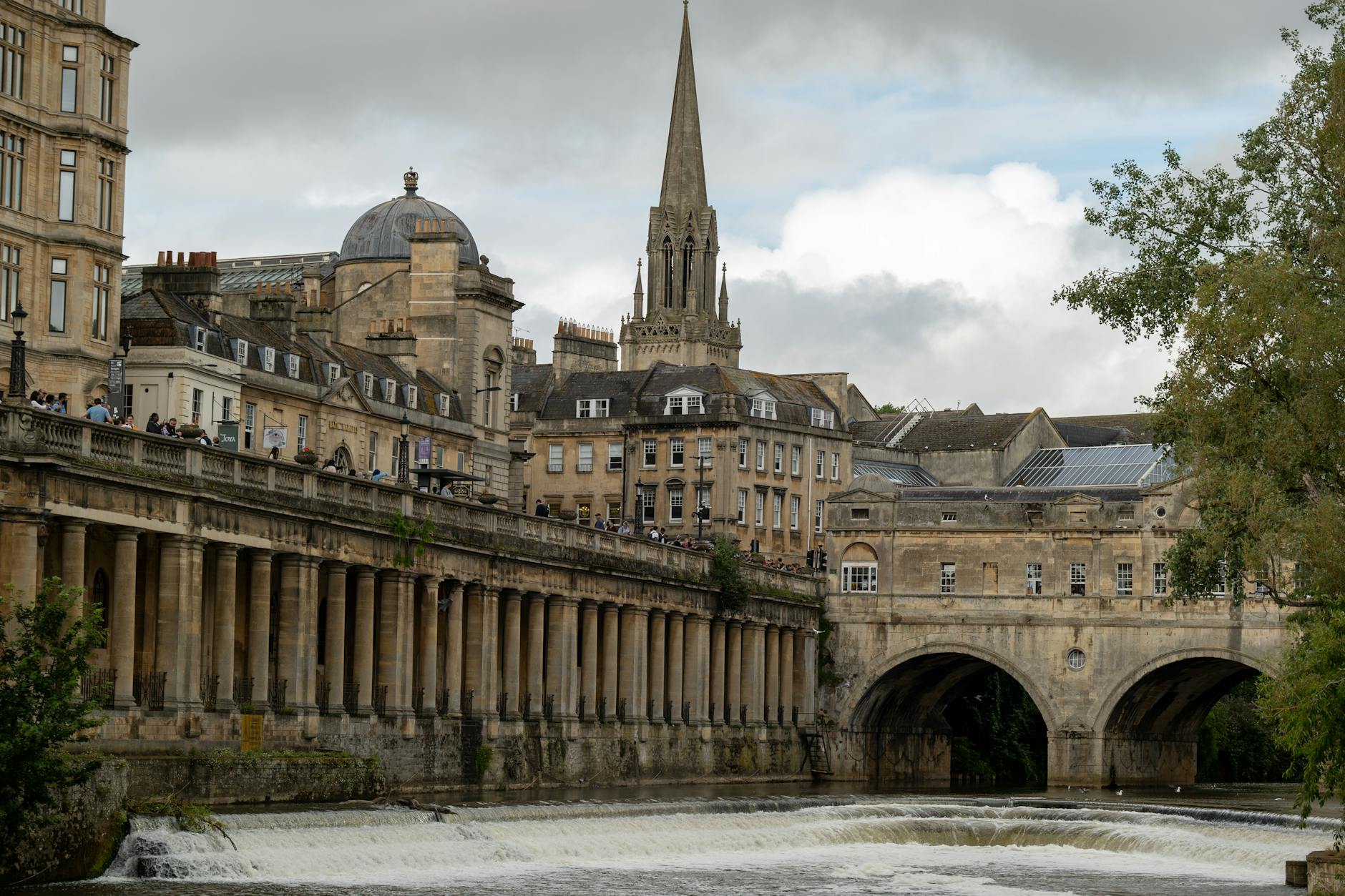
Bath is one of the easiest cities in Britain to visit badly because its beauty arrives too early. The honey-colored stone, the crescents, the abbey tower, the terraces, the river, the streets bending into one another with improbable coherence: all of it convinces the visitor almost immediately that the city will take care of itself. That confidence is where mistakes begin.
Start Here
Bath is not difficult, exactly, but it is delicate. It depends on pace more than many first-time visitors expect. Arrive as a day-tripper with a checklist, queue once, walk the most obvious streets, and leave, and you will understand why people think Bath is charming. Stay overnight, choose your base properly, read the city through its spa history and urban composition, and let the day slow down enough for the architecture to keep speaking, and Bath becomes something much better than charming. It becomes exact.
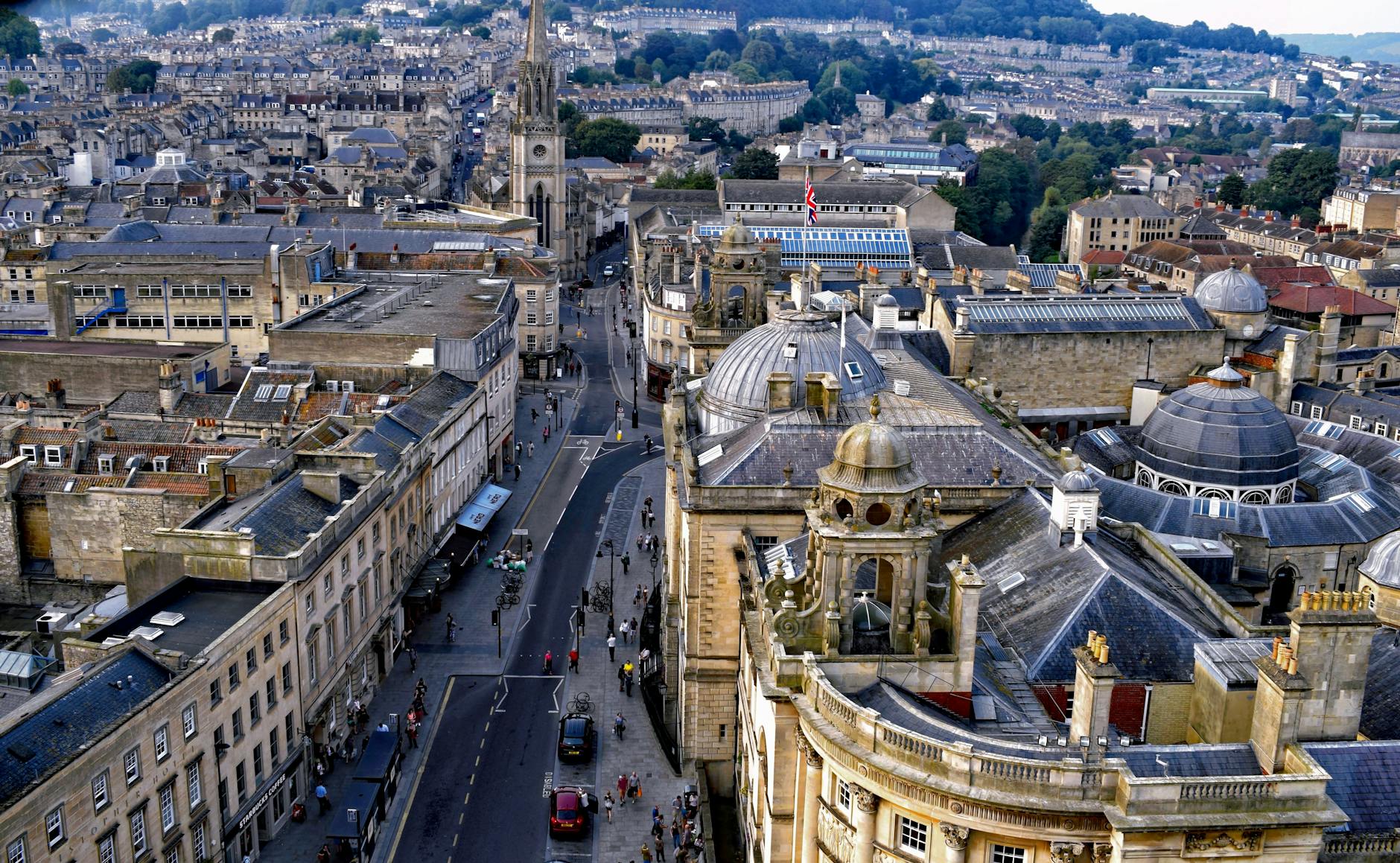
This is not a city that rewards volume. It rewards proportion. The buildings were meant to be seen in sequence. The slopes and terraces matter. The transition from abbey-and-Roman-centre Bath to the Circus, Royal Crescent, quiet side streets, and river walk matters. The difference between the daytime Bath of tour groups and the evening Bath of softened stone, calmer pavements, and dinner behind Georgian facades matters. When the trip is built correctly, Bath feels almost edited.
That is what makes it distinctive. Plenty of historic cities are pretty. Fewer are this compositionally controlled. Bath is not simply a container of attractions. It is a unified urban idea, one in which Roman water, Georgian planning, English restraint, and modern tourism pressure all sit uncomfortably but productively together. If you understand that tension, the city becomes more than photogenic. It becomes intelligible.
The weak Bath trip is obvious. It treats the city as a polished errand. Arrive from London or Bristol, see the Roman Baths, look at the abbey, photograph the Crescent, buy fudge or tea or linen soap, and go. The stronger Bath trip accepts that the city is small enough to master, but only if you stop trying to conquer it. One good hotel. One proper architectural loop. One or two paid highlights. One quiet church or museum moment. One evening in which the city is allowed to become elegant rather than merely visited. That is when Bath starts feeling like a city and not just a set.
The city in one sentence: Bath is a compact but high-maintenance city where the best first trip comes from balancing Roman and spa heritage, Georgian composition, crowd timing, and hotel quality instead of reducing the city to a very pretty day trip.
Quick Verdict
Best for: couples, solo travelers, architecture travelers, short England routes, first-time UK visitors who want beauty without London scale, food-and-hotel city breakers, and anyone who likes cities that feel composed rather than sprawling.
Not ideal for: travelers who need nonstop novelty, people who hate queues and refuse to plan, or anyone who expects Bath to behave like an effortless open-air museum at midday.
Ideal first visit: 2 full days.
Minimum worthwhile stay: 1 full day and 1 night, though 2 nights is much better.
Best overall months: May, June, September, and early October.
Best winter case: December for lights, interiors, and compact elegance, or late winter for a quieter architecture-first stay.
Biggest planning mistake: treating Bath as a same-day heritage errand instead of a place whose real value appears after the day-trippers thin out.
One thing to prioritize: the hotel base. In Bath, where you start and end the day materially changes the city's quality.
One thing to leave flexible: the exact sequence of your central highlights. Queue patterns and weather can change the emotional cost of the day.
The blunt version: Bath is one of Britain's strongest short city breaks if you let it stay slow, and one of its most overrated places if you reduce it to noon-hour crowd photography.
Who Will Love Bath?
Bath suits travelers who enjoy cities that feel arranged. This is not accidental beauty. It is designed beauty, or at least beauty shaped by successive ideas of order. The city works well for people who like urban form as much as isolated monuments: terraces, crescents, processional routes, framed views, and the sense that one elegant building is helping explain the next.
It is especially good for couples because few British cities of this size can produce such a polished weekend. Bath offers handsome rooms, manageable walking, good restaurants, an immediate sense of place, and enough atmosphere that the day can remain low-stress without becoming thin. It is also a city where evenings matter. The stone softens, the center loosens, and the city becomes less public and more intimate once many day visitors have gone.
Solo travelers also tend to do well here. Bath is walkable, safe-feeling, and legible. It has enough cafés, museums, church space, bookishness, and slow-moving streets that being alone feels natural. A solo traveler can spend hours here without pressure to perform tourism aggressively.
Architecture travelers may love Bath most of all. The city is unusually clear about what it wants to be seen as. The Roman and medieval layers matter, but Bath's emotional power for many visitors comes from the Georgian whole: the Circus, the Royal Crescent, the urban-facing facades, the way the city stages arrival and repetition.
It is less ideal for travelers who need a city to keep expanding all day. Bath is finite. That is part of the point. If you need a constant stream of new districts, different subcultures, or late-night unpredictability, the city may feel too self-contained. If you value finish, it can be extremely strong.
Bath at a Glance
| Question | Practical Answer |
|---|---|
| Main rail gateway | Bath Spa station |
| Best first-time arrival mode | Train or direct coach/rail-linked arrival |
| Best first-time base | Central Bath or a calm edge-of-center Georgian stay |
| Best way to understand the city | Walking |
| Signature paid highlight | The Roman Baths |
| Signature spiritual/architectural anchor | Bath Abbey |
| Signature modern-spa experience | Thermae Bath Spa |
| Best big-picture architectural sequence | Abbey and Roman core to Circus and Royal Crescent |
| Best all-weather city logic | One indoor anchor, one long walk, one slower meal |
| Car needed? | No |
| Parking strategy if driving | Use Park & Ride where sensible |
| Emergency number | 999 or 112 |
| Tap water | Safe to drink |
| Currency | Pound sterling |
| Power plugs | Type G |
2026 Visitor Notes
Bath Works Best As A Rail City
Bath Spa is the city's main station, right where a first-time visitor needs it: close enough to the center that arrival can move quickly into city use rather than transport management.[1] This is one of the reasons Bath works so well for a short break. The city starts almost immediately.
Driving Into Bath Is Usually The Wrong First Instinct
Official Visit Bath guidance continues to position Park & Ride as the practical strategy for drivers, with services now operating until 11:30 p.m. Monday to Saturday and until 6:00 p.m. on Sundays and public holidays.[2] That is useful because central Bath is exactly the kind of place where driving can make an elegant trip feel administrative.
The Roman Baths Need To Be Treated As A Booked Anchor
The Roman Baths are not a casual add-on. They are one of the city's defining draws and should be scheduled deliberately, especially in popular periods.[3] Bath becomes much easier once you accept that its most famous site should structure part of the day rather than be squeezed into leftover time.
Bath Abbey Is More Than The View Behind The Square
Bath Abbey remains one of the city's strongest balancing elements because it is active, visitable, and central both visually and historically.[4] It is worth more than a photograph from the Roman Baths queue line.
Thermae Bath Spa Is Real Bath Logic, Not Just A Luxury Extra
Thermae Bath Spa's official material still frames it as Britain's only day spa using Bath's natural thermal waters, and the main spa session includes the rooftop pool, Minerva Bath, and Wellness Suite.[5][6] This matters because Bath's spa identity is not just historical branding. Water remains part of the city's live logic.
Bath's UNESCO Status Is Not Decorative
Bath's inclusion within the Great Spa Towns of Europe helps clarify what makes the city distinct: it is not simply pretty Georgian England. It is a European spa city whose urban structure developed around mineral water, therapeutic, social, and recreational functions.[7]
Midday Bath And Evening Bath Are Different Cities
This is not a factual note from an institution so much as the practical consequence of Bath's fame. The center can feel compressed during peak hours. It becomes better when the trip includes morning timing discipline and at least one evening in town.
How to Understand Bath
Bath works through five forces.
The first is the spa origin. Roman water and later spa culture are not decorative backstory here. They are the reason Bath exists in the form it does.
The second is Georgian composition. More than many historic British cities, Bath still reads as a planned visual argument. It is a city of repetition, curve, stone tone, and controlled grandeur.
The third is compactness. The visitor territory is small enough to feel manageable and large enough to support a full stay. That ratio is one of Bath's greatest strengths.
The fourth is crowd pressure. Tourism does not just add noise. It changes how the city feels spatially. Timing is therefore part of understanding Bath.
The fifth is finishing quality. Good rooms, tea rooms, churches, hotel bars, and architectural transitions matter more here than in rougher, more improvisational cities. Bath is a city of finish.
The Five Baths A Visitor Actually Meets
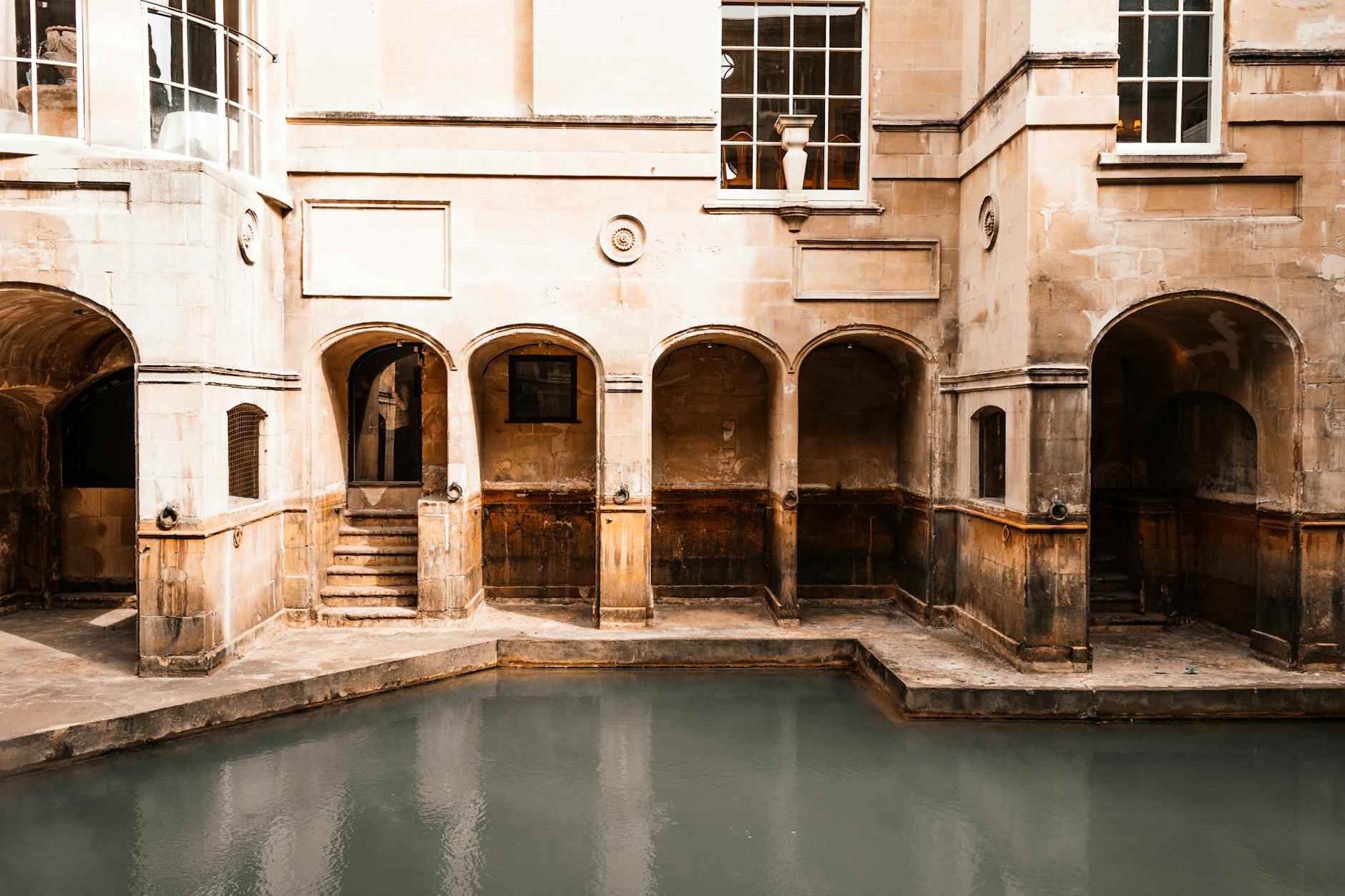
Roman Bath: the springs, the Roman Baths, the reason for the city's existence.
Abbey-and-central Bath: squares, church presence, shops, and the most immediate heritage density.
Georgian Bath: the Circus, the Royal Crescent, terraces, and the city as a unified urban performance.
Evening Bath: quieter pavements, restaurant light, softened stone, and the version of the city most day-trippers miss.
Spa Bath: modern reuse of thermal identity through Thermae and the city's long water story.
The Main Mental Shift
Do not ask, "What are the top things to see in Bath?" Ask, "How do water, architecture, and pace fit together here?" That produces a much better city than simply collecting landmarks.
What Bath Does Better Than People Think
Bath is unusually good at short-break completeness. Plenty of small cities are attractive; fewer can sustain a two-night stay without feeling like an elegant shell. Bath usually can, because the city offers built beauty, usable scale, one major historical anchor, one active religious anchor, a spa logic, and enough food and hotel quality to finish the day well.
It is also better than many first-time visitors expect at repetition. The city does not rely on endless novelty. Bath gets stronger when you rewalk routes at different times of day. Morning abbey square, late-afternoon Circus, and evening central Bath do not feel identical.
Another underrated strength is city-scale grandeur. Bath feels architecturally serious in a way that far exceeds its size. This is not because it has one enormous monument. It is because the whole city center participates in the same language.
Bath is also very good at hotel-dependent travel. In some cities, the room barely matters. In Bath, it matters a great deal, because the city is about polish, recovery, and atmosphere as much as sightseeing.
Finally, Bath does civilized slowness better than people think. If you plan with confidence, the city can feel deeply calm without becoming inert.
Best Time to Visit Bath
Bath is a year-round city, but it is not season-neutral. Light, garden quality, queue pressure, and weather affect the city's mood significantly.
Best Overall Months
May, June, September, and early October are often the smartest first-visit windows. The city is attractive on foot, the light helps the stone, and conditions are usually better for long walks without full summer compression.
Summer
Summer makes Bath easiest to admire quickly. Outdoor seating, longer evenings, and greener edges help. The tradeoff is that the city can feel too visible to itself. Crowds matter more here because Bath is small enough for crowd density to change tone fast.
Autumn
Early autumn suits Bath extremely well. The city can feel more settled, less theatrically visited, and more English in a grounded way. This is a strong season for architecture-and-food travelers.
Winter
Winter narrows Bath into interiors, Christmas-market energy if relevant, church space, hotel bars, and stone under low light. This can be very good if you actively want a compact city of atmosphere.
Spring
Spring is attractive because the city regains softness. Greenery matters in Bath more than people sometimes admit, because it frames and relieves the stone.
Month-by-Month Guidance
January: calm, colder, best for architecture purists. February: still subdued, but good for a quieter break. March: transitional and variable. April: increasingly workable, though still weather-sensitive. May: one of the best overall choices. June: excellent for a first visit. July: strong but busy. August: usable, though often crowded and a little overexposed. September: one of the smartest months to go. October: especially good early in the month. November: quieter and more interior-led. December: festive, atmospheric, and best if you like compact city drama.
How Many Days You Need
One Day
Enough for a respectable first impression, not enough for Bath to feel complete.
Two Days
Ideal for most first visits. One day should anchor the Roman Baths and abbey core. The other should lean architectural and slower, with the Circus, Royal Crescent, and more unforced city time.
Three Days
Very good if you want to include Thermae Bath Spa, museums, longer lunches, and one partially unstructured day.
Four Days Or More
Only really necessary if Bath is serving as a slower regional base and the city itself still remains the point.
Where to Stay in Bath
Where you stay matters because Bath is a city of first and last impressions. A strong hotel makes the city feel composed from breakfast to evening return. A weak, overly practical base can make it feel fussy and overhandled.
Fast Answer
For most first-time visitors, stay central or quietly edge-of-center in a Georgian building or a property that feels in conversation with the city. You want easy access to the abbey core and a manageable walk toward the Circus and Royal Crescent.
Neighborhood Decision Table
| Traveler Type | Best Area |
|---|---|
| First-time visitor | Central Bath |
| Couple weekend | Quiet central or Georgian edge-of-center stay |
| Rail traveler | Near Bath Spa but not so close that the stay feels purely functional |
| Architecture-first stay | Central-west toward the Georgian highlights |
| Calm luxury stay | Slightly removed from the busiest core but still walkable |
Central Core
Best for: first-timers, short stays, and travelers who want Bath to feel immediately available. Why it works: easy access to the abbey, Roman Baths, shopping streets, and restaurants. Tradeoff: can feel busier and more exposed to day-visitor pressure. Best use: one- or two-night first stays.
Georgian Edge Of Center
Best for: atmosphere, quieter mornings, and a stronger sense of Bath as a lived architectural city. Why it works: you remain close to everything while gaining elegance and relief. Tradeoff: can involve mild uphill walking depending on the property. Best use: couples and repeat UK travelers.
Station-Adjacent Practical Stay
Best for: convenience-led itineraries. Why it works: arrival and departure stay friction-light. Tradeoff: some properties feel more transactional than beautiful. Best use: very short stays where logistics matter more than mood.
Area Profiles
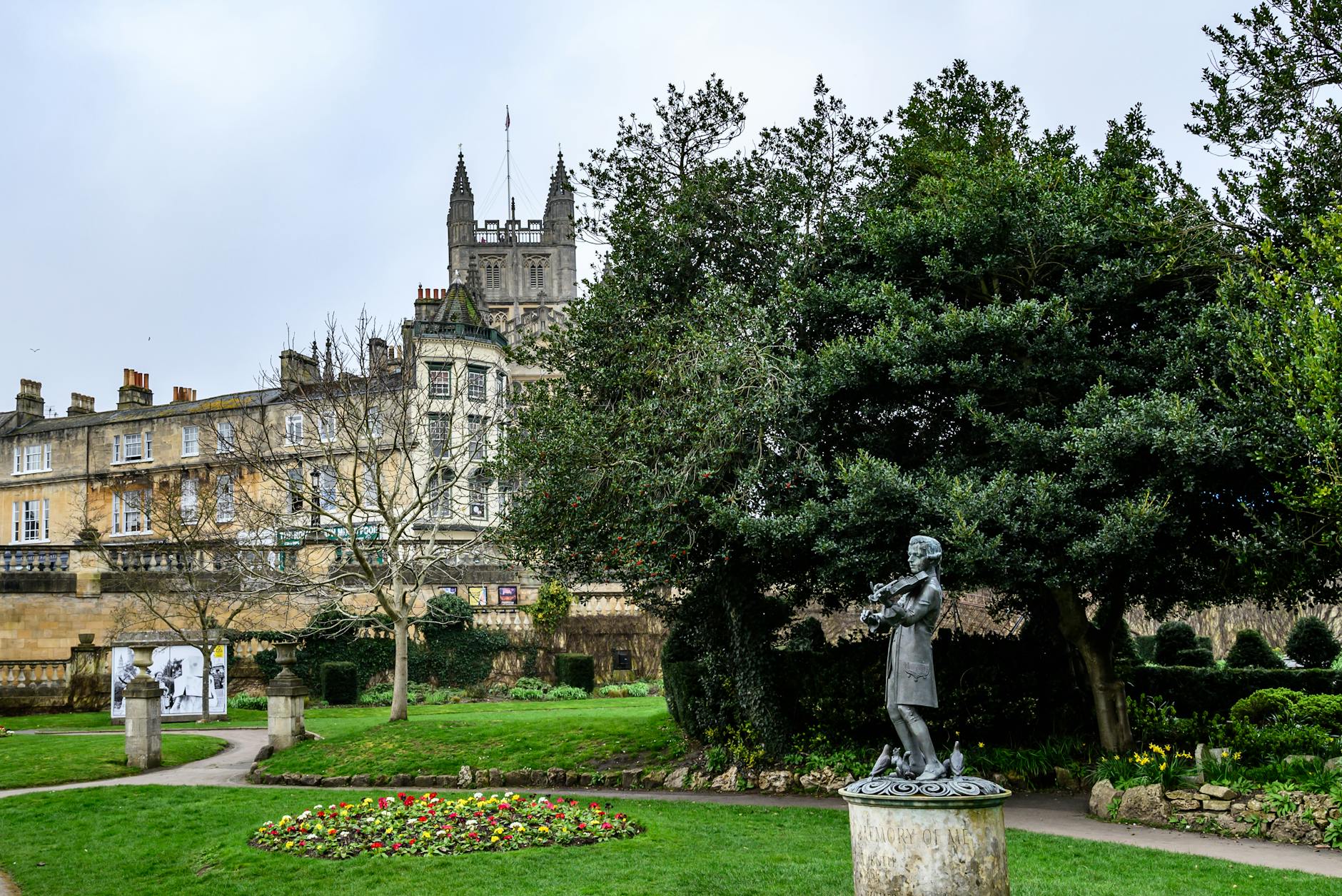
Abbey/Roman core: best for first orientation and central density. Pulteney and river edge: best for scenic breathing room and transition. Circus/Royal Crescent side: best for understanding Georgian Bath properly. Central commercial streets: useful, but not the soul of the city. Hillier residential edges: good for hotel charm, but choose carefully.
Neighborhood Guide: Where to Explore, Not Just Sleep
Begin in the central Roman-and-abbey Bath zone because it gives you the city's origin story in compressed form. The Roman Baths and Abbey precinct are where Bath's fame gathers most tightly, but the area should be used as a starting grammar, not the whole book. If you stay only there, the city can feel like an attraction cluster.
From the central core, the city improves as you move outward with intention. The route toward the Circus and Royal Crescent is not just about ticking off famous facades. It is about letting Bath's Georgian order accumulate. The city wants to be read in curves, terraces, and repeated stone language. The stronger visitor sees this as one extended argument, not three separate landmarks.
The river and Pulteney side help prevent Bath from becoming too self-enclosed. These areas are useful not because they are louder or more exciting, but because they give the city air. Bath improves when the day alternates between enclosed architectural grandeur and lighter civic space.
In the evening, central Bath usually regains balance. Streets that felt over-observed during the day start relaxing back into themselves. This is when the city stops behaving like a heritage product and begins behaving like a place again.

The Best Things to Do in Bath
- Visit the Roman Baths and let the city's origin become concrete rather than abstract.[3]
- Spend real time in Bath Abbey, not just the square around it.[4]
- Walk from the central core to the Circus and Royal Crescent as a single architectural sequence.
- Use Thermae Bath Spa if modern thermal bathing appeals to you and the trip can support a slower ritual.[6]
- Take an evening walk once the city center has calmed down.
- Read Bath as a UNESCO spa city, not just a Georgian postcard.[7]

Itineraries
If You Have One Day
Arrive early. Do the Roman Baths in a timed, deliberate block. Use Bath Abbey either before or after depending on queue pressure. Have lunch, then walk out toward the Circus and Royal Crescent. Finish with one slower drink or tea rather than trying to force extra highlights.
If You Have Two Days
Use day one for the Roman-and-abbey core plus evening Bath. Use day two for the Georgian city, the river/Pulteney side, and either Thermae Bath Spa or a slower architecture-and-food day. This is the strongest first-time pattern.
If You Have Three Days
Keep the first two days as above and use the third for spa time, museums, a long lunch, shopping, or simply rewalking the city under different light. Bath is one of those cities where repetition can improve the trip.
Itineraries By Traveler Type
For Couples
Stay slightly calmer than the absolute busiest core if possible. Do one major attraction per day, prioritize dinner, and give the city one full evening. Bath is at its best when it remains unforced.
For Solo Travelers
Lean into walking. Use one central anchor, one long architecture loop, and a café or church pause. Bath is easy to inhabit alone if you stop trying to optimize every hour.
For Architecture Travelers
Treat the Roman Baths as origin, not climax. The deeper pleasure here is the Georgian whole. Rewalk the city's formal sequences and pay attention to how often Bath is building space, not just buildings.
For Rail-Based England Trips
Bath is one of the best overnight or two-night city breaks in the country because arrival is simple and the city is self-contained. The mistake is trying to "fit Bath in." It works better when it is allowed to hold the trip for a night or two.
Food and Drink
Bath is not a city where the food scene needs to dominate the trip, but it is good enough to complete it properly. The best approach is not gastronomic aggression. It is one good lunch or tea, one considered dinner, and a willingness to let the city remain polished rather than overbooked.
The center offers obvious options, but Bath often rewards the slightly more careful choice. You want places that feel aligned with the city: composed rooms, good service, food that suits a city of proportion rather than trying to overpower it.

Getting Around
Walk. Bath's central strength is that the city reveals itself properly on foot. Distances are short, but the city should still be paced, not rushed. If you are driving in, use the official Park & Ride system where appropriate and keep the car from interfering with the city.[2]
If you arrive by train, Bath Spa station gives you a clean start because it places you close to the center immediately.[1] That reinforces the basic rule of the city: movement should feel elegant, not procedural.
What To Skip
Skip the temptation to see Bath only between 11 a.m. and 4 p.m. Skip trying to package every famous site into one block. Skip the assumption that shopping streets are the full city. Skip any plan that leaves no room for evening Bath.
Common Mistakes
- Doing Bath as a same-day checkbox from somewhere else.
- Choosing a hotel only for price and not for mood or route logic.
- Treating the Roman Baths as the whole city.
- Never seeing Bath after many day visitors have gone.
- Confusing compactness with the need to rush.
My Blunt Advice
Bath is worth slowing down for. That sounds obvious, but many people still refuse the terms the city offers. They try to make Bath efficient when it is really about finish. They chase the photograph instead of the sequence. They treat a thermal city as a façade city. They arrive at noon and wonder why it felt crowded and faintly overhandled.
Come for at least one night, preferably two. Stay somewhere that suits the city. Book the Roman Baths deliberately. Decide whether Thermae is part of your version of Bath or not. Walk the Georgian sequences properly. Give the city an evening. If you do that, Bath stops being merely attractive and starts becoming one of the most exact short breaks in Britain.
Where Bath Fits in a UK Trip
Bath occupies a distinctive place in Britain because it manages to feel both iconic and unusually complete at short length. Many visitors know it as a day-trip destination from London or as a picturesque stop somewhere on the way to the West Country. That use is understandable, but it undersells what the city is actually good at.
For a first UK trip, Bath is strongest in one of three roles.
The first is as a short architectural city break. Few places in Britain can match Bath's ability to hold two nights so elegantly. The city has enough history, enough urban coherence, enough hotel quality, and enough finish to justify being the main event for a weekend.
The second is as a counterweight to London. After the capital, Bath can feel wonderfully edited: smaller, more legible, more composed, and less exhausting without becoming insubstantial. If London gives you national scale, Bath gives you one of the clearest examples of British urban design working almost as a single visual proposition.
The third is as a bridge to the southwest. Because Bath is rail-friendly and narratively strong, it can reset the tone of a broader trip. It shifts the traveler from capital sprawl into a slower, more exact register before the route continues outward.
Bath is slightly weaker only when it is treated as an errand. It is too composed a city to be used only as a pause button. The more carefully you let it hold its own shape, the better it gets.
Bath Versus Oxford, York, and Edinburgh
Bath improves immediately once it is compared accurately.
Against Oxford, Bath is more visually unified and more explicitly aesthetic. Oxford often feels collegiate, layered, and intellectually distributed. Bath feels staged, in the best sense: one city-shaped argument of stone, curve, and spa-era self-presentation. Oxford is more various. Bath is more composed.
Against York, Bath is less medieval in emotional register and far more Georgian in total effect. York often works through walls, narrow streets, and a denser accumulation of English history. Bath works through urban sequence, terrace logic, and the strange confidence of a city that still behaves like an idealized resort-capital hybrid. York can feel older; Bath often feels more edited.
Against Edinburgh, Bath is much smaller, softer, and less topographically dramatic. Edinburgh overwhelms through cliff, monument, and narrative force. Bath persuades through finish, proportion, and civility. If Edinburgh is grandly theatrical, Bath is elegantly deliberate.
The right question is not which city is "better." It is what sort of British city experience you want. If you want compression, polish, and one of the clearest urban identities in the country, Bath is an unusually strong answer.
First-Time Visitors Versus Repeat Visitors
Bath is highly satisfying on a first trip and often more intelligent on a second one.
First-time visitors naturally build around the obvious skeleton: Roman Baths, Abbey, central core, Circus, Royal Crescent, perhaps Thermae, perhaps afternoon tea, one scenic meal, and one harboring hope that the city can somehow be fully solved in a day. That outline is not wrong. It simply tends to overconcentrate the city at its busiest points.
Repeat visitors usually stop trying to "solve" Bath. They stay a little better, slow down a little more, and allow the city to work through recurrence rather than first-pass consumption. The Roman Baths no longer need to bear the full symbolic load. The Georgian sequences get more real time. The evenings become more central. The hotel matters more. A second visit often makes Bath feel less like a beautiful obligation and more like a place with real urban temperament.
For first-timers, the key question is: what is the clearest way to meet Bath's Roman, Georgian, and spa logic without crowding them into one overhandled day? For return visitors, the better question becomes: which Bath do I want this time? Spa Bath, winter Bath, architecture Bath, quieter hotel-and-dinner Bath. The second trip often works better because the city no longer needs to prove its beauty. It can start proving its depth.
Summer Bath Versus Shoulder-Season and Winter Bath
Bath is very usable across the year, but its mood changes significantly with season.
Shoulder-season Bath is often the smartest first-time answer. In May, June, September, and early October, the city remains fully walkable, the stone reads beautifully in the changing light, and the central core tends to feel a little less overhandled than during peak holiday surges. This is when Bath's balance is easiest to appreciate.
Summer Bath can be wonderful, but it can also exaggerate the city's weaknesses. The center grows denser, queues feel more visible, and the prettiest routes become more obviously shared. If you are staying overnight and moving well, summer can still be lovely. If you are trying to force maximum coverage into a single crowded daytime block, it becomes much less persuasive.
Winter Bath is a different but often excellent product. The city narrows into church space, hotel life, museum logic, warm interiors, and low-light stone. It becomes less floral and more architectural. For many travelers, that version is actually closer to the city's deeper appeal.
The mistake is to think Bath only works in peak nice weather. It does not. It works whenever the traveler understands which version of Bath the season is offering.
Why the Base Matters More Than It Looks
Because Bath is compact, visitors often assume that almost any central hotel will do. That is not quite true. In a city built so heavily around finish and sequence, the base changes the entire tone.
Stay too deep in the busiest center and the city can start to feel overobserved, overcommodified, and more touristic than it really is. Stay too far out and the repeated returns that make Bath so satisfying become small logistical irritations. Stay in the right place and the city starts and ends each day at exactly the level of elegance it needs.
That is why central Bath and the quiet Georgian edge of center are such strong first answers. You want to be able to use the Abbey core, the Roman Baths, and the Georgian sequences without turning them into commutes, but you also want some relief from the most compressed visitor flow.
The right test is simple: when you leave the hotel, does Bath begin in a way that already feels aligned with why you came? If yes, the base is likely right. If you feel either too dropped into the busiest performance or too detached from the city’s strongest rhythms, it probably is not.
Why One Proper Bath Day Matters
Bath is one of those cities that can be ruined by fragmentation. Arrive late, see the Abbey square, queue the next morning for the Roman Baths, photograph the Crescent, and leave, and you may think the city was as pretty as promised and slightly thinner than hoped. What you lacked was one proper Bath day.
By "proper," I mean a day where Roman Bath, abbey Bath, Georgian Bath, and evening Bath can actually speak to one another. The Roman Baths make more sense when the city around them has had time to become coherent. The Georgian crescents feel stronger when they are not treated as isolated landmarks. The evening feels better when the day has not been reduced to proof and motion.
That is why Bath so often needs at least one overnight stay. A proper day allows the city to stop being a procession of famous facades and start acting like a place with order, intention, and depth.
If you only have one full day, make it one version of Bath leading into another, not a stack of disconnected highlights. If you have two days, let one belong to the Roman/abbey core and one to the Georgian city plus slower hours.
Day Bath Versus Evening Bath
Bath changes meaningfully after daytime visitor pressure drops, and a good first trip should exploit that.
Day Bath is explanatory. This is when the Roman Baths, Abbey, shopping streets, and architectural routes make the city’s argument visible. You understand where the spa story begins, how the Georgian composition works, and why the city became such an object of admiration.
Evening Bath is persuasive. Once some of the day-trip pressure drains away, the city regains proportion. The stone softens, the center becomes less processed, and restaurants, bars, and hotel spaces rise in importance. This is often when Bath stops feeling like a famous package and starts feeling like a city.
Weak itineraries spend all their energy in the busiest daylight core and then leave just before the city gets good. Strong itineraries keep one evening in reserve so Bath can finally breathe.
Why the Roman Baths Should Not Own the Whole Trip
The Roman Baths are one of the city's essential anchors. They should absolutely dominate part of a first stay. They should not dominate your whole idea of Bath.
Because they are so famous and so central, travelers often let the Baths become the full logic of the trip. Everything else turns into a surround-sound effect for the main heritage site. The result is that Bath's deeper urban pleasure, which lies in the Georgian whole, evening calm, spa identity, and repeated architectural sequences, gets weakened.
The problem is not that the Roman Baths are overvalued. They are properly valued. The problem is that the city around them still needs enough room to answer back. Bath is not one attraction and a very good gift shop district. It is an argument about water, health, architecture, display, and finish carried across the whole center.
The best use of the Roman Baths is to let them establish origin and then let the rest of the city provide the composition.
Why Bath Often Improves on the Second Visit
Bath often gets better the second time because the first visit is usually overburdened by recognition. Travelers arrive already knowing the city is beautiful. They then spend too much energy verifying every famous angle. On the second visit, that proving is no longer necessary.
That frees the trip to become more precise. The room gets better. The city gets slower. The Roman Baths no longer need to be the whole symbolic center. The Georgian city gains more time. Thermae or one long lunch starts to feel like part of the city's logic instead of an indulgence.
In a city where finish matters so much, that often changes everything. The second visit is usually the one in which Bath stops feeling merely attractive and starts feeling exact.
How Bath Changes Over the Course of a Stay
On arrival, Bath often feels instantly legible. The stone, the Abbey, the center, the curves of the streets: the city makes a quick aesthetic case. That immediate beauty is real, but not yet complete.
By the second day, if the stay is going well, the city starts differentiating. The Roman core becomes one kind of Bath, not the whole of it. The Georgian routes stop being a list of facades and start feeling like one long compositional movement. The hotel begins to matter as a partner to the city rather than just as accommodation.
By the third day, Bath often relaxes fully into its best form. You stop asking what else there is to do and start appreciating how well the city repeats. One more loop, one more view, one more evening, one more return to the center under softer light. Bath works because repetition improves it.
That is why one night is the minimum respectable stay and two nights are so often ideal. The first day gives the image. The second gives the structure. The third, if you have it, gives the city.
Source Notes
- 1. Great Western Railway, Bath Spa station information: [https://www.gwr.com/stations-and-destinations/stations/bath-spa](https://www.gwr.com/stations-and-destinations/stations/bath-spa)
- 2. Visit Bath, official Park & Ride information: [https://visitbath.co.uk/plan-your-visit/travel-information/park-and-ride-in-bath](https://visitbath.co.uk/plan-your-visit/travel-information/park-and-ride-in-bath)
- 3. Bath & North East Somerset Council, Roman Baths information: [https://www.bathnes.gov.uk/tourism-and-heritage/residents-discovery-card/roman-baths](https://www.bathnes.gov.uk/tourism-and-heritage/residents-discovery-card/roman-baths)
- 4. Bath Abbey, official visiting information: [https://www.bathabbey.org/visiting/](https://www.bathabbey.org/visiting/)
- 5. Thermae Bath Spa, official about page: [https://www.thermaebathspa.com/about-us/](https://www.thermaebathspa.com/about-us/)
- 6. Thermae Bath Spa, official spa-session page: [https://www.thermaebathspa.com/spa-sessions-new-royal-bath](https://www.thermaebathspa.com/spa-sessions-new-royal-bath)
- 7. UNESCO World Heritage Centre, The Great Spa Towns of Europe listing including Bath: [https://whc.unesco.org/en/list/1613](https://whc.unesco.org/en/list/1613)