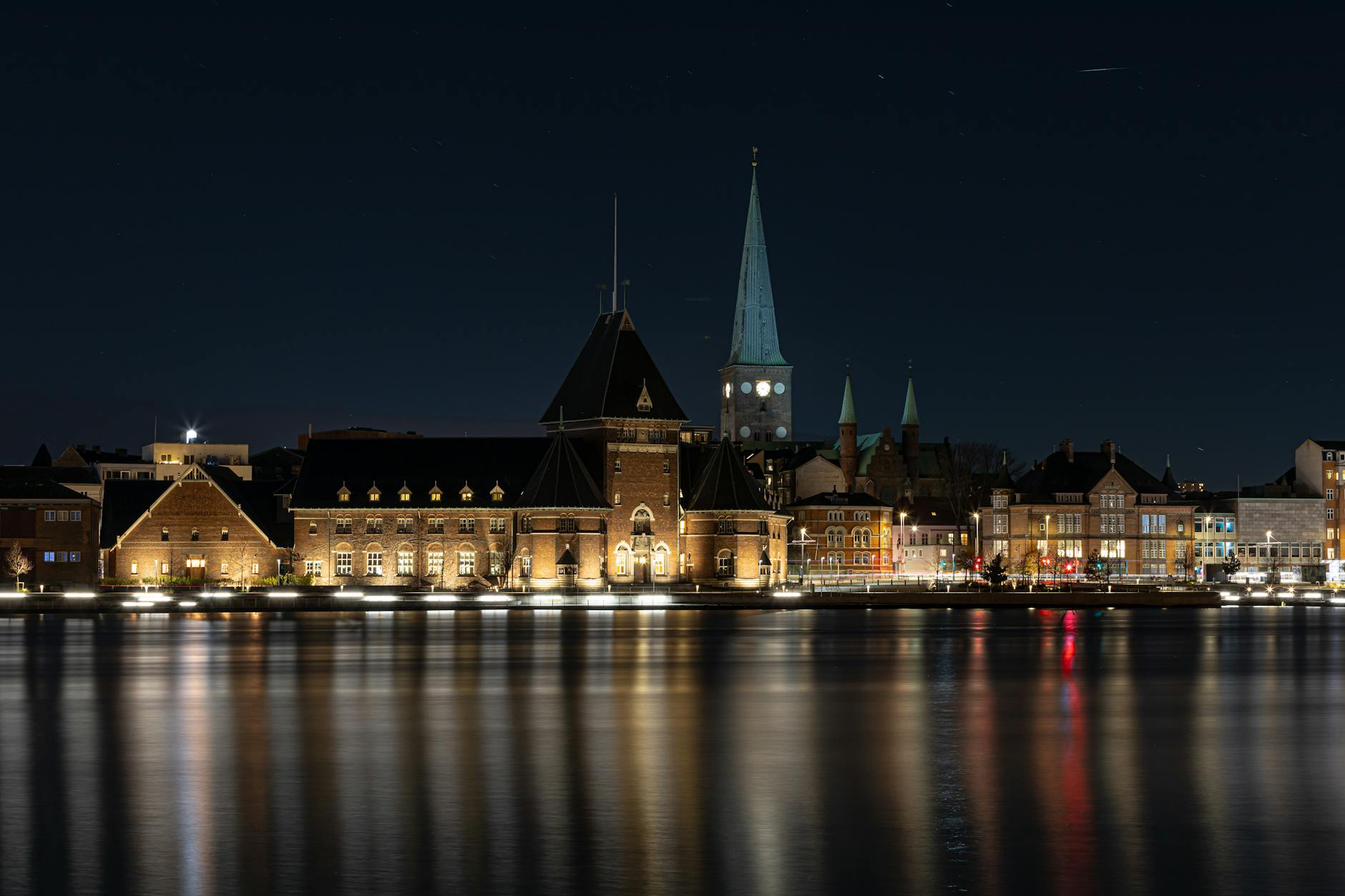
Aarhus is one of those cities that gets introduced with information that is technically correct and spiritually useless. Denmark's second city. A cultural hub. A university town. A place with good design, good food, and a regenerated waterfront. None of that is false. None of it tells you what the city feels like, which is the part that actually matters.
Start Here
The city works best when you stop asking where it ranks and start asking how it moves. Aarhus is compact enough to feel immediately usable, but not so small that it becomes a toy town. It is a harbor city, a student city, a museum city, and a city that has spent the last generation changing how it meets the water. It can give you cobbled streets, contemporary architecture, a serious art museum, one of Europe's best open-air historical museums, a beach-and-forest edge, and a dinner-and-wine-bar evening, all without the day ever feeling overpacked.
That is what makes Aarhus strong. It is not trying to overpower you. It is trying to fit together. The center is legible. The river and harbor organize the city emotionally. The university and younger population keep it from feeling merely polished. The food scene is better than many first-time visitors expect. The museum layer is substantial enough to justify a city-first itinerary. And because the place is still scaled for human use, the traveler can spend more time being in Aarhus than administering Aarhus.
The weak trip is easy to spot. Someone arrives expecting a provincial version of Copenhagen, walks the Latin Quarter for an hour, checks off ARoS, glances at the waterfront, maybe eats well by accident, and leaves impressed but not converted. The stronger trip lets the city reveal its own logic: the old center, the river mouth origins, the contemporary harbor shift, the cultural institutions, the university and café energy, and the closeness of nature to daily urban life. Aarhus improves quickly once you stop measuring it against bigger capitals and start using what is actually in front of you.
The city in one sentence: Aarhus is a compact, design-aware Danish city where the best trip comes from combining museums, harbor life, student-city energy, and neighborhood texture rather than treating it as a side note to Copenhagen.
Basic data
| Population | About 290,000 in the city; municipality about 360,000 |
|---|---|
| Area | 91 km2 in the urban core |
| Major religions | Christian heritage with growing secular and minority-faith communities |
| Political system | Municipal government inside a parliamentary constitutional monarchy |
| Economic system | High-income mixed economy led by education, technology, services, port activity, and culture |
Quick Verdict
Best for: couples, solo travelers, short Scandinavian routes, architecture and design travelers, museum lovers, food travelers, first-time Denmark visitors who want something more human-scaled than the capital, and anyone who likes cities that feel young without feeling chaotic.
Not ideal for: travelers who need capital-city monument density, people looking for maximal nightlife rather than good evenings, or anyone who expects a nonstop medieval old-town fantasy.
Ideal first visit: 2 to 3 full days.
Minimum worthwhile stay: 2 full days, if one of them is firmly city-led rather than immediately surrendered to regional excursions.
Best overall months: May, June, September, and the cleaner parts of early autumn.
Best winter case: December for lights, cafés, and museum-heavy city energy, or late winter if you want a quieter urban break.
Biggest planning mistake: treating Aarhus as if its compact scale means hotel choice, district choice, and city rhythm do not matter.
One thing to prioritize: a central base that lets you move easily between the old core, the river/harbor spine, and the major museums.
One thing to leave flexible: your waterfront time. Aarhus becomes better when you can respond to light and weather rather than forcing the harbor into an over-rigid schedule.
The blunt version: Aarhus is one of northern Europe's highest-return smaller cities if you let it be itself, and one of the easiest places to underrate if you arrive asking only whether it is "big enough."
Who Will Love Aarhus?
Aarhus suits travelers who like cities that feel both composed and alive. It is very good for people who want culture without the fatigue tax that larger cities impose. You can go from museum to lunch to waterfront walk to design shop to evening bar here without spending the whole day crossing town or recovering from the town you just crossed. That matters more than guidebooks often admit.
It works especially well for couples because the city offers several things that support a good short break: strong hotel stock relative to scale, a walkable center, serious museums, good food, clean public space, and a civic tone that feels stylish without becoming performative. A very good day in Aarhus can include coffee, ARoS or Den Gamle By, a long lunch, river or harbor walking, some browsing in smaller streets, and a dinner that feels contemporary rather than tourist-scripted.
Solo travelers do well here too. Aarhus is legible, safe-feeling, and full of places where being alone feels natural rather than conspicuous. The university presence helps. So do the cafés, bookstores, museums, harbor promenades, and the general sense that people actually use the city rather than only display it.
The city is also excellent for travelers who care about how cities evolve. Aarhus is one of those places where harbor redevelopment, contemporary architecture, and older street patterns all sit close enough together to be read in a single stay. That means a traveler can understand not only what the city is, but how it has been changing.
It is less ideal for the visitor who needs a city to assert its importance loudly. Aarhus does not lack ambition, but it rarely shouts. Its confidence is quieter. If you need the city to convince you every hour that you are in a major destination, it may feel understated. If you can meet it halfway, that understatement becomes part of the appeal.
Aarhus at a Glance
| Question | Practical Answer |
|---|---|
| Main airport option | Aarhus Airport (AAR), with Billund also relevant for some itineraries |
| Typical airport shuttle logic | Airport bus linked to arriving and departing flights |
| Approximate Aarhus Airport drive time to city | About 35 minutes |
| Best first-time base | Central Aarhus near the river, harbor spine, or Latin Quarter edge |
| Best food-and-evening zone | Central streets around the river, Latin Quarter, and newer harbor-adjacent dining pockets |
| Best museum anchor | ARoS, Den Gamle By, or Moesgaard depending on your interests |
| Best way to understand the city | Walking first, then selective bus/light rail use |
| Public transport operator | Midttrafik |
| Current transport rule visitors should remember | In city buses and the light rail, buy before boarding |
| Car needed? | No |
| Emergency number | 112 |
| Tap water | Safe to drink |
| Currency | Danish krone |
| Power plugs | Type C, E, and K compatibility in practice |
2026 Visitor Notes
Aarhus Airport Is Manageable, But It Is Not In The City
Aarhus Airport is the nearest airport to the city, but it is not an urban doorstep. Official local guidance places it about a 35-minute drive from Aarhus, with shuttle buses coordinated to flights.[1][2] That means arrival is usually straightforward, but it also means the city begins best when you think in shuttle-and-center terms rather than in vague "airport train" expectations.
Buy Public-Transport Tickets Before You Board
This is the kind of detail that matters precisely because Aarhus feels so easy. Official transport guidance is clear: on Aarhus city buses and the light rail, you need to have bought your ticket in advance.[3][4] That is not hard. It is just the sort of rule that punishes travelers who assume every nice, quiet city will forgive improvisation.
Tourist Day Tickets Exist, But The Old City Card Does Not
VisitAarhus now points travelers toward tourist day tickets and practical transport products, and also notes that the old AarhusCARD is no longer available.[5][6] That matters because some older online advice still talks as though a city card remains central to planning. It does not.
ARoS Is A Serious Anchor, Not A Back-Up Plan
ARoS is one of the clearest reasons Aarhus can support a city-first trip. Official visitor guidance confirms substantial opening windows and the museum's practical role as a major cultural draw.[7] This is not a minor gallery you fit in if it rains. It is one of the reasons to come.
Den Gamle By Deserves Real Time
Den Gamle By is not just a quick historical sampler. Official visitor guidance explicitly recommends allowing several hours, which is correct.[8] If you rush it, you reduce one of the city's deepest strengths into costumed background texture.
Moesgaard Is Worth The Effort If History Really Matters
Moesgaard is outside the tightest central core, which means it should be chosen deliberately rather than vaguely. But if archaeology, prehistory, and museum architecture matter to you, it is one of the strongest reasons to give Aarhus more than a rushed weekend.[9]
Aarhus Is Compact, But Not Flatly "Done" In A Few Hours
This city is easy to move through, but that is not the same as being thin. A lot of first-time visitors misread Aarhus because the center behaves well. That good behavior should make you stay curious, not complacent.
How to Understand Aarhus
Aarhus works through five forces.
The first is the harbor. Not just historically, but emotionally. The city began at the river mouth, and even after generations of change, the water still explains orientation, trade memory, and the modern outward face of the city.
The second is the student and university layer. Aarhus does not feel like a museum city sealed under glass. It feels current. The university and younger population help keep the place active, caffeinated, and culturally open.
The third is the museum depth. For a city of this size, Aarhus has unusually strong cultural anchors. ARoS, Den Gamle By, and Moesgaard give the city genuine intellectual weight.
The fourth is design-minded urban change. Aarhus has spent years reshaping how the center meets the waterfront. Contemporary buildings, repurposed areas, and cleaner public-space logic are part of the city's identity now.
The fifth is human scale. This may be the most important one. Aarhus is large enough to feel real and varied, but small enough that the traveler can still understand it within a short stay. That combination is rare and valuable.
The Five Aarhuses A Visitor Actually Meets
Old-Core Aarhus: cathedral, Latin Quarter, older streets, river traces, and the version of the city that most clearly remembers how it began.
Cultural Aarhus: ARoS, Den Gamle By, Moesgaard, libraries, design, and the institutions that give the city lasting weight.
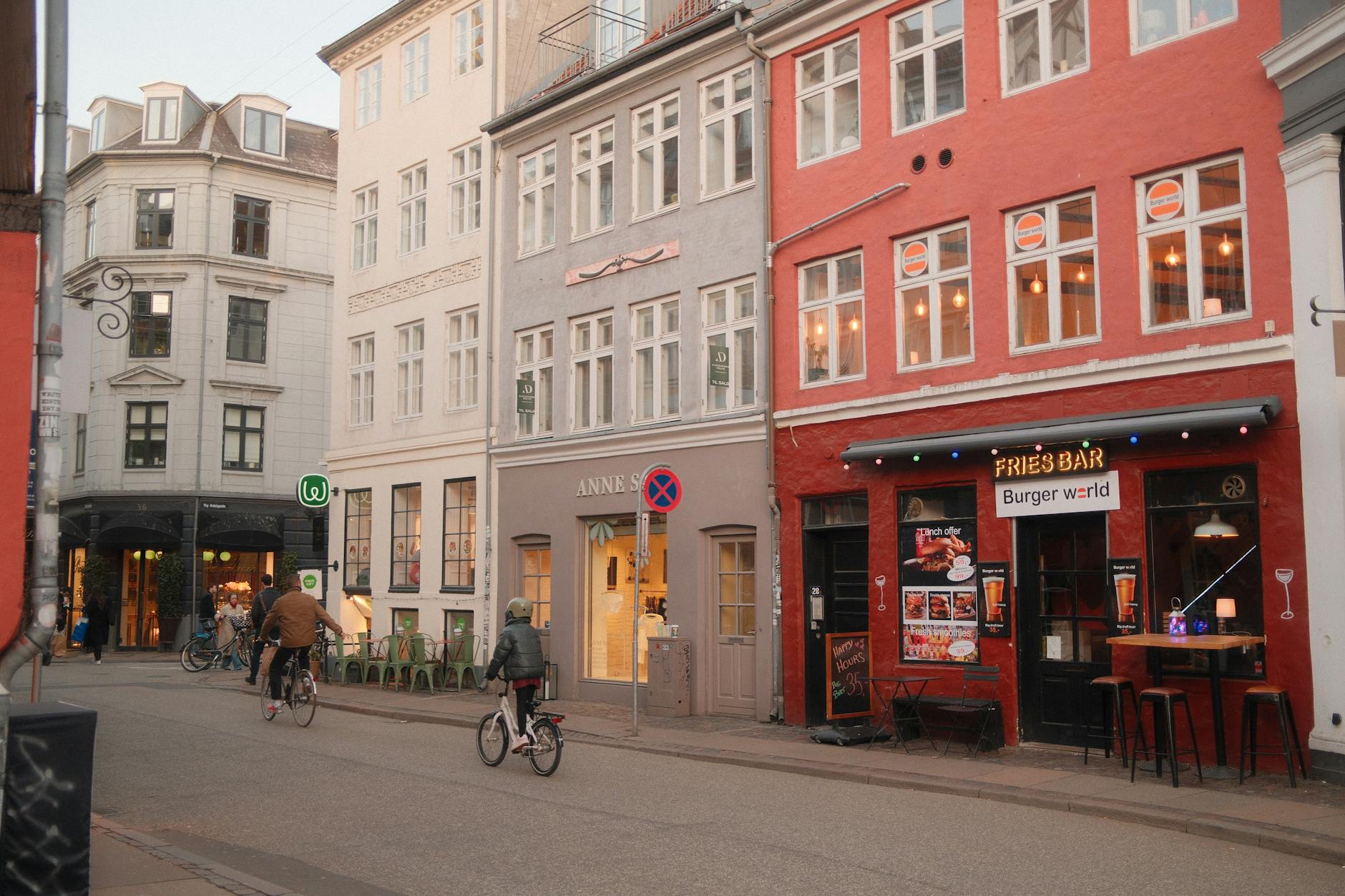
Student Aarhus: cafés, bars, ordinary street life, bicycles, easy social energy, and the part of the city that prevents it from feeling over-curated.
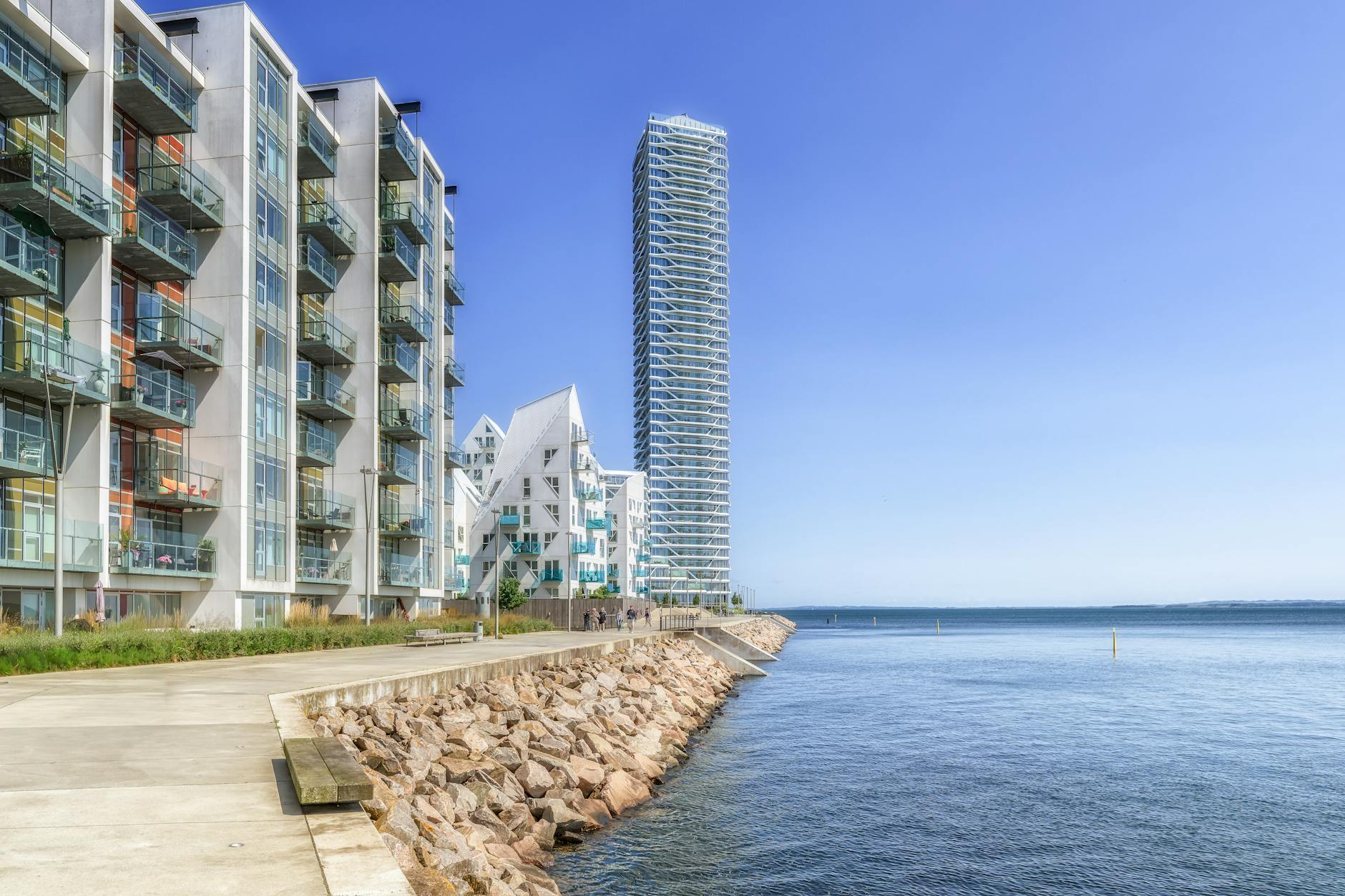
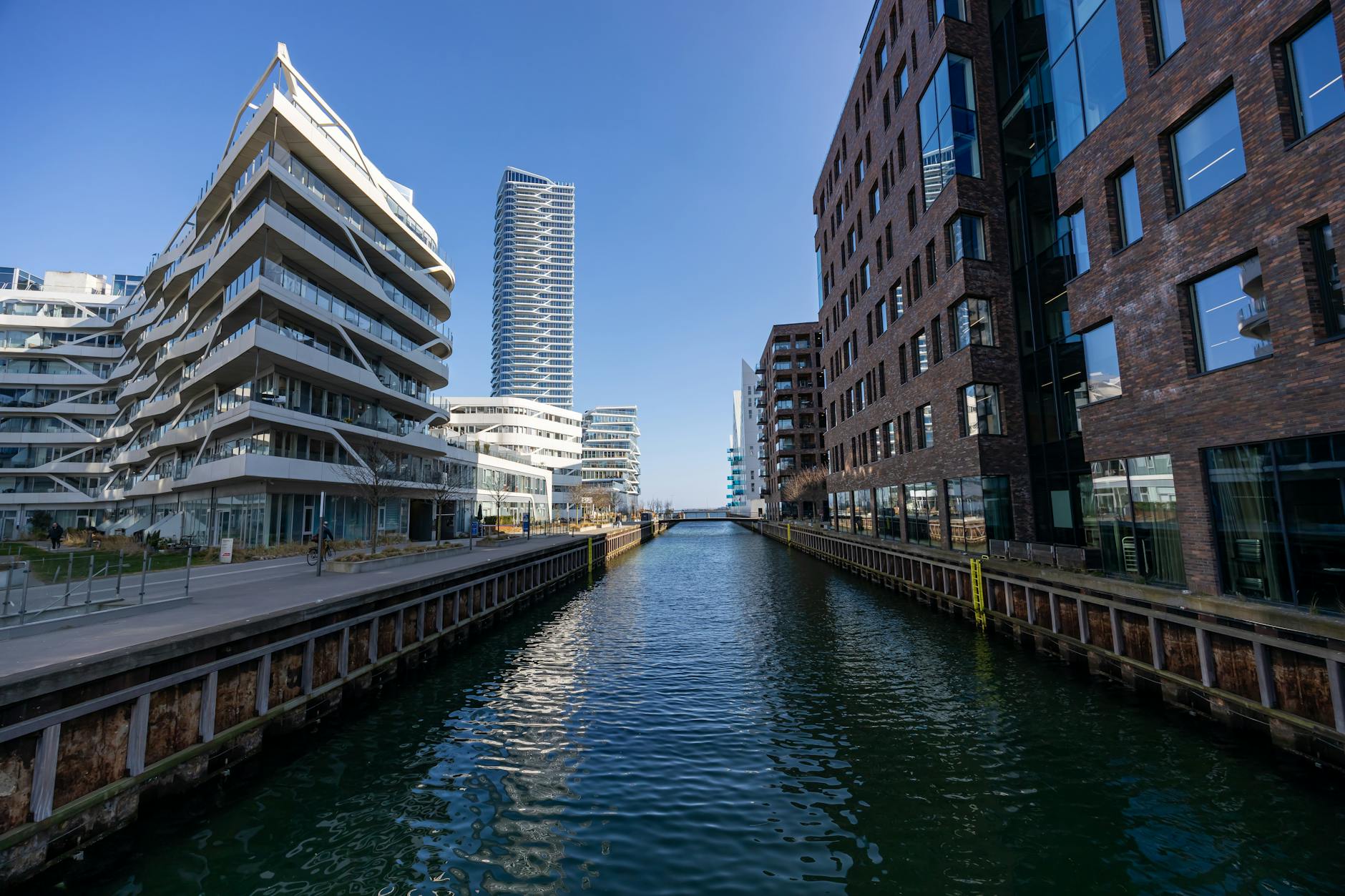
Harbor Aarhus: Dokk1, the redeveloped waterfront, Aarhus Ø, promenades, and the contemporary edge of the city's identity.
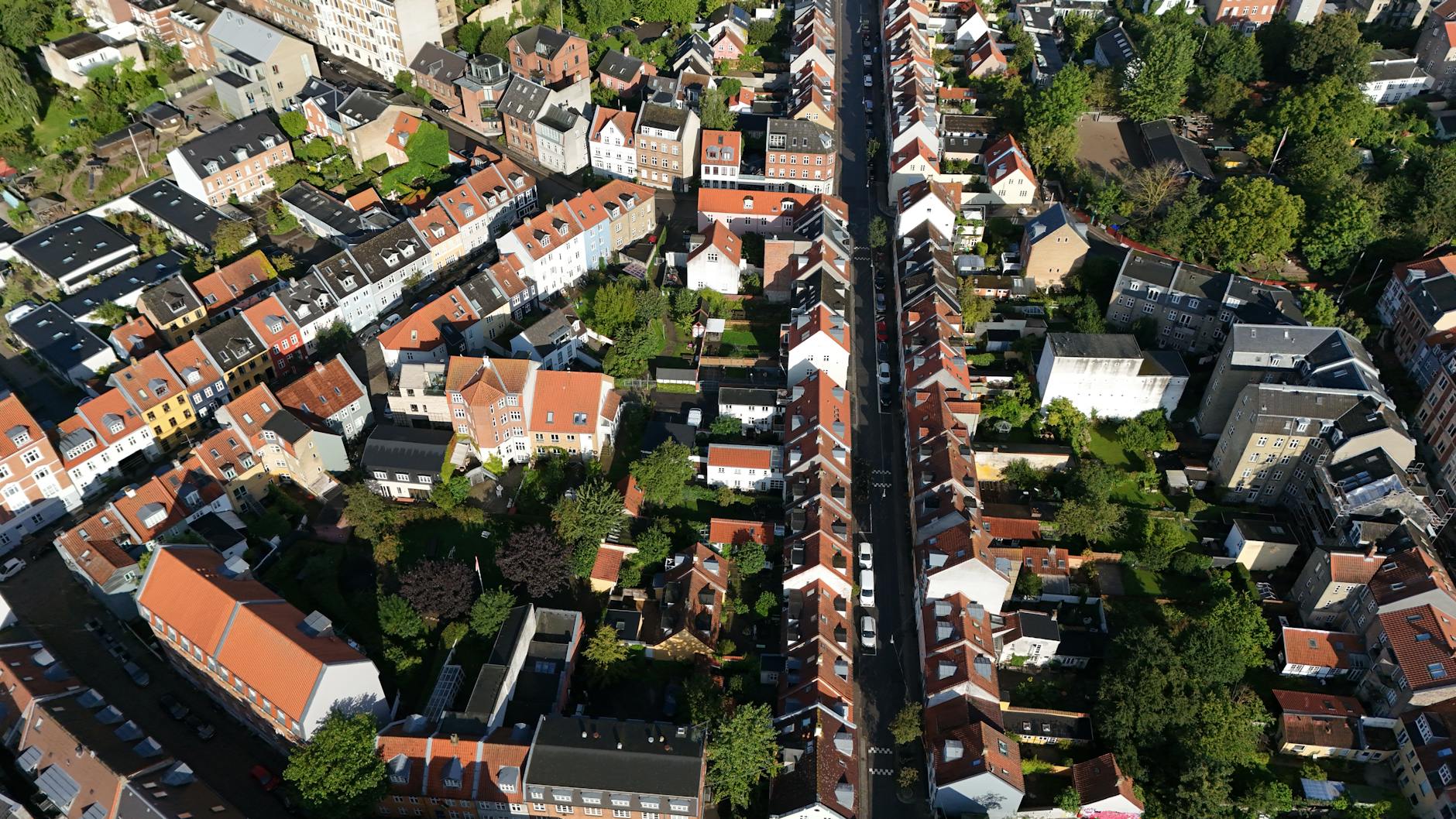
Quiet-Danish Aarhus: parks, side streets, calmer residential textures, and the part that makes the city feel inhabited rather than staged.
The Main Mental Shift
Do not ask, "What are the main sights?" Ask, "How do the old city, the museum city, and the harbor city fit together?" Once you start with that question, Aarhus becomes much easier to use well.
What Aarhus Does Better Than People Think
Aarhus is unusually good at high-quality short stays. Plenty of cities can occupy two days. Fewer cities can make two days feel coherent, well-proportioned, and genuinely satisfying. Aarhus often can. The scale helps, but scale alone does not explain it. The city has enough substance and enough ease at the same time.
It is also better than many first-time visitors expect at museum density relative to effort. In some cities, strong museums are scattered so awkwardly that a culture-heavy day becomes a transport problem. In Aarhus, cultural seriousness and everyday usability still mostly cooperate.
Another underrated strength is contemporary Danish life without capital-city pressure. Copenhagen has scale, glamour, and international magnetism. Aarhus often gives a cleaner read on what many travelers actually want from Denmark: good public space, design competence, good food, bicycles, young civic energy, and a city that feels stylish without advertising the fact too aggressively.
The city is also very strong at mixed-mode travel. You can do history, design, food, waterfront walking, bookstores, and modern architecture without the itinerary feeling schizophrenic. Aarhus holds those elements together unusually well.
Finally, Aarhus is better than people think at combining city and nature proximity. The bay, nearby beaches, and forest edges mean the city never feels as sealed off from air and landscape as many urban breaks do.
Best Time to Visit Aarhus
Aarhus is a year-round city, but not a season-neutral one. Light, wind, outdoor café culture, and waterfront use all change meaningfully.
Best Overall Months
May, June, and September are especially strong for first-time visitors. You usually get a city that is active, attractive on foot, and easier to enjoy outdoors without peak-summer compression.
Summer
Summer is the easiest season in which to like Aarhus quickly. The harbor opens up, terraces matter more, students and visitors fill the center, and longer daylight makes the city feel generous. The downside is that the best weather can encourage shallow use. Aarhus still needs thought, not just sunlight.
Autumn
Early autumn suits the city very well. Aarhus can feel more local, more polished, and slightly less performative once summer energy softens. This is an excellent time for food-and-museum travelers.
Winter
Winter narrows the city into cafés, museums, shops, and compact walking days. That can be very good if you want Danish urban mood rather than waterfront optimism. It is not the season for treating the city as a summer promenade destination with different temperatures.
Spring
Spring is attractive because the city begins to turn outward again. Light improves, harbor walks regain pleasure, and the transition itself gives Aarhus a certain energy.
Month-by-Month Guidance
January: quiet, design-and-café friendly, best for museum travelers and urban minimalists. February: still wintry, but often slightly lighter in feel. March: transitional and variable. April: increasingly workable, though wind can still shape the day. May: one of the best overall months. June: excellent for a first visit. July: bright, active, easy to enjoy quickly. August: still strong, but with a slightly more ordinary city rhythm returning. September: one of the smartest months to go. October: attractive if you like cooler air and stronger museum-weather balance. November: more subdued, best if you actively want the quieter city. December: festive, compact, and pleasant if you like winter-city mood.
How Many Days You Need
One Day
Enough for a strong first impression, not enough for a real reading of the city.
Two Days
The minimum respectable stay. One day should lean old-core and central Aarhus. The other should be cultural or harbor-led.
Three Days
Ideal for a first visit. This gives you enough room for a major museum, the waterfront, one slower neighborhood-and-food block, and some weather flexibility.
Four To Five Days
Very good if you want Aarhus plus a beach, forest, or regional extension without hollowing out the city itself.
One Week
Excellent for travelers building a broader East Jutland route, but the city still needs several real city days to avoid becoming merely the region's most convenient bed.
Where to Stay in Aarhus
Where you stay matters because Aarhus is so easy to read incorrectly. A central hotel can make the city feel elegant and intuitive. A weak location can make the trip feel more commuter-like than it should.
Fast Answer
For most first-time visitors, stay in central Aarhus near the river, cathedral, or harbor-facing core. Choose the Latin Quarter edge if you want atmosphere and smaller streets. Choose the station-to-center corridor if arrival convenience matters most. Choose the harbor side if contemporary Aarhus interests you and the hotel is still walkable into the older center.
Neighborhood Decision Table
| Traveler Type | Best Area |
|---|---|
| First-time visitor | Central core near river/harbor/Latin Quarter |
| Couple weekend | Latin Quarter edge or refined central stay |
| Food-led trip | Central Aarhus with easy evening access to the river and smaller side streets |
| Museum-first trip | Central or west-central with efficient access to ARoS and Den Gamle By |
| Rail traveler | Station-to-center corridor |
| Quiet-but-central stay | Edge of the core rather than fully waterfront-facing |
The Historic Center And Latin Quarter Edge
Best for: first-timers, atmosphere, walking, and travelers who want the city to feel immediately like itself. Why it works: older streets, independent shops, café life, and easy access to the central core. Tradeoff: some properties are more charming than practical; not every beautiful street is the easiest luggage street. Best use: the classic short-break Aarhus stay.
River And Inner-Center Spine
Best for: balance, transport ease, and all-purpose first visits. Why it works: you stay inside the most useful movement pattern of the city. Tradeoff: parts of the center feel more functional than atmospheric. Best use: travelers who want Aarhus to stay easy at every hour.
Harbor-Adjacent Central Aarhus
Best for: contemporary-city travelers, design-minded stays, and people who want both water access and centrality. Why it works: proximity to Dokk1, newer architecture, and the sense of modern Aarhus turning toward the bay. Tradeoff: some waterfront stretches feel cleaner than warmer. Best use: a more contemporary reading of the city.
Station Corridor
Best for: very short stays, rail arrival simplicity, and travelers continuing elsewhere in Denmark. Why it works: straightforward arrival and departure, still within reach of the center. Tradeoff: convenience can outscore character if you choose too mechanically. Best use: a transit-efficient city break that still walks into the core quickly.
Area Profiles
The Latin Quarter
This is one of the easiest areas in the city to like immediately. Smaller streets, shops, cafés, and an older-scale urban texture help Aarhus feel more intimate than its population might suggest.
Cathedral And River-Mouth Core
This is where the city's historical logic is easiest to grasp. Aarhus began here, and even in a polished modern city, the old relationship between river mouth, trade, and urban life still matters.
Dokk1 And The Waterfront
Dokk1 is part infrastructure, part civic statement. It helps explain how Aarhus wants to meet the water now: open, practical, and contemporary rather than merely picturesque.
Aarhus Ø
This area is useful less as a mandatory sightseeing zone than as evidence of what the city is becoming. It shows the ambitious, design-forward, newly waterfront-facing Aarhus.
The Museum Belt
ARoS, Den Gamle By direction, and related cultural spaces give the city much of its seriousness. This is part of what makes Aarhus more than just a pleasant place to eat and stroll.
Neighborhood Guide: Where to Explore, Not Just Sleep
The Latin Quarter
Walk it slowly rather than treating it as a photogenic detour. This is where the city often feels most naturally itself.
Mejlgade And Adjacent Streets
These are useful if you want Aarhus to feel more local and less diagrammed. Smaller retail, cafés, and neighborhood texture matter here.
The River Corridor
The river is not the whole city, but it is a useful emotional and practical spine. This is where social Aarhus often becomes easiest to read.
Dokk1 And Harbor Walks
Do this when you want the city to expand. It gives you air, water, and a clearer sense of contemporary Aarhus.
Around ARoS
This area reminds you that Aarhus has real cultural scale, not just good urban manners.
Den Gamle By Side
If you move westward with attention, the city starts feeling broader and less like a compact central loop.
The Best Things to Do in Aarhus
1. Give ARoS Real Time
Do not treat it as a roof-installation errand. ARoS can anchor a serious cultural half-day if you let it.
2. Use Den Gamle By As More Than Nostalgia
This museum works best when you read it as a structured argument about Danish urban life across time, not as quaint backdrop.
3. Walk The Harbor As Evidence Of Change
The waterfront is part of the city's present tense. Use it to understand what Aarhus has become.
4. Read The Old Core Properly
Cathedral, smaller streets, and the older center matter because they show what the city was before the contemporary harbor face became so visible.
5. Build One Food-Led Evening
Aarhus rewards one carefully chosen dinner and a second stop afterward far more than it rewards indiscriminate grazing.
6. Use One Day For Museums And One For The City Itself
This is often the cleanest way to stop Aarhus from feeling either too cultural or too casual.
7. Consider Moesgaard If History Is Your Thing
If you care about archaeology and deeper time, it is one of the city's most distinctive offerings. If you do not, do not force it out of duty.
8. Spend Time Where Students Actually Use The City
Cafés, bars, and ordinary streets matter. They keep Aarhus from becoming a museum-diagram city.
9. Let The Waterfront Happen At The Right Hour
Midday can be fine. Late afternoon and evening often give the harbor more atmosphere and less glare.
10. Respect The City's Scale Without Underestimating It
The whole trick of Aarhus is that it is both manageable and substantial. Use both facts at once.
Itineraries
One Excellent Day In Aarhus
Start in the old core and Latin Quarter while the city is still relatively calm. Move toward ARoS for a serious museum block. Have lunch somewhere central rather than merely convenient. Spend the afternoon on the harbor side or at Dokk1. Finish with a strong dinner and a walk along the river or into quieter side streets.
Two Days
Day 1: old-core Aarhus, ARoS, central streets, and evening food. Day 2: Den Gamle By or Moesgaard depending on your interests, followed by waterfront and modern-city Aarhus.
Three Days
Day 1: central historic and social Aarhus. Day 2: museum-heavy Aarhus. Day 3: harbor, architecture, slower neighborhood time, and whatever weather-dependent move seems right.
Four To Five Days
This is the length at which Aarhus can support both deep city time and a beach, forest, or regional excursion without losing shape.
One Week
A week works well if Aarhus is anchoring a broader Denmark route, but the city should still keep at least three days of real attention.
Itineraries By Traveler Type
First-Timer
Prioritize ARoS or Den Gamle By, the old center, the waterfront, and one very good evening rather than trying to prove the city has everything.
Couple Weekend
Spend more on the room, walk often, use one museum seriously, and let dinner matter.
Food Traveler
Treat Aarhus as a compact dining city with stronger range than its size suggests. The right approach is one serious dinner, one more casual stop, and no panic.
Design And Architecture Traveler
Use the harbor shift, Dokk1, ARoS, and the contrast between older streets and newer development as the spine of the trip.
Denmark Route Starter
Use Aarhus as a first real Danish city, not merely as the place between airport and countryside.
Food and Drink
What To Prioritize
Prioritize judgment over trend-chasing. Aarhus has enough good places that the goal is not to eat everywhere fashionable. It is to let one or two meals reveal the city properly.
The Real Food Logic
The strongest food trip here usually includes three things: one café or bakery stop that proves the city understands daily quality, one thoughtful central dinner, and one meal or drink that uses either the harbor or the smaller older streets to give the evening some atmosphere.
What Aarhus Does Well
It does contemporary Nordic-adjacent dining, relaxed quality, and quietly serious restaurant culture better than many travelers expect. The city is rarely loud about its standards, which is part of why people underestimate them.
Evening Rhythm
Aarhus is not a pure nightlife city, but it is very capable at good evenings. Good bars, wine-led rooms, student-city energy, and manageable distances help.
Getting Around
The Core Rule
Aarhus is a walking city first. If you stay central, a lot of the trip should happen on foot.
Public Transport
Midttrafik is useful for selected movements and for keeping a museum-heavy or weather-heavy day efficient. The main practical rule is simple: buy before boarding city buses and light rail.[3][4]
Bikes
Cycling fits the city naturally, but visitors do not need to force a bike-based identity onto a short trip if walking already works.
Cars
Do not rent a car for Aarhus itself unless your wider route genuinely requires it. The city gives back more when you stay inside its center and move lightly.
Copenhagen Comparisons, And Why To Stop Making Them
The Bad Comparison
Aarhus is not "Copenhagen but smaller." That phrase explains almost nothing and encourages the wrong expectations.
The Better View
Aarhus gives you a different Danish urban experience: less grand, less internationally self-conscious, more compact, often easier to use, and in some ways more revealing of ordinary contemporary Danish city life.
What Aarhus Can Do That The Comparison Misses
It can feel more complete over two or three days than some larger cities feel over the same period, precisely because its parts still cooperate.
Where Aarhus Fits In A Denmark Trip
Aarhus is one of the most useful cities in Denmark because it breaks the false choice between capital-city intensity and small-town charm. Copenhagen supplies the grander urban stage, the political center, and Denmark's most internationally legible image of itself. Aarhus supplies another kind of Danish city life: more compact, younger in feel, more quietly design-aware, and often easier to inhabit over a short stay. If your Denmark trip includes both, the country usually becomes much clearer.
That role matters in practical itinerary design. Many travelers either give all their urban time to Copenhagen or treat Jutland only as countryside and transit. Aarhus proves that Denmark can also deliver a serious second city with museums, food, harbor redevelopment, public-space intelligence, and a real social life of its own. It turns Denmark from a capital-plus-day-trips country into something broader.
It is also one of the best stabilizing stops in wider Scandinavian routes. After larger capitals, Aarhus can feel like a reset without feeling like a downgrade. The standards remain high, but the pace becomes more humane. That makes it one of the best cities in the region for travelers who value quality over scale.
Aarhus Versus Copenhagen, Odense, And Malmö
Compared with Copenhagen, Aarhus is less ceremonially confident and more immediately manageable. Copenhagen wins on range, glamour, and capital authority. Aarhus wins on proportion. You can understand more of it in less time, and the trip often feels less administratively expensive in energy. It is not trying to replicate the capital. It is offering a cleaner, tighter version of contemporary Danish urban life.
Compared with Odense, Aarhus is the stronger all-purpose city break for most first-time visitors. Odense has charm and a very particular literary-historical identity, but Aarhus has more cultural weight, better museum logic, and a more convincing balance between old core, contemporary city, and waterfront transformation.
Compared with Malmö, Aarhus feels more self-contained as a destination. Malmö can be smart, rewarding, and unfairly underestimated, but Aarhus generally offers a fuller stand-alone case over two or three days: better museum concentration, stronger city-harbor dialogue, and a more obviously complete civic identity.
This is why Aarhus is so satisfying. It feels like a real city rather than a useful comparison point.
First-Time Visitors Versus Repeat Visitors
First-time visitors usually enter Aarhus through one of two mistaken expectations. Either they assume it will be a small, easy city with only a few pleasant highlights, or they assume it must justify itself through comparison with Copenhagen. Both expectations flatten the trip. The first visit works better when you treat the city as a sequence of cooperating parts: old core, museum layer, harbor edge, student energy, and evening food culture.
Repeat visitors often do much better because they stop asking the city to prove its status. They already know Aarhus is good. That lets them use it more selectively. One return trip may focus on architecture and harbor change. Another may lean into museums and calmer café days. Another may use Aarhus as a city anchor within Jutland while still protecting one or two full urban days. The city is flexible enough to support all of those readings.
This is also why Aarhus tends to improve in memory. Its first impression is competence and charm. Its second and third impressions are coherence.
Why One Proper Aarhus Day Matters
It is very easy to under-allocate time to Aarhus because the city seems so manageable. Travelers often assume they can compress it into a morning, a museum, and an evening. That usually produces something agreeable but thin: one cobbled lane, one rooftop view, one dinner, and a vague sense that the city is nice but maybe not necessary.
One proper Aarhus day changes that judgment. It gives the old core time to become more than atmosphere. It lets a museum carry real weight instead of functioning as a quick credential. It gives the harbor enough room to explain the city's present-tense ambitions. It also leaves space for food and everyday streets, which are essential to understanding why Aarhus feels so complete.
Most importantly, a full day allows the city to reveal its proportion. Aarhus is not trying to dazzle continuously. It is trying to fit its parts together so well that the traveler begins trusting the city. That trust is what turns a pleasant stop into a persuasive destination.
Why The Latin Quarter Should Not Own The Whole Trip
The Latin Quarter is one of the easiest parts of Aarhus to like quickly, and that is precisely why it can distort a first visit. If you stay too obediently within its smaller streets, cafés, and atmospheric corners, you can come away with a version of the city that is attractive but too gentle, too quaint, and too detached from the harbor-facing present.
This matters because the rest of Aarhus is what gives the Latin Quarter proportion. The cathedral and river-mouthed core explain the city's origins. ARoS and Den Gamle By give it intellectual and historical scale. Dokk1 and Aarhus Ø show where the city has chosen to head. Student-oriented streets and evening zones keep it from becoming a museum piece.
The Latin Quarter should welcome you into Aarhus, not end the conversation. It is one voice in the city, not the whole choir.
How Aarhus Changes Over The Course Of A Stay
On arrival, Aarhus often feels almost suspiciously easy. The center is readable, the distances are kind, and the city does not ask for much logistical effort. By the second day, that ease usually becomes more interesting. The harbor starts making more sense. The museum layer begins to feel heavier in a good way. You notice how the city shifts from older streets to contemporary development without losing itself.
By the third day, many travelers stop trying to check whether Aarhus is "enough" and begin simply using it. They choose a better lunch, walk a longer route, spend more time near the water at the right hour, or let one neighborhood breathe instead of trying to sample all of them. That is often when the city becomes most persuasive.
This is one of Aarhus's deepest strengths. It rarely overwhelms in the first hour, but it often strengthens across the stay. The last impression is frequently bigger than the first.
Common Mistakes
- Treating Aarhus like a provincial warm-up act instead of a destination.
- Assuming compact means shallow.
- Giving Den Gamle By too little time.
- Treating ARoS as only a rooftop photo stop.
- Staying somewhere merely convenient while ignoring the old core and river/harbor logic.
- Looking for the discontinued AarhusCARD instead of current transport options.
- Using only the polished central streets and missing the student-city texture.
My Blunt Advice
Aarhus does not need you to be impressed by its rank. It needs you to use it properly. Stay central. Walk the old core. Give one museum real time and one evening real thought. Let the harbor explain the new city and the cathedral side explain the old one. Do not chase Copenhagen inside it. Aarhus gets better the moment you stop asking whether it is enough and start noticing how much it already fits together.
That coherence is the prize. Aarhus is not trying to overwhelm you with scale, and it does not have to. It is offering something harder to find: a city that is cultured, youthful, stylish, and genuinely usable all at once.
Source Notes
- 1. VisitAarhus, "Aarhus Airport." https://www.visitaarhus.com/aarhus-region/plan-your-trip/aarhus-airport-gdk790226
- 2. VisitAarhus, "Easy going to the Aarhus Region." https://www.visitaarhus.com/aarhus-region/plan-your-trip/transport/easy-going-to-the-aarhus-region
- 3. VisitAarhus, "Getting around in Aarhus and in the Aarhus Region." https://www.visitaarhus.com/aarhus/plan-your-trip/transport/getting-around-aarhus
- 4. Midttrafik, "Tickets and ticket checks." https://www.midttrafik.dk/english/customer-service/travel-rules/travel-rules-bus-letbanen-and-midtjyske-jernbaner/tickets-and-ticket-checks/
- 5. VisitAarhus, "Getting around in Aarhus and in the Aarhus Region." https://www.visitaarhus.com/aarhus/plan-your-trip/transport/getting-around-aarhus
- 6. VisitAarhus, "Plan your trip to Aarhus." https://www.visitaarhus.com/areas-and-cities/aarhus/plan-your-trip
- 7. ARoS, "Visit." https://www.aros.dk/en/visit/
- 8. Den Gamle By, "Tickets and opening hours." https://www.dengamleby.dk/en/plan-your-visit/tickets-and-opening-hours/
- 9. Moesgaard Museum. https://www.moesgaardmuseum.dk/en/