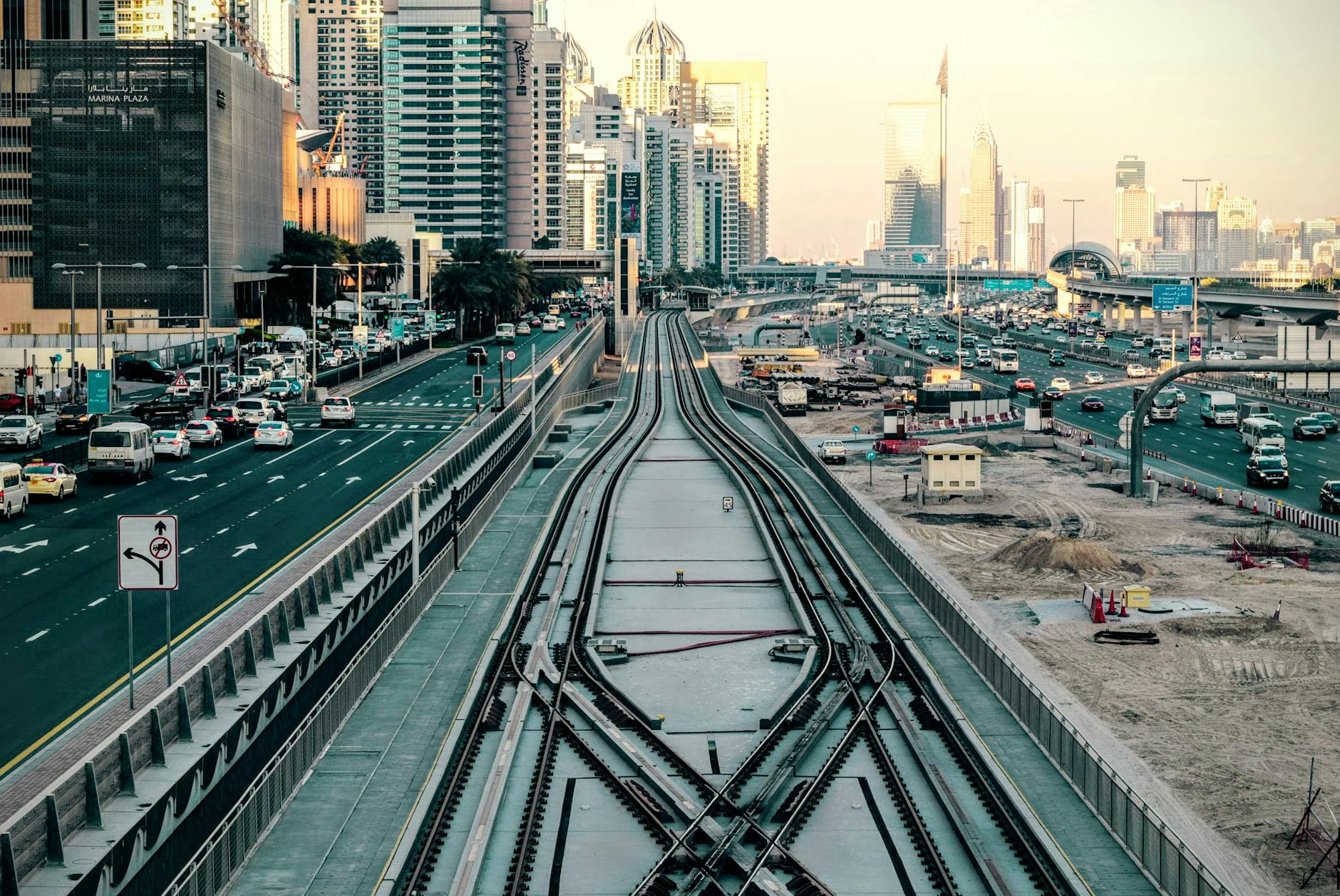
A practical analysis for visitors, foreign residents, and local users
Audience: Independent travelers, families, business travelers, longer-stay visitors, foreign residents, commuting workers, and locals comparing practical mobility options.
Contents
- [Executive summary](#executive-summary)
- [Part I — National-scale transportation in the United Arab Emirates](#part-i--national-scale-transportation-in-the-united-arab-emirates)
- [1. The basic structure of UAE transportation](#1-the-basic-structure-of-uae-transportation)
- [2. The visitor decision framework](#2-the-visitor-decision-framework)
- [3. Payment systems, apps, and fragmentation](#3-payment-systems-apps-and-fragmentation)
- [4. Private vehicles, driving, rental cars, parking, and tolls](#4-private-vehicles-driving-rental-cars-parking-and-tolls)
- [5. Taxis and ride-hailing](#5-taxis-and-ride-hailing)
- [6. Urban rail, tram, future passenger rail, and monorail](#6-urban-rail-tram-future-passenger-rail-and-monorail)
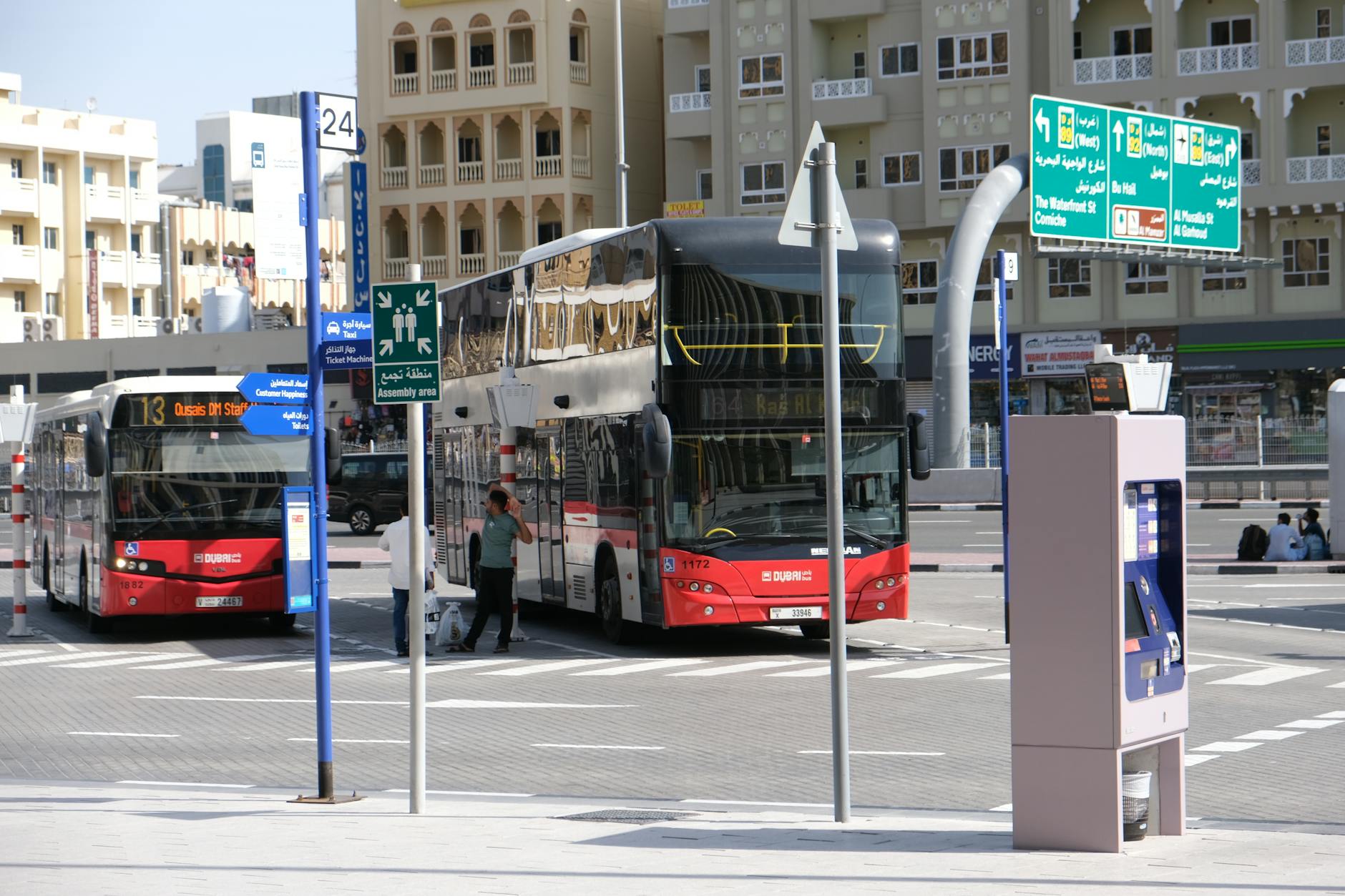
- [7. Buses and intercity public transport](#7-buses-and-intercity-public-transport)
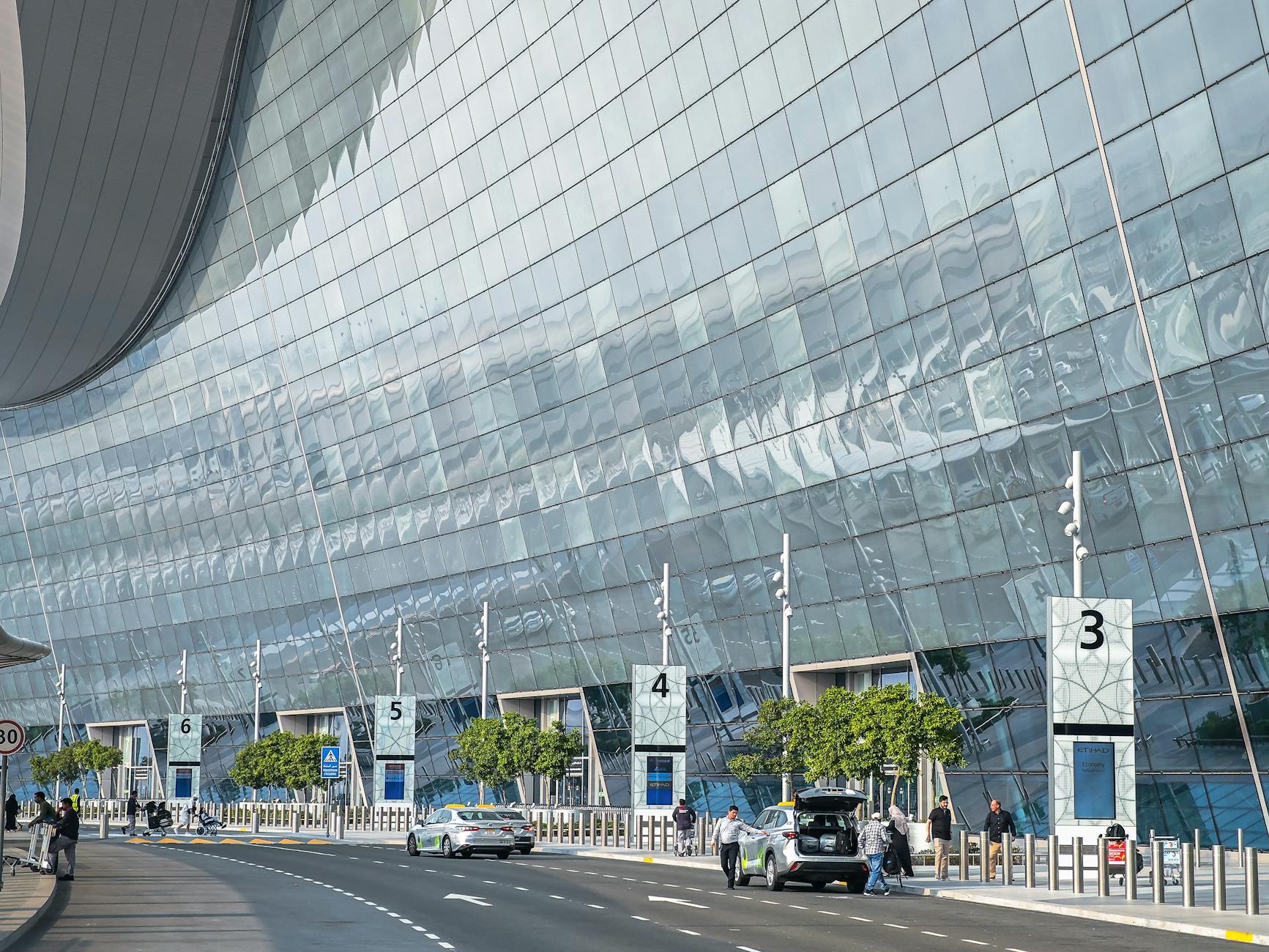
- [8. Airports and airport access](#8-airports-and-airport-access)
- [9. Marine transport](#9-marine-transport)
- [10. Walking, cycling, scooters, and the last mile](#10-walking-cycling-scooters-and-the-last-mile)
- [11. Accessibility, families, luggage, women travelers, and safety](#11-accessibility-families-luggage-women-travelers-and-safety)
- [12. Climate, Ramadan, holidays, events, and disruption planning](#12-climate-ramadan-holidays-events-and-disruption-planning)
- [13. Resident and local-user concerns](#13-resident-and-local-user-concerns)
- [14. Recommended mobility strategies by traveler type](#14-recommended-mobility-strategies-by-traveler-type)
- [Part II — City-by-city analysis](#part-ii--city-by-city-analysis)
- [Dubai](#dubai)
- [Abu Dhabi](#abu-dhabi)
- [Sharjah](#sharjah)
- [Ras Al Khaimah](#ras-al-khaimah)
- [Fujairah](#fujairah)
- [Al Ain](#al-ain)
- [References](#references)
Executive summary
The United Arab Emirates is easy to move through if a traveler understands one core fact: it is a high-road-quality, car-oriented country with several strong local public transport systems, not one single national transit system. Dubai has the region's most developed rail-based urban transit network. Abu Dhabi has a large bus network, taxis, on-demand services, and an emerging automated rapid transit system. Sharjah, Ras Al Khaimah, Fujairah, and Al Ain rely more heavily on buses, taxis, ride-hailing, local transport authorities, and private cars. Intercity buses are important, but they do not operate like an integrated national rail system.
At the national scale, the most common transport pattern is simple: use metro, tram, bus, abra, taxi, or ride-hail inside Dubai; use bus, taxi, on-demand bus, or private car inside Abu Dhabi and Al Ain; use bus and taxi systems in Sharjah, Ras Al Khaimah, and Fujairah; and use intercity coaches, taxis, rental cars, or private transfers between emirates. For many visitor itineraries, especially those involving beaches, resorts, desert areas, mountain roads, theme parks, or multiple emirates, a taxi or private car remains the practical last-mile solution.
The UAE's strongest transport assets are excellent roads, clean regulated taxis, high-quality airport access in Dubai, extensive intercity highways, air-conditioned vehicles and stations, relatively clear English/Arabic signage, and a strong app ecosystem. The friction points are payment fragmentation, heat-limited walking, spread-out land use, rush-hour congestion, tolls and parking rules, airport-to-resort distances, and the fact that each emirate uses its own agencies, fare media, apps, and operating assumptions.
For visitors, the biggest practical mistake is planning from a map alone. A destination may be only a few kilometers away but separated by highways, missing sidewalks, heat, construction, gated communities, or long transfer walks. The second mistake is assuming that because Dubai has a metro, the rest of the country has the same style of rail transit. It does not. The third mistake is assuming one transport card works everywhere. Dubai's nol card, Abu Dhabi's Hafilat card, Sharjah's Sayer card, and Ras Al Khaimah's E-Saqr/Sayr ecosystem are separate systems.
For locals and residents, the main transport concerns are commuting congestion, especially around Dubai-Sharjah corridors; dependence on cars in outer districts; parking costs and fines; the last-mile gap between bus stops and final destinations; road-safety behavior on fast multilane roads; and the social divide between people with access to cars and people who rely on buses, company transport, or taxis. The UAE is investing in rail, smart mobility, bus networks, and active transport corridors, but daily mobility remains uneven by emirate and neighborhood.
Etihad Rail is the major future national shift. The UAE has announced a passenger network intended to connect major places including Abu Dhabi, Dubai, Sharjah, and Fujairah, with initial passenger operations planned in phases from 2026. Until public schedules, stations, fares, and booking are live, visitors should treat Etihad Rail as a future planning factor, not as a dependable current mode for a trip.
The best practical rule is this: use public transport where it is strong, but budget for taxis, ride-hailing, or a car where the urban form demands it. In Dubai, staying near the Metro can transform a trip. In Abu Dhabi, staying near the Corniche, downtown, Yas Island, Saadiyat, or a business district reduces long taxi rides. In Sharjah, proximity to Al Jubail, Rolla, Sahara Centre, the airport, or a direct Dubai route matters. In Ras Al Khaimah, Fujairah, and Al Ain, a car, driver, or carefully planned taxi strategy often determines whether sightseeing is smooth or frustrating.
1. The basic structure of UAE transportation
The UAE's transportation system can be understood as seven overlapping layers:
This structure creates a country that is highly mobile but not always transit-simple. The highways are excellent and fast. Taxis are widely available in major cities. Airports are well connected by road. But outside Dubai's rail-served spine and some central bus corridors, the UAE is often not walkable or transit-dense in the way visitors may expect from London, Tokyo, Paris, Seoul, or Singapore.
1.1 Emirate-based governance
Transportation is organized heavily by emirate. Dubai's Roads and Transport Authority, Abu Dhabi Mobility, Sharjah Roads and Transport Authority, Ras Al Khaimah Transport Authority, Fujairah Transport Corporation, and other local bodies all manage pieces of the system. This is important because the UAE is a federation, not a single-city state. A trip that looks like one metropolitan movement may cross agency boundaries.
Examples:
This fragmentation is not a minor inconvenience. It affects daily planning, especially for travelers moving among Dubai, Abu Dhabi, Sharjah, and the northern emirates.
1.2 The road network as the national backbone
The UAE's national mobility backbone is the highway network. Major corridors include:
Road quality is generally high, signage is often bilingual in Arabic and English, and fuel stations are common on major corridors. But the roads are fast, multilane, and unforgiving. Visitors should not confuse good road engineering with easy relaxed driving. Lane changes can be aggressive, distances are long, speed cameras are common, and mistakes can lead to fines, toll charges, or rental-car administrative fees.
1.3 Public transport is strongest where density supports it
The country's most useful public transport is concentrated where density, tourism, and commuter demand justify it. That means:
- Private vehicles and highways — the dominant national mobility layer.
- Regulated taxis and ride-hailing — the most universal visitor-friendly layer.
- Dubai urban rail and tram — the strongest fixed-rail urban transit system in the country.
- Local bus systems — important in Dubai, Abu Dhabi, Al Ain, Sharjah, Ras Al Khaimah, and Fujairah, but uneven in coverage and frequency.
- Intercity buses — the main public alternative to driving between emirates.
- Marine services — useful in Dubai Creek, Dubai Marina/Canal corridors, and limited Ras Al Khaimah routes.
- Future national passenger rail — Etihad Rail, announced but not yet a universally usable visitor mode at the time of this paper.
- A visitor can use Dubai's nol card for Dubai Metro, tram, buses, and some marine/taxi payments, but that card does not become a universal UAE transit card.
- Abu Dhabi and Al Ain use Hafilat for public buses.
- Sharjah city buses are cheaper with Sayer than with cash.
- Ras Al Khaimah promotes Sayr and the E-Saqr Card for public transport services.
- Intercity buses may use the departure emirate's fare rules or ticketing channels rather than a common national pass.
- E11 / Sheikh Zayed Road / Sheikh Maktoum bin Rashid Road — the core coastal corridor linking Abu Dhabi, Dubai, Sharjah, Ajman, Umm Al Quwain, Ras Al Khaimah, and toward the Saudi border in the other direction.
- E311 / Sheikh Mohammed bin Zayed Road — a major inland parallel corridor used heavily for commuter, logistics, and inter-emirate traffic.
- E611 / Emirates Road — another high-speed inland route used for freight, intercity movement, and bypassing inner congestion.
- E66 — Dubai to Al Ain corridor.
- E84 / Sheikh Khalifa Bin Zayed Road and related mountain-crossing corridors — key links from Dubai/Sharjah side to Fujairah.
- Roads to Jebel Jais, Hatta, Al Ain, Liwa, and desert areas — important for tourism but often unsuitable for casual public transport planning.
- Dubai's Metro is excellent for airport access, old Dubai, Downtown, Business Bay, DIFC, Dubai Marina, JLT, Expo area, and parts of the Sheikh Zayed Road corridor.
- Dubai's tram is useful around Dubai Marina, JBR, Al Sufouh, and connections to Palm access areas.
- Abu Dhabi's buses and on-demand services are useful, but the city is spread across islands, suburbs, and wide roads.
- Sharjah's buses are useful around major nodes such as Rolla, Al Jubail, Sahara Centre, and the airport, but Dubai-Sharjah commuting remains road-congested.
- Ras Al Khaimah has grown its internal and intercity bus network, but resort and mountain tourism still often needs a car or arranged ride.
- Fujairah has public transport and intercity bus connections, but tourist movement along beaches and mountain sites is mostly by taxi, car, or transfer.
- Al Ain has buses and intercity links, but major attractions are spread across a car-oriented oasis city.
2. The visitor decision framework
Visitors should choose transport based on the type of trip, not simply on the city name.
2.1 Use rail or metro when your origin and destination are both rail-served
In Dubai, the Metro can be faster, cheaper, and less stressful than driving, especially during peak periods. It is especially strong for:
But the Metro is not a complete citywide web. Many famous places are not directly on a station doorstep. Beaches, Jumeirah villas, parts of Palm Jumeirah, Dubai Hills, Global Village, Miracle Garden, many suburban malls, and many outer residential districts require bus, taxi, ride-hail, or walking in heat.
2.2 Use taxis or ride-hailing for the last mile, late night, hotels away from rail, and short high-friction trips
Taxis are one of the UAE's most useful transportation tools. They are regulated, metered, air-conditioned, and generally safer than informal alternatives. For travelers who value time, taxis solve problems that public transport cannot always solve:
The downside is cost accumulation. A visitor who uses taxis for every movement in Dubai and Abu Dhabi may spend far more than expected. The best approach is usually mixed: metro/bus for the strong corridor, taxi for the last mile.
2.3 Use rental cars when the itinerary is dispersed or nature-focused
A rental car makes sense for:
A rental car is less attractive for:
2.4 Use intercity buses when budget matters more than doorstep convenience
Intercity buses are the main public way to move cheaply between emirates. They are air-conditioned and usually reliable, but they are not as flexible as rail. They depart from specific terminals, may run through traffic, and may require another taxi/bus at the destination.
Good intercity bus use cases:
Poor intercity bus use cases:
- Dubai International Airport Terminals 1 and 3.
- Deira and Bur Dubai connections via Green Line and interchange stations.
- Downtown Dubai / Burj Khalifa / Dubai Mall area.
- Business Bay, DIFC, World Trade Centre, and Sheikh Zayed Road hotels.
- Dubai Marina and JLT area.
- Expo 2020 / Dubai Exhibition Centre area.
- Connections to Dubai Tram at Sobha Realty and DMCC-type transfer areas.
- The final 1–3 kilometers from a metro/bus stop to a hotel, villa, resort, beach, hospital, office tower, or attraction.
- Late-night travel when public transport is limited or when walking from a stop is unpleasant.
- Travel with children, strollers, large luggage, formal clothing, or shopping bags.
- Inter-emirate trips where a bus exists but is slow or does not serve the exact destination.
- Trips during extreme heat, rain disruption, or major events.
- Ras Al Khaimah resorts plus Jebel Jais.
- Fujairah, Al Aqah, Dibba, beaches, wadis, and mountain viewpoints.
- Al Ain attractions such as Jebel Hafeet, Al Ain Zoo, Qasr Al Muwaiji, and scattered heritage sites.
- Day trips to desert resorts, Hatta, Liwa, mountain areas, or multiple emirates in one day.
- Families with heavy luggage or travelers staying in suburban villas.
- Central Dubai hotels on the Metro.
- Short Dubai-Abu Dhabi business trips where parking and tolls add friction.
- Travelers uncomfortable with fast multilane highways.
- Visitors who plan to drink alcohol; the UAE has strict impaired-driving rules and severe penalties.
- People staying only in central beach or mall districts with hotel shuttles and taxis available.
- Dubai to Abu Dhabi on a budget.
- Abu Dhabi to Al Ain.
- Abu Dhabi to Sharjah, Ajman, or Ras Al Khaimah when schedules work.
- Ras Al Khaimah to Dubai or Sharjah.
- Dubai to Fujairah when the public route matches the itinerary.
- Workers and residents making recurring inter-emirate trips.
- A family landing with large luggage and needing a resort in a different emirate.
- A short day trip with several scattered attractions.
- Late-night movements where the bus schedule is limited.
- Beach and mountain itineraries far from bus stations.
3. Payment systems, apps, and fragmentation
Payment is one of the most important practical issues in the UAE. The country is digitally advanced, but transport payment is not nationally unified.
3.1 Core payment systems by area
| Area | Main public transport payment | Useful apps and tools | Practical note |
|---|---|---|---|
| Dubai | nol card for Metro, tram, buses, and many marine services; also accepted in Dubai taxis | RTA apps, S'hail, nol Pay, Careem, Dubai Taxi, Google Maps | Best-integrated transport payment ecosystem in the UAE, but not universal outside Dubai |
| Abu Dhabi | Hafilat card for public buses; cash generally not accepted on airport/city buses | Darbi / Abu Dhabi Mobility tools, Abu Dhabi Taxi app, Abu Dhabi Link | Tap on and tap off on buses; Hafilat is not the same as nol |
| Al Ain | Hafilat card, because Al Ain is part of Abu Dhabi emirate's bus system | Abu Dhabi Mobility, Darbi-type tools, taxi apps/call center | Useful for city and intercity buses, but tourist sites are spread out |
| Sharjah | Sayer card or cash; Sayer gives discounted bus fares | Mowasalat, Rihlati, SRTA tools | Cash fares are higher than Sayer; buses are local and intercity-oriented |
| Ras Al Khaimah | E-Saqr Card and Sayr ecosystem for public transport | Sayr app, RAKTA tools, taxi booking | Internal bus network is growing; many tourist movements still require taxi/car |
| Fujairah | Local transport/taxi systems; Dubai-Fujairah bus ticketing depends on route/operator | Fujairah Transport Corporation, Careem/Hala where available, RTA route tools for Dubai route | Public transport exists but is more limited and less visitor-obvious |
3.2 Why one card is not enough
Visitors often expect one national payment card because the country feels integrated. That expectation fails quickly. A nol card works extremely well inside Dubai, but it will not automatically pay for Abu Dhabi buses or Sharjah's Sayer discount. Hafilat works in Abu Dhabi and Al Ain buses, not Dubai Metro. Sharjah's Sayer is useful on Sharjah buses, not Dubai's Metro. Ras Al Khaimah's E-Saqr belongs to RAKTA's ecosystem.
A practical visitor moving across multiple emirates should carry:
3.3 App ecosystem
The most useful app categories are:
The best approach is not to rely on one app. Use official apps for fare/payment details, a map app for geography, and a taxi/ride-hail app for the last mile.
3.4 Cash versus card
The UAE is very card-friendly, but transport still has exceptions. Dubai taxis accept several payment methods, including cash, bank cards, mobile wallets, and nol card options. Buses and metro systems usually require their transport cards or app-based ticketing. Sharjah buses allow cash but discount with Sayer. Abu Dhabi airport buses require Hafilat rather than cash. Smaller taxis, outer emirate routes, or low-friction local services may still benefit from cash backup.
Visitors should not arrive with only a foreign mobile wallet and no backup. A bank card and some small cash make problems easier to solve.
- A contactless bank card.
- Some small UAE dirham notes and coins.
- A Dubai nol card if spending time in Dubai.
- Hafilat if using Abu Dhabi/Al Ain buses.
- Sayer if using Sharjah city buses repeatedly.
- The relevant taxi/ride-hail apps configured before travel.
- Official transport apps for routes, fares, and service notices.
- Taxi apps for regulated local taxis.
- Ride-hailing apps such as Careem and Uber where available.
- Navigation apps such as Google Maps and Apple Maps, used cautiously because local bus routing and last-mile pedestrian assumptions may be imperfect.
- Airport apps/websites for terminal transport details.
- Toll and parking platforms for drivers and residents.
4. Private vehicles, driving, rental cars, parking, and tolls
Private vehicles are central to UAE life. For many residents, a car is not a luxury; it is a practical requirement created by heat, highways, spread-out housing, and work locations. For visitors, driving can be liberating or stressful depending on the itinerary and confidence level.
4.1 Driving environment
The UAE drives on the right-hand side of the road. Roads are generally modern, well-lit, and high-capacity. Major highways can have many lanes, frequent exits, slip roads, service roads, and fast traffic. Navigation apps are useful but can be confusing around interchanges, tunnel exits, lane splits, and one-way service roads.
Common issues for visitors:
4.2 Licensing and rental requirements
Visitors should confirm licensing rules before renting. The UAE government's visitor driving guidance notes that visitors driving into the UAE may need an International Driving Permit and valid insurance, while rental-car rules vary by residency and nationality. UAE residents need a valid UAE driving license. Many rental companies set a minimum rental age around 21, with higher ages or additional restrictions for premium vehicles.
Practical advice:
4.3 Tolls: Dubai Salik and Abu Dhabi Darb
Two toll systems matter most to visitors:
#### Dubai Salik
Dubai's Salik system charges vehicles electronically at toll gates. Rental cars are usually already registered by the rental company, and the customer later pays tolls plus any administrative fees. Recent official guidance lists variable toll pricing, with higher peak charges on weekdays and free overnight periods. Drivers should check current rates before travel because toll pricing can change by time, day, and Ramadan schedule.
#### Abu Dhabi Darb
Abu Dhabi's Darb toll system applies at certain bridges and gates, especially relevant for traffic entering and leaving Abu Dhabi Island. Official Darb information lists AED 4 peak-period tolls at specified morning and afternoon/evening windows, excluding Sundays and official holidays, but rules and exemptions should be checked in the Darb platform before driving.
For visitors, the key lesson is not the exact toll amount. It is that tolls are electronic and may appear later on a rental bill. A cheap rental can become more expensive after tolls, parking, and administrative charges.
4.4 Parking
Parking varies sharply by emirate and district.
Do not assume empty curb space is legal parking. Fines, towing, and rental-company admin fees are a real risk.
4.5 When driving is the best solution
Driving is usually best for:
4.6 When driving is a poor solution
Driving is often poor for:
- Missing an exit can add significant time.
- Lane discipline varies; sudden lane changes occur.
- Large SUVs and high-speed traffic can feel intimidating.
- Speed cameras and red-light cameras are common.
- Roadworks and new districts can outpace map intuition.
- Parking entrances may be hidden inside malls, podiums, or hotel forecourts.
- Distances look short on a map but require highway loops.
- Bring a physical driving license, passport, credit card, and International Driving Permit if required for your license country.
- Confirm that your license category covers the vehicle you are renting.
- Check whether the rental includes basic insurance, excess/deductible, roadside assistance, and cross-emirate use.
- Ask how tolls, parking fines, speeding fines, and traffic violations are charged.
- Photograph the car at pickup and return.
- Avoid driving in flood-prone rain events unless necessary.
- Dubai has paid parking zones managed through RTA systems, SMS, apps, meters, and mall/hotel parking structures. Premium and congestion-sensitive areas can be expensive or time-limited.
- Abu Dhabi uses Mawaqif-style paid parking in many city areas, with different standard and premium zones. Residents may need permits, and visitors should watch curb colors and signs.
- Sharjah has paid parking in dense areas and around commercial streets; congestion and limited curbside parking can be major issues.
- Ras Al Khaimah, Fujairah, and Al Ain can be easier in outer areas, but malls, waterfronts, tourist sites, hospitals, schools, and government districts still require attention to signs and payment rules.
- Multi-emirate road trips.
- Resorts in Ras Al Khaimah or Fujairah.
- Jebel Jais, Jebel Hafeet, Hatta, desert camps, Al Qudra, Liwa, and remote beaches.
- Families with luggage or child seats.
- Residents living in villa communities or outer suburbs.
- Business visitors moving among industrial zones, free zones, and remote offices.
- Downtown Dubai during peak traffic and events.
- Dubai Marina/JBR evenings and weekends.
- Old Dubai areas where walking, abra, Metro, or taxi may be easier.
- Central Abu Dhabi when parking is tight.
- Dubai-Sharjah peak commuting.
- Any night involving alcohol.
- Visitors unfamiliar with aggressive multilane driving.
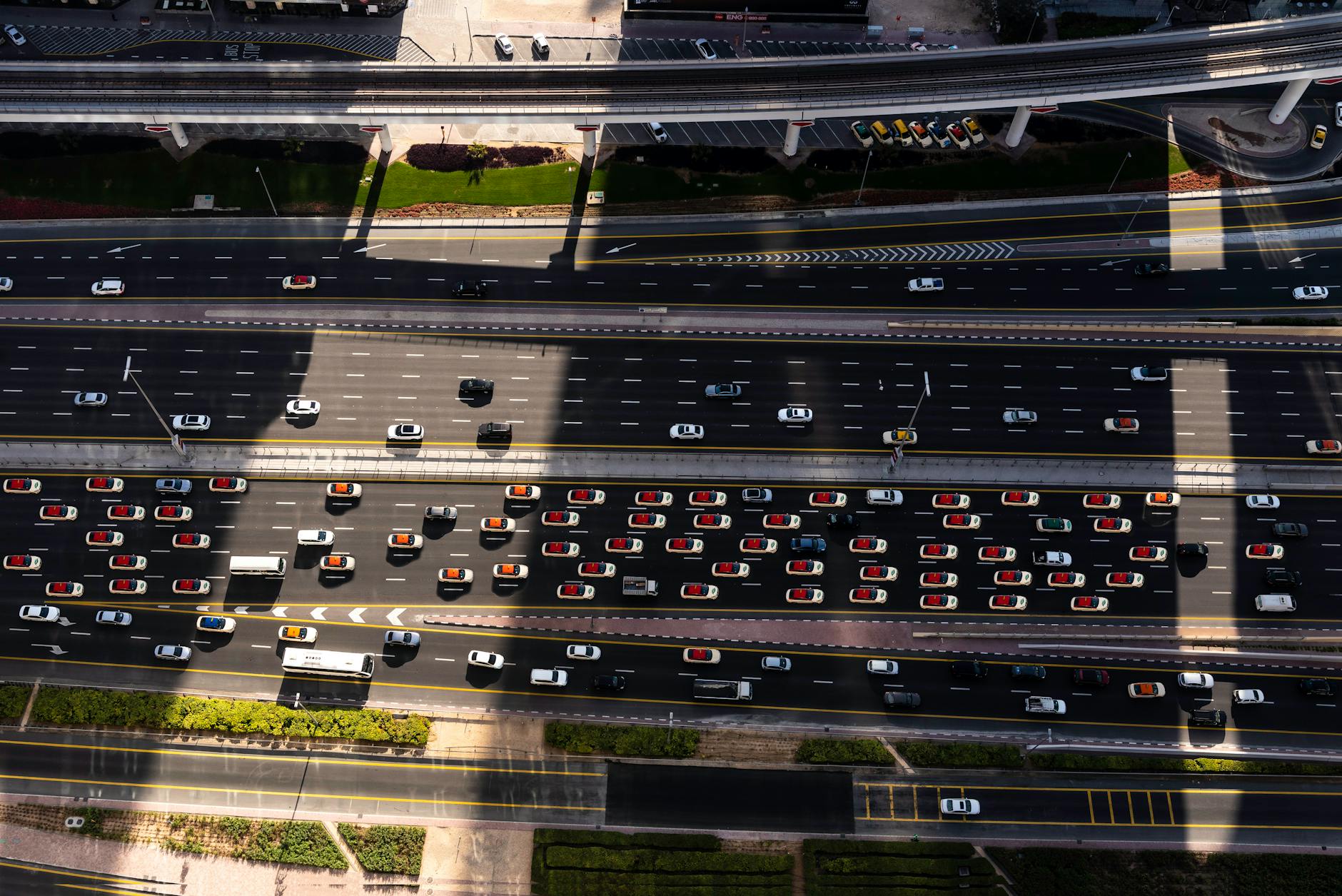
5. Taxis and ride-hailing
Taxis are one of the UAE's most important mobility systems. They bridge the gap between excellent roads and uneven public transit coverage.
5.1 Why taxis work well in the UAE
The regulated taxi model is strong because:
For a visitor, taxis are often the difference between a frustrating route and a smooth day.
5.2 Taxi limitations
Taxis are not perfect. Common issues include:
5.3 Dubai taxis
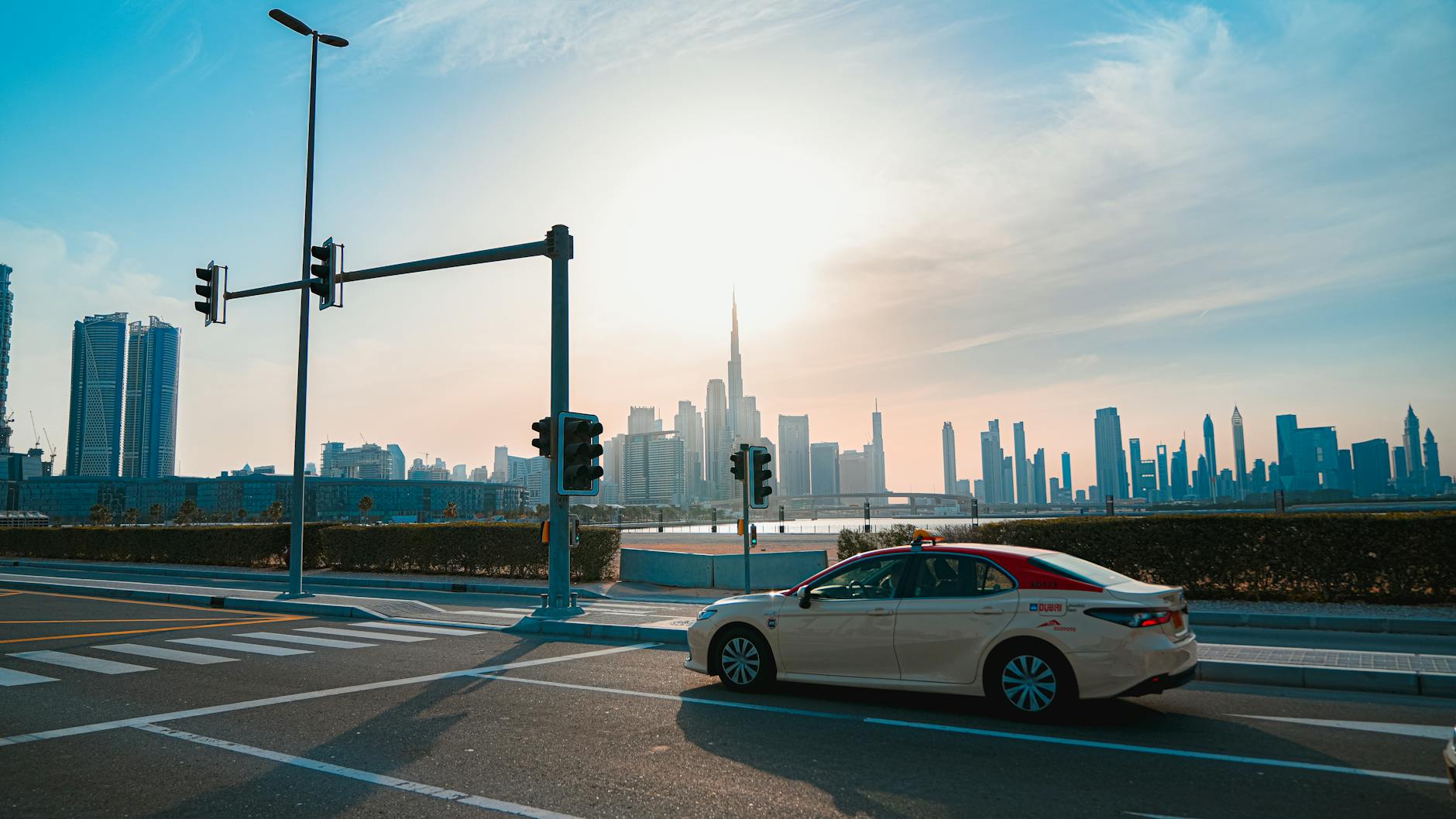
Dubai taxis are especially useful because they can be hailed, booked through apps, or accessed at official ranks. Dubai Taxi Corporation describes regular taxi service as operating within Dubai and to other emirates around the clock, with booking available through platforms such as Careem, Bolt, and S'hail. Dubai taxis support multiple payment methods including cash, cards, mobile wallets, QR payments, and nol card options.
Airport taxis are a separate practical category. They serve Dubai airport arrivals and are the simplest way to reach hotels outside the Metro corridor, reach other emirates, or travel with luggage late at night.
5.4 Abu Dhabi taxis
Abu Dhabi taxis can be booked through the Abu Dhabi Taxi app or by call center. They are essential for many tourist trips because Abu Dhabi's attractions are spread across the Corniche, Saadiyat, Yas Island, downtown, Grand Mosque area, business districts, and suburban residential areas. Buses are cheaper, but taxis are often the practical choice for time-sensitive visitors.
5.5 Sharjah, Ras Al Khaimah, Fujairah, and Al Ain taxis
In the other listed cities, taxis matter even more because rail is absent and bus networks are less dense. Sharjah has regulated taxis and app/call center options. Ras Al Khaimah's transport authority lists 24/7 taxi services with smart meters and specialized vehicles. Fujairah taxis and Hala/Careem-style booking have been expanding. Al Ain uses Abu Dhabi emirate's broader transport ecosystem, but taxis remain important for tourist attractions spread around the city and Jebel Hafeet.
5.6 Practical taxi tips
- Vehicles are metered and air-conditioned.
- Major airports have official taxi ranks.
- Drivers are licensed through local systems.
- Apps and call centers make booking easier.
- Taxis can cross many emirate boundaries, though surcharges and return-trip economics may apply.
- Payment options are generally improving.
- Long waits during rush hour, heavy rain, large conferences, New Year's Eve, major concerts, or Eid travel peaks.
- Surge-style pricing in app-based services.
- Difficulty finding taxis in outer districts, beaches, mountain areas, or resort zones at certain times.
- Some drivers being unfamiliar with small residential compounds, villa numbers, or new developments.
- Higher cost for repeated long-distance trips.
- Child seats not being reliably available unless booked specifically or arranged privately.
- Use official taxi ranks at airports, malls, hotels, and transport stations.
- Put the exact destination in the app or show the driver a pin.
- Know the nearest landmark, hotel, mall entrance, tower, or gate number.
- Carry a bank card and some cash backup.
- For intercity taxi trips, ask whether a surcharge applies.
- For remote return trips, arrange the return before you leave the city.
- During events and rain, book earlier and expect longer waits.
6. Urban rail, tram, future passenger rail, and monorail
6.1 Dubai Metro
Dubai Metro is the country's flagship rail transit system and the best fixed-route public transport system in the UAE. It serves the Red Line and Green Line corridors, with interchanges connecting older Dubai, business districts, airport terminals, Downtown, Sheikh Zayed Road, Dubai Marina/JLT, and Expo-related districts.
For visitors, the Metro is useful for:
Limitations:
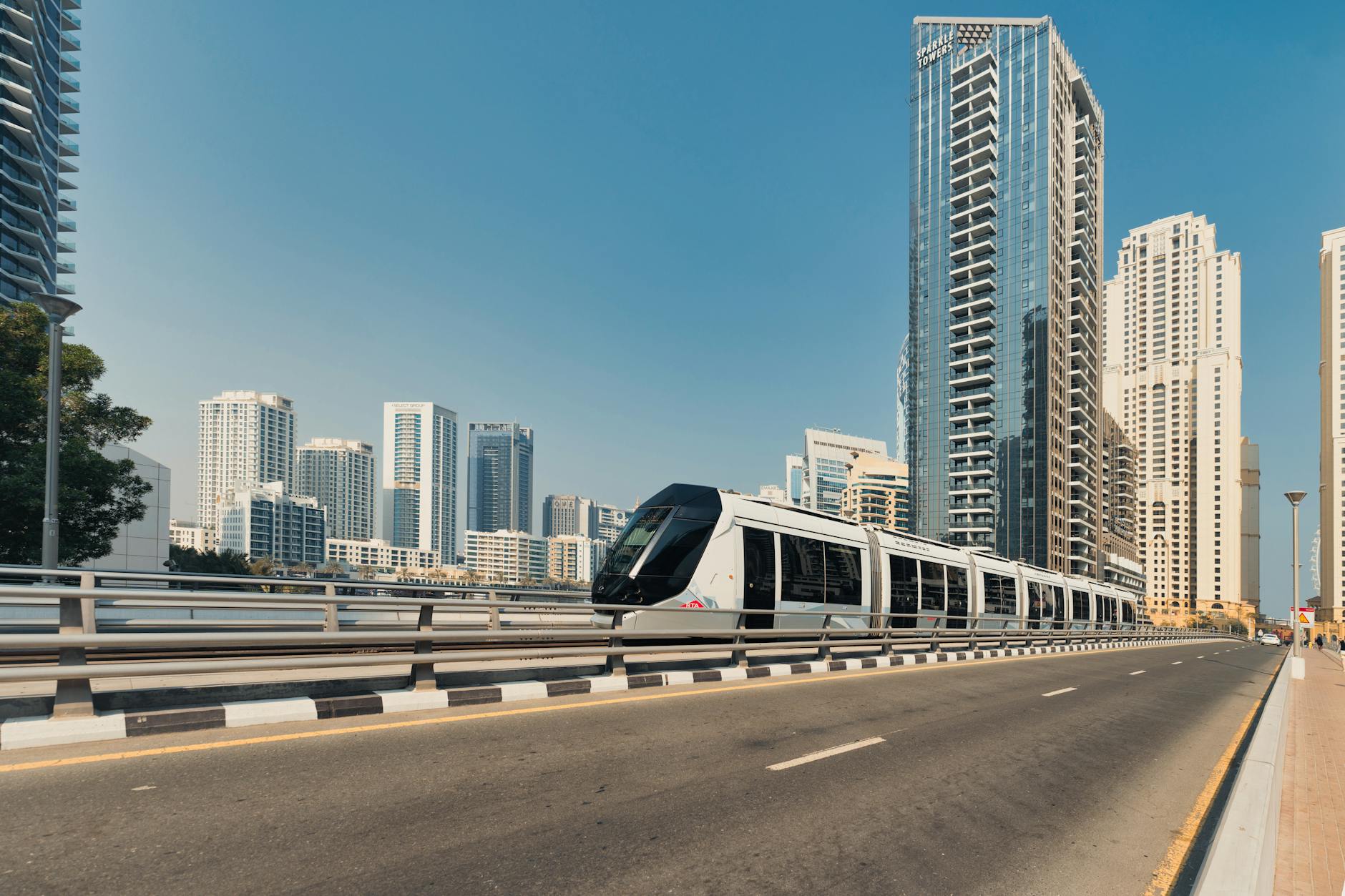
6.2 Dubai Tram
Dubai Tram serves the Dubai Marina, JBR, Al Sufouh, and connections toward Palm access points. It is most useful for people staying in Marina/JBR and for connecting between the Metro and beachfront/hotel zones. It is slower than the Metro but useful in a dense tourist district where walking in heat can be difficult.
6.3 Palm Monorail
The Palm Monorail historically connected the Palm Gateway area with stops on Palm Jumeirah, including Atlantis-related destinations. However, the official Palm Monorail site has indicated temporary service suspension for maintenance. Visitors should not rely on the monorail unless they confirm same-day operation. For Palm Jumeirah, practical alternatives are taxi, ride-hail, hotel shuttle, bus where available, or private car.
6.4 Etihad Rail passenger services
Etihad Rail is the most important future change in UAE transportation. The national railway project has completed a major freight network and has announced passenger network plans. Official Etihad Rail information describes a full passenger railway network intended to connect multiple cities and regions, with the first stations announced for Abu Dhabi, Dubai, Sharjah, and Fujairah and further planned stations including places such as Al Sila', Al Dhannah, Al Mirfa, Madinat Zayed, Mezaira'a, Al Faya, and Al Dhaid.
This could eventually transform intercity travel by giving visitors and residents a rail alternative to highways. It may especially matter for Abu Dhabi-Dubai-Sharjah-Fujairah movement and for residents who currently rely on cars or buses.
For now, the practical advice is conservative: do not build a travel itinerary around Etihad Rail until public passenger schedules, booking, fares, stations, and opening dates are confirmed and operating. Treat it as a near-future development, not a guaranteed current transport option.
6.5 Dubai Metro Blue Line
Dubai is also developing future Metro expansion, including the Blue Line project. This is important for long-term residents and future planning because it will improve rail access to developing residential and academic districts. It does not solve current visitor transport needs until it opens.
- Arriving from Dubai International Airport Terminals 1 and 3.
- Avoiding traffic on Sheikh Zayed Road.
- Connecting to Dubai Mall/Burj Khalifa via station and feeder links.
- Reaching Dubai Marina/JLT and connecting to the tram.
- Reaching old Dubai and creek areas by Green Line and walking/abra connections.
- Saving money compared with repeated taxis.
- It does not directly reach every beach or resort.
- Stations can be a long, hot walk from final destinations.
- Peak trains can be crowded.
- Luggage is allowed but constrained by space and rules.
- Some routes require long transfers or bus/taxi last mile.
7. Buses and intercity public transport
Buses are the public transport workhorse outside Dubai's rail corridors. They are cheaper than taxis and essential for many workers, students, and budget travelers.
7.1 City buses
City buses operate in all the major places covered in this paper, but their usefulness varies.
7.2 Intercity buses
Intercity buses are especially useful for travelers who want lower-cost movement between emirates.
Common examples include:
The exact departure point matters. A traveler staying in Dubai Marina may need significant time just to reach an intercity bus terminal. A traveler arriving in Abu Dhabi may need another local bus or taxi after reaching the central bus station.
7.3 Bus comfort and usability
Most public buses are air-conditioned. This matters enormously in the UAE. However, the walk to and from stops may be hot, exposed, or interrupted by highways. Bus shelters are not always close to the final destination. Luggage space varies, and bus travel with large suitcases can be awkward.
Practical bus tips:
- In Dubai, buses feed Metro and tram stations, serve residential districts, connect to beaches and malls, and support intercity terminals.
- In Abu Dhabi, buses are the primary scheduled public transport network and cover Abu Dhabi city, suburbs, Al Ain, and Al Dhafra.
- In Sharjah, Mowasalat buses serve city routes, airport links, and intercity connections, with Sayer discount payment.
- In Ras Al Khaimah, RAKTA operates internal routes including colored lines connecting key districts, the airport, and outer areas.
- In Fujairah, bus services exist but are less extensive and less visitor-obvious than Dubai or Abu Dhabi.
- In Al Ain, buses use the Abu Dhabi emirate network and Hafilat payment.
- Dubai to Abu Dhabi via routes such as E100/E101/E102 corridors.
- Abu Dhabi to Al Ain through Abu Dhabi Mobility intercity services.
- Abu Dhabi to Dubai, Sharjah, Ajman, Ras Al Khaimah, and other emirates through inter-emirate buses.
- Sharjah to Dubai, Abu Dhabi, Al Ain, Ras Al Khaimah, Kalba, Khorfakkan, and other destinations through SRTA/Mowasalat networks.
- Ras Al Khaimah to Dubai Union Bus Station, Sharjah, Ajman, Abu Dhabi, Al Ain, and Musandam connections.
- Dubai to Fujairah through RTA-linked routes such as E700-style services.
- Check the official app or website on the day of travel.
- Confirm the direction, terminal, and platform.
- Load the correct transport card in advance.
- Keep water with you, especially during summer.
- Allow extra time at rush hour and around holidays.
- For intercity trips, check last departures before making evening plans.
8. Airports and airport access
The UAE is highly air-connected. Airport access is a major part of transportation planning.
8.1 Dubai International Airport (DXB)
DXB is the country's busiest international gateway and one of the easiest airports in the region for public transport. Terminals 1 and 3 have direct Dubai Metro Red Line access. The airport's own guidance describes Metro operating hours and notes that travelers can buy nol products at Terminals 1 and 3. Metro is often excellent for central hotels near rail.
Use Metro from DXB when:
Use taxi from DXB when:
8.2 Al Maktoum International Airport (DWC)
DWC is farther from central Dubai. Access typically relies on taxis, buses, and connections via stations such as Ibn Battuta or Expo 2020 depending on current services. Travelers using DWC should plan more carefully than DXB passengers because the airport is more distant from traditional hotel zones.
8.3 Zayed International Airport, Abu Dhabi (AUH)
Abu Dhabi's Zayed International Airport is primarily road/bus/taxi accessed. Official airport transport information lists 24/7 A-series bus routes to locations such as Al Zahiyah, Khalifa Street, Mohammed Bin Zayed City, Al Shahama, and other points, with Hafilat required on bus services. Taxis are the easiest choice for most visitors going to hotels, Yas Island, Saadiyat, downtown Abu Dhabi, or onward intercity destinations.
8.4 Sharjah International Airport
Sharjah Airport is linked by bus routes to Sharjah city nodes such as Rolla and Al Jubail, and by taxi/ride-hail. It is also used by travelers staying in Dubai or the northern emirates, but road congestion between Sharjah and Dubai can be significant. A cheap flight into Sharjah can be less cheap if the onward transfer is long, late, or traffic-heavy.
8.5 Ras Al Khaimah, Fujairah, and Al Ain airports
These airports are more specialized for regional, charter, cargo, or limited passenger operations compared with DXB/AUH. In practice, many visitors to Ras Al Khaimah, Fujairah, and Al Ain arrive through Dubai, Abu Dhabi, or Sharjah and continue by road. Airport transfers, hotel shuttles, taxis, and rental cars should be arranged based on flight time and destination distance.
- You land during Metro operating hours.
- Your hotel is near a Red/Green Line station.
- You have manageable luggage.
- You want to avoid traffic and taxi cost.
- You arrive late or outside Metro hours.
- You have heavy luggage or children.
- Your destination is Jumeirah, Palm, Dubai Hills, Sharjah, Abu Dhabi, Ras Al Khaimah, Fujairah, or a non-rail district.
- You are tired and want the simplest route.
9. Marine transport
Marine transport is not the national backbone, but it is locally important and often enjoyable.
9.1 Dubai Creek abras
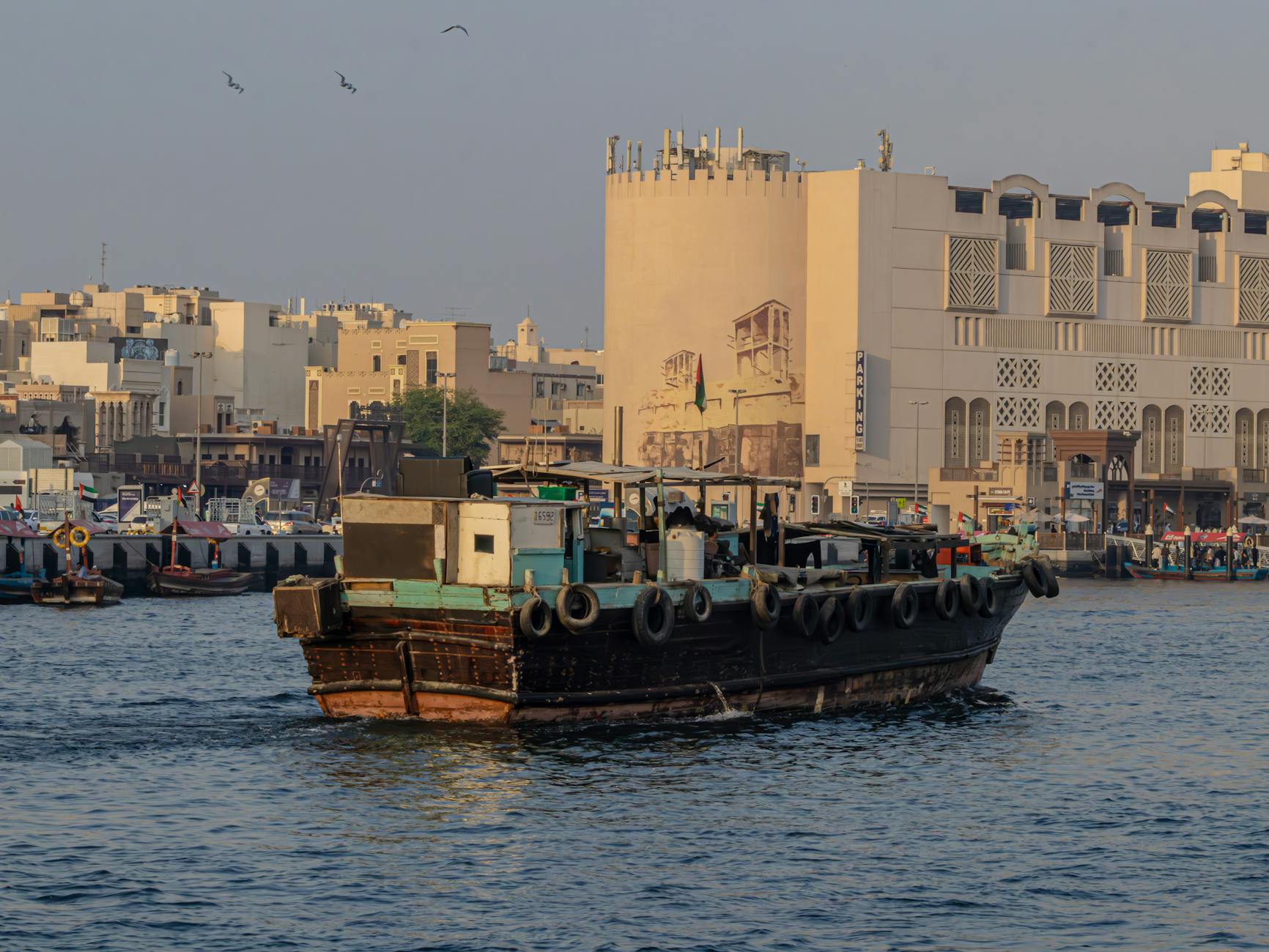
Traditional abras across Dubai Creek are one of the best small transport experiences in the country. They connect historic districts such as Deira and Bur Dubai and can be faster and more pleasant than road detours. They are also part of the visitor experience, not merely a sightseeing gimmick.
9.2 Dubai Ferry, water taxi, and water buses
Dubai's RTA marine network includes modern abras, ferries, and water taxi-style services in areas such as Dubai Creek, Dubai Water Canal, Dubai Marina, and waterfront corridors. These are useful for specific routes and sightseeing, but schedules and operating routes should be checked in advance. They are not a complete replacement for metro/taxi travel.
9.3 Ras Al Khaimah marine service
Ras Al Khaimah Transport Authority lists marine abra-style services connecting points such as Qawasim Corniche and Hilton Garden Inn areas, with scheduled and rental options. These services are more local and recreational than Dubai's larger marine network, but they add mobility along waterfront corridors.
9.4 Weather sensitivity
Marine services can be suspended or delayed due to weather, sea conditions, or operational changes. Always check same-day status if a boat connection is essential.
10. Walking, cycling, scooters, and the last mile
Walking and micromobility are where many UAE travel plans fail. The country has many polished pedestrian environments — malls, promenades, metro-linked walkways, waterfronts, plazas, resort districts — but the spaces between them can be hostile to walking.
10.1 Heat changes everything
From late spring through early autumn, daytime walking can be physically risky. Shade, humidity, and distance matter more than map distance. A 1.2-kilometer walk from a station to a hotel may be fine in winter and miserable in August.
Practical heat rules:
10.2 Urban design barriers
Common barriers include:
10.3 Cycling and scooters
Cycling and e-scooter availability is improving in selected areas, especially Dubai, Abu Dhabi leisure corridors, Ras Al Khaimah tourist districts, and waterfront zones. But micromobility is regulated by local rules and permitted zones. It is not safe or legal to ride everywhere.
Good use cases:
Bad use cases:
- Do not assume a walk is reasonable because it is short on a map.
- Use covered walkways, malls, and metro-linked bridges where possible.
- Carry water and sun protection.
- Use taxis for last-mile movements during peak heat.
- Avoid long exposed walks with children or older travelers.
- Multilane roads with limited crossings.
- Service roads and frontage roads that confuse walking routes.
- Construction detours.
- Gated communities.
- Huge blocks and superblocks.
- Pedestrian bridges that add distance.
- Lack of shade or seating.
- Hotels whose lobby entrances are on the opposite side from the pedestrian path.
- Designated waterfront promenades.
- Approved scooter zones.
- Leisure cycling tracks.
- Short first/last-mile trips in districts built for it.
- Fast roads.
- Unmarked sidewalks where riding is prohibited.
- Long summer daytime trips.
- Trips requiring highway crossings.
- Carrying luggage.
11. Accessibility, families, luggage, women travelers, and safety
11.1 Accessibility
Accessibility is improving, especially in Dubai Metro, major airports, malls, newer hotels, and official taxi fleets. Lifts, escalators, ramps, tactile paving, accessible ticketing counters, and priority spaces exist in many high-profile locations. However, practical accessibility depends on the full journey, not just the station.
A wheelchair user may find a Metro station accessible but still face a difficult final segment because of heat, curb design, construction, or missing crossings. In Abu Dhabi, Sharjah, Ras Al Khaimah, Fujairah, and Al Ain, accessible taxis or arranged transport may be more reliable for complex trips.
11.2 Families and children
The UAE is generally family-friendly, but transport planning matters.
Family considerations:
11.3 Luggage
Luggage is manageable on airport Metro routes in Dubai but not always pleasant at peak times. Taxis are better for heavy bags, multiple suitcases, golf clubs, strollers, or late-night arrivals. Intercity buses can carry luggage, but terminal access and final-mile movement must be considered.
11.4 Women travelers
The UAE is generally safe for women travelers, including solo travelers, but normal urban caution applies. Dubai Metro and tram include women-and-children cabins that can be useful during crowded periods. Taxis are regulated, and some emirates have women-focused taxi or family transport options. Ride-hailing apps add route tracking and cashless payment convenience.
11.5 Road and pedestrian safety
The largest safety issue is road exposure. Pedestrians should cross only at designated crossings and should not attempt to run across large roads. Drivers may travel fast, and road geometry can be confusing. Tourists should be cautious around parking lots, hotel driveways, mall drop-off areas, and service roads.
- Metro and tram can be excellent with children when stations are close.
- Taxis are useful, but child seats are not always guaranteed unless arranged.
- Large strollers can be awkward on crowded trains and buses.
- Mall entrances and taxi ranks can be long walks from attractions.
- Summer heat can quickly exhaust children.
- Theme parks and waterparks often require taxi, shuttle, or private car.
12. Climate, Ramadan, holidays, events, and disruption planning
12.1 Summer heat
Summer heat is not a minor comfort issue. It changes trip design. A traveler may need to replace walking transfers with taxis, plan indoor breaks, and avoid midday outdoor movement. Locals also adapt schedules around heat, using cars, taxis, delivery services, and indoor malls.
12.2 Rain and flooding
The UAE can experience rare but disruptive heavy rain. Roads may flood, taxis may become scarce, buses can be delayed, and marine services may be suspended. Because much of daily life assumes car movement, rain disruption can ripple widely. Travelers should build flexibility into airport-transfer days during storms.
12.3 Ramadan
During Ramadan, public transport hours, toll schedules, parking rules, traffic patterns, and restaurant activity may change. The evening iftar period can create concentrated movement and road congestion. Official apps and websites should be checked during Ramadan rather than relying on standard schedules.
12.4 Eid, New Year's Eve, major exhibitions, and sports events
Major events can transform transport conditions:
During these events, the correct strategy may be to use Metro where possible, walk only within controlled event zones, avoid driving near venues, and accept that taxi pickup points may be far from the exact destination.
- New Year's Eve around Downtown Dubai, Burj Khalifa, Dubai Mall, JBR, and fireworks areas.
- Major exhibitions at Dubai World Trade Centre, Expo City, ADNEC, and other venues.
- Formula 1 and Yas Island events in Abu Dhabi.
- Concerts and festivals in Dubai, Abu Dhabi, Sharjah, and Ras Al Khaimah.
- Eid travel peaks.
- National Day celebrations.
13. Resident and local-user concerns
Visitors see convenience; residents experience the daily tradeoffs.
13.1 Congestion
The most visible daily concern is congestion. Dubai-Sharjah commuting corridors are especially difficult because housing cost, employment locations, and road capacity combine into heavy peak flows. Dubai itself has congestion around Sheikh Zayed Road, Business Bay, Downtown, Dubai Marina, Al Khail Road, school zones, and event districts. Abu Dhabi has bridge and island-entry congestion. Sharjah's inner roads can be slow during commute times.
13.2 Car dependency and cost
Many residents need cars because housing, schools, offices, supermarkets, and healthcare are spread out. Car ownership brings fuel, insurance, registration, parking, fines, maintenance, tolls, and depreciation. Lower-income workers may depend on buses, company transport, shared rides, or long commutes.
13.3 Last-mile gaps
The last mile is the difference between a public transport network that looks good on a map and one that works in daily life. A bus route may exist, but a 15-minute walk in 43°C heat is not equivalent to a 15-minute walk in a temperate city. This affects workers, students, domestic employees, hospitality staff, and visitors without cars.
13.4 Fragmented regional planning
Cross-emirate travel is common, but systems are not fully unified. Different cards, apps, authorities, fares, tolls, and parking rules create friction. Residents who move between Dubai, Sharjah, Ajman, Abu Dhabi, and Ras Al Khaimah often become expert in multiple systems.
13.5 Road safety and enforcement
Road safety is a continuous concern because of speed, heavy traffic, lane changes, delivery vehicles, buses, trucks, and pedestrian exposure. Enforcement is technologically advanced, but human behavior still matters.
13.6 Future optimism and transition
Residents also see progress: metro expansion, bus network upgrades, smart payment systems, Etihad Rail, better taxi apps, on-demand buses, cycling tracks, electric vehicles, and marine services. The challenge is bridging the current period where many places are still easier by car than by transit.
14. Recommended mobility strategies by traveler type
14.1 First-time Dubai-focused visitor
Stay near a Metro station if possible. Use Metro for airport, Downtown, old Dubai, Marina/JLT, World Trade Centre, and Expo corridor. Use taxis for beaches, Palm, Jumeirah, late nights, luggage, and final-mile gaps. Buy a nol card early.
14.2 Abu Dhabi cultural and leisure visitor
Use taxis for most sightseeing unless you have time to learn bus routes. Use buses for budget travel and airport-city connections if your destination is near a route. For Grand Mosque, Louvre Abu Dhabi, Saadiyat, Yas Island, and Qasr Al Watan combinations, taxis or a private car may save significant time.
14.3 Multi-emirate road trip traveler
Rent a car if confident driving. Plan tolls, parking, and fuel. Avoid tight same-day schedules across Dubai-Sharjah-Abu Dhabi rush periods. For Ras Al Khaimah, Fujairah, Al Ain, mountains, and desert sites, a car is usually the most practical option.
14.4 Budget traveler
Use Metro and buses heavily in Dubai. Use intercity buses between emirates. Choose accommodation near transport nodes rather than isolated resorts. Carry the relevant cards and small cash. Accept that cheaper transport may cost more time.
14.5 Family traveler
Prioritize accommodation location, taxi access, and hotel shuttles. Use Metro only when station access is genuinely easy. Pre-arrange child seats for transfers where needed. Avoid overloading days with long cross-emirate trips in summer.
14.6 Business traveler
Use taxis, ride-hailing, or a driver for meetings across different districts. Metro works well for World Trade Centre, DIFC-area, Business Bay, and Sheikh Zayed Road hotel-office movements. Build traffic buffers into Dubai-Sharjah and Dubai-Abu Dhabi journeys.
14.7 Long-stay resident or digital nomad
Choose housing based on commute, not just apartment quality. Test the commute at the actual hour you will travel. Learn parking/toll rules. Decide whether a car, monthly taxi budget, or public transport card strategy is cheaper and more reliable.
Dubai
Overview
Dubai has the UAE's most advanced urban public transport system and the strongest visitor transport infrastructure. It combines Metro, tram, buses, marine transport, taxis, ride-hailing, airport rail access, extensive roads, parking systems, and toll roads. It is the only city in the UAE where a visitor can realistically build much of a trip around rail.
That said, Dubai is not a fully rail-saturated city. It is a linear, highway-oriented metropolis with dense nodes separated by large distances. The Metro is excellent along its spine, but many famous attractions require a taxi, bus, tram transfer, or long walk.
What is unique and important
Dubai is unique in the UAE because:
Best transport modes for visitors
| Trip type | Best mode | Why |
|---|---|---|
| DXB to rail-served hotel | Metro | Fast, cheap, avoids traffic |
| DXB to beach/Palm/suburban hotel | Taxi | Simpler with luggage and final-mile distance |
| Downtown to Marina/JLT | Metro | Avoids Sheikh Zayed Road traffic |
| Marina/JBR local trips | Tram, walking in winter, taxi | Tram helps but walking depends on heat |
| Old Dubai / Creek | Metro + abra + walking | Best mix of cost, experience, and practicality |
| Palm Jumeirah | Taxi/ride-hail/hotel shuttle | Palm Monorail status must be checked; taxis often easiest |
| Global Village / Miracle Garden / Dubai Hills | Taxi, bus if route fits | Rail does not directly solve these trips |
| New Year's Eve / major events | Metro + planned walking | Driving and taxi pickup may be restricted |
Dubai Metro
Dubai Metro is the city's backbone. The Red Line runs broadly along the major modern corridor, connecting airport terminals, Deira, Bur Dubai connections, World Trade Centre, DIFC, Downtown/Burj Khalifa, Business Bay, Mall of the Emirates, Dubai Marina/JLT connections, and Expo-related areas. The Green Line serves historic and central districts, including parts of Deira and Bur Dubai.
Practical Metro details:
Metro is especially useful for visitors staying near stations such as Dubai Mall/Burj Khalifa, Business Bay, Financial Centre, World Trade Centre, Mall of the Emirates, Sobha Realty, DMCC, Ibn Battuta, Deira City Centre, Union, BurJuman, and airport terminals.
Dubai Tram
The tram serves the Marina/JBR/Al Sufouh corridor and connects to the Metro. It is useful for beach hotels, Marina promenades, and local movement where traffic can be slow. It is not a high-speed citywide transit solution, but it reduces the need for taxis in a congested tourist zone.
Buses
Dubai's buses are extensive and often underrated. They feed Metro stations, reach beaches, residential districts, malls, and intercity bus terminals. For residents and budget travelers, buses can dramatically reduce transport costs. For visitors, buses are best when the route is direct and the stop is close. In summer, a bus route that requires long walking may be less useful than it appears.
Taxis and ride-hailing
Dubai taxis are essential even for rail-oriented visitors. They solve Palm, Jumeirah, Dubai Hills, Bluewaters, Global Village, Miracle Garden, beach clubs, restaurants away from stations, and late-night returns. Dubai taxis can be hailed in safe places, found at ranks, or booked through apps. Payment options are broad.
Ride-hailing can be more expensive than regular taxis, but app-based pickup and route tracking are useful. During major events, both taxis and ride-hailing may require long walks to designated pickup points.
Airport access
DXB is highly transit-friendly. Terminals 1 and 3 connect to Metro Red Line stations, and nol cards can be purchased at the airport. Use Metro if your hotel is near rail and luggage is manageable. Use airport taxi if traveling to Jumeirah, Palm, Sharjah, Abu Dhabi, Ras Al Khaimah, Fujairah, or outer districts.
DWC is more distant and more car/taxi/bus dependent. Do not assume DWC has the same convenience as DXB.
Driving and parking
Driving in Dubai is useful but can be stressful. Salik tolls, paid parking, traffic, exits, fast roads, and event closures all matter. A car is useful for residents, suburban stays, families, and road trips. It is often unnecessary or inconvenient for a central Metro-based visitor.
Difficult driving zones include:
Marine transport
Dubai's marine transport is uniquely useful and enjoyable. Traditional abras across the Creek are cheap, fast, and culturally important. Ferries and water transport can serve Creek, Canal, Marina, and sightseeing corridors. Use marine services when they fit the route, but check schedules rather than assuming turn-up-and-go service.
Walking and last mile
Dubai has some excellent walking environments: Marina Walk, JBR, Downtown boulevard areas, Dubai Mall connections, City Walk, old souk alleys, Creek edges, and winter beachfront promenades. But it also has many places where walking is a trap because of heat, road crossings, construction, or distance.
A hotel listed as “near Dubai Mall” may still involve a long indoor/outdoor walk. A hotel near a Metro station may be practical in January and draining in July. Always check the actual pedestrian path, not just distance.
Resident concerns in Dubai
Local and resident concerns include:
Practical Dubai strategy
For most visitors, the best strategy is: stay near the Metro, use nol, take Metro for the spine, tram where useful, abras in old Dubai, and taxis for last-mile or non-rail destinations. Rent a car only if the itinerary extends beyond rail-served Dubai or involves multiple outer districts.
- It has the Dubai Metro, a high-quality automated urban rail system.
- DXB Terminals 1 and 3 connect directly to the Metro Red Line.
- nol card integrates Metro, tram, buses, and many marine services.
- Taxis are abundant, app-bookable, and multi-payment.
- Road tolls through Salik shape driving costs.
- Marine transport is both practical and scenic in Creek/Canal/Marina areas.
- Event transport management is advanced but can still be intense.
- The city has strong tourist infrastructure but also severe last-mile issues in heat.
- Buy a nol card before entering the system.
- Ensure sufficient balance before tapping in.
- Use the women-and-children cabin if appropriate.
- Gold Class requires the correct card/product; do not sit there by mistake.
- Avoid peak crowding where possible.
- Check operating hours, especially late night, Friday/Saturday timing, holidays, and Ramadan.
- Account for long station-to-destination walks.
- Downtown and Dubai Mall at peak times.
- Dubai Marina and JBR evenings/weekends.
- Deira and Bur Dubai old streets.
- School zones at pickup/drop-off times.
- Dubai-Sharjah commuting corridors.
- Event zones around World Trade Centre, Expo City, and major venues.
- Congestion and commute unpredictability.
- Parking cost and availability.
- Salik toll accumulation.
- Dependence on cars in suburban communities.
- Crowding on Metro at peak times.
- Last-mile heat from transit stops.
- High taxi costs for daily use.
- Construction detours in fast-growing districts.
- Delivery vehicle and scooter safety conflicts.
Abu Dhabi
Overview
Abu Dhabi is the UAE's capital and a large, spread-out metropolitan area built around islands, suburbs, wide roads, government districts, business zones, cultural sites, and leisure islands. It does not have a public metro in operation. Its practical mobility system is buses, taxis, private cars, on-demand services, airport buses, and emerging rapid-transit experiments.
Abu Dhabi can be easy for visitors who use taxis and plan clusters. It can be slow for visitors who attempt to cross the city repeatedly by public bus without understanding distances.
What is unique and important
Abu Dhabi is unique because:
Best transport modes for visitors
| Trip type | Best mode | Why |
|---|---|---|
| Airport to hotel | Taxi, airport bus if route fits | Taxi is easiest; A-series buses are cheap but require Hafilat |
| Corniche/downtown short trips | Taxi, bus, walking in winter | Distances still matter |
| Louvre Abu Dhabi / Saadiyat | Taxi, bus if close | Cultural district is spread out |
| Yas Island parks | Taxi, hotel shuttle, local shuttle where available | Door-to-door convenience matters |
| Sheikh Zayed Grand Mosque | Taxi or bus if route convenient | Taxi saves time for most visitors |
| Abu Dhabi to Dubai | Intercity bus or taxi/private car | Bus is cheaper; car/taxi is faster door-to-door |
| Abu Dhabi to Al Ain | Intercity bus or car | Bus is regular and affordable; car helps for sightseeing |
Buses and Hafilat
Abu Dhabi's public buses are the primary scheduled transit network. They serve Abu Dhabi city, suburban areas, Al Ain, and Al Dhafra. Hafilat smart cards are used to pay bus fares by tapping on and off. Official fare information describes a standard fare structure with a boarding component plus a distance component and a capped fare on standard local services, with transfer rules allowing continued journeys under conditions.
Visitors using buses should buy/load Hafilat in advance at available machines, customer service points, partner outlets, or airport points. Cash should not be relied on for public buses.
Airport buses
Zayed International Airport lists A-series bus routes operating 24/7 from stops outside arrivals. These connect the airport with parts of Abu Dhabi such as Al Zahiyah, Khalifa Street, Mohammed Bin Zayed City, Al Shahama, and other destinations. The fares are low, but Hafilat is required and cash is not accepted.
This is excellent for budget travelers whose accommodation is near a route. For most first-time visitors with luggage, taxis remain simpler.
Taxis
Taxis are central to Abu Dhabi mobility. They are reliable, metered, and easy to use at hotels, malls, airport ranks, and major attractions. The Abu Dhabi Taxi app and call center are useful for booking.
Taxis are especially sensible for:
Abu Dhabi Link and on-demand transport
Abu Dhabi Link provides on-demand bus-style service in zones such as Al Shahama, Yas Island, Saadiyat, and Khalifa City. It is booked by app and paid through Hafilat. This type of service is important because Abu Dhabi's urban form has many medium-density areas where fixed-route buses do not always solve the last mile.
Automated Rapid Transit
Abu Dhabi's Automated Rapid Transit service is an electric bus/rapid transit style service operating on high-demand corridors. It is not a metro, and it should not be confused with rail, but it demonstrates Abu Dhabi's move toward higher-capacity public transport in selected corridors.
Driving, parking, and Darb
Driving is common and often practical in Abu Dhabi. Roads are broad and parking is structured in many areas, but city-center parking rules must be respected. Darb toll gates matter for certain bridge and island-entry trips. Rental-car users should expect tolls and fines to be billed later.
Walking and last mile
Abu Dhabi has pleasant promenades and cultural areas, especially in winter, but districts are spread out. A “nearby” landmark may still be across a wide road, bridge, construction zone, or long exposed sidewalk. Taxis remain the best last-mile tool in summer.
Resident concerns in Abu Dhabi
Residents deal with:
Practical Abu Dhabi strategy
For visitors, cluster activities geographically. Do not plan Grand Mosque, Louvre, Yas Island, Corniche, and Qasr Al Watan as if they were adjacent. Use taxis for time-sensitive movements, buses for budget corridors, Hafilat if using public transport, and intercity buses for lower-cost Dubai or Al Ain travel.
- It is the national capital and has major government/business travel demand.
- It is more spread out than many visitors expect.
- It uses Hafilat for bus payment.
- It has strong regulated taxi services.
- It has intercity buses to Dubai, Al Ain, Sharjah, Ras Al Khaimah, and other emirates.
- It has Darb toll gates on key island-entry corridors.
- It includes separate visitor zones such as Corniche/downtown, Saadiyat, Yas Island, Grand Mosque area, and the airport.
- It is developing on-demand and automated rapid transit services rather than relying only on conventional fixed-route buses.
- Grand Mosque plus Qasr Al Watan combinations.
- Saadiyat cultural district.
- Yas Island attractions.
- Late-night returns.
- Business meetings across islands.
- Families with children.
- Long cross-city distances.
- Bridge and island-entry congestion.
- Dependence on cars in suburban communities.
- Parking and Mawaqif rules.
- Bus journey times and last-mile exposure.
- Commuting from mainland communities to island jobs.
- Event congestion around Yas Island and major venues.
Sharjah
Overview
Sharjah is a major emirate and city directly adjacent to Dubai. It is culturally important, residentially dense in places, and deeply tied to Dubai commuting patterns. Sharjah has no metro, so its mobility depends on buses, taxis, intercity buses, private cars, and road links.
Sharjah is one of the most important transport case studies in the UAE because it shows the consequences of cross-emirate commuting. Many residents live in Sharjah and work or study in Dubai because of housing costs, family needs, or job distribution. That creates heavy road demand on corridors between the two emirates.
What is unique and important
Sharjah is unique because:
City buses and Sayer
Sharjah's Mowasalat network operates local routes serving areas such as Al Sharq, Rolla, Sahara Centre, Al Jubail, Sharjah Airport, and other districts. Official route information shows that Sayer fares are lower than cash fares. The Sayer card can be purchased and recharged through bus drivers and other channels, depending on card type and route.
For occasional visitors, paying cash may be acceptable for one ride. For repeated bus use, Sayer saves money and reduces friction.
Airport access
Sharjah International Airport is connected by bus routes such as services between Rolla/Al Jubail and the airport, along with taxis and app-based transport. It is used by travelers staying in Sharjah, Dubai, and the northern emirates. The airport can be convenient, but onward travel should be planned carefully because Dubai-Sharjah traffic can be severe.
Intercity buses
Sharjah's intercity bus network is important. It connects with Dubai, Abu Dhabi, Al Ain, Ras Al Khaimah, Kalba, Khorfakkan, and other places. This makes Sharjah a useful budget hub but not necessarily a fast hub. Road congestion and terminal access matter.
Taxis and ride-hailing
Taxis are essential in Sharjah, especially for visitors. They solve gaps between hotels, museums, souks, waterfront areas, the airport, and Dubai connections. Ride-hailing can be useful, but availability and pricing depend on time and location.
Driving and parking
Driving in Sharjah can be challenging because of dense urban streets, commuter congestion, parking constraints, school traffic, and Dubai-bound flows. Visitors renting cars should avoid peak commute periods if possible and should check paid parking rules carefully.
Walking
Sharjah has walkable cultural districts, waterfronts, and souk areas, especially in winter. But the broader city has wide roads, hot weather, and car-oriented zones. Walking between attractions should be assessed case by case.
Resident concerns in Sharjah
The main resident issues are:
Practical Sharjah strategy
Visitors should use taxis for most point-to-point sightseeing, buses for budget routes, Sayer for repeated bus use, and allow major buffers for Dubai transfers. Staying near Al Jubail, Rolla, Sahara Centre, or the airport can make a big difference depending on the itinerary.
- It is functionally tied to Dubai but has its own transport authority and fare system.
- It uses Sayer for discounted bus fares.
- Cash bus fares are higher than Sayer fares.
- Al Jubail and Rolla are key bus/transport nodes.
- Sharjah Airport is served by bus routes and taxis.
- Dubai-Sharjah road congestion is a major daily issue.
- Intercity buses connect Sharjah to Dubai, Abu Dhabi, Al Ain, Ras Al Khaimah, Kalba, Khorfakkan, and other destinations.
- Dubai commute congestion.
- Parking scarcity in dense neighborhoods.
- Bus journey times.
- Dependence on private cars and shared transport.
- Cost tradeoffs between cheaper housing and longer commutes.
- School traffic.
- Roadworks and bottlenecks.
Ras Al Khaimah
Overview
Ras Al Khaimah is a northern emirate known for resorts, beaches, mountains, Jebel Jais, adventure tourism, heritage sites, and a less dense urban form than Dubai or Sharjah. It has an increasingly visible public transport system, including internal buses, intercity buses, taxis, marine services, and micromobility, but visitors should still think of it as a destination where car/taxi planning matters.
What is unique and important
Ras Al Khaimah is unique because:
Internal buses
RAKTA has developed internal bus routes covering important urban and airport corridors. Examples include colored lines connecting areas such as Al Nakeel, Al Jazirah Al Hamra, Sha'am, Ras Al Khaimah Airport, and other districts. Fares are low compared with taxis, and services are useful for residents and budget travelers.
However, many visitor destinations — resorts, remote beaches, desert camps, Jebel Jais viewpoints, adventure parks, and heritage sites — may not align with frequent public bus service. Always check whether the bus actually stops near the destination and whether a return trip is available.
Intercity buses
Ras Al Khaimah has useful intercity bus links. RAKTA lists services such as Ras Al Khaimah to Dubai Union Bus Station, Sharjah, Ajman, Abu Dhabi, Al Ain on selected days, and Musandam-related routes. These services are valuable for budget travelers, workers, and residents.
For visitors, the main decision is where the bus leaves you. Dubai Union Bus Station may be convenient for old Dubai and Metro connections, but not for a beach hotel in JBR. Ras Al Khaimah bus terminal arrival may still require a taxi to a resort.
Taxis
RAK taxis are essential for tourism. The transport authority lists 24/7 taxi services with smart meters and safety systems, plus specialized services such as accessible taxis and sharing taxi options on certain corridors. Taxis are practical for city movement, resort transfers, and short trips. For mountain or remote trips, pre-arranged private transport can be better than hoping to find a taxi later.
Jebel Jais and mountain travel
Jebel Jais is one of the UAE's most important non-urban transport cases. The road is paved and scenic, but it is a mountain road. Visitors should consider:
Public or seasonal services to Jebel Jais may exist or change, but same-day confirmation is essential.
Marine and micromobility
RAKTA lists abra/marine services around Qawasim Corniche and hotel waterfront areas, as well as e-scooter/e-bike services in selected zones such as Al Marjan Island, Al Hamra, Corniche, Mina Al Arab, Jebel Jais, and other tourism/residential areas. These are useful locally but not a replacement for intercity or resort transport.
Driving and parking
A car is very useful in Ras Al Khaimah. Parking is generally easier than in central Dubai, but resorts, waterfronts, events, and tourist attractions can still create congestion. Visitors should not underestimate distances between city center, Al Hamra, Al Marjan, mountain areas, and remote resorts.
Resident concerns in Ras Al Khaimah
Residents deal with:
Practical Ras Al Khaimah strategy
Use intercity buses for budget access, taxis for local point-to-point movement, and a rental car or arranged driver for resorts, Jebel Jais, desert/mountain areas, and multi-stop itineraries. Confirm return transport before leaving dense areas.
- It combines city, resort, desert, beach, and mountain tourism.
- Jebel Jais and outer resort areas are not simple public transit destinations.
- RAKTA operates intercity buses to Dubai, Sharjah, Ajman, Abu Dhabi, Al Ain, and Musandam-style connections.
- Internal colored bus routes connect key local areas, including the airport and coastal districts.
- The Sayr app and E-Saqr Card are central to the local public transport ecosystem.
- Taxis are available 24/7 but should be planned for remote returns.
- Marine and micromobility services exist in selected zones.
- Driving confidence.
- Vehicle condition.
- Weather, fog, rain, and temperature changes.
- Fuel and water.
- Return timing.
- Whether activities require advance booking.
- Whether taxis will wait or return.
- Limited high-frequency public transport compared with Dubai.
- Car dependence for jobs, schools, and shopping.
- Connectivity between old city areas, new resort developments, and mountain/tourism zones.
- Need for affordable intercity commuting options.
- Seasonal tourism traffic.
- Last-mile gaps from bus routes.
Fujairah
Overview
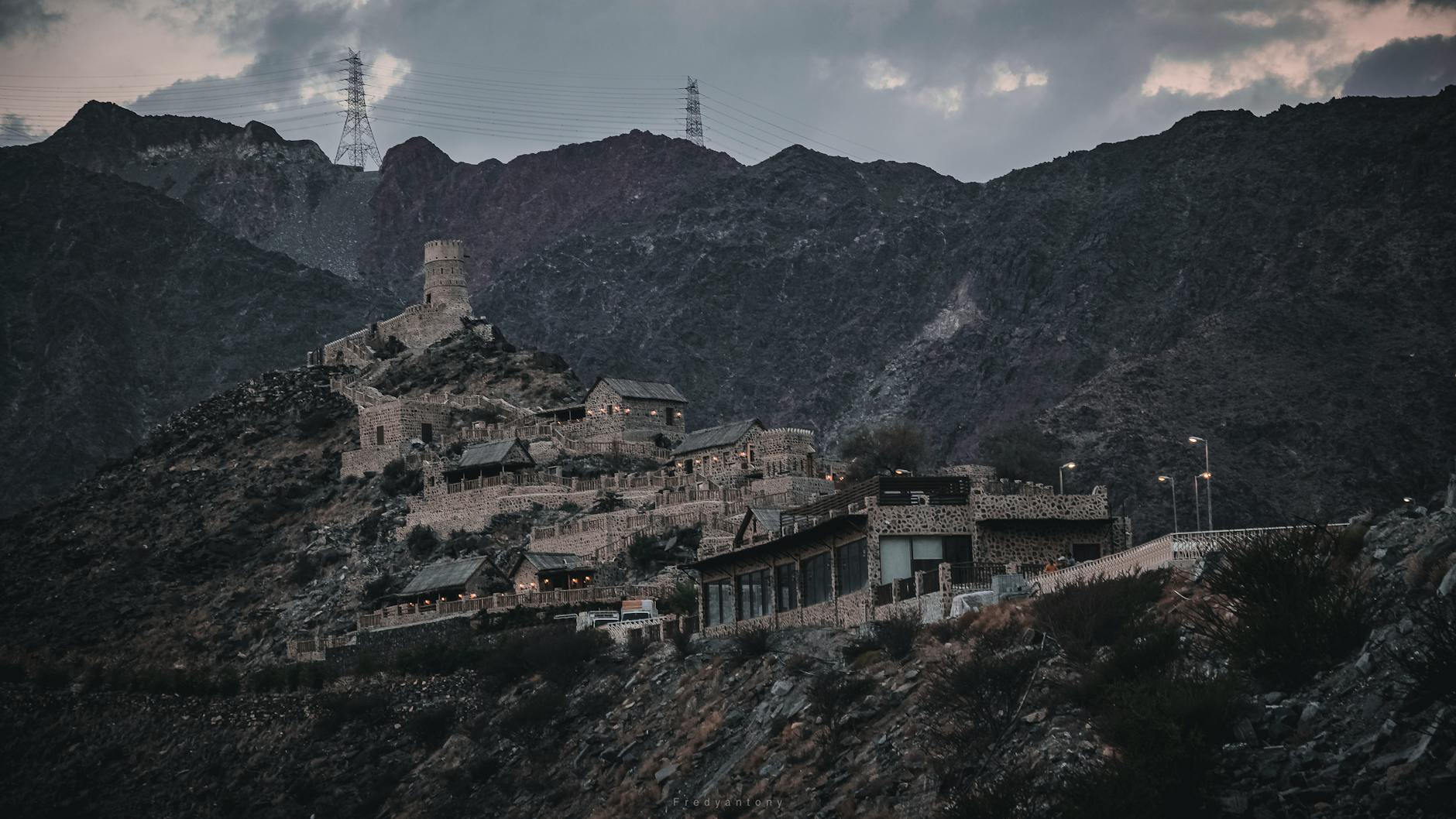
Fujairah sits on the UAE's east coast and has a different transportation character from Dubai or Abu Dhabi. It is connected by road through the Hajar Mountains and is important for beaches, diving, resorts, ports, mountain scenery, and access to areas such as Al Aqah and Dibba. It has public transport and intercity connections, but most visitor mobility is car/taxi/transfer oriented.
What is unique and important
Fujairah is unique because:
Intercity access
Many visitors reach Fujairah from Dubai, Sharjah, or Abu Dhabi by road. The drive from Dubai is commonly around two hours depending on origin, traffic, and road conditions. Public bus routes between Dubai and Fujairah exist, including RTA-linked services such as E700-style corridors between Dubai and Fujairah bus stations, but travelers should check current schedules and terminals before relying on them.
A bus may be good for Fujairah city. It may be poor for Al Aqah, Dibba, resort beaches, or multiple sightseeing stops.
Local transport
Local public transport in Fujairah is more limited than Dubai or Abu Dhabi. Fujairah Transport Corporation and taxi services provide the local mobility base. Hala/Careem-style booking has expanded in Fujairah, improving app-based taxi access. Still, availability may be thinner than in Dubai.
Taxis and transfers
Taxis are the practical choice for many Fujairah trips, especially:
For remote beaches, early-morning diving, or late returns, pre-arranging a taxi or private driver is safer than assuming immediate availability.
Driving
Driving is often the best way to explore Fujairah. The main roads are generally good, but mountain weather, heavy vehicles, and weekend traffic can affect journeys. Visitors should be cautious after heavy rain because wadis and mountain roads can become hazardous.
Walking
Fujairah city has some walkable areas, but the emirate as a destination is spread out. Beach resort guests may be able to walk within resort zones, but not between coastal attractions in a practical way.
Resident concerns in Fujairah
Residents and local users face:
Practical Fujairah strategy
For a short beach or dive trip, book a transfer or rent a car. For a budget city trip, use the Dubai-Fujairah bus if the timetable fits, then taxis locally. For mountain, resort, or multi-stop itineraries, a car or arranged driver is the most practical solution.
- It is on the Gulf of Oman side of the country rather than the Arabian Gulf coast.
- Road access from Dubai/Sharjah involves mountain-crossing corridors.
- Beach resorts and dive areas are spread out along the coast.
- Public buses connect Fujairah with Dubai and other areas, but local tourist movement is less transit-friendly.
- Taxi and private transfers are often necessary.
- Future Etihad Rail plans include Fujairah as a passenger network location, but public passenger service should not be relied on until operating.
- Fujairah city hotels to beaches.
- Resorts along the coast.
- Diving centers.
- Mountain viewpoints.
- Forts and heritage sites.
- Airport or bus station transfers.
- Fewer high-frequency public transport options.
- Car dependence.
- Need for reliable connections to Dubai/Sharjah for work, medical, education, or flights.
- Spread-out coastal and mountain geography.
- Limited late-night transport outside central areas.
- Seasonal tourism and weekend traffic.
Al Ain
Overview
Al Ain is part of the Emirate of Abu Dhabi but has its own distinct identity: an oasis city, heritage center, university city, family city, and gateway to Jebel Hafeet. It is more relaxed than Abu Dhabi or Dubai but still spread out. Public buses exist through the Abu Dhabi Mobility/Hafilat system, but sightseeing is usually easier by taxi, private car, or rental car.
What is unique and important
Al Ain is unique because:
Intercity access
Abu Dhabi Mobility lists Al Ain intercity services, including regular and premium bus options between Abu Dhabi and Al Ain. Inter-emirate services also include links such as Al Ain to Dubai and Al Ain to Sharjah. These are useful for residents, students, workers, and budget visitors.
For visitors, buses work best if the start and end points are near bus stations or if a taxi completes the final segment.
City buses and Hafilat
Al Ain buses use the Abu Dhabi system, with Hafilat as the key payment method. Buses are useful for local residents and some budget travelers, but visitor sightseeing may require several transfers or long waits depending on the destination.
Taxis
Taxis are the easiest way to move around Al Ain without a car. They are useful for:
For Jebel Hafeet, ensure the taxi/driver arrangement covers waiting and return.
Driving and Jebel Hafeet
A car is extremely useful in Al Ain. Jebel Hafeet is a classic driving destination, with a mountain road that is scenic but demands attention. Visitors should avoid reckless driving, watch weather conditions, and plan the descent before dark if uncomfortable with mountain roads.
Walking
Al Ain Oasis and some heritage areas are pleasant for walking in cooler weather. But the city as a whole is too spread out for walking as the main transport mode. Heat makes even short walks difficult in summer.
Resident concerns in Al Ain
Residents face:
Practical Al Ain strategy
Use intercity buses to reach Al Ain if budget matters. Use taxis or a rental car for local sightseeing. Rent a car or hire a driver for Jebel Hafeet, multiple heritage sites, and any itinerary that crosses the city several times.
| City | Strongest modes | Weakest point | Best visitor strategy |
|---|---|---|---|
| Dubai | Metro, tram, taxis, buses, marine transport, airport Metro | Last mile, heat, traffic in non-rail areas | Stay near Metro; use taxis for beaches/Palm/outer districts |
| Abu Dhabi | Taxis, buses, airport buses, on-demand services, private car | No metro; attractions spread out | Cluster sights; use taxis for time, buses for budget |
| Sharjah | Buses, taxis, intercity buses | Dubai commute congestion; no metro | Use Sayer for buses; allow traffic buffers; taxi for sightseeing |
| Ras Al Khaimah | Taxis, intercity buses, internal buses, rental cars | Resorts/mountains spread out | Use car/driver for Jebel Jais and resorts; buses for budget access |
| Fujairah | Cars, taxis, transfers, intercity buses | Limited local tourist transit | Rent car or arrange transfer for beaches/mountains |
| Al Ain | Taxis, Hafilat buses, intercity buses, rental cars | Attractions spread; no rail | Use bus to arrive, car/taxi for sightseeing |
The following official and practical sources were used to verify current systems, agencies, payment media, airport access, fares, and future rail planning. Transport schedules and fares change; check official sources on the day of travel.
: UAE Government Portal, “Public transport” — https://u.ae/en/information-and-services/transportation/public-transport
: UAE Government Portal, “Roadways” — https://u.ae/en/information-and-services/transportation/roadways
: UAE Ministry of Economy and Tourism, “Renting a car” — https://www.moet.gov.ae/en/-/renting-a-car
: UAE Government Portal, “How to get to the UAE” — https://u.ae/en/information-and-services/visiting-and-exploring-the-uae/how-to-get-to-the-uae
: Etihad Rail, “Ahead of the launch of the first phase of passenger train services in 2026, Etihad Rail reveals details of the UAE's full passenger railway network” — https://www.etihadrail.ae/en/post/ahead-of-the-launch-of-the-first-phase-of-passenger-train-services-in-2026-etihad-rail-reveals-details-of-the-uaes-full-passenger-railway-network
: Etihad Rail, “Network” — https://www.etihadrail.ae/en/network
: Dubai Airports, “Metro” — https://dubaiairports.ae/transport/metro
: Visit Dubai, “Guide to Dubai Metro” — https://www.visitdubai.com/en/articles/guide-to-dubai-metro
: Dubai Taxi Company, “Regular Taxi” — https://www.dubaitaxi.ae/en/our-services/taxi
: Dubai Taxi Company, “Airport Taxi” — https://www.dubaitaxi.ae/en/our-services/airport-taxi
: Dubai Digital Authority, “Road toll in Dubai — Salik” — https://www.dubai.ae/living/driving-transportation/road-toll-in-dubai-salik
: Salik, “Variable toll rates” — https://www.salik.ae/en/Toll-Gates/variable-toll-rates
: Visit Dubai, “Marine transport” — https://www.visitdubai.com/en/plan-your-trip/getting-around-dubai/marine-transport
: Palm Monorail official website — https://www.palmmonorail.com/
: Dubai Media Office, “RTA awards Dubai Metro Blue Line contract” — https://www.mediaoffice.ae/en/news/2024/december/19-12/rta-awards-dubai-metro-blue-line-contract
: Abu Dhabi Mobility, “Public bus service” — https://admobility.gov.ae/en/pb-bus-service
: Abu Dhabi Mobility, “Hafilat cards” — https://admobility.gov.ae/en/pb-bus-service/hafilat-cards
: Abu Dhabi Mobility, “Hafilat public buses fees” — https://admobility.gov.ae/en/pb-bus-service/hafilat-public-buses-fees
: Abu Dhabi Mobility, “Inter-city services” — https://admobility.gov.ae/en/inter-city-services
: Abu Dhabi Mobility, “Inter-Emirates services” — https://admobility.gov.ae/en/inter-emirates-services
: Abu Dhabi Mobility, “Abu Dhabi Link” — https://admobility.gov.ae/en/pb-ad-link
: Abu Dhabi Mobility, “Automated Rapid Transit” — https://admobility.gov.ae/en/automated-rapid-transit
: Abu Dhabi Mobility, “Taxi booking” — https://admobility.gov.ae/en/taxi-booking
: Abu Dhabi Mobility, “Darb fees” — https://admobility.gov.ae/en/darb-fees
: Zayed International Airport, “City bus routes and timetables” — https://www.zayedinternationalairport.ae/en/parking-and-transport/transport/city-bus-routes-and-timetables
: Mowasalat, “Routes” — https://mowasalat.ae/routes/
: Mowasalat official website — https://mowasalat.ae/
: Sharjah Roads and Transport Authority, “Sayer Card” — https://www.srta.gov.ae/en-us/Transport-Sector/Sayer-Card.html
: Sharjah Roads and Transport Authority, “Intercity bus schedule” — https://eforms.srta.gov.ae/eforms/BusSchedule.aspx?Route=Intercity
: Ras Al Khaimah Transport Authority — https://www.rakta.gov.ae/
: Ras Al Khaimah Transport Authority, “Public Transport” — https://www.rakta.gov.ae/public-transport/
: Ras Al Khaimah Transport Authority, “Taxi Service” — https://www.rakta.gov.ae/taxi-service/
: Ras Al Khaimah Transport Authority, “Marine transport services” — https://www.rakta.gov.ae/marine-transport-services/
: Ras Al Khaimah Transport Authority, “Micro mobility services” — https://www.rakta.gov.ae/micro-mobility-services/
: Fujairah Transport Corporation — https://transport.fujairah.ae/
: Fujairah Government, “Arriving in Fujairah” — https://fujairah.ae/en/Pages/arrivinginfujairah.aspx
: Fujairah International Airport, “Transportation” — https://www.fujairah-airport.ae/en/travellers/discover-fujairah/transportation/
: Hala, “Fujairah taxi booking” — https://www.halaride.com/fujairah-taxi-booking/
- It uses the Abu Dhabi emirate transport ecosystem, including Hafilat for buses.
- It has important intercity bus links to Abu Dhabi, Dubai, and Sharjah.
- It is built around dispersed attractions rather than a dense rail-served core.
- Jebel Hafeet is a major road-based attraction.
- The city has heritage sites, oasis areas, parks, zoo attractions, malls, universities, and residential neighborhoods spread across a wide area.
- It is near Oman border areas, but border-crossing rules, insurance, and visas must be checked before attempting any cross-border movement.
- Al Ain Oasis.
- Al Ain Zoo.
- Jebel Hafeet base or summit access.
- Qasr Al Muwaiji.
- Al Jahili Fort.
- Hotels and malls.
- Bus station transfers.
- Car dependence for school, work, and family errands.
- Long distances between neighborhoods and attractions.
- Need for reliable intercity buses to Abu Dhabi, Dubai, and Sharjah.
- Heat-limited walking.
- Limited late-night public transport compared with larger cities.
- Transport needs of students, workers, and families without cars.