A practical analysis for visitors, foreign residents, and local users
Purpose: Explain what a visitor, new resident, or local user actually needs to know to move around Taiwan: high-speed rail, Taiwan Railways, metro/MRT systems, local and intercity buses, tourist shuttles, airport access, taxis, ride-hailing, private vehicles, rental cars, scooters, bicycles, ferries, payment cards, accessibility, disruption risks, and the practical concerns that shape daily transportation decisions.
Executive summary
Taiwan is one of Asia’s easiest places for a traveler to move around without a car, but it is not a single seamless transportation system. It is better understood as a dense west-coast rail spine, an islandwide conventional rail network, several city metro systems, broad bus coverage, strong taxi availability, and a very large scooter/private-vehicle culture. Visitors who stay in Taipei, New Taipei, Kaohsiung, and the west-coast city corridor can rely heavily on rail, metro, bus, YouBike, walking, and taxis. Visitors who go to Hualien, mountain areas, hot springs, east-coast attractions, rural beaches, or small historic towns will still use trains and buses, but taxis, private tours, rental cars, or scooters become much more important.
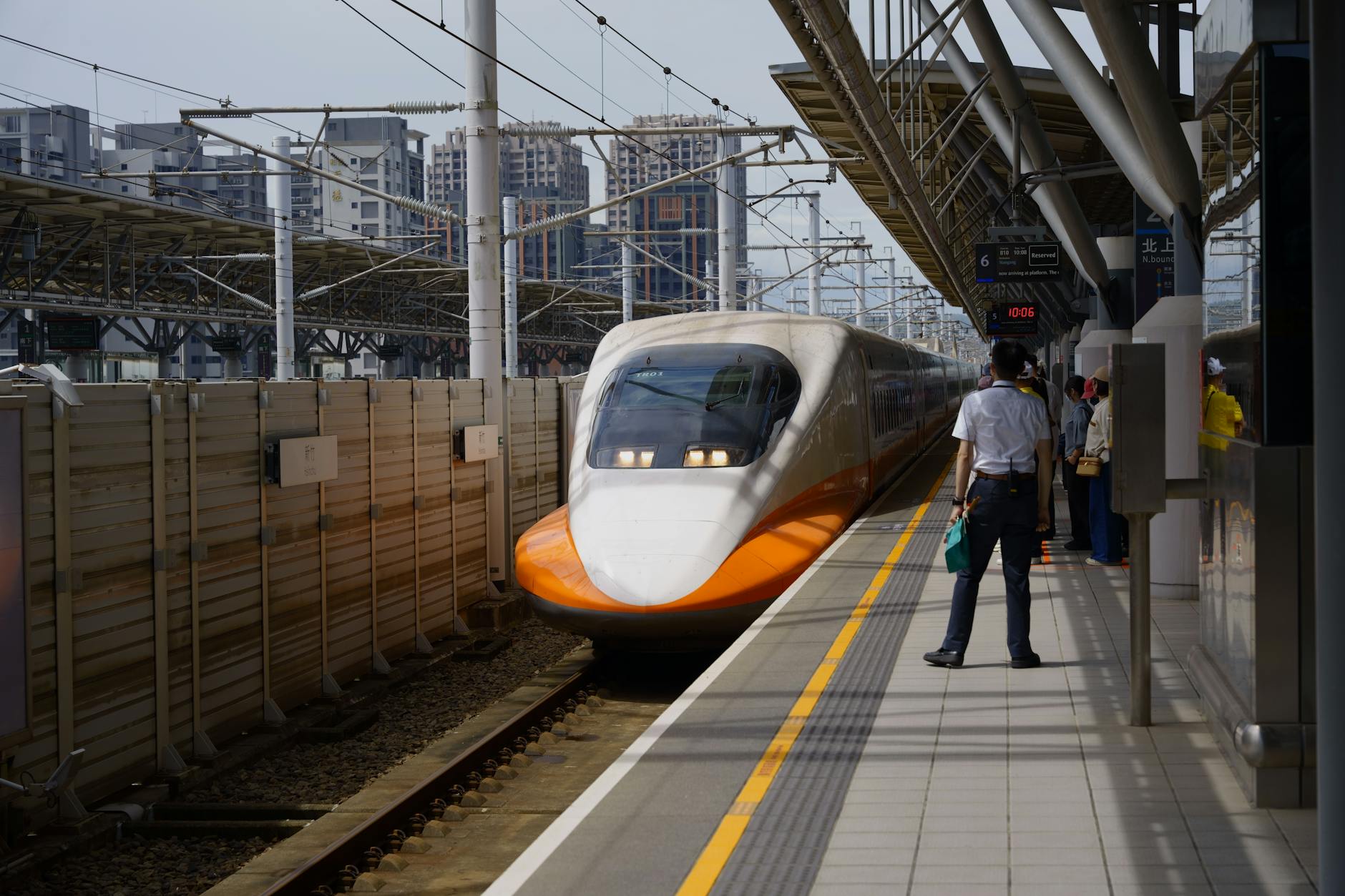
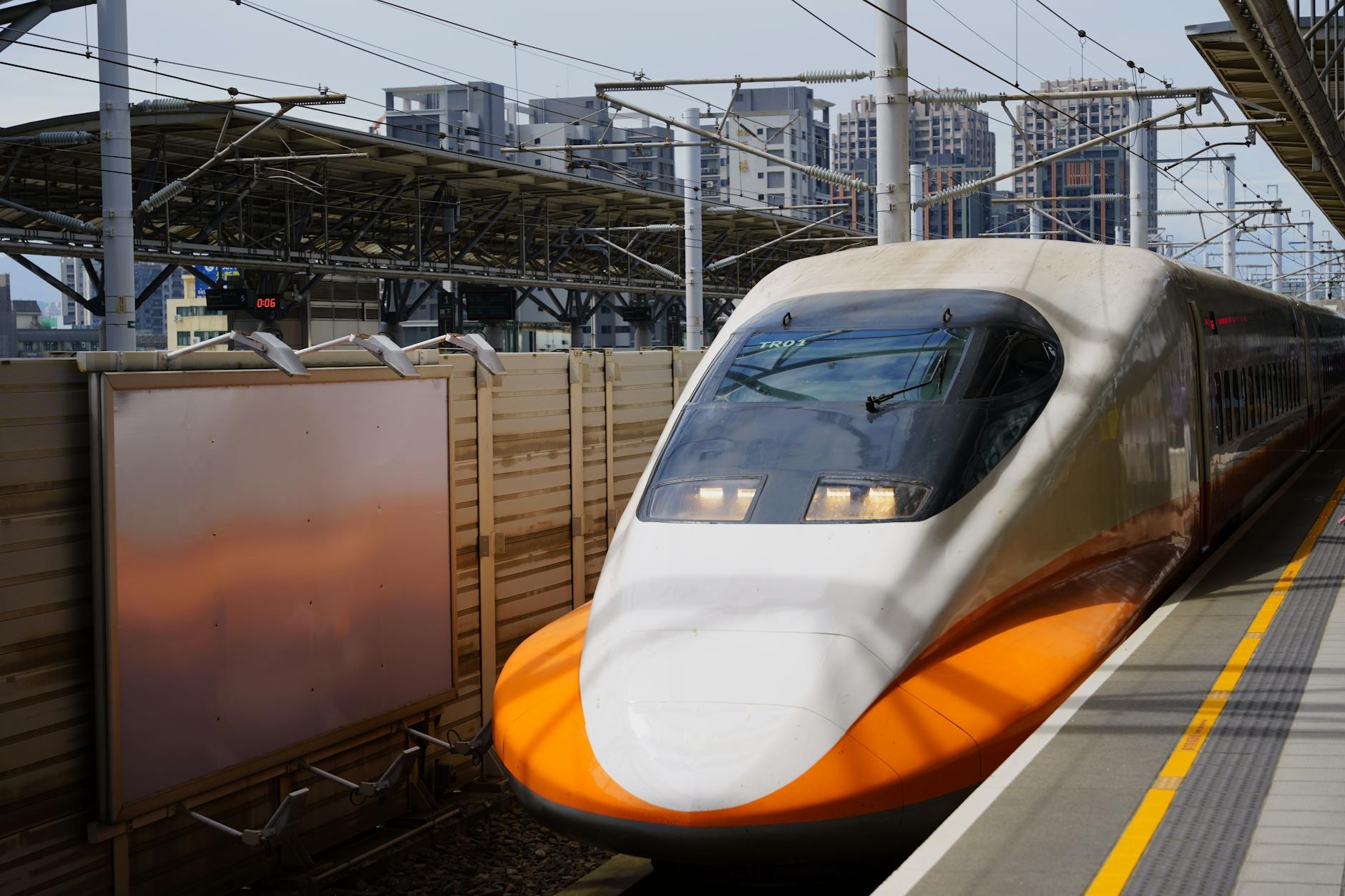
At the national scale, the most important distinction is between Taiwan High Speed Rail (THSR) and Taiwan Railways (TRA). THSR is fast, modern, and west-coast focused. Its core travel market is the north-south corridor through Nangang, Taipei, Banqiao, Taoyuan, Hsinchu, Miaoli, Taichung, Changhua, Yunlin, Chiayi, Tainan, and Zuoying/Kaohsiung. It is the best tool for Taipei–Taichung–Tainan–Kaohsiung trips, but its stations are sometimes outside the traditional downtown, so the “last 30 minutes” to the city center matters. TRA is slower but broader. It serves the conventional rail network, including east-coast cities such as Hualien and many smaller towns that THSR does not reach. Taiwan Tourism Administration presents both Taiwan Railway and Taiwan High Speed Rail as core land-transport categories, alongside metro systems, intercity buses, taxis, car rental, and public bicycles.
Taiwan’s local transport culture is built around stored-value transit cards. EasyCard and iPASS are the two cards most visitors will encounter. They work on many MRT, bus, railway, ferry, public-bicycle, parking, taxi, and retail use cases, although the exact acceptance differs by mode, operator, and city. For a short visitor, the normal move is simple: buy an EasyCard or iPASS at the airport, a convenience store, or a metro station; add value; use it for MRT, buses, YouBike registration where applicable, small purchases, and some local rail/bus travel. For a long-stay resident or student, the right move may be different: consider commuter passes such as regional TPASS products, monthly bundles, or workplace/student discounts.
Taiwan’s biggest public-transport strength is urban and intercity convenience. Taipei and New Taipei form a huge integrated metropolitan transport region. Kaohsiung has MRT plus a light-rail loop. Tainan is historically important and visitor-friendly but does not have an urban metro, so city buses, taxis, bicycles, walking, and scooters matter more. Hualien is a rail gateway to the east coast and Taroko region, but post-earthquake and storm recovery conditions around Taroko Gorge make official road and bus updates essential. Jiufen is not a big city transit system at all; it is a mountain village/day-trip destination where bus timing, crowding, rain, steep walking, and return logistics matter more than urban transit planning.
For locals, the most important daily issues are familiar but distinctively Taiwanese: scooter safety, parking pressure, peak-hour crowding, long suburban commutes, high-speed rail commuting on the west coast, typhoon and earthquake disruptions, bus frequency outside dense areas, heat and rain exposure while walking or waiting, and the cost-benefit tradeoff between monthly passes and pay-as-you-go cards. For visitors, the most common mistakes are assuming THSR goes everywhere, underestimating transfers from THSR stations to city centers, not carrying small cash for rural buses or taxis, boarding buses without checking whether to tap on/tap off, relying on Taroko information that is no longer current, and trying to drive or scooter in dense city traffic before understanding local road behavior.
The practical rule is: use MRT and buses inside Taipei/New Taipei/Kaohsiung; use THSR for fast west-coast city hops; use TRA for Hualien, east coast, smaller towns, and many scenic rail corridors; use tourist shuttles, local buses, taxis, or tours for attractions beyond rail stations; use cars only when the itinerary truly benefits from flexibility; and treat scooters with respect, not as a casual toy.
1. How Taiwan’s transportation system is organized
Taiwan’s transport network is layered. Each layer solves a different problem, and the most efficient trips often combine two or three layers rather than relying on one mode.
The first layer is high-speed rail. THSR is the fast north-south spine of western Taiwan. It is excellent for long west-coast trips: Taipei to Taichung, Taipei to Tainan, Taipei to Kaohsiung/Zuoying, Taoyuan to Taichung, and so on. It is not an islandwide system. It does not serve Hualien, Taitung, Jiufen, central mountain towns, or most east-coast attractions. THSR stations also reflect modern high-speed rail planning: some are in city centers or near major nodes, while others are outside the old downtown and require a transfer by TRA branch line, shuttle bus, metro, taxi, or local bus.
The second layer is Taiwan Railways, often still called TRA in travel contexts. This is the conventional railway system. It is slower than THSR but much more geographically useful. It circles much of the island, reaches Hualien and the east coast, serves central-city stations in many older cities, and connects to towns that high-speed rail bypasses. For visitors, TRA is not only transportation; it is often the most intuitive way to reach day-trip bases such as Ruifang for Jiufen, Xincheng or Hualien for Taroko access, and smaller coastal or inland towns.
The third layer is urban rail, usually called MRT rather than “subway.” Taipei Metro and the connected New Taipei systems form the strongest urban rail environment in Taiwan. Taoyuan Metro links Taoyuan International Airport with Taipei and Taoyuan. Kaohsiung has heavy metro lines plus light rail. Taichung has MRT service too, although Taichung is outside this paper’s city list. For visitors, the key point is that Taiwan’s metro systems are clean, legible, bilingual enough for basic use, and easy to pay for with smart cards.
The fourth layer is local buses and intercity coaches. Taiwan has dense urban buses in major cities, intercity freeway coaches between cities, airport buses, and many local/regional services. Tourism Administration’s land-transport guide lists intercity buses as one of Taiwan’s core land-transport categories, and notes that freeway bus companies connect via the highway network, are often cheaper than flights and trains, and in some cases operate around the clock. Buses are essential for places that rail gets near but not directly to.
The fifth layer is tourist shuttles. The Taiwan Tourist Shuttle is a public bus service designed for tourists. Its purpose is to connect rail and high-speed rail stations with scenic spots that would otherwise be inconvenient without driving. This matters because Taiwan has many attractions where the hard part is not the intercity journey; it is the last 5–30 kilometers from a station to the mountain village, national park entrance, coastal viewpoint, hot spring area, or historic district.
The sixth layer is taxis, ride-hailing, and private transfers. Taxis are common in major cities and at transport hubs. Tourism Administration explains that taxis are useful for station/airport/hotel transfers, short trips, places lacking transit, and carrying luggage, with most taxis using meters and cash always accepted while some also accept card or mobile payment. Ride-hailing and app-dispatched taxis can help with language barriers, but availability is not uniform across rural areas.
The seventh layer is private vehicles, scooters, and rental cars. Taiwan’s cities are public-transport friendly in their cores, but the island still has a strong private-vehicle and scooter culture. Cars, scooters, and motorcycles dominate many local streets. Tourism Administration reminds visitors that cars drive on the right side of the road, seatbelts are required, and foreign drivers should have a valid international driving permit or equivalent legal authorization before driving.
The eighth layer is cycling and public bicycles, especially YouBike. Public bicycles are useful for short urban trips, riverside paths, campus districts, parks, and neighborhoods not directly beside an MRT station. Tourism Administration describes YouBike rental as card-based, with users tapping at a dock to rent and return. The system is practical, but a visitor should not assume that all streets are comfortable for inexperienced cyclists.
Together, these layers make Taiwan unusually flexible. The mistake is expecting every layer to work equally everywhere. Taipei is not Hualien. Tainan is not Kaohsiung. Jiufen is not a transit city. The right plan depends on the geography of the destination.
2. The first transportation decisions every visitor should make
A first-time visitor should answer six questions before building an itinerary.
2.1 Is the trip mainly west coast, east coast, or mountains?
This single question determines the main mode. If the trip is Taipei, Taichung, Tainan, and Kaohsiung, THSR is likely the fastest backbone. If the trip includes Hualien, Taroko, Taitung, coastal towns, or the east side of the island, TRA becomes central. If the trip includes mountain roads, hot springs, rural guesthouses, tea areas, or scattered scenic stops, the plan may need buses, Tourist Shuttle routes, private tours, taxis, rental cars, or scooters.
2.2 Is speed or station convenience more important?
THSR is fast, but the nearest THSR station may be outside the old city. TRA is slower, but in places like Tainan and Hualien the conventional rail station may be closer to hotels, old streets, and bus networks. A fast THSR trip can become less convenient if it adds a long transfer at the end. This is especially important for Tainan: THSR Tainan Station is linked to the city by TRA Shalun branch services, shuttle buses, taxis, and local buses rather than being the same as central Tainan Station.
2.3 Will one smart card cover most local movement?
For most visitors, yes. EasyCard or iPASS will handle the majority of MRT and bus trips, many local rail and ferry situations, and convenience-store purchases. Still, do not treat a smart card as a substitute for every ticket. THSR long-distance travel, reserved TRA trains, special passes, airport products, taxis, and rural services may require separate booking, cash, app payment, or a paper/mobile ticket.
2.4 Is a tourist pass worth it?
Sometimes. THSR passes can be worthwhile if the itinerary includes multiple long west-coast high-speed trips in a short period. THSR states that its pass products are for short-term foreign visitors, not Taiwan passport holders or people entering with a valid alien resident certificate. Taiwan PASS products are also aimed at overseas visitors and combine rail or high-speed rail components with selected MRT or tourist-shuttle options within a limited validity window.
For locals and longer-stay visitors, monthly regional products such as TPASS may matter more. Taiwan’s Executive Yuan describes TPASS as a major commuter-pass program launched in 2023, and regional versions can include combinations of metro, bus, TRA, public bicycles, and other local modes. The northern Taiwan TPASS has been promoted as covering Taipei, New Taipei, Taoyuan, and Keelung public transport options for a fixed monthly price. A short tourist should not buy a monthly pass reflexively, but a student, remote worker, or repeat commuter should compare it.
2.5 Are you traveling during a holiday or weather-risk period?
Lunar New Year, long weekends, major concerts, temple festivals, typhoons, heavy rain, and earthquake recovery work can change the answer. Long-distance train seats sell out. Roads clog. Scenic areas run crowd-control measures. Mountain roads close. Taroko and east-coast travel have been especially sensitive to earthquake and storm recovery. Build slack into the schedule when the trip relies on one road or one train corridor.
2.6 Are you carrying luggage, children, mobility equipment, or a bicycle?
Taiwan’s public transport is generally clean and orderly, but peak-hour crowding can be intense. Taipei has explicit size rules for bringing large items into the metro system: the longest side must be within 165 cm and the sum of length, width, and height within 220 cm, with listed exceptions for items such as wheelchairs and strollers. Bicycles also have line and size restrictions; regular bicycles are not allowed on some metro lines, while folded/packed bikes must meet dimensional limits.
3. Payment systems and fare media
3.1 EasyCard
EasyCard is the most familiar smart card for many visitors because Taipei and New Taipei are common entry points. The EasyCard company’s use-range page lists MRT, buses, parking lots, Taiwan Railway, Taiwan High Speed Rail, taxis, ferries, public bicycles, and other services as areas where EasyCard products can be used in some form. The practical visitor interpretation should be conservative: use EasyCard confidently for MRT, local buses, many TRA local trips, YouBike where set up, convenience stores, and small purchases; check operator rules before assuming it covers a reserved rail seat, an intercity route, a special shuttle, or a taxi.
3.2 iPASS
iPASS is especially associated with southern Taiwan and Kaohsiung, but it is accepted much more broadly than one city. iPASS describes itself as a stored-value card/e-wallet for transport and retail use. Tourism Administration’s Kaohsiung transport information highlights iPASS and EasyCard use for Kaohsiung MRT, LRT, bus, and public bicycles. A traveler who already bought an EasyCard in Taipei does not usually need to buy iPASS just for a short Kaohsiung visit, but iPASS can be equally practical depending on where it is purchased.
3.3 icash and other cards
icash is another stored-value card encountered in Taiwan, particularly through convenience-store ecosystems. It can work on some transit services, but first-time visitors usually find EasyCard or iPASS more straightforward because they are heavily associated with public transport. For advanced users, the best card is the one that fits the city, retail habits, subsidies, and app ecosystem.
3.4 Cash
Cash still matters. It matters for some buses where exact change is expected, rural services, older taxis, small private shuttles, markets near transport nodes, luggage lockers, and backup situations when a card fails. Taipei Travel’s bus guide notes that bus fares can be paid in cash or with smart cards, and that coin fare payment requires exact change because buses do not give change.
3.5 Mobile payment and app tickets
Mobile payment is common in Taiwan, but foreign visitors may not be able to use every local wallet or account-based service. Do not assume that a non-Taiwanese phone number, non-local credit card, or foreign app store account will work smoothly for every transit app. Keep a stored-value card and some cash as a low-tech backup.
3.6 Passes: when they help and when they waste money
Passes help when your trip pattern is intense and predictable. THSR tourist passes are useful for rapid west-coast hopping. Taipei-area day passes can help if you are making many metro trips in one day. Taiwan PASS can make sense if its bundled elements match your exact itinerary. Monthly TPASS products help locals and long-stay visitors with regular commuting patterns.
Passes waste money when you buy them because they feel “official” rather than because the math works. Taiwan’s normal fares are often affordable. A visitor who takes two MRT rides, one taxi, and walks for the rest of the day may not need any pass beyond a reloadable card.
4. High-speed rail: THSR
4.1 What THSR is best for
THSR is best for fast travel between major west-coast nodes. It is the logical mode for:
THSR’s station list includes Nangang, Taipei, Banqiao, Taoyuan, Hsinchu, Miaoli, Taichung, Changhua, Yunlin, Chiayi, Tainan, and Zuoying. Those names matter because several THSR stations are not the same as the historic downtown station. A ticket to THSR Tainan is not the same as arriving at central Tainan Station; THSR Zuoying is the high-speed rail gateway for Kaohsiung and connects well to Kaohsiung MRT; THSR Taichung is separate from central Taichung Station.
4.2 Ticket types and seat strategy
THSR has reserved and non-reserved patterns. Its ticketing information describes non-reserved seats as sold only on the travel day and valid for boarding non-reserved cars on the date shown. For a visitor, the practical strategy is:
4.3 THSR passes
THSR’s pass program is designed for short-term foreign visitors and excludes people entering Taiwan with a Taiwan passport or valid ARC. Passes can be valuable for itineraries such as Taipei–Kaohsiung–Tainan–Taichung–Taipei over a few days. They are less valuable for a trip that spends most days in Taipei and makes only one high-speed rail round trip.
4.4 Transfers from THSR stations
This is the most important THSR planning issue. Many visitors calculate only station-to-station rail time, then lose time on transfers. Examples:
THSR also publishes transfer information for station shuttle buses and notes that passengers using THSR shuttle services should retain THSR tickets for inspection.
4.5 Traveler and local concerns
Visitors care about luggage, seat selection, whether the station is downtown, English ticketing, and pass value. Locals care about peak-hour seat availability, station parking, intercity commuting costs, monthly routines, business travel, and holiday capacity. THSR is excellent but not magic. It solves long-distance west-coast speed; it does not solve every last-mile problem.
- Taipei/New Taipei to Taichung.
- Taipei/New Taipei to Tainan.
- Taipei/New Taipei to Kaohsiung/Zuoying.
- Taoyuan Airport region to Taichung, Tainan, or Kaohsiung after connecting to the THSR station.
- Business travel, weekend travel, and time-sensitive domestic trips along the west coast.
- Reserve seats for holiday periods, Friday/Sunday peak flows, and luggage-heavy travel.
- Use non-reserved seating for flexible short-notice trips when trains are frequent and the schedule is not tight.
- Arrive earlier at major stations during holidays because queues and platform crowding can increase.
- Keep the ticket until exiting and until any transfer benefit or shuttle inspection is complete.
- Tainan: THSR Tainan Station connects to the TRA Shalun line and local bus/taxi options; central historic Tainan is not at the THSR station.
- Kaohsiung: THSR Zuoying is very convenient because it connects to Kaohsiung MRT and TRA, but it is still north of some visitor districts.
- Taoyuan: THSR Taoyuan is not Taoyuan Airport. Use Taoyuan Metro, buses, taxis, or other transfer options.
- Chiayi: Useful for Alishan access, but Alishan itself still requires bus, tour, or car.
5. Taiwan Railways: conventional rail and local/intercity access
Taiwan Railways is the system that makes Taiwan feel islandwide. It is less glamorous than THSR but more geographically important for many trips.
5.1 What Taiwan Railways is best for
Use Taiwan Railways for:
Tourism Administration’s Taiwan Railway guide describes ticket pre-ordering, station collection/payment, stored-value card use on some services, and rail passes such as TR-PASS or day/tour products.
5.2 Train categories and booking behavior
Taiwan Railways operates a mix of local, express, and limited-express services. For a visitor, the exact train category matters less than three practical questions:
5.3 East-coast reliability and disruption risk
The east coast is beautiful but more exposed to typhoons, landslides, earthquakes, and road/rail disruption. Hualien and Taroko trips should be planned with more slack than Taipei–Tainan high-speed rail trips. A same-day onward flight after a mountain-road excursion is risky. Always check official updates when the trip depends on one corridor.
5.4 Station design and wayfinding
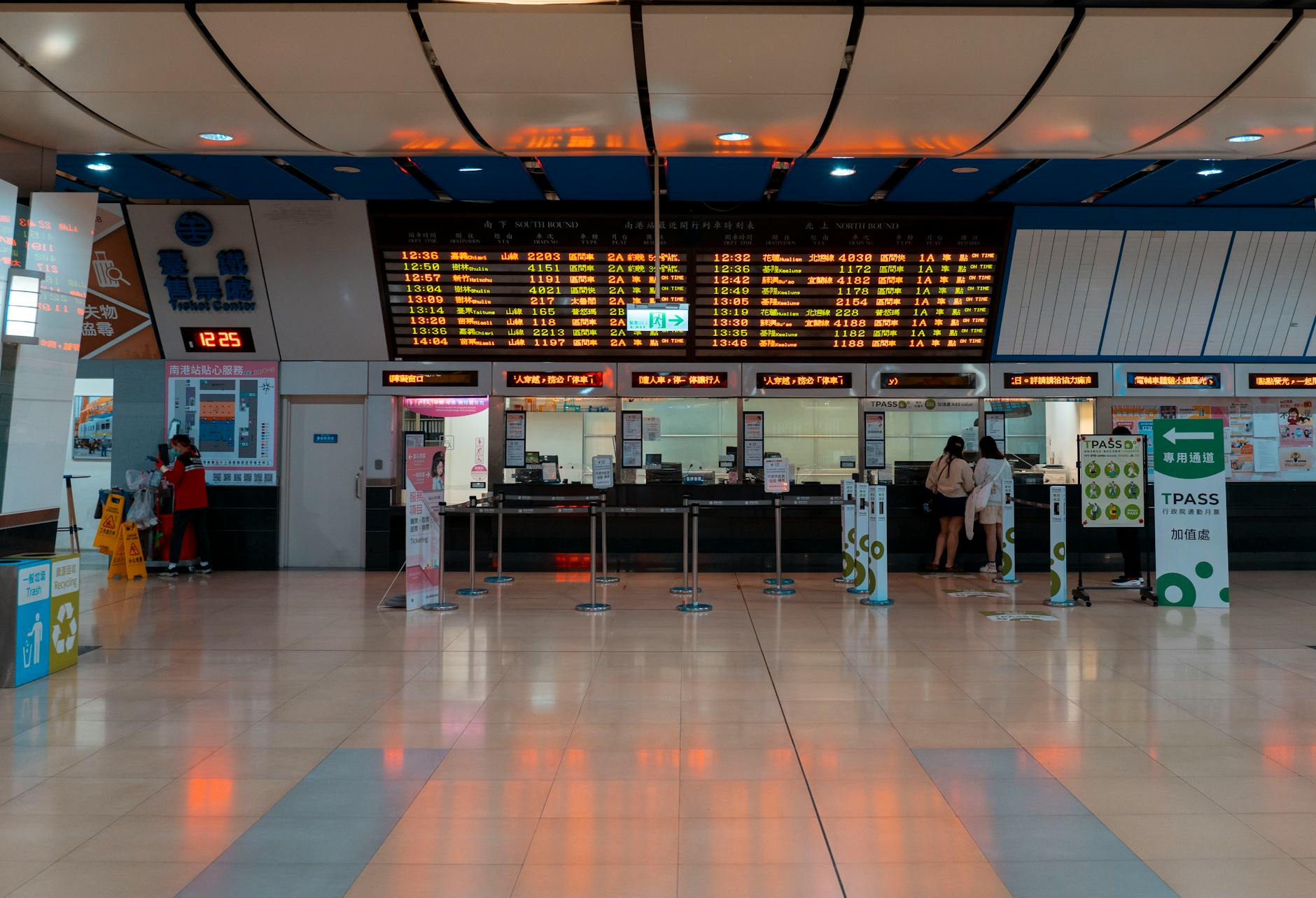
Major stations usually have bilingual signs, ticket machines, staffed counters, convenience stores, toilets, taxi stands, bus connections, and lockers. Smaller stations may be simpler. Carry the destination in Chinese characters if taking a taxi from a small station. Do not assume every station has elevators positioned conveniently for every platform; build extra time with luggage or mobility needs.
5.5 Common mistakes
The common visitor mistakes are:
- Hualien and east-coast travel.
- Ruifang for Jiufen access.
- Central-city arrivals in many older urban areas.
- Smaller towns that THSR bypasses.
- Scenic rail corridors and coastal routes.
- Short and medium-distance local travel where the station is closer than the THSR station.
- Do I need a reserved seat? For long east-coast trips or holiday travel, yes.
- Can I use a stored-value card? For local/commuter-style travel, often yes; for reserved trains, buy the correct ticket.
- Is this the fastest railway option? On the west coast, THSR may be much faster; on the east coast, TRA is usually the rail backbone.
- Confusing THSR and Taiwan Railways stations with similar city names.
- Buying a ticket to the wrong station because “Tainan” appears in both systems.
- Assuming every train accepts tap-in smart-card travel.
- Underestimating holiday sellouts.
- Planning Jiufen as if it has a train station; it does not.
- Treating Hualien/Taroko access as permanently normal after major disasters; it may not be.
6. Metro, MRT, light rail, and urban rail
Taiwan uses the term MRT for metro/subway-style systems. Visitors from North America may say “subway,” but in Taiwan the signs, maps, and official websites usually say MRT.
6.1 Taipei and New Taipei
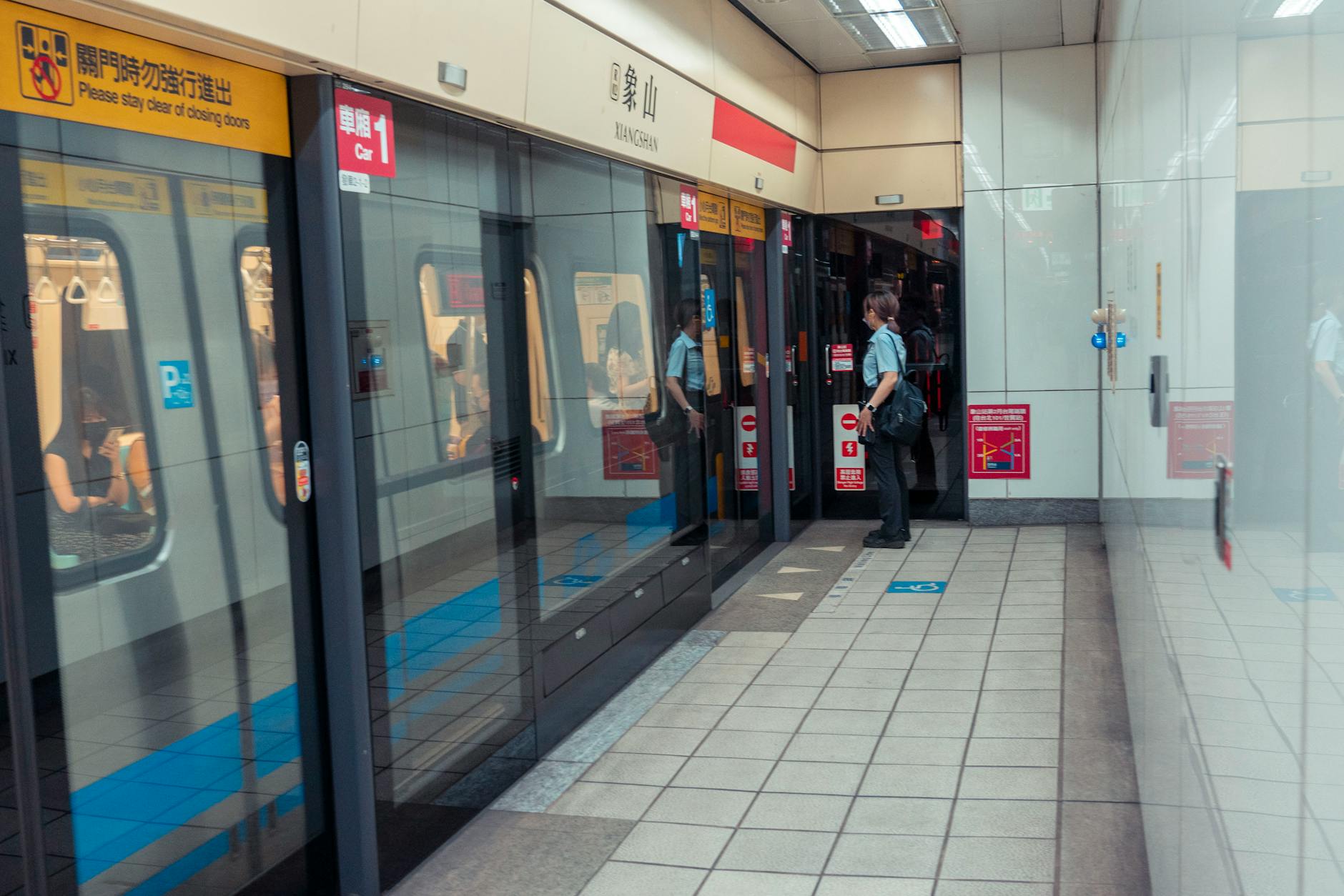
Taipei Metro is the country’s most important urban rail system. It serves Taipei and many parts of New Taipei, and its payment ecosystem extends into New Taipei Metro services such as the Circular Line, Danhai LRT, and Ankeng LRT through integrated smart-card use.
Taipei Metro ticket information lists single-journey tickets and distance-based fares, and the same system also supports EasyCard, iPASS, icash, day passes, and tourist-oriented products depending on the trip. For a visitor, it is one of the easiest metro systems in Asia: tap in, tap out, follow line colors and station numbers, and use transfers when needed.
6.2 Taoyuan Metro
Taoyuan Metro matters most for airport access. Taipei Travel’s airport metro guide states that express trains from Taoyuan Airport Terminal 1 to Taipei Main Station take about 35 minutes, Terminal 2 to Taipei Main about 38 minutes, while commuter trains take about 50 minutes. Express and commuter services have different stopping patterns, so a visitor should check whether the next train is express or commuter.
6.3 Kaohsiung MRT and light rail
Kaohsiung has two main MRT lines, Red and Orange, plus a light-rail system. Kaohsiung’s travel authority emphasizes MRT, LRT, bus, and public bicycle use with iPASS or EasyCard. Kaohsiung International Airport is directly served by the Red Line’s Kaohsiung International Airport Station, with station exits connected to domestic and international terminals.
The light rail is especially important because it changes how visitors move along waterfront, harbor, art, shopping, and redevelopment districts. Kaohsiung’s light rail completed a circular operating pattern, making it a distinctive part of the city’s transportation identity.
6.4 What MRT systems solve and what they do not
MRT solves clean, frequent, predictable movement in the urban core. It does not always solve:
The correct habit is to pair MRT with buses, taxis, YouBike, and walking rather than expecting station-to-door coverage.
- Hill towns and rural attractions.
- Late-night travel after the last train.
- Heavy luggage during peak hours.
- Old streets and alleys far from stations.
- Bad-weather walking from the station to the destination.
- Suburban destinations between rail corridors.
7. Local buses and intercity buses
7.1 City buses
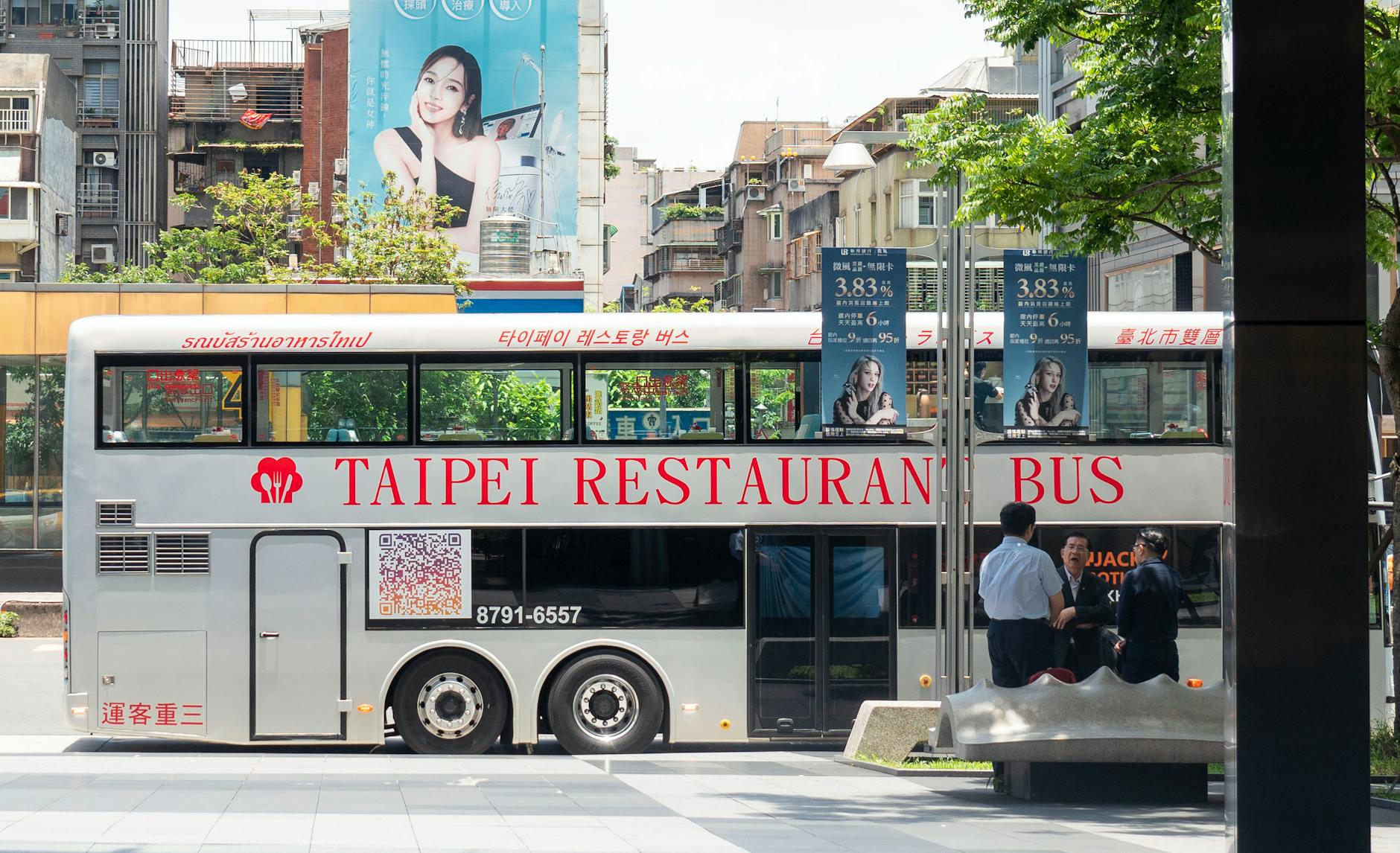
Taiwanese city buses are powerful but less intuitive than metro systems. They reach neighborhoods, schools, temples, markets, mountain foothills, and residential areas that rail does not. They can also confuse visitors because route names, direction, payment rules, and stop locations are harder to read.
In Taipei, bus fares are paid by cash or smart card, and exact change is required when paying coins because drivers do not give change. Some routes use segmented fares, which means a long ride may cost more than a short ride. In many cities, the safest visitor behavior is to watch local passengers, tap when others tap, and check the onboard sign for whether payment is on boarding, alighting, or both.
7.2 Intercity buses
Intercity buses fill gaps between rail systems and provide cheaper or more direct connections in some corridors. Tourism Administration notes that Taiwan’s long-distance freeway buses are mainly operated by private companies and can be cheaper than flights or trains, with some routes running 24 hours. They are useful when:
The downside is traffic. Buses use roads, so congestion, crashes, weather, and holiday traffic can affect them more than rail.
7.3 Taiwan Tourist Shuttle
Taiwan Tourist Shuttle is one of Taiwan’s most visitor-friendly services. Tourism Administration describes it as a public bus service specifically designed to take travelers from Taiwan Railway and THSR stations to major scenic spots, especially for people who do not want to drive long distances or join group tours. Its official site provides route, timetable, fare, and stop information by county and route.
For this paper’s cities, Tourist Shuttle is especially relevant for New Taipei scenic routes, Jiufen/Jinguashi access, Hualien/Taroko or east-coast routes, and Tainan coastal/historic routes. The key caution is frequency: these buses are useful but not always frequent enough for spontaneous travel. Check the last return time.
7.4 Apps and real-time information
The iBus information system is operated under Taiwan’s transport authorities and provides route and real-time bus information. Google Maps is often good for planning, but official bus systems and local government pages are better during route changes, holiday detours, typhoon disruptions, or special-event traffic control.
- The destination is not on THSR.
- The bus goes closer to the final destination than the train.
- Rail tickets are sold out during holidays.
- You are traveling late at night.
- Price matters more than speed.
8. Airports and airport access
8.1 Taoyuan International Airport
Taoyuan International Airport is the main international gateway for most long-haul travelers. The most important public transport option is Taoyuan Airport MRT. Express service links the airport with Taipei Main Station, with published travel times of about 35 minutes from Terminal 1 and 38 minutes from Terminal 2 to Taipei Main; commuter services take longer because they stop more often.
Airport MRT ticketing includes single-journey tickets and stored-value card options such as EasyCard, iPASS, and icash sold through machines, service counters, and airport e-ticket counters depending on the product.
Other airport access options include buses, taxis, hotel shuttles, private transfers, and rental cars. For groups, taxis or private transfers can compete on cost and convenience, especially late at night or with luggage. For solo travelers staying near Taipei Main Station, Airport MRT is usually the cleanest option.
8.2 Taipei Songshan Airport
Taipei Songshan Airport is inside Taipei and handles domestic services plus some regional international flights. Its advantage is proximity. It is often much more convenient than Taoyuan for domestic flights or short regional trips if the routing fits. It connects to Taipei’s urban transport network, and taxis from central Taipei can be quick outside heavy traffic.
8.3 Kaohsiung International Airport
Kaohsiung International Airport is unusually convenient because it is directly on Kaohsiung MRT’s Red Line. The airport’s own transport page identifies Kaohsiung International Airport Station as R4 and connects exits to the domestic and international terminals. This makes Kaohsiung one of the easiest Taiwanese cities for rail-to-airport travel.
8.4 Hualien and Tainan airports
Hualien and Tainan have smaller airports with more limited route networks. For most visitors, rail remains more important than air for both cities, unless a specific domestic flight fits the itinerary. Airport ground access is usually by bus, taxi, private pickup, or rental vehicle rather than a metro.
9. Taxis, ride-hailing, and private transfers
Taxis are an essential part of Taiwan’s transportation system, not just a fallback. They solve late-night movement, heavy luggage, short trips in bad weather, last-mile access from train stations, and destinations that are awkward by bus.
Tourism Administration describes taxis as common and convenient in cities and useful for airport, station, hotel, short-distance, and transit-poor trips. It also notes that most taxis use meters based on distance and travel time, with possible highway and late-night charges; cash is always accepted, and some taxis accept cards or mobile payments.
9.1 When taxis are a good idea
Use a taxi when:
9.2 When taxis are a bad idea
Avoid taxis when:
9.3 Language and destination handling
Carry the destination in Chinese characters. Hotel cards, screenshots, Google Maps pins, and official attraction pages help. Do not rely on English pronunciation of place names; romanization can vary, and tones matter. Taxi drivers are usually practical problem solvers, but clear written destinations reduce stress.
9.4 Receipts and lost items
Ask for a receipt if possible, especially when carrying luggage or expensive items. The receipt can help identify the taxi company or vehicle if something is left behind. For app rides, the ride history is your receipt.
- You arrive with luggage and the hotel is not near a station.
- It is raining hard or extremely hot.
- The route requires multiple bus transfers.
- You are returning late from a night market.
- You are in Hualien, Tainan, or Jiufen and bus frequency is low.
- You are traveling with children or elderly relatives.
- The fare split among several people is reasonable.
- You are crossing central Taipei during peak traffic and MRT is faster.
- You are traveling a long intercity distance where THSR/TRA is better.
- A scenic area has road restrictions or crowd-control zones.
- You cannot show the destination clearly and the driver does not understand your pronunciation.
- Surge pricing or dispatch fees make an app ride expensive.
10. Private vehicles, rental cars, and scooters
10.1 Driving basics
Taiwan drives on the right. Tourism Administration’s car-rental guidance states that all cars must drive on the right side of the road and that drivers and passengers must fasten seatbelts. Foreigners who want to drive should confirm license and permit rules before arrival. Taiwan’s motor-vehicle office explains that holders of international driving permits from reciprocal regions can drive for up to 30 days without registration, while longer stays require registration with a motor-vehicle office and are subject to validity limits.
10.2 When renting a car helps
A car helps when:
10.3 When renting a car hurts
A car hurts when:
10.4 Scooters
Scooters are central to Taiwanese daily life, especially outside Taipei’s most rail-rich districts. Locals use them for commuting, errands, food, family logistics, and last-mile access. Visitors are often tempted to rent them because they look convenient.
Be careful. Taiwanese scooter traffic is not beginner-friendly. It involves dense flows, turning rules, bus interactions, rain, road-surface hazards, parked vehicles, and drivers who understand local patterns that visitors may not. Renting a scooter can make sense in places with lighter traffic and appropriate licensing, but it is a bad first-day experiment in Taipei, Tainan, or Kaohsiung traffic.
10.5 Parking and tolls
Parking is a major local concern. Scooter parking is abundant in some areas but still regulated. Car parking in dense districts can be expensive and hard to find. Some attractions have official lots that fill early on weekends. Taiwan’s freeway tolling and electronic payment systems are not hard for residents, but rental-car users should confirm how tolls, fines, parking fees, and insurance are handled before signing.
10.6 Weather and road risk
Typhoons, heavy rain, earthquakes, landslides, rockfall, fog, and mountain-road repairs are transportation issues, not just weather issues. A road that is legal and open in the morning may be delayed or controlled later. This is especially important in Hualien/Taroko and mountain corridors.
- You are visiting east-coast scenic areas with multiple stops.
- You are traveling with family, luggage, or mobility needs.
- The itinerary includes rural guesthouses or attractions outside bus range.
- You want flexibility in Hualien County, Taitung, central mountains, hot-spring areas, or coastal routes.
- You are not staying in dense Taipei or central Kaohsiung.
- You are staying in central Taipei, New Taipei, Tainan old town, or central Kaohsiung.
- Parking is scarce, expensive, or confusing.
- You plan to drink alcohol.
- You are uncomfortable with scooters filtering around traffic.
- The destination is better served by MRT or THSR.
- Weather, mountain roads, or landslide risk are serious.
11. Cycling, YouBike, walking, and micromobility
11.1 YouBike
YouBike is Taiwan’s public bicycle system and is very useful for short trips. Tourism Administration describes a simple dock-based process: tap the card at a dock to rent and return the bicycle, with registration options involving phone numbers and cards or credit-card use in some contexts.
Use YouBike for:
Avoid YouBike when:
11.2 Walking
Walking is excellent in Taipei shopping districts, Tainan historic neighborhoods, Kaohsiung waterfront areas, Jiufen old street, Hualien city center, and many night-market zones. But Taiwan’s walking environment varies. Some sidewalks are wide and clean; others are blocked by scooters, arcades, shop displays, construction, or uneven surfaces. In older districts, pedestrians often share space with scooters and cars more than visitors expect.
11.3 Heat and rain
Taiwan is humid. Summer heat, sudden rain, and typhoon-season weather can make a “15-minute walk” feel much harder. Carry water, sun protection, and a compact umbrella or rain jacket. Underground malls, station corridors, department stores, and covered arcades can be useful pedestrian infrastructure.
11.4 Micromobility
Do not assume that e-scooters, rental bikes, or app-based micromobility rules are the same everywhere. Local rules, parking restrictions, and vehicle availability change by city. In Taiwan, traditional scooters and YouBike matter far more than tourist e-scooter culture.
- Short neighborhood hops.
- Riverside cycling paths.
- University and park districts.
- First/last-mile trips from MRT or TRA stations.
- Exploring flat urban areas in good weather.
- Traffic is heavy and you are not used to Taiwanese road behavior.
- It is raining hard.
- The route has steep hills.
- You will ride after drinking.
- You cannot identify safe return docks near the destination.
12. Accessibility, families, luggage, and etiquette
12.1 Accessibility
Taiwan’s major metro systems are generally strong on elevators, tactile paving, priority seating, station staff, and accessible ticket gates. However, the real challenge is the full journey: old sidewalks, crowded night markets, stair-heavy historic areas, mountain villages, bus stops without seating, and attractions beyond the station.
Travelers with mobility needs should prefer hotels very close to MRT/TRA stations, confirm elevator exits, and avoid itineraries that require bus transfers in old districts unless the stops are known. Taxis and private cars may be necessary for Jiufen, Hualien scenic stops, and old Tainan streets.
12.2 Families with children
Taiwan is family-friendly, but strollers can be awkward in crowded stations, night markets, buses, and old streets. MRT elevators help. Buses can be harder when crowded. Taxis are useful with tired children or bad weather. In Jiufen, steep stairs and crowds make lightweight carriers more practical than large strollers.
12.3 Luggage
Large luggage is manageable on THSR and airport MRT, tolerable on TRA if planned carefully, and annoying on buses or crowded MRT lines. Avoid moving giant suitcases during commuter peaks. Taipei Metro has formal large-item size rules, and travelers should respect them.
12.4 Etiquette
Common etiquette expectations include:
Taiwan’s public transport culture is orderly. Visitors who behave like they are in a private tour bus will stand out.
- Queue where marked.
- Let passengers exit before boarding.
- Keep right or follow station flow where signed.
- Do not eat or drink in MRT paid areas where prohibited.
- Keep phone calls quiet.
- Offer priority seats to people who need them.
- Move backpacks off your back in crowded trains.
- Do not block doors for luggage photos or group coordination.
13. Safety, disruptions, and operational concerns
13.1 Typhoons and heavy rain
Typhoons can shut down work, schools, flights, trains, buses, ferries, and mountain roads. Heavy rain can produce local flooding and landslide risk. Visitors should check official weather and transport notices, not just app icons.
13.2 Earthquakes
Earthquakes can disrupt rail, roads, bridges, mountain trails, and scenic areas. After a significant earthquake, transport may appear normal in cities while mountain roads remain under repair. Hualien and Taroko require special caution because road, trail, and bus conditions can remain constrained long after the initial event.
13.3 Taroko and Highway 8
Taroko National Park’s current visitor information is a critical example. Official Taroko pages state that bus services between Taroko Visitor Center and Tianxiang remain temporarily suspended and that visitors planning to reach areas such as Lushui or Tianxiang need their own transport and must check Highway 8 traffic-control windows. The park also posts traffic-control measures tied to earthquake and typhoon recovery, slope stabilization, road repairs, and weather conditions.
Do not use an old blog post, old YouTube itinerary, or pre-2024 travel guide as the basis for Taroko transportation.
13.4 Holidays and crowding
Lunar New Year, Tomb Sweeping, Dragon Boat, Mid-Autumn Festival, long weekends, summer travel, and major events can strain rail tickets, hotels, roads, and buses. Book THSR and TRA reserved trains early. Expect station crowds and long taxi lines.
13.5 Night travel
Taipei and Kaohsiung are easy by MRT until late evening, but all systems have last trains. Night buses exist on some routes, taxis are common in cities, and convenience stores make waiting safer and easier, but rural or mountain areas can become difficult after dark. Plan the return trip before starting a day trip.
14. Mode-selection guide
| Situation | Best first choice | Backup or supplement | Key concern |
|---|---|---|---|
| Taipei city sightseeing | MRT + walking | Bus, YouBike, taxi | Peak crowding and station exits |
| Taipei to Tainan/Kaohsiung | THSR | TRA, intercity bus | THSR station transfer at destination |
| Taipei to Hualien | TRA | Flight, private car/tour in specific cases | East-coast disruption risk |
| Airport to Taipei | Taoyuan Airport MRT | Bus, taxi, private transfer | Express vs commuter train |
| Tainan old city | Walking + bus + taxi | YouBike, scooter for licensed/experienced users | No urban MRT; heat and old streets |
| Kaohsiung core | MRT + LRT | Bus, YouBike, taxi | LRT speed/frequency vs walking/taxi |
| New Taipei suburbs | MRT/New Taipei Metro + bus | Taxi, Tourist Shuttle | Long cross-suburb travel times |
| Hualien city | TRA arrival + taxi/bus/walk | Rental car, tour | Scenic areas outside city |
| Taroko area | Official buses where operating + taxi/tour/car | Private driver | Road controls and suspended bus sections |
| Jiufen day trip | Train to Ruifang + bus/taxi, or direct bus | Private tour/taxi | Crowding, rain, steep lanes, last bus |
| Rural/mountain multi-stop trip | Rental car/private tour | Tourist Shuttle where available | Licensing, roads, weather |
| Local commuting for a month | TPASS or commuter product | Stored-value card | Pass geography and eligibility |
1. Transportation identity
Taipei is Taiwan’s most transit-friendly city. A visitor can spend a week in Taipei without driving and barely feel constrained. The core system is Taipei Metro, supported by buses, YouBike, taxis, walking, Taiwan Railways, high-speed rail at Taipei/Nangang/Banqiao, Taoyuan Airport MRT, and Songshan Airport. Taipei is also the place where Taiwan’s smart-card culture is easiest to understand because MRT stations, convenience stores, airport counters, and tourist information are abundant.
For locals, Taipei transportation is a daily tradeoff between excellent rail coverage and urban crowding. Many households do not need a car for central living, but scooters remain common, and cross-town trips can still require buses, transfers, or taxis. Housing costs push many workers into New Taipei, Taoyuan, or farther suburbs, which makes regional commuting a major lived reality.
2. Taipei Metro
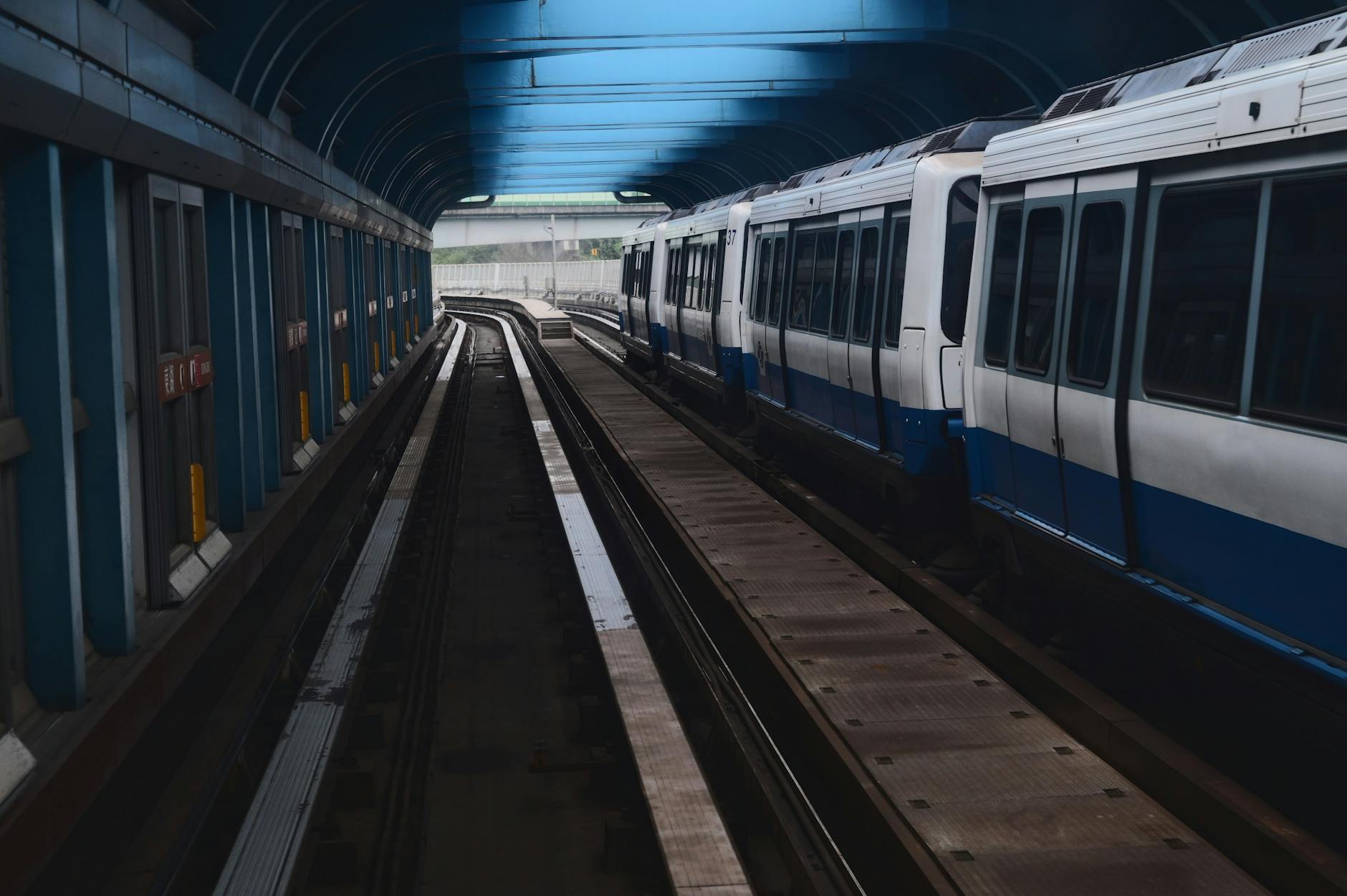
Taipei Metro is the backbone. It is clean, frequent, bilingual, and easy to navigate. Single-journey tickets and stored-value cards are supported; Taipei Metro’s English ticket pages describe single-journey tickets and a range of card/pass options.
Practical tips:
Taipei Main Station deserves special attention. It is a complex interchange among Taipei Metro, TRA, THSR, airport metro connections nearby, underground malls, buses, taxis, and shopping corridors. It is not one simple station room. New visitors should allow extra transfer time.
- Use station numbers and line colors, not only station names.
- Check the correct exit before leaving the paid area; the wrong exit can add a long walk.
- Avoid large luggage during weekday rush hour.
- Stand on the correct side of escalators according to local flow and signage.
- Do not eat or drink in prohibited MRT areas.
- Keep the same card for entry and exit.
3. Buses
Taipei’s bus system is extensive and reaches places the MRT does not. It is valuable for National Palace Museum approaches, hill districts, residential neighborhoods, riverside areas, and short cross-grid routes. Taipei Travel’s bus page explains cash and smart-card payment, section fares, and the need for exact coins if paying cash.
Traveler concerns:
Local concerns:
- Bus stops can serve many routes; stand at the correct sign.
- Some buses require tapping on and off; follow signs and local behavior.
- Destination signs may alternate Chinese and English, but not always fast enough for nervous visitors.
- Google Maps is useful, but official bus apps can be more accurate during detours.
- Buses are less comfortable than MRT with large suitcases.
- Bus lanes and traffic priority help, but buses still get caught in congestion.
- Frequency can vary sharply by route and time.
- School and commuter peaks crowd buses.
- Elderly riders and mobility-impaired passengers often depend on buses for neighborhoods not served by MRT.
4. Airport access
Taipei has two airport realities.
Taoyuan International Airport is the main international gateway. Taoyuan Airport MRT is the main rail link. Express service to Taipei Main is significantly faster than commuter service, so visitors should check train type before boarding.
Taipei Songshan Airport is inside the city. For domestic or regional flights, it can be far more convenient than Taoyuan. It connects to the urban transport network and is often taxi-friendly from central districts.
The key visitor mistake is booking a flight from one airport while assuming it is the other. Taoyuan and Songshan are not interchangeable.
5. THSR and TRA access
Taipei has unusually good rail access because both THSR and TRA serve central Taipei, with additional high-speed rail access at Nangang and Banqiao. This makes Taipei the best national base for rail-oriented travel.
Use THSR for west-coast speed. Use TRA for local/regional destinations, Ruifang/Jiufen access, Yilan/Hualien/east-coast travel, and trips where the conventional station is more convenient than the high-speed station.
6. YouBike and walking
Taipei is one of the best places in Taiwan to use YouBike. It works well for riverside paths, parks, university districts, short neighborhood hops, and connecting MRT stations to destinations. The weakness is traffic comfort: not every street is beginner-friendly.
Walking is excellent in Xinyi, Zhongshan, Daan, Ximending, many night-market districts, and around major parks. But summer heat, rain, and large intersections can make walking slower than map estimates suggest. Underground passages and department-store connections are real transport infrastructure in Taipei.
7. Taxis and ride-hailing
Taxis are abundant and useful. They are good for late-night returns, heavy rain, luggage, older travelers, and destinations between rail lines. In dense central Taipei, MRT can be faster than a taxi during peak traffic.
Carry Chinese addresses. A hotel business card or phone map pin reduces confusion.
8. Driving and parking
Visitors generally should not rent a car for Taipei itself. Parking is expensive, traffic is dense, scooters are everywhere, and MRT coverage is strong. Rent a car only when leaving the metro region for places that genuinely require it.
9. Taipei-specific advice
- Buy or load a smart card early.
- Use MRT first, buses second, taxis tactically.
- Budget extra time at Taipei Main Station.
- Stay near an MRT line if this is your first trip.
- Use THSR for west-coast day trips only when the transfer math still works.
- Use TRA for Ruifang/Jiufen and Hualien rather than trying to force THSR.
- Do not plan large luggage moves during rush hour.
1. Transportation identity
Tainan is one of Taiwan’s most historically rewarding cities, but it is not a metro city. Its transportation experience is built around walking, local buses, taxis, YouBike, scooters, TRA, and transfers from THSR Tainan Station. This makes Tainan feel very different from Taipei or Kaohsiung.
For visitors, the main issue is that many attractions are spread across old neighborhoods, Anping, temples, museums, markets, and food streets. Walking is enjoyable in the old city, but not every attraction is close together. For locals, scooters remain deeply important because they solve short trips in a city whose historic street pattern predates modern transit planning.
2. Arrival by THSR versus TRA
This is the most important Tainan transportation distinction.
TRA Tainan Station is central. It is close to many hotels, bus routes, taxis, and older districts.
THSR Tainan Station is outside the old center, connected by TRA Shalun line services, THSR shuttle buses, city buses, taxis, car rental, and parking. THSR’s Tainan station information lists access by TRA, THSR shuttle bus, city bus, taxi, car rental, and parking.
A visitor arriving from Taipei by THSR should not assume they are already in central Tainan. Add transfer time. If the hotel is near central Tainan Station or the old city, the TRA connection or a taxi may be needed.
3. City buses
Tainan Travel describes the city as having an extensive bus network with main lines, city buses, sightseeing buses, and THSR shuttle bus service. Buses are affordable and useful, but they are less intuitive than a metro. Some routes are excellent for major attractions; others require patience.
Visitor tips:
Local concerns:
- Check the last bus back, especially from Anping or coastal areas.
- Use a smart card if possible.
- Carry exact cash as backup.
- Expect slower travel during traffic or festival periods.
- Use taxis when bus transfers become inefficient.
- Bus frequency can be less convenient than scooters.
- Heat and rain make waiting unpleasant.
- Older riders and students depend heavily on buses.
- Historic street congestion affects reliability.
4. THSR shuttle and airport bus connections
THSR transfer shuttles matter in Tainan because the high-speed station is not downtown. THSR publishes transfer information for station shuttle buses and notes that eligible THSR passengers may use shuttle services with ticket inspection.
Tainan Airport’s bus information also lists H31 THSR shuttle service between THSR Tainan Station, Tainan Airport, and Tainan City Government, with other local bus connections. This is useful for visitors whose transport chain includes THSR, the airport, or government/business districts.
5. Taxis
Taxis are often the most efficient way to move between Tainan attractions, especially for groups, families, bad weather, or late evenings. Because fares within the city can be reasonable compared with the time saved, a mixed strategy works well: walk the old center, use buses for known routes, and use taxis for awkward cross-town jumps.
6. YouBike, scooters, and cycling
Tainan has expanded YouBike service; city announcements describe YouBike 2.0 deployment with hundreds of docking stations in its rollout. YouBike can be useful for short hops in flatter areas, but traffic conditions and heat matter.
Scooters are central to local life. Visitors should be cautious. Tainan’s old streets, parked scooters, turning vehicles, and local traffic habits can overwhelm inexperienced riders. If you are not legally licensed and comfortable in dense scooter traffic, do not make Tainan your first scooter experiment.
7. Walking and old-street reality
Tainan rewards walking more than almost any other Taiwanese city. Temples, alleys, food stalls, historic buildings, and small shops are best discovered at walking speed. But sidewalks can be inconsistent, scooter parking can block paths, and heat is serious. Plan clusters rather than zigzagging across town.
8. Anping, coastal areas, and tourist routes
Anping is one of the main transport planning tests. It is not on a metro line. Visitors use buses, taxis, bikes, scooters, or tours. Taiwan Tourist Shuttle and sightseeing services can help with coastal and historic routes; Tainan’s tourism transport pages point travelers toward city buses, sightseeing buses, and shuttle services.
9. Tainan-specific advice
- Decide whether you are arriving at central TRA Tainan Station or THSR Tainan Station.
- Do not judge Tainan by metro standards; it is a bus/taxi/walk/scooter city.
- Stay centrally if you want to minimize transport friction.
- Use taxis more freely than in Taipei when moving between scattered attractions.
- Group attractions by neighborhood.
- Carry sun and rain protection.
- Be conservative about scooter rental.
1. Transportation identity
Kaohsiung is southern Taiwan’s most rail-friendly city. It has a clearer urban rail structure than Tainan: MRT Red Line, MRT Orange Line, circular light rail, buses, YouBike/public bicycles, taxis, ferries, and direct airport rail access. The city is more spread out than central Taipei, but its waterfront redevelopment, harbor districts, malls, art areas, and airport are increasingly easy to connect by rail.
For locals, Kaohsiung transportation is a mix of modern rail and long-standing scooter/car habits. The MRT and LRT are useful, but scooters remain dominant for many daily trips, especially where rail coverage is not direct.
2. MRT Red and Orange lines
The Red and Orange lines form the main rapid-transit cross. They meet at Formosa Boulevard, a famous transfer station. The Red Line is especially important because it links Zuoying/THSR, central districts, and Kaohsiung International Airport.
Visitor uses:
Local concerns:
- THSR Zuoying to central Kaohsiung.
- Airport to city.
- Liuhe Night Market/Formosa Boulevard area.
- Sanduo shopping district.
- Connections to ferry or LRT corridors.
- Rail is convenient along corridors but not universal.
- Feeder buses, scooters, and bikes still matter.
- Heat makes station-to-destination walking harder.
3. Airport access
Kaohsiung International Airport is one of Taiwan’s easiest airports by public transport. The airport states that Kaohsiung International Airport Station on the Red Line serves the airport, with exits connected to domestic and international terminals. This is a major advantage over cities where airports require long bus or taxi transfers.
4. Light rail
Kaohsiung’s light rail is a defining feature. It serves harbor, waterfront, cultural, shopping, and redevelopment areas that are not all on the main MRT lines. Kaohsiung officials have described the light rail as completing a circular route, giving the city a distinctive full-loop light-rail system. The light rail has its own riding and fare rules, and the operator provides route and station information.
Visitor tips:
- Use LRT for Pier-2, harbor, waterfront, and slower scenic urban movement.
- Do not expect LRT to be as fast as MRT for cross-city travel.
- Tap correctly according to platform or onboard rules.
- In hot weather, compare LRT plus walking with a short taxi.
5. Buses and public bicycles
Kaohsiung Travel emphasizes that visitors can use MRT, LRT, bus, and public bicycles with iPASS or EasyCard. Buses fill rail gaps, while bikes are useful near waterfront and flatter districts. Heat is the main limiting factor.
6. Ferries and water transport
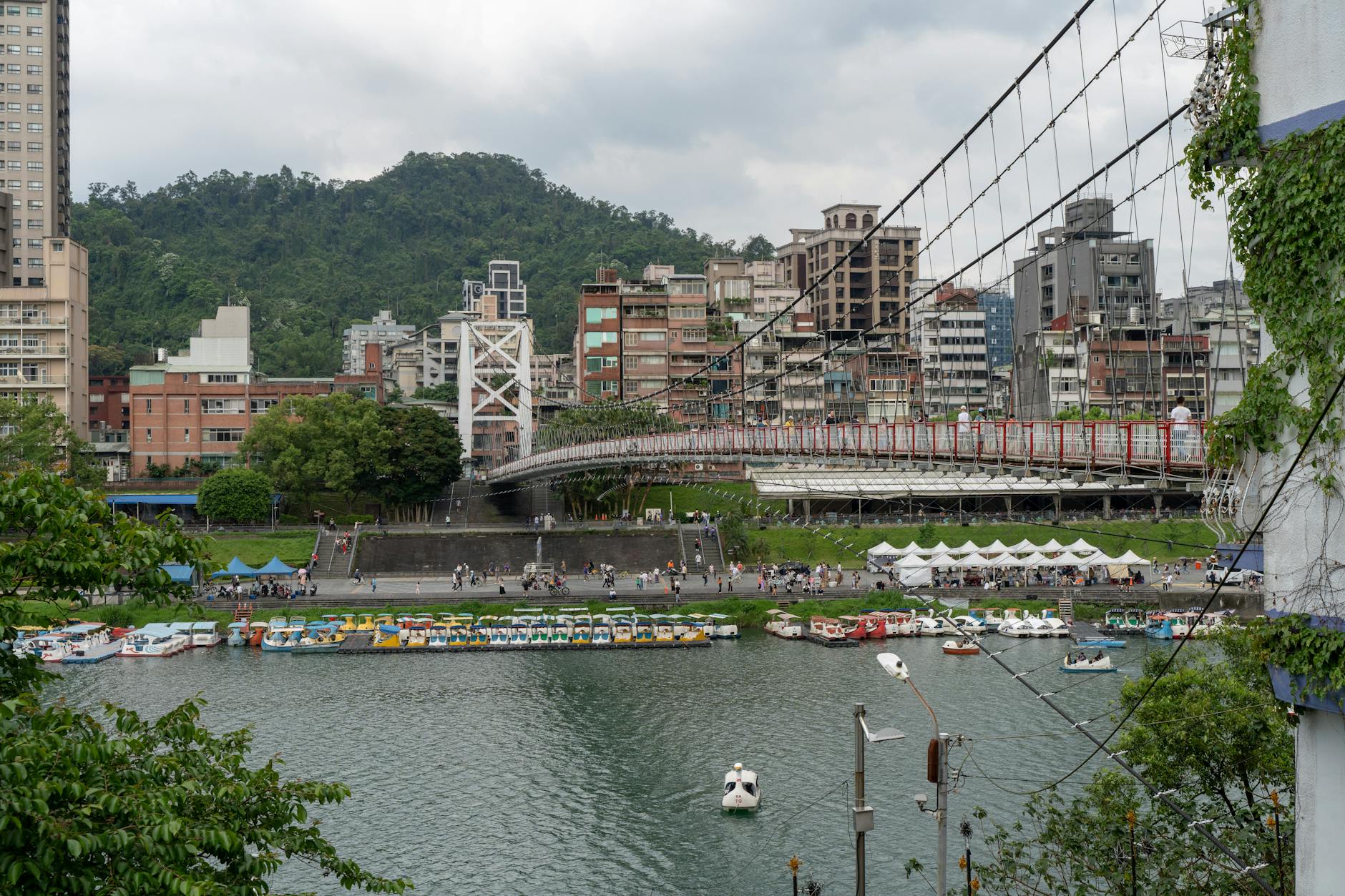
Kaohsiung’s harbor geography makes ferries and waterfront transport part of the visitor experience. Cijin Island access is a classic example where ferry movement is both transport and tourism. Check bicycle/scooter rules, crowding, and weather before assuming the ferry is effortless.
7. Driving, scooters, and parking
Kaohsiung is easier to drive than central Taipei in some areas, but not necessarily easy for visitors. Scooter traffic, wide roads, port logistics, construction, parking, and heat all affect comfort. For a short city stay, MRT/LRT/taxi is usually simpler. For regional trips outside the city, a car or private tour may become useful.
8. Passes and commuter products
Kaohsiung has local commuter-pass products, and city transport materials describe monthly public-transport options that may include MRT, LRT, buses, ferries, TRA, and YouBike elements depending on the pass. These are more relevant to locals, students, and monthlong visitors than to short tourists.
9. Kaohsiung-specific advice
- Use MRT Red Line for airport and THSR Zuoying.
- Use LRT for harbor/waterfront districts, but do not assume it is always fastest.
- Keep EasyCard or iPASS loaded.
- Consider taxis when heat and walking distances stack up.
- Use ferries for Cijin-style trips, but check weather and queues.
- Stay near MRT or LRT if you want a car-free visit.
1. Transportation identity
New Taipei is not a single compact tourist city. It is a large metropolitan ring around Taipei, containing dense urban districts, mountain towns, river corridors, coastal areas, hot springs, historic streets, industrial zones, commuter suburbs, and famous day-trip destinations. Transportation in New Taipei is therefore a network problem: Taipei Metro, New Taipei Metro, TRA, buses, Tourist Shuttles, taxis, YouBike, and private vehicles all matter depending on the district.
For visitors, New Taipei often appears as “places outside Taipei” rather than as a separate city. That is a mistake. Distances can be long, and two New Taipei destinations may be awkward to connect even if both are technically in the same municipality.
2. MRT and New Taipei Metro
Many New Taipei districts are integrated into the Taipei Metro network. Banqiao, Tamsui, Yonghe, Zhonghe, Xindian, Luzhou, Sanchong, Xinzhuang, and other areas are part of the lived Taipei metropolitan transit system. New Taipei also has light-rail and metro services such as Danhai LRT, Ankeng LRT, and the Circular Line. Taipei’s English transport information notes stored-value card transfer discounts involving New Taipei Light Rail, Taipei Metro, and the Circular Line within specified conditions.
For visitors, this means:
- A hotel in parts of New Taipei can be as convenient as a hotel in Taipei if it is near the right MRT station.
- Cross-river and cross-suburb trips can take longer than expected.
- The Circular Line can be useful for avoiding central Taipei transfers, but not all tourist routes are obvious.
- Tamsui is easy by MRT; Jiufen is not.
3. Buses and Tourist Shuttle routes
New Taipei’s tourism transport page explains that buses can be paid by EasyCard or cash, that cash payment may require exact fare/no change, and that transfer discounts apply in some cases with EasyCard between MRT and bus modes. It also highlights Taiwan Tourist Shuttle as useful for semi-independent travelers and notes that EasyCard or iPASS can be used on certain tourist-shuttle services.
This matters because New Taipei attractions include places where rail only gets you partway:
- Jiufen and Jinguashi.
- Shifen and Pingxi.
- Wulai.
- Yehliu.
- Bitan and Xindian river areas.
- Tamsui waterfront and nearby coast.
- Mountain and hot-spring areas.
4. TRA in New Taipei
TRA is important for Ruifang, Pingxi Line access, and northeast-coast travel. For Jiufen, the common pattern is train to Ruifang, then bus or taxi uphill. This is often more reliable than trying to chain multiple city buses from central Taipei, especially during traffic, but direct buses can be simpler if boarding near their origin.
5. Taxis and private tours
Taxis are useful in New Taipei when:
Private drivers and tours are common for multi-stop day trips. They cost more but reduce transfer risk.
- The destination is uphill from a station.
- A scenic route has infrequent buses.
- You are traveling with luggage or elderly relatives.
- You want to combine Jiufen, Jinguashi, Shifen, Yehliu, or the northeast coast.
- Weather is bad.
6. Local concerns
New Taipei residents experience transportation as commuting. Many live in New Taipei and work or study in Taipei. Peak-hour crowding into Taipei can be intense. Housing affordability, school location, job location, and MRT access shape daily life. Outer districts may be car- or scooter-dependent even while inner districts feel rail-rich.
7. New Taipei-specific advice
- Do not choose accommodation in New Taipei only because it is cheaper; check the exact MRT/rail line and travel time.
- Use MRT for dense inner districts.
- Use TRA for Ruifang/Pingxi/Jiufen patterns.
- Use Tourist Shuttle or direct buses for scenic destinations.
- Expect weekend crowding at Jiufen, Shifen, Tamsui, Wulai, and coastal spots.
- Plan the return trip before leaving Taipei/New Taipei’s core.
1. Transportation identity
Hualien is the gateway to Taiwan’s east coast and Taroko region. Its transportation system is completely different from Taipei’s. Rail is crucial for reaching the city, but once in Hualien, many attractions require buses, taxis, tours, rental cars, scooters, or bicycles. Hualien is less about metro convenience and more about regional access, weather, road safety, and scenic-destination logistics.
For visitors, the main decision is whether Hualien is a city stay, an east-coast base, a Taroko attempt, or part of a longer east-coast route. For locals, transport concerns include road resilience, tourism traffic, limited public-transport frequency, access to medical/education/employment centers, and vulnerability to earthquakes, typhoons, and landslides.
2. Getting to Hualien
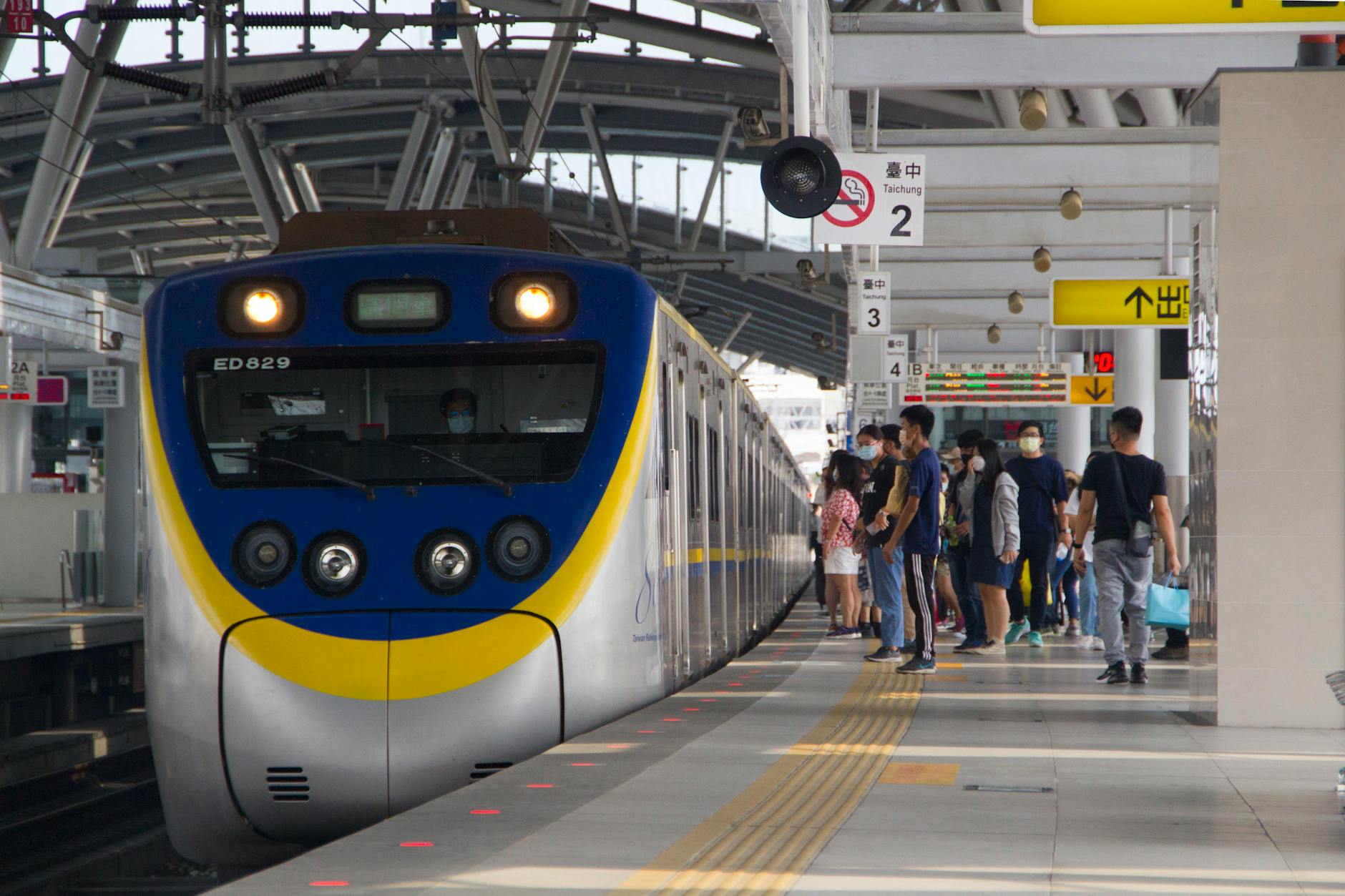
TRA is the main public transport mode to Hualien. Trains from Taipei/Yilan corridors are common visitor choices, but popular trains can sell out, especially on weekends and holidays. Hualien also has an airport, but air service is not the default for most visitors compared with rail.
The key planning issue is resilience. If rail is disrupted by weather or earthquake repair, alternatives may be slower or limited. Avoid scheduling a tight same-day international flight after a long east-coast return.
3. Hualien city transport
Hualien city itself is manageable by walking, taxis, buses, and bicycles depending on hotel location. The station area is important, but not every hotel or night market is immediately beside it. Taxis are useful for luggage and evening movement.
Buses exist, but frequency and route coverage are not Taipei-like. If the day’s plan has multiple stops, a taxi, scooter, rental car, or tour may be more efficient.
4. Taroko access and current restrictions
Taroko is the central transport challenge. In older travel guides, visitors often took buses deep into Taroko Gorge, hopped between trailheads, and returned by bus. That assumption is no longer safe without verification.
Official Taroko National Park information states that bus services between Taroko Visitor Center and Tianxiang remain temporarily suspended and that visitors going to areas such as Lushui or Tianxiang need their own transport while checking Provincial Highway 8 traffic-release windows. Taroko also posts continuing traffic-control measures connected to earthquake and typhoon recovery, slope stabilization, road repairs, and weather-related safety.
The Taiwan Tourist Shuttle Taroko Route page lists the Hualien Bus Station to Taroko Visitor Center route, with fare and pass information including cash or electronic-ticket payment. Taroko National Park’s bus-timetable page also points visitors toward current route information for services such as the 310 Taroko Route and other bus connections.
Practical meaning:
- You may be able to reach the Taroko Visitor Center by public transport.
- You may not be able to continue by regular public bus into the gorge section depending on current restrictions.
- You may need a rental car, taxi, private driver, or tour for certain open areas.
- Even private vehicles may face traffic-control windows.
- Check official Taroko and highway updates close to the travel date.
5. Rental cars and scooters
Hualien is one of the places where a rental vehicle can be useful, but it also requires maturity. Roads can be scenic but exposed. Mountain routes can have rockfall or traffic controls. East-coast highways are beautiful but should not be treated like relaxed city boulevards.
Scooters can be useful for local Hualien movement and short coastal trips if the rider is legally licensed and experienced. They are not a substitute for careful route planning in poor weather or on long-distance mountain roads.
6. Tours and private drivers
Tours and private drivers are often the safest and simplest way for visitors to handle Hualien scenic transportation, especially after major route disruptions. A driver who knows current road controls, legal parking, viewpoints, and closure patterns can save a day from failing. The tradeoff is cost and less independence.
7. Cycling and walking
Hualien can be pleasant by bicycle in selected areas, especially along flatter city or coastal routes. But cycling is not a universal solution. Wind, heat, road width, trucks, and long distances matter. Walking works in the city center and station areas but not for dispersed scenic attractions.
8. Hualien-specific advice
- Book TRA tickets early for weekends and holidays.
- Treat Taroko information as date-sensitive.
- Check official Taroko road and bus updates immediately before travel.
- Do not rely on old itineraries that assume normal bus access into the gorge.
- Use taxis or tours for multi-stop scenic days.
- Avoid tight same-day connections after mountain-road activities.
- Plan around weather, not just distance.
1. Transportation identity
Jiufen is included in this paper because it is one of Taiwan’s most important visitor destinations, but it is not a city transportation system like Taipei or Kaohsiung. It is a steep, historic mountain village in New Taipei’s northeast. The transportation problem is simple and difficult at the same time: getting there is straightforward in theory, but crowding, rain, stairs, bus queues, last-return timing, and mountain-road congestion can make the trip stressful.
For visitors, Jiufen is usually a day trip from Taipei/New Taipei. For locals and nearby residents, transport issues include tourist crowding, bus congestion, narrow roads, parking pressure, and weekend/holiday overload.
2. Main access patterns
The main public transport patterns are:
This is a classic route. TRA gets you from Taipei/New Taipei to Ruifang; buses or taxis climb to Jiufen. It is flexible and avoids depending entirely on road traffic from Taipei.
Direct buses can be simpler because they avoid a rail-to-bus transfer. However, they are more exposed to road traffic and can have queues at popular boarding points. Taiwan Tourist Shuttle’s official site lists Jiufen/Jinguashi-related route information among its route offerings.
This is the easiest option for groups, elderly travelers, bad weather, or multi-stop northeast-coast itineraries. It costs more but reduces uncertainty.
Useful for combining Jiufen with Shifen, Pingxi, Jinguashi, Yehliu, or other northeast attractions.
- TRA to Ruifang, then bus or taxi to Jiufen.
- Direct bus from Taipei/New Taipei to Jiufen/Jinguashi.
- Taxi or private driver.
- Tour bus or organized day tour.
3. Bus realities
New Taipei’s transport guidance notes that Taiwan Tourist Shuttle can be useful for semi-independent trips and that EasyCard or iPASS may be used on certain tourist-shuttle services. For Jiufen specifically, route pages and operators change details over time, so the exact boarding point, fare, and final bus should be checked close to travel.
The practical problems are not usually “Is there a bus?” but:
- Is there a seat?
- Is the line long?
- Is the road congested?
- Is the last return bus too early for your dinner plan?
- Is it raining?
- Are you comfortable standing on a winding mountain bus?
4. Walking and terrain
Jiufen is steep. The old street area has stairs, narrow lanes, crowds, food queues, and wet surfaces when it rains. Large suitcases are a bad idea. Strollers can be difficult. Wheelchair access is limited by terrain even if transport to the village is possible.
Wear shoes with grip. Carry rain protection. Keep valuables secure in dense crowds. Do not plan Jiufen as a smooth mobility-accessible outing without detailed route confirmation.
5. Taxis
Taxis between Ruifang and Jiufen are common and can be worth the cost, especially for groups. Taxis from Taipei are more expensive but can be sensible if the itinerary combines multiple stops.
Agree on route expectations and use official taxis or trusted dispatch services. At crowded tourist sites, be careful with informal offers.
6. Private vehicles and parking
Driving to Jiufen is usually more trouble than it looks. Roads are narrow, parking is limited, weekend crowds are heavy, and mountain weather can be poor. Locals and nearby residents bear the burden of tourist traffic. Unless you have a specific reason to drive and understand the parking situation, public transport or a hired driver is usually better.
7. Jiufen-specific advice
- Travel early or off-peak if possible.
- Avoid large luggage.
- Use TRA to Ruifang plus bus/taxi if you want flexibility.
- Use a direct bus if it starts near your accommodation and traffic risk is acceptable.
- Check the last return option before committing to an evening plan.
- Expect rain and slippery stairs.
- Consider a private driver for Jiufen + Shifen + Jinguashi + Yehliu combinations.
1. Which cities are easiest without a car?
| City/place | Car-free ease | Why |
|---|---|---|
| Taipei | Very high | Dense MRT, buses, taxis, YouBike, rail hubs |
| New Taipei inner districts | High | Integrated MRT/metro/bus network with Taipei |
| Kaohsiung | High in rail corridors | MRT, LRT, airport rail, buses, taxis |
| Tainan | Medium | No MRT; buses/taxis/walking needed |
| Hualien city | Medium | Rail arrival easy; scenic access harder |
| Jiufen | Medium-low | Easy to reach, but steep/crowded/weather-sensitive |
2. Which cities require the most last-mile planning?
Tainan, Hualien, and Jiufen require the most last-mile planning. Tainan because attractions are spread across a non-metro historic city. Hualien because scenic sites are outside the city and Taroko conditions are date-sensitive. Jiufen because the final climb, crowds, and return trip matter as much as the initial rail/bus ride.
3. Which cities are best for transit beginners?
Taipei and Kaohsiung are best for transit beginners. Taipei teaches the smart-card/MRT/bus/taxi pattern. Kaohsiung adds a simple airport rail connection and light rail experience. Tainan and Hualien are excellent, but they require more judgment about buses, taxis, and geography.
4. What locals experience that tourists may miss
Tourists often experience Taiwan transportation as convenient and affordable. Locals experience a more complicated reality:
A good visitor uses the system respectfully: avoid blocking commuters, do not drag luggage through peak crowds unnecessarily, queue properly, and remember that scenic places are also local communities.
- Commuters crowd into MRT and TRA corridors during peaks.
- Housing prices push people farther from central jobs.
- Scooter dependency is practical but increases safety exposure.
- Elderly people and students depend heavily on buses.
- Monthly pass geography affects household transport budgets.
- Parking is a daily problem in dense districts.
- Typhoons and earthquakes are recurring transport risks.
- Tourist crowding affects places such as Jiufen, Tamsui, Hualien, and Tainan historic districts.
1. First-time visitor, 5–7 days, Taipei + one day trip
- Buy EasyCard or iPASS on arrival.
- Use Taoyuan Airport MRT or taxi/private transfer depending on hotel location and luggage.
- Use Taipei Metro for most city travel.
- Use buses for National Palace Museum, hill areas, or routes not near MRT.
- Use TRA to Ruifang plus bus/taxi for Jiufen, or direct bus if convenient.
- Use taxis tactically for late-night or rain.
- Do not rent a car.
2. West-coast city itinerary: Taipei, Tainan, Kaohsiung
- Use THSR for Taipei–Tainan–Zuoying/Kaohsiung.
- Calculate transfers from THSR Tainan to central Tainan.
- Use MRT/LRT in Kaohsiung.
- Use taxis/buses/walking in Tainan.
- Consider a THSR tourist pass only if multiple long high-speed trips make the math work.
- Keep a smart card loaded for local transport.
3. Taipei + Hualien/Taroko itinerary
- Use TRA to Hualien.
- Book reserved train seats early for weekends/holidays.
- Check official Taroko bus and road updates close to travel.
- Do not assume buses operate beyond Taroko Visitor Center into the gorge.
- Consider private driver/tour if Taroko access is limited.
- Keep schedule slack for weather and road controls.
4. Long-stay student or remote worker in Taipei/New Taipei
- Compare monthly TPASS products against daily pay-as-you-go costs.
- Choose housing by actual door-to-door commute, not just city name.
- Favor locations near MRT/TRA lines if commuting daily.
- Use YouBike for first/last-mile trips only on safe routes.
- Learn bus routes after learning the metro.
- Do not buy a scooter unless licensed, insured, and comfortable with local traffic.
5. Family or older-traveler itinerary
- Stay near elevators and major stations.
- Use taxis more often in Tainan, Hualien, and Jiufen.
- Avoid large transfers at peak hours.
- Choose direct rail where possible.
- Avoid Jiufen at the busiest weekend times if stairs/crowds are a concern.
- Consider private drivers for multi-stop scenic days.
Mistake 1: Thinking THSR goes everywhere
THSR is a west-coast high-speed system, not an islandwide network. Use TRA for Hualien and many smaller towns.
Mistake 2: Confusing THSR stations with downtown stations
Tainan is the classic example. THSR Tainan is not central Tainan Station. Add transfer time.
Mistake 3: Buying passes without doing the math
Taiwan’s normal fares are often affordable. A pass is useful only when the itinerary matches its validity, geography, and mode coverage.
Mistake 4: Ignoring last-return times
This matters for Jiufen, Hualien scenic routes, Tainan coastal areas, and New Taipei mountain/coastal attractions.
Mistake 5: Renting a scooter casually
Scooters are practical for locals but risky for inexperienced visitors. Licensing, insurance, traffic behavior, weather, and road conditions matter.
Mistake 6: Trusting old Taroko transportation information
Taroko access has been affected by earthquake and storm recovery. Check official Taroko and highway updates.
Mistake 7: Carrying large luggage everywhere
Use station lockers, luggage forwarding where available, hotel storage, or taxi transfers. Taipei Metro and other systems have size and safety rules.
Mistake 8: Assuming buses give change
Carry a smart card and small cash. Some buses require exact cash fare.
Mistake 9: Underestimating rain
Rain changes walking, biking, Jiufen stairs, bus queues, and mountain-road safety. Carry rain gear and build flexibility.
Mistake 10: Choosing lodging by city name only
A hotel in “New Taipei” may be excellent if near an MRT station or frustrating if far from the right corridor. A hotel in “Tainan” may be central or awkward. Always check actual transit time.
Taiwan’s transportation system is one of its great advantages as a travel destination. It gives visitors multiple ways to move: fast high-speed rail on the west coast, conventional rail for islandwide access, excellent metro systems in key cities, dense buses, practical tourist shuttles, abundant taxis, public bicycles, and a strong culture of convenience-store-based smart-card use. But the system rewards travelers who understand scale. Taipei is a transit metropolis. Tainan is a historic bus/taxi/walk city. Kaohsiung is an MRT/LRT southern hub. New Taipei is a vast metropolitan and scenic region. Hualien is an east-coast gateway where rail gets you there but roads and shuttles determine what you can actually see. Jiufen is a mountain village where stairs, rain, buses, and crowds matter more than abstract transit maps.
For short visitors, the best strategy is simple: get a smart card, use MRT where available, use THSR only for the west-coast trips it is designed for, use TRA for Hualien and smaller towns, check buses and Tourist Shuttle routes for scenic destinations, and use taxis when the time saved is worth the fare. For locals and long-stay residents, the deeper strategy is about monthly passes, commute geography, scooter safety, rail access, and resilience to weather and disasters.
The best transportation plan in Taiwan is not the one that uses the most public transport or the fewest taxis. It is the one that matches the real geography of the trip.
This paper uses official transportation, tourism, metro, railway, airport, and national-park sources where possible. Transit operations, fares, passes, road controls, and disaster recovery conditions can change. For time-sensitive trips, especially Taroko/Hualien, airport access, monthly passes, and holiday rail travel, check the official operator pages immediately before travel.
: Taiwan Tourism Administration, “Land Transport,” listing Taiwan Railway, Taiwan High Speed Rail, Taipei Metro, Taoyuan Metro, Kaohsiung Metro, Intercity Buses, Taxi, Car Rental, and Public Bicycles: https://eng.taiwan.net.tw/m1.aspx?sNo=0029023
: Taiwan High Speed Rail, English homepage and station/fare search information, including the THSR station list from Nangang to Zuoying: https://en.thsrc.com.tw/
: Taiwan High Speed Rail, “Types of Tickets,” including reserved/non-reserved and tourist-ticket products: https://en.thsrc.com.tw/ArticleContent/1f6d4b42-c408-4985-840a-1b4c59daaa1d
: Taiwan High Speed Rail, THSR Pass eligibility for short-term foreign visitors: https://pass.thsrc.com.tw/
: Taiwan Tourism Administration, “Taiwan Railway,” including ticket pre-ordering, stored-value card use, and pass information: https://eng.taiwan.net.tw/m1.aspx?sNo=0029052
: EasyCard Corporation, “Scope of EasyCard Use,” listing MRT, buses, parking, Taiwan Railway, Taiwan High Speed Rail, taxi, ferry, public bicycle, and other categories: https://www.easycard.com.tw/en/use-range
: iPASS Corporation, “Overview,” describing iPASS as a stored-value/e-wallet card for public transport, convenience stores, malls, and other uses: https://www.i-pass.com.tw/en/Page/Overview
: Taiwan Tourism Administration, “Public Bicycles,” describing YouBike rental and return processes with EasyCard/iPASS and other registration/payment methods: https://eng.taiwan.net.tw/m1.aspx?sNo=0029053
: Taiwan Tourism Administration, “Intercity Buses,” describing long-distance freeway bus operators and usage: https://eng.taiwan.net.tw/m1.aspx?sNo=0029049
: iBus Taiwan passenger transport information system, official bus route and real-time bus information portal: https://www.taiwanbus.tw/eBUSPage/default.aspx?lan=E
: Taiwan Tourism Administration, “Taiwan Tourist Shuttle,” describing the service as a public bus system for tourists connecting Taiwan Railway/THSR stations with scenic spots: https://eng.taiwan.net.tw/m1.aspx?sNo=0024041
: Taiwan Tourist Shuttle official route/timetable/fare portal: https://www.taiwantrip.com.tw/Frontend/Home/Index_en
: Taiwan Tourism Administration, “Taxi,” covering taxi use cases, meters, payment, dispatch platforms, and safety advice: https://eng.taiwan.net.tw/m1.aspx?sNo=0029050
: Taiwan Tourism Administration, “Car Rental,” covering rental availability, insurance questions, driving on the right, seatbelts, and international driving permit guidance: https://eng.taiwan.net.tw/m1.aspx?sNo=0029051
: Taipei City Motor Vehicles Office, “Apply to Register Your International Driving Permit (IDP),” explaining 30-day and longer-stay IDP registration rules for reciprocal jurisdictions: https://tpcmv.thb.gov.tw/en/cp.aspx?n=10288
: Taipei Travel, “Taoyuan Airport MRT,” including express and commuter travel times between Taoyuan Airport and Taipei Main Station: https://www.travel.taipei/en/information/taoyuanmetro
: Taoyuan Metro, passenger-service FAQ on ticket types and stored-value card options: https://www.tymetro.com.tw/tymetro-new/en/_pages/service/FAQ.html?page=6
: Taipei Metro, English ticket information including single-journey tickets, EasyCard/iPASS/icash, and travel-pass products: https://english.metro.taipei/cp.aspx?n=BECC2E7AC426F659
: Taipei Travel, “Public Bus,” including cash/smart-card payment, section fares, and exact-change warning: https://www.travel.taipei/en/information/bus
: Taipei City Government, Taipei Metro large-item rules with size limits and exceptions: https://english.gov.taipei/News_Content.aspx?n=ADAE9018C6CFA1FE&s=10A5E6C8A5E0E575&sms=5B794C46F3CDE718
: Taipei City Government, Taipei Metro bicycle carriage restrictions and folded-bike size rules: https://english.gov.taipei/News_Content.aspx?n=ADAE9018C6CFA1FE&s=F08A8757A01684E7&sms=5B794C46F3CDE718
: Taiwan PASS official site, overseas-visitor transport pass information and product structure: https://twpass.tw/index_en.html
: Executive Yuan, TPASS commuter-pass program description and usage statistics: https://english.ey.gov.tw/Page/61BF20C3E89B856/dde0f267-f1d2-41b8-a579-d737a6b46186
: Taoyuan City SDGs page describing Northern Taiwan TPASS coverage and monthly pricing context: https://sdgs.tycg.gov.tw/en/News_Content.aspx?n=21371&s=1409746
: Taiwan High Speed Rail, “Transfer Information,” including THSR shuttle bus information and ticket inspection note: https://en.thsrc.com.tw/ArticleContent/99e64de4-a5eb-4081-ad3c-c3596b4f307f
: Taiwan High Speed Rail, Tainan Station access information showing TRA, THSR shuttle bus, city bus, taxi, car rental, and parking connections: https://en.thsrc.com.tw/ArticleContent/84221373-8943-4a42-8707-bbd38f022138
: Kaohsiung International Airport, transport information for Kaohsiung International Airport MRT Station R4 and terminal exits: https://www.kia.gov.tw/EN/TRANS.html
: Kaohsiung Travel, “Local Transport,” describing MRT, LRT, bus, and public bicycle use with iPASS or EasyCard: https://khh.travel/en/traffic/local-transport/
: Kaohsiung City Mass Rapid Transit Bureau news on the light rail circular route and ridership: https://mtbu.kcg.gov.tw/En/Activities/E003000
: Kaohsiung Rapid Transit Corporation, Kaohsiung Light Rail riding and fare information: https://www.krtc.com.tw/eng/KLRT/
: Kaohsiung Rapid Transit Corporation, Kaohsiung Light Rail station guide/map: https://www.krtc.com.tw/eng/KLRT/guide_map
: Transportation Bureau of Kaohsiung City Government, public transportation achievement/pass information: https://www.tbkc.gov.tw/English/Achievement/Sustainable/PublicTransport
: Tainan Travel, “Getting here,” city bus section describing main lines, city buses, sightseeing buses, and THSR shuttle bus: https://www.twtainan.net/en/statics/goto
: Tainan Airport, English bus information including H31 THSR shuttle and city bus connections: https://www.tna.gov.tw/English/StaticPage/BusInformation
: Tainan City Government information on YouBike 2.0 rollout: https://info.tainan.gov.tw/en/news_content.aspx?n=890&s=8597760&sms=9700
: Taiwan Tourist Shuttle, Tainan route information including Anping/Qigu-related tourist route pages: https://www.taiwantrip.com.tw/Frontend/Home/Index_en
: New Taipei City Travel, “City Transportation,” including bus fares, EasyCard/iPASS use, transfer discounts, and Tourist Shuttle information: https://newtaipei.travel/en/traffic/local-transport
: Taipei City Government FAQ on stored-value card transfer discounts involving New Taipei Light Rail, Taipei Metro, and Circular Line: https://english.gov.taipei/News_Content.aspx?n=A0EDC3930FBE7EFC&s=A5339BD03DDEDE20
: Taroko National Park, bus timetable page referencing TaiwanTrip Taroko Route and related bus services: https://www.taroko.gov.tw/en/sglarticle/bus-timetable
: Taiwan Tourist Shuttle, Taroko Route page with Hualien Bus Station to Taroko Visitor Center fare/pass/payment information: https://www.taiwantrip.com.tw/Frontend/Route/Select_p_en?RouteID=R0071
: Taroko National Park FAQ noting that bus services between Taroko Visitor Center and Tianxiang remain temporarily suspended and that travelers should check Highway 8 release windows: https://www.taroko.gov.tw/en/listicle/faq/532
: Taroko National Park news and notices on traffic-control measures connected to earthquake/typhoon recovery, slope stabilization, road repairs, and weather conditions: https://www.taroko.gov.tw/en/titlelist/news%28n%29