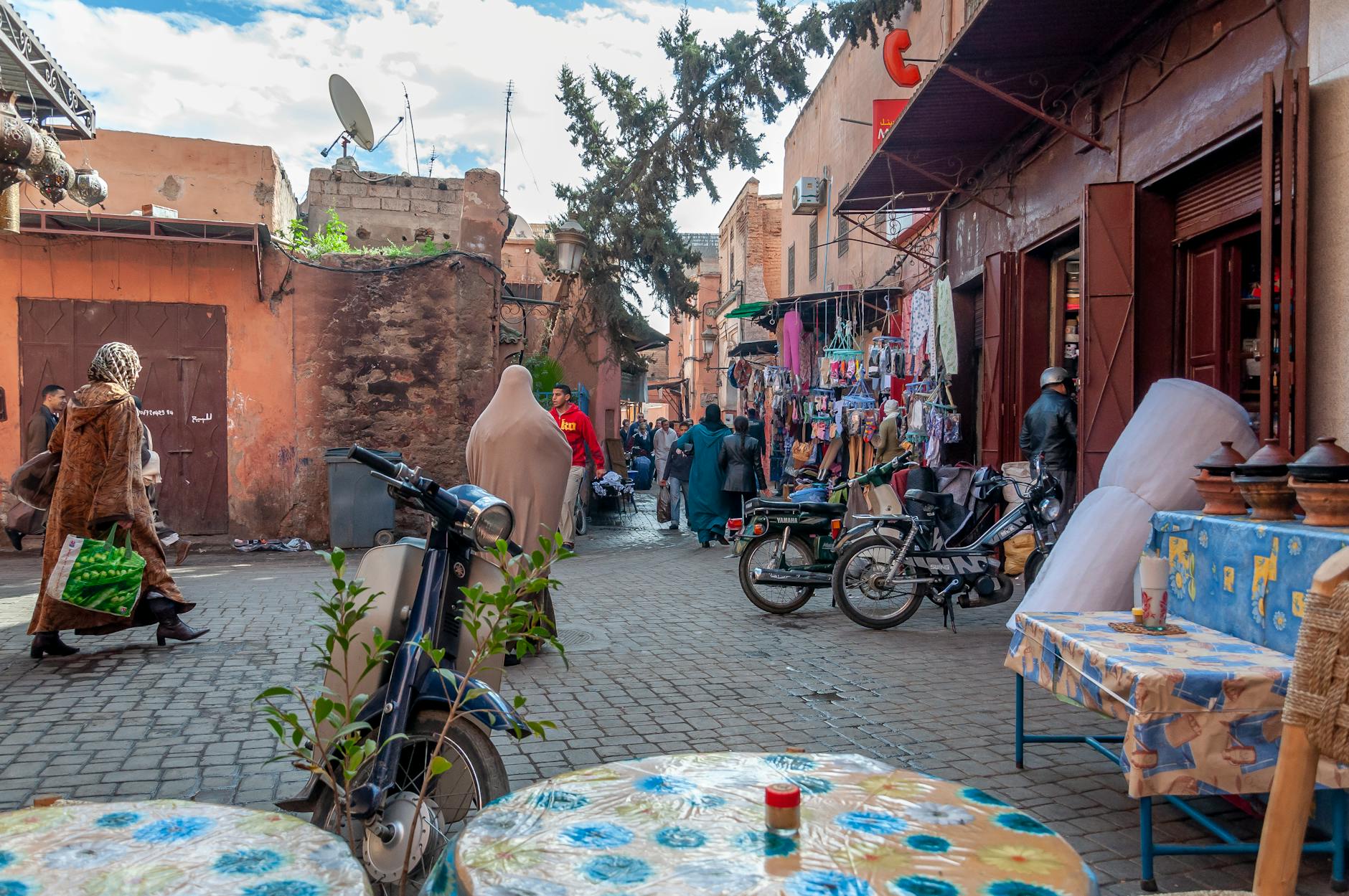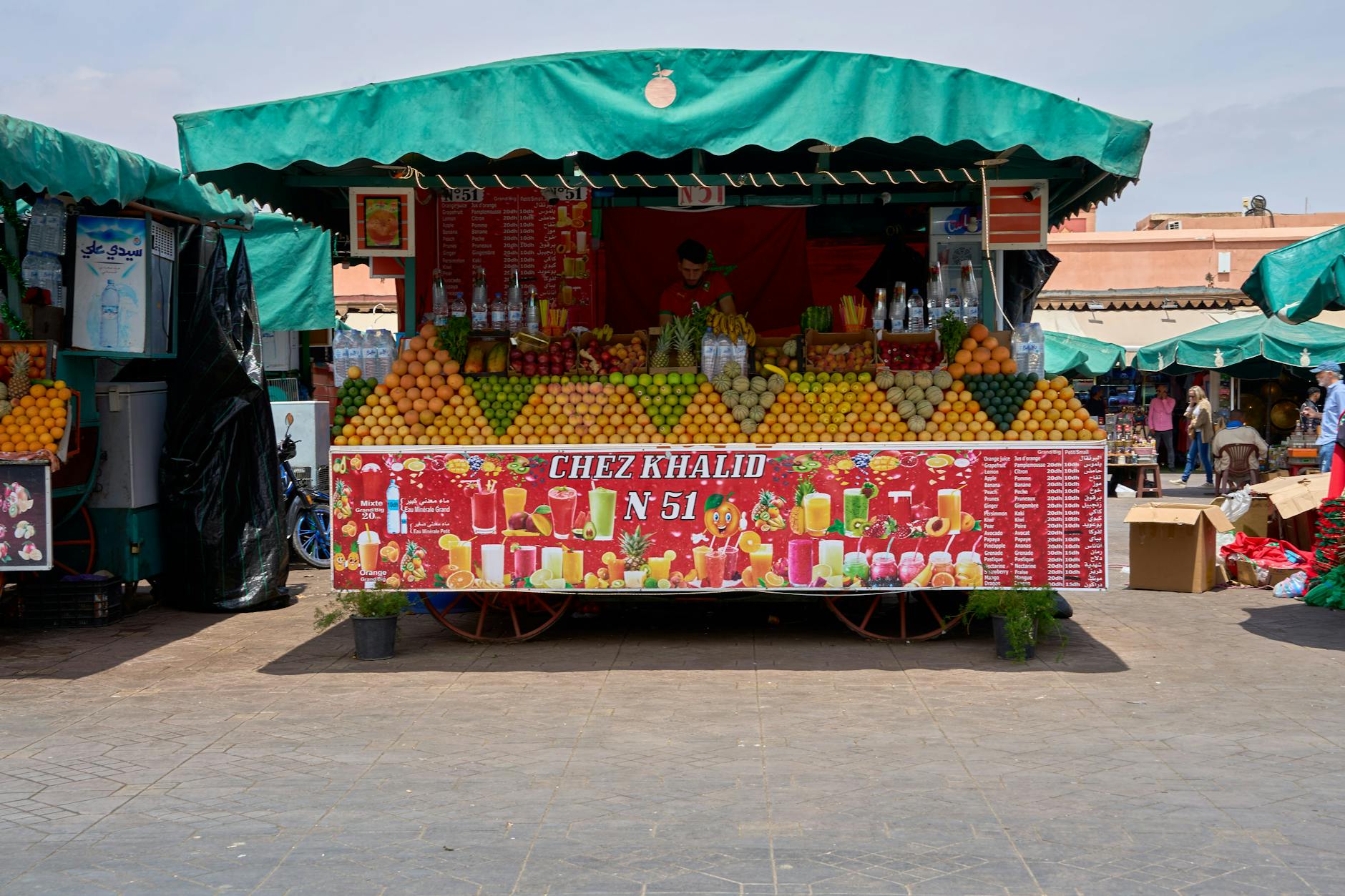
Marrakech can work very well for budget travelers, but it is not won by choosing the cheapest version of every decision. The city offers affordable food, markets, inexpensive taxis by many international standards, riads and guesthouses across price tiers, walkable districts, strong atmosphere without paid admission, and plenty of memorable low-cost time. It also has false economies: a cheap bed with a difficult final walk, a late arrival without a transfer plan, a bargain tour that wastes the whole day, or a shopping route where small purchases quietly become the main expense. A good budget Marrakech trip is disciplined, not joyless. It spends where simplicity protects the trip, saves where the city is already generous, and keeps heat, food, transport, and bargaining from taking over the day. The traveler does not need a luxury budget to enjoy Marrakech. They do need a plan that separates smart savings from costs that come back as stress.
Do not let cheap lodging become expensive friction
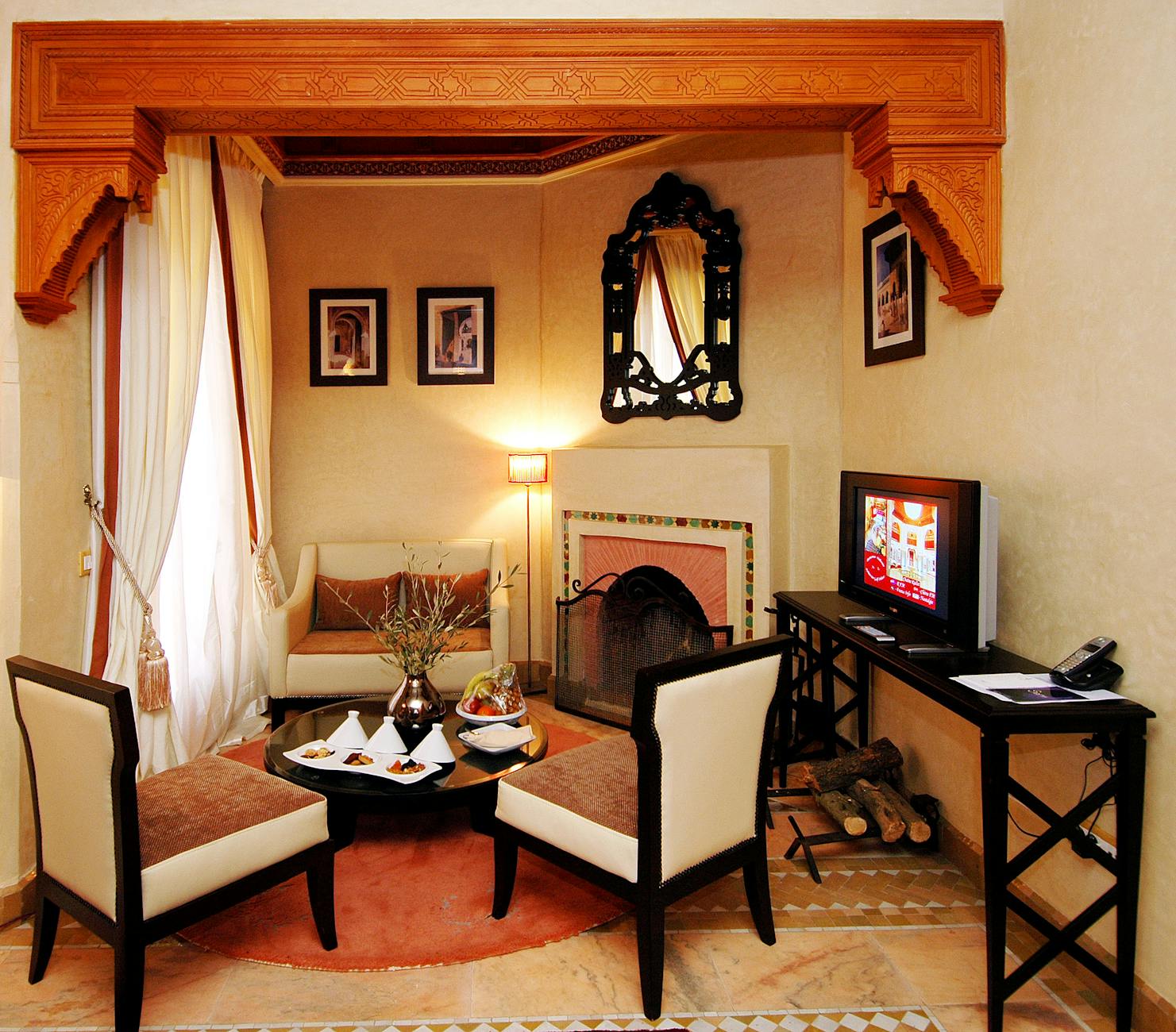
The lodging decision is the first budget trap in Marrakech. A cheap room can be a good choice if it has clean access, reliable sleep, clear directions, luggage help, and a return route the traveler can repeat without stress. It becomes a false economy when the car cannot get close, the final walk is confusing at night, the room is noisy or hot, the stairs are punishing, or every outing requires extra transport and negotiation. The nightly price is only one part of the cost.
Budget travelers should compare medina guesthouses, edge-of-medina stays, Gueliz hotels, hostels, and simple riads by total trip friction. A slightly higher rate may be worth it when it saves arrival stress, protects sleep, includes breakfast, or makes midday returns easy. A cheaper address deep in the medina can still work, but only when the traveler understands the route and the property supports arrival. Marrakech rewards budget lodging that is practical, not merely inexpensive.
- Judge lodging by access, sleep, breakfast, heat control, final walk, and return route, not only nightly price.
- Pay a little more when it removes repeated taxis, difficult stairs, or confusing medina returns.
- Confirm where the car stops and how luggage reaches the door before booking a deep-medina bargain.
Spend on the first transfer when it protects the trip
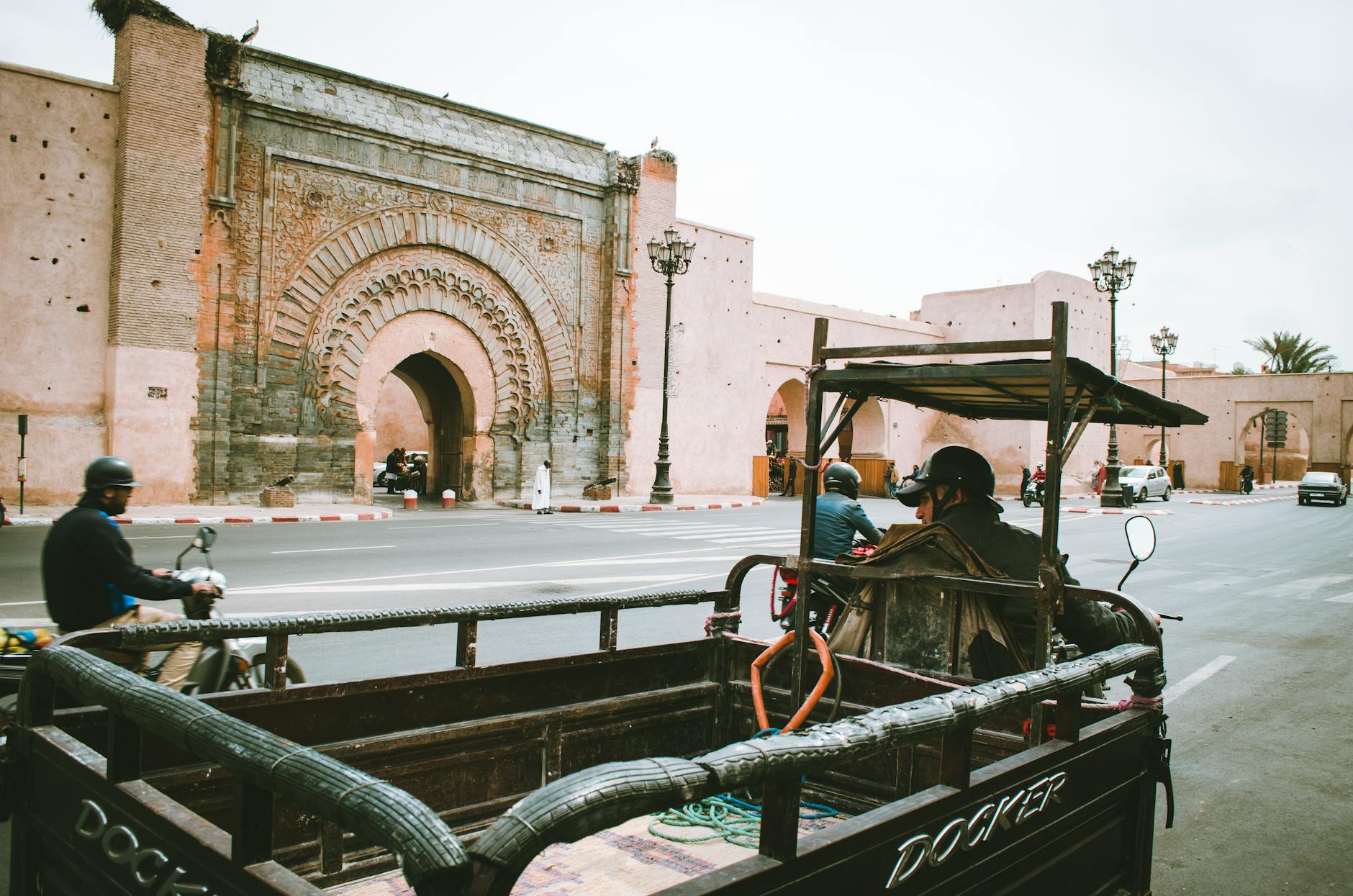
Airport arrival is one of the places where budget travelers should be careful about saving the wrong money. Marrakech Menara Airport is close to the city, but tired travelers with luggage, cash questions, phone battery, heat, and a medina address can lose more value than they save by improvising. A prearranged pickup, agreed price, or hotel-organized transfer can be the right budget decision, especially for late arrivals, first visits, solo travelers, or lodging where a vehicle cannot reach the entrance.
Inside the city, walking can be excellent when the route is short, shaded, and purposeful. Taxis or hotel-arranged cars make sense when heat, luggage, distance, late timing, or confusing gates would otherwise consume the day. The cheapest movement is not always the best movement. A budget traveler should know where to walk, where to negotiate, and when paying for a clean transfer protects the rest of the itinerary.
- Use a prearranged airport transfer when arrival time, luggage, or medina access makes improvisation costly.
- Walk short, useful routes, but do not turn heat or confusing gates into a budget principle.
- Set taxi and driver decisions by time, fatigue, luggage, and return safety, not only price.
Use Marrakech's low-cost strengths deliberately
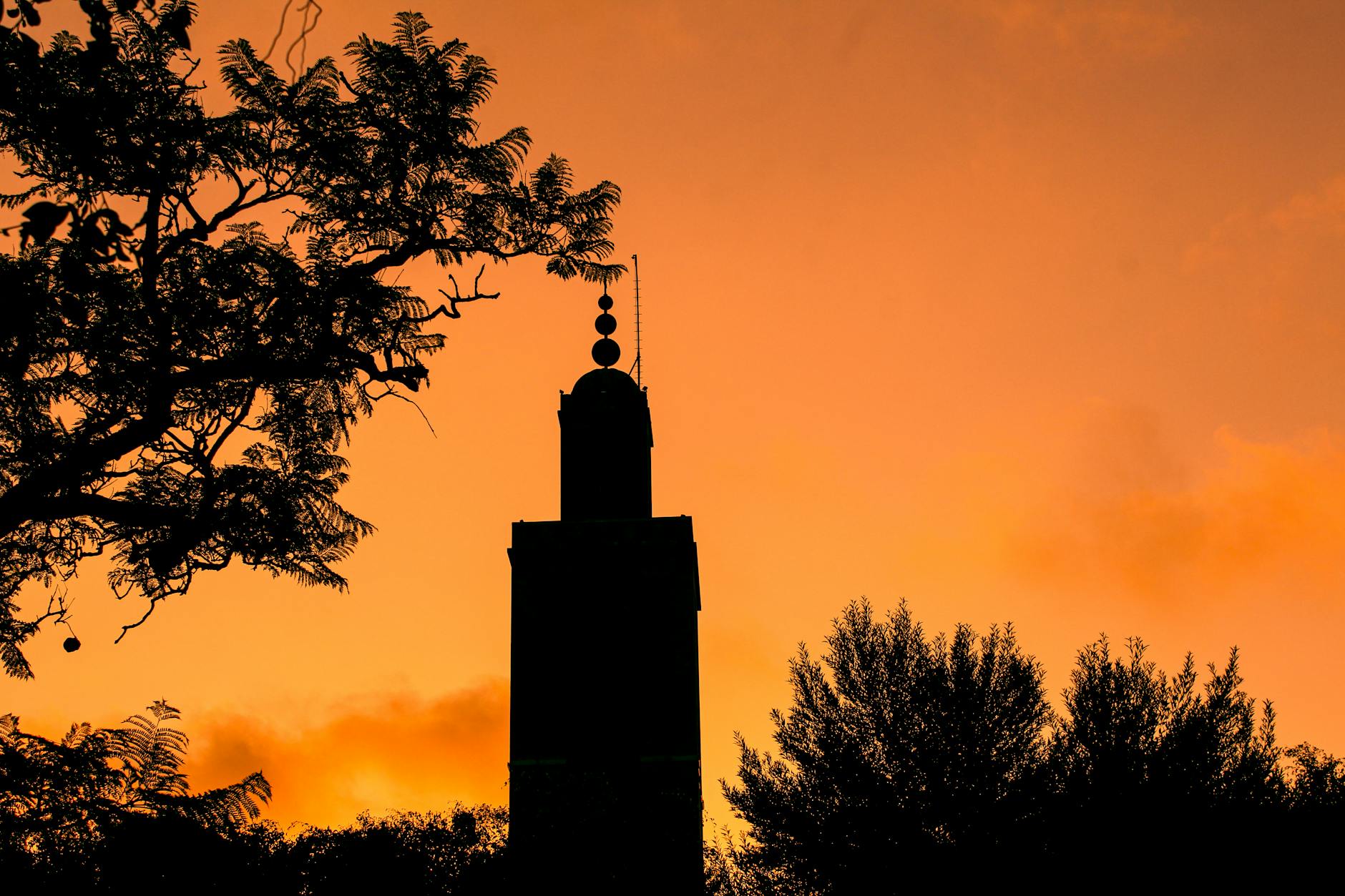
Marrakech gives budget travelers a lot without requiring constant paid admission. Koutoubia views, public squares, medina lanes, souks, neighborhood walks, garden edges, rooftops for a drink or tea, simple cafes, and the visual life of the city can carry whole blocks of time. The traveler should not feel that a budget trip is a lesser version of Marrakech. It can be strong when the free and low-cost anchors are chosen deliberately.
The danger is confusing free with effortless. A free medina walk still costs energy. A public square still requires crowd and bag awareness. A cheap rooftop tea can become expensive if it is paired with a long, tired taxi back from the wrong area. Budget travelers should group low-cost sights by geography, protect shade and meals, and avoid paying small amounts repeatedly just because every offer seems inexpensive.
- Use public views, medina walks, squares, souks, cafes, and rooftops as real anchors, not filler.
- Group low-cost sights by geography so free time does not become tiring movement.
- Watch repeated small purchases, tips, drinks, and impulse stops; they can become the main expense.
Make food a budget system
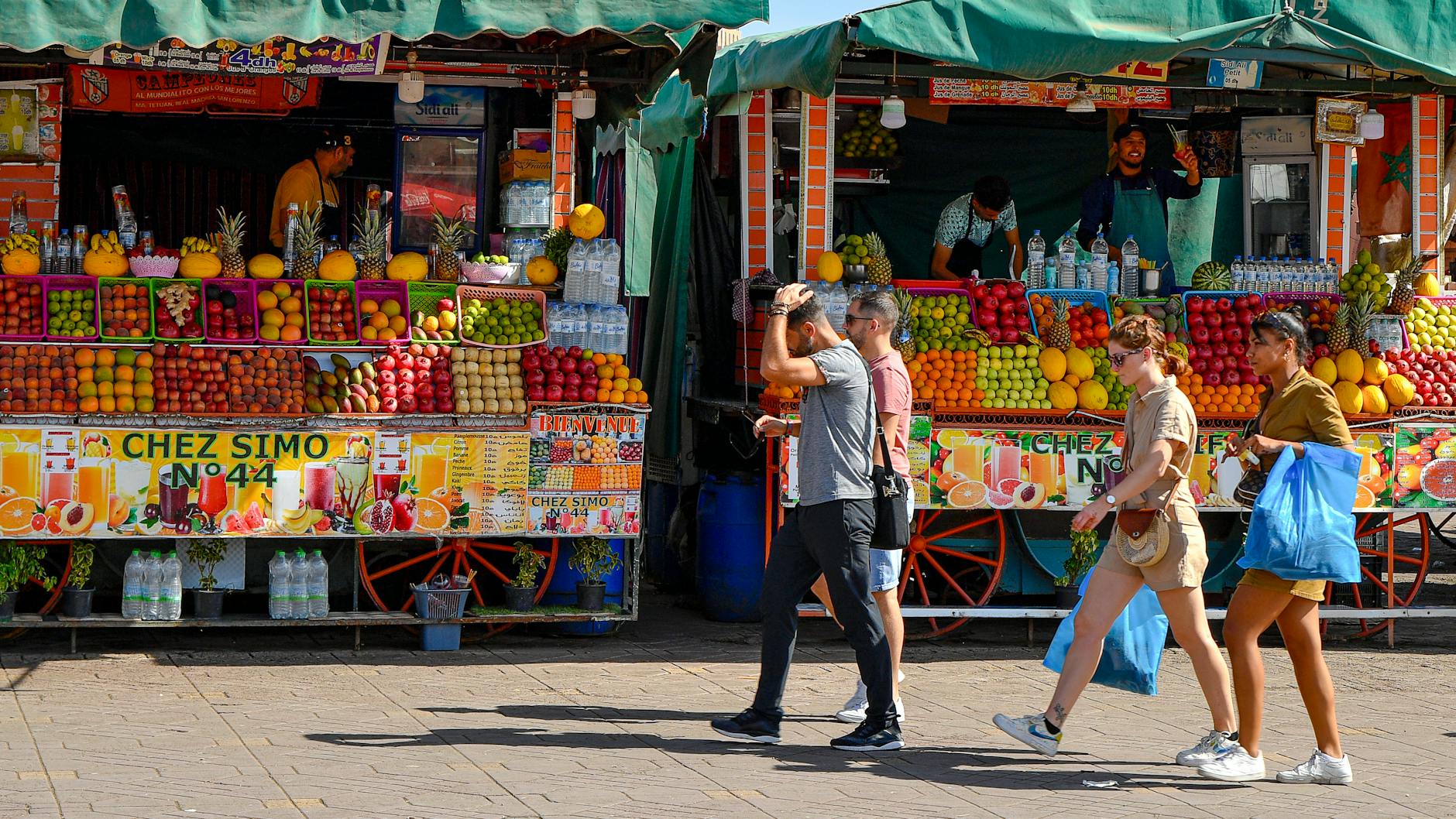
Food can help the Marrakech budget when it is planned as geography. A traveler should know a simple near-hotel breakfast option, where to get water and snacks, which market or cafe works near the day's main route, and which meals are worth paying more for. Fresh juice, bread, pastries, simple tagines, sandwiches, market fruit, casual cafes, and neighborhood restaurants can all keep costs reasonable, but hunger in the wrong place can turn into a poor-value meal quickly.
Food safety and dietary needs still matter. The cheapest option is not useful if it makes the traveler sick or anxious. Budget travelers should separate atmospheric meals from functional meals. One rooftop or courtyard meal may be worth the spend; another day may need a simple, close dinner and an early reset. The best budget food plan saves money without making every meal a problem to solve from scratch.
- Map breakfast, water, snacks, and low-cost meals near the hotel and each day's main route.
- Use markets, cafes, bakeries, fruit stands, and simple restaurants strategically.
- Spend selectively on one or two atmospheric meals instead of drifting into poor-value choices when hungry.
Treat shopping as a controlled category
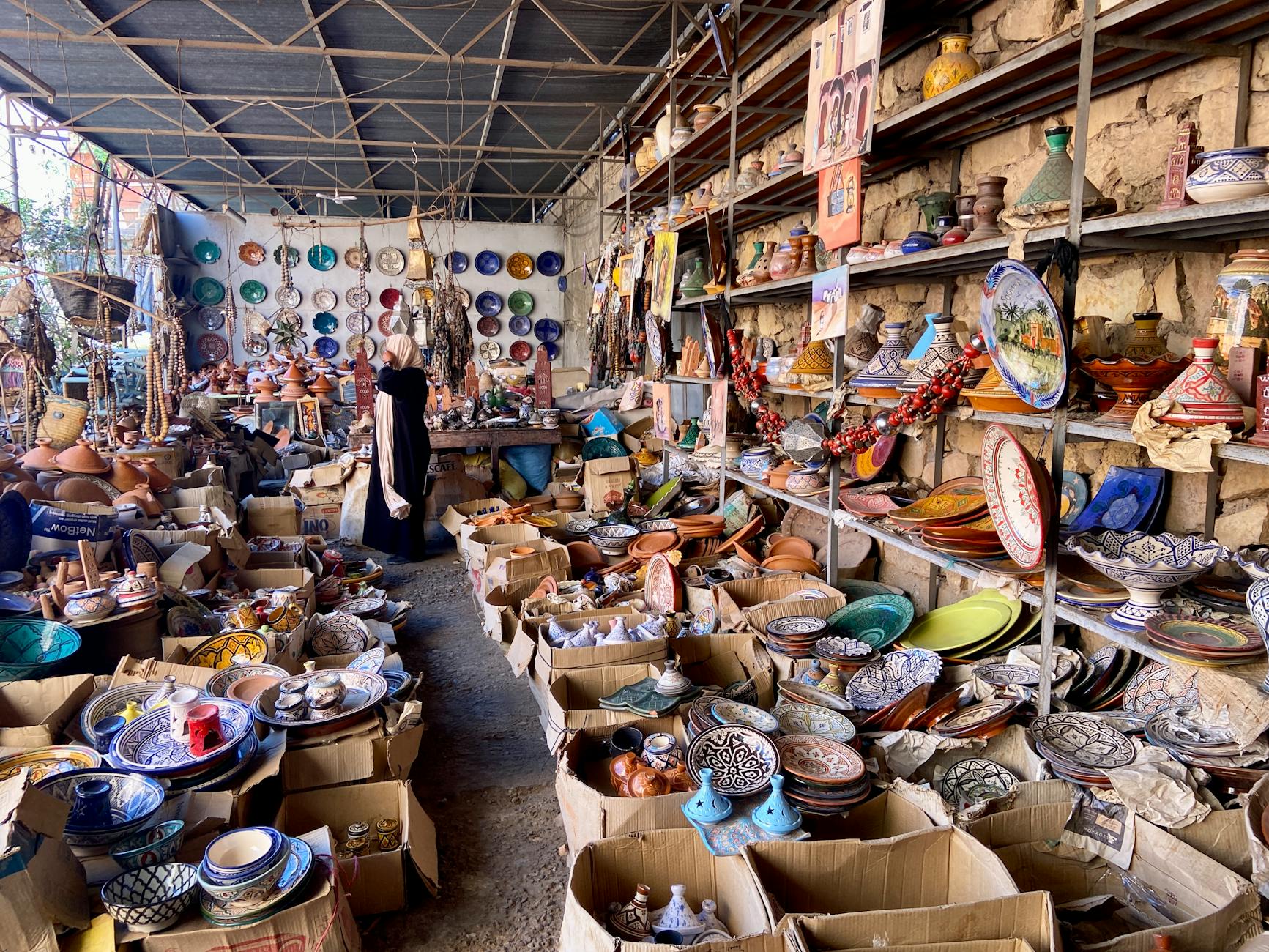
Marrakech is one of the easiest cities for a budget traveler to overspend because so many objects feel affordable in isolation. Ceramics, slippers, scarves, lamps, spices, baskets, rugs, leather goods, and small gifts can all seem harmless until the traveler adds the totals. Bargaining can also make a purchase feel like a win even when the traveler did not need the item. The solution is not to avoid shopping. It is to define the category, budget, and stopping point before entering the souks.
A budget traveler should decide what is worth buying locally and what is better admired in place. If shipping is involved, the math changes. If the traveler is buying gifts, a list helps. If the goal is atmosphere rather than goods, a guided craft route or short market window can provide context without turning the day into negotiation. The best souvenir is not the one that proves the traveler bargained hardest. It is the one that still feels worth carrying home.
- Set a shopping category, cash limit, and stopping point before entering the souks.
- Separate browsing for atmosphere from buying gifts, textiles, ceramics, leather, or rugs.
- Include shipping, luggage space, and real use at home in the budget decision.
Avoid false economies after dark
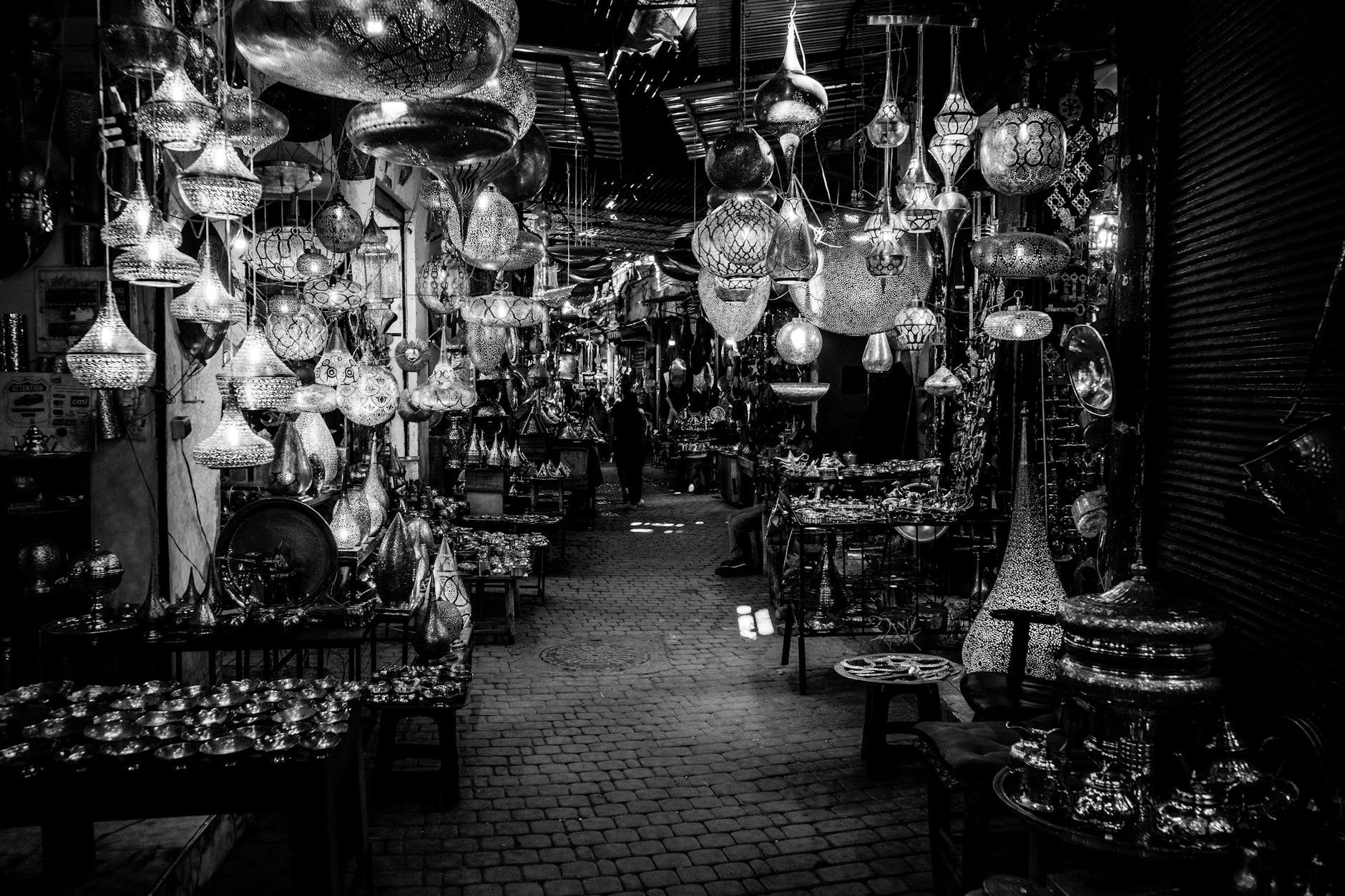
Evenings are where small budget decisions can become expensive in stress. A cheap hotel far from the evening plan, a late medina walk with a weak route, a phone battery running low, or a refusal to pay for a taxi when the group is tired can undermine the trip. Marrakech evenings can be affordable and memorable, but the return route should be known before dinner, rooftop time, or Jemaa el-Fnaa becomes the whole night.
Budget travelers should also protect belongings. Replacing a phone, passport, wallet, glasses, medication, or camera costs more than a disciplined bag system. Crowded markets, night squares, taxi negotiations, and dark medina lanes deserve ordinary urban attention: zipped bag, controlled phone, small cash separated from backup cards, hotel address saved offline, and a clear point where saving money stops being worth it.
- Know the evening return route before leaving the hotel or restaurant.
- Pay for a simpler taxi or driver when fatigue, darkness, or route uncertainty makes walking a false economy.
- Protect phone, passport, medication, cards, and small cash as part of the budget strategy.
When to order a short-term travel report
A budget traveler with a flexible schedule, familiar Marrakech experience, and a strong lodging choice may not need a custom report. A report becomes useful when the traveler is choosing among cheap riads, arriving late, traveling solo, trying to control souk spending, balancing free sights with paid experiences, managing dietary or medical needs, or deciding whether a low-cost day trip is actually good value. Marrakech is affordable in places, but it is not automatically simple.
The report should test lodging access, airport transfer, walking routes, taxi thresholds, free and low-cost anchors, meal geography, shopping boundaries, paid-experience value, evening returns, heat rhythm, and false economies. The value is an honest budget plan: where to save, where to spend for simplicity, and how to keep the trip vivid without letting friction eat the savings.
- Order when lodging access, late arrival, shopping, meals, transport, or day trips could make or break the budget.
- Provide hotel candidates, arrival time, must-see sights, food limits, walking tolerance, shopping plans, and budget ceiling.
- Use the report to separate smart savings from decisions that only look cheap.