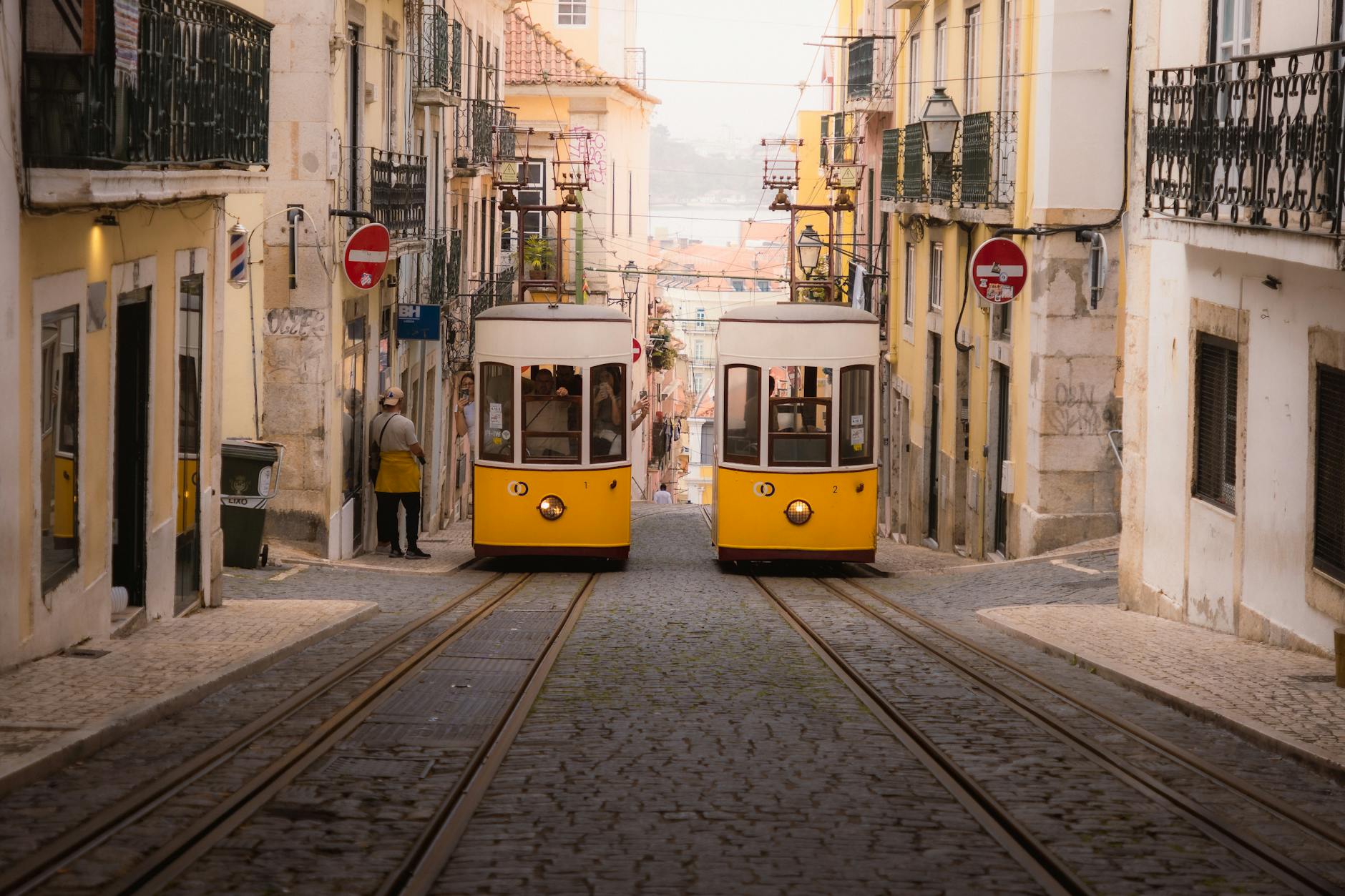
*A practical analysis for visitors, foreign residents, and local users* Prepared: April 22, 2026
Scope and audience
This paper explains how transportation in Portugal works in practice. It is written for travelers planning a trip, foreign residents learning everyday mobility, and local users comparing the tradeoffs between trains, buses, metros, trams, ferries, taxis, ride-hailing, cycling, walking, rental cars, and private vehicles.
The first part covers national-scale transportation patterns that apply across Portugal. The second part focuses on the two requested city systems:
Portugal is compact, but it is not one unified transportation system. National rail is operated mainly by CP — Comboios de Portugal, long-distance coaches fill many rail gaps, toll motorways are important for road travel, and local transport depends heavily on metropolitan ticket systems. Lisbon uses the Navegante family of tickets and passes; Porto uses the Andante system. A visitor who understands those two systems will avoid most avoidable mistakes.
Fare information and operational details change. This paper uses official or operator sources where possible and should be treated as a planning document, not a substitute for checking the operator app or ticket machine on the day of travel.
- Lisbon
- Porto
Contents
- [Executive summary](#executive-summary)
- [Part I — National-scale transportation in Portugal](#part-i--national-scale-transportation-in-portugal)
- [1. The Portuguese transportation model](#1-the-portuguese-transportation-model)
- [2. The practical decision framework](#2-the-practical-decision-framework)
- [3. Tickets, cards, apps, and payment fragmentation](#3-tickets-cards-apps-and-payment-fragmentation)
- [4. National and long-distance rail](#4-national-and-long-distance-rail)
- [5. Urban and suburban rail](#5-urban-and-suburban-rail)
- [6. Intercity coaches and regional buses](#6-intercity-coaches-and-regional-buses)
- [7. Urban metros, trams, funiculars, and local buses](#7-urban-metros-trams-funiculars-and-local-buses)
- [8. Private vehicles, rental cars, tolls, and parking](#8-private-vehicles-rental-cars-tolls-and-parking)
- [9. Taxis, ride-hailing, transfers, and tuk-tuks](#9-taxis-ride-hailing-transfers-and-tuk-tuks)
- [10. Airports and airport access](#10-airports-and-airport-access)
- [11. Ferries and water transport](#11-ferries-and-water-transport)
- [12. Walking, cycling, scooters, and micro-mobility](#12-walking-cycling-scooters-and-micro-mobility)
- [13. Accessibility, luggage, families, and older travelers](#13-accessibility-luggage-families-and-older-travelers)
- [14. Safety, scams, enforcement, and passenger behavior](#14-safety-scams-enforcement-and-passenger-behavior)
- [15. Disruptions, strikes, festivals, weather, and construction](#15-disruptions-strikes-festivals-weather-and-construction)
- [16. Main concerns for residents and locals](#16-main-concerns-for-residents-and-locals)
- [17. Recommended strategies by traveler type](#17-recommended-strategies-by-traveler-type)
- [Part II — City-by-city analysis](#part-ii--city-by-city-analysis)
- [Lisbon](#lisbon)
- [Porto](#porto)
- [Comparative city matrix](#comparative-city-matrix)
- [Practical itineraries and modal choices](#practical-itineraries-and-modal-choices)
- [References](#references)
Executive summary
Portugal is easiest to navigate when you separate intercity travel from local metropolitan travel. Intercity movement between Lisbon, Porto, Coimbra, Braga, Aveiro, Faro, Évora, and other main destinations is usually best by train or coach. Local travel in Lisbon and Porto depends on the correct urban fare card and careful validation.
For a first-time visitor, the most important rule is this: do not rent a car for Lisbon or Porto themselves unless you have a specific reason. Both cities are old, hilly, compact, congested, and difficult to park in. Public transport, walking, taxis, and ride-hailing are easier. A rental car becomes useful when the trip moves into the Douro Valley, smaller towns, rural Alentejo, surf beaches without rail access, mountain areas, or scattered accommodations outside city centers.
Portugal’s transportation strengths are significant. Lisbon and Porto have strong airport links by rail or metro. Lisbon has an unusually rich multimodal network: metro, buses, historic trams, funiculars, elevators, suburban trains, ferries, taxis, ride-hailing, and bike share. Porto’s Metro is clean, simple to use, and connects the airport, central districts, suburbs, Gaia, Matosinhos, and major rail hubs. CP’s Alfa Pendular and Intercidades trains make the Lisbon–Porto corridor easy for most travelers, while buses are valuable where rail is slow, indirect, or absent.
Portugal’s frictions are also predictable. Ticket systems are fragmented. A Lisbon Navegante card does not work in Porto. A Porto Andante card does not work in Lisbon. The Lisbon metro, Carris buses/trams, CP suburban trains, and Transtejo/Soflusa ferries can be combined in some ticket products but not all. Porto’s Andante works across Metro do Porto, STCP buses, CP Porto urban trains, and UNIR on the integrated network, but tourists must still buy the right zone and validate when changing lines or modes. In both cities, failing to validate can produce a fine even if you bought a ticket.
The main visitor problems are practical rather than conceptual: choosing the wrong station, confusing Lisbon Oriente with Santa Apolónia or Porto Campanhã with São Bento, buying a ticket that does not cover the intended operator, underestimating hills, assuming every tram is normal transport rather than a crowded tourist magnet, not planning around luggage, and failing to understand motorway tolls before driving.
For locals, transportation concerns are different. Residents care about commuter reliability, overcrowding, late-night coverage, rising operating costs, accessibility gaps, suburban dependence on buses, parking scarcity, construction disruption, and whether the monthly pass actually covers their commute. Portugal has made public transport more affordable in its largest metropolitan areas — for example, Lisbon’s Navegante and Porto’s Andante monthly passes are crucial for residents — but network coverage and reliability still vary sharply between central districts and outer municipalities.
A practical rule set for Portugal is:
- Use train for Lisbon–Porto, Lisbon–Coimbra, Porto–Braga, Porto–Aveiro, Lisbon–Faro when the timetable works, and day trips such as Lisbon–Sintra/Cascais or Porto–Guimarães/Aveiro.
- Use coach for towns not well served by rail, many Alentejo routes, some Algarve routes, airport-to-town links, and budget travel.
- Use metro/local rail for airport access in Lisbon and Porto.
- Use buses/trams/funiculars for hills, western Lisbon, Porto neighborhoods beyond metro coverage, and late-night or local trips.
- Use taxis or ride-hailing for early flights, heavy luggage, late nights, short group trips, and steep neighborhoods.
- Use rental cars for rural flexibility, not for central Lisbon or Porto.
- Learn the local card: Navegante in Lisbon, Andante in Porto.
1. The Portuguese transportation model
Portugal’s transportation system is shaped by a strong coastal urban axis, two dominant metropolitan regions, historic city centers, and rural areas where public transport can be limited. The practical system has six layers:
The country’s geography matters. Lisbon and Porto are both built on slopes, and both have older districts where walking is beautiful but physically demanding. The Lisbon–Porto corridor is comparatively easy by train or motorway. The Algarve, Douro Valley, Alentejo, and many interior towns require more careful planning. A route that looks short on a map can require a slow bus, a transfer, or a car.
Portugal is not a high-speed rail country in the same way France or Spain is, but its premium trains are fast enough for most visitor itineraries. The Alfa Pendular is CP’s premium long-distance service and is advertised with a maximum speed of 220 km/h. Intercidades trains connect major cities daily and serve routes from Minho to the Algarve, Lisbon to Porto, and interior regions.
- National rail operated mainly by CP — Comboios de Portugal. CP sells online tickets and operates long-distance, regional, interregional, and urban train services.
- Long-distance coaches, especially Rede Expressos and FlixBus-style intercity services. Rede Expressos markets travel to more than 300 destinations in Portugal.
- Metropolitan public transport, with Lisbon and Porto using large integrated pass systems: Navegante in Lisbon and Andante in Porto.
- Local buses, trams, metros, funiculars, and ferries, which vary by city and operator.
- Private road transport, including private cars, rental cars, motorcycles, taxis, ride-hailing, private transfers, and tour vehicles.
- Air travel, especially for the islands, international arrivals, and occasional domestic trips where rail would be too slow.
2. The practical decision framework
When to use rail
Use rail when the trip is on or near the main rail network:
Rail is strongest when both ends are near stations. It is less ideal when the destination is a hill town, remote beach, vineyard accommodation, rural quinta, or national park trailhead.
When to use coaches
Use coaches when rail is slow, unavailable, or indirect. Coaches are often the best public-transport option for smaller Alentejo towns, inland destinations, some Algarve combinations, and routes that do not align well with CP’s network. Coaches also matter for late bookings because long-distance train fares can rise or sell out on busy days, while buses may still have capacity.
The main tradeoff is station location. Long-distance bus terminals can be efficient, but they are sometimes outside the old center. Always check whether the destination bus station is walkable from your accommodation.
When to use a car
Use a car when the destination pattern is scattered. A car is useful for:
A car is usually a liability inside central Lisbon and Porto. It adds parking, narrow streets, one-way systems, tolls, and stress.
When to fly domestically
Domestic flights make the most sense for Madeira and the Azores, and occasionally for long mainland combinations if time is very tight. For Lisbon–Porto, flying is usually unattractive after including airport access, security, boarding, taxiing, baggage, and transfer time. Train or coach is normally simpler.
When to use taxis or ride-hailing
Use taxis or ride-hailing for:
Portugal’s taxi fares are often reasonable compared with much of Western Europe, but price transparency is better with apps. Official taxis should use meters; ride-hailing apps provide the fare before booking.
- Lisbon–Porto
- Lisbon–Coimbra
- Porto–Coimbra
- Porto–Braga
- Porto–Aveiro
- Porto–Guimarães
- Lisbon–Sintra
- Lisbon–Cascais
- Lisbon–Évora, if the timetable fits
- Lisbon–Faro, if you value comfort and certainty over door-to-door speed
- Lisbon or Porto to intermediate towns such as Aveiro, Coimbra, and Entroncamento
- Douro Valley viewpoints, wineries, and rural hotels
- Peneda-Gerês National Park
- beaches outside rail corridors
- interior villages and castles
- Alentejo countryside
- surf trips with boards
- families with heavy luggage staying outside city centers
- itineraries with multiple small stops in a day
- early-morning airport trips before public transport starts
- heavy luggage
- late nights
- short group journeys
- steep neighborhoods
- mobility limitations
- bad weather
- trips where a bus requires a long walk at either end
3. Tickets, cards, apps, and payment fragmentation
Portugal’s most important transportation lesson is that ticketing is local.
National rail tickets
CP tickets for Alfa Pendular and Intercidades are tied to a route, class, and train. Buy them through CP channels, station ticket offices, or recognized sellers. Advance purchase can reduce prices on long-distance trains, while last-minute travel is more expensive and less flexible.
For regional and urban trains, the system is more local. In Lisbon and Porto metropolitan areas, many short-distance journeys can be covered by metropolitan fare products rather than a long-distance CP ticket.
Lisbon: Navegante
Lisbon’s occasional and frequent travelers use the Navegante system. The Lisbon Metro’s official fare page lists a Carris/Metro ticket at €1.90, valid for unlimited Carris and Metro journeys during 60 minutes after first validation, but not for consecutive Metro journeys. The same official page lists 24-hour tickets for Carris/Metro (€7.25), Carris/Metro/Transtejo Cacilhas ferry (€10.35), and Carris/Metro/CP urban trains (€11.40). Zapping is prepaid credit usable on several operators, with a Metro journey listed at €1.72, while bank-card contactless Metro access is listed at €1.92.
Carris’ 2026 fare table confirms key onboard prices that matter to visitors: onboard bus €2.30, onboard tram €3.30, onboard funicular up to two journeys €4.30, onboard Santa Justa lift up to two journeys €6.20, Carris/Metro ticket €1.90, 24-hour Carris/Metro €7.25, and zapping €1.72.
Residents usually care more about monthly passes. The Navegante Metropolitano covers the 18 municipalities of the Lisbon Metropolitan Area and costs €40 per month; the Municipal Navegante costs €30 for one municipality.
Porto: Andante
Porto’s Andante ticket is valid across the main public transport systems in the Porto Metropolitan Area, including STCP, Metro do Porto, CP Porto urban trains, and UNIR. The price is based on the route/zones, not on whether you use bus, metro, or train. For occasional trips, the Blue Andante card costs €0.60 and is rechargeable.
The essential operational rule is validation. STCP states that validation is mandatory and that users must validate when starting a journey and when changing lines or modes, regardless of card type. Andante’s own guidance repeats that users must validate when starting a journey and when changing line or transport, including the app version.
For visitors, the Andante Tour can be simpler than zone counting. The Andante Tour 1 is valid for 24 hours after first validation; the Andante Tour 3 is valid for 72 hours; the 2026 prices shown by Andante are €7.75 and €16.55 respectively. It is valid on the intermodal Andante network but not on the Funicular dos Guindais or STCP’s historic tram.
Monthly users in Porto rely on passes: Andante 3Z and Municipal Andante are €30, while Andante Metropolitano is €40 across the integrated metropolitan system.
Payment realities
Expect a mix of cards, apps, machines, and cash.
- Ticket machines in Lisbon and Porto usually have English options.
- Contactless bank-card payment exists in some places, but do not assume it works across every operator.
- Lisbon Metro officially supports bank-card fare-gate payment for Metro journeys.
- Onboard urban fares can be much higher than preloaded fare-card prices.
- Some older trams, funiculars, and small bus situations are easier with cash or a preloaded card.
- Each passenger generally needs their own reusable card; do not assume one card can tap multiple people.
- Locals often use monthly passes and Portuguese payment tools; visitors should keep a backup payment method.
4. National and long-distance rail
CP services
Portugal’s main rail operator is CP — Comboios de Portugal. For practical planning, think of CP services in four groups:
Booking and seat reservations
For Alfa Pendular and Intercidades, buy in advance when possible. These services can have train-specific tickets and seat reservations. During holidays, summer weekends, football events, university travel peaks, and long weekends, popular trains sell out or become expensive.
Digital tickets are normally acceptable when bought through official channels, but keep your device charged. For older travelers or complex trips, printing a backup can still reduce stress.
Major station confusion
Portugal’s two biggest station traps are in Lisbon and Porto.
In Lisbon:
In Porto:
The correct station can save time; the wrong station can create a missed train.
Luggage and bikes
CP provides travel information covering luggage, bikes, pets, refunds, and rules. Bicycles and scooters can be carried free of charge on CP under specific conditions; each passenger may take one bicycle or scooter, must load and store it responsibly, and may only use permitted services and designated areas.
For luggage, the practical reality is simpler: Portuguese trains are usually manageable with normal suitcases, but older stations, stairs, narrow platforms, and crowded carriages can make large bags inconvenient. Put identification on bags, arrive early, and avoid blocking aisles or doors.
Green Rail Pass
Portugal’s Green Rail Pass is important for residents, but many visitors misunderstand it. CP states that the pass is valid for Portuguese citizens and foreigners resident in Portugal, costs €20 for 30 days, and can also be loaded for 60 or 90 days at €40 or €60. It is valid on Intercidades in 2nd class only with compulsory advance seat reservation, and on Regional, InterRegional, Coimbra urban trains, and some Lisbon/Porto urban sections not covered by metropolitan passes.
This means it is not a general tourist rail pass. It excludes Alfa Pendular, has residency requirements, and has reservation rules. It is excellent for eligible residents; it is not the normal answer for a two-week tourist itinerary.
- Alfa Pendular: premium, faster long-distance trains. Useful for Lisbon–Porto and north–south journeys. CP describes the Alfa Pendular as its comfortable service up and down Portugal, including Lisbon–Porto and Braga–Faro travel, with a maximum speed of 220 km/h.
- Intercidades: intercity trains connecting major cities. CP says Intercidades connects the country’s main cities daily, with routes from Minho to the Algarve and Lisbon to Porto.
- Regional and InterRegional: slower trains serving intermediate towns and local corridors.
- Urban trains: metropolitan commuter rail around Lisbon, Porto, and Coimbra.
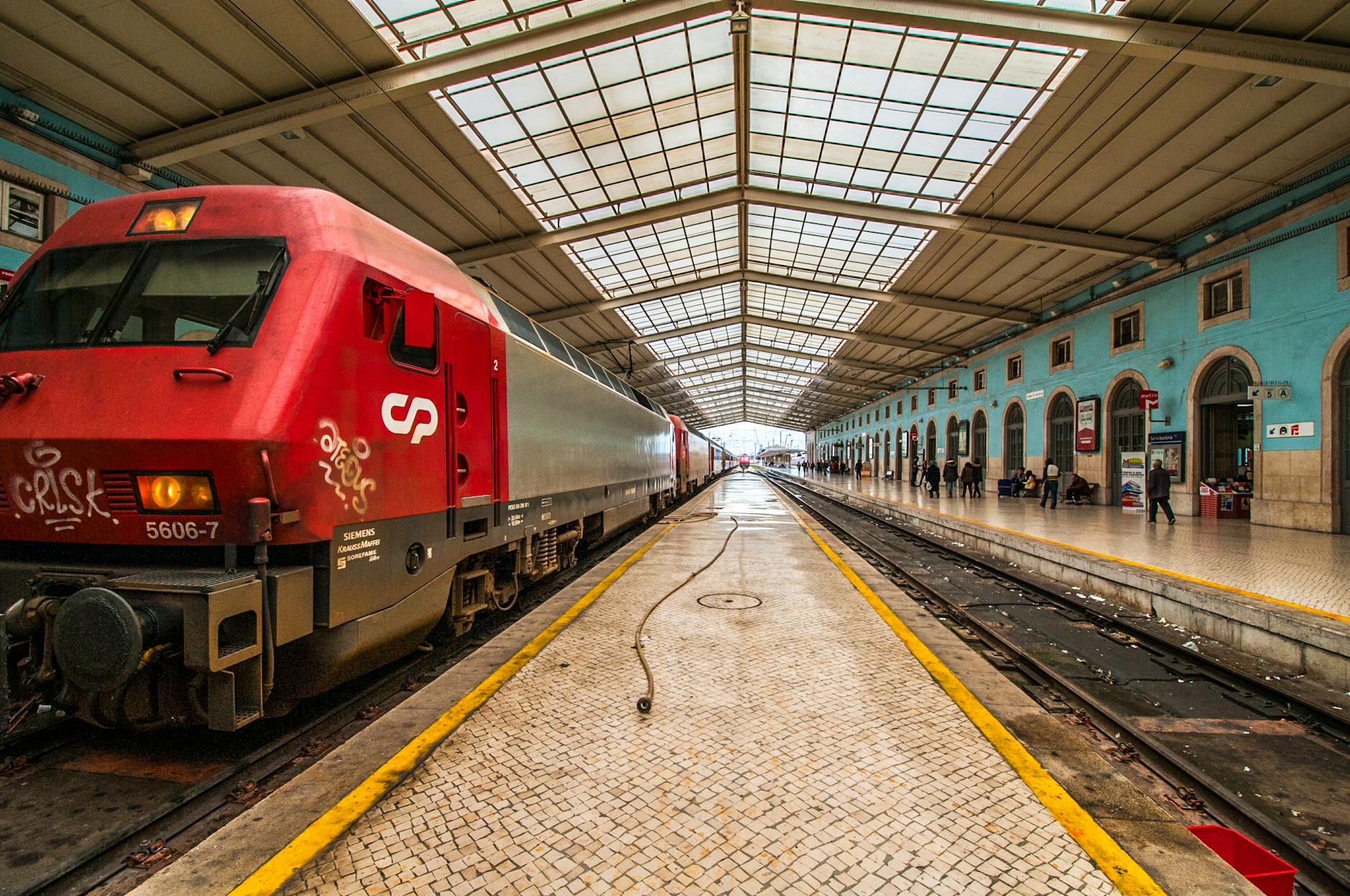
- Oriente is the modern eastern hub near Parque das Nações and the airport side of the city. Many long-distance trains stop here.
- Santa Apolónia is the older central rail terminal near Alfama and the river.
- Entrecampos and Sete Rios are also important for some rail and bus connections.
- Rossio is important for Sintra trains.
- Cais do Sodré is the hub for Cascais trains, Metro, ferries, and waterfront movement.
- Campanhã is the main long-distance rail hub.
- São Bento is the beautiful central station, very useful for local/regional trains and visitors, but not always the best place to board long-distance services.
5. Urban and suburban rail
Urban rail in Portugal is crucial around Lisbon and Porto.
Lisbon urban trains
Lisbon’s suburban rail network connects the city with Sintra, Cascais, Azambuja, the south bank, and other commuter areas. For visitors, the most important tourist routes are:
The main issue is not whether the trains exist; it is whether your Lisbon ticket product covers the route. A Carris/Metro ticket is not automatically a CP suburban train ticket. Use the right Navegante product, zapping credit, CP ticket, or 24-hour combined ticket.
Porto urban trains
Porto urban trains connect Porto with Aveiro, Braga, Guimarães, Marco de Canaveses, and other regional destinations. CP says Porto urban train prices depend on route, zones, and validity period.
For visitors, these trains make Porto a good base for:
Again, station choice matters. Campanhã is the rail hub; São Bento is central and convenient, but not every through or long-distance train is best handled there.
- Rossio to Sintra: palaces, old town, Pena Palace connections.
- Cais do Sodré to Cascais: Belém, Estoril, Cascais, coastal day trips.
- Oriente/Santa Apolónia/Entrecampos corridors: useful depending on accommodation and long-distance transfers.
- Ferry plus south-bank rail/bus: useful for Almada, Cacilhas, Cristo Rei, and some Setúbal/Costa da Caparica combinations.
- Aveiro
- Braga
- Guimarães
- some Douro-line access, though full Douro Valley planning is more complex
6. Intercity coaches and regional buses
Coaches are not second-rate in Portugal; they are often the right tool. Rede Expressos markets service to more than 300 destinations in Portugal and sells digital tickets. Coaches often beat trains for towns without direct rail service, routes where the rail line is indirect, and budget itineraries.
Strengths of buses and coaches
Weaknesses of buses and coaches
Practical bus-station notes
In Lisbon, long-distance buses may use Sete Rios, Oriente, or other stops depending on operator and route. In Porto, long-distance bus arrival points may vary; always check the operator ticket and map rather than assuming “Porto” means a single station.
Regional bus information can be less tourist-friendly than rail information. Use operator sites, Google Maps, Moovit, local municipality pages, and station displays, but verify important rural connections in advance.
- Better coverage of smaller towns.
- Often cheaper than trains, especially close to departure.
- Direct service where rail would require a transfer.
- Useful for Alentejo, interior regions, some beach towns, and small cities.
- Good fallback during rail strikes or sold-out trains.
- Road congestion can affect punctuality.
- Bus terminals can be outside historic centers.
- Luggage policies vary by operator.
- Night arrivals at unfamiliar terminals can be stressful.
- Service frequency can drop sharply on Sundays and public holidays.
7. Urban metros, trams, funiculars, and local buses
Portugal’s two largest urban systems are very different.
Lisbon
Lisbon has a conventional metro, a large bus network, historic trams, modern trams, funiculars, elevators, suburban trains, ferries, and bike share. The Metro normally opens at 6:30 a.m. and closes at 1:00 a.m. It is fast and useful, especially for the airport, Baixa/Chiado, Avenida, Saldanha, Oriente, Marquês de Pombal, and major transfer points. It does not cover every tourist area; Belém, Alfama’s steepest parts, Graça, and many western neighborhoods require bus, tram, train, taxi, or walking.
Porto
Porto’s Metro is a light-rail system that runs underground in central sections and above ground across much of the metropolitan area. It is easy for visitors because Trindade is the main interchange and Line E serves the airport. Metro do Porto provides official maps and timetables.
Porto also relies heavily on buses, especially for neighborhoods and river/coastal routes not directly covered by Metro. Historic trams and the Funicular dos Guindais are useful visitor experiences, but they are not the backbone of daily mobility.
Local bus realities
Local buses are necessary but harder for visitors than metros. Stops can be less intuitive, real-time information can be imperfect, and old streets can slow service. Still, buses solve problems metros cannot, especially hills, neighborhoods away from rail, late-night travel, and cross-town routes.
8. Private vehicles, rental cars, tolls, and parking
Driving rules
Portugal drives on the right. Standard European road behavior applies: seatbelts are mandatory, mobile-phone use without hands-free is not allowed, and child restraint rules apply. The EU’s Your Europe road-safety page for Portugal lists alcohol limits of 0.5 mg/ml for standard drivers and 0.2 mg/ml for professional and novice drivers, and confirms that mobile phones may be used only with hands-free equipment.
Common speed limits, unless signs say otherwise, are approximately:
Always follow posted signs; local restrictions, construction zones, and municipal speed limits matter.
Driving license and rental-car issues
EU/EEA licenses are generally straightforward. Non-EU visitors should check both Portuguese rules and rental-company requirements. Many rental companies ask for an International Driving Permit when the license is not in a Latin alphabet or not from a commonly recognized jurisdiction. Residents face different license-exchange rules than tourists; Portugal’s government explains that some foreign license holders may have deadlines to exchange their license after becoming resident.
Rental-car details that matter:
Tolls
Portugal’s motorway toll system is a major source of visitor anxiety. There are traditional toll barriers and electronic-only toll roads. VisitPortugal explains that electronic toll roads have no toll booths and use electronic gateways; foreign-plated vehicles can use options such as EasyToll, Tollcard, a 3-Day Virtual Card, or other payment methods.
PT Tolls explains that electronic-only toll roads require an activated means of payment for foreign-registered vehicles, and that Via Verde, EasyToll, Tollcard, and other methods exist depending on vehicle and route. Via Verde’s visitor site presents Go Toll options that allow non-stop toll use with charges to a payment card.
The practical advice is blunt: settle tolls before you drive. Do not assume you can pay every toll later with cash. If renting, decide whether to accept the rental company’s transponder. It may have service fees, but it often prevents bigger administrative problems.
Parking
Parking is one of the best reasons not to drive in Lisbon or Porto. Historic centers have narrow streets, resident-only areas, paid zones, garages with tight ramps, and high demand. Lisbon’s municipal mobility page notes low-emission restrictions, including Zone 1 around Avenida da Liberdade/Baixa where only post-2000 vehicles meeting Euro 3 standards may circulate.
Lisbon’s EMEL is the city’s mobility and parking company; it manages on-street public parking, parking lots, and historic neighborhoods.
In Porto, parking is also tight around Ribeira, Baixa, Cedofeita, Santa Catarina, and the riverfront. Porto also has limited-traffic areas where access may be allowed only in certain periods or for certain user types.
For both cities, the best car strategy is usually:
- 50 km/h in built-up areas
- 90 km/h on ordinary rural roads
- 100 km/h on some expressways
- 120 km/h on motorways
- Manual transmission is common; book automatic early.
- Photograph the car at pickup and return.
- Confirm whether toll transponder rental is included.
- Ask how electronic tolls will be billed and what admin fees apply.
- Check cross-border permission if driving into Spain.
- Avoid picking up a car until the day you leave Lisbon or Porto.
- Confirm parking at accommodation before arrival.
- Do not bring the car into the center.
- Use a hotel garage or pre-booked garage if you must drive.
- Use park-and-ride or edge parking when practical.
- Return the rental car before spending time in the city.
- Never leave luggage visible in a parked car.
9. Taxis, ride-hailing, transfers, and tuk-tuks
Portugal has conventional taxis and app-based ride-hailing. In Lisbon and Porto, Uber, Bolt, and Free Now-style services are common. Availability can drop during rain, late-night peaks, major events, and airport rush periods.
Taxis
Official taxis should use meters. Airports and stations have taxi ranks. Taxis are often a good value for groups or luggage-heavy trips, especially compared with buying several transit tickets.
Risks are familiar: long routes, language confusion, surcharge surprises, and airport queue stress. These are not reasons to avoid taxis altogether, but they are reasons to know the approximate route and fare range before starting.
Ride-hailing
Ride-hailing gives price transparency and avoids language issues. The tradeoffs are pickup-location confusion, surge pricing, airport pickup zones, and occasional cancellations.
Private transfers
Private transfers are useful for:
They are usually not necessary for ordinary city travel.
Tuk-tuks
Tuk-tuks in Lisbon and Porto are mainly tourist vehicles, not public transportation. They can be useful for sightseeing in steep districts, but they are expensive per kilometer. They also contribute to congestion and resident frustration in historic neighborhoods. Agree on price, duration, and route before boarding.
- early flights
- families with child seats
- mobility needs
- late arrivals
- high-end hotels
- rural accommodation
- groups with large luggage
10. Airports and airport access
Lisbon Airport
Lisbon Airport is unusually close to the city. The airport’s official public-transport page states that Lisbon Airport has a Metro station and that the Aeroporto–Saldanha line takes passengers downtown in about 20 minutes.
The Metro is usually the best choice for a solo traveler with manageable luggage. Taxis and ride-hailing are better for early or late travel, groups, heavy luggage, mobility needs, or accommodation far from a Metro stop.
Porto Airport
Porto Airport’s official public-transport page states that Line E (Purple) connects the airport and city center, running every 20 or 30 minutes depending on day and time.
The Metro is the simplest airport link for most visitors. Buy the correct Andante zone before boarding and validate. Taxis or ride-hailing make sense for early flights, late arrivals, large groups, and hotels not near Metro.
Domestic flights
Flights are essential for Madeira and the Azores. For mainland travel, rail and coach are often more practical. Lisbon–Porto flights can look fast but usually lose their advantage once airport access, check-in, boarding, and baggage are included.
11. Ferries and water transport
Portugal’s most important daily-use ferry network for this paper is in Lisbon. Transtejo/Soflusa operates Tagus River ferry services connecting Lisbon with south-bank communities. The Cais do Sodré–Cacilhas route is particularly useful for visitors because it is scenic, short, and connects to Almada and Cristo Rei options. The official Cacilhas–Cais do Sodré page lists an average journey time of 10 minutes.
Transtejo/Soflusa’s fare table includes Cacilhas–Cais do Sodré at €1.60 and other south-bank routes such as Barreiro–Terreiro do Paço at €2.95 in the 2026 tariff material.
For Porto, Douro riverboats are mainly sightseeing, not core commuter transport for visitors. Crossing between Porto and Vila Nova de Gaia is usually done on foot, by Metro Line D over the Dom Luís I bridge, by taxi/ride-hailing, or by bus.
12. Walking, cycling, scooters, and micro-mobility
Walking
Walking is one of Portugal’s great pleasures and one of its hidden physical challenges. Lisbon and Porto both involve steep gradients, polished cobblestones, uneven sidewalks, narrow lanes, and stairs. Good shoes matter.
Practical walking advice:
Cycling
Cycling is improving, especially along Lisbon’s riverfront and in flatter modern areas. Lisbon’s GIRA bike-share is the city’s official shared-bicycle system. GIRA’s pricing page lists a visitor-friendly day pass and short-trip rules, including a day pass at €2 in its current promotional presentation and free trips up to 45 minutes under the listed day-pass conditions.
Cycling is easiest in Lisbon along:
It is harder in Alfama, Graça, Bairro Alto, Chiado, and hilly inner neighborhoods.
Porto is less straightforward for casual cycling because of hills, cobblestones, narrow streets, and traffic patterns. The coast and riverfront can be pleasant; central commuting by bike is more situational.
Scooters and micro-mobility
E-scooters and shared micro-mobility are regulated locally and can change quickly. In practice:
For many visitors, a scooter is not worth the risk in steep old districts. It is more useful in flat, modern, waterfront areas.
- Do not judge distance by map alone; check elevation.
- Avoid dragging large roller bags through Alfama, Mouraria, Bairro Alto, Ribeira, or steep Gaia streets.
- In rain, cobblestones become slippery.
- In summer, hills and sun exposure matter.
- Plan downhill walks where possible; use tram, bus, funicular, metro, taxi, or ride-hailing uphill.
- Belém riverfront
- Parque das Nações
- the Tagus waterfront
- flatter Avenidas corridors with bike lanes
- Do not ride on crowded sidewalks.
- Use bike lanes where available.
- Park only in permitted areas.
- Wear a helmet when available.
- Avoid steep cobblestone streets if inexperienced.
- Do not use scooters after drinking.
- Expect geofenced slow or no-parking zones in central tourist areas.
13. Accessibility, luggage, families, and older travelers
Accessibility
Portugal has improved accessibility, but the old urban fabric remains difficult. CP says wheelchair travel is allowed on many services, but not all stations have accessibility facilities and passengers should confirm in advance through CP customer service.
Key accessibility issues:
Luggage
Luggage changes the best transportation choice. A metro trip that is easy with a backpack can be miserable with two large suitcases. Consider:
The most common mistake is booking charming old-town lodging and then discovering the final 300 meters are uphill cobblestones.
Families
Families should weigh cost and logistics. A family of four can make a short taxi or ride-hailing trip cheaper and easier than four separate transit fares, especially with luggage. For normal sightseeing, day passes can be excellent in Lisbon and Porto. For strollers, avoid relying on historic trams, steep stairs, and old-town walking routes without checking elevation.
Older travelers
Older travelers should prioritize accommodation near reliable transit and avoid steep return walks. In Lisbon, the difference between staying near Baixa/Chiado, Avenida, Saldanha, or Cais do Sodré versus deep in Alfama can be significant. In Porto, staying near Aliados, Trindade, Bolhão, São Bento, or Boavista can reduce hill stress.
- Old districts have stairs, slopes, cobblestones, and narrow sidewalks.
- Some Metro and rail stations have elevators, but outages matter.
- Historic trams are not a reliable accessible mode.
- Buses can be accessible in theory but difficult in practice when crowded or stuck at awkward curbs.
- Taxis/ride-hailing may be essential for some trips.
- station elevators and escalators
- stair-heavy accommodations
- cobbled streets near hotels
- rush-hour crowding
- taxi/ride-hailing cost split by group
- luggage storage near stations
14. Safety, scams, enforcement, and passenger behavior
Portugal is generally safe for public transport users, but normal urban caution applies.
Pickpocketing
The highest-risk situations are crowded tourist trams, busy metro cars, station escalators, queues, and scenic viewpoints after transit. Lisbon Tram 28 is famous and crowded; treat it as a pickpocket environment.
Ticket inspections
Ticket inspection is real. Buying a ticket is not enough if the system requires validation. This is especially important in Porto, where Andante must be validated when starting journeys and changing line or mode.
Taxi and ride-hailing concerns
Use official taxi ranks or reputable apps. Confirm that a taxi meter is running unless a fixed airport or prearranged price applies. For ride-hailing, confirm the license plate before entering.
Road safety
Portuguese cities mix pedestrians, trams, scooters, buses, delivery vehicles, and cars in narrow streets. Look both ways, especially around tram tracks and one-way streets that still allow transit movements. Do not assume drivers will yield just because a crossing feels central or tourist-heavy.
15. Disruptions, strikes, festivals, weather, and construction
Strikes and labor actions
Portugal occasionally has strikes affecting rail, metro, bus, airport handling, or public services. Strikes may be announced with minimum services but can still disrupt plans. For high-stakes travel — flights, cruises, prepaid tours, weddings — build a backup plan.
Weather
Heat can make walking and non-air-conditioned waiting unpleasant. Heavy rain makes cobblestones slippery and can overload road traffic. Atlantic storms can disrupt coastal travel and ferries. Wildfire risk can affect road and rail in summer, especially outside the cities.
Festivals and major events
City festivals can reshape transportation:
Construction
Lisbon and Porto are both expanding and modifying networks. Lisbon Metro’s expansion plan includes connecting Rato on the Yellow Line to Cais do Sodré on the Green Line, adding Estrela and Santos stations and improving links to CP and river transport.
Porto is also changing. Metrobus began commercial service between Casa da Música and Praça do Império on April 20, 2026, after a trial period. Metro, Metrobus, and public-space works can change street routes, bus stops, and walking paths. Always check the current route before travel.
- Lisbon’s Santo António celebrations around June can affect Alfama, Baixa, Avenida, and nightlife movement.
- Porto’s São João around June 23–24 creates huge nighttime crowds, street closures, and late transport demand.
- Football matches, concerts, marches, marathons, and cruise arrivals can affect local routes.
16. Main concerns for residents and locals
Visitors usually think about “how do I get there?” Locals think about “can I rely on this every day?” The concerns are related but not identical.
Affordability and monthly passes
The €30/€40 monthly-pass model in Lisbon and Porto is central to local mobility. For residents commuting daily, these passes can be excellent value. The issue is whether the network actually covers the home-to-work pattern without excessive transfers.
Reliability and frequency
Residents care about peak-hour frequency, missed connections, overcrowding, and whether a bus arrives when the app says it will. A line that works for a tourist at 11 a.m. may be frustrating for a commuter at 8 a.m.
Suburban inequality
Central Lisbon and Porto have many options. Outer municipalities often depend on buses or infrequent rail. Commute quality can vary dramatically between neighborhoods that are only a few kilometers apart.
Parking pressure
Residents with cars face parking scarcity, resident-permit systems, paid zones, and tourist traffic. In old districts, parking and deliveries are daily conflicts.
Accessibility gaps
For people with reduced mobility, parents with strollers, and older users, the gap between “a route exists” and “a route is usable” can be large. Elevator outages, steep sidewalks, and old tram vehicles matter.
Tourism pressure
Tourism affects mobility in both Lisbon and Porto. Crowded trams, tuk-tuk traffic, ride-hailing congestion, pedestrian bottlenecks, luggage on metro lines, and short-term rental concentration all change daily transport for locals.
17. Recommended strategies by traveler type
First-time visitor without a car
Use trains or coaches between cities. In Lisbon, buy a Navegante occasional card or use day passes depending on how many rides you will take. In Porto, use Andante and validate every ride and transfer. Use taxis/ride-hailing for luggage, late nights, and steep final approaches.
Budget traveler
Use CP regional/urban trains where practical, coaches for long-distance bargains, zapping or day tickets in Lisbon, and correctly zoned Andante tickets in Porto. Avoid onboard tram/funicular fares in Lisbon when a day pass would be cheaper.
Family with luggage
Use rail between Lisbon and Porto, but consider taxis/ride-hailing from station to accommodation. Avoid accommodations up steep stair streets unless the charm is worth the logistics. For airport transfers, compare one taxi or ride-hailing fare with multiple transit fares and walking time.
Accessibility-focused traveler
Stay near step-free metro/rail access and confirm elevator availability where possible. Use taxis/ride-hailing for old-town districts. Contact CP in advance for train assistance where needed. Do not assume historic trams or old neighborhoods will be accessible.
Resident or long-stay visitor
Investigate monthly passes immediately. In Lisbon, compare Navegante Municipal versus Metropolitano. In Porto, compare Andante 3Z/Municipal versus Metropolitano. Choose housing based on actual commute, not just distance.
Road-trip traveler
Start without a car in Lisbon or Porto. Pick up the car when leaving the city. Confirm toll payment method, parking, insurance excess, and transmission. Use the car for rural areas and return it before re-entering a big city.
Overview
Lisbon is Portugal’s most complex transportation city. It combines a modern metro, old and modern trams, buses, funiculars, elevators, CP suburban trains, Tagus ferries, ride-hailing, taxis, bike share, tourist vehicles, and difficult urban driving. It is also hilly, crowded, and physically uneven.
For most visitors, Lisbon transportation is not hard because of lack of options. It is hard because there are too many overlapping options with different tickets.
The city’s core transport layers are:
- Metropolitano de Lisboa: fast subway network, airport connection, four-line backbone.
- Carris: city buses, trams, funiculars, and elevators.
- CP urban trains: Sintra, Cascais, Azambuja, and south-bank-related rail trips.
- Transtejo/Soflusa ferries: Tagus crossings to Cacilhas, Barreiro, Seixal, Montijo, Trafaria/Porto Brandão.
- Carris Metropolitana and municipal buses: metropolitan bus links beyond central Lisbon.
- Taxis and ride-hailing: useful because of hills and luggage.
- GIRA and micro-mobility: useful mostly in flatter corridors.
- Private vehicles: usually a poor choice inside the city.
What is unique about Lisbon transportation
Lisbon is unusual because the visitor network is genuinely multimodal. In one day, a traveler might take the airport Metro, a tram to Belém, a CP train to Cascais, a ferry to Cacilhas, a bus uphill to Cristo Rei, a funicular in Bairro Alto, and a taxi back from Alfama. That richness is the city’s strength. It is also why fare confusion is common.
Lisbon also has a rare combination of airport convenience and old-city difficulty. The airport is close and connected by Metro, but the final approach to many hotels or apartments may involve steep streets, stairs, and cobblestones.
Metro
The Lisbon Metro is the easiest mode for many central trips. Under normal conditions, it opens at 6:30 a.m. and closes at 1:00 a.m.
The Metro is best for:
The airport connection is a major advantage. Lisbon Airport states that the Metro station provides a direct line to the city center and that the Aeroporto–Saldanha line takes about 20 minutes.
The Metro is weaker for:
- airport access
- Saldanha and Avenidas Novas
- Marquês de Pombal
- Baixa-Chiado
- Rossio/Restauradores access
- Oriente and Parque das Nações
- Alameda, São Sebastião, Campo Grande, and major transfers
- Belém
- many parts of Alfama
- Graça
- Estrela until expansion is complete
- Alcântara
- some riverfront west-side trips
- steep final approaches into old neighborhoods
Carris buses, trams, funiculars, and elevators
Carris is essential because Lisbon’s Metro does not cover the whole city. Buses fill gaps, trams serve historic corridors, and funiculars/elevators solve steep slopes.
Historic trams
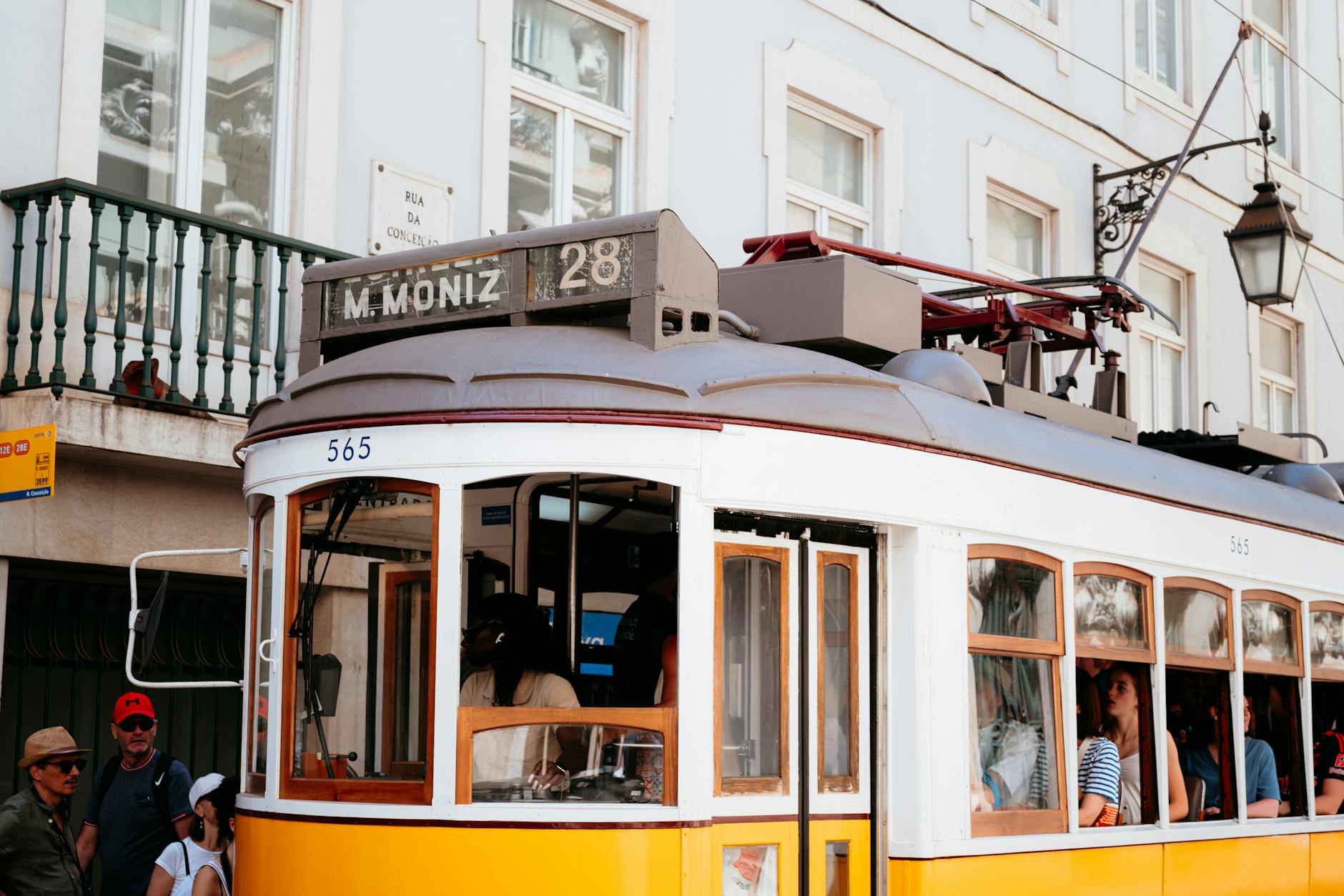
Tram 28E is famous, scenic, and often overcrowded. Treat it as a tourist experience, not a reliable commuter solution. Board early, avoid large bags, and watch for pickpockets. Tram 15E is more useful for Belém, though it can also be crowded.
Funiculars and Santa Justa
Lisbon’s funiculars and Santa Justa lift are useful and iconic, but onboard tickets are expensive relative to a preloaded or day-ticket strategy. Carris’ 2026 table lists onboard funicular fare up to two journeys at €4.30 and Santa Justa up to two journeys at €6.20.
For visitors planning multiple Carris/Metro rides, the 24-hour Carris/Metro ticket is often better value than paying onboard.
Buses
Buses reach neighborhoods the Metro misses. They are useful for:
Buses can be slow in traffic. Real-time apps help, but do not plan tight connections around a bus in central Lisbon during peak hours.
- Belém and Ajuda
- Campo de Ourique
- Graça
- Alcântara
- Estrela
- airport alternatives
- late-night or cross-town movement
- accommodation not near Metro
CP suburban trains from Lisbon
CP suburban trains are essential for day trips and suburbs.
Sintra
The Sintra train is one of Portugal’s most important tourist rail routes. It is usually the sensible way to reach Sintra because driving there is stressful, parking is scarce, and palace-area traffic is difficult. Trains generally use Rossio and other Lisbon-side stations depending on route. After arrival, local buses, taxis, tuk-tuks, or walking connect to palace areas.
Cascais and Estoril
The Cascais line from Cais do Sodré is the classic coastal train. It serves Belém/Algés area connections, Estoril, Cascais, beaches, and waterfront suburbs. It is highly useful for visitors and commuters.
Azambuja, Setúbal, and south-bank connections
The Azambuja corridor serves northern/eastern commuter patterns. South-bank travel can involve ferries, buses, and CP services depending on destination. For tourists, Cacilhas and Cristo Rei are more common than deeper commuter routes.
Ferries
Lisbon’s ferries are both practical transport and scenic experiences. The most visitor-useful route is Cais do Sodré–Cacilhas, which TTSL lists at an average travel time of 10 minutes. The fare table lists the Cacilhas–Cais do Sodré route at €1.60 in 2026 tariff material.
Other routes connect:
Use ferries for:
Ferries can be affected by weather, labor action, and schedules that vary by day type. Check current departures.
- Cais do Sodré–Seixal
- Cais do Sodré–Montijo
- Terreiro do Paço–Barreiro
- Belém–Porto Brandão–Trafaria
- Cacilhas waterfront restaurants
- Cristo Rei access
- river views
- south-bank commutes
- avoiding bridge traffic
Airport access in Lisbon
Metro
Best for most solo travelers and light luggage. The airport Metro station connects directly to the city network, with Aeroporto–Saldanha advertised at about 20 minutes.
Taxi and ride-hailing
Best for:
Airport ride-hailing pickup points can be less obvious than taxi ranks. Follow app instructions carefully.
Bus
Airport buses and local bus routes can be useful for some destinations, but the Metro is simpler for most first-time visitors.
- early/late flights
- heavy luggage
- groups
- children
- reduced mobility
- hotels far from Metro
- final climbs into Alfama, Graça, or Bairro Alto
Walking in Lisbon
Lisbon is walkable but physically demanding. Key advice:
A good Lisbon walking strategy is to start high and walk down. For example, take transit or a taxi to a viewpoint, then walk downhill through old districts.
- Baixa is flat; Alfama, Graça, Bairro Alto, Chiado, and Príncipe Real are not.
- Plan routes by elevation, not just distance.
- Use funiculars, elevators, buses, or taxis uphill.
- Cobblestones are slippery when wet.
- Roller luggage is a poor match for many old streets.
Cycling and GIRA
GIRA is Lisbon’s official shared-bike service. It is best for flat or gently sloped routes, especially along the riverfront. GIRA’s pricing page shows visitor-friendly pass options, including a day pass and short-trip pricing rules.
Good cycling areas:
Poor cycling areas for casual visitors:
- Belém riverfront
- Alcântara waterfront
- Parque das Nações
- parts of Avenidas Novas
- Tagus-side paths
- Alfama
- Graça
- Bairro Alto
- steep cobblestone streets
- tram-track streets
- dense tourist zones
Driving and parking in Lisbon
Driving in Lisbon is rarely worth it. The city has congestion, steep streets, narrow lanes, resident parking, paid parking zones, and low-emission restrictions. Lisbon’s municipal page notes that Zone 1 around Avenida da Liberdade/Baixa restricts circulation to post-2000 vehicles meeting Euro 3 standards.
Use a car only if:
Do not use a car for:
- your hotel has parking
- you are leaving the city immediately
- you need rural access
- you have mobility or family logistics that outweigh parking stress
- Alfama sightseeing
- Baixa/Chiado shopping
- Belém unless parking is confirmed
- Sintra palace day trips in high season
- nightlife in Bairro Alto/Cais do Sodré
Taxis, ride-hailing, and tuk-tuks in Lisbon
Taxis and ride-hailing are highly useful because of hills. They are often the right answer for a short uphill ride after dinner. Tuk-tuks are sightseeing vehicles, not ordinary transport. They can be fun, but agree on price and route before boarding.
For airport trips, use official taxis or app pickup points. If a driver proposes an informal cash price away from the official rank, decline.
Accessibility in Lisbon
Lisbon is challenging for reduced mobility. The Metro is much more accessible than the old tram network, but station access and elevator status matter. Old neighborhoods can be difficult even when transit gets close. The most accessible strategy is to stay near a modern Metro station, use taxis/ride-hailing for old-town areas, and plan fewer but easier movements per day.
Lisbon concerns for locals
Local transportation issues include:
- Metro and bus crowding at peak times.
- Dependence on suburban rail and buses for outer municipalities.
- Tourist crowding on Tram 28E, in Baixa, at Cais do Sodré, and around Belém.
- Parking scarcity and resident-permit pressure.
- Ride-hailing and tuk-tuk congestion in old districts.
- Construction around Metro expansion and public works.
- Accessibility gaps in historic streets and older vehicles.
- Night-service gaps after Metro closure.
Lisbon: best strategies
One-day visitor
Use Metro from airport or station, walk Baixa/Chiado/Alfama carefully, use one or two strategic trams/funiculars if desired, and take a taxi/ride-hailing back uphill or to the airport if luggage is involved.
Two-to-three-day visitor
Buy a Navegante occasional card and use zapping or a 24-hour Carris/Metro ticket on heavy transit days. Use CP train for Sintra or Cascais. Use the ferry to Cacilhas if you want a scenic low-cost river crossing.
Longer stay or resident
Get a personalized Navegante card if staying long enough. Compare Municipal (€30) and Metropolitano (€40) passes. Choose housing based on the actual commute, not neighborhood reputation alone.
With a rental car
Do not pick up the car until leaving Lisbon. If arriving by car, park once and do not move it until departure.
Overview
Porto is smaller and easier to understand than Lisbon, but it is still hilly, crowded in tourist zones, and split between old-city walking and metropolitan rail. The core system is:
- Metro do Porto: light-rail metro, central underground sections, suburban surface branches, airport link.
- STCP buses: essential for neighborhoods, river/coast routes, and areas not covered by Metro.
- UNIR and metropolitan buses: wider regional bus coverage.
- CP urban trains: Aveiro, Braga, Guimarães, Marco de Canaveses, and other regional links.
- Long-distance rail at Campanhã: Lisbon, Coimbra, Braga, Faro connections.
- Historic trams and Funicular dos Guindais: visitor-oriented and limited.
- Taxis/ride-hailing: useful for hills, luggage, late nights, and Gaia/riverfront movement.
- Private cars: useful outside Porto, frustrating inside the center.
What is unique about Porto transportation
Porto’s Metro is easier for visitors than Lisbon’s system because the network has a clear central hub at Trindade and a direct airport line. But it is not a dense subway like Paris or London. It is a light-rail network that runs above ground for much of the metropolitan area. This means it is excellent for airport, suburbs, Matosinhos, Gaia, and major corridors, but not every central street or riverfront district is close to a station.
Porto’s second unique feature is the station split between Campanhã and São Bento. Campanhã is the serious rail hub. São Bento is central and beautiful, but not always the correct station for long-distance travel.
Metro do Porto
Metro do Porto provides official maps and timetables online. The system is the backbone for many visitor trips:
Airport Line E
Porto Airport states that Line E (Purple) connects the airport to the city center and runs every 20 or 30 minutes depending on time and day. For most visitors, this is the best airport transfer.
Line D and Gaia
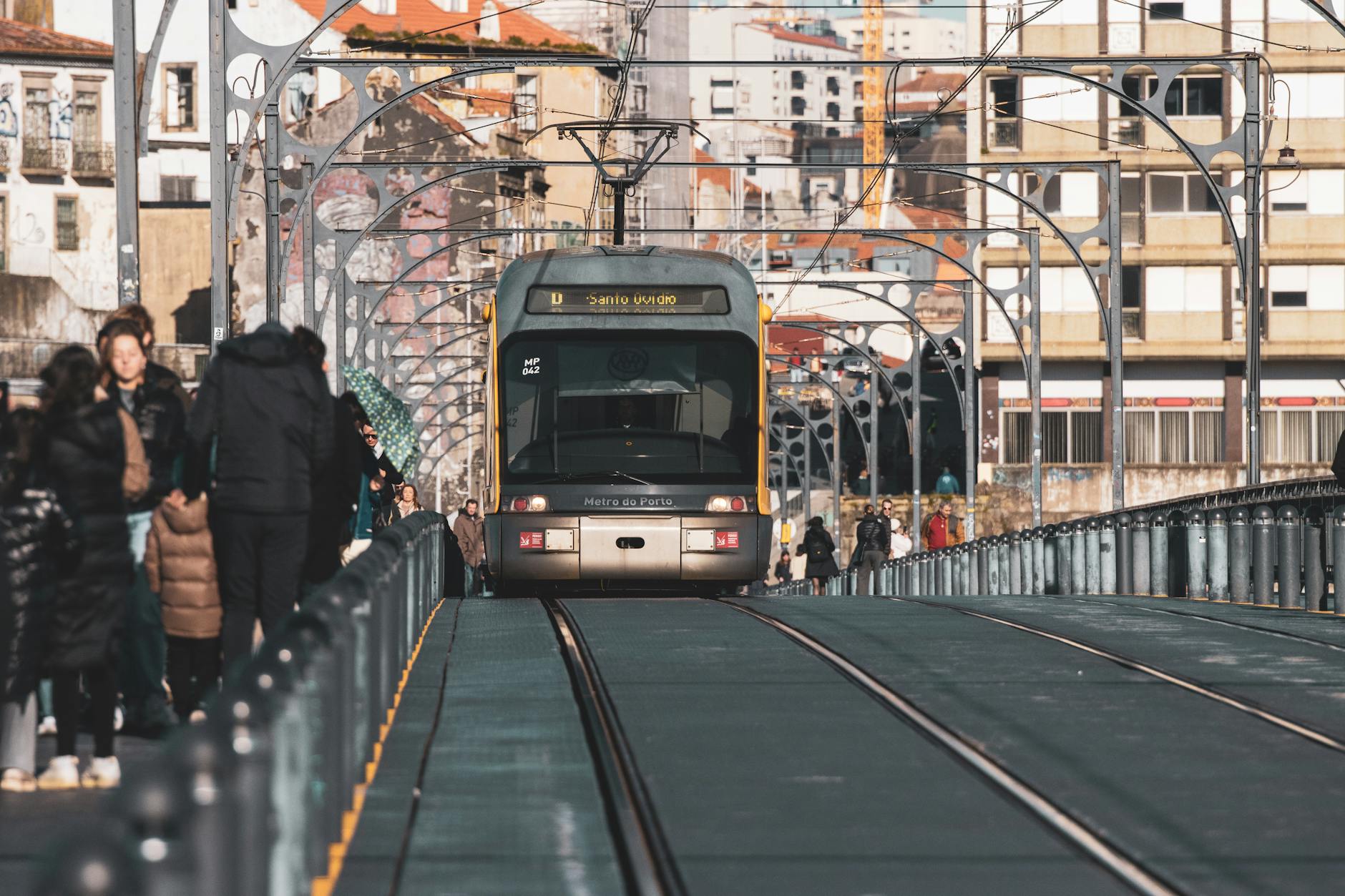
Line D is particularly useful because it crosses the Dom Luís I bridge and connects central Porto with Vila Nova de Gaia. It is one of the city’s best public-transport experiences because the crossing itself is scenic and practical.
Metro limitations
Metro is not always ideal for:
- Airport to Trindade/city center
- Trindade transfers
- Campanhã rail hub
- São Bento/Aliados/Bolhão access
- Vila Nova de Gaia via Line D
- Matosinhos and beach/coastal access via Line A and buses
- Estádio do Dragão
- Hospital São João and university/medical districts
- Ribeira final approaches
- steep riverfront hotels
- Foz do Douro waterfront routes
- some Boavista and western neighborhoods
- late-night travel after service reductions
- places where a bus has a more direct route
Andante tickets and passes
Andante is the essential Porto mobility system. STCP states that Andante is valid on the main public transport systems in the Porto Metropolitan Area and can be used on STCP, Metro do Porto, CP Porto urban trains, and UNIR. The price depends on the route, not the mode or number of boardings.
Occasional users
The Blue Andante card costs €0.60 and is used for occasional trips. The key is to buy the correct zone. A short central trip may need fewer zones than an airport trip. If unsure, use the ticket machine’s route selection or ask staff.
Validation rule
This is the most important Porto rule: validate every time you start a journey and every time you change line or mode. STCP explicitly says validation is mandatory at the start and when changing lines or transport. Andante’s own page gives the same instruction and says validation can be done up to 10 minutes before starting the journey.
Do not skip validation just because you already bought the ticket.
Andante Tour
The Andante Tour is designed for visitors. Andante lists:
It covers the intermodal Andante network but not the Funicular dos Guindais or STCP’s historic tram.
Monthly passes
For residents and long-stay users:
- Andante Tour 1: €7.75, valid for 24 consecutive hours after first validation.
- Andante Tour 3: €16.55, valid for 72 consecutive hours after first validation.
- Andante 3Z: €30.
- Municipal Andante: €30.
- Andante Metropolitano: €40.
- Family versions cap household costs at the equivalent of two passes.
STCP buses and metropolitan buses
Buses fill gaps in the Metro network. They are useful for:
STCP’s tariff page states that onboard tickets can be purchased from the driver in cash, MB WAY, or contactless and cost €2.50 for that trip. Preloaded Andante is usually better value.
A visitor who only uses Metro will miss some of Porto’s best practical routes, especially toward the river and coast.
- Foz do Douro
- riverfront routes
- Boavista connections
- neighborhoods not near Metro
- late-night movement
- short trips where walking would involve steep climbs
CP trains from Porto
CP urban trains make Porto a strong base for day trips. Important destinations include:
Campanhã is the main hub. São Bento is central and visually spectacular, but always verify the departure station. Some journeys start or connect through Campanhã even if São Bento appears in local planning.
- Aveiro: canals, architecture, coastal connections.
- Braga: historic center and Bom Jesus access.
- Guimarães: historic city and castle area.
- Marco de Canaveses/Douro approaches: useful for some regional travel.
Long-distance rail: Porto to Lisbon and beyond
For Lisbon, Coimbra, and long north–south travel, the train is usually the easiest mode. Alfa Pendular and Intercidades connect Porto with Lisbon and other major cities. Book ahead for better prices and seat certainty.
The main mistake is arriving at São Bento for a train that departs from Campanhã, or assuming a connection is automatic. If your ticket says Campanhã, go to Campanhã.
Airport access in Porto
Metro
Line E is best for most travelers. It reaches central transfer points and connects with the rest of the system. Buy the correct Andante zone, validate, and keep the card until exit.
Bus
Porto Airport notes that STCP and Resende provide bus connections from the airport to various areas. Buses can be useful if your destination is better aligned with a bus corridor than Metro.
Taxi and ride-hailing
Use taxis or ride-hailing for early flights, late arrivals, heavy luggage, children, or accommodation on steep streets. The airport is close enough that group car travel can be reasonable.
Walking in Porto
Porto is walkable but steep. The most important slopes are between:
Walking downhill is pleasant; walking uphill with luggage is not. Plan accordingly.
- Ribeira and São Bento/Aliados
- riverfront and Baixa
- Gaia waterfront and upper Gaia/Metro
- Miragaia/Cordoaria/Cedofeita approaches
Historic trams and Funicular dos Guindais
Porto’s historic trams are atmospheric but limited. They are not the main transit system. The Funicular dos Guindais can save a steep climb between Ribeira and the upper bridge/Batalha area, but the Andante Tour does not cover it.
Cycling and scooters in Porto
Porto is less intuitive for casual cycling than flat cities. The riverfront and coastal corridors can be enjoyable, but central hills, cobbles, tracks, traffic, and tourist crowds limit everyday usefulness. Scooters should be used carefully and legally; avoid sidewalks and steep cobbled descents.
Driving and parking in Porto
Driving in Porto is easier than Lisbon in some outer districts but still poor in the historic core. Avoid driving around:
A car is useful for:
Porto has limited-traffic zones in areas such as Cedofeita, Flores, Ribeira, and Santa Catarina, where access may be restricted by time or user type.
- Ribeira
- São Bento
- Aliados/Baixa
- Santa Catarina
- Clérigos/Cordoaria
- Gaia waterfront during peak visitor periods
- Douro Valley
- Peneda-Gerês
- rural northern Portugal
- surf beaches beyond transit
- wineries and small towns
- luggage-heavy road trips
Metrobus and construction
Porto’s transport system is changing. Metrobus began commercial service between Casa da Música and Praça do Império on April 20, 2026. Expansion and street works can alter walking routes, bus stops, and driving access. In Porto, this matters because even small street changes can affect steep walking paths and one-way vehicle access.
Porto concerns for locals
Local concerns include:
- peak crowding on central Metro corridors
- dependence on buses in western and outer neighborhoods
- construction disruption from Metro and Metrobus projects
- traffic and parking pressure in Baixa and Ribeira
- tourist crowding near São Bento, Ribeira, Luís I bridge, and Gaia cellars
- limited late-night frequency
- need for better accessibility in steep streets
- housing location versus commute quality
Porto: best strategies
One-day visitor
Use Metro to reach Trindade, São Bento/Aliados, or Gaia. Walk downhill where possible. Use Line D for the bridge/Gaia experience. Use a taxi/ride-hailing for the return from Ribeira if tired.
Two-to-three-day visitor
Use Andante for Metro and buses; validate every trip and transfer. Consider Andante Tour if you will use several modes and zones. Take CP urban trains for a day trip to Guimarães, Braga, or Aveiro.
Longer stay or resident
Compare Andante 3Z, Municipal, and Metropolitano passes. Choose housing based on access to Metro or frequent bus corridors, not just distance to the center.
With a rental car
Do not drive inside the old center unless your lodging provides parking and access instructions. Pick up a car when leaving for the Douro or northern countryside, and return it before a city stay if possible.
| Category | Lisbon | Porto |
|---|---|---|
| Main local ticket system | Navegante | Andante |
| Best airport link for most visitors | Metro Red Line from airport; about 20 minutes to Saldanha | Metro Line E; every 20–30 minutes depending on time/day |
| Best mode inside central city | Metro + walking + buses/trams/funiculars | Metro + walking + buses |
| Main station confusion | Oriente vs Santa Apolónia vs Rossio vs Cais do Sodré | Campanhã vs São Bento |
| Best day trips by rail | Sintra, Cascais, Estoril | Guimarães, Braga, Aveiro |
| Ferry role | Important Tagus crossings, especially Cais do Sodré–Cacilhas | Mostly tourist river cruises; not central to daily visitor mobility |
| Historic tram role | Iconic but crowded; some lines also useful | Mostly visitor/heritage use |
| Hills | Severe in Alfama, Graça, Bairro Alto, Chiado | Severe between Ribeira/Gaia waterfront and upper city |
| Car usefulness in city | Low | Low to moderate outside center; low in historic core |
| Car usefulness outside city | High for Sintra countryside, Alentejo, beaches beyond rail, rural stays | High for Douro Valley, northern villages, Peneda-Gerês |
| Common tourist mistake | Paying expensive onboard tram/funicular fares or using wrong CP/ferry ticket | Not validating Andante on transfers or using São Bento/Campanhã incorrectly |
| Local resident concern | crowding, suburban reliability, parking, tourism pressure | construction, bus coverage, hills, tourist crowding, parking |
Lisbon and Porto in one trip
Best default: train between Lisbon and Porto, no car inside either city.
Recommended sequence:
- Arrive Lisbon Airport.
- Use Metro or taxi/ride-hailing to hotel depending on luggage.
- Use Navegante/zapping/day passes locally.
- Use CP train from Lisbon to Porto; check whether your train departs Oriente or Santa Apolónia.
- Arrive Porto Campanhã; transfer by Metro, train, taxi, or ride-hailing depending on accommodation.
- Use Andante in Porto.
- Pick up a rental car only if continuing to Douro/northern countryside.
Lisbon with Sintra and Cascais
Best default: CP suburban trains, not car.
- Use train for Sintra.
- Use train for Cascais/Estoril.
- Use local buses/taxis in Sintra for palace access.
- Avoid driving to Pena Palace in high season.
- Use a combined day ticket only if it fits the day’s exact operators; otherwise buy specific CP fares or use zapping where valid.
Porto with Braga, Guimarães, and Aveiro
Best default: CP urban/regional trains.
- Use São Bento if the route and timetable allow; otherwise use Campanhã.
- Check last return trains.
- For Bom Jesus in Braga, combine train with local bus/taxi/ride-hailing.
- Aveiro is easy by train, but beaches beyond Aveiro may need bus, taxi, bike, or car.
Douro Valley from Porto
Best choices depend on style:
Do not combine heavy wine tasting with self-driving.
- Train: scenic, relaxing, limited flexibility.
- Car: best for wineries, viewpoints, rural hotels, and multiple stops.
- Tour/driver: best if wine tasting and not wanting to drive.
- Boat/train combination: scenic but slow and schedule-dependent.
Algarve from Lisbon or Porto
From Lisbon, train or coach can work. From Porto, the trip is longer; flying, train, coach, or car depends on itinerary. A car is useful in the Algarve if staying outside rail-linked towns or visiting multiple beaches.
Portugal road trip
Best sequence:
- Start city stay without car.
- Pick up car at edge/airport/rail-adjacent location when leaving city.
- Confirm toll system.
- Drive rural and coastal sections.
- Return car before entering the next big city.
- Use public transport inside Lisbon or Porto.
High-stakes airport travel
For flights, especially early flights:
: CP — Comboios de Portugal, passenger homepage: https://www.cp.pt/passageiros/en
: CP — Alfa Pendular information, including maximum speed and service description: https://cp.pt/info/en/alfa-pendular-train
: CP — Intercidades information: https://www.cp.pt/info/en/intercidades-train
: CP — Useful information for travel: https://www.cp.pt/info/en/useful-information-travel
: CP — Bikes and scooters: https://www.cp.pt/info/en/w/bikes-and-scooters
: CP — Train journeys for passengers with specific needs: https://www.cp.pt/info/en/w/snp
: CP — Green Rail Pass: https://www.cp.pt/info/en/w/green-rail-pass
: CP — Porto urban trains prices: https://www.cp.pt/info/en/prices-porto-urban-trains
: Rede Expressos — official English homepage: https://rede-expressos.pt/en
: VisitPortugal — Tolls: https://www.visitportugal.com/en/content/tolls
: PT Tolls — official toll information for Portugal: https://www.pttolls.com/en
: Via Verde Visitors — Go Toll and visitor toll payment options: https://visitors.viaverde.pt/en/home
: European Union Your Europe — Road rules and safety in Portugal: https://europa.eu/youreurope/citizens/travel/driving-abroad/road-rules-and-safety/portugal/index_en.htm
: Portuguese government services — exchange a foreign driving licence: https://www2.gov.pt/en/servicos/trocar-carta-de-conducao-estrangeira-por-portuguesa
: Metropolitano de Lisboa — Buy / tickets and fares: https://www.metrolisboa.pt/en/buy/
: Carris — Prices table 2026: https://www.carris.pt/en/discover/prices-table-2026/
: CP — Navegante Pass information: https://www.cp.pt/info/en/w/navegante-pass
: Metropolitano de Lisboa — Timetables and frequency: https://www.metrolisboa.pt/en/travel/timetables-and-frequency/
: Lisbon Airport — Public transportation access: https://www.lisbonairport.pt/en/lis/access-parking/getting-to-and-from-the-airport/public-transportation
: Metropolitano de Lisboa — Network expansion plan: https://www.metrolisboa.pt/company/inform/network-expansion-plan/
: Transtejo/Soflusa — Tarifário: https://ttsl.pt/passageiros/tarifario/
: Transtejo/Soflusa — Cacilhas–Cais do Sodré route: https://ttsl.pt/passageiros/horarios-de-ligacoes-fluviais/ligacao-cacilhas-cais-do-sodre/
: GIRA — Bicicletas de Lisboa official site: https://www.gira-bicicletasdelisboa.pt/en/
: GIRA — Subscriptions and pricing: https://www.gira-bicicletasdelisboa.pt/en/subscriptions-and-pricing/
: Lisbon City Council — Mobility / private vehicle and low-emission information: https://www.lisboa.pt/en/themes/mobility/transport-modes/private-vehicle
: Visit Lisboa — EMEL description: https://www.visitlisboa.com/en/places/emel
: Metro do Porto — Maps and timetables: https://en.metrodoporto.pt/pages/396
: Metro do Porto — Routes: https://en.metrodoporto.pt/pages/391
: Metro do Porto — Fares: https://en.metrodoporto.pt/pages/397
: STCP — Tariff and Andante validation rules: https://stcp.pt/en/travel/tariff
: Andante — Andante Tour: https://andante.pt/en/purchase/andante-tour/
: STCP — Andante passes: https://stcp.pt/en/andante-passes
: Porto Airport — Public transportation access: https://www.portoairport.pt/en/opo/access-parking/getting-to-and-from-the-airport/public-transportation
: The Portugal News / Lusa — Porto Metrobus commercial service began April 20, 2026: https://www.theportugalnews.com/news/2026-04-20/porto-metrobus-is-officially-operating/1009880
: Urban Access Regulations — Porto limited traffic zone: https://urbanaccessregulations.eu/countries-mainmenu-147/portugal/porto-ltz
- Check first Metro times; do not assume service at very early hours.
- Use taxi/ride-hailing/private transfer if the schedule is tight.
- For Lisbon, airport proximity helps but traffic can still be unpredictable.
- For Porto, Metro Line E is good but frequency matters; build a buffer.