A practical analysis for visitors, foreign residents, and local users
Purpose: Explain what a visitor or local resident actually needs to know to move around Mexico: domestic aviation, long-distance buses, urban rail, app taxis, driving, airport access, intercity road logic, regional differences, and the practical decisions that determine whether Mexican transport feels efficient and flexible or exhausting and badly exposed.
Executive summary
Mexico is one of the easiest large countries to misread if the traveler arrives with a single transport stereotype. Some outsiders imagine chaos and unreliability everywhere. Others imagine that app taxis and cheap domestic flights have made the whole country frictionless. Both views are weak. Mexico is not one transport environment. It is a large federal country with major differences between megacity movement, industrial north-south corridors, beach-resort mobility, colonial-city layouts, and long overland routes that look manageable on a map but feel much longer in real use.
The central practical rule is this: Mexico is a country where transport quality changes by layer, not just by place. Domestic aviation is often stronger than visitors expect. Premium intercity buses are far better than many first-time travelers imagine. Urban rail ranges from essential to irrelevant depending on city. App-based taxis are frequently useful, but not as a substitute for thinking through airport exits, late-night arrivals, congestion, and neighborhood-specific friction. Driving can be valuable in certain regional itineraries, but it is not automatically the independent, romantic answer some travelers expect.
The second rule is that Mexico punishes sloppy sequencing more than careful travelers expect. Distance, traffic, heat, altitude, terminal logistics, toll-road choices, and airport-to-hotel transitions can all take a trip from elegant to draining. The strongest itineraries are usually the ones that reduce transfer count, avoid gratuitous road time, and distinguish between places where public transport is part of the solution and places where pre-arranged car service is the cleaner answer.
For visitors, the strongest national defaults are:
For residents and longer-stay users, the picture shifts. The big issues become daily congestion, commute time, road safety habits, local bus quality, airport dependence on longer internal trips, and the uneven line between cities with real urban-transit identity and cities where the car still shapes everyday life.
The central recommendation is simple: plan Mexico by corridor and city type, not by generic country impression. Mexico City is not Cancun. Cancun is not Oaxaca. Oaxaca is not Monterrey. The right transport strategy changes sharply depending on whether the trip is urban, resort, regional, business-led, or colonial-city cultural travel.
- use domestic flights without guilt when the country’s size makes overland movement wasteful
- use premium long-distance buses where they are structurally good and avoid romanticizing cheaper, slower options
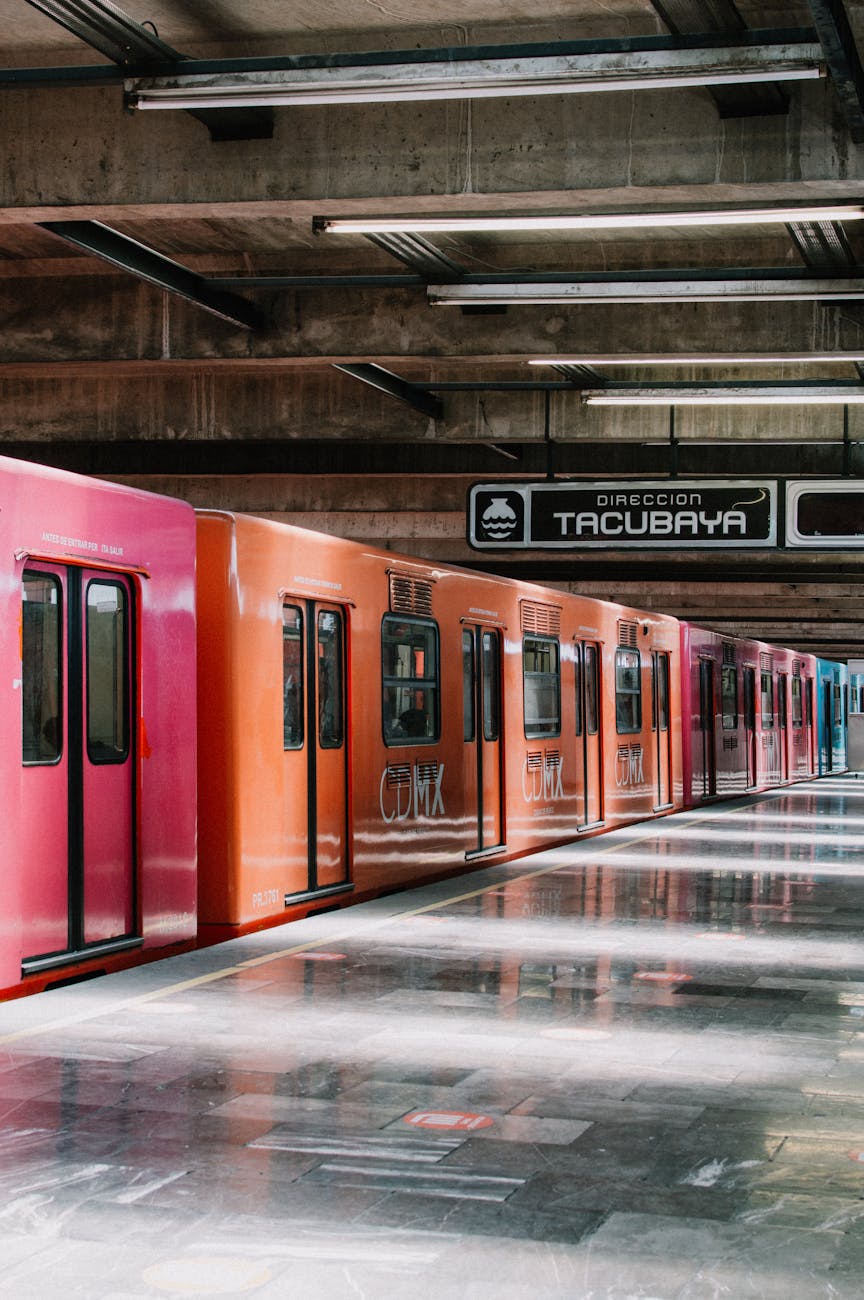
- use urban rail selectively, above all in Mexico City where it matters most
- use app taxis and hotel-arranged cars deliberately, especially for airport and late-night movement
- use rental cars only where the route truly benefits from them
1. How the national system actually works
Mexico works best when understood as several overlapping transport systems rather than one national model. The country has strong internal aviation, a serious premium bus culture, heavily road-based regional movement, important toll-road corridors, and only limited intercity passenger rail relevance for most travelers.
The main layers are:
This is why Mexico can feel surprisingly efficient in one part of a trip and slow or badly exposed in another. The system is not uniformly weak. It is uneven, layered, and very sensitive to context.
- domestic aviation for long-distance national movement between major regions
- long-distance coaches for many intercity routes, especially when airports do not improve the trip enough
- urban metro, BRT, and local transit in selected major cities
- roads and toll roads for regional flexibility and resort or smaller-city movement
- app taxis, taxis, and private transfers for the critical first and last mile
2. The first transport decisions every traveler should make
The first Mexican transport question is not “should I rent a car?” It is “what kind of Mexican trip am I actually taking?”
If the trip is mainly Mexico City, urban rail and app taxis matter. If it is a Riviera Maya resort trip, airport transfer logic and controlled local movement matter more than public transport. If it is Oaxaca or Merida, walkability, airport access, and selective car use matter more than a grand national system. If it is a multicity national trip, the real question is how much time should be protected through flying rather than spent proving endurance.
The key distinctions are:
Mexico rewards travelers who simplify their routing and choose the strongest mode for each segment rather than trying to impose one ideology across the whole country.
2.1 The core products that matter
| Product | What it is best for | Main caution |
|---|---|---|
| Domestic flights | Long national jumps and time-sensitive itineraries | Airport transfer friction and delays can blunt the advantage |
| Premium long-distance buses | Medium and long overland routes on strong corridors | Not all operators, terminals, or departure times feel equally comfortable |
| Metro / BRT systems | Large-city movement where rail or separated bus corridors exist | Crowding, line complexity, and station logistics matter |
| App taxis / private cars | Airport arrivals, night movement, and hotel-to-destination transfers | Pickup confusion and neighborhood traffic can still degrade the trip |
| Rental car | Regional circuits, Yucatan exploration, selective independence | Parking, driving style, night roads, and urban stress change the equation |
| Toll roads | Faster, cleaner intercity road movement | Costs accumulate and route planning still matters |
2.2 The practical hierarchy
If the trip crosses major regions, start by assuming air is part of the answer. If the route is within a manageable overland corridor, premium buses often outperform naive driving assumptions. If the city is huge and congested, solve for the first and last mile, not just the line on the map. If the trip is resort or heritage-town based, think first about airport transfer cleanliness and local movement after dark.
- megacity versus secondary city
- urban trip versus beach-resort corridor
- domestic business travel versus leisure travel
- one-base trip versus multi-stop national circuit
- daylight movement versus late-night arrival
3. Domestic aviation and why it matters so much
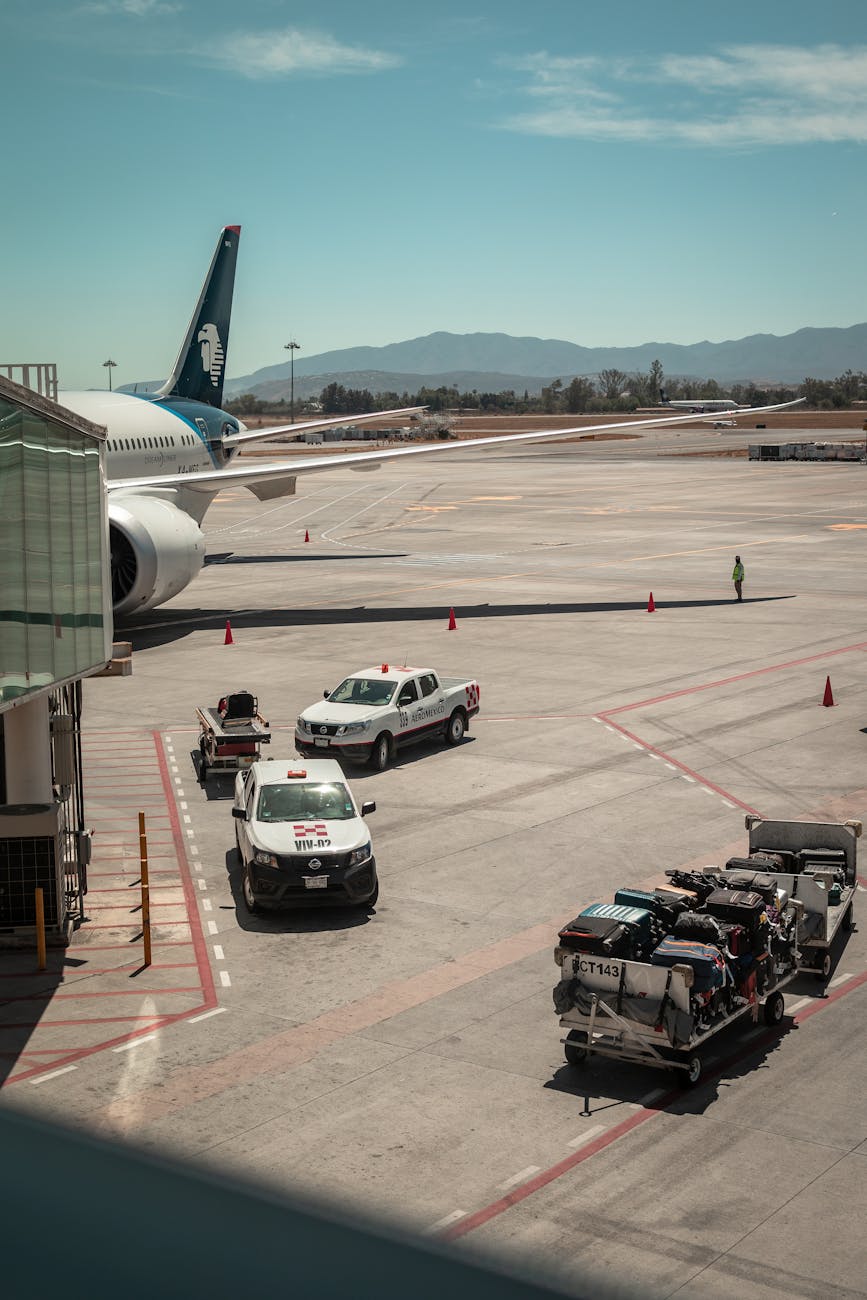
Mexico is too large to treat internal flying as a luxury extra. On many real itineraries it is the correct national backbone. Travelers who insist on overland purism often spend a disproportionate share of the trip inside terminals, on buses, or in long road transfers that add little value.
Domestic aviation matters especially for:
The caution is not that flying is wrong. It is that air travel in Mexico still requires disciplined airport planning. A short flight does not cancel a bad airport-to-hotel handoff.
- Mexico City to Yucatan routings
- central Mexico to the north
- combining beach and inland cultural destinations in limited time
- business travel where same-day productivity matters
- family travel where transfer fatigue multiplies quickly
4. Long-distance buses: one of Mexico’s underrated strengths
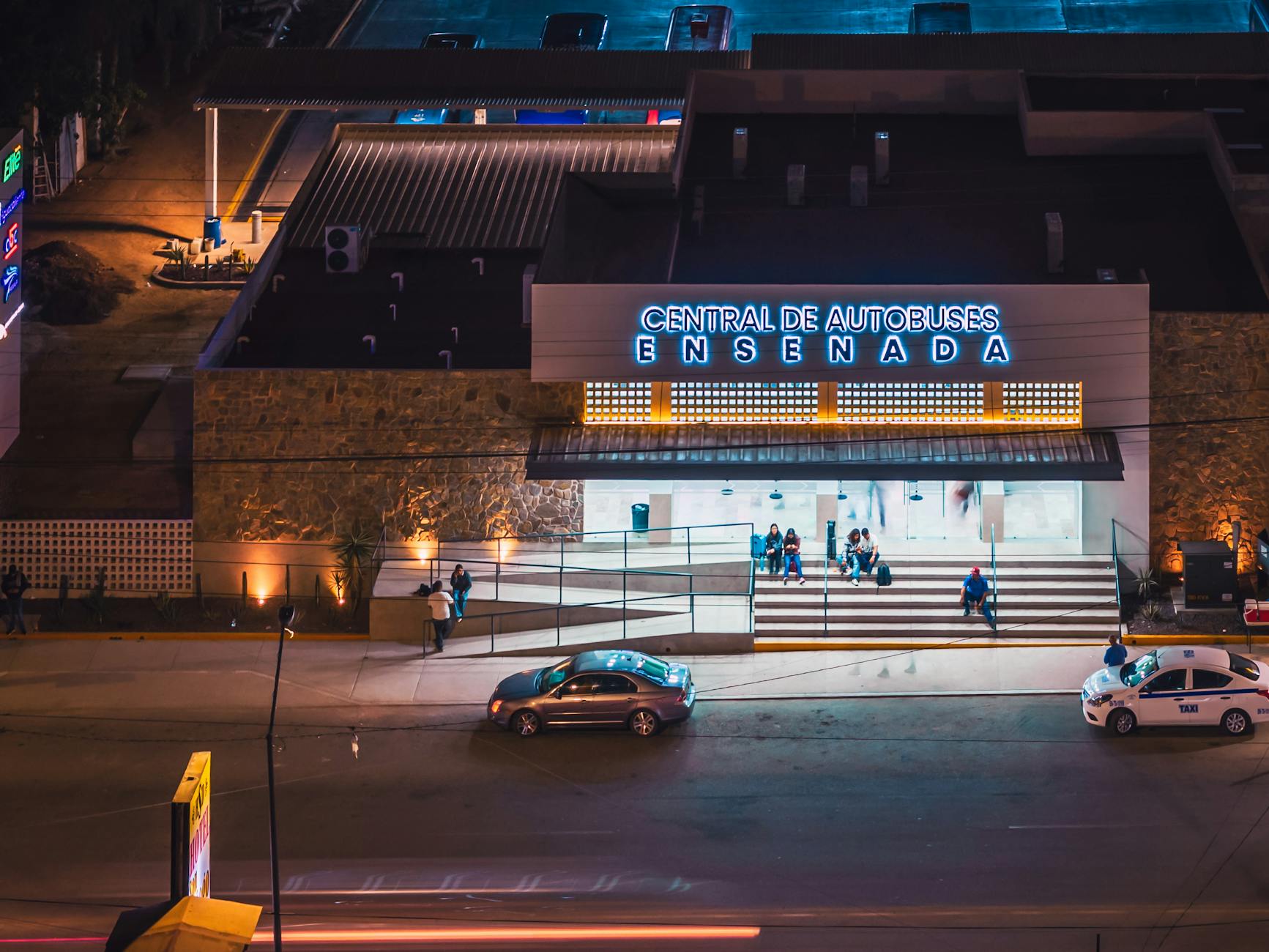
Mexico’s premium intercity buses are one of the country’s most important transport advantages. Many foreign travelers arrive assuming long-distance buses are a fallback for people who cannot afford to fly. In practice, on certain corridors they are comfortable, rational, and often superior to piecing together car rental, fuel, tolls, and unfamiliar road stress.
The useful mindset is:
Mexico’s bus culture is not a rough substitute for proper transport. In many places, it is proper transport.
- distinguish premium services from lower-tier assumptions
- think corridor by corridor, not nostalgically
- respect terminal location and arrival time
- remember that an excellent bus is still only as good as the transfer on either end
5. Urban transit: where it is essential and where it is secondary
Urban public transport in Mexico is important, but its role changes sharply by city. Mexico City has a true urban-transit identity. Guadalajara has meaningful rail and BRT structure. Monterrey has more limited but still useful urban rail. Other destinations depend far more on cars, taxis, walking, and carefully chosen bases.
The main visitor mistake is exporting one city’s logic into another. A traveler who treats all of Mexico as a metro-and-bus country will make poor decisions in resort zones and smaller heritage cities. A traveler who ignores transit altogether will also overpay and overexpose themselves in the capital.
6. App taxis, street taxis, and private cars
For many visitors, the most important transport layer in Mexico is neither air nor rail but controlled point-to-point movement. App taxis and pre-arranged private drivers often solve the parts of the trip where stress actually accumulates: airport exits, unfamiliar neighborhoods, restaurant returns after dark, and hotel-to-meeting timing.
The main practical rule is simple: use controlled car movement where uncertainty has the highest cost.
That especially applies to:
This does not mean every taxi choice is equally good. It means the traveler should deliberately choose the cleanest available transport layer for the moment that actually matters.
- first arrival in a city
- late-night returns
- luggage-heavy hotel transfers
- places where the public network is weak or irrelevant
- business travel where reliability matters more than cost trimming
7. Driving, toll roads, and when a car is or is not worth it
Driving in Mexico can be highly useful, but only on the right route. In some regions it offers meaningful freedom and time savings. In others it produces parking headaches, fatigue, exposure to poor road habits, and city-entry stress that outweigh the benefits.
Cars are strongest for:
Cars are weaker for:
The right question is not “can I drive in Mexico?” It is “does this route genuinely improve with a car?”
- Yucatan Peninsula exploration away from a single resort base
- selective day trips from cities with manageable road geometry
- itineraries with archaeological sites, cenotes, beaches, or dispersed countryside stops
- longer stays where fixed schedules become constraining
- Mexico City
- short urban business trips
- late-night airport arrivals
- colonial-center stays where parking is awkward and streets are tight
- travelers uncomfortable with assertive driving cultures or highway judgment calls
8. Airports, terminals, and transfer discipline
The practical burden of Mexican transport often sits in transitions rather than the main segment. An easy flight can be followed by a weak airport exit. A comfortable bus can still arrive at an inconvenient terminal. A simple route can unravel if the traveler lands late, lacks a pickup plan, or treats all terminals as interchangeable.
Mexico rewards travelers who decide the following in advance:
This is where many “Mexico is hard” stories actually begin.
- exact airport or bus terminal
- exact hotel transfer method
- whether arrival is daylight or after dark
- whether the neighborhood supports walking on arrival
- whether the next segment begins from the same side of the city
9. Accessibility, luggage, and family movement
Mexico is highly variable on accessibility. Major airports, newer terminals, and some modern transit corridors can function reasonably well. Historic centers, older stations, uneven sidewalks, crowded transfer points, and beach destinations with fragmented local transport can be much less graceful.
The main practical constraints are:
Mexico often becomes more comfortable when the traveler pays for cleaner transfers rather than trying to save small sums at the hardest moments.
- stairs and broken pavement in older city areas
- crowding in major transit systems
- heat and weather exposure
- terminal complexity with children or heavy luggage
- the gap between a transport hub and the actual hotel entrance
10. What Mexico gets wrong
Mexico’s transport weaknesses are usually not the absence of options. They are inconsistency, congestion, and the gap between route theory and route reality.
The recurring issues are:
Mexico is often more functional than foreign stereotypes suggest. It is also less forgiving than casual, underplanned travelers expect.
- major urban traffic that ruins optimistic planning
- uneven local bus quality
- late-night transfer friction
- weak interchange between otherwise decent systems
- terminal and curbside stress
- the temptation to overbuild itineraries in a very large country
11. National quick-decision guide
| Situation | Best default choice | Why |
|---|---|---|
| Multi-region Mexico trip | Domestic flights plus controlled transfers | The country is too large for casual overland chaining |
| Mexico City urban stay | Metro, BRT, walking, and app taxis | Public transport is structurally useful, cars are not always superior |
| Central Mexico intercity route | Compare premium bus and air honestly | Bus quality can be high enough to beat forced flying |
| Riviera Maya stay | Pre-arranged transfer plus selective taxi/car use | The airport-hotel handoff matters more than ideology |
| Colonial-city leisure trip | Walkable base plus selective car or taxi | Local position matters more than system breadth |
| Late-night arrival anywhere | Controlled pickup | Reduces confusion at the most fragile point |
| Short business trip | Fly, minimize transfers, avoid speculative driving | Reliability matters more than transport romance |
| Yucatan regional exploration | Rental car or well-planned private transport | Flexibility genuinely helps there |
Mexico City
1. System character
Mexico City is the country’s most consequential urban transport environment. It is enormous, crowded, and often exhausting by road, but it also has the deepest public-transport toolkit in Mexico.
2. What matters most
The essential fact is that distance and congestion define the city more than abstract neighborhood labels. A route that looks short on a map can absorb serious time if it depends on road movement at the wrong hour.
3. Main modes
| Mode | Use |
|---|---|
| Metro | Core mass transit backbone |
| Metrobus / BRT | Important corridor movement above street congestion |
| App taxis | Controlled first and last mile, especially at night |
| Walking | Strong only within well-chosen neighborhoods |
| Taxis / private cars | Useful for direct transfers but vulnerable to traffic |
| Rental car | Usually weak for visitors |
4. Local concerns
Mexico City rewards staying close to where the traveler actually spends time. The biggest mistake is assuming a prestigious address automatically solves movement across the city.
5. Mexico City visitor strategy
Use the rail and BRT backbone where it is clearly useful, pair it with app taxis for precise transfers, and build the trip around a disciplined base rather than cross-city ambition.
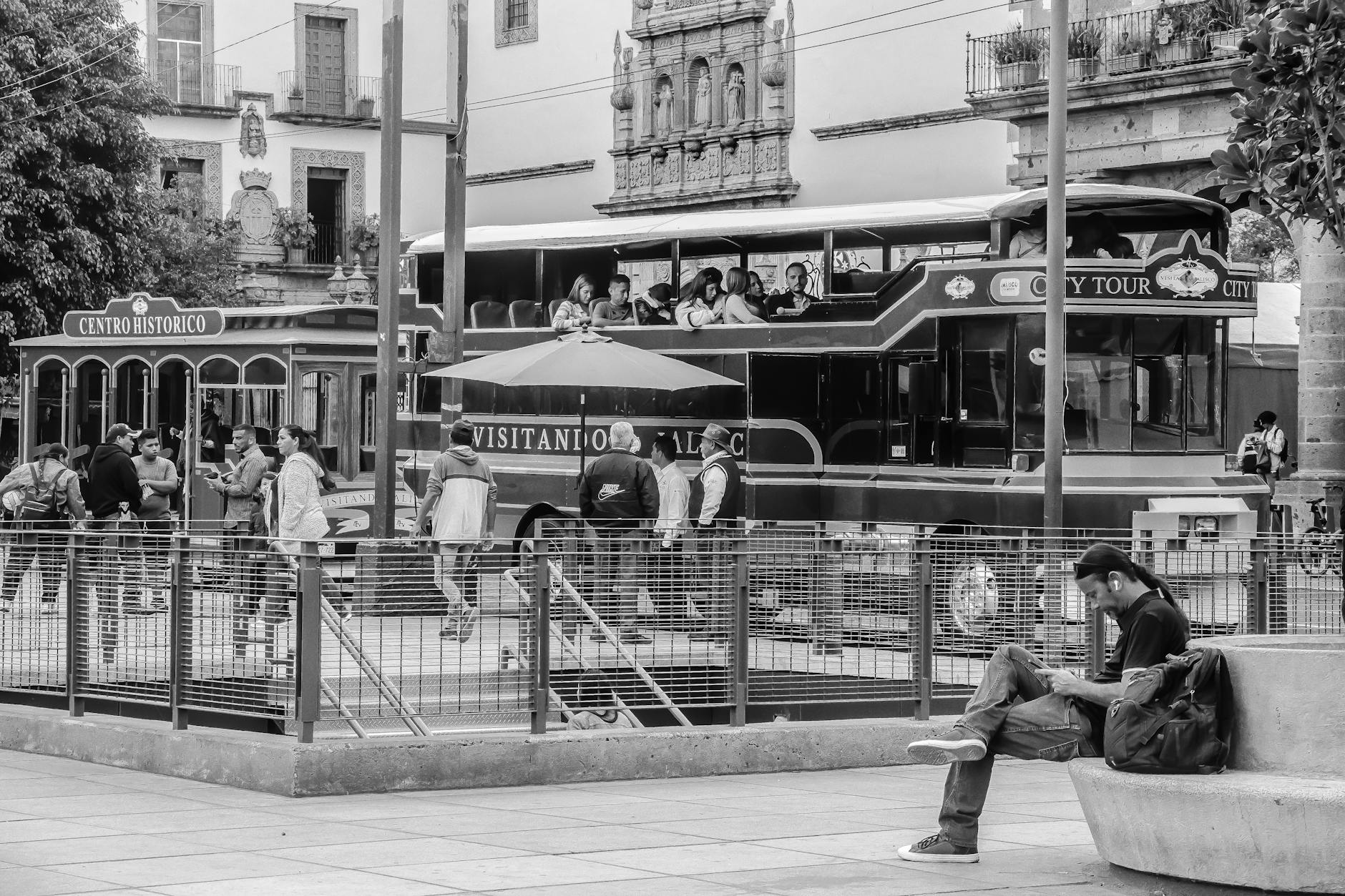
Guadalajara
1. System character
Guadalajara is a large, real city with enough structured transit to matter, but not enough to remove the importance of traffic, district choice, and car-based movement.
2. What matters most
The city feels easier than Mexico City, but that can produce overconfidence. The practical question is whether the traveler is staying in a district that reduces dependence on long road crossings.
3. Main modes
| Mode | Use |
|---|---|
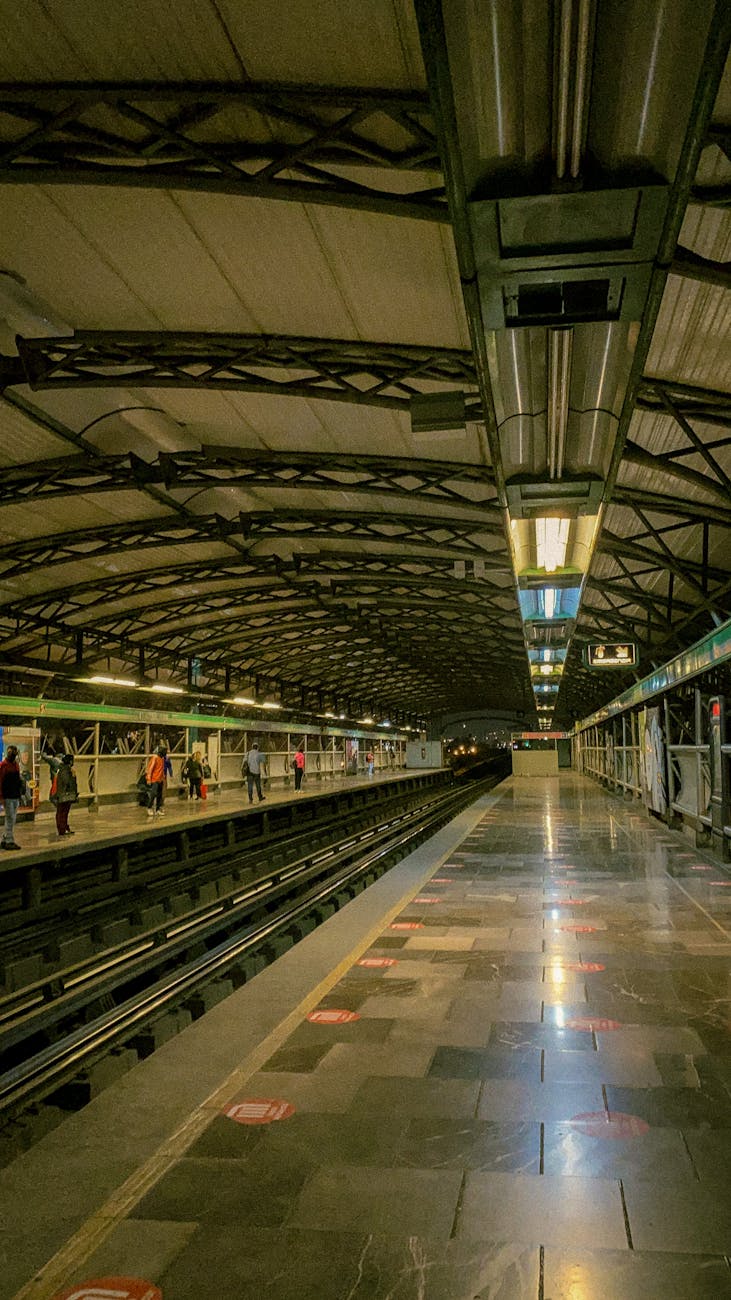
| Light rail / metro lines | Useful on specific urban axes |
| BRT and buses | Meaningful, but route knowledge matters |
| App taxis | Often the cleanest visitor tool |
| Walking | Good in selected districts only |
| Rental car | Usually secondary unless the trip extends outward |
4. Local concerns
Guadalajara is manageable when the itinerary is clustered. It degrades when visitors assume they can bounce between districts without friction.
5. Guadalajara visitor strategy
Choose a base with intention, use app taxis freely, and treat transit as a support tool rather than the whole solution.
Monterrey
1. System character
Monterrey is a business-forward, road-shaped city where movement is heavily influenced by highways, modern districts, and the logic of the car.
2. What matters most
The key fact is that Monterrey often rewards direct vehicle movement more than transit idealism. This is especially true for business travelers moving between office, hotel, and airport.
3. Main modes
| Mode | Use |
|---|---|
| Metro / urban rail | Limited but useful on certain corridors |
| App taxis / private cars | Strong default for many visitors |
| Walking | Selective and district-dependent |
| Rental car | Sometimes useful, especially beyond a tight urban schedule |
| Bus | Functional but rarely the main visitor strength |
4. Local concerns
Heat, road geometry, and dispersed urban form make Monterrey less forgiving on foot than some outsiders expect.
5. Monterrey visitor strategy
Think in terms of clean car transfers, not transit theater, unless the route very clearly favors rail.
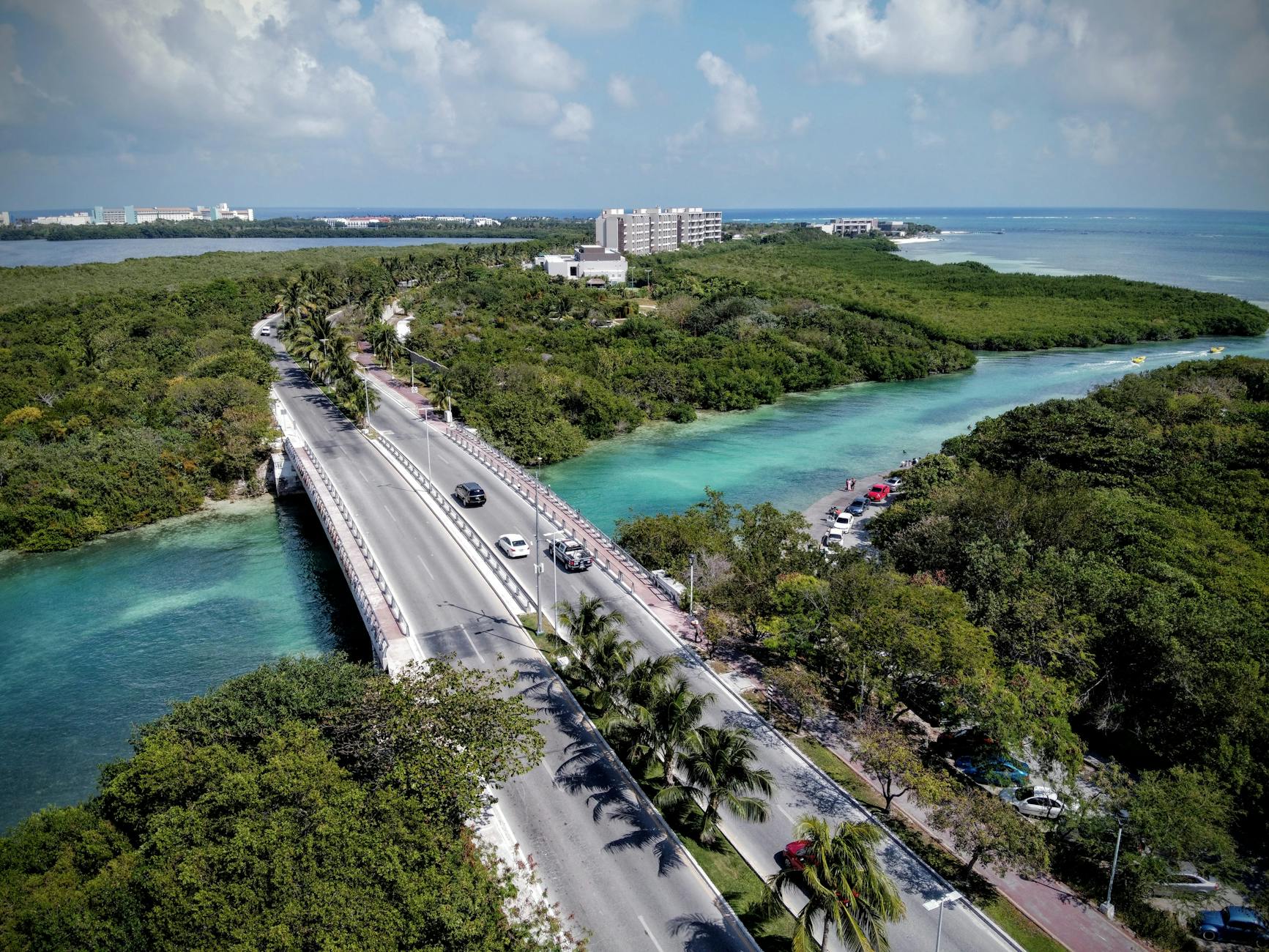
Cancun
1. System character
Cancun is not mainly a transit city. It is an airport-and-corridor city shaped by resort geography, hotel-zone movement, excursions, and the quality of the arrival transfer.
2. What matters most
The first real transport decision is how the traveler gets from the airport to the hotel and whether the trip stays within a controlled resort pattern or expands into regional exploration.
3. Main modes
| Mode | Use |
|---|---|
| Pre-arranged transfer | Best arrival and departure control |
| App taxi / taxi | Useful in the city, variable in resort-adjacent logic |
| Bus | Relevant on some local corridors but not the main luxury answer |
| Rental car | Useful for broader Riviera Maya plans |
| Tour transport | Common for structured excursions |
4. Local concerns
The difference between a smooth Cancun trip and an irritating one often comes down to transfer quality, traffic in the hotel zone, and whether the hotel location supports the actual trip shape.
5. Cancun visitor strategy
Solve the airport transfer first, use controlled point-to-point movement, and rent a car only if the itinerary genuinely extends beyond a resort-centered stay.
Oaxaca
1. System character
Oaxaca is a smaller, more intimate transport environment where walkability, selective taxis, airport access, and the geometry of the historic center matter more than any grand transit system.
2. What matters most
The city rewards travelers who stay near the right part of the center and avoid creating unnecessary transfer burden. The practical challenge is less system complexity than street pattern, luggage friction, and regional trip planning.
3. Main modes
| Mode | Use |
|---|---|
| Walking | Strong in the center with the right base |
| Taxi / app taxi | Important for airport and outlying movement |
| Rental car | Helpful only for broader regional exploration |
| Bus / shuttle | Situational for onward regional travel |
4. Local concerns
Historic-center charm does not mean every street is easy with luggage, cars, or late arrivals. Base quality matters heavily.
5. Oaxaca visitor strategy
Stay central but not blindly, walk when the area supports it, and use controlled vehicle movement for arrival, departure, and deeper regional excursions.
Merida
1. System character
Merida is calmer and more legible than Mexico’s biggest cities, but it still sits inside a wider Yucatan transport logic where heat, dispersed sites, and regional day trips affect how useful different modes really are.
2. What matters most
The key distinction is whether the traveler is staying inside a city-first Merida trip or using the city as a base for haciendas, cenotes, archaeological sites, and coastward movement.
3. Main modes
| Mode | Use |
|---|---|
| Walking | Good in the center with realistic heat expectations |
| App taxi / taxi | Clean for city movement and airport transfers |
| Rental car | Strong for Yucatan exploration |
| Bus | Useful on certain regional routes |
| Private driver / tour transport | Valuable for comfort-first day trips |
4. Local concerns
Merida can feel easy if the traveler respects heat and route length. It becomes draining when people assume every outing should be improvised at midday.
5. Merida visitor strategy
Use the city center on foot when conditions are right, but treat cars and private transport as serious tools once the trip broadens into the region.
2. Where do visitors most often make the wrong transport choice?
The most common mistake is in Mexico City, where visitors rely too heavily on road movement and underestimate how destructive traffic can be. The second common mistake is in Cancun, where travelers treat airport transfer planning as a detail when it is actually the first major transport decision of the trip.
3. Where is a rental car most justified?
Among the cities in this paper, Merida and Cancun most often justify a car when the trip includes serious regional exploration. In Mexico City and usually Guadalajara, the case is much weaker. In Oaxaca, it depends on whether the trip is city-focused or built around deeper regional movement.
4. When are buses better than flights in Mexico?
Buses are better when the corridor is strong, the terminals are workable, and the time difference versus flying is not dramatic enough to justify airport burden. They are especially attractive on routes where premium bus quality is high and the traveler would otherwise spend a large share of the day navigating check-in, security, transfer, and airport-to-city friction.
5. Final advice
Mexico rewards travelers who stop looking for a single “Mexican transport answer.” The country is too large, too varied, and too layered for that. The correct approach is to solve each movement problem in its actual context: fly when geography demands it, trust premium buses where they are strong, use urban transit where the city truly supports it, pay for clean transfers where uncertainty is expensive, and rent cars only where flexibility genuinely improves the trip.