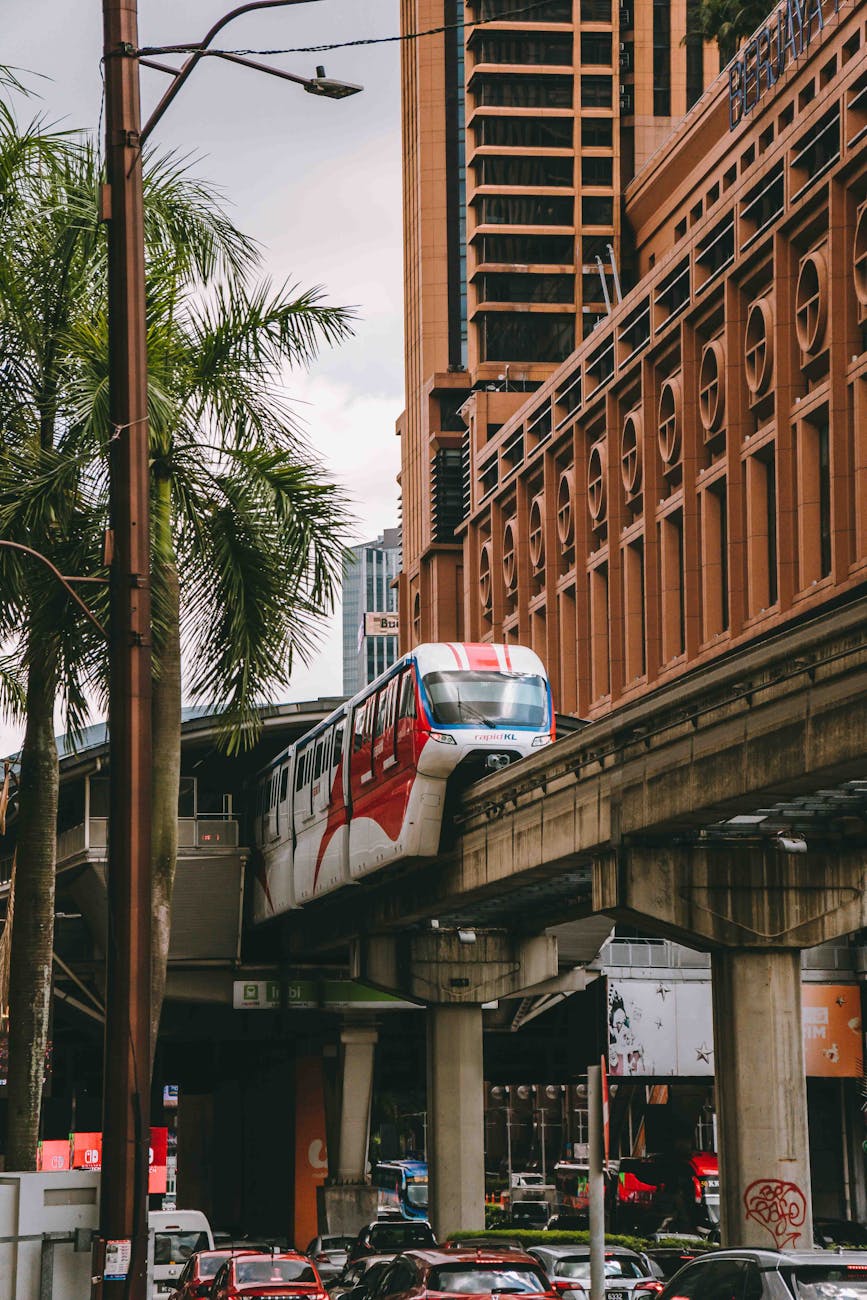
A practical analysis for visitors, foreign residents, and local users
Purpose: Explain what a visitor or local resident actually needs to know to move around Malaysia: domestic aviation, intercity rail, long-distance buses, e-hailing, urban rail, island access, driving, airport transfers, and the practical decisions that determine whether Malaysian transport feels orderly and efficient or fragmented and overheated.
Executive summary
Malaysia is one of the easiest countries in Asia to misjudge if the traveler arrives with a single regional stereotype. Some expect Singapore-style transport coherence everywhere. Others expect a looser, improvised Southeast Asian mobility environment in which every journey is negotiated piece by piece. The truth is more useful than either caricature. Malaysia has several genuinely strong transport layers: domestic aviation, major tolled highways, selected urban rail networks, decent airport infrastructure, and a practical long-distance bus culture. But it is not a country where one mode cleanly solves the whole trip.
The central practical rule is this: Malaysia is a country where transport quality depends on whether you are moving through the capital region, the peninsular overland network, or East Malaysia. Kuala Lumpur and its surrounding urban belt have the deepest structured transport logic. Peninsular intercity travel often works well by bus, car, or selective rail. Sabah and Sarawak change the equation sharply, making aviation much more central than many first-time visitors expect. Islands and resort areas introduce yet another layer where ferries, short flights, airport transfers, and selective taxi use matter more than any grand national system.
The second rule is that Malaysia rewards mode realism. Visitors who choose transport based on what sounds elegant rather than what actually fits the route usually create avoidable friction. Rail is useful, but not universally dominant. Buses are often better than outsiders assume. Driving can be excellent on the right itinerary, but weaker inside dense urban areas or on short stays. E-hailing is one of the country’s most practical everyday tools, but it is still subject to airport pickup rules, weather, and traffic.
For visitors, the strongest national defaults are:
For residents and longer-stay users, the core issues shift toward congestion, commute time, dependence on cars outside major urban rail zones, airport importance for Borneo movement, and the divide between places with meaningful public-transport identity and places where private vehicles still shape daily life.
The central recommendation is simple: plan Malaysia by region and trip shape, not by national label. Kuala Lumpur is not Penang. Penang is not Langkawi. Langkawi is not Kota Kinabalu. Kota Kinabalu is not Kuching. The best transport strategy changes sharply depending on whether the trip is capital-centered, colonial-and-food oriented, beach-and-island based, or stretched across peninsular and East Malaysian geography.
- use e-hailing and private car transfers deliberately for first and last mile movement
- use domestic flights without hesitation when East Malaysia or island routings are involved
- use long-distance buses seriously on peninsular corridors where they are structurally good
- use urban rail selectively and confidently in Greater Kuala Lumpur
- use rental cars only where they genuinely improve the trip
1. How the national system actually works
Malaysia works best when understood as a layered, region-sensitive transport country. Peninsular Malaysia has the strongest overland logic, with expressways, buses, and selected rail corridors carrying a large share of practical movement. Greater Kuala Lumpur has the deepest city-scale public transport. East Malaysia changes the map, making air travel a structural necessity rather than an optional upgrade.
The main layers are:
This is why Malaysia can feel pleasantly efficient on one trip and more fragmented on another. The infrastructure is not weak in general. It is unevenly distributed by geography and city type.
- domestic aviation for East Malaysia, islands, and longer national jumps
- intercity buses for many peninsular routes
- urban rail and airport rail in Greater Kuala Lumpur
- highways and rental cars for selected regional itineraries
- e-hailing, taxis, and private transfers for everyday precision movement
- ferries and boats for islands and certain coastal approaches
2. The first transport decisions every traveler should make
The first Malaysian transport question is not “should I take the train?” It is “what kind of Malaysian trip is this?”
If the trip is mostly Kuala Lumpur, urban rail plus e-hailing will solve much of it. If the trip is Peninsular Malaysia city-to-city, buses and highways become central. If Borneo is involved, internal flights usually become structurally necessary. If the trip is beach-and-island based, airport and ferry timing matter more than public transport ideology.
The key distinctions are:
Malaysia usually rewards travelers who choose fewer bases, cleaner transfers, and mode-specific realism rather than treating all of the country as one compact, connected whole.
2.1 The core products that matter
| Product | What it is best for | Main caution |
|---|---|---|
| Domestic flights | East Malaysia, islands, and long national jumps | Airport timing and baggage rules still matter |
| Express buses | Peninsular intercity travel | Terminal location and road traffic shape the experience |
| Urban rail | Greater Kuala Lumpur and selected airport access | Outside the capital region, rail relevance drops quickly |
| E-hailing | Airport transfers, hotel-to-destination movement, everyday city use | Surge pricing, pickup points, and weather can add friction |
| Rental car | Regional flexibility, island exploration, some peninsular routes | City traffic, parking, and left-side driving change the equation |
| Ferries / boats | Island access and coastal movement | Weather, schedule discipline, and last-mile coordination matter |
2.2 The practical hierarchy
If East Malaysia or islands are involved, assume aviation is part of the answer. If the route is inside Peninsular Malaysia, compare buses, driving, and rail honestly rather than assuming the train must be best. If the city is Kuala Lumpur, use the rail system where it is strong and car movement where it is precise. If the destination is resort-led or heritage-led, start with airport and arrival logic rather than abstract national transport theory.
- Greater Kuala Lumpur versus everywhere else
- Peninsular overland route versus East Malaysia
- business trip versus leisure circuit
- island transfer versus city-center movement
- short stay versus multi-stop route
3. Domestic aviation and why it matters
Malaysia is not a country where internal flights should be treated as a guilty shortcut. They are often the correct structural answer, especially when crossing the South China Sea between peninsula and Borneo or when reducing long, transfer-heavy surface movement.
Domestic aviation matters especially for:
The practical caution is straightforward: a short flight does not erase a weak arrival plan. Airport-to-hotel movement, baggage handling, and exact terminal expectations still determine whether the trip feels smooth.
- Kuala Lumpur to Kota Kinabalu
- Kuala Lumpur to Kuching
- national itineraries that combine peninsula and Borneo
- short high-value trips
- island-led itineraries where the air segment simplifies the whole route
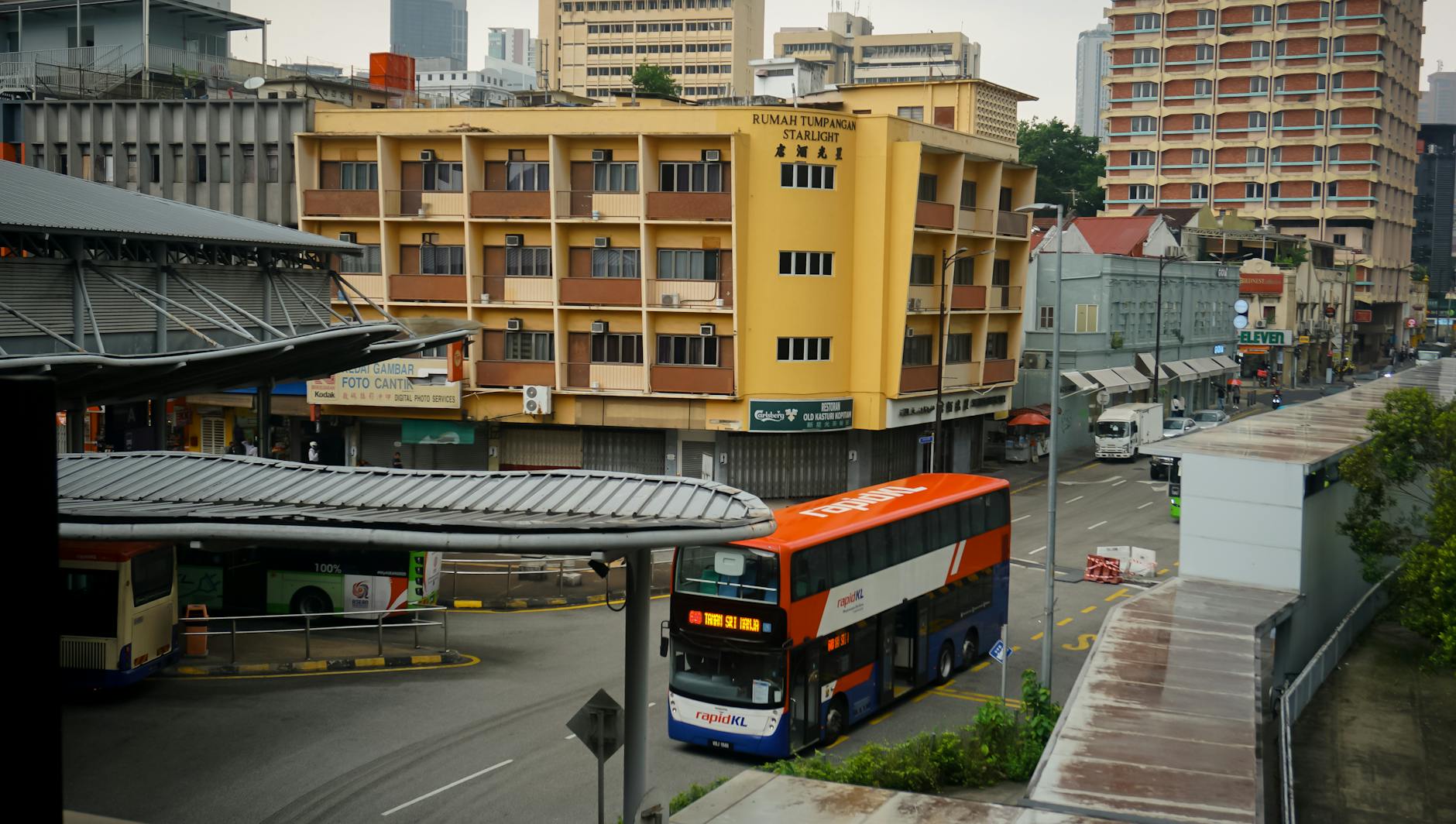
4. Intercity buses: one of Malaysia’s most useful travel tools
Malaysia’s long-distance bus network is often much better than first-time foreign visitors expect. On peninsular corridors, express coaches can be rational, comfortable, and highly competitive with driving or rail once the full door-to-door journey is considered.
The useful mindset is:
In many real itineraries, buses are not the compromise. They are the practical answer.
- treat buses as serious transport, not as a fallback
- choose operator, departure point, and arrival point carefully
- remember that road traffic still matters
- assess the terminal-to-hotel transfer before you commit
5. Rail: useful, but not the universal answer
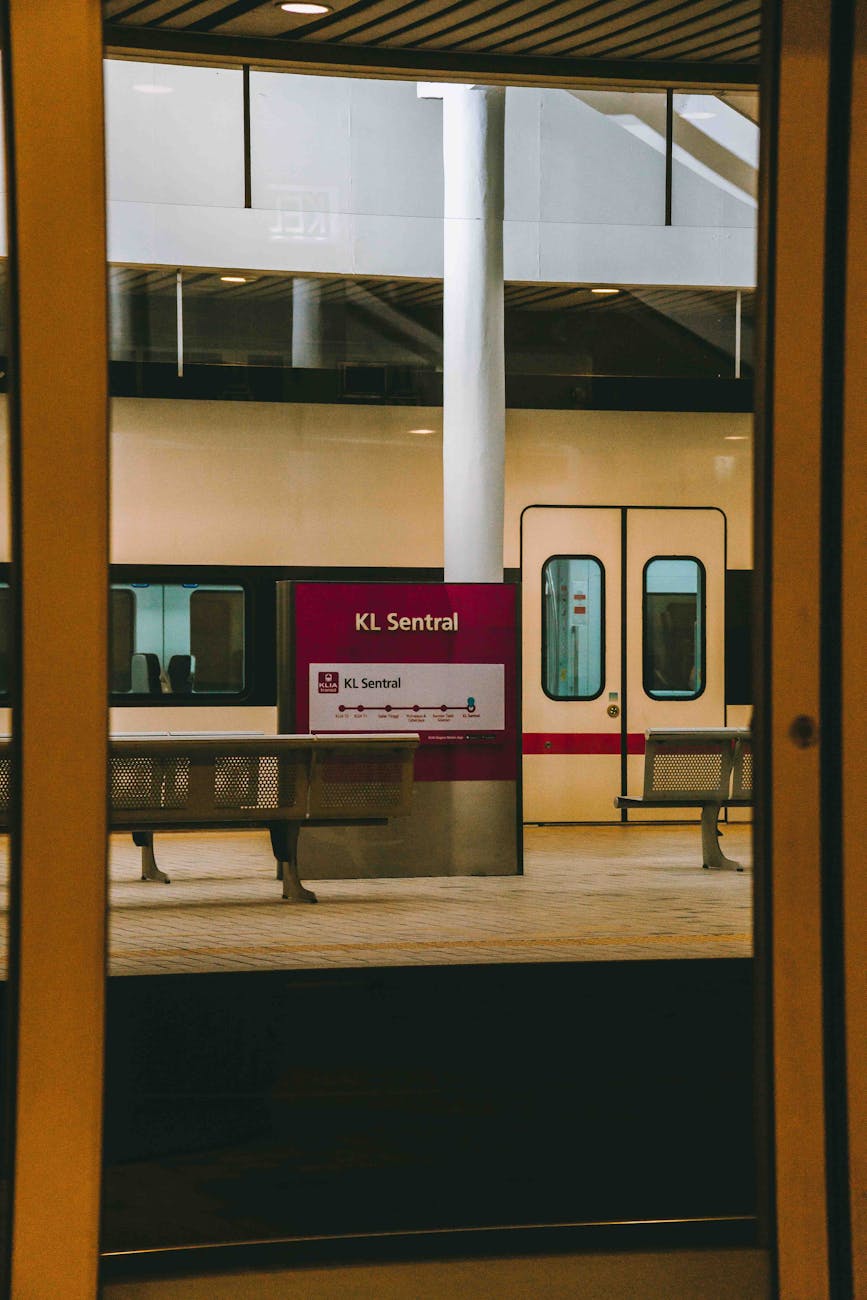
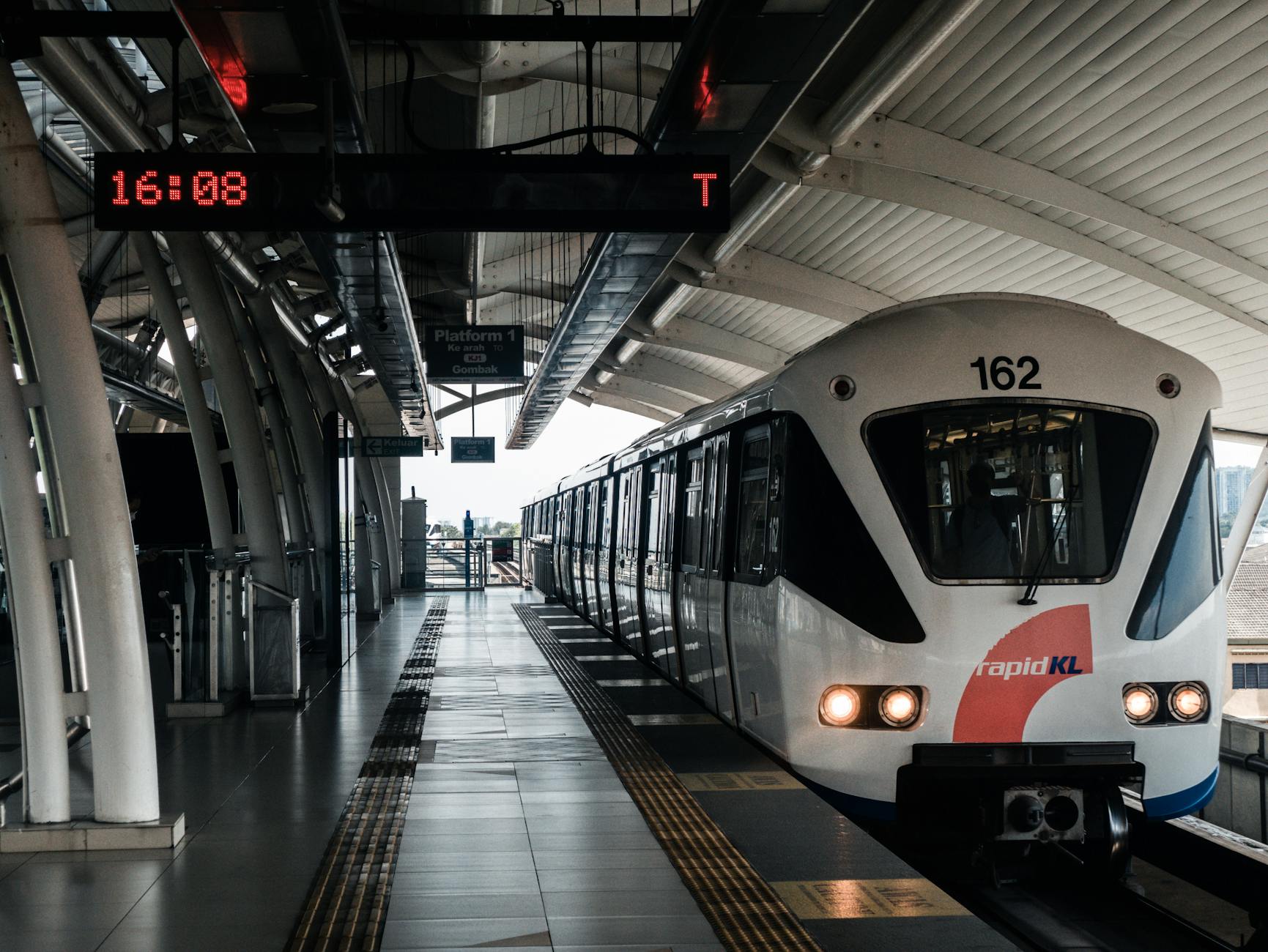
Rail matters in Malaysia, but its importance is often overstated by travelers who arrive expecting a single national train logic. In Greater Kuala Lumpur, urban rail is genuinely important. Certain intercity rail journeys are practical. But rail does not dominate the national movement story the way it does in some other countries in Asia.
The main practical rule is:
Malaysia’s rail story is strong in context, not universally decisive.
- use rail where it clearly serves the route
- avoid forcing rail onto itineraries better handled by bus, car, or air
- remember that terminal geography matters as much as the line itself
6. E-hailing, taxis, and private cars
For many visitors, the most important Malaysian transport layer is controlled point-to-point movement. E-hailing is one of the country’s most practical modern travel tools because it reduces negotiation, helps on the first and last mile, and often solves the hotel-to-destination problem more cleanly than trying to decode local bus systems on the fly.
This matters especially for:
The key is not to overuse car transport inside obvious rail corridors. It is to deploy it exactly where uncertainty becomes expensive.
- airport arrivals
- evening returns
- hotel transfers with luggage
- short business itineraries
- cities where the public network is partial rather than comprehensive
7. Driving, toll roads, and when a car is or is not worth it
Driving in Malaysia can be very good on the right trip. The road network on the peninsula is often strong, and certain regional itineraries are undeniably easier with a car. But city congestion, parking friction, island-specific rhythm, and the left-side driving environment mean that a car is not automatically the cleanest choice.
Cars are strongest for:
Cars are weaker for:
The correct question is not “can I drive in Malaysia?” It is “does this itinerary improve enough to justify the added burden?”
- regional exploration beyond one city
- selected west coast or interior peninsular routes
- Langkawi movement outside a single resort base
- travelers who want time flexibility and stop freedom
- Kuala Lumpur short stays
- airport-to-city trips where rail or e-hailing is cleaner
- itineraries built around only one dense urban area
- travelers who dislike assertive traffic or unfamiliar road norms
8. Airports, terminals, and transfer discipline
Malaysia often feels easy in the main segment and weaker in the transfer. A clean flight can be followed by a muddled airport pickup. A decent bus journey can end in a terminal too far from the hotel. A fast city movement plan can unravel because the traveler underestimated humidity, luggage, or final-mile complexity.
Malaysia rewards travelers who decide in advance:
This is where many transport mistakes begin.
- the exact airport or terminal being used
- the exact arrival transfer method
- whether the hotel is positioned for the actual trip
- whether weather exposure changes the route
- whether the destination is walkable in practice, not in theory
9. Accessibility, luggage, and family movement
Accessibility in Malaysia is uneven. Major airports, newer rail stations, and better urban infrastructure can work reasonably well. But heat, rain, uneven walkways, terminal distances, stairs, and fragmented final-mile conditions can make seemingly easy journeys more tiring than expected.
The practical constraints are:
Malaysia becomes easier very quickly when the traveler pays for cleaner transfers at the hardest moments.
- heavy weather exposure
- long indoor-outdoor transitions
- incomplete pedestrian comfort outside select districts
- terminal-to-hotel gaps
- crowding and vertical circulation in rail systems
10. What Malaysia gets wrong
Malaysia’s transport weaknesses are usually not the absence of options. They are fragmentation, overreliance on private vehicles outside major corridors, and the gap between system quality on paper and door-to-door reality.
The recurring issues are:
Malaysia is often more functional than outsiders expect. It is also less uniformly seamless than glossy regional comparisons suggest.
- congestion in and around Kuala Lumpur
- incomplete urban walkability
- transfer friction outside best-case zones
- overconfidence about rail coverage
- road dependence in many destinations
- humidity and rain making small distances feel longer
11. National quick-decision guide
| Situation | Best default choice | Why |
|---|---|---|
| Kuala Lumpur city stay | Urban rail plus e-hailing | Each mode solves a different part of the trip well |
| Peninsular city-to-city route | Compare express bus, rail, and car honestly | No single mode dominates every corridor |
| Peninsula to Borneo | Fly | Geography makes aviation the structural answer |
| Island stay | Solve airport or ferry transfer first | Arrival logistics shape the whole trip |
| Short business trip | Fly or rail as needed, then use e-hailing | Reliability matters more than transport romance |
| Heritage-city leisure stay | Walkable base plus selective car use | Good hotel positioning matters more than system breadth |
| Langkawi exploration | Rental car or selective ride-hailing | Flexibility helps more there than in dense cities |
| Multi-stop Malaysia trip | Fewer bases, cleaner connections | Overcomplicated routing adds more fatigue than value |
Kuala Lumpur
1. System character
Kuala Lumpur is Malaysia’s most consequential transport city. It has the country’s deepest structured urban mobility environment, but it is also one of the places where traffic, scale, and district mismatch can waste the most time.
2. What matters most
The key fact is that Kuala Lumpur is not just a city but a wider metropolitan movement environment. Rail lines matter, but so do where the traveler stays, which station is actually near the destination, and whether the route crosses the city at a bad hour.
3. Main modes
| Mode | Use |
|---|---|
| MRT / LRT / monorail | Core urban backbone |
| Airport rail | Strong airport-city connection for the right destinations |
| E-hailing | Essential first and last mile |
| Walking | Selective and district-dependent |
| Bus | Useful in places, but rarely the main visitor strength |
| Rental car | Usually weak for short visitor stays |
4. Local concerns
Kuala Lumpur punishes weak base selection. A hotel can look central and still create awkward daily movement if it sits outside the actual pattern of the trip.
5. Kuala Lumpur visitor strategy
Use rail where it is clearly strong, use e-hailing for precision, and build the stay around a district that reduces cross-city repetition.
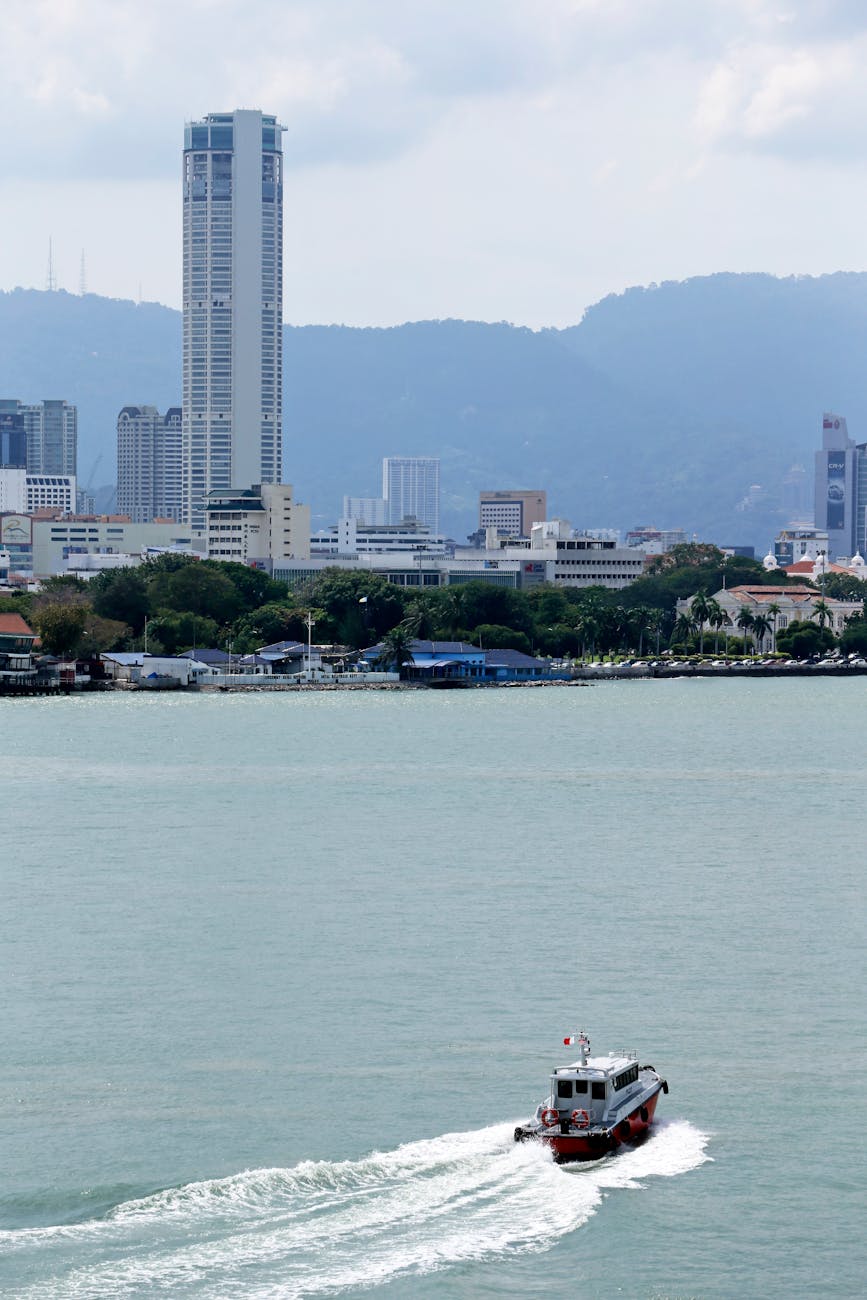
George Town
1. System character
George Town is a heritage-and-street-life city where the experience is shaped more by walkability, road traffic, and selective car use than by a deep formal transit network.
2. What matters most
The essential point is that George Town works best when the traveler understands it as a historic urban environment first and a modern transit city second. Distance is often manageable, but heat and weather can change the feel of short journeys quickly.
3. Main modes
| Mode | Use |
|---|---|
| Walking | Strong in the historic core when conditions are right |
| E-hailing / taxi | Important for precision and heat avoidance |
| Bus | Useful but not usually the luxury answer |
| Rental car | More useful regionally than inside the core |
4. Local concerns
George Town can feel either charmingly navigable or sticky and tiring depending on hotel location, weather, and whether the itinerary spills too far beyond the center.
5. George Town visitor strategy
Stay in or near the right part of the core, walk when it is genuinely pleasant, and use e-hailing to avoid turning heat and traffic into unnecessary fatigue.
Malacca City
1. System character
Malacca City is a heritage destination where transport is less about system depth and more about arrival quality, walkable positioning, and whether the traveler is trying to move beyond the central historical districts.
2. What matters most
The crucial fact is that Malacca works best when the traveler arrives cleanly and then reduces movement complexity. The city is more about controlled approach and local pacing than about transit sophistication.
3. Main modes
| Mode | Use |
|---|---|
| Walking | Strong around the historical core |
| E-hailing / taxi | Best for arrivals and outer movements |
| Bus | More relevant for intercity arrival than inner-city elegance |
| Rental car | Situational, often unnecessary for short stays |
4. Local concerns
Historic charm does not remove traffic, weather, or last-mile friction. A hotel just outside the ideal zone can change the whole rhythm of the stay.
5. Malacca City visitor strategy
Solve the intercity arrival first, stay close to the part of town that matters, and avoid building a car-dependent version of a place best enjoyed at shorter range.
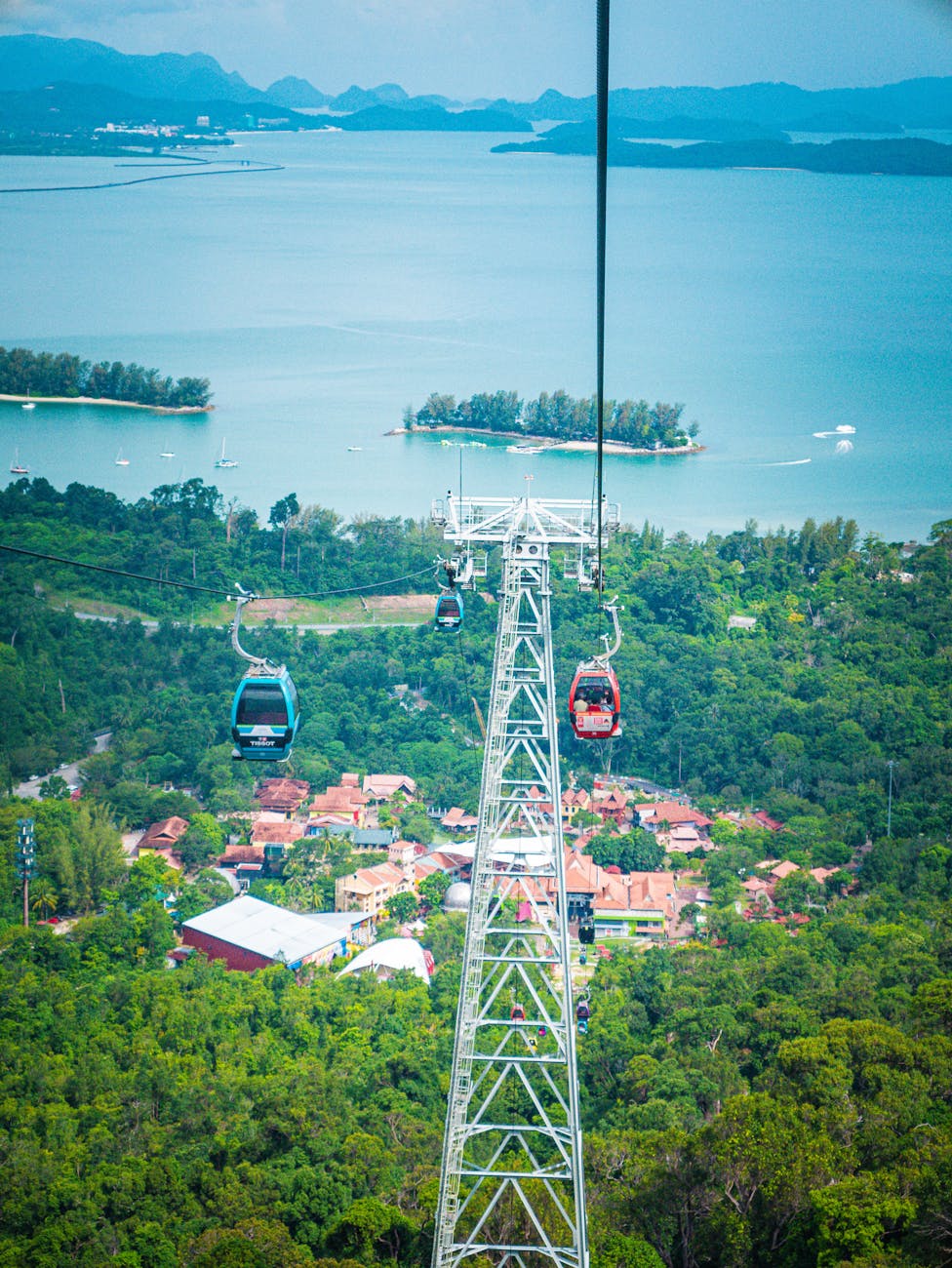
Langkawi
1. System character
Langkawi is an island transport environment where flexibility matters more than formal public transport depth. This is a place of airport arrivals, beach bases, resort geography, and dispersed sights rather than one coherent urban network.
2. What matters most
The first real decision is whether the trip is one-base and mostly relaxed or whether it involves meaningful island exploration. That answer determines whether the traveler can rely on selective rides or should take driving seriously.
3. Main modes
| Mode | Use |
|---|---|
| Rental car | Strong option for island flexibility |
| E-hailing / taxi | Good for simple resort-centered stays |
| Private transfer | Cleanest airport-to-hotel solution |
| Ferry / boat | Relevant for onward movement and certain excursions |
4. Local concerns
Langkawi often feels easier with a vehicle than visitors expect, but that does not mean everyone should drive. The decision depends on hotel isolation, trip ambition, and tolerance for tropical road movement.
5. Langkawi visitor strategy
Use private transfer or e-hailing for a simple stay, but consider a car when the itinerary spreads meaningfully across the island.
Kota Kinabalu
1. System character
Kota Kinabalu is an aviation-linked gateway city where airport access, coastal positioning, excursion logistics, and practical car movement matter more than any deep public-transport network.
2. What matters most
The key fact is that Kota Kinabalu often functions as both destination and launch platform. That means the value of transport lies less in urban transit sophistication and more in clean transfers, timing, and onward movement discipline.
3. Main modes
| Mode | Use |
|---|---|
| Domestic flights | Structural national access |
| E-hailing / taxi | Main visitor movement tool |
| Private transfer | Strong for airport or excursion timing |
| Boat / ferry | Relevant for island excursions |
| Rental car | Situational for wider Sabah exploration |
4. Local concerns
Kota Kinabalu feels manageable when the trip is planned as gateway-plus-base. It degrades when visitors assume local transport depth that the city does not really offer.
5. Kota Kinabalu visitor strategy
Treat airport transfer as a real decision, keep the base clean, and use car-based movement pragmatically rather than trying to force a transit-city reading onto the destination.
Kuching
1. System character
Kuching is a calmer, more human-scale city than Kuala Lumpur, but its transport identity is still road-led. It works best through selective walking, car-based movement, and disciplined regional planning rather than heavy dependence on formal public transit.
2. What matters most
The main point is that Kuching can feel easy if the traveler respects what it is: a riverfront-oriented city where heat, spacing, and local car movement still matter.
3. Main modes
| Mode | Use |
|---|---|
| Walking | Good in chosen zones, especially around the riverfront |
| E-hailing / taxi | Main practical movement tool |
| Private car | Useful for regional and nature-linked outings |
| Bus | Secondary for most short-stay visitors |
4. Local concerns
Kuching is pleasant, but not frictionless. A hotel can be close in theory and still inconvenient in humidity or rain.
5. Kuching visitor strategy
Stay near the part of the city you actually want to inhabit, walk selectively, and use car movement for precision and for anything beyond the compact core.
2. Where do visitors most often make the wrong transport choice?
The most common mistake is in Kuala Lumpur, where visitors either overuse cars and lose time in traffic or overestimate how fully rail alone will solve the trip. The second common mistake is in Langkawi, where travelers underestimate how much flexibility helps once the itinerary broadens beyond one beach base.
3. Where is a rental car most justified?
Among the cities in this paper, Langkawi most clearly justifies a car for many travelers. On the peninsula, a car can also make sense on broader regional routes. In Kuala Lumpur, George Town, and usually Malacca City, the case is much weaker for short urban stays.
4. When are buses better than trains in Malaysia?
Buses are better when the route is peninsular, the road corridor is strong, and the terminal geography works in your favor. They are often superior when rail does not actually align well with the trip’s origin and destination or when the train adds elegance in theory but not in total travel time.
5. Final advice
Malaysia rewards travelers who stop searching for one national transport doctrine. The country works best when each movement problem is solved in its actual geographic context: rail where the line is genuinely useful, buses where the peninsular corridor is strong, flights where East Malaysia or islands make them necessary, e-hailing where precision matters, and rental cars only where flexibility materially improves the trip. That is how Malaysia shifts from “a lot of transport options” to a clean and efficient travel experience.