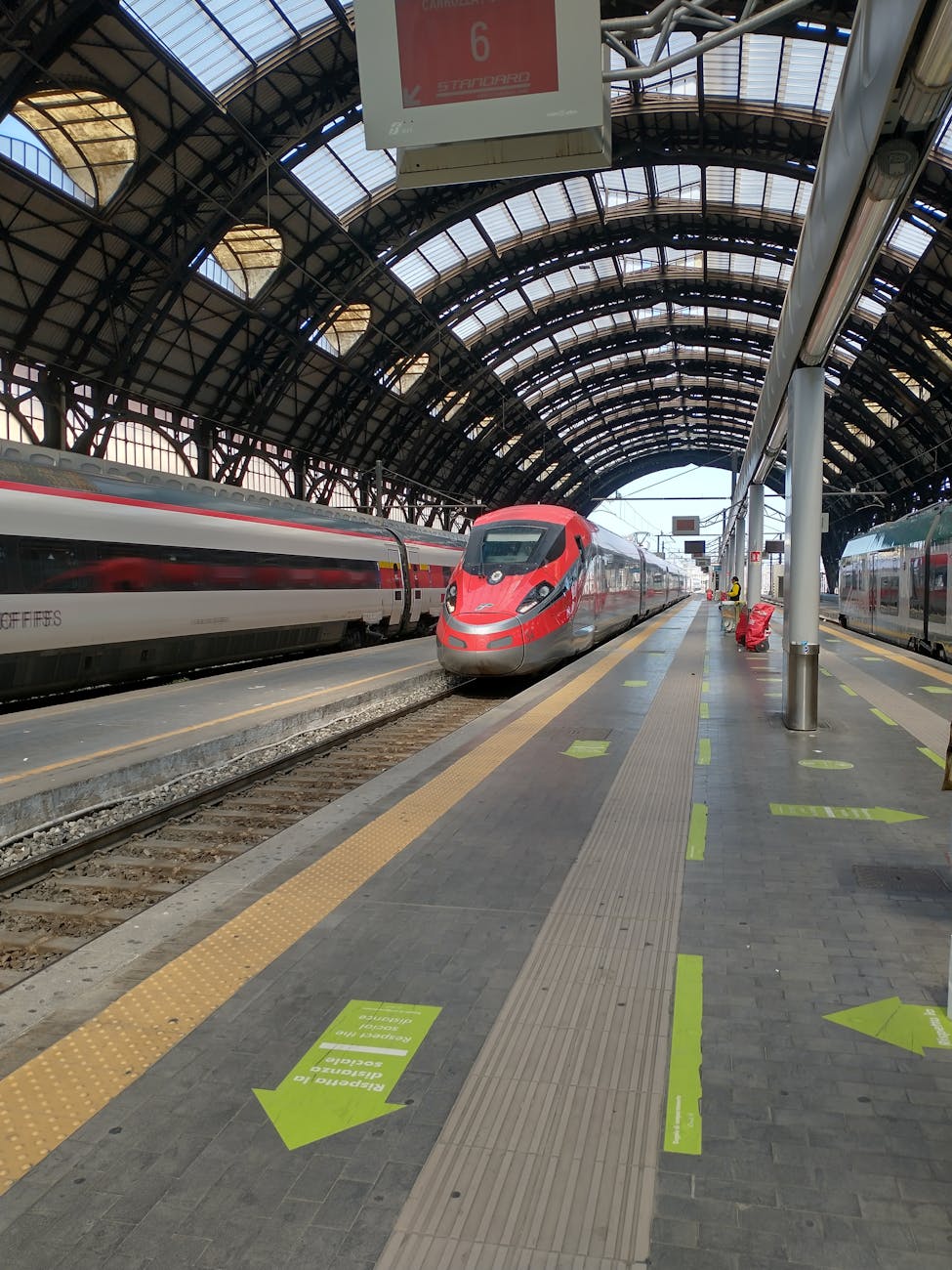
*A practical analysis for visitors, foreign residents, and local users* Prepared: April 22, 2026
Scope and audience
This paper explains how transportation in Italy works in practice. It is written for travelers planning a visit, foreign residents trying to understand daily mobility, and locals comparing the tradeoffs between trains, buses, metros, trams, taxis, private vehicles, ferries, cycling, walking, and airport access.
The first part covers the national-scale systems and rules that apply across Italy. The second part goes city by city for:
Italy is one of Europe’s most rewarding countries to cross by rail, but it is not one unified transportation system. A visitor can move between major cities very easily on high-speed trains, then immediately face local complexity: city-specific tickets, ZTL restricted-driving zones, different transit apps, airport transfer choices, water transport in Venice, funiculars in Naples, underground high-speed platforms in Bologna, or Area B/Area C driving restrictions in Milan. The main practical skill is learning which mode fits which job.
- Rome
- Milan
- Florence
- Venice
- Bologna
- Naples
- Turin
Contents
- [Executive summary](#executive-summary)
- [Part I — National-scale transportation in Italy](#part-i--national-scale-transportation-in-italy)
- [1. The Italian transportation model](#1-the-italian-transportation-model)
- [2. The practical decision framework](#2-the-practical-decision-framework)
- [3. Tickets, fare media, apps, validation, and payment fragmentation](#3-tickets-fare-media-apps-validation-and-payment-fragmentation)
- [4. National and long-distance rail](#4-national-and-long-distance-rail)
- [5. Regional and commuter rail](#5-regional-and-commuter-rail)
- [6. Intercity coaches and regional buses](#6-intercity-coaches-and-regional-buses)
- [7. Urban metros, trams, buses, funiculars, and water services](#7-urban-metros-trams-buses-funiculars-and-water-services)
- [8. Private vehicles, rental cars, ZTLs, tolls, parking, and driving rules](#8-private-vehicles-rental-cars-ztls-tolls-parking-and-driving-rules)
- [9. Taxis, NCC private-hire cars, and ride-hailing](#9-taxis-ncc-private-hire-cars-and-ride-hailing)
- [10. Airports and airport access](#10-airports-and-airport-access)
- [11. Ferries, ports, islands, and water transport](#11-ferries-ports-islands-and-water-transport)
- [12. Walking, cycling, scooters, and micro-mobility](#12-walking-cycling-scooters-and-micro-mobility)
- [13. Accessibility, luggage, children, seniors, and personal security](#13-accessibility-luggage-children-seniors-and-personal-security)
- [14. Strikes, engineering works, weather, festivals, and disruption management](#14-strikes-engineering-works-weather-festivals-and-disruption-management)
- [15. Main concerns for residents and locals](#15-main-concerns-for-residents-and-locals)
- [16. Recommended strategies by traveler type](#16-recommended-strategies-by-traveler-type)
- [Part II — City-by-city analysis](#part-ii--city-by-city-analysis)
- [Rome](#rome)
- [Milan](#milan)
- [Florence](#florence)
- [Venice](#venice)
- [Bologna](#bologna)
- [Naples](#naples)
- [Turin](#turin)
- [Comparative city matrix](#comparative-city-matrix)
- [Practical itineraries and modal choices](#practical-itineraries-and-modal-choices)
- [References](#references)
Executive summary
Italy is easiest to understand if you separate intercity travel from local travel. Intercity travel between the cities in this paper is usually best by rail. The main high-speed spine runs through Turin, Milan, Bologna, Florence, Rome, Naples, and Salerno, with extensions and branches to other regions. Trenitalia’s Frecciarossa services and Italo’s high-speed trains compete on many of the most important city pairs, creating frequent, fast service between the cities most visitors use.
Local travel is more fragmented. Rome has metro, tram, bus, suburban rail, and heavy visitor pressure. Milan has Italy’s most businesslike urban transit system, with a large metro and strong contactless payment. Florence is mostly a walking city supported by trams and buses, but is one of the easiest cities in Italy in which to get fined by driving into the wrong restricted zone. Venice is not comparable to other cities: its core is a walking-and-boat city, while Mestre and the mainland use buses and trams. Bologna is a rail hub and bus city with a fast airport monorail. Naples combines metro, funiculars, buses, ferries, and EAV suburban rail toward Pompeii and Sorrento. Turin has a compact automated metro, trams, buses, and a relatively short central ZTL window.
For most visitors, the best national rule is simple: do not rent a car for Rome, Milan, Florence, Venice, Bologna, Naples, or Turin city centers. Rent a car only when the itinerary requires countryside, hill towns, agriturismi, remote beaches, mountain access, villages with poor rail service, or luggage-heavy family logistics. Italy’s historic cities were not designed for cars, and the combination of ZTL gates, camera enforcement, bus lanes, one-way streets, garages, resident-only areas, and expensive parking makes driving in city centers a poor default choice.
The second rule is equally important: validate or activate the correct ticket. High-speed train tickets are usually tied to a specific train and seat. Regional rail rules vary by paper versus digital ticket. Trenitalia’s Digital Regional Ticket is now automatically validated at the scheduled departure time, but physical tickets and some local transit tickets still require validation before or at boarding. Local buses and trams are strict: buying a ticket is not the same as validating it. Inspectors generally do not excuse tourists who misunderstood the system.
Italy’s strengths are substantial. Trains connect the major cities better than cars do. High-speed rail city-center to city-center often beats flying. Milan’s metro is excellent. Rome’s Tap & Go system makes short transit use easier than it used to be. Florence and Bologna are highly walkable. Venice’s public boats are expensive for short stays but irreplaceable for island travel. Naples has one of Italy’s most interesting multi-modal urban systems and is the rail gateway to Pompeii, Herculaneum, Sorrento, and the islands. Turin has a calmer, more orderly feel than Rome or Naples and is easier to drive around if one avoids ZTL hours.
The frictions are predictable. Travelers struggle with ZTLs, fare fragmentation, train-station names, platform changes, crowded regional trains, luggage on stairs and bridges, taxi scams at airports, strikes, summer heat, late-night service gaps, and the difference between official taxis and NCC private-hire cars. Locals struggle with commuting reliability, parking scarcity, pollution controls, accessibility gaps, tourist pressure, fare changes, service frequency, and underinvestment in some bus networks.
A practical first-time itinerary should use:
- High-speed rail for Milan–Bologna–Florence–Rome–Naples and Turin–Milan–Bologna–Florence–Rome.
- Regional rail for short hops such as Florence–Pisa/Lucca, Bologna–Modena/Ravenna/Ferrara, Naples–Pompeii/Sorrento, and Venice–Padua/Verona, where appropriate.
- Metro/tram/bus inside large cities, with contactless payment where supported.
- Walking in Florence, Venice, Bologna’s historic core, central Rome, central Turin, and many central Naples districts.
- Taxis or booked NCC cars for early flights, heavy luggage, mobility needs, late-night arrivals, and groups.
- Rental cars outside the city cores, with hotels chosen for parking and ZTL access.
1. The Italian transportation model
Italy’s transportation system is a layered network. It is not a single “Italian transit system.” It is a combination of national rail, regional rail, municipal transit agencies, private high-speed rail, intercity coaches, airport rail/bus links, taxis, licensed private-hire cars, ferries, private vehicles, bicycles, walking networks, and local restrictions.
The most important layers are:
The main national lesson is that intercity mobility is relatively easy, while local mobility requires city-specific knowledge. A visitor who understands Trenitalia and Italo can cross the country efficiently. A visitor who assumes that a Milan contactless habit works the same way in Venice or Naples will make mistakes.
- High-speed and long-distance rail. Trenitalia runs Frecciarossa, Frecciargento/Frecciabianca where applicable, Intercity, Intercity Notte, regional, and airport rail products. Italo runs private high-speed services between major cities.
- Regional rail. Regional trains connect cities, suburbs, towns, and secondary destinations. They are crucial for trips that do not justify a high-speed train, but they require more attention to validation, platform changes, and frequency.
- Metropolitan and municipal transit. Rome’s ATAC, Milan’s ATM, Florence/Tuscany’s Autolinee Toscane and GEST tram system, Venice’s ACTV/AVM, Bologna’s TPER, Naples’s ANM plus UnicoCampania/EAV, and Turin’s GTT all operate locally specific systems.
- Intercity coaches. FlixBus, Itabus, MarinoBus, regional operators, and airport shuttles fill gaps where rail is slower, more expensive, or absent.
- Private cars and rental cars. These remain important outside dense cities, but in historic centers they are heavily constrained by ZTLs, parking rules, low-emission rules, and tolls.
- Taxis and NCC. Official taxis are municipal, metered, and usually white. NCC vehicles are pre-booked private-hire cars. App-based ride-hailing in Italy often operates through NCC-style services rather than cheap UberX-style street competition.
- Ferries and water transport. Ferries matter for Venice, Naples, islands, Sicily, Sardinia, and coastal travel. In Venice, boats are not scenic extras; they are core public transport.
2. The practical decision framework
When to use high-speed rail
Use high-speed rail for the classic mainland trunk routes:
Trenitalia’s Frecciarossa route information highlights the Turin–Milan–Bologna–Florence–Rome–Naples–Salerno spine, with further extensions to places such as Brescia, Bergamo, Perugia, Foggia, Bari, Lecce, Reggio Calabria, Potenza, and Taranto. Italo advertises high-speed links among Rome, Florence, Milan, Naples, Venice, and Salerno, with typical headline journey times such as Rome–Florence around 1h30, Milan–Rome around 3h, and Rome–Naples around 1h.
High-speed rail is usually better than flying inside the mainland triangle of Milan, Venice/Bologna/Florence, Rome, and Naples. It avoids airport security, airport transfer time, baggage collection, and the risk of traffic getting to the airport. It also deposits passengers at central stations such as Roma Termini, Firenze Santa Maria Novella, Milano Centrale/Porta Garibaldi/Rogoredo depending on service, Bologna Centrale, Napoli Centrale, Torino Porta Susa/Porta Nuova, or Venezia Santa Lucia/Mestre.
When to use regional rail
Use regional trains for shorter or less expensive routes, for towns not served by high-speed trains, and for day trips. Examples include:
Regional rail is cheaper and flexible but less luxurious. It may be crowded at commuter times. It may require validation or automatic digital validation rules. It often uses open seating. It may not have large luggage racks. It is also more exposed to local strikes and service disruptions than premium high-speed travel.
When to use intercity coaches
Use coaches when rail is expensive, sold out, indirect, or poorly timed. Coaches are especially useful for:
FlixBus and Itabus both sell mobile e-tickets and cover many Italian destinations. The tradeoff is station location, road congestion, possible delays, and less comfort compared with high-speed rail.
When to rent a car
Rent a car for rural flexibility, not for city centers. Good use cases include:
Poor use cases include:
When to use taxis or NCC
Taxis and NCC cars are best for:
Official taxis should be taken from ranks or booked through local taxi radio systems/apps. Do not accept informal offers from drivers approaching inside airports or stations.
- Turin–Milan
- Milan–Bologna
- Bologna–Florence
- Florence–Rome
- Rome–Naples
- Milan–Rome
- Venice–Bologna–Florence–Rome, where schedules fit
- Rome–Salerno and onward southern connections
- Florence to Pisa, Lucca, Pistoia, Arezzo, or Siena combinations.
- Bologna to Modena, Parma, Ferrara, Ravenna, or Rimini.
- Venice to Padua, Vicenza, Verona, Treviso, or Conegliano.
- Naples to Caserta, Pompeii/Herculaneum via EAV/Circumvesuviana, or coastal rail depending on route.
- Milan to Como, Bergamo, Pavia, Monza, or Lake Maggiore connections.
- Rome to Tivoli, Ostia, Frascati, or Civitavecchia, depending on route.
- Late-booked budget travel.
- Airport-to-city transfers.
- Cross-country routes not well aligned with rail.
- Towns and villages away from the rail network.
- Overnight budget travel where comfort expectations are modest.
- Tuscan countryside stays outside Florence or Siena.
- Dolomites, Alpine valleys, and mountain villages.
- Agriturismi without rail/bus access.
- Puglia, Basilicata, Calabria, rural Sicily, and Sardinia itineraries.
- Lakeside villas or coastal accommodation away from rail stations.
- Families with children, strollers, or multiple suitcases moving between rural accommodations.
- Rome plus Florence plus Venice city-center sightseeing.
- Milan city-center hotel stays.
- Venice historic center, where cars cannot enter.
- Naples center unless the accommodation has clear parking and arrival instructions.
- Any itinerary where the driver is unfamiliar with ZTLs and parking rules.
- Airport arrivals with heavy luggage.
- Late-night arrivals after public transport is infrequent.
- Travelers with mobility limitations.
- Families or groups of 3–4 where the fare is competitive against several train/bus tickets.
- Direct transfers to cruise ports, ferry terminals, or hotels away from transit.
- Early-morning flights where public transit would be stressful.
3. Tickets, fare media, apps, validation, and payment fragmentation
The core rule: payment is local
Italy has no single national urban transit card. A ticket valid on Rome’s ATAC network is not valid in Florence. A Milan ATM contactless payment habit does not automatically apply to Venice vaporetto tickets. A regional train ticket is not a city bus ticket unless an integrated fare explicitly says it is. A tourist should treat each city as a new fare system.
Common ticket types
Across Italian cities, common fare types include:
Validation and activation
Italy is strict about validation. The exact rules depend on the ticket.
A common tourist error is buying a ticket and keeping it unstamped in a wallet. Inspectors evaluate whether the ticket is valid for travel, not whether the passenger intended to validate it.
Apps that matter nationally
Useful apps and websites include:
Do not rely on one app for everything. In Italy, the app ecosystem is useful but fragmented.
- Single ticket. Usually valid for a time window on local buses/trams/metro, with local rules about transfers.
- Daily or multi-day pass. Useful in large cities if using transit repeatedly.
- Carnet/multi-ride ticket. Good for residents or repeated short trips.
- Contactless bank-card fare. Increasingly common in Rome, Milan, Turin, Florence/Tuscany buses, Bologna services, and some airport links, but not universal.
- Stored-value or local card. Examples include Venezia Unica, regional smart cards, and local operator cards.
- Digital ticket in operator app. Common for trains and increasingly common for buses/trams.
- High-speed train tickets are generally tied to a specific train and seat. They normally do not require stamping in a station machine, but the passenger must be on the correct train for the ticket conditions.
- Regional train tickets require careful attention. Trenitalia says regional passengers must have an appropriate ticket and keep it until leaving the arrival station. Digital Regional Tickets are now automatically validated at the scheduled departure of the selected train. Paper regional tickets and some third-party tickets may still require validation before boarding.
- City bus/tram tickets often require validation on board or before boarding, even if purchased in advance.
- Contactless card payments require using the same physical card or device for all taps in a journey or fare-capping period. Rome’s ATAC explicitly warns that taps for transfers should be made with the same device and that one card cannot be used to pay for another person traveling with you under Tap & Go.
- Trenitalia for Frecce, Intercity, regional trains, Leonardo Express, and many regional products.
- Italo for Italo high-speed services.
- ViaggiaTreno for train status and train-number lookups.
- ATM Milano, ATAC Roma, GTT To Move, ANM/UnicoCampania, at bus, Roger, Venezia Unica/AVM depending on city.
- Google Maps, Apple Maps, Moovit, Citymapper where available for planning, but always verify against the operator during strikes, engineering works, or special events.
- FreeNow, itTaxi, WeTaxi, local taxi cooperative apps depending on city.
4. National and long-distance rail
Trenitalia
Trenitalia is the dominant national rail operator. It runs high-speed Frecciarossa services, Intercity trains, regional services, and airport rail products such as the Leonardo Express to Rome Fiumicino.
Strengths:
Concerns:
Italo
Italo is a private high-speed rail operator that competes with Trenitalia on major corridors. Italo’s own route materials emphasize high-speed travel between major cities such as Rome, Florence, Naples, Venice, Milan, and Salerno.
Strengths:
Concerns:
Station-name discipline
Italian cities often have multiple stations. This is a major source of errors.
A ticket to “Venezia Mestre” is not the same as arriving directly into the historic-center station “Venezia Santa Lucia.” A Milan train to “Cadorna” is different from “Centrale.” A Florence high-speed train may use Santa Maria Novella, Campo di Marte, or Rifredi during works or routing changes. Always check the station printed on the ticket.
Buying rail tickets
For high-speed and Intercity trains, buy in advance for better fares. For regional trains, same-day purchase is often normal, though digital purchase is convenient. The tradeoff is flexibility: discounted high-speed tickets can be restrictive, while flexible fares cost more.
For visitors making a multi-city Italy trip, a simple strategy is:
- Extensive network.
- Strong high-speed service on the main north-south spine.
- City-center stations.
- Digital ticketing.
- Good option for both premium and budget fares when booked early.
- Regional ticket rules can confuse visitors.
- Platform changes require attention.
- Larger stations can be sprawling and stressful.
- Strikes and engineering works affect some services.
- Fare names and ticket conditions vary.
- Competitive fares if booked early.
- Modern rolling stock.
- Clear digital tickets.
- Strong service on major tourist/business corridors.
- Italo does not serve every station or every region.
- Some city pairs have different station choices than a traveler expects.
- A passenger connecting between Italo and Trenitalia must verify station names, not just city names.
- Rome: Termini, Tiburtina, Ostiense, Trastevere, San Pietro, and others.
- Milan: Centrale, Porta Garibaldi, Rogoredo, Cadorna, Lambrate, and suburban stations.
- Florence: Santa Maria Novella, Campo di Marte, Rifredi.
- Venice: Venezia Santa Lucia is on the island; Venezia Mestre is on the mainland.
- Bologna: Bologna Centrale includes the high-speed AV platforms underground.
- Naples: Napoli Centrale/Piazza Garibaldi complex, Porta Nolana for some EAV/Circumvesuviana services.
- Turin: Porta Susa and Porta Nuova are both important.
- Book long high-speed legs in advance.
- Keep regional day trips flexible unless traveling at peak times.
- Build buffer time between separate tickets.
- Avoid last possible train when a same-day hotel check-in or flight is involved.
- Keep the ticket and ID accessible for inspection.
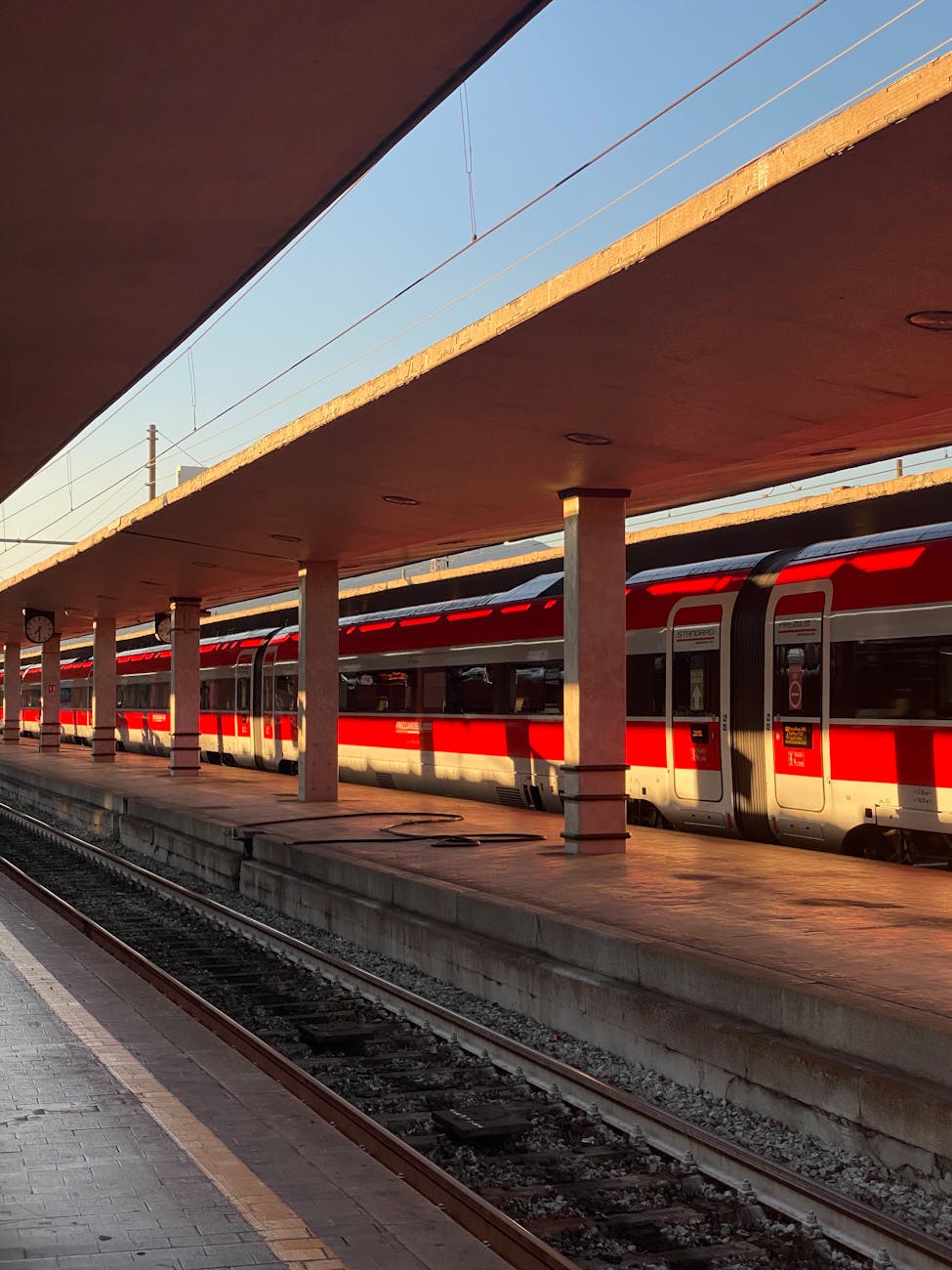
5. Regional and commuter rail
Regional rail is the backbone of daily life for many Italians. It links suburbs and satellite towns to city centers, connects tourist day-trip destinations, and fills the gaps between high-speed corridors.
Regional rail is useful but less standardized than high-speed rail. Travelers should expect:
Examples:
For visitors, regional rail is powerful but requires a lower-stress mindset than high-speed travel. Trains may be crowded and less comfortable. Locals rely on these trains for commuting, so tourists with large luggage should avoid rush hours where possible.
- Fewer reserved seats.
- Crowding at commute times.
- Platform changes.
- Older rolling stock on some routes.
- Limited luggage space.
- Ticket validation rules.
- Different operators in some regions.
- Rome’s FL lines link Fiumicino, Tiburtina, Trastevere, Ostiense, and other stations.
- Milan’s suburban and regional rail network links the wider Lombardy region.
- Naples relies on EAV routes such as Circumvesuviana for Pompeii, Herculaneum, and Sorrento.
- Venice uses regional trains to connect Mestre, Padua, Vicenza, Verona, Treviso, and the Veneto.
- Florence and Bologna use regional trains for Tuscan and Emilia-Romagna day trips.
6. Intercity coaches and regional buses
Italy’s bus market has two distinct layers:
Coaches are attractive when:
The disadvantages are road congestion, bus-station locations, weaker punctuality, and comfort limits. On some routes, coach stops are in peripheral parking areas rather than historic centers. Always check the exact stop location, not only the city name.
Regional buses matter for places like Amalfi Coast access from Sorrento/Salerno, Tuscan hill towns, villages around Bologna, lake areas near Milan, and mountain/coastal destinations. They often require local apps, paper tickets from tabacchi/newsstands, or region-specific fare systems.
- Long-distance coaches, such as FlixBus and Itabus, which compete with rail on price and connect cities, airports, and secondary destinations.
- Regional/local buses, which serve towns, villages, beaches, mountain areas, suburbs, and last-mile connections.
- Rail fares are high.
- The route is direct by bus but indirect by rail.
- The destination is not near a rail station.
- Airport transfers are easier by bus than rail.
- The traveler is flexible on time.
7. Urban metros, trams, buses, funiculars, and water services
Italy’s urban transit is highly local.
Metros
Major metro systems in this paper include:
Milan’s metro is generally the most efficient and easiest of the cities in this paper. Rome’s metro is useful but limited relative to city size and archaeology constraints. Naples’s metro is useful but not enough alone; funiculars and buses matter. Turin’s metro is compact and reliable but has only one main corridor.
Trams
Trams are important in Milan, Florence, Rome, Turin, Venice mainland, and parts of Naples. Milan and Turin have especially strong tram identities. Florence’s trams are modern and crucial for airport and suburban access. Rome’s trams can be useful but are affected by works and network changes.
Buses
Buses fill most gaps. They also create the most confusion: validation, crowding, traffic, route diversions, and stop naming can challenge visitors. Buses are often the main mode in Florence’s historic surroundings, Bologna, Naples neighborhoods, and Rome areas beyond metro lines.
Funiculars
Funiculars matter most in Naples, where steep hills make them part of ordinary urban movement. Turin also has the Sassi–Superga rack tramway for a scenic hill connection.
Water services
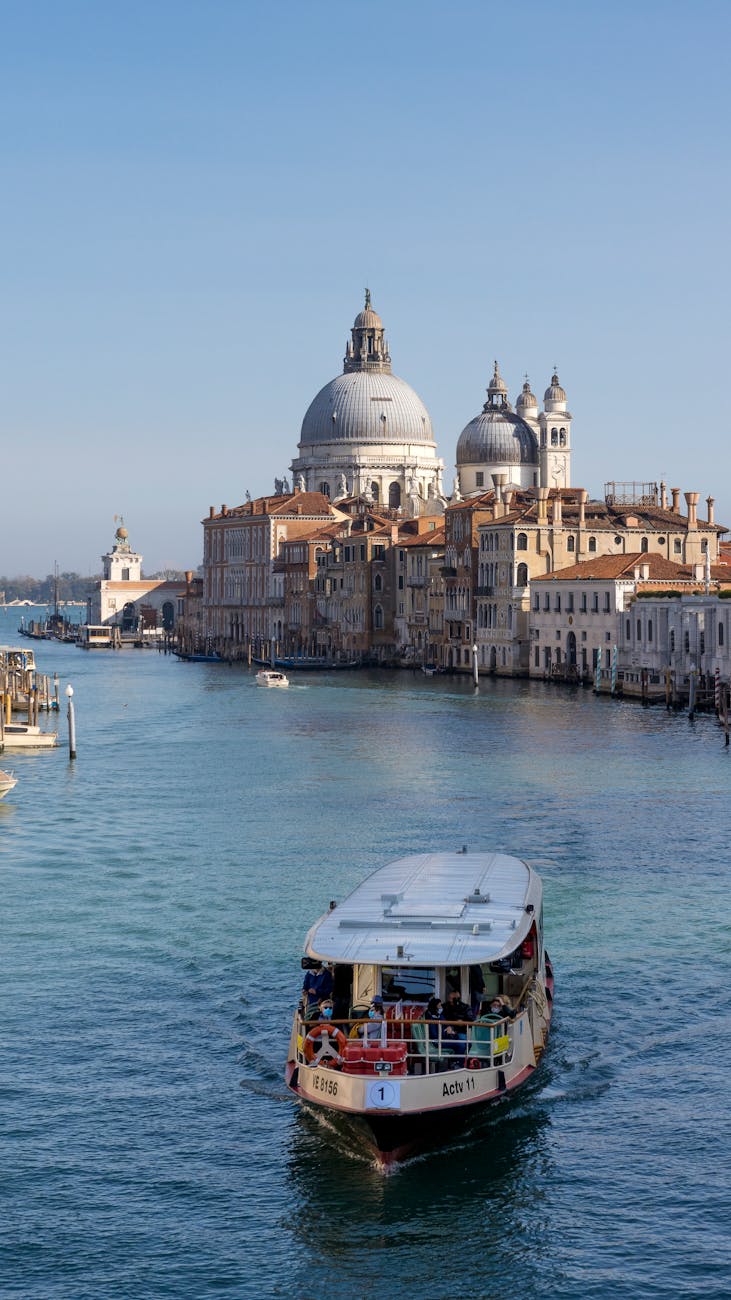
Venice is the main case. ACTV vaporetti are public transit, not a novelty. They are expensive compared with ordinary Italian city transit, but they are essential for the Grand Canal, Giudecca, Murano, Burano, Lido, and other lagoon movements.
- Rome: Metro A, B/B1, and C, plus suburban rail links.
- Milan: M1, M2, M3, M4, M5, with M4 linking Linate Airport to the city.
- Naples: Metro Line 1 and Line 6, plus Line 2 as a rail-style urban line.
- Turin: automated metro line.
8. Private vehicles, rental cars, ZTLs, tolls, parking, and driving rules
Driving rules and speed limits
Italy’s official tourism portal summarizes standard speed limits as 130 km/h on motorways, 110 km/h on main roads, 90 km/h on secondary/local roads, and 50 km/h in built-up areas, subject to signs and conditions. Weather, road works, local restrictions, and “zona 30” streets may reduce limits.
Visitors from outside the EU/EEA should check license requirements before arrival. The U.S. Embassy in Italy advises American tourists intending to drive to obtain an International Driving Permit before leaving the United States. Italy’s foreign ministry notes that for short stays, an official translation of a foreign driving license may be sufficient in some cases, but many rental companies and police checks expect an IDP or official translation depending on the issuing country.
ZTLs: the main tourist driving hazard
ZTL means Zona a Traffico Limitato — limited traffic zone. These are restricted-access areas, often in historic centers, enforced by cameras. Italy has hundreds of access-regulation schemes, including ZTLs, low-emission zones, and camera-enforced restrictions.
The practical facts:
The safest rule is: park outside the ZTL and walk, take transit, or take a taxi. This is especially important in Florence, Rome, Bologna, Milan, and Turin.
Toll roads and Telepass
Most Italian motorways are tolled. Autostrade per l’Italia lists payment methods including electronic toll collection, credit card, prepaid/rechargeable products, and cash. Telepass allows toll payment without stopping at ordinary booths, but rental-car users should confirm whether the rental includes an electronic device and what fees apply.
For visitors without Telepass:
Parking
Parking rules vary by city, but common colors are:
City-center garages are expensive but safer than street parking for visitors. In ZTL cities, choose accommodation based on parking strategy before arrival. For Florence, Venice, Rome, Bologna, Naples, and Milan, a “cheap hotel with no parking plan” can become expensive quickly.
When a car is genuinely useful
A car is valuable for:
A car is usually not valuable inside the seven city centers in this paper.
- ZTL gates are often at the edge of historic centers.
- The sign may be easy to miss in traffic.
- Navigation apps may route through restricted zones unless configured carefully.
- Rental cars are not exempt.
- Fines may arrive months later through the rental company.
- Hotels inside a ZTL may be able to register the license plate for limited access, but only if the traveler gives the plate and follows the hotel’s exact instructions.
- Entering the wrong gate, using a bus lane, or taking the wrong street can still trigger a fine even if the destination is a hotel.
- Avoid Telepass-only lanes.
- Take a ticket at entry where required.
- Pay cash or card at exit.
- Keep receipts.
- If a toll is unpaid or a free-flow road is used, handle payment promptly through official channels.
- Blue lines: paid parking.
- White lines: often free, but check signs.
- Yellow lines: residents, disabled permits, loading, taxis, or other reserved uses.
- Rural Tuscany and Umbria.
- Dolomites and mountain areas.
- Amalfi Coast only with caution; buses, ferries, and drivers are often less stressful.
- Puglia and Basilicata towns.
- Sicily and Sardinia outside major cities.
- Agriturismi and villas.
- Beach-hopping outside train corridors.
9. Taxis, NCC private-hire cars, and ride-hailing
Official taxis
Official taxis in Italy are generally white, marked with a roof TAXI sign, municipal markings, and a license number. Rome airport guidance describes authorized taxis as white vehicles with a TAXI sign and municipal symbols/license numbers.
Use taxis by:
Avoid:
NCC cars
NCC means noleggio con conducente, a licensed private-hire car with driver. NCC cars are legal but usually pre-booked and priced differently from taxis. They are useful for airport transfers, early departures, events, and groups, but should be booked transparently in advance.
Ride-hailing
Ride-hailing exists in some Italian cities, but Italy does not operate like the United States with abundant low-cost UberX in every city. Many app-based car services function as NCC/private-hire options. In practice, visitors should compare official taxi apps, hotel-arranged transfers, and local NCC quotes rather than assuming one global ride-hailing model applies.
- Going to an official taxi rank.
- Calling a local taxi dispatch number.
- Using an app supported by local taxi cooperatives.
- Following airport signs to the official rank.
- Drivers approaching passengers inside terminals.
- Negotiated cash fares where a meter or fixed official fare should apply.
- Unmarked cars claiming to be “taxi.”
- Paying extra for an official fixed-fare route unless legitimate supplements apply.
10. Airports and airport access
Airport access is city-specific.
Rome
Rome Fiumicino is linked to Termini by the Leonardo Express. Trenitalia lists the Leonardo Express fare at €14 and describes it as an airport-city rail product. Trenitalia also describes Fiumicino connections by Leonardo Express and the FL1 regional line to stations such as Tiburtina, with FL1 frequencies differing by weekday/Sunday/holiday. Ciampino is smaller and connected by bus, taxi, and Ciampino Airlink, which combines train and bus for €2.70 according to Trenitalia.
Milan
Milan has three relevant airports: Linate, Malpensa, and Bergamo/Orio al Serio. Linate is now connected by M4 metro to the city; Milan Linate airport states that M4 operates daily and serves the airport. Malpensa Express links Malpensa with Milan stations, with the adult fare listed at €15 by the operator. Bergamo is mainly bus/shuttle for most Milan visitors.
Florence
Florence Airport is linked to the city by tram T2. Visit Tuscany describes the T2 tram as running between Santa Maria Novella and the airport, with the airport stop a short walk from the terminal.
Venice
Venice Marco Polo requires a mode choice: land bus to Piazzale Roma/Mestre, water bus via Alilaguna, water taxi, or private transfer. Alilaguna connects Marco Polo Airport to Venice, Lido, and islands and lists airport-Venice fares such as €18 single and €32 return. ATVO provides a direct airport bus to Piazzale Roma and Mestre.
Bologna
Bologna has the Marconi Express, a dedicated monorail connecting the airport and central station in about seven minutes, with contactless Pay&Go and standard fares listed by the operator.
Naples
Naples Airport is close to the city. Alibus is the direct bus between Naples International Airport, Central Station, and the port, operated by ANM.
Turin
Turin Airport is linked by rail to Porta Susa in about half an hour, with a fare of €3.70 listed by the airport and Trenitalia/airport materials.
11. Ferries, ports, islands, and water transport
Ferries are essential in specific regions rather than nationally universal.
Major visitor use cases include:
Ferries vary by season, sea conditions, luggage rules, and operator. In Naples and Venice, always distinguish between public local services, private water taxis, tourist boats, and ferries/hydrofoils.
- Venice lagoon boats and island routes.
- Naples ferries/hydrofoils to Capri, Ischia, Procida, Sorrento-area maritime links, and seasonal coastal services.
- Sicily and Sardinia crossings.
- Amalfi Coast and Bay of Naples ferries, seasonally and weather-dependent.
- Ligurian and Tuscan island routes.
12. Walking, cycling, scooters, and micro-mobility
Walking
Walking is the most important “mode” in Italian historic centers. Florence, Venice, Bologna, central Rome, central Turin, and parts of Naples reward walking. But walking has real constraints:
Good shoes matter more in Italy than in many destinations.
Cycling
Cycling varies widely:
E-scooters
Italy has tightened e-scooter rules. Reuters reported that Italy passed reforms mandating helmet use and insurance for e-scooter riders, license plates, stricter fines for parking, and restrictions on where scooters can circulate. Later 2026 reporting has focused on implementation of plate and insurance requirements. City rules also differ: Florence is ending shared e-scooter rentals from April 2026 due to safety and regulatory issues.
For visitors, the safe advice is:
- Cobblestones.
- Uneven paving.
- Hills in Naples and Rome.
- Bridges in Venice.
- Heat in summer.
- Crowds near major sights.
- Limited shade in some areas.
- Late-night safety and lighting differences by neighborhood.
- Bologna and Turin have practical cycling cultures.
- Milan has bike-share and improving infrastructure but heavy traffic in parts.
- Florence is flat but crowded and constrained in the historic core.
- Rome and Naples are more challenging due to traffic, hills, and road conditions, though cycling exists.
- Venice historic center is not a cycling city; bikes belong on the mainland or Lido-type contexts.
- Do not assume scooters are available.
- Do not ride on sidewalks or pedestrian areas unless explicitly permitted.
- Check helmet and insurance requirements.
- Park only in permitted areas.
- Avoid scooters in dense tourist zones.
13. Accessibility, luggage, children, seniors, and personal security
Accessibility
Italy’s accessibility is uneven. Modern metros, airport links, trams, and high-speed trains can be good. Historic centers, old metro stations, narrow pavements, steps, bridges, and elevators out of service can be serious obstacles.
City-specific concerns:
Travelers with mobility constraints should book hotels based on door-to-door logistics, not only neighborhood charm.
Luggage
Luggage is a transportation concern in Italy.
For Venice especially, pay more for a hotel near a vaporetto stop or with clear arrival instructions. A cheaper room across several bridges may cost more in exhaustion.
Children and seniors
Families should consider:
Seniors should consider:
Personal security
Italy is generally safe for transit users, but pickpocketing is a real concern in crowded places:
Use normal urban precautions: keep bags closed, avoid wallets in back pockets, do not leave phones on café tables near traffic, and watch luggage during boarding.
- Rome: metro elevators/escalators and station access can be unreliable; distances between sights are larger than visitors expect.
- Milan: generally stronger accessibility by Italian standards, especially newer metro lines.
- Florence: walking surfaces, crowds, and historic buildings are the issue more than long transit distances.
- Venice: bridges are the major barrier; vaporetto access helps but not every route is easy.
- Bologna: porticoes help with shade/rain, but pavements and buses vary.
- Naples: hills, stairs, funicular access, and crowded streets matter.
- Turin: flatter grid, wide avenues, and modern metro make it comparatively manageable.
- High-speed trains have luggage racks but no airline-style baggage handling.
- Regional trains may have limited space.
- Metro stations can involve stairs.
- Venice bridges make wheeled suitcases difficult.
- Florence and Rome cobblestones damage wheels and slow walking.
- Naples stations and Circumvesuviana trains can be crowded.
- Elevator availability.
- Crowding at rush hour.
- Whether children travel free or discounted on local systems.
- Whether a taxi/NCC is more efficient than multiple transit tickets.
- The burden of strollers on cobblestones and bridges.
- Walking distances between stations and platforms.
- Need for seat reservations on longer rail trips.
- Heat exposure.
- Stairs and escalator reliability.
- Hotels near transit, not merely near attractions.
- Major stations: Roma Termini, Milano Centrale, Napoli Centrale, Firenze SMN, Venezia Santa Lucia, Bologna Centrale.
- Crowded metro lines and buses.
- Airport trains and buses.
- Tourist routes around Colosseum, Vatican, Duomo areas, Rialto/San Marco, Spanish Steps, and Naples station areas.
14. Strikes, engineering works, weather, festivals, and disruption management
Strikes
Transport strikes are a normal part of Italian life. They can affect national rail, regional rail, local transit, airports, taxis, ferries, and baggage handling. Trenitalia states that on strike days it guarantees minimum essential services under agreements and Italian law. ViaggiaTreno can help check train status.
Practical rules:
Engineering works
Rail and metro works can change platform assignments, close stations, reduce tram lines, or send buses on replacement routes. This is especially relevant in Rome, Florence, Bologna, and Milan around large infrastructure projects and event preparations.
Weather
Weather affects transport in different ways:
Festivals and major events
Religious events, football matches, strikes, fashion/design weeks, trade fairs, Carnival, marathons, demonstrations, and holidays can alter service. Milan’s trade fairs, Venice Carnival, Rome Holy Year/Jubilee impacts, Florence high-season crowds, Naples festivals, Bologna trade events, and Turin events can all change transport demand.
- Check operator websites a few days before travel.
- Avoid tight flight connections on announced strike days.
- Book flexible or refundable tickets for critical legs.
- Keep a backup bus, taxi, or overnight option.
- Do not assume every train is canceled; some guaranteed trains run.
- Local transit strikes often have protected commute windows, but details vary.
- Summer heat slows walking and makes crowded buses unpleasant.
- Heavy rain can disrupt roads, regional rail, and walking in old streets.
- Acqua alta affects Venice walking routes and low-lying areas.
- Snow/ice affects northern and mountain routes.
- Fog can affect airports and roads in the Po Valley.
15. Main concerns for residents and locals
Visitors often ask, “How do I get to the museum?” Locals ask different questions:
Italy’s transportation debates are often about quality of life, not just route maps. Rome residents worry about service reliability and maintenance. Milan residents focus on congestion, pollution, and commuter pressure. Florence residents deal with tourist crowding and ZTL/pedestrianization tradeoffs. Venice residents face a uniquely severe tourism-versus-daily-life mobility problem. Bologna residents rely on buses and rail while managing university/event pressure. Naples residents navigate a fragmented multi-operator network. Turin residents balance a strong transit tradition with car use and air-quality restrictions.
- Can I get to work reliably at 8:30 a.m.?
- Is the bus frequent enough outside the center?
- Can I afford parking or a monthly pass?
- Is my neighborhood served after midnight?
- Will the elevator work for a stroller or wheelchair?
- Will a strike affect school and work?
- Does a ZTL improve air and noise or simply shift congestion?
- Are tourists crowding transit at commute times?
- Are scooters blocking sidewalks?
- Are new low-emission rules fair to low-income drivers with older cars?
- Is regional rail reliable enough to live outside the city?
16. Recommended strategies by traveler type
First-time tourist visiting Rome, Florence, Venice, and Milan
Use high-speed rail between cities. Do not rent a car. Stay near transit but not necessarily inside the most crowded tourist core. Use Rome Tap & Go or a pass depending on ride frequency, Florence walking/tram/bus, Venice vaporetto pass if taking more than two or three boat rides, and Milan ATM contactless.
Family with children and luggage
Use high-speed trains with reserved seats. Take taxis/NCC for airport arrivals if arriving tired. In Venice, choose accommodation near a vaporetto stop and minimize bridge crossings. Avoid regional train rush hours. Consider luggage storage near stations when sightseeing between hotels.
Budget traveler
Book rail early, compare Italo/Trenitalia/Itabus/FlixBus, use regional trains for day trips, walk heavily, and avoid taxis except late-night safety or airport necessity. In Venice, calculate whether a multi-day vaporetto pass beats individual €9.50 rides.
Rural/countryside traveler
Use trains between major cities, then rent a car only for the rural segment. Pick up the car outside the densest city if possible. Avoid driving into Florence, Rome, Naples, Bologna, Milan, or Venice. Choose lodging with parking outside ZTL gates.
Mobility-limited traveler
Prioritize hotel location, elevators, station accessibility, and direct transfers. Milan and Turin are usually easier than Venice, Naples, or Rome. Venice can be done with careful vaporetto planning but is inherently bridge-heavy.
Local/long-stay resident
Learn the monthly pass system, fare zones, strike-alert sources, and bike/bus alternatives. For a car, understand resident permits, ZTL access, parking rules, and low-emission requirements. For commuting, build redundancy: one rail option, one bus/tram option, one bike/walk/taxi fallback.
Rome
System identity
Rome’s transportation system is broad but imperfect. It combines metro lines A, B/B1, and C; buses; trams; trolleybuses; urban railways; regional rail; taxis; airport trains; and heavy walking. Rome is too large to be treated as a purely walkable city, but its historic core is too dense and constrained to be treated as car-friendly.
For visitors, Rome’s mobility experience is shaped by three facts:
ATAC provides official maps for the city-center network, metro/rail map, tram map, night lines, Ostia, and suburban lines.
Main public transport modes
#### Metro
Rome’s metro is the fastest option when origin and destination are near a station. Line A is especially useful for Vatican-area access, Spanish Steps, Barberini/Trevi area, Termini, and San Giovanni. Line B/B1 helps with Colosseum, Circus Maximus, Ostiense/Piramide, Termini, Tiburtina, and northern branches. Line C is more peripheral for many tourists but useful for eastern districts and some interchange patterns.
Limitations:
#### Buses and trams
Buses are indispensable for areas away from metro lines, including many hotel neighborhoods and residential districts. Trams can be useful where routes align, especially around Trastevere, Testaccio, San Lorenzo, and other corridors, but Rome’s tram network is less comprehensive than Milan’s or Turin’s.
Bus concerns:
#### Regional and urban rail
Rome’s FL/regional services are important for Fiumicino, Ostia, Tiburtina, Trastevere, Ostiense, and suburban links. Visitors should learn whether their trip is best served by metro, bus, tram, FL train, Leonardo Express, or taxi.
Tickets and payment
Rome has become easier for casual riders because ATAC Tap & Go accepts contactless cards/devices on buses, trams, trolleybuses, metro lines A/B/B1/C, and certain urban rail contexts. ATAC states that the ticket is valid for 100 minutes from the first tap, with metro restrictions, and warns users to tap with the same device/card for transfers and fare calculation.
Practical Rome ticket advice:
ATAC’s Tap & Go “best fare” language notes that after enough 100-minute BIT tickets in a 24-hour period, the system can apply a 24-hour Roma ticket fare, making repeated daily use less risky for casual riders.
Airports
#### Fiumicino (FCO)
Best options:
#### Ciampino (CIA)
Best options:
Driving and ZTL
Rome is not a good city for casual driving. The historic center has ZTL restrictions, bus lanes, resident zones, taxi lanes, tight streets, and parking scarcity. Urban Access Regulations lists multiple Rome ZTL schemes and restricted periods. Rome Tourism reported that from January 15, 2026, a 30 km/h limit applies throughout the historic-center ZTL.
Practical driving rules:
Taxis and ride-hailing
Use official white taxis from ranks or apps. Fixed airport fares are useful, but only within defined zones. For destinations outside the fixed-fare zone, the meter or a different official rule applies. Always confirm whether the fare is fixed before departure and request a receipt if there is a dispute.
Walking and tourist movement
Rome is walkable by district, not always across the entire sightseeing day. Good walking clusters include:
Do not plan a day as if Vatican → Colosseum → Trastevere → Borghese → Testaccio are all short strolls. Use metro/taxi/bus strategically.
Local concerns
Rome residents experience transportation as a reliability challenge. Reuters reported that Italy’s competition authority investigated ATAC over alleged poor service related to punctuality, lifts/escalators, and security targets, and later reported commitments to refunds and improvements. Whether or not a visitor notices these issues on a short trip, locals experience them as daily quality-of-life concerns.
Main Rome local concerns:
Rome bottom line
Rome is best handled with a mix of metro, walking, buses/trams where useful, and occasional taxis. Avoid cars. Use Fiumicino rail if staying near Termini/Ostiense/Tiburtina/Trastevere, and taxis/NCC for awkward late-night or luggage-heavy arrivals. Build slack into every transfer.
- The metro is useful but does not cover all tourist or residential needs.
- Buses and trams fill gaps but are vulnerable to traffic and reliability problems.
- Walking is essential, but distances and heat are often underestimated.
- The network is small relative to Rome’s size.
- Archaeology and construction complexity limit expansion.
- Stations can be crowded.
- Elevator/escalator outages can matter.
- Some tourist sights still require walking or bus connections.
- Traffic delays.
- Crowding.
- Route diversions.
- Night-service gaps.
- Need to validate or tap correctly.
- Confusing stop names for first-time visitors.
- For one or two rides, contactless Tap & Go is usually simplest.
- Use the same physical card or same phone/watch device throughout the journey.
- Do not use one card to pay for multiple people under Tap & Go.
- Keep the card/device available for inspection.
- For heavy transit days, compare 24/48/72-hour tickets or weekly products.
- If using a paper ticket, validate it immediately.
- Leonardo Express to Termini: fast, direct, rail-based, good for hotels near Termini or metro lines. Trenitalia lists the fare at €14.
- FL1 regional train: useful for Trastevere, Ostiense, Tiburtina, and connections that do not need Termini. Trenitalia describes FL1 links to Rome transport hubs and different frequencies by day type.
- Taxi: useful for groups, late arrivals, heavy luggage, or hotels not near rail. Rome airport guidance states authorized taxis are white and lists fixed fares to destinations including the city center within the Aurelian Walls.
- Bus coaches: budget option to Termini or other nodes; slower and traffic-dependent.
- Ciampino Airlink train+bus: Trenitalia lists the Termini–Ciampino airport terminal combination at €2.70.
- Airport coaches to Termini.
- Taxi from official rank, especially for groups or late arrivals.
- Do not drive into the historic center unless the hotel has explicitly registered the plate.
- Do not assume motorcycles/electric cars/rental cars are exempt without checking current rules.
- Use park-and-ride or garages outside restricted zones.
- Avoid bus lanes.
- Be cautious near the Vatican, Trastevere, Monti, and Centro Storico.
- Colosseum/Forum/Monti.
- Pantheon/Piazza Navona/Campo de’ Fiori/Trevi/Spanish Steps.
- Vatican/Borgo/Prati.
- Trastevere/Jewish Ghetto/Testaccio depending on stamina.
- Bus reliability.
- Metro crowding and works.
- Elevator/escalator outages.
- Traffic congestion.
- Parking scarcity.
- Tourist pressure during peak seasons and religious events.
- ZTL enforcement and resident access.
- Night transport gaps.
Milan
System identity
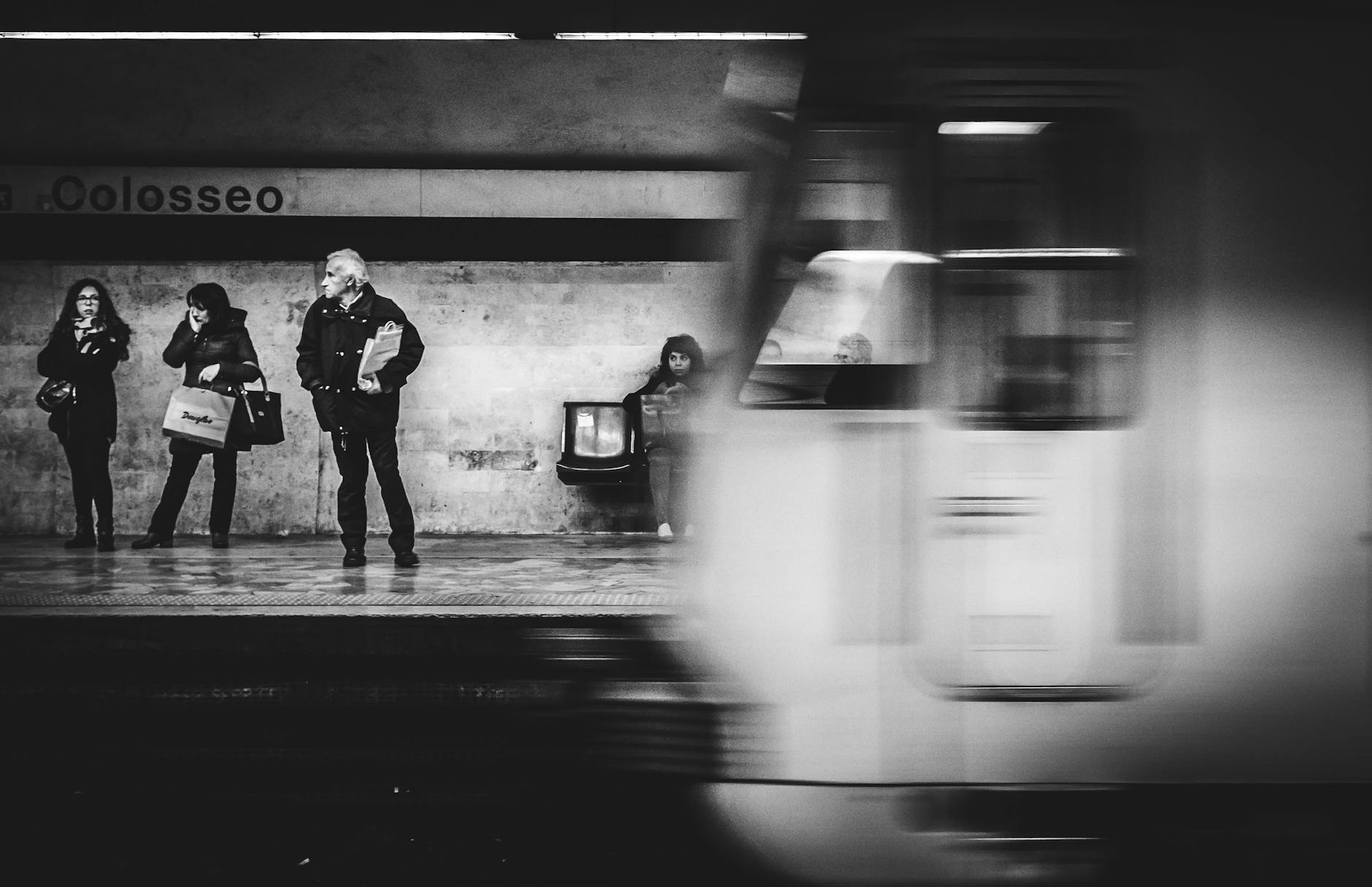
Milan has Italy’s most efficient large-city public transport network. It is the country’s business and finance capital, and its mobility system reflects that: multiple metro lines, strong tram coverage, buses, trolleybuses, suburban rail, airport links, bike-share, car-share, taxis, and heavily managed road access.
Milan is the easiest city in this paper for a visitor to use contactless urban transit. ATM states that travelers can enter the metro and board buses, trams, and trolleybuses with credit/debit cards, smartphones, or smartwatches, and that the system applies the cheapest fare automatically on ATM services.
Main public transport modes
#### Metro
Milan’s metro is the backbone. Lines M1, M2, M3, M4, and M5 cover most high-value visitor and commuter corridors. M4 is especially important because it links Linate Airport to the city. ATM describes M4 as a 21-stop, 15 km line connecting the center to the airport in about 12 minutes for the city-center segment.
Strengths:
Concerns:
#### Trams
Milan’s trams are both practical and iconic. They are useful for central movements not aligned with metro lines and provide a better street-level view than the metro. Some historic trams are charming but slower. For locals, trams are a daily mode, not a sightseeing gimmick.
#### Buses and trolleybuses
Buses and trolleybuses fill outer-neighborhood gaps and night/late service needs. They are slower than metro but important for residents and hotels away from rail stations.
#### Suburban and regional rail
Milan’s suburban rail and regional networks link the wider Lombardy region: Como, Bergamo, Monza, Pavia, Varese, Lecco, and Malpensa corridors. Cadorna, Centrale, Porta Garibaldi, Rogoredo, and other stations have distinct roles.
Tickets and payment
ATM’s visitor-facing materials for Milano Cortina 2026 list a 90-minute ticket at €2.20, a 24-hour ticket at €7.60, a 3-day ticket, and carnet options, and state that the same ticket can be used on metro, buses, trams, trolleybuses, regional trains, and S lines within the relevant fare area.
Practical Milan ticket advice:
Airports
#### Linate (LIN)
Linate is the closest major airport and now the easiest by public transport. M4 links Linate to the city; Milan Linate airport lists the M4 “blue line” service.
Best for:
#### Malpensa (MXP)
Malpensa is farther out. Malpensa Express serves Milan stations, and the operator lists adult tickets at €15, with discounts for children.
Best practice:
#### Bergamo/Orio al Serio (BGY)
Bergamo is a major low-cost airport for Milan-area travel. Most visitors use airport coaches to Milano Centrale or regional bus/rail combinations. It is not “in Milan” in practical terms; plan transfer time.
Driving, Area B, and Area C
Milan is more car-manageable than Rome or Naples in its outer areas, but the center is heavily regulated.
Comune di Milano describes Area B as limiting access to older and more polluting vehicles. The city also provides official services for Area C ticket purchase and rules. Urban Access Regulations describes Milan Area C as a low-emission/congestion scheme.
Practical driving advice:
Taxis and ride-hailing
Taxis are useful for late nights, heavy luggage, and outer-neighborhood trips. Official airport taxi rates and procedures should be checked through airport and municipal sources. Milan’s official taxi service pages cover airport-system context and taxi access.
Cycling and micro-mobility
Milan has bike-share and scooter options, but traffic can feel intense. Cycling is most practical for confident urban riders or protected routes. For visitors, metro/tram is usually simpler.
Local concerns
Milan residents focus on:
Milan bottom line
Milan is Italy’s easiest major city for modern urban transit. Use metro and trams, pay contactless for simplicity, take M4 to/from Linate, Malpensa Express for Malpensa, and avoid driving into Area C unless you know exactly what you are doing.
- Fast and frequent.
- Good interchange logic.
- Strong airport connection at Linate.
- Contactless payment.
- Useful for both visitors and commuters.
- Peak-hour crowding.
- Event surges during trade fairs, design week, fashion week, football, and major exhibitions.
- Station choice matters for suburban rail or airports.
- Contactless is easiest for short stays.
- Use the same card/device for fare capping.
- Tap in and out where required, especially for metro and rail-style gates.
- Multi-day tickets make sense for heavy use.
- Verify zones if going beyond central Milan, including Rho Fiera, Assago, airports, or outer municipalities.
- Short business trips.
- City-center stays.
- Travelers with light luggage.
- Choose the Malpensa Express destination based on hotel/station: Centrale, Cadorna, or Porta Garibaldi may not be interchangeable.
- Allow buffer time for flights.
- Consider taxi/NCC for groups or late arrivals.
- Area C is the central congestion-charge/restricted zone.
- Area B is a wider low-emission access restriction zone targeting older/polluting vehicles.
- Check Area B/Area C eligibility before driving into Milan.
- Rental cars may still be subject to restrictions or charges.
- Garages inside Area C do not automatically remove the need to comply with Area C rules.
- Public transport is usually easier than driving for central Milan.
- Peak-hour crowding.
- Trade-fair and event surges.
- Area B/Area C compliance and fairness.
- Air quality.
- Housing/job commuting from outside the city.
- Night transit.
- Service resilience during strikes.
- Airport access reliability.
Florence
System identity
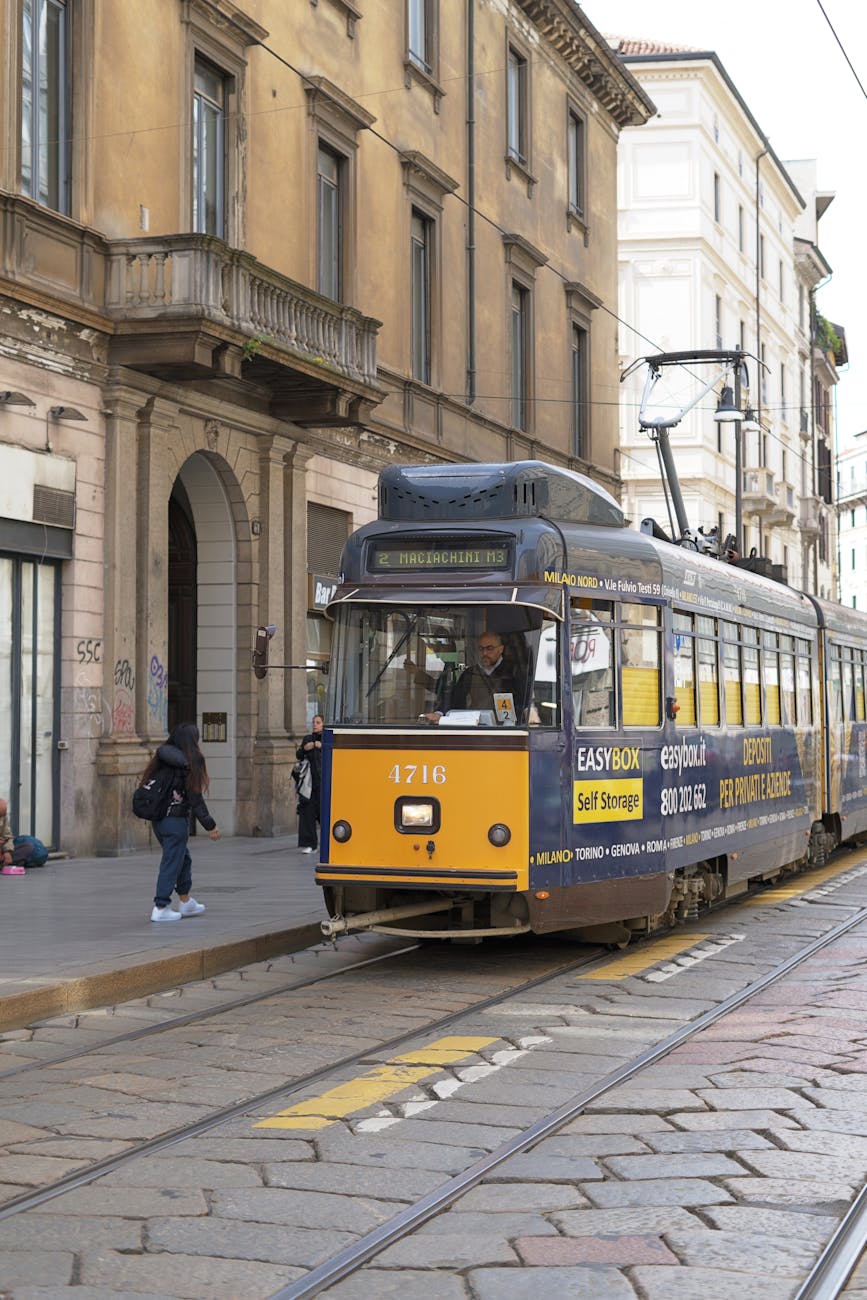
Florence is a walking city supported by trams and buses. It has no metro and does not need one for most central visitor movement. The historic core is compact, dense, and ZTL-protected. For visitors, the main transportation skill is knowing when not to use transport: many trips are faster on foot.
Florence is also one of Italy’s most dangerous cities for tourist driving mistakes, not because the roads are uniquely unsafe, but because the ZTL is easy to violate and the city center is compact enough that driving is rarely worth it.
Main public transport modes
#### Walking
Walking is the default. Most first-time visitor routes can be covered on foot:
Concerns:
#### Tram
Florence’s tram system is modern and useful. T2 is especially important for the airport. Visit Tuscany describes Line T2 as running between Santa Maria Novella railway station and Florence Airport, with a stop near the terminal and about a 20-minute ride in its summary.
Tram uses:
#### Buses
Autolinee Toscane operates buses and tickets for Florence/Tuscany. The operator’s ticket page explains single tickets, paper/digital/contactless options, and the need to validate or activate when boarding.
Buses are useful for:
Visitors in the historic core may use buses less than expected because walking is often faster.
Tickets and payment
Autolinee Toscane lists Florence urban tickets and ticket types. Visit Tuscany states Florence tickets cost €1.70 and last 90 minutes from validation, with SMS purchases costing more plus the SMS charge. The same general ticketing ecosystem covers buses and trams.
Practical Florence ticket advice:
Airport
Florence Airport is close to the city. Best options:
Florence Airport lists taxi fixed-rate information, including €28 standard, €30 daytime holiday, and €32 night rate, with additional supplements for luggage/passengers over the third.
Rail
Firenze Santa Maria Novella (SMN) is the main station for most visitors. It sits near the historic center and is one of the easiest major Italian stations for walking access. Campo di Marte and Rifredi also matter, especially during routing changes or for some high-speed/regional services.
Florence is a strong rail base for:
Trenitalia’s Tuscany Line materials highlight regional services connecting Florence, Pisa, Pistoia, and Lucca.
Driving and ZTL
Florence is one of the clearest “do not drive into the center” cities in Italy. Feel Florence, the city tourism portal, states that those reaching Florence by car must understand private traffic rules because the historic center is not suitable for cars and pedestrian/bus-lane areas are forbidden to traffic. VisitFlorence emphasizes that visitors need a special ZTL permit for the historical center and likely will not have one even with a rental car.
Practical rules:
Taxis
Florence taxis are useful but cannot usually be hailed casually like in some countries. Use taxi ranks, phone/app booking, or hotel assistance. They are especially useful for Piazzale Michelangelo, early trains, airport backup, and mobility-limited travelers.
Cycling and scooters
Florence is flat in the center but crowded. Cycling can be useful outside the densest tourist streets. E-scooter sharing is changing: Florence Daily News reported that shared e-scooter service will end by April 2026 due to safety/new road-code issues.
Local concerns
Residents deal with:
Florence bottom line
Walk first. Use tram T2 for the airport and trams/buses for outer areas. Use taxis selectively. Do not drive into the historic center unless a hotel has registered your vehicle and given exact route instructions.
- Duomo to Uffizi/Ponte Vecchio.
- Santa Maria Novella to San Lorenzo/Duomo.
- Oltrarno to Ponte Vecchio/Santo Spirito.
- Accademia to San Marco/Duomo.
- Crowds.
- Heat.
- Cobblestones.
- Narrow sidewalks.
- Tourist bottlenecks on Ponte Vecchio and around the Duomo.
- Airport to city.
- Santa Maria Novella connections.
- Suburban access.
- Avoiding taxi queues.
- Piazzale Michelangelo area.
- Hillside neighborhoods.
- Outer accommodation.
- Fiesole and other nearby areas depending on route.
- Local resident commuting.
- Buy before boarding where possible.
- Validate/activate immediately.
- Use contactless where available, but do not assume every vehicle or use case is identical.
- Keep a backup paper/digital ticket if relying on buses late at night.
- For a short central stay, walking may eliminate most ticket needs.
- T2 tram to Santa Maria Novella/central area.
- Taxi for heavy luggage, rain, late night, or accommodation not near the tram.
- Pisa.
- Lucca.
- Siena by train/bus depending on preference.
- Bologna.
- Rome.
- Milan.
- Venice.
- Arezzo.
- Park outside the center.
- Use tram, taxi, or walking to the hotel.
- If staying inside the ZTL, ask the hotel for precise plate-registration instructions before arrival.
- Do not blindly follow GPS into the Duomo/Ponte Vecchio/Uffizi area.
- Do not enter bus lanes.
- Keep records if a hotel registers your plate.
- Tourist crowding on pedestrian routes.
- Bus reliability in traffic.
- ZTL enforcement and deliveries.
- Tram expansion works.
- Taxis during peak tourist demand.
- Limited parking.
- Sidewalk congestion from groups and luggage.
- Balancing preservation with daily access.
Venice
System identity
Venice is the transportation outlier. The historic city is a walking-and-boat environment. Cars, ordinary buses, trams, and taxis reach the edge of the historic city at Piazzale Roma, Tronchetto, or the mainland; they do not circulate through the calli and canals like in a normal city.
Venice has three transport geographies:
A visitor must decide whether they are staying in historic Venice, Mestre, Lido, Giudecca, Murano, or elsewhere because the transport plan changes completely.
Main public transport modes
#### Walking
Walking is mandatory in historic Venice. Even with a vaporetto pass, most final access is by foot. Bridges are the main constraint. A hotel that looks “near” on a map may require multiple bridge crossings with luggage.
Practical walking concerns:
#### Vaporetti
ACTV vaporetti are the public water buses. ACTV/AVM pricing materials list a standard waterborne 75-minute ticket at €9.50 and separate road-network tickets for mainland buses/trams/People Mover.
Vaporetto uses:
Vaporetto concerns:
#### ACTV buses, trams, and People Mover
On the mainland and Lido/Pellestrina contexts, ACTV road-network tickets are much cheaper than vaporetto tickets. ACTV lists 75-minute road-network tickets for buses/trams/People Mover contexts and separate waterborne tickets.
The People Mover links Piazzale Roma and Tronchetto parking/cruise-area contexts. AVM states the same ticket can be used for buses and trams in the relevant road-network context.
Tickets and payment
For tourists using boats, multi-day ACTV passes can be better value than repeated €9.50 single rides. Venezia Unica sells public transport products for vaporetti, buses, trams, and People Mover.
Practical Venice ticket advice:
Airport
Venice Marco Polo airport offers distinct transfer choices:
Rail
Venice has two key rail stations:
A train to Mestre may require a second local train, bus, tram, or taxi to reach historic Venice. A train to Santa Lucia puts you at the Grand Canal edge but still requires walking or vaporetto onward.
Driving
Private cars cannot enter historic Venice. Drivers must park at:
Do not rent a car for Venice unless the car is for a wider Veneto/Dolomites/lake itinerary and will be parked during the Venice stay.
Venice access fee and tourism pressure
Venice has an access-fee system for certain day visitors. The official Venice access-fee site explains the fee and early-payment amount, and the FAQ states that those paying by the fourth last day before access pay €5, while late payments within three days pay €10.
This is not exactly a transport fare, but it affects movement into the city because checks and QR-code requirements can appear at access points such as the station or Piazzale Roma on applicable days.
Local concerns
Venice residents face the most unusual transport concerns in this paper:
Venice bottom line
Venice requires planning by geography. Stay near a vaporetto stop if luggage or mobility matters. Use boats when distance, islands, or luggage justify them; walk when routes are short. Do not compare vaporetto fares with normal bus fares — Venice’s network is physically different and more expensive to operate.
- Historic Venice: walking, bridges, vaporetti, water taxis, gondolas for tourism, delivery boats.
- Lagoon/islands: ACTV boats, Alilaguna, private boats, ferries, water taxis.
- Mainland Venice/Mestre/Marghera: buses, trams, cars, trains, taxis, cycling.
- Crowds near Rialto, San Marco, and railway-station routes.
- Bridges with steps.
- Narrow lanes.
- Dead-end streets.
- High water/acqua alta conditions.
- Night navigation in quiet areas.
- Grand Canal travel.
- Santa Lucia/Piazzale Roma to San Marco/Rialto/Accademia depending on route.
- Giudecca.
- Murano, Burano, Torcello, Lido.
- Avoiding long walks for mobility or luggage reasons.
- Expensive single tickets.
- Crowding.
- Slower than walking for some short central trips.
- Step/gangway issues for mobility-limited travelers.
- Route complexity.
- Weather and fog.
- If staying two or more days and using boats repeatedly, price out a 24/48/72-hour or 7-day pass.
- If staying in Mestre and taking bus/tram to Venice only, understand road-ticket vs boat-ticket differences.
- Validate before boarding.
- Keep the ticket/pass accessible for inspection.
- Do not confuse Alilaguna airport boats with ACTV vaporetto passes unless a product explicitly includes the service.
- ATVO/ACTV bus to Piazzale Roma or Mestre: often fastest and cheaper for many travelers. ATVO describes a direct airport bus to Piazzale Roma and Mestre with about 20 minutes to Venice/Mestre in its airport express material.
- Alilaguna airport boat: scenic and useful for hotels near served stops; Alilaguna lists airport-Venice fares such as €18 single and €32 return.
- Private water taxi: expensive but extremely convenient for groups or luxury/luggage-heavy hotel access.
- Land taxi/NCC: useful to Piazzale Roma/Mestre, not into canal-side pedestrian streets unless paired with water service.
- Venezia Santa Lucia: on the historic island, ideal for Venice proper.
- Venezia Mestre: mainland hub, useful for cheaper hotels and regional/high-speed connections.
- Piazzale Roma garages.
- Tronchetto.
- Mestre/Marghera parking with train/bus/tram onward.
- Hotel parking if staying on mainland or Lido-accessible context.
- Tourist crowding on bridges and vaporetto stops.
- High cost and congestion of boat transport.
- Deliveries by boat and handcart.
- Commuting from mainland Mestre/Marghera.
- Acqua alta and climate-related disruption.
- Luggage crowding.
- Access-fee enforcement.
- Balance between residents, workers, students, cruise/day visitors, and overnight tourists.
Bologna
System identity
Bologna is a rail hub and bus city. It has no metro. Its historic center is walkable and protected by ZTL restrictions. Its central station is one of the most important rail nodes in Italy, and the Marconi Express gives it a fast airport link.
Bologna’s mobility identity is shaped by:
Main public transport modes
#### Walking
Bologna’s historic center is compact, and porticoes make walking unusually pleasant. Many visitor trips are on foot:
#### Buses
TPER buses are the main local public transport mode. Bologna Welcome’s transport information notes urban fare integration, ticket machines/contactless/Tper sales points/Roger app options, and the Q bus connection introduced from May 2025.
Bus uses:
#### Marconi Express
Marconi Express is the dedicated airport monorail connecting Bologna Airport, Lazzaretto, and Bologna Centrale. The operator advertises a 7-minute airport-to-city-center connection and Pay&Go contactless use.
The operator’s fare page lists standard fares, including single and return options.
Strengths:
Concerns:
Rail
Bologna Centrale is a key Italian rail hub. It handles high-speed, Intercity, regional, and suburban services. The high-speed AV platforms are underground in the same station complex; travelers need time to move between surface concourses, underground platforms, and street exits.
Bologna is excellent for:
Tickets and payment
Bologna uses local/regional ticketing and apps such as Roger. Bologna Welcome highlights ticket machines, contactless, TPER sales points, web, and Roger app purchase options for urban fares. For visitors, the main rule is to validate correctly and know whether the ticket is for urban bus, airport monorail, regional rail, or another service.
Driving and ZTL
Bologna’s historic center has a Limited Traffic Zone. Bologna Welcome states that within the LTZ there are areas limited 24 hours a day, including pedestrian areas and T areas such as via Rizzoli, via Indipendenza, and via Ugo Bassi, and that visitors may have special access to hotels, public garages, and repair shops in the LTZ.
Practical driving advice:
Taxis
Taxis are useful for airport backup, hills, late nights, and luggage. The Marconi Express will often be faster to Centrale, but taxis may be better door-to-door for groups or hotels outside the station axis.
Cycling
Bologna is more bike-friendly than many Italian cities, and cycling can be practical for residents and confident visitors. The center’s porticoes and student population create a lively pedestrian/cycling environment, though pavements and traffic still require care.
Local concerns
Residents experience:
Bologna bottom line
Bologna is simple if you arrive by train and walk. Use buses for outer areas and Marconi Express for fast airport transfer. Avoid driving inside the old center unless a garage/hotel route is confirmed.
- Bologna Centrale as a major north-south/east-west rail interchange.
- A dense bus network.
- Porticoes that make walking more comfortable in rain/heat.
- A large student population.
- ZTL restrictions inside the old walls.
- Airport monorail convenience.
- Centrale to Piazza Maggiore is a manageable walk for many travelers.
- Quadrilatero, Due Torri, Santo Stefano, university district, and food-market areas are pedestrian-friendly.
- Porticoes offer shade and rain protection.
- Outlying hotels.
- FICO/outer attractions where relevant.
- Hospitals/university areas.
- Suburbs.
- Hillside approaches not pleasant on foot.
- Very fast.
- Clear airport-station use case.
- Avoids road congestion.
- More expensive than ordinary urban bus options.
- May not be best if the hotel is not near Centrale.
- Travelers should check service status before early/late flights.
- Florence.
- Milan.
- Venice/Padua/Verona.
- Rome.
- Rimini/Ravenna/Ferrara/Modena/Parma.
- Day trips across Emilia-Romagna.
- Avoid entering the old-wall area unless your hotel/garage has provided instructions.
- Use garages outside or at the edge of the ZTL.
- Do not assume a GPS route is legal.
- Watch for bus lanes and restricted T areas.
- Bus crowding during student and commuter peaks.
- Rail-station complexity.
- ZTL and parking constraints.
- Event/trade-fair surges.
- Airport-link price versus convenience.
- Air quality and traffic on ring roads.
- Balancing tourist growth with daily life.
Naples
System identity
Naples has one of Italy’s most complex and interesting urban transportation systems. It combines metro, funiculars, buses, trams, regional rail, suburban EAV lines, ferries, taxis, airport buses, and intense walking. The city is vertical, dense, lively, and sometimes chaotic. Transportation is not as polished as Milan, but it is powerful when understood.
Naples is also a gateway city: Pompeii, Herculaneum, Sorrento, Capri, Ischia, Procida, and the Amalfi Coast are common onward targets. This means visitor mobility is not only “how to get around Naples,” but “how to connect Naples city, archaeological sites, ferries, and coastal destinations.”
Main public transport modes
#### Metro
ANM operates metro services including Line 1 and Line 6, along with buses, trams, funiculars, and Alibus products. ANM’s ticket page explains that tickets for trams, buses, metro, funiculars, and Alibus can be purchased through AnmGo and UnicoCampania apps.
Line 1 is useful for:
Naples’s “Art Stations,” especially Toledo, are part of the city’s identity, but transport users should treat them as working stations first.
#### Funiculars
Funiculars are central to Naples mobility because of the city’s hills. They connect lower-city areas with Vomero and other elevated districts. For residents, funiculars are commuting infrastructure. For visitors, they are the easiest way to combine the historic center/waterfront with Vomero views, Certosa di San Martino, and hill neighborhoods.
#### Buses and trams
Buses fill gaps but can be slow due to traffic. Trams have limited usefulness compared with metro/funiculars but remain part of the system.
#### EAV/Circumvesuviana and regional rail
EAV/Circumvesuviana is crucial for Pompeii, Herculaneum, and Sorrento. Visitor-facing schedule guides describe the Naples–Sorrento Circumvesuviana stopping at Pompeii and Herculaneum, with travel times around 30 minutes to Pompeii and longer to Sorrento depending on service.
Important practical facts:
Tickets and payment
Campania’s fare system is integrated through UnicoCampania. The Campania regional government describes the Consorzio Unico Campania as handling fare unification for Naples and Campania and enabling a single ticket for several local public transport modes.
Practical Naples ticket advice:
Airport
Naples Airport is close to the city. ANM states Alibus is the direct connection between Naples International Airport and the city center, including Central Station and the Port of Naples. Naples Airport likewise describes Alibus as a fast connecting bus between airport, Central Station, and port.
Best options:
Ferries and ports
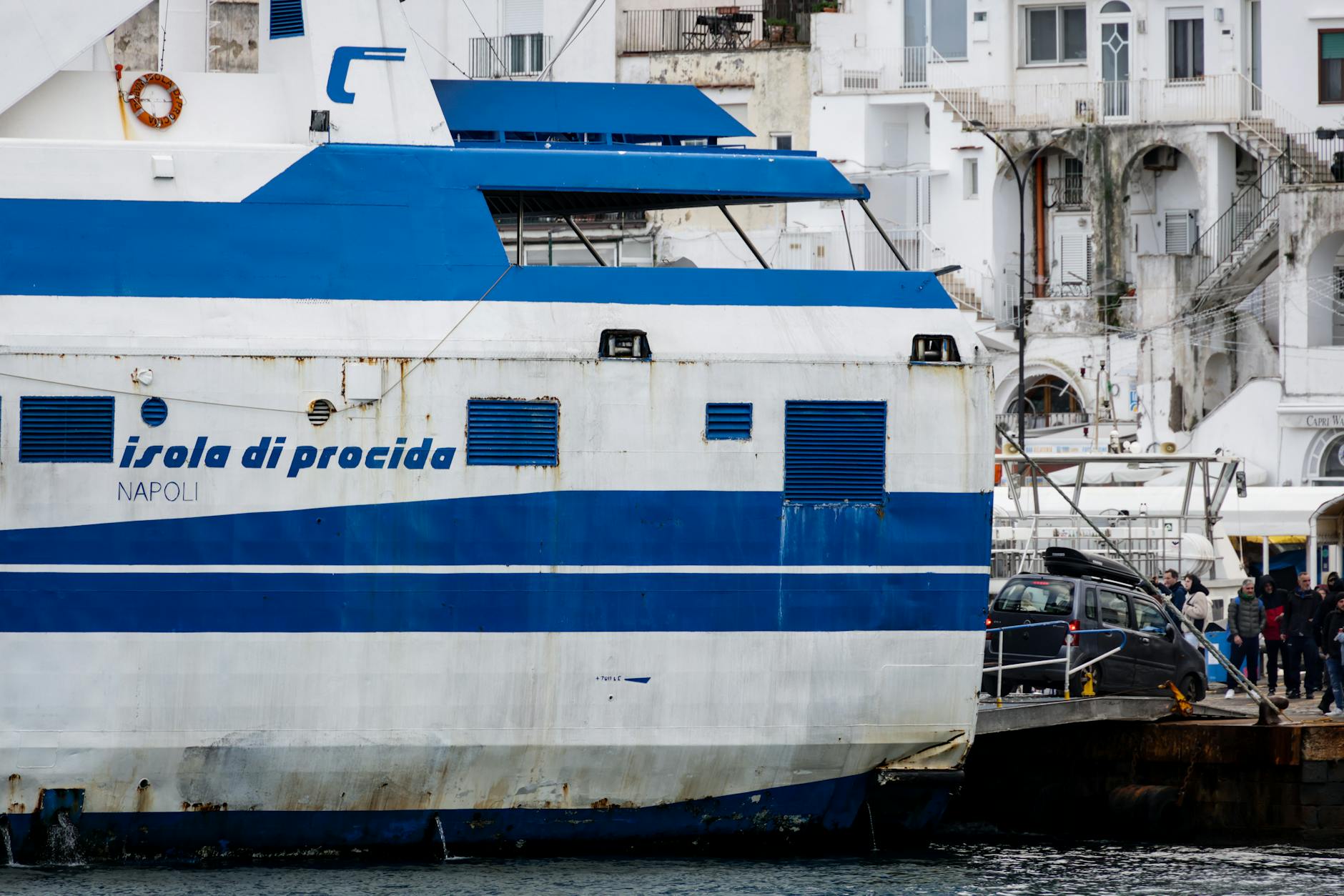
Naples is a ferry city. Port areas connect to Capri, Ischia, Procida, Sorrento, Sicily, and other destinations depending on operator/season. The key practical challenge is matching the right pier, operator, ticket type, and time. Molo Beverello and Calata Porta di Massa serve different services. Always verify the terminal printed on the ticket.
Driving
Driving in Naples is not recommended for inexperienced visitors. Traffic is assertive, streets can be narrow, scooters are everywhere, parking is difficult, and ZTL/bus-lane rules exist. A car may be useful outside Naples for countryside/coast itineraries, but inside the city taxis, metro, funiculars, walking, and ferries are usually better.
Taxis
Official taxis are useful but require attention to fixed fares versus meter. At airport/station/port, use official ranks. Do not accept informal offers from drivers inside terminals. Confirm fixed-rate destinations before departure if applicable.
Walking
Naples rewards walking but demands awareness:
Walking clusters:
Local concerns
Residents deal with:
Naples bottom line
Use metro and funiculars inside the city, Alibus for airport-station-port links, EAV/Circumvesuviana or Campania Express for Pompeii/Sorrento, and ferries for islands. Avoid driving. Expect a less polished but highly functional system if you give yourself time and stay alert.
- Garibaldi/Centrale.
- Municipio/port area.
- Toledo/Spanish Quarter access.
- Museo/archaeological museum.
- Vomero connections via metro/funicular combinations.
- Circumvesuviana is a commuter rail line, not a premium tourist train.
- It can be crowded and hot.
- Luggage space is limited.
- Pickpocketing vigilance is wise.
- The Campania Express tourist train is more comfortable on selected schedules, with reserved-style advantages such as seating, air conditioning, and luggage space according to visitor schedule sources.
- Know whether your ticket is ANM-only, integrated TIC/UnicoCampania, Alibus, EAV, or regional rail.
- Use official apps where possible.
- Validate correctly.
- Keep tickets until after exiting stations.
- For Pompeii/Sorrento, verify whether you are using ordinary Circumvesuviana, Campania Express, Trenitalia, ferry+bus, or private transfer.
- Alibus for station/port connection.
- Taxi for groups, late arrivals, or hotel door-to-door.
- NCC/private transfer for Sorrento/Amalfi/large luggage.
- Historic center lanes are intense and crowded.
- Hills are real.
- Pavements are uneven.
- Scooter traffic can surprise visitors.
- Night walking varies strongly by street and district.
- Spaccanapoli/historic center.
- Archaeological Museum to historic center.
- Spanish Quarter/Toledo/Municipio.
- Waterfront/Chiaia/Santa Lucia.
- Vomero by funicular + walking.
- Multi-operator coordination.
- Crowded and aging suburban rail.
- Road congestion.
- Parking scarcity.
- Hills and elevator/escalator needs.
- Service reliability.
- Tourist pressure on Pompeii/Sorrento routes.
- Airport-bus crowding.
- Safety perception around major stations.
Turin
System identity
Turin is orderly, elegant, and easier to navigate than many Italian cities. It has a broad street grid, trams, buses, an automated metro, regional rail, airport train, taxis, and a comparatively limited central ZTL time window. It is less tourist-overwhelmed than Rome, Florence, or Venice, and its transport system feels more local and commuter-oriented.
Main public transport modes
#### Metro
Turin’s metro is automated, clean, and useful along its corridor. It does not cover every destination, but it is easy to understand. For visitors, it is especially useful for Porta Susa, Porta Nuova area connections, Lingotto, and neighborhoods along the line.
#### Trams and buses
GTT operates buses, trams, and the underground. Turismo Torino describes GTT ticket solutions for the Torino network, including the underground. Trams remain part of Turin’s identity and are useful for areas beyond the metro.
#### Sassi–Superga rack tramway
The historic Sassi–Superga line is a special scenic/hill route rather than ordinary city transit for most visitors. It is useful for Superga Basilica and views, but schedules and ticket conditions should be checked separately.
Tickets and payment
GTT’s fare page states that city tickets are valid for 100 minutes and a single metro journey, with validation required each time boarding bus/tram or entering the metro within the validity period. GTT also describes the Tap&Go contactless system, currently usable in metro stations and on specified bus routes, accepting major contactless card networks.
Practical Turin ticket advice:
Airport
Turin Airport has a rail link to Porta Susa. The airport states the railway line connects Turin Airport with Torino Porta Susa in about half an hour, 7 days a week, with a €3.70 fare, and that the airport station is opposite arrivals. Trenitalia similarly describes Torino-Caselle Airport rail connections.
Best options:
Rail
Turin has two main stations:
Both matter. Do not assume “Turin station” means one place.
Turin is well connected to Milan and the high-speed network. It is also the rail gateway to parts of Piedmont and the Alps, though mountain access often requires regional trains/buses or a car.
Driving and ZTL
Turin is easier to drive around than Florence or Naples, but the center has an LTZ. Turin’s official infomobility portal states the Central LTZ is in force from 7:30 to 10:30 a.m. on weekdays excluding Saturday, during which transit and parking are prohibited except for authorized vehicles.
Practical driving advice:
Walking and cycling
Turin’s grid, arcades, and broad streets make walking pleasant. Main walking clusters include:
Cycling is more practical than in Rome or Naples, though traffic awareness remains necessary.
Local concerns
Residents focus on:
Turin bottom line
Turin is one of the easiest Italian cities in this list for calm urban movement. Use metro, trams, and buses; take the airport train to Porta Susa; walk the center; and respect the morning ZTL if driving.
| City | Best default mode for visitors | Strongest system feature | Biggest visitor trap | Biggest local concern |
|---|---|---|---|---|
| Rome | Metro + walking + buses/taxis as needed | Broad network with Tap & Go and useful airport rail | Assuming buses are always reliable or driving into ZTLs | Service reliability, crowding, maintenance, traffic |
| Milan | Metro/tram + contactless | Strong metro, trams, airport links, contactless fares | Confusing airports/stations or Area B/C rules | Congestion, air quality, peak crowding, commuter pressure |
| Florence | Walking + tram/bus | Compact center and airport tram | Driving into the ZTL; not validating tickets | Tourist crowding, parking, deliveries, tram works |
| Venice | Walking + vaporetto | Unique water-transit network | Underestimating bridges/luggage or vaporetto cost | Overtourism, boat crowding, resident access, acqua alta |
| Bologna | Walking + buses + rail | Major rail hub and fast airport monorail | Confusing Bologna Centrale/AV levels or ZTL | Bus frequency, student/event crowding, ZTL/parking |
| Naples | Metro + funicular + walking + EAV/ferries | Multi-modal gateway to Pompeii/Sorrento/islands | Treating Circumvesuviana like premium tourist rail | Operator fragmentation, congestion, reliability, station crowding |
| Turin | Metro/tram/bus + walking | Orderly grid, automated metro, airport rail | Assuming all trips are on metro or ignoring ZTL sub-zones | Air quality, outer-neighborhood frequency, car restrictions |
- A 100-minute ticket covers many simple trips.
- Validate each boarding where required.
- Contactless works in the metro and selected routes; do not assume it works everywhere unless GTT has expanded coverage.
- Tourist transport add-ons may be available with Torino+Piemonte Card products at tourist offices.
- Train to Porta Susa for many city-center transfers.
- Bus if better matched to destination or train times.
- Taxi/NCC for late arrivals, groups, or heavy luggage.
- Porta Susa: important for high-speed and airport rail.
- Porta Nuova: central terminus near many hotels and sights.
- Avoid central ZTL hours.
- Watch for other sub-zones with different rules.
- Use garages and verify hotel access.
- Be aware of air-quality/emission restrictions in the wider region during pollution episodes.
- Porta Nuova to Piazza San Carlo/Piazza Castello.
- Egyptian Museum/Royal Palace/Mole Antonelliana areas.
- Po river and Valentino Park.
- Quadrilatero Romano.
- Metro corridor limitations.
- Bus/tram frequency outside the core.
- Air quality in the Po Valley.
- Parking and ZTL compliance.
- Regional rail links to suburbs and airport.
- Event surges and football traffic.
- Winter weather/fog.
Classic first-time route: Milan → Venice → Florence → Rome → Naples
Use high-speed rail between cities. Do not rent a car. Use Milan ATM contactless, Venice vaporetto pass if staying long enough, Florence walking/T2 tram, Rome Tap & Go, and Naples metro/funicular/EAV/ferry mix.
Northern urban route: Turin → Milan → Bologna → Venice
Use rail. Turin to Milan is easy by high-speed or regional service depending on budget. Milan to Bologna is high-speed. Bologna to Venice is rail. Cars are unnecessary unless continuing into the countryside, lakes, or mountains.
Art-city route: Rome → Florence → Bologna → Venice
Use high-speed rail. Florence and Bologna are walkable; Venice is walk/boat; Rome is metro/walk/bus/taxi. Avoid choosing hotels based only on charm; station and transit access can matter more with luggage.
Naples and Campania route: Rome → Naples → Pompeii/Sorrento/Capri
Use high-speed rail Rome–Naples. In Naples, use metro/funiculars and Alibus if flying. Use EAV/Circumvesuviana or Campania Express to Pompeii/Sorrento, and ferries for islands. For Amalfi Coast, compare ferry, SITA bus, train+bus, or private driver; do not assume a rental car is relaxing.
Countryside add-on: Florence or Bologna with rental car
Take train into Florence/Bologna, stay without a car in the city, then rent a car after the city stay from a location that avoids the ZTL. Return the car before entering the next major city. Book rural lodging with parking.
Mobility-limited route
Prioritize Milan and Turin for easier urban transit, use taxis/NCC in Rome and Florence as needed, plan Venice carefully around vaporetto stops and bridge-free routes where possible, and avoid heavy luggage transfers through Naples/Circumvesuviana unless using private assistance.
: Trenitalia, “Discover Italy with Trenitalia trains.” https://www.trenitalia.com/en.html
: Trenitalia, “Frecciarossa.” https://www.trenitalia.com/en/frecce/frecciarossa.html
: Trenitalia, “Travelling on Regional trains.” https://www.trenitalia.com/en/information/travelling-on-regional-trains.html
: Trenitalia, “Digital Regional Ticket.” https://www.trenitalia.com/en/information/digital-regional-ticket.html
: Trenitalia, “In case of strike.” https://www.trenitalia.com/en/information/in-case-of-strike.html
: Trenitalia, “ViaggiaTreno train search.” https://www.viaggiatreno.it/vt_pax_internet/mobile?lang=EN
: Italo, “Italian high-speed train.” https://www.italotreno.com/en
: Italo, “Train Routes Italy: Italo train stops.” https://www.italotreno.com/en/destinations-timetable
: FlixBus, “Bus Travel in Italy.” https://www.flixbus.com/bus/italy
: Itabus, “Travel by bus.” https://www.itabus.it/en/home
: Italia.it, “Driving in Italy: requirements and rules.” https://www.italia.it/en/italy/things-to-do/tutto-quello-che-ce-da-sapere-per-guidare-in-italia-regole-stradali-consigli-e-informazioni-utili
: U.S. Embassy & Consulates in Italy, “Transportation and Driving in Italy.” https://it.usembassy.gov/transportation-and-driving-in-italy/
: Italian Ministry of Foreign Affairs, “Driving licence.” https://www.esteri.it/en/servizi-consolari-e-visti/italiani-all-estero/autoveicoli_e_patenti/patenteguida/
: Urban Access Regulations, “Italy.” https://urbanaccessregulations.eu/countries-mainmenu-147/italy-mainmenu-81
: Autostrade per l’Italia, “Payment methods.” https://www.autostrade.it/en/servizi-al-cliente/pedaggio/metodi-di-pagamento
: Telepass, “Highways: Pay the Toll with Telepass.” https://www.telepass.com/en/consumer/services/motorway
: ATAC Roma, “tap&go.” https://www.atac.roma.it/en/tickets-and-passes/tap-go
: ATAC Roma, “Maps.” https://www.atac.roma.it/en/utility/maps
: Urban Access Regulations, “Roma (Rome) - Limited Traffic Zone.” https://urbanaccessregulations.eu/countries-mainmenu-147/italy-mainmenu-81/rome-ar
: Turismo Roma, “Historic City Centre ZTL: 30 km/h Zone introduced.” https://www.turismoroma.it/en/news/historic-city-centre-ztl-30-kmh-zone-introduced
: Trenitalia, “Leonardo express.” https://www.trenitalia.com/en/services/leonardo-express.html
: Trenitalia, “Connections to and from Rome Fiumicino Airport.” https://www.trenitalia.com/en/services/connections-to-and-from-rome-fiumicino-airport.html
: Trenitalia, “Ciampino Airlink.” https://www.trenitalia.com/en/services/ciampino-airlink.html
: Aeroporti di Roma, “Taxi.” https://www.adr.it/web/aeroporti-di-roma-en/pax-fco-taxi
: Reuters, “Italy regulator probes Rome bus and metro company over poor service,” February 25, 2025. https://www.reuters.com/business/autos-transportation/italy-regulator-probes-rome-bus-metro-company-over-poor-service-2025-02-25/
: Reuters, “Rome's bus and metro company to offer refunds for poor service,” December 3, 2025. https://www.reuters.com/sustainability/boards-policy-regulation/romes-bus-metro-company-offer-refunds-poor-service-2025-12-03/
: ATM Milano, “How to get around Milan by public transport - Tickets.” https://www.atm.it/EN/VIAGGIACONNOI/BIGLIETTI/Pages/HowtogetaroundMilanbypublictransport.aspx
: ATM Milano, “Milano Cortina 2026 - Complete guide to ATM services.” https://www.atmmilano.it/en
: ATM Milano, “M4 line, San Cristoforo-Linate.” https://www.atm.it/en/ViaggiaConNoi/InfoTraffico/Pages/M4passengerserviceinformation2.aspx
: Milan Linate Airport, “How to get to Linate by underground.” https://www.milanolinate-airport.com/en/from-to/by-underground
: Malpensa Express, “Ticket prices Milan–Malpensa Airport.” https://www.malpensaexpress.it/en/tickets/travel-documents/prices/
: Comune di Milano, “Area B.” https://www.comune.milano.it/en/argomenti/mobilita/area-b
: Comune di Milano, “Area C | Buy the ticket.” https://www.comune.milano.it/en/servizi/mobilita/area-c-acquista-il-ticket
: Urban Access Regulations, “Milano Area C LEZ & CS.” https://urbanaccessregulations.eu/countries-mainmenu-147/italy-mainmenu-81/milan-area-c-charging-scheme
: Comune di Milano, “Use the taxi service.” https://www.comune.milano.it/en/servizi/mobilita/utilizzare-il-servizio-taxi
: Autolinee Toscane, “Ticket and passes.” https://www.at-bus.it/en/buy/ticket-and-passes
: Visit Tuscany, “From Florence Airport to Florence city center.” https://www.visittuscany.com/en/ideas/from-florence-airport-to-florence-city-center/
: Visit Tuscany, “Transport in Florence: how to get around.” https://www.visittuscany.com/en/ideas/how-to-get-around-in-florence/
: Florence Airport, “Taxi.” https://firenze-airport.it/en/passengers/transports/taxi
: Feel Florence, “By car in Florence - ZTL.” https://www.feelflorence.it/en/editorial-staff/car-florence-ztl
: VisitFlorence, “Driving in Florence - Do's and Don'ts.” https://www.visitflorence.com/moving-around-florence/by-car.html
: Trenitalia, “Tuscany Line.” https://www.trenitalia.com/en/services/tuscany-line.html
: Florence Daily News, “E-scooter sharing to end in Florence by April 2026.” https://www.florencedailynews.com/2025/11/24/e-scooter-sharing-to-end-in-florence-by-april-2026/
: AVM/ACTV, “Tickets and pricing.” https://avm.avmspa.it/en/content/prices
: ACTV/AVM, “Venice Urban Services.” https://actv.avmspa.it/en/content/venice-urban-services-0
: Venezia Unica, “Public Transport.” https://www.veneziaunica.it/en/getting-around-venice/public-transport
: AVM, “People Mover.” https://avm.avmspa.it/en/content/people-mover-0
: Alilaguna, “Public transport.” https://www.alilaguna.it/en/
: Alilaguna, “Fares and Tickets.” https://www.alilaguna.it/en/biglietti/tariffe
: ATVO, “Venice Airport Bus Express to City Centre and Mestre.” https://www.atvo.it/en/services-provided/airport-services/venice-airport-bus-express
: Venezia Unica / City of Venice, “What is the Venice Access Fee.” https://cda.veneziaunica.it/en/access-fee
: City of Venice, “Access Fee FAQ.” https://cda.ve.it/en/faq
: Bologna Welcome, “Plan your trip.” https://www.bolognawelcome.com/en/information/plan-your-trip
: Marconi Express, “From Bologna Airport to city centre in 7 minutes.” https://www.marconiexpress.it/en/
: Marconi Express, “Discover rates and discounts.” https://www.marconiexpress.it/en/tickets/fares/
: Bologna Welcome, “Limited traffic area (ZTL).” https://www.bolognawelcome.com/en/other/other/limited-traffic-area-ztl-en
: ANM Napoli, “Biglietti e abbonamenti.” https://www.anm.it/s/biglietti-e-abbonamenti?language=en_US
: ANM Napoli, “Alibus.” https://www.anm.it/s/alibus?language=en_US
: Aeroporti di Napoli, “By bus.” https://www.aeroportodinapoli.it/en/by-bus
: Regione Campania, “Consorzio Unico Campania – Unified Regional Fare.” https://www.regione.campania.it/en/printable/consorzio-unico-campania-unified-regional-fare
: Visit Pompeii Vesuvius, “2026 Schedules for the Circumvesuviana Train.” https://www.visitpompeiivesuvius.com/en/naples-to-sorrento-train-schedule
: Sorrento Insider, “2026 Campania Express Train Tickets and Schedules.” https://www.sorrentoinsider.com/en/campania-express-train-schedule
: GTT Torino, “Urban and suburban transport fares.” https://www.gtt.to.it/cms/en/fares
: GTT Torino, “Using public transport.” https://www.gtt.to.it/cms/en/howtouse
: Turismo Torino, “Bus, Tram and Metro Tickets.” https://turismotorino.org/en/visit/plan-your-trip/getting-around/by-public-transport/bus-tram-and-metro-tickets
: Turismo Torino, “Torino+Piemonte Card.” https://turismotorino.org/en/visit/plan-your-trip/tourist-products/torino-piemonte-card
: Turin Airport / SAGAT, “By Train.” https://www.aeroportoditorino.it/en/tomove/parking-transport/by-train
: Trenitalia, “Torino-Caselle Airport.” https://www.trenitalia.com/en/services/torino-caselle-airport.html
: Muoversi a Torino, “Limited Traffic Zone.” https://muoversiatorino.it/en/limited-traffic-zone/
: Reuters, “Italy to enforce helmets, insurance for e-scooter riders after accidents,” November 20, 2024. https://www.reuters.com/world/europe/italy-enforce-helmets-insurance-e-scooter-riders-after-accidents-2024-11-20/