*A practical analysis for visitors, foreign residents, and local users across the island of Ireland* Prepared: April 22, 2026
Scope and important note
This paper treats Ireland as a travel region across the island of Ireland because the requested city list includes Belfast, which is in Northern Ireland, part of the United Kingdom. That matters in practical ways: the Republic of Ireland uses the euro, Transport for Ireland, Leap, Iarnród Éireann/Irish Rail, Bus Éireann, Luas, and National Transport Authority taxi rules; Belfast uses pounds sterling, Translink, NI Railways, Metro, Glider, Ulsterbus, UK road rules, and UK immigration rules. A traveler moving between Dublin, Galway, Cork, Killarney, Limerick, Kilkenny, or Dingle and Belfast is crossing an invisible land border but also crossing into a different transport, payment, road-sign, and legal environment.
The goal is practical rather than academic. The paper covers what a visitor, student, worker, or local resident may need to use: private vehicles, rental cars, taxis, ride-hailing apps, city buses, rural buses, intercity coaches, rail, DART, Luas, commuter rail, ferries, airports, airport buses, cycling, bike share, e-scooters, walking, accessibility, luggage, children, weather disruption, safety, etiquette, and common frustrations.
Contents
- [Executive summary](#executive-summary)
- [Part I — Island-wide and national transportation in Ireland](#part-i--island-wide-and-national-transportation-in-ireland)
- [1. The Irish transportation model](#1-the-irish-transportation-model)
- [2. Practical decision framework](#2-practical-decision-framework)
- [3. Operators, authorities, and the Republic/Northern Ireland split](#3-operators-authorities-and-the-republicnorthern-ireland-split)
- [4. Payment systems, fares, apps, and tickets](#4-payment-systems-fares-apps-and-tickets)
- [5. Rail, DART, commuter rail, Luas, and the Enterprise](#5-rail-dart-commuter-rail-luas-and-the-enterprise)
- [6. Buses, intercity coaches, Local Link, and rural mobility](#6-buses-intercity-coaches-local-link-and-rural-mobility)
- [7. Taxis, ride-hailing, and late-night travel](#7-taxis-ride-hailing-and-late-night-travel)
- [8. Private vehicles, rental cars, tolls, and parking](#8-private-vehicles-rental-cars-tolls-and-parking)
- [9. Airports and airport transfers](#9-airports-and-airport-transfers)
- [10. Ferries, islands, and sea travel](#10-ferries-islands-and-sea-travel)
- [11. Walking, cycling, bike share, e-scooters, and micromobility](#11-walking-cycling-bike-share-e-scooters-and-micromobility)
- [12. Accessibility, luggage, families, pets, and bikes](#12-accessibility-luggage-families-pets-and-bikes)
- [13. Weather, disruptions, safety, and etiquette](#13-weather-disruptions-safety-and-etiquette)
- [14. Cross-border travel: Republic of Ireland to Northern Ireland](#14-cross-border-travel-republic-of-ireland-to-northern-ireland)
- [15. Recommended strategies by traveler type](#15-recommended-strategies-by-traveler-type)
- [Part II — City-by-city analysis](#part-ii--city-by-city-analysis)
- [Dublin](#dublin)
- [Galway](#galway)
- [Cork](#cork)
- [Killarney](#killarney)
- [Belfast](#belfast)
- [Limerick](#limerick)
- [Kilkenny](#kilkenny)
- [Dingle](#dingle)
- [Comparative mode matrix](#comparative-mode-matrix)
- [Practical itinerary examples](#practical-itinerary-examples)
- [Quick checklist](#quick-checklist)
- [References](#references)
Executive summary
Ireland is easy to visit without a car in Dublin, Belfast, Cork, Galway, Limerick, Kilkenny, and much of Killarney, but it becomes much harder once the trip turns rural, coastal, or national-park oriented. The transport system is not weak everywhere; it is uneven. Dublin has dense bus, tram, DART, commuter rail, and airport coach coverage. Belfast has a coherent Translink bus/rail network and a strong city bus spine. Cork, Galway, and Limerick have workable city buses but weaker frequency and reliability than large continental European cities. Killarney and Kilkenny are highly walkable, but local public transport is limited outside core routes. Dingle is scenic and rewarding, but it is the hardest of the requested places to do fully car-free.
The simplest rule is: use public transport inside the main cities, use trains or intercity coaches between major cities, and rent a small car only when the trip demands rural freedom. A car is not useful in central Dublin or central Belfast, and it can be a liability in old city centres with narrow streets, bus gates, limited parking, high parking costs, and congestion. A car becomes useful for the Dingle Peninsula, Ring of Kerry, Beara, Connemara, rural Clare, parts of Donegal, the Wicklow Mountains, and scattered castles or trailheads.
For the Republic of Ireland, the most useful public transport tools are TFI Live, TFI Journey Planner, TFI Leap Card, TFI Go, Irish Rail, and the operator apps or websites for specific coaches. Transport for Ireland states that its Journey Planner covers train, bus, tram, car, taxi, and bicycle journeys; TFI Live provides real-time information and journey planning across the TFI network. The Leap Card is the default stored-value payment card across much of the Republic’s public transport network, including Dublin, surrounding commuter areas, and the Cork, Galway, Limerick, and Waterford regions. In Dublin, the Leap Visitor Card can be excellent for short visits because it provides unlimited travel for selected periods on Dublin city buses, Luas, DART, and commuter rail in Dublin Zone 1.
In Dublin, the best operating pattern is Leap plus walking plus bus/Luas/DART. The TFI 90 Minute Fare applies to most Zone 1 journeys on Dublin Bus, Go-Ahead Ireland Dublin city services, Luas, DART, and commuter rail within Zone 1, allowing transfers within 90 minutes for the same capped fare. The main caution is that Dublin Airport still has no rail link as of this paper. Use Dublin Bus/TFI routes, Aircoach, Dublin Express, other coaches, taxi, or private transfer. MetroLink is planned to link Dublin Airport with the city centre, but it remains a future project rather than something a 2026 visitor can use.
For intercity travel in the Republic, Irish Rail is comfortable but not always fastest or most direct. It is strong on Dublin–Cork, Dublin–Galway, Dublin–Limerick, Dublin–Waterford/Kilkenny, Dublin–Belfast, Dublin–Sligo, and Dublin–Westport/Ballina corridors, but some journeys require a change, and routes are Dublin-centred. Irish Rail provides national, Dublin, and Cork-area maps and live train tools. Coaches often beat rail on airport-to-city and cross-country trips, such as Dublin Airport–Galway, Dublin Airport–Belfast, Cork–Limerick–Galway, or Shannon Airport–Limerick/Galway.
For Northern Ireland and Belfast, use Translink. Belfast’s core modes are Metro buses, Glider bus rapid transit, NI Railways, Ulsterbus, airport buses, taxis, walking, and bike share. Translink supports contactless payment on many services; its Metro contactless structure includes a daily cap, and Belfast also has the Belfast Visitor Pass for unlimited travel within the pass zone on Metro, NI Railways, Ulsterbus, and Glider for 1, 2, or 3 days.
The biggest practical risks are not usually safety. They are missed rural connections, late-night taxi scarcity, weather, unrealistic car itineraries, and underestimating walking time in rain or wind. Ireland’s official weather warning system uses Yellow, Orange, and Red categories; severe Atlantic weather can disrupt roads, rail, ferries, flights, and buses. Travelers should check operator service updates before important transfers.
The most important visitor recommendations are:
- Do not rent a car for Dublin. Use public transport and taxis. Rent after leaving the city if you need rural access.
- Use a small automatic car if driving rurally, and book early. Many rentals are manual unless you reserve automatic.
- Check whether your route is better by train or coach, especially if starting or ending at an airport.
- Do not assume Dublin rules apply in Belfast. Different country, currency, operator, ticketing, road signs, and immigration/ETA regime.
- For Dingle, plan carefully. It can be reached by bus via Tralee, but sightseeing beyond Dingle town usually needs a car, bicycle, organized tour, taxi, or very careful Local Link planning.
- Build weather slack into coastal and rural days. Ferries, mountain roads, scenic drives, and exposed walks are more weather-sensitive than city transport.
1. The Irish transportation model
Ireland’s transport geography is defined by a strong capital, several mid-sized cities, scattered rural settlement, a tourism economy heavily oriented toward coast and countryside, and two jurisdictions on one island. Most long-distance infrastructure in the Republic is radial: Dublin sits at the centre of the motorway, rail, coach, airport, and administrative network. That makes Dublin-to-city trips relatively simple, but city-to-city trips outside Dublin can be slower or require a transfer.
The island’s transport systems can be grouped into four layers:
For a visitor, the system is friendly in some ways and unforgiving in others. English-language information is abundant, people are helpful, and the main cities are manageable. The difficulty is that Ireland is not a single tap-in/tap-out nationwide system like the Netherlands or Switzerland. You must know which operator you are using, whether Leap applies, whether a seat should be reserved, whether cash is accepted, and whether the last rural bus has already gone.
- Urban public transport. Dublin has the most complete system: buses, Luas trams, DART, commuter rail, taxis, bike share, and dense walking. Belfast has Metro, Glider, NI Railways, Ulsterbus, taxis, and bike share. Cork, Galway, and Limerick rely mainly on bus plus walking and taxis, with Cork also having useful commuter rail.
- Intercity public transport. Irish Rail and intercity coaches connect the major cities and tourist regions. Rail is pleasant and less affected by road congestion, while coaches are often more flexible and better connected to airports.
- Rural and tourism transport. TFI Local Link, Bus Éireann regional routes, seasonal tours, private coaches, taxis, rental cars, bicycles, and ferries fill gaps. This layer is where planning matters most.
- Private mobility. Cars remain important outside cities. Locals in rural Ireland often need cars because public transport frequency may be limited, especially evenings and Sundays.
2. Practical decision framework
Use this decision tree before each trip:
| Travel situation | Best default choice | Why |
|---|---|---|
| Inside central Dublin | Walk, Luas, bus, DART, taxi if needed | Dense network; parking and driving are poor value |
| Dublin Airport to Dublin city | TFI bus, Aircoach, Dublin Express, taxi | No rail link yet; coaches and buses are direct |
| Dublin to Cork/Galway/Limerick/Kilkenny/Belfast | Train or coach | Compare station location, fare, timing, and luggage |
| Cork/Galway/Limerick city centres | Walk plus city bus or taxi | Compact cores; buses useful for suburbs |
| Killarney town and National Park | Walk, bicycle, shuttle/tour, taxi, jaunting car | Many attractions are close, but not all |
| Dingle Peninsula sightseeing | Car, organized tour, bicycle/e-bike in good weather, taxi | Public transport reaches Dingle but not every viewpoint conveniently |
| Belfast city centre and Titanic Quarter | Walk, Glider, Metro, rail/taxi | Glider is useful east-west and for Titanic Quarter |
| Rural coast, castles, trailheads, scenic loops | Rental car or tour | Public transport may be too infrequent |
| Late-night travel | Pre-book taxi, use night buses where available | Taxi supply can be tight, especially weekends |
| Mobility impairment or heavy luggage | Taxi/private transfer or confirmed accessible route | Step-free access varies by station/stop and town |
The harsh truth: Ireland rewards visitors who plan one region per day. It punishes visitors who try to do Dublin, Galway, Cliffs of Moher, Dingle, and Belfast as casual same-day hops. Distances look small on maps, but rural roads, weather, limited buses, and sightseeing stops stretch travel times.
3. Operators, authorities, and the Republic/Northern Ireland split
Republic of Ireland
Transport for Ireland is the public-facing brand of the National Transport Authority. It brings together information for public transport in the Republic, including journey planning, timetables, live departures, network maps, fare information, Leap, TFI Local Link, and service updates. The main operators a traveler will encounter are:
Northern Ireland and Belfast
Belfast and Northern Ireland are primarily served by Translink, which brings together Metro, Glider, Ulsterbus, Goldliner, and NI Railways information and ticketing. Belfast’s system is not connected to Leap or TFI. It uses pounds sterling, Translink tickets, contactless payment, mLink, and Translink travel cards. The Dublin–Belfast rail service, the Enterprise, is jointly operated by Iarnród Éireann and NI Railways/Translink and links Dublin Connolly with Belfast Grand Central.
Why this matters
A visitor can easily move between the Republic and Belfast, but not with one national card. A Dublin Leap Card is not a Belfast card. A Belfast Visitor Pass is not a Dublin card. Taxi rules differ. Road speed units differ. Some apps are jurisdiction-specific. Even basic assumptions such as where to buy a ticket, whether contactless works, and which currency is accepted change at the border.
- Iarnród Éireann / Irish Rail for intercity rail, DART, Dublin commuter rail, and Cork commuter rail.
- Dublin Bus and Go-Ahead Ireland for many Dublin urban bus routes.
- Luas for Dublin’s tram network, with Red and Green lines.
- Bus Éireann for city, town, regional, rural, airport, and intercity services; Expressway is Bus Éireann’s commercial coach arm.
- TFI Local Link for rural and local bus services where conventional service is limited.
- City Direct for some services in Galway and Kilkenny.
- Commercial coach operators such as Aircoach, Dublin Express, Citylink, GoBus, Wexford Bus, and others depending on route.
4. Payment systems, fares, apps, and tickets
TFI Leap Card
The TFI Leap Card is the most important payment tool in the Republic of Ireland’s public transport system. Leap is a prepaid card that offers lower fares than cash on many services and is valid on buses, trains, trams, and many commercial services across the TFI network. Leap is used in Dublin and surrounding counties and in Cork, Galway, Limerick, Waterford, and some other services.
For residents, students, repeat visitors, and anyone spending more than a short Dublin stay in the Republic, a regular Leap Card is usually more flexible than a visitor-only card. It is pay-as-you-go, can be topped up, and can work outside Dublin in cities such as Cork, Galway, and Limerick when accepted.
Leap Visitor Card
The Leap Visitor Card is designed for tourists in Dublin. It provides unlimited travel for the selected period on Dublin City Bus services operated by Dublin Bus and Go-Ahead Ireland, Luas, DART, and commuter rail in Zone 1: TFI Dublin City. It is excellent for someone staying mostly in Dublin and using transit several times per day. It is not a nationwide tourist pass and should not be bought under the assumption that it covers Galway, Cork, Belfast, Dingle, or intercity rail.
TFI 90 Minute Fare
In Dublin Zone 1, the TFI 90 Minute Fare is one of the most visitor-friendly fare rules. It applies to most journeys taken on TFI bus, train, and tram services in Zone 1, whether the journey uses one service or several services within the 90-minute period. The services include Dublin City Bus operated by Dublin Bus and Go-Ahead Ireland, Luas, and DART/commuter rail within Zone 1.
The practical habit is simple: use the same Leap Card and tap correctly on each service. For Luas and rail, tapping on and off matters. For buses, ask or tap as directed. Do not treat Leap as a London-style contactless bank card; Leap is its own card.
TFI Go and TFI Live
TFI Live is for real-time journey planning and live departures. TFI Go is for buying tickets for Bus Éireann, TFI Local Link, and selected commercial bus operators on your phone; the ticket is activated before boarding and shown to the driver. These are not identical apps. Many visitor mistakes come from downloading one app and assuming it does everything.
Cash and bank cards in the Republic
Cash still matters on some bus services and with some rural/local situations. Contactless bank-card payment is not yet universal across all public transport in the Republic. Leap and TFI Go are more reliable than assuming a bank card will work everywhere.
Translink payment in Belfast and Northern Ireland
Translink supports contactless payment on many bus and rail services. For Metro in Belfast, Translink publishes contactless fare options and a daily cap; contactless payment is made by tapping a card or smart device on the reader. Translink also sells tickets and travel cards online and through the mLink app. The Belfast Visitor Pass provides unlimited travel in the Belfast Visitor Pass Zone for 1, 2, or 3 days on Metro, NI Railways, Ulsterbus, and Glider and includes visitor discounts.
Currency split
The Republic uses euro. Northern Ireland uses pounds sterling. Cards are widely accepted, but visitors should not assume a euro cash fare will be accepted in Belfast or that sterling cash will be useful in Dublin. Cross-border coaches and trains generally sell through online systems, but local taxis, buses, and small transactions are jurisdiction-specific.
5. Rail, DART, commuter rail, Luas, and the Enterprise
Irish Rail intercity and commuter rail
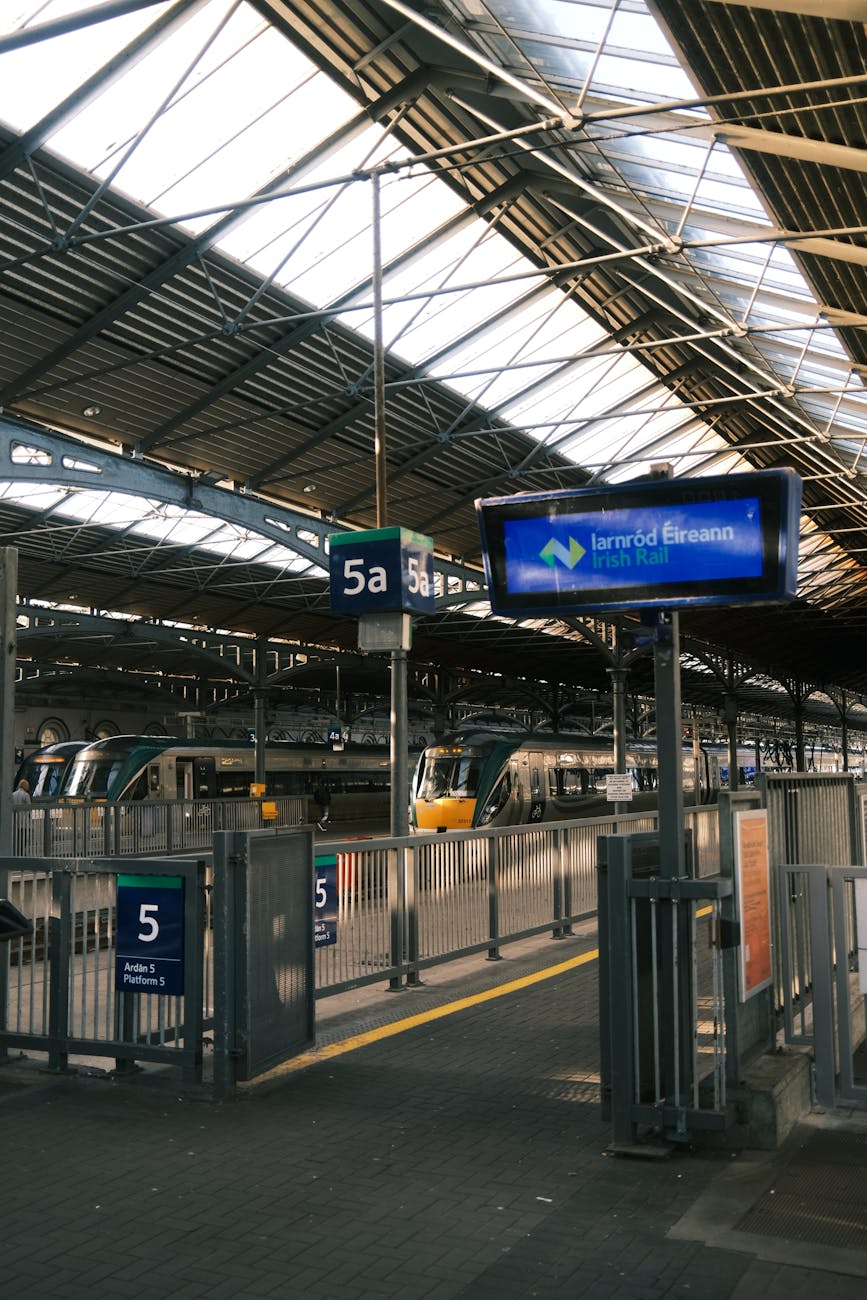
Irish Rail is the backbone for many intercity trips. The main Dublin stations are Heuston and Connolly, and choosing the wrong station can wreck a schedule. Heuston handles many south, west, and southwest routes, such as Cork, Limerick, Galway, Waterford/Kilkenny, and Tralee/Killarney services. Connolly handles Belfast Enterprise, Sligo, Rosslare, some commuter routes, and DART/commuter interchanges. Always check the station name, not just the city.
Irish Rail provides an Ireland Rail Map, Dublin Area Rail Map, Cork Area Rail Map, and live departure tools. For visitors, rail is usually comfortable, easy to understand, and less stressful than driving. However, rail is not a complete web. Some scenic areas require bus, taxi, bike, tour, or car after the train.
DART and Dublin commuter rail
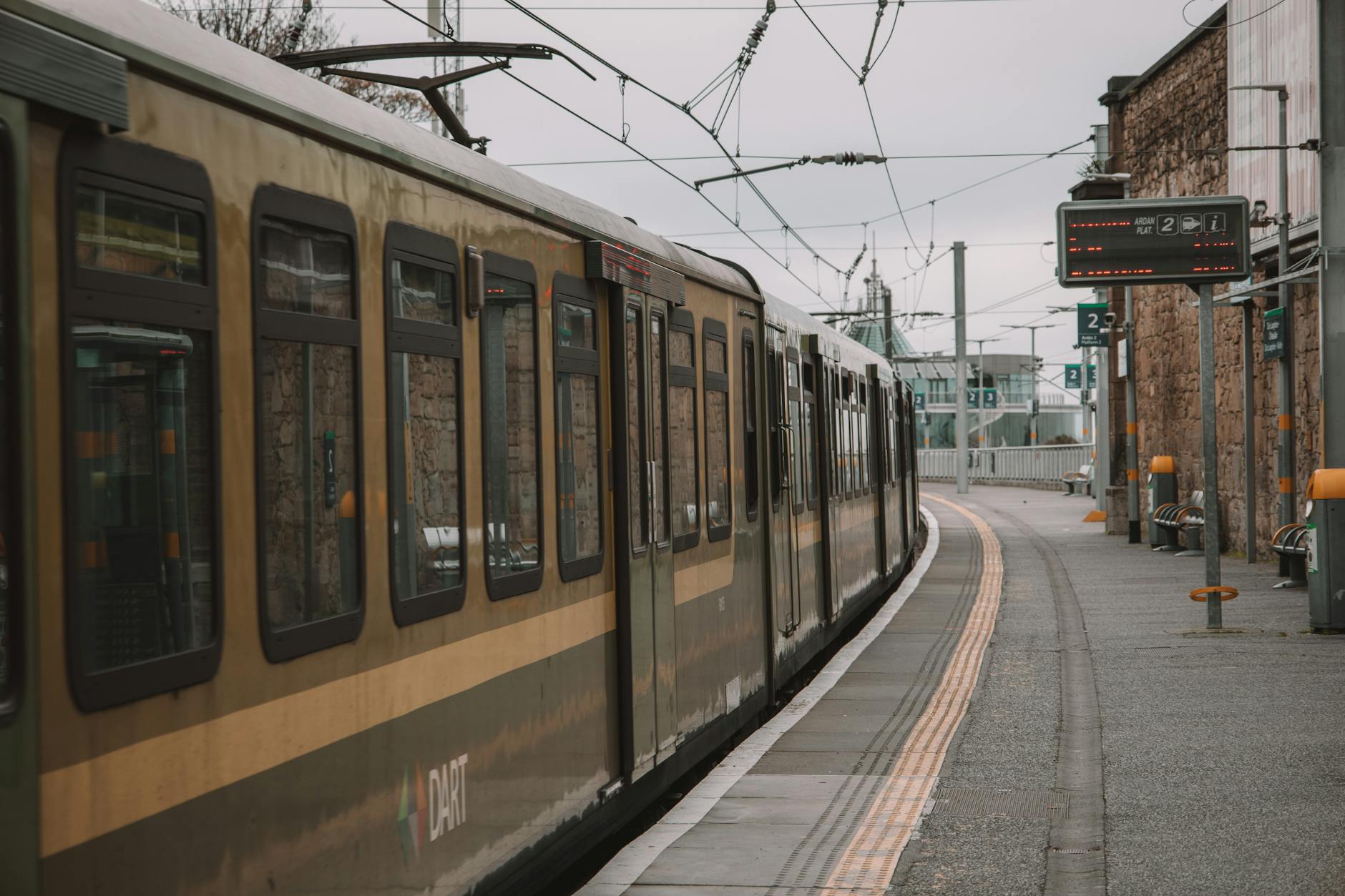
DART is Dublin’s electrified coastal rail service and one of the best visitor assets in Ireland. It connects coastal towns and suburbs such as Howth, Malahide, Dún Laoghaire, Bray, and Greystones with central Dublin stations. It is useful both as transport and as a scenic experience.
Dublin commuter rail extends beyond DART and links the capital with surrounding commuter towns. Leap works in the Dublin City and Commuter Zone and on DART/commuter rail zones where accepted.
Cork commuter rail
Cork has the Republic’s second most useful suburban rail network for visitors: Cork Kent links with Cobh, Midleton, and Mallow. This is useful for Cobh day trips, Fota Wildlife Park, and regional movement. Leap is valid in the Cork commuter area on rail services where accepted.
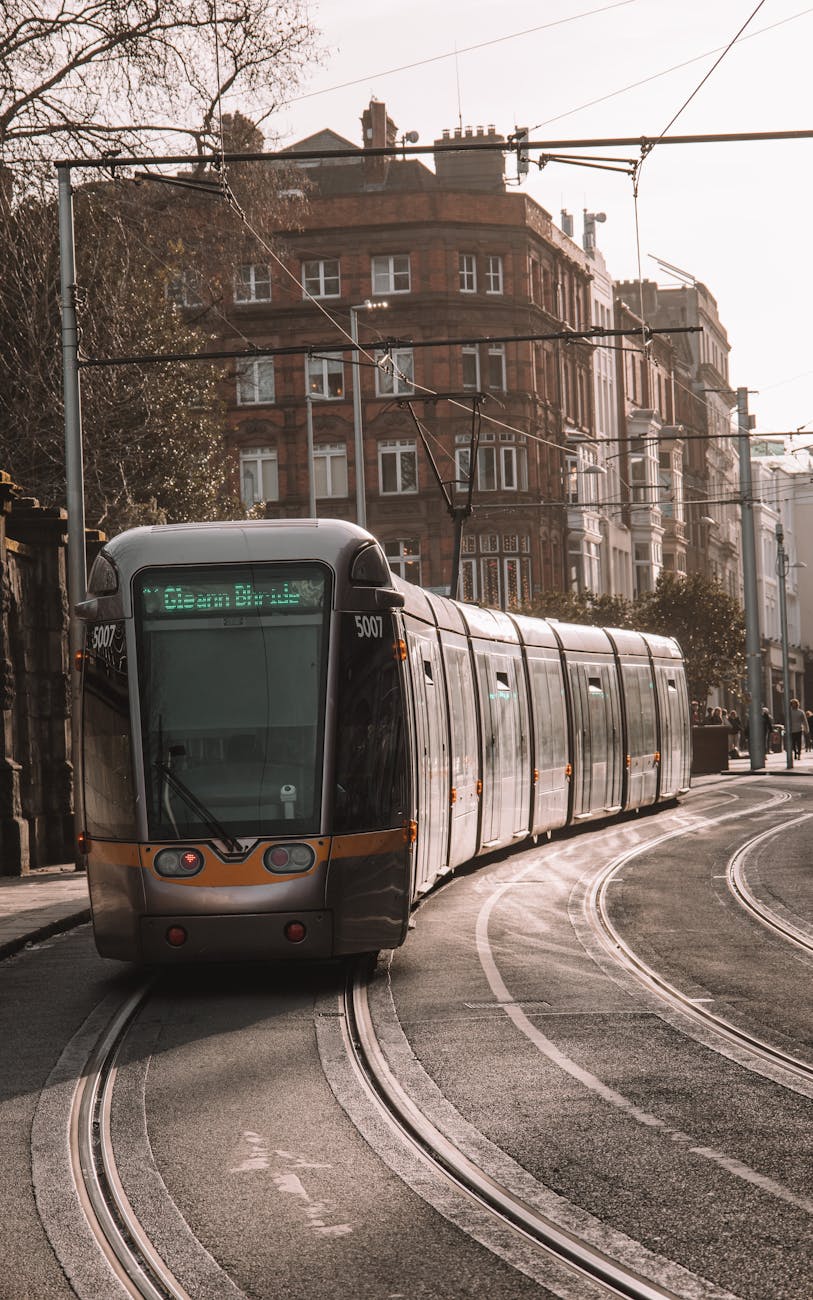
Luas
Luas is Dublin’s tram system. It has Red and Green lines. The Red Line is useful for Heuston, Connolly, Busáras, the Docklands/Point area, and city-centre east-west movement. The Green Line is useful for St Stephen’s Green, O’Connell/GPO area connections, Ranelagh, Dundrum, Sandyford, and southside trips. Luas fares are zonal; Leap is generally the easiest and cheapest payment method. Users must tap on at the platform validator before boarding and tap off when exiting to avoid incorrect fares or standard fare notices.
Enterprise: Dublin–Belfast rail
The Enterprise links Dublin Connolly and Belfast Grand Central. Translink describes Enterprise services from Belfast Grand Central to Dublin and provides route planning and ticketing. This is the most elegant car-free way to move between the island’s two largest cities. Coaches may be cheaper or serve airports more directly, but the train is more comfortable and avoids motorway traffic.
Rail luggage, bikes, and accessibility
Irish trains are generally manageable with luggage, but older stations, peak-hour crowding, and limited onboard storage can be annoying. Large suitcases are easier on intercity trains than on busy commuter services. Irish Rail welcomes bicycles free of charge on off-peak DART and commuter services subject to capacity, but standard bicycles are not permitted on DART and commuter services during weekday peak windows; folded and covered bicycles can be carried without those time restrictions. Accessibility assistance exists, and Irish Rail publishes accessibility policies and access officer information.
6. Buses, intercity coaches, Local Link, and rural mobility
City buses
City buses are the main everyday public transport mode outside Dublin’s rail/tram corridors. Cork, Galway, Limerick, Kilkenny, and many towns depend heavily on buses. TFI publishes city network maps, including Galway, Cork, Limerick, and Kilkenny maps.
Bus usage habits:
Intercity coaches
Coaches are essential in Ireland. They often connect airports directly to cities without requiring a transfer through Dublin city centre. Examples include Dublin Airport to Galway, Dublin Airport to Belfast, Cork–Limerick–Galway, Shannon Airport–Limerick/Galway/Cork, and many regional routes. Bus Éireann and Expressway are major national providers; Bus Éireann’s route and timetable pages are the starting point for public services.
Coaches can be better than rail when:
Coaches can be worse than rail when:
TFI Local Link
TFI Local Link connects rural communities across the Republic with affordable public transport and is available to anyone, not just locals. It is important for rural access, small villages, market towns, and areas where regular national services are sparse. Some Local Link services are fixed timetable routes; others may be door-to-door or demand-responsive and require booking. Local Link is valuable but not a magic substitute for a rental car if a visitor wants to string together multiple remote sites in one day.
Rural mobility reality
For locals, transport outside cities is often the difference between independence and isolation. Young people, older residents, people with disabilities, and workers without cars can be constrained by low frequency, lack of evening buses, missing Sunday service, and long walks to stops. Visitors experience this as inconvenience; locals experience it as daily life.
- Stand at the correct stop and signal clearly when the bus approaches.
- Have Leap, TFI Go, correct fare, or ticket ready before boarding.
- In smaller towns, ask the driver politely if unsure about the stop; drivers are often helpful, but do not expect them to solve a complex itinerary during boarding.
- In rural Ireland, check the last return time first. Do not plan a one-way scenic trip assuming there will be an evening bus back.
- The trip starts at an airport.
- The destination lacks a railway station.
- The rail route requires a backtrack through Dublin or a slow transfer.
- The coach stop is closer to the hotel or attraction than the train station.
- Road congestion is heavy.
- You are prone to motion sickness.
- You have large luggage and need guaranteed storage comfort.
- You value toilets, table seats, or the ability to move around.
7. Taxis, ride-hailing, and late-night travel
Republic of Ireland taxis
Taxis in the Republic are regulated by the National Transport Authority. National maximum taxi fares apply, with different rates by time and distance; as of the current fare structure, the NTA taxi fare page publishes standard and premium rates, and the Taxi Regulation Maximum Fares Order 2024 increased maximum fares from December 1, 2024.
Taxi apps such as FREENOW, Uber, Bolt, and other local apps may be available in larger towns and cities, but Ireland is not a free-for-all private ride-hailing market. App-based services generally connect passengers with licensed taxis or licensed vehicles, not casual private drivers. A taxi rank, hotel call, or local phone booking may work better than an app in smaller towns.
Taxi supply concerns
Taxi scarcity is a real local concern, especially late Friday/Saturday nights, during rain, after concerts, around Christmas, at airport peaks, and in towns with fewer drivers. A visitor who expects instant app pickup at 1:30 a.m. in Galway, Killarney, Kilkenny, or Dingle may be disappointed. Pre-book important trips, especially early airport transfers and rural hotel pickups.
Northern Ireland taxis
Northern Ireland has its own taxi rules. nidirect explains that taxi fares depend on taxi class and time and warns passengers not to use unlicensed taxis. Taxi hailing rules differ inside Belfast; nidirect states that inside the Belfast Zone, Class A taxis can generally be hailed only during specified late-night/public-holiday periods, while wheelchair-accessible Class B taxis can be hailed anywhere in Northern Ireland. In practice, many Belfast visitors use taxi ranks, hotel bookings, local firms, or apps.
8. Private vehicles, rental cars, tolls, and parking
When a car helps
A car helps most in:
When a car hurts
A car is often a burden in:
Parking, bus lanes, one-way systems, narrow streets, and congestion can turn a car into a time sink. Use park-and-ride where appropriate, book accommodation with parking when driving, and avoid picking up a rental car until the day you leave Dublin or Belfast.
Licensing and driving rules
In the Republic, the Road Safety Authority says visitors can drive on a current, valid non-EU/EEA licence for up to one year; EU/EEA licences can be used until expiry. Tourism Ireland also emphasizes that drivers need a valid full national licence or international driving permit and must carry their licence while driving in the Republic. In Northern Ireland, nidirect advises visitors to carry a valid driving licence and proof of insurance and notes that driving is governed by the Highway Code.
Ireland and Northern Ireland both drive on the left. Most rural roads are narrower than North American drivers expect. Hedges, stone walls, tractors, cyclists, sheep, tour buses, and blind bends are normal. Choose a smaller car than your ego wants. If you are not confident with a manual gearbox while shifting with your left hand, reserve an automatic early.
Tolls and the M50
Ireland has tolled roads. The most important visitor trap is the M50 around Dublin, which uses barrier-free tolling. Transport Infrastructure Ireland explains that the M50 records trips by photographing the vehicle’s licence plate, and drivers without an electronic toll tag or video account must pay before 8 p.m. the following day to avoid penalties. eFlow is the operator of the M50 barrier-free tolling system.
If renting a car, ask the rental company exactly how tolls are handled. Some charge administrative fees; some provide toll tags; some expect you to pay manually. Do not ignore tolls.
- Dingle Peninsula and Slea Head Drive
- Ring of Kerry and parts of the Iveragh Peninsula
- Beara Peninsula
- Connemara beyond easy bus/tour routes
- Rural Clare and Burren backroads
- Wicklow Mountains trailheads
- Scattered castles, gardens, ruins, beaches, and rural accommodation
- Family travel with children, strollers, or luggage
- Mobility-impaired travel where public transport is uncertain
- Dublin city centre
- Belfast city centre
- Cork city centre at peak times
- Galway city centre during congestion
- Kilkenny historic core
- Dingle town in high season
- Killarney town during peak tourist periods
9. Airports and airport transfers
Dublin Airport
Dublin Airport is the main international gateway. Its transport weakness is clear: no rail connection yet. Dublin Airport lists Transport for Ireland bus routes operating from the airport, including routes such as 16, 19, 24, 33a, 41, 101, and 102, and also explains that Leap and Leap Visitor Card can be used on eligible TFI services. Aircoach and Dublin Express operate frequent airport coach services to city and regional points; Dublin Express advertises very frequent Dublin Airport–Dublin City service and direct Belfast service.
Best practical choices:
Cork Airport
Cork Airport is easier to connect by bus than many visitors expect. Bus Éireann states that routes 225 and 226 link Cork Airport with Cork city centre, Cork Bus Station, and Kent Railway Station; these routes run frequently on weekdays and less frequently on Sundays/public holidays. Cork Airport’s own transport page also points passengers to Bus Éireann 225 and 226 from bus stop A.
Shannon Airport
Shannon Airport serves the west and mid-west, especially Limerick, Clare, Galway, and parts of the Wild Atlantic Way. Shannon Airport states that direct bus links operate to Limerick, Cork, and Galway. Bus Éireann notes that all services on the Galway/Limerick/Cork corridor pass through Shannon Airport.
Kerry Airport
Kerry Airport is located between Killarney and Tralee. Bus Éireann states that it is served by Expressway services outside the terminal, and route 271 serves Tralee–Killarney via Kerry Airport. It can be useful for Killarney or Dingle itineraries, but many international visitors still arrive via Dublin, Cork, or Shannon.
Belfast airports
Belfast has two airports. Belfast International Airport is farther out and is served by Translink Airport Express 300/300a; Belfast International says Airport Express 300 operates 7 days a week with frequent peak service. George Best Belfast City Airport is close to the city; the airport states that Airport Express 600 links the terminal with Belfast Grand Central Station, with a short journey time and frequent peak service.
- Budget and no rush: Dublin Bus/TFI route such as 41 or 16, depending on destination.
- Fast city-centre coach: Dublin Express or Aircoach.
- Door-to-door: taxi, especially with luggage, late arrival, children, or poor weather.
- Intercity without entering Dublin: direct airport coach to Galway, Belfast, Cork, Limerick, or other destinations where available.
10. Ferries, islands, and sea travel
Ferries matter in three ways: international sea travel, island trips, and scenic tourism.
International ferries
Dublin Port connects to Britain, especially Holyhead. Irish Ferries advertises Dublin–Holyhead routes and foot/cycle passenger options. Dublin Port provides passenger transfer information between terminals and city/port access. International ferries are more weather-sensitive than rail and road, so always check sailing status.
Aran Islands
The Aran Islands are a common extension from Galway or Clare. Aran Island Ferries operates year-round from Rossaveel, Connemara, to the Aran Islands and seasonally from Galway City; it publishes sailing times and notes that the Rossaveel–Inis Mór crossing is approximately 40 minutes, while Galway City sailings are seasonal and longer.
The practical issue is not just the ferry. It is getting to the ferry terminal, matching bus/shuttle times, and returning before the last boat. Weather can cancel or alter sailings. Do not build an international flight connection immediately after a ferry day.
Local ferries
Small ferry services around Ireland can be useful for islands and peninsulas, but they are often seasonal, weather-dependent, and not integrated with Leap. Treat them as separate transport operators.
12. Accessibility, luggage, families, pets, and bikes
Accessibility
TFI states that most TFI bus services are low-floor and wheelchair accessible, and that Bus Éireann city and town fleets are wheelchair accessible without advance booking; Dublin Bus and Go-Ahead can accommodate wheelchairs up to specified dimensions without advance booking. TFI also publishes broader accessible travel information and support for hidden disabilities, including the “Please Offer Me a Seat” Badge and Card.
Irish Rail provides accessibility policies, assistance information, and guide/assistance dog rules. The reality, however, varies by station, stop, staff availability, lift status, vehicle type, and crowding. A mobility-impaired traveler should plan fewer connections, confirm accessible routes, and avoid last-minute rural assumptions.
Luggage
Large luggage is easiest on intercity trains, airport coaches, taxis, and private transfers. It is harder on crowded Dublin buses, Luas at peak times, old streets, and rural buses. Hotels in city centres often lack curbside space, so door-to-door taxi drop-off is not always possible. Pack smaller than you think.
Families and children
Families should consider:
Bicycles on public transport
Irish Rail’s bicycle rules are workable but constrained. Standard bikes are welcome free on off-peak DART and commuter services subject to capacity, but not during weekday peaks; folded and covered bikes have more flexibility. Bus Éireann permits folding bicycles subject to space under its conditions and bicycle guidance. On Luas, only folded bicycles in a carrier bag are allowed; standard bicycles are not.
- Stroller space on city buses can conflict with wheelchair priority.
- Rural buses may not be frequent enough for toddler schedules.
- Car seats are required in cars but not always provided by taxis or tours unless requested.
- Long scenic drives can be difficult for motion-sensitive children.
- Trains are easier for children who need toilets and movement.
13. Weather, disruptions, safety, and etiquette
Weather
Ireland’s weather is not just rain. Wind matters. Storms can close bridges, cancel ferries, disrupt flights, flood roads, bring down trees, and suspend public transport. Met Éireann uses Yellow, Orange, and Red warnings, with escalating levels of risk and action. Northern Ireland uses UK Met Office warnings, but the practical advice is similar: check before you travel.
Disruptions
Use the official update channels before high-stakes journeys. TFI publishes service updates across major Republic operators. Irish Rail and Bus Éireann publish service updates, and Bus Éireann’s service update page shows route-level delays and cancellations. In Belfast and Northern Ireland, check Translink service updates and journey planner.
Safety
Ireland is generally safe for transport users, but normal city awareness applies. Watch for pickpocketing in crowded areas, late-night intoxication around nightlife zones, and poorly lit rural roads. Never walk along narrow rural roads at night without high-visibility clothing or lights. Do not rely on “it is only 2 km” in a rural area with no footpath.
Etiquette
- Queue and let people off before boarding.
- Keep music and calls quiet.
- Offer priority seats.
- Do not occupy wheelchair spaces with luggage or buggies if needed.
- On buses, thank the driver when leaving; it is common in Ireland.
- On rural roads, pull in safely to let faster local traffic pass if driving slowly.
- Do not stop a car suddenly in the road for photographs.
14. Cross-border travel: Republic of Ireland to Northern Ireland
Dublin–Belfast trips are easy operationally but require awareness.
Transport choices
Immigration and ETA caution
There are no routine immigration controls at the Ireland–Northern Ireland land border, but that does not mean immigration rules disappear. UK Home Office guidance says the UK does not operate routine immigration controls on journeys within the Common Travel Area and has no immigration controls on the Ireland–Northern Ireland land border, but travelers entering the UK, including Northern Ireland, still need to comply with UK immigration rules, including obtaining an ETA if required. GOV.UK says an ETA lets eligible visitors travel to the UK for tourism and certain other purposes for up to 6 months and that most visitors need an ETA or visa depending on nationality and purpose. British and Irish citizens do not need an ETA; some legal residents of Ireland may be exempt in specific circumstances.
This is not a transport ticket problem, but it affects transport choices. A non-Irish, non-British visitor should check current UK ETA/visa rules before a Belfast day trip.
- Train: Enterprise from Dublin Connolly to Belfast Grand Central. Best for comfort and city-centre-to-city-centre travel.
- Coach: Often best for Dublin Airport–Belfast or budget trips.
- Car: Direct via the M1/A1 corridor; remember speed units and road rules change after the border.
15. Recommended strategies by traveler type
First-time visitor staying in Dublin only
Buy or use a Leap product, use Luas/DART/bus, walk heavily, and use taxis for rain, luggage, or late nights. Do not rent a car. Use DART for coastal day trips such as Howth, Malahide, Dún Laoghaire, Bray, or Greystones.
First-time visitor doing Dublin plus one western city
Use train or coach. Dublin–Galway and Dublin–Cork are straightforward. If you land at Dublin Airport and go straight west, consider a direct coach rather than entering Dublin city first.
Visitor doing Dingle, Ring of Kerry, or rural west
Rent a car after leaving Dublin, Cork, Shannon, or Killarney, or book structured tours. Do not rely on sparse local buses for multi-stop scenic days unless you have built the whole day around the timetable.
Student or long-stay resident
Get a regular Leap Card, learn TFI Live and operator apps, understand fare capping, buy rail tickets early for intercity trips, and learn where taxis are scarce. A bicycle may be more useful than a car in Dublin, Cork, Galway, or Limerick if your route is safe.
Older traveler or traveler with mobility needs
Use taxis/private transfers more than a backpacker would. Choose central hotels near rail/bus stations. Confirm lifts and accessible routes. Do fewer same-day transfers. Consider guided tours for scenic rural areas rather than renting a car if narrow roads are stressful.
Family traveler
Trains are easier than coaches for long trips with children. A rental car is valuable for rural stays, but central Dublin and Belfast parking will annoy you. Confirm child seats for taxis or private transfers in advance.
Dublin
Transportation profile
Dublin is the Republic’s transport capital and the one Irish city where a visitor can confidently rely on a layered public transport system. It has Dublin Bus and Go-Ahead city buses, Luas trams, DART, commuter rail, intercity rail, intercity coaches, taxis, bike share, and heavy pedestrian activity. It also has the island’s busiest airport but, critically, no airport rail connection as of April 2026.
The best Dublin strategy is walk plus Leap plus Luas/DART/bus, with taxis only when they solve a problem. Renting a car for Dublin city is almost always a mistake.
Arrival and intercity connections
Dublin’s main intercity rail stations are:
The Luas Red Line links Heuston, Busáras, Connolly, and the Docklands corridor, making it useful for transfers. The Luas Green Line is useful for north-south movement but does not replace DART for coastal trips.
Dublin Airport
Dublin Airport’s transport system is bus/coach/taxi-based. The airport lists TFI routes from Zone 15, including 16, 19, 24, 33a, 41, 101, and 102, and notes that Leap can be used for cheapest fares on eligible TFI services. Aircoach and Dublin Express serve the city and some longer-distance routes; Dublin Express advertises frequent city services and direct Belfast service.
Practical airport advice:
Local modes
Dublin Bus and Go-Ahead Ireland. Buses provide the widest coverage. BusConnects has been redesigning the network into spines, orbitals, radials, and locals. TFI states the redesign is rolling out in phases and aims to improve frequency, evening/weekend service, and orbital connections. The upside is a more useful network; the downside is that locals may still be adjusting to changed route numbers and patterns.
Luas. Luas is excellent when your origin and destination are near stops. It is not a full metro. It can be crowded, and it does not go to the airport. Tap on and off correctly with Leap.
DART. DART is the visitor’s best scenic transit asset. Use it for Howth, Malahide, Dún Laoghaire, Dalkey/Killiney, Bray, and Greystones. Weekend engineering works happen, so check Irish Rail updates.
Taxis. Useful but not always abundant late at night. Taxi apps help but do not guarantee supply. Use ranks at stations, hotels, and airport areas when apps are slow.
Cycling. DublinBikes and private bike-share can be useful for short central trips. Dublin City Council notes that the first 30 minutes of DublinBikes journeys are free after registration. Be cautious on bus-heavy streets if you are not used to cycling on the left.
Payment and ticketing
The best default is a regular Leap Card or Leap Visitor Card. The Leap Visitor Card is especially good for a short tourist stay focused on Dublin Zone 1. The TFI 90 Minute Fare makes multimodal trips affordable and simple when used correctly.
Driving and parking
Avoid driving in central Dublin. If you rent a car for rural Ireland, pick it up after your Dublin stay. If returning a rental at Dublin Airport, ask about M50 toll handling. If staying outside the centre with parking, use public transport into town.
Local concerns
Dublin locals complain about bus reliability, “ghost buses,” congestion, housing-driven commuter distances, taxi shortages at night, Luas crowding, DART disruptions, and the long-delayed airport rail link. Visitors mainly feel this as uncertainty. The fix is not complicated: check live departures, avoid last-minute tight connections, and keep taxi or walking alternatives in mind.
Practical Dublin use cases
- Heuston: Cork, Limerick, Galway, Waterford/Kilkenny, Tralee/Killarney, Westport/Ballina, and many western/southern routes.
- Connolly: Belfast Enterprise, Sligo, Rosslare, DART, and many commuter services.
- Pearse, Tara Street, and Grand Canal Dock: important DART/commuter city-centre stations but not the main starting points for most long-distance rail.
- Use route 41 or other TFI routes for budget access if your destination is near the route and you are not overloaded with luggage.
- Use Dublin Express or Aircoach for faster coach links to central areas.
- Use a taxi for groups, heavy luggage, late arrivals, accessibility needs, or accommodation not close to a bus stop.
- Avoid booking a tight train connection from Heuston after landing unless you have built in generous time for immigration, bags, bus/taxi transfer, and traffic.
- Temple Bar to Guinness Storehouse: walk if weather is good; bus/taxi if not.
- City centre to Kilmainham Gaol: bus or taxi; book the attraction separately.
- City centre to Howth: DART.
- Airport to Heuston: coach/bus to centre plus Luas/taxi, or direct taxi if luggage is heavy.
- Dublin to Belfast: Enterprise train from Connolly or direct coach from city/airport.
Galway
Transportation profile
Galway is compact, walkable, popular, and congested. Its public transport is bus-based, with regional coaches, Irish Rail to Dublin, and bus links toward Shannon Airport, Connemara, the Aran Islands ferry shuttle, and the west. The city core around Eyre Square, Latin Quarter, Spanish Arch, and the docks is best explored on foot.
Arrival and intercity connections
Galway has rail service to Dublin and coach links to Dublin, Dublin Airport, Limerick, Cork, Shannon Airport, and regional towns. Coaches can be especially useful from Dublin Airport because they avoid transferring into Dublin city. Bus Éireann route 51 runs the Cork–Limerick–Galway corridor and serves Shannon Airport connections.
Local buses
TFI publishes a Galway city bus map showing principal stops and routes operated by Bus Éireann and City Direct. Leap works on Bus Éireann, TFI Local Link, and City Direct routes 410–414 in Galway, according to Leap’s Galway page.
Galway bus use is straightforward, but frequency and reliability can be affected by traffic. Eyre Square is a major bus focus. Salthill is reachable by bus or a long walk. The university/hospital area, Knocknacarra, Doughiska, Ballybrit, and suburbs depend more on bus.
Aran Islands and Connemara
Galway is a gateway, not just a city. For the Aran Islands, Aran Island Ferries operate year-round from Rossaveel and seasonally from Galway City. The ferry company notes the Rossaveel crossing to Inis Mór is about 40 minutes and that a shuttle bus is available from Galway for Rossaveel departures.
For Connemara, Kylemore Abbey, Clifden, and national-park trips, visitors typically choose between organized tours, regional buses, rental cars, or private drivers. Public transport exists but is not ideal for multi-stop sightseeing.
Cycling and walking
Galway is one of Ireland’s most walkable visitor cities. TFI Bikes operate in Galway and cover locations such as rail/bus stations, Eyre Square, docks, and city-centre points. Cycling can be enjoyable in good weather but less pleasant in heavy rain or wind.
Driving and parking
A car is useful for rural Galway, Connemara, or Burren/Clare combinations, but it is annoying in Galway city. Traffic congestion is a major local concern. If staying in the city, choose accommodation with parking or leave the car outside the centre and walk.
Local concerns
Galway’s main problems are congestion, bus reliability, limited night transport, and the mismatch between tourist demand and rural service frequency. Locals deal with daily traffic delays. Visitors notice that a short distance on a map can take longer than expected by road.
Practical Galway use cases
- Dublin Airport to Galway: direct coach is often easiest.
- Galway city to Salthill: walk, bus, taxi, or bike depending on weather.
- Galway to Aran Islands: ferry from Rossaveel with shuttle or seasonal Galway City sailing; book and check weather.
- Galway to Cliffs of Moher: organized tour, regional bus via Clare routes, or car; do not assume late returns.
- Galway to Cork/Limerick: coach is often more direct than rail.
Cork
Transportation profile
Cork is Ireland’s second city and has a more complex transport geography than many visitors expect. The city centre sits on and around islands in the River Lee, with hills rising quickly to the north and south. The transport system is bus-led, supported by useful commuter rail to Cobh, Midleton, and Mallow, an airport bus connection, taxis, walking, and TFI Bikes.
Arrival and intercity connections
Cork Kent Station is the main rail station. It is close to the city centre but not directly in the middle of the main shopping/nightlife streets. Walking is possible for many travelers, but buses or taxis are better with heavy luggage. Rail to Dublin is strong. Coaches connect Cork with Dublin Airport, Limerick, Galway, Waterford, Killarney, and regional towns.
Local buses and commuter rail
TFI states that Cork has over 30 routes operating in Cork city and surrounding areas, with services operated by Bus Éireann and TFI Local Link. Leap’s Cork page says the TFI Leap Card can be used on Bus Éireann services in Cork city and offers lower fares than cash.
Cork commuter rail is especially useful for:
Cork Airport
Cork Airport is connected by Bus Éireann routes 225 and 226. Bus Éireann says routes 225 and 226 link Cork Airport with Cork city centre, Cork Bus Station, and Kent Railway Station, with frequent weekday service. This makes car-free Cork airport transfers relatively straightforward.
Future transport projects
Cork is planned for major improvements. Transport Infrastructure Ireland launched public consultation on Luas Cork, a proposed light rail line with up to 27 stops from Ballincollig to Mahon Point, serving destinations such as MTU, Cork University Hospital, UCC, Cork city centre, Kent Station, Cork Docklands, Páirc Uí Chaoimh, Blackrock, and Mahon. This is important for future planning but not available to current travelers.
Walking, cycling, and hills
Central Cork is walkable, but hills matter. A hotel that looks close to the centre may involve a steep walk. TFI Bikes operate in Cork, with docking stations and bikes across the city. Cycling is easiest along flatter river corridors and harder on hilly approaches.
Driving and parking
A car is useful for West Cork, Blarney, Kinsale, coastal villages, and rural Cork, but not for central Cork. Parking is limited and traffic can be frustrating. If driving into Cork, use accommodation parking or park-and-walk approaches.
Local concerns
Cork locals experience bus reliability issues, road congestion, hilly walking/cycling constraints, and pressure on commuter routes. Visitors most often struggle with Kent Station being slightly outside the core, airport transfer assumptions, and underestimating hilliness.
Practical Cork use cases
- Cobh: harbour town, Titanic/Queenstown history, Spike Island ferry access.
- Midleton: Jameson Distillery area.
- Fota: wildlife park and gardens.
- Mallow: rail interchange and north Cork access.
- Cork Airport to city: Bus Éireann 225/226 or taxi.
- Cork to Cobh: commuter rail.
- Cork to Blarney: bus or tour; taxi if time-limited.
- Cork to Kinsale: bus/coach or car; route 226 also serves Kinsale via Cork Airport.
- Cork to Galway/Limerick: coach is often more logical than rail.
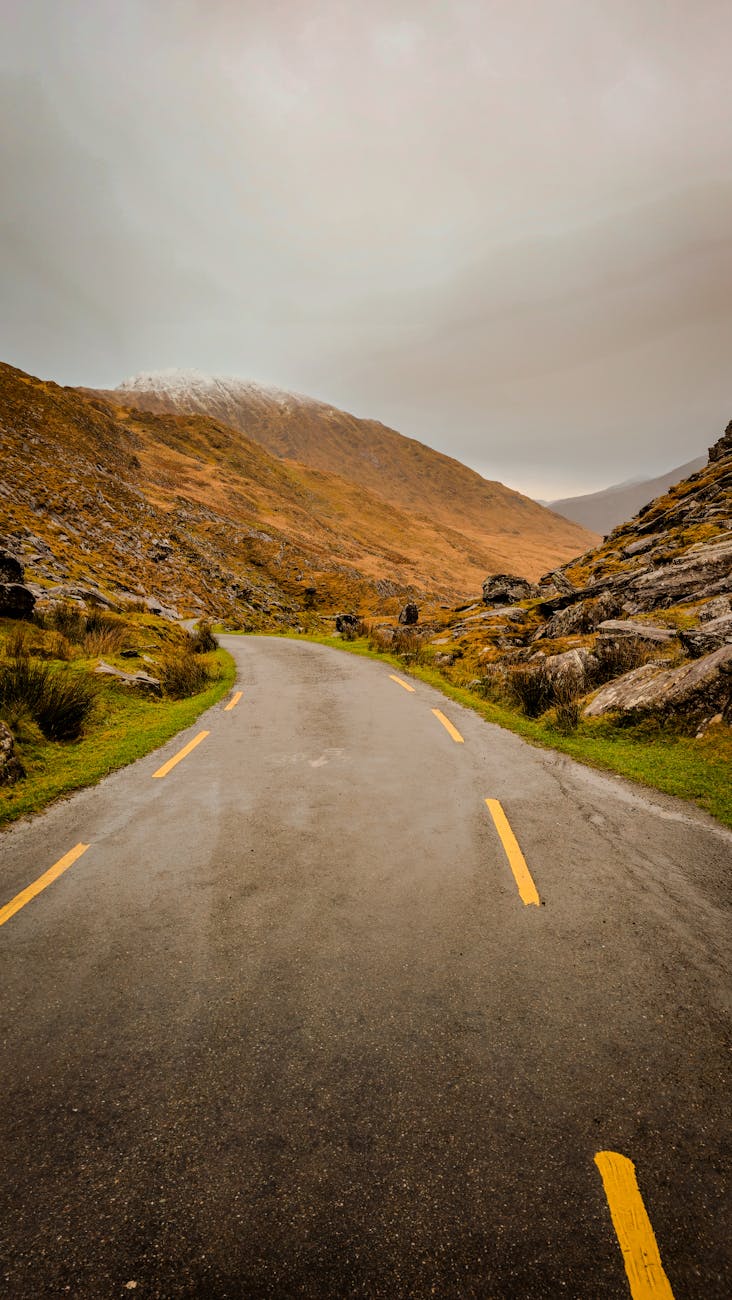
Killarney
Transportation profile
Killarney is a tourism town with unusually strong visitor infrastructure for its size. It has a rail/bus station, walkable town centre, access to Killarney National Park, bicycle rental, jaunting cars, tour coaches, taxis, Local Link services, and road access to the Ring of Kerry and Dingle. It is one of the easiest small Irish bases for car-light travel, but not for fully spontaneous car-free rural sightseeing.
Arrival and intercity connections
Killarney is on the rail route from Dublin/Cork/Mallow toward Tralee. It also has Bus Éireann and regional coach links. Kerry Airport is nearby between Killarney and Tralee; Bus Éireann route 271 serves Tralee to Killarney via Kerry Airport.
Local and regional buses
Local Link Kerry provides regular rural services and door-to-door services. Its site explains that regular rural services operate to a set timetable and do not require pre-booking, while door-to-door services require booking. Local Link Kerry also has Killarney-area services and demand-responsive pilots such as TFI Anseo in the Killarney area.
National park access
Killarney National Park is close enough that many visitors can walk or bike from town to parts of the park. Muckross House, Ross Castle, Torc Waterfall, and Gap of Dunloe access require different strategies depending on fitness, weather, and time. Bicycles, jaunting cars, tours, taxis, and private cars all play roles.
Ring of Kerry and scenic drives
For the Ring of Kerry, visitors can self-drive, take a bus tour, hire a driver, or combine public transport with limited sightseeing. Self-driving gives control but requires confidence on narrow roads and patience with tour buses. Bus tours are efficient but less flexible. If driving, start early and avoid trying to combine too many scenic stops with Dingle or Cork on the same day.
Driving and parking
A car can be useful in Killarney, but town parking fills during high season. Many central streets are busy with pedestrians, coaches, and hotel traffic. Choose accommodation with parking if renting.
Local concerns
Killarney’s local concerns include seasonal crowding, coach traffic, narrow roads, pressure on national-park access, and limited late-night taxi availability. Visitors often make the mistake of assuming every beauty spot is walkable from town; some are, some are not.
Practical Killarney use cases
- Train station to hotel: walk if central and luggage is light; taxi otherwise.
- Town to Muckross/Ross Castle: walk, bike, jaunting car, taxi, or local tour.
- Ring of Kerry: car or bus tour.
- Killarney to Dingle: bus via Tralee or Local Link/Bus Éireann combinations; car is simpler.
- Kerry Airport to Killarney: Bus Éireann route 271, taxi, or rental car.
Belfast
Transportation profile
Belfast is the transport centre of Northern Ireland. Its core system is Translink: Metro buses, Glider bus rapid transit, Ulsterbus/Goldliner regional coaches, NI Railways, the Enterprise to Dublin, airport buses, taxis, walking, and public bike share. It is distinct from the Republic’s TFI/Leap system.
Belfast Grand Central Station
Belfast Grand Central opened in 2024 as a major integrated rail and bus hub. Translink’s Grand Central page describes it as a new transport hub that has hosted services since autumn 2024. It replaced the previous Great Victoria Street/Europa focus and is now central to Belfast’s intercity, regional, airport, and rail movement.
For visitors, this is good news: many bus and rail connections are concentrated at one modern hub. But it also means old guidebooks mentioning Europa Buscentre or Great Victoria Street may be outdated.
Local modes
Metro buses. Metro is Belfast’s urban bus network.
Glider. Glider is Belfast’s bus rapid transit system. The Department for Infrastructure describes the first Belfast Rapid Transit route network as operating under the Glider brand from September 2018, providing rapid transit between East and West Belfast through the city centre with a link to Titanic Quarter.
NI Railways. Rail is useful for local/regional trips such as Bangor, Lisburn, Portadown, Derry/Londonderry, and connections to the Enterprise.
Ulsterbus/Goldliner. Regional and intercity coach/bus services.
Bike share. Belfast bikes are available year-round and can be rented using kiosk, app, or hotline.
Tickets and payment
Translink contactless is useful on many services; the Metro contactless fare structure includes a daily cap. The mLink app and Translink tickets/travel cards are important for pre-purchased tickets. The Belfast Visitor Pass can be worthwhile for short tourist stays because it gives unlimited travel in the pass zone on Metro, NI Railways, Ulsterbus, and Glider for 1, 2, or 3 days.
Airports
Cross-border travel to Dublin
Use the Enterprise train for comfort, city-centre-to-city-centre travel, and a clear route. Use coach for Dublin Airport or lower fares. Check ETA/visa rules if you are not an Irish or British citizen.
Driving and taxis
Driving in Belfast is more manageable than central Dublin for some visitors, but city-centre parking and bus lanes still make public transport better for short stays. In Northern Ireland, carry licence and insurance documents when driving and follow UK/NI road rules.
Taxis are useful, especially after dark or outside core corridors. Do not use unlicensed taxis. Hailing rules differ by taxi class and zone; check nidirect guidance if unsure.
Local concerns
Belfast residents deal with bus frequency gaps, road congestion, limited rail coverage inside parts of the city, and interface between regional and urban services. Visitors usually find Belfast easier than expected, but they must remember the payment/currency/operator split from the Republic.
Practical Belfast use cases
- Belfast International Airport: Airport Express 300/300a connects with Belfast; Belfast International says Airport Express 300 operates 7 days per week and frequently at weekday peaks.
- George Best Belfast City Airport: Airport Express 600 links the airport with Belfast Grand Central Station; the airport describes the journey as short and frequent at peak times.
- Grand Central to Cathedral Quarter: walk or short taxi.
- City centre to Titanic Belfast: Glider G2 or taxi; walking is possible but longer.
- Belfast to Dublin: Enterprise train or coach.
- Belfast International to city: Airport Express 300/300a.
- Belfast City Airport to city: Airport Express 600, taxi, or rail/bus combinations.
Limerick
Transportation profile
Limerick is a compact but spread-out mid-western city with a bus-based urban system, rail at Colbert Station, close links to Shannon Airport, and road connections to Galway, Cork, Dublin, and Kerry. It is less tourist-dense than Galway or Killarney but important for regional movement.
Arrival and intercity connections
Limerick Colbert Station is the main bus and rail hub. Rail to Dublin may be direct or may require a change at Limerick Junction depending on service. Coach routes connect Limerick with Galway, Cork, Shannon Airport, Dublin, and regional towns. Bus Éireann route 343 serves Limerick to Shannon via Bunratty.
Local buses
TFI publishes a Limerick city bus services map. Leap’s Limerick page says Leap can be used on Bus Éireann services in Limerick city, on city/commuter/rural Bus Éireann services, and on TFI Local Link services, with lower fares than cash.
The bus network is useful for University of Limerick, Raheen, Castletroy, Moyross, and suburban areas, but central Limerick is walkable for many visitor purposes.
Shannon Airport
Shannon Airport is one of Limerick’s biggest transport advantages. Shannon Airport says direct bus links connect the airport with Limerick, Cork, and Galway. Bus Éireann says its Galway/Limerick/Cork corridor services pass through Shannon Airport.
Cycling and walking
The central city, King’s Island, the riverside, and the Georgian grid are walkable. TFI Bikes operate in Limerick, with the city scheme covering multiple locations.
Driving and parking
A car is useful for Bunratty, Adare, rural Clare, the Burren, and parts of the Shannon region. It is not needed for the central city. As with other Irish cities, choose accommodation with parking if driving.
Local concerns
Limerick’s transport concerns include bus frequency, suburban dependence on cars, links to employment zones, and the need for better evening and orbital service. Visitors mostly feel this when trying to reach suburban hotels, universities, or rural attractions without a car.
Practical Limerick use cases
- Limerick to Shannon Airport: Bus Éireann route 343 or taxi.
- Limerick to Bunratty: route 343 or taxi/tour.
- Limerick to Galway/Cork: coach often makes sense.
- Limerick to Dublin: train via direct service or Limerick Junction; compare with coach.
- Limerick city sightseeing: walk plus bus/taxi as needed.
Kilkenny
Transportation profile
Kilkenny is one of the easiest Irish cities for visitors because the medieval core is compact and walkable. Public transport exists, but most short tourist movement is on foot. The city has rail on the Dublin–Waterford corridor, intercity/regional buses, local city buses, taxis, and manageable driving access if staying outside the core.
Arrival and intercity connections
Kilkenny MacDonagh Station is on the Dublin–Waterford rail line. It is close enough to walk to parts of the centre, though a taxi may be better with luggage. Coaches also connect Kilkenny with Dublin, Waterford, and regional points.
Local buses
TFI’s Kilkenny city bus page describes two city services, KK1 and KK2, operated by City Direct, with frequent service Monday to Saturday and up to every 30 minutes on Sunday; Leap is accepted, and transfers between KK1 and KK2 are allowed within 90 minutes on TFI Leap single fares. This is more local-bus structure than many visitors expect from a compact heritage city.
Walking and taxis
Walking is the default. Kilkenny Castle, Medieval Mile, Rothe House, St Canice’s Cathedral, pubs, restaurants, and central hotels are generally reachable on foot. Taxis matter for late-night trips, mobility needs, luggage, and accommodation outside the core. Taxi supply can be limited at peak nightlife times.
Driving and parking
A car is useful for rural Kilkenny, Jerpoint Abbey, Kells Priory, Inistioge, Thomastown, and countryside accommodation. It is not necessary inside the historic core. Central parking is easier than Dublin but still requires planning during events and weekends.
Local concerns
Residents deal with parking pressure, traffic through a heritage street network, limited late service, and balancing tourism with everyday access. Visitors usually overestimate the need for a car inside town and underestimate how useful the local KK1/KK2 buses can be for outer accommodation.
Practical Kilkenny use cases
- Dublin to Kilkenny: Irish Rail from Heuston or coach.
- Station to medieval core: walk or short taxi.
- Around the city: walk; KK1/KK2 if needed.
- Countryside sites: car, taxi, bike, or tour.
- Kilkenny to Waterford: train or bus.
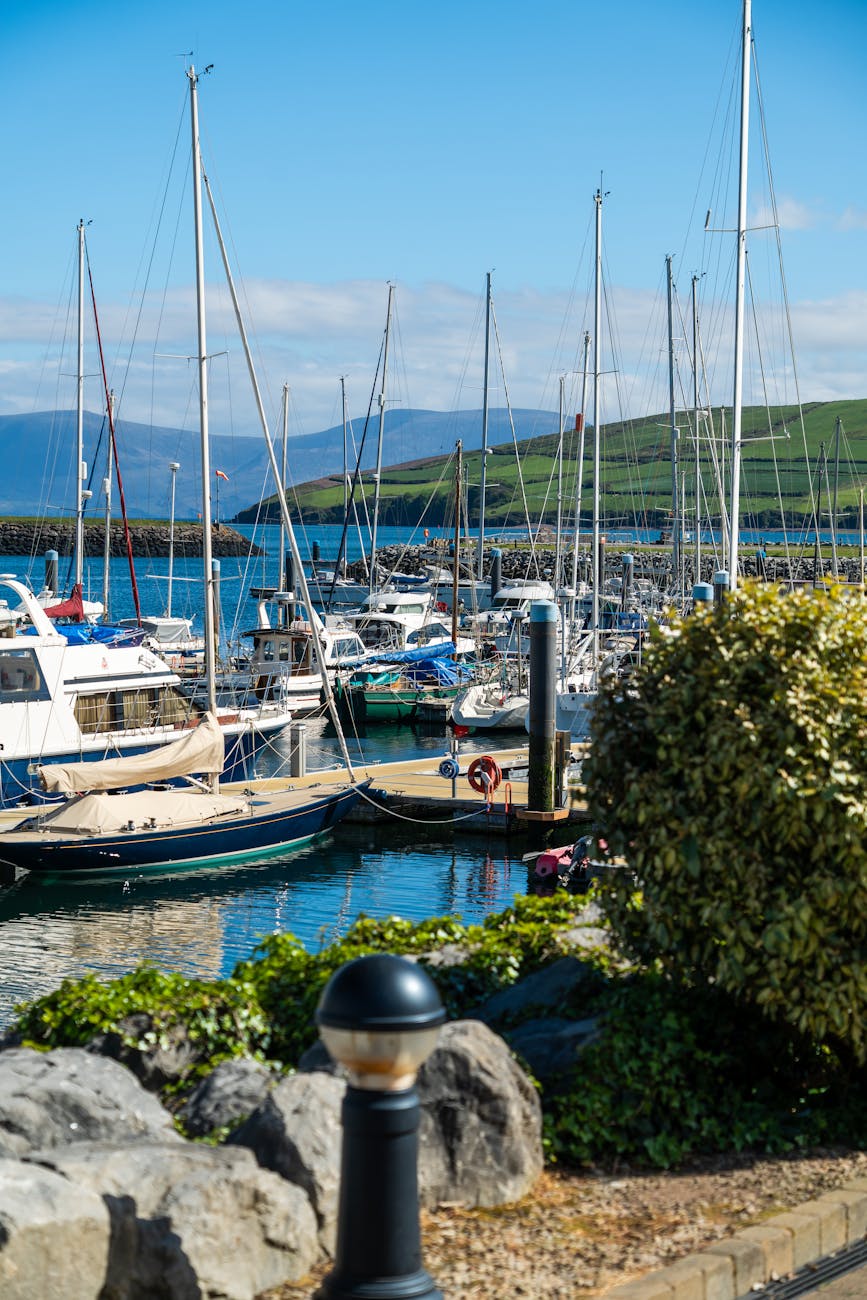
Dingle
Transportation profile
Dingle is a town and peninsula, not a city transport system. It is beautiful, popular, and transport-constrained. Getting to Dingle without a car is possible. Fully exploring the peninsula without a car requires planning, tours, cycling, taxis, or acceptance of limits.
Arrival and intercity connections
There is no railway station in Dingle. The nearest major rail/bus hub is Tralee. Bus Éireann route 275 serves Tralee to Dingle via Camp. This is the key public transport route for car-free access. Dingle can also be approached through Killarney/Tralee combinations, but the final leg is bus, car, taxi, or tour.
Local Link and peninsula services
Local Link Kerry publishes regular rural services around Kerry, including Dingle Peninsula routes such as route 268 around Dingle/Gallarus and other services in the region; regular rural services operate to set timetables and do not require pre-booking, while door-to-door services do require booking. These services can be genuinely useful, but they are not as frequent or flexible as a city bus network.
Sightseeing
The main Dingle challenge is not reaching Dingle town. It is reaching Slea Head, Dunquin, Gallarus Oratory, beaches, trailheads, viewpoints, and scattered accommodation. Options:
Driving and parking
Dingle Peninsula roads are beautiful and narrow. Drivers should be comfortable with left-side driving, meeting buses on tight roads, reversing to passing places, and not stopping dangerously for photos. High season brings congestion in Dingle town and at viewpoints. Choose smaller vehicles.
Local concerns
Locals deal with seasonal traffic, limited parking, pressure from tour buses, narrow roads, and limited public transport frequency. Visitors often underestimate the last bus, the weather, and the fatigue of cycling in wind.
Practical Dingle use cases
| Mode | Best in Ireland for | Weaknesses | Traveler advice |
|---|---|---|---|
| Walking | Dublin core, Galway, Kilkenny, Killarney, Cork centre, Belfast centre, Dingle town | Rain, wind, hills, cobbles, limited rural footpaths | Bring waterproof shoes and do not walk rural roads at night |
| Dublin bus | Citywide Dublin coverage | Congestion, route changes, live-info uncertainty | Use TFI Live and Leap; avoid tight transfers |
| Luas | Dublin tram corridors | Does not serve airport; can crowd | Tap on/off; use with buses/DART |
| DART | Dublin coastal trips | Engineering works, peak crowding | Best car-free scenic day-trip tool near Dublin |
| Irish Rail | Intercity comfort, Dublin/Cork commuter rail | Dublin-centred network, some transfers | Book intercity in advance; verify station |
| Intercity coach | Airports, cross-country routes, budget travel | Traffic, motion sickness, operator fragmentation | Compare against rail; book direct airport coaches when useful |
| Local Link | Rural towns, villages, social mobility | Low frequency, booking needed on some services | Check last return before departure |
| Taxi | Luggage, rain, late night, accessibility, rural gaps | Scarcity and cost at peaks | Pre-book critical trips |
| Rental car | Dingle, Ring of Kerry, rural west, trailheads | City parking, narrow roads, tolls | Rent only after city stays; choose small automatic if needed |
| Bike share | Short urban trips in Dublin/Cork/Galway/Limerick/Belfast | Weather, traffic, docking/zone limits | Great for confident cyclists in good weather |
| Ferry | Aran Islands, Britain/Ireland sea routes, islands | Weather-sensitive, separate booking | Check sailing status; avoid tight onward connections |
- Rental car: most flexible, but roads are narrow and parking is seasonal.
- Organized tour: efficient for Slea Head and peninsula highlights.
- Bicycle/e-bike: rewarding in good weather for fit riders; wind and hills are serious.
- Taxi/private driver: expensive but practical for groups or mobility needs.
- Local Link/bus: possible for certain villages and routes; plan around the timetable.
- Walking: good in town and on selected trails, not a substitute for peninsula transport.
- Dublin to Dingle car-free: train to Tralee or Killarney, then bus to Dingle; check connection times carefully.
- Killarney to Dingle: car, tour, or bus via Tralee/Local Link combinations.
- Dingle town to Slea Head: car, tour, taxi, or bike in good conditions.
- Dingle to Kerry Airport: bus/taxi via Tralee or Killarney; plan transfers.
- Dingle without a car: stay central, book tours, check route 275 and Local Link timetables, and avoid lodging far outside town unless transport is included.
1. Dublin-only, 3 days, no car
Use a Leap Visitor Card or regular Leap. Take coach or bus from the airport to the city. Use Luas/bus for central trips, DART for one coastal day, and taxis for late-night or rain. Avoid renting a car.
2. Dublin + Galway, car-free
Take a direct coach from Dublin Airport to Galway if arriving by air, or train/coach from Dublin city. Stay central in Galway. Use walking and city buses. Book an Aran Islands ferry day or Connemara tour rather than improvising rural public transport.
3. Dublin + Belfast
Take Enterprise from Dublin Connolly to Belfast Grand Central, or coach if airport-to-airport/city-airport movement is better. Use Translink in Belfast, not Leap. Check UK ETA/visa requirements if not Irish or British.
4. Cork + Killarney + Dingle
Use rail or coach to Cork, Cork commuter rail for Cobh/Midleton, then rail/coach to Killarney. For Dingle, rent a car in Cork/Killarney/Tralee or take bus via Tralee and book local tours. Avoid a same-day Cork–Killarney–Dingle–Ring of Kerry plan unless you enjoy exhaustion.
5. Rural west with a car
Start in Galway or Shannon, rent a small car, and build slower days: Connemara one day, Burren/Cliffs one day, Dingle/Kerry separately. Do not use Google Maps drive time as the full plan; add stops, weather, parking, narrow roads, and daylight.
Before each transport day:
: Transport for Ireland, “Plan A Journey,” https://www.transportforireland.ie/plan-a-journey/
: Leap Card, “Our Apps,” https://about.leapcard.ie/apps
: TFI Leap Card, “About TFI Leap Card,” https://about.leapcard.ie/about
: TFI Leap Card, “Leap Visitor Card,” https://about.leapcard.ie/leap-visitor-card
: TFI Leap Card, “TFI 90 Minute Fare,” https://about.leapcard.ie/tfi-90-minute-fare
: Transport for Ireland, “TFI Go app,” https://www.transportforireland.ie/tfi-go-app/
: Iarnród Éireann / Irish Rail, “Ireland Rail Map,” https://www.irishrail.ie/en-ie/travel-information/station-and-route-maps/ireland-rail-map
: Iarnród Éireann / Irish Rail, “Leap Card for Rail Travel,” https://www.irishrail.ie/en-ie/rail-fares-and-tickets/leap-card
: Iarnród Éireann / Irish Rail, “Bicycle Information for Rail Travel,” https://www.irishrail.ie/en-ie/travel-information/bicycle-information-for-rail-travel
: Iarnród Éireann / Irish Rail, “Accessibility Policy for Intercity and All Other Routes,” https://www.irishrail.ie/en-ie/travel-information/accessibility-onboard-trains/planning-your-journey
: Transport for Ireland, “Luas fares,” https://www.transportforireland.ie/fares/luas-fares/
: Luas, “FAQs,” https://www.luas.ie/faqs/
: Bus Éireann, “Routes and Timetables,” https://www.buseireann.ie/routes-and-timetables
: Expressway, “Home,” https://www.expressway.ie/
: Bus Éireann, “Travelling with Bicycles on Bus Éireann Services,” https://www.buseireann.ie/bicycles
: Transport for Ireland, “TFI Local Link,” https://www.transportforireland.ie/tfi-local-link/
: City Direct, “Home,” https://citydirect.ie/
: Translink, “Plan Your Journey,” https://www.translink.co.uk/
: Translink, “Contactless Payment,” https://www.translink.co.uk/tickets/ways-to-pay/contactless-payment
: Translink, “Tickets and Travel Cards,” https://www.translink.co.uk/tickets
: Visit Belfast, “Belfast Visitor Pass,” https://visitbelfast.com/plan/belfast-visitor-pass/
: Translink, “Enterprise,” https://www.translink.co.uk/using-translink/cross-border/enterprise
: Transport for Ireland, “Taxi Fare Estimator,” https://www.transportforireland.ie/fares/taxi-fares/
: National Transport Authority, “Maximum Taxi Fares to Increase from December 1st 2024,” https://www.nationaltransport.ie/publications/maximum-taxi-fares-to-increase-from-december-1st-2024/
: nidirect, “Taxi fares,” https://www.nidirect.gov.uk/articles/taxi-fares
: nidirect, “Taxis and their services,” https://www.nidirect.gov.uk/articles/taxis-and-their-services
: Road Safety Authority, “Exchanging a foreign driving licence for an Irish licence,” https://www.rsa.ie/services/licensed-drivers/driving-licence/exchange-foreign-licence
: Tourism Ireland, “Driving in Ireland,” https://www.ireland.com/en-us/plan-your-trip/travel/driving-in-ireland/
: nidirect, “Driving in Northern Ireland – road safety for visitors,” https://www.nidirect.gov.uk/articles/driving-northern-ireland-road-safety-visitors
: Transport Infrastructure Ireland, “Pay a Toll,” https://www.tii.ie/en/roads-tolling/tolling-information/pay-a-toll/
: eFlow, “Home page,” https://www.eflow.ie/
: Dublin Airport, “Dublin Airport Bus Services,” https://www.dublinairport.com/to-from-the-airport/by-bus/dublin-buses
: Dublin Express, “Dublin Coach Travel & Airport Transfers,” https://www.dublinexpress.ie/
: Bus Éireann, “Buses to and from Cork Airport,” https://www.buseireann.ie/destinations/cork-airport
: Cork Airport, “Bus Services To And From Cork Airport,” https://www.corkairport.com/to-from-the-airport/book-a-coach-ticket
: Shannon Airport, “Daily Bus Services To and From Shannon Airport,” https://www.shannonairport.ie/bus
: Bus Éireann, “Buses to and from Shannon Airport,” https://www.buseireann.ie/destinations/shannon-airport
: Bus Éireann, “Bus Routes that serve Kerry Airport,” https://www.buseireann.ie/destinations/kerry-airport
: Bus Éireann, “Route 271: Tralee to Killarney via Kerry Airport,” https://www.buseireann.ie/routes-and-timetables/271
: Belfast International Airport, “By Bus/Coach,” https://www.belfastairport.com/to-from/by-buscoach
: George Best Belfast City Airport, “Public Transport,” https://www.belfastcityairport.com/To-and-From/Public-Transport
: Irish Ferries, “Ferry Holyhead to Dublin,” https://www.irishferries.com/uk-en/routes-and-times/dublin-holyhead/
: Dublin Port, “To & From,” https://www.dublinport.ie/to-from/
: Aran Island Ferries, “Home,” https://www.aranislandferries.com/
: Aran Island Ferries, “Aran Islands Ferry Sailing Timetables,” https://www.aranislandferries.com/aran-islands-ferry-sailing-times
: Dublin City Council, “Bike Sharing Services in Dublin,” https://www.dublincity.ie/sports-and-healthy-living/walking-and-cycling-dublin/bike-sharing-services-dublin
: TFI Bikes, “Home,” https://www.bikeshare.ie/
: TFI Bikes, “Galway,” https://www.bikeshare.ie/galway.html
: TFI Bikes, “Cork,” https://www.bikeshare.ie/cork.html
: TFI Bikes, “Limerick,” https://www.bikeshare.ie/limerick.html
: Discover Northern Ireland, “Belfast Bikes: Public Cycle Hire,” https://discovernorthernireland.com/listing/belfast-bikes%3A-public-cycle-hire/71153101/
: Road Safety Authority, “E-scooters,” https://www.rsa.ie/road-safety/road-users/special-purpose-vehicles/e-scooters
: Police Service of Northern Ireland, “E-Scooter, Scrambler and Quad Safety,” https://www.psni.police.uk/safety-and-support/roads-and-driving/e-scooter-scrambler-and-quad-safety
: Transport for Ireland, “Bus Accessibility,” https://www.transportforireland.ie/accessibility/bus-accessibility/
: Transport for Ireland, “Accessible travel information,” https://www.transportforireland.ie/accessibility/
: Transport for Ireland, “Please Offer Me a Seat Badge & Card,” https://www.transportforireland.ie/accessibility/please-offer-me-a-seat-badge-card/
: Met Éireann, “Weather Warnings Explained,” https://www.met.ie/7039-2
: Transport for Ireland, “Live Service Updates and Disruptions,” https://www.transportforireland.ie/plan-a-journey/service-updates/
: Iarnród Éireann / Irish Rail, “Service Updates,” https://www.irishrail.ie/en-ie/news/service-updates
: Bus Éireann, “Service Updates,” https://www.buseireann.ie/service-updates
: UK Home Office, “Electronic Travel Authorisation (ETA) factsheet – April 2026,” https://homeofficemedia.blog.gov.uk/electronic-travel-authorisation-eta-factsheet-april-2026/
: GOV.UK, “Get an electronic travel authorisation (ETA) to visit the UK,” https://www.gov.uk/eta
: GOV.UK, “You do not need an ETA to travel to the UK if,” https://www.gov.uk/eta/when-not-need-eta
: MetroLink, “Route Description,” https://www.metrolink.ie/en/route/route-description
: Transport for Ireland, “BusConnects Dublin Network Redesign,” https://www.transportforireland.ie/network-redesign/
: Transport for Ireland, “Galway city bus services,” https://www.transportforireland.ie/plan-a-journey/network-maps/galway-city-bus-services/
: TFI Leap Card, “Galway,” https://about.leapcard.ie/galway
: Transport for Ireland, “Cork city bus & train services,” https://www.transportforireland.ie/plan-a-journey/network-maps/cork-city-bus-services/
: TFI Leap Card, “Cork,” https://about.leapcard.ie/cork
: Transport Infrastructure Ireland, “TII Launches Luas Cork Public Consultation,” https://www.tii.ie/en/news/press-releases/tii-launches-luas-cork-public-consultation/
: Bus Éireann, “Route 226: Kinsale to Kent Station via Cork Airport,” https://www.buseireann.ie/routes-and-timetables/226
: Local Link Kerry, “Killarney,” https://www.locallinkkerry.ie/killarney/
: Local Link Kerry, “Home,” https://www.locallinkkerry.ie/
: Local Link Kerry, “TFI Anseo Pilot Project Killarney,” https://www.locallinkkerry.ie/tfi-anseo-pilot-project-killarney/
: Translink, “Belfast Grand Central Station,” https://www.translink.co.uk/bgcs
: Department for Infrastructure Northern Ireland, “Belfast Rapid Transit - Glider Introduction,” https://www.infrastructure-ni.gov.uk/articles/belfast-rapid-transit-glider-introduction
: Transport for Ireland, “Limerick City bus services,” https://www.transportforireland.ie/plan-a-journey/network-maps/limerick-city-bus-services/
: TFI Leap Card, “Limerick,” https://about.leapcard.ie/limerick
: Bus Éireann, “Route 343: Limerick to Shannon via Bunratty,” https://www.buseireann.ie/routes-and-timetables/343
: Transport for Ireland, “Kilkenny city bus services,” https://www.transportforireland.ie/plan-a-journey/network-maps/kilkenny-bus-services/
: Bus Éireann, “Route 275: Tralee to Dingle via Camp,” https://www.buseireann.ie/routes-and-timetables/275
: Local Link Kerry, “Timetables,” https://www.locallinkkerry.ie/timetables/
: Bus Éireann, “Route 51: Cork to Galway via Limerick,” https://www.buseireann.ie/routes-and-timetables/51
- Confirm the operator: TFI/Irish Rail/Bus Éireann/Luas/Local Link/Translink/private coach.
- Confirm the payment method: Leap, TFI Go, cash, bank card, online ticket, Translink/mLink, or operator ticket.
- Confirm the station or stop name, especially Dublin Heuston vs Connolly.
- Check the last return service, especially rural buses and ferries.
- Check weather warnings and service updates.
- Leave slack for airport transfers, ferry days, and rural connections.
- Pre-book taxis for early flights, remote lodging, or late nights.
- If driving, confirm toll policy, parking, automatic/manual transmission, and left-side comfort.
- For Belfast/Northern Ireland, confirm currency, Translink tickets, and ETA/visa rules.