*A practical analysis for visitors, foreign residents, and local users* Prepared: April 22, 2026
Scope and audience
This paper explains how transportation works in Hong Kong at the territory-wide level and then applies those principles to the main districts, transport zones, and trip types a visitor or resident is likely to use. Hong Kong is not a multi-city country in the same way as Japan, the United Kingdom, France, or Germany, so the second part is organized by functional travel areas: Hong Kong Island, Kowloon, the New Territories, Lantau and the airport, the outlying islands, and cross-boundary corridors to Mainland China and Macao.
The goal is practical rather than abstract. The paper covers the systems a traveler may need: MTR and Light Rail, buses, minibuses, trams, ferries, taxis, ride-hailing, private vehicles, rental cars, cycling, walking, airport access, high-speed rail, cross-boundary links, payments, apps, weather disruptions, luggage, accessibility, etiquette, and common problems experienced by both travelers and locals.
Hong Kong is one of the easiest dense urban regions in the world to navigate without a car. Its difficulty is not the absence of transport. The difficulty is choosing correctly among several overlapping networks, understanding when taxis or ferries are better than rail, knowing how Octopus and other payment methods work, and planning around crowding, hills, humidity, typhoons, and cross-harbour or cross-boundary bottlenecks.
Contents
- [Executive summary](#executive-summary)
- [Part I — Territory-wide transportation in Hong Kong](#part-i--territory-wide-transportation-in-hong-kong)
- [1. The Hong Kong transportation model](#1-the-hong-kong-transportation-model)
- [2. Practical decision framework](#2-practical-decision-framework)
- [3. Governance, operators, and integration](#3-governance-operators-and-integration)
- [4. Payment systems, fares, cards, passes, and cash](#4-payment-systems-fares-cards-passes-and-cash)
- [5. MTR, Light Rail, Airport Express, and High Speed Rail](#5-mtr-light-rail-airport-express-and-high-speed-rail)
- [6. Buses](#6-buses)
- [7. Public light buses and minibuses](#7-public-light-buses-and-minibuses)
- [8. Trams, Peak Tram, and heritage/special rail](#8-trams-peak-tram-and-heritagespecial-rail)
- [9. Ferries and water transport](#9-ferries-and-water-transport)
- [10. Taxis, e-payment, and ride-hailing](#10-taxis-e-payment-and-ride-hailing)
- [11. Private vehicles, rental cars, parking, tolls, and driving](#11-private-vehicles-rental-cars-parking-tolls-and-driving)
- [12. Walking, hills, escalators, weather, and last-mile travel](#12-walking-hills-escalators-weather-and-last-mile-travel)
- [13. Cycling and micromobility](#13-cycling-and-micromobility)
- [14. Airport access](#14-airport-access)
- [15. Cross-boundary travel to Mainland China and Macao](#15-cross-boundary-travel-to-mainland-china-and-macao)
- [16. Accessibility, seniors, families, luggage, and disabilities](#16-accessibility-seniors-families-luggage-and-disabilities)
- [17. Safety, etiquette, enforcement, and scams](#17-safety-etiquette-enforcement-and-scams)
- [18. Weather, disruptions, typhoons, and local concerns](#18-weather-disruptions-typhoons-and-local-concerns)
- [19. Recommended strategies by user type](#19-recommended-strategies-by-user-type)
- [Part II — Hong Kong area and use-case analysis](#part-ii--hong-kong-area-and-use-case-analysis)
- [Hong Kong Island](#hong-kong-island)
- [Kowloon](#kowloon)
- [New Territories](#new-territories)
- [Lantau, Hong Kong International Airport, Disneyland, Tung Chung, and South Lantau](#lantau-hong-kong-international-airport-disneyland-tung-chung-and-south-lantau)
- [Outlying islands](#outlying-islands)
- [Cross-boundary corridors: Shenzhen, Mainland China, Macao, and Zhuhai](#cross-boundary-corridors-shenzhen-mainland-china-macao-and-zhuhai)
- [Major visitor destinations and transport choices](#major-visitor-destinations-and-transport-choices)
- [Comparative mode matrix](#comparative-mode-matrix)
- [Practical trip-planning examples](#practical-trip-planning-examples)
- [References](#references)
Executive summary
Hong Kong is a transit-first city. For most visitors and many residents, the winning formula is MTR plus walking plus Octopus, with buses, ferries, trams, taxis, and minibuses added when they solve a specific local problem. Renting a car is rarely useful unless a traveler has unusual mobility needs, remote work locations, or family logistics that outweigh the cost and stress of parking and congestion.
The territory-wide travel logic is straightforward:
The single most important practical recommendation is this: get a physical or mobile Octopus immediately, use the MTR for the backbone, and then choose buses, trams, ferries, minibuses, or taxis based on terrain, weather, luggage, and final destination.
- Use the MTR first for most medium- and long-distance urban trips. It is fast, frequent, signed in English and Chinese, and connects the main tourist and business districts. The system includes metro lines, commuter rail, Light Rail in the northwest New Territories, the Airport Express, and the Hong Kong section of the High Speed Rail network.
- Use Octopus as the default payment tool. A physical or mobile Octopus works on MTR, buses, minibuses, ferries, trams, many coaches, and a huge number of small retail transactions. Octopus describes acceptance at more than 180,000 points across transport, dining, shopping, and entertainment.
- Know the newer card-payment options but do not rely on them everywhere. MTR gates increasingly accept contactless Visa, Mastercard, and UnionPay at light-blue gates, but Octopus remains the most universal transport payment method, especially for buses, ferries, trams, minibuses, small shops, and quick local spending.
- Use buses when rail is indirect. Hong Kong’s franchised bus network is extensive and often more convenient than MTR for hillside districts, beach areas, South Hong Kong Island, parts of the New Territories, and airport or overnight trips. Major franchised operators include Citybus, Kowloon Motor Bus, Long Win Bus, and New Lantao Bus.
- Use minibuses carefully. Green minibuses run scheduled routes with fixed stops and fares. Red minibuses are more flexible and less predictable. Public light buses have not more than 19 seats, and they can be extremely useful for local trips that do not fit neatly into the MTR or franchised bus network.
- Use taxis for hills, luggage, bad weather, late nights, and difficult last miles. Hong Kong taxis are color-coded by operating area: red urban taxis cover most of Hong Kong; green taxis mainly cover parts of the New Territories; blue taxis serve Lantau Island and Chek Lap Kok. As of April 1, 2026, taxi drivers are required to offer at least two electronic payment methods, including one QR-code option and one non-QR option, while cash remains available.
- Use ferries when they beat geography. The Star Ferry is both a transport service and an iconic Victoria Harbour experience. Ferries are essential for Lamma, Cheung Chau, Peng Chau, Mui Wo, Discovery Bay, and some cross-boundary trips. They are also more exposed to weather disruption than rail.
- Do not treat Hong Kong as car-friendly by default. Roads are dense, parking is expensive, tunnels and bridges create choke points, and hillside districts can be awkward to drive. Visitors may drive on a valid overseas driving licence or international driving permit for up to 12 months after last entry if they meet the visitor definition, but legal permission does not make driving the smart choice.
- Download HKeMobility and MTR Mobile. HKeMobility is the official all-in-one transport information app for route search, fares, public transport ETAs, traffic, parking, walking, driving, cycling, and control point information.
- Plan around weather. During typhoons, ferries are often the first major mode to stop, buses may be suspended, and the MTR may reduce service. Under Tropical Cyclone Warning Signal No. 8, MTR says rail initially remains normal but may become limited as the storm approaches, while MTR Bus suspends three hours after Signal 8 is issued; open sections of railway, Light Rail, and MTR Bus suspend immediately at Signal 9 or above.
- Plan around crowds. Rush hours, major events, public holidays, Mainland border peaks, and ferry weekends can change the best route. The fastest route on a map is not always the most comfortable route.
1. The Hong Kong transportation model
Hong Kong’s transportation system reflects its geography. The territory is compact but not simple. It has a dense urban core around Victoria Harbour, steep mountains immediately behind major neighborhoods, new towns spread across the New Territories, an international airport on Chek Lap Kok, island communities connected by ferries, and multiple borders with Mainland China and Macao. The result is a layered network rather than a single grid.
The system is built around five main layers:
For visitors, the system feels easy because signs are bilingual and the MTR is intuitive. For locals, the system can feel both excellent and frustrating: excellent because it is dense and frequent; frustrating because crowding, interchange walking, tunnel traffic, housing-workplace mismatch, border queues, service disruptions, parking costs, and fare accumulation affect daily life.
What makes Hong Kong different from many cities
The city is vertical. A destination 800 meters away may involve stairs, slopes, footbridges, elevators, escalators, and intense humidity. This matters in Central, Sheung Wan, Sai Ying Pun, Mid-Levels, Wan Chai, Kennedy Town, parts of Kowloon, and many New Territories estates.
The harbour is a real barrier. The MTR crosses it efficiently, but cross-harbour road tunnels can congest badly. Ferries remain useful for selected trips because they bypass road traffic and provide direct harbour crossings.
The border is part of local mobility. Many residents cross to Shenzhen or Macao for work, shopping, family, or leisure. Cross-boundary transport is not an edge case; it is part of the regional system.
The best route changes by time of day. MTR may beat road traffic at peak hours. Buses may beat MTR when the rail route requires a long interchange. Taxis may be poor value during tunnel congestion but excellent late at night.
Payment integration is strong but not total. Octopus makes payment easy, but Hong Kong does not function as one perfectly unified fare zone. Transfer concessions vary by operator, route, and payment method.
- Rail backbone. MTR lines carry most fast urban trips. They are the default for Central, Admiralty, Causeway Bay, Tsim Sha Tsui, Mong Kok, Sha Tin, West Kowloon, Disneyland, Tung Chung, and the airport corridor.
- Surface bus network. Buses fill gaps left by rail, especially hillside districts, New Territories residential areas, beaches, airport routes, tunnel routes, and overnight movement.
- Local minibuses. Green and red minibuses connect neighborhoods, estates, hospitals, villages, beaches, and rail stations in a granular way that visitors may initially find confusing but locals rely on heavily.
- Water links. Ferries are essential for outlying islands and useful across Victoria Harbour. They also connect Hong Kong with Macao, Zhuhai, and other Pearl River Delta destinations.
- Taxis and private vehicles. These handle irregular trips, mobility constraints, luggage, late nights, storms, and places where multiple transfers would be inefficient.
2. Practical decision framework
Use this hierarchy when choosing a mode.
For most visitors
For locals and longer-stay residents
Mode choice by problem
| Problem | Usually best solution | Why |
|---|---|---|
| First day in Hong Kong | Buy/set up Octopus, use MTR | Simple, predictable, bilingual |
| Airport to Central fast | Airport Express | Direct, luggage-friendly, about 24 minutes to downtown Hong Kong by MTR’s published Airport Express timetable |
| Airport to neighborhood cheaply | Airport bus | Direct to many districts, avoids MTR transfers |
| Central to Tsim Sha Tsui scenic | Star Ferry | Direct, iconic, low cost |
| Central to Causeway Bay | MTR or tram | MTR is fast; tram is scenic and slow |
| Central to Mid-Levels | Walk/escalator/taxi | Hills matter more than distance |
| Beach or country park | Bus/minibus/taxi | Rail rarely reaches trailheads or beaches directly |
| Lamma/Cheung Chau/Peng Chau | Ferry | Essential |
| Disneyland | Tung Chung Line + Disneyland Resort Line, taxi with kids/luggage | Rail is easy; taxi can be more comfortable for families |
| Shenzhen day trip | East Rail to Lo Wu/Lok Ma Chau or HSR | Depends on final Shenzhen destination and immigration plan |
| Late night after MTR closes | Taxi or night bus | MTR is not 24-hour except special nights |
| Heavy rain | MTR/taxi/covered walkways | Buses slow; ferries may be uncomfortable or disrupted |
| Typhoon Signal 8+ | Avoid non-essential travel | Services reduce or suspend, especially ferries and buses |
- MTR if both origin and destination are near stations.
- MTR plus walking if the walk is flat, shaded, or underground.
- MTR plus bus/minibus for hills, beaches, remote estates, country parks, and final legs.
- Tram for slow, cheap, scenic east-west movement on northern Hong Kong Island.
- Star Ferry for Central or Wan Chai to Tsim Sha Tsui when the harbour crossing itself is part of the experience or when it gives a convenient direct link.
- Taxi for luggage, rain, late night, short uphill hops, family travel, or awkward point-to-point trips.
- Airport Express when speed and luggage convenience matter; airport buses when price and direct neighborhood access matter.
- Ferry for outlying islands or Macao; High Speed Rail for Mainland high-speed rail destinations.
- Choose housing by commute geometry, not just map distance. A single-seat MTR or bus ride is often better than a shorter trip with two uncomfortable transfers.
- Learn the bus and minibus alternatives to your nearest MTR station. They become important during rain, rail disruption, or late-night service gaps.
- Track interchange walking time, especially at Admiralty, Central/Hong Kong, Tsim Sha Tsui/East Tsim Sha Tsui, Mei Foo, Kowloon Tong, and large New Territories stations.
- Budget for taxis during typhoons, family trips, and late-night returns, but remember taxi availability can fall precisely when demand spikes.
- Avoid car ownership unless there is a strong household case: children, elderly relatives, remote work sites, business needs, disability needs, or regular trips to areas poorly served by public transport.
- For cross-boundary life, choose the border mode first: East Rail for Lo Wu or Lok Ma Chau, HSR for Mainland city trips, HZMB shuttle or cross-boundary coaches for Macao/Zhuhai, ferry where it is still the easiest terminal-to-terminal choice.
3. Governance, operators, and integration
Hong Kong transport is coordinated by the Transport Department, but much of the day-to-day operation is delivered by corporations and franchise operators. This creates a system that is highly usable but operationally plural.
Important bodies and operators include:
Integration strengths
Hong Kong’s integration is strongest in practical use:
Integration limits
The system is not a single fare system like some European metropolitan networks. Important limits include:
- Transport Department (TD). Oversees public transport policy, road traffic, licensing, tunnels, parking meters, public light buses, taxis, cross-boundary road access, and transport information.
- MTR Corporation. Operates the MTR heavy rail network, Light Rail, MTR Bus in the northwest New Territories, Airport Express, and the Hong Kong section of High Speed Rail services from West Kowloon.
- Franchised bus operators. Citybus, Kowloon Motor Bus, Long Win Bus, and New Lantao Bus operate major bus networks under franchises.
- Public light bus operators. Green minibuses run scheduled routes; red minibuses run non-scheduled services.
- Ferry operators. Star Ferry, Sun Ferry, Hong Kong & Kowloon Ferry, Fortune Ferry, Discovery Bay Transportation Services, TurboJET, Cotai Water Jet, and others operate harbour, outlying island, and cross-boundary routes.
- Octopus Cards Limited. Operates the stored-value card system used for transport and retail payments.
- Hong Kong International Airport and Airport Authority ecosystem. Connects air, Airport Express, airport buses, taxis, coaches, ferries, and cross-boundary options.
- one stored-value card across most modes;
- bilingual signs on major networks;
- frequent services on major corridors;
- efficient interchanges at many MTR stations;
- mature airport-city links;
- dense bus and minibus feeds into rail;
- official real-time route planning through HKeMobility.
- transfer discounts are not universal;
- cash users often lose concessions and must have exact fare on buses/minibuses;
- not all payment methods work everywhere;
- taxis are separate from the public transport fare ecosystem;
- ferry pricing varies greatly by route, vessel type, day, and operator;
- cross-boundary travel adds immigration, customs, ticketing, visa, and terminal complexity.
4. Payment systems, fares, cards, passes, and cash
Octopus
Octopus is the default answer to Hong Kong transport payment. Visitors should treat it as a transit card and small-payment wallet. It works on MTR, buses, ferries, public light buses, coaches, trams, and many shops and restaurants. Octopus says it is accepted at more than 180,000 points across public transport, dining, entertainment, shopping, and other categories.
A traveler can use:
For most visitors, Octopus is more useful than a one-day pass because it works across more modes and for small purchases. A day pass can be worthwhile only when a visitor plans heavy MTR use within its validity and does not need excluded services.
Tourist Day Pass
The MTR Tourist Day Pass allows unlimited travel for one day on MTR, Light Rail, and MTR Bus, but excludes Airport Express, East Rail Line First Class, and travel to/from Lo Wu or Lok Ma Chau. MTR restricts it to tourists who are non-residents and have been in Hong Kong for less than 14 days at purchase. “Any one day” means 24 consecutive hours from the first recorded MTR journey.
Practical interpretation:
Contactless bank cards and QR options
MTR has expanded direct contactless bank card payment. Since August 24, 2024, passengers can use Visa, Mastercard, or UnionPay contactless bank cards at designated light-blue MTR gates.
This is convenient for visitors who do not want a stored-value card for simple MTR use. But it has limits:
Some buses, ferries, trams, and promotions support additional QR or card payment methods, but coverage is not as universal or simple as Octopus. Treat non-Octopus payment as a supplement rather than the core plan.
Cash
Cash still matters in Hong Kong, but transport cash use is less convenient than Octopus.
A practical visitor should carry:
Fares and concessions
Hong Kong fares vary by mode and route. MTR is distance-based. Bus fares are route-based and often charged on boarding. Some bus routes have sectional fares. Minibus fares vary by route and may have Octopus or cash differences. Ferries vary by route, deck, weekday/weekend/holiday, vessel type, and operator.
For local seniors and eligible persons with disabilities, Hong Kong operates a public transport fare concession scheme. From April 3, 2026, the relevant concession changed from a simple flat HK$2 model to “HK$2 flat rate or 80% discount” for eligible beneficiaries on participating modes, using designated Octopus products such as JoyYou Card or eligible personalized Octopus.
Visitors should not assume they qualify for resident-only concessions. Some modes have child or senior fares that may apply to non-residents, but rules differ by operator.
- physical Octopus card, bought after arrival by air, land, or sea, including at common transport points;
- Mobile Octopus for tourists, available through the Octopus App for Tourists on supported iPhone and Huawei devices, with credit/debit card top-up in the app;
- ordinary Adult Octopus, suitable for most short-term adult visitors;
- special fare Octopus types, where eligible, mainly for local residents or age-specific groups.
- Good for rail-heavy sightseeing days.
- Not useful for Airport Express.
- Not useful for cross-boundary Lo Wu/Lok Ma Chau rail trips.
- Does not replace Octopus for buses, ferries, trams, shops, or many practical local payments.
- You must use compatible gates.
- You should tap in and out with the same physical card or mobile wallet token.
- It may not work on every transport mode you need.
- Octopus remains the smoother all-round payment solution.
- On many buses and minibuses, cash requires exact fare; change is often not given.
- Taxis historically required cash, but from April 1, 2026 drivers must offer at least two e-payment methods while passengers may still pay in cash.
- Small shops, older restaurants, markets, and some remote areas may prefer cash, although Octopus and mobile payments are widespread.
- Octopus or mobile Octopus;
- a contactless credit/debit card;
- some HKD cash for taxis, cash-only shops, small islands, older restaurants, or payment failures.
5. MTR, Light Rail, Airport Express, and High Speed Rail
The MTR is the core of Hong Kong movement. For visitors, it is the easiest system to understand because station names are bilingual, transfers are clearly signed, and trains are frequent. For residents, it is the commuting backbone and a major determinant of housing convenience.
Major MTR components
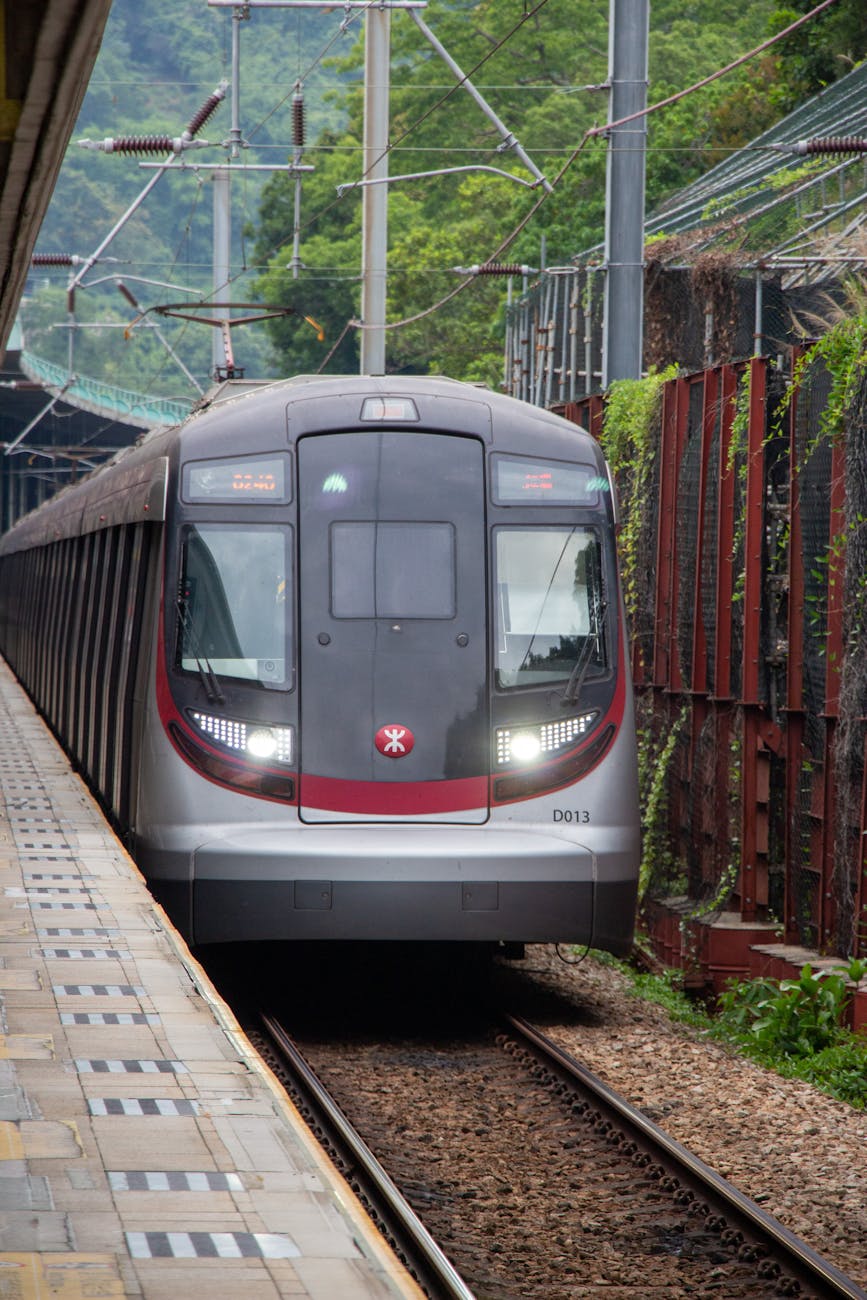
The network includes:
MTR service hours and frequency
MTR service hours vary by station and line. MTR publishes station-specific first and last train tools; passengers are advised to enter before service closes and at least five minutes before last train departure.
The Airport Express is easier to summarize. MTR publishes a downtown-airport journey time of approximately 24 minutes, with first and last trains roughly from early morning to around 00:48–01:13 depending on direction and station.
Practical rule:
MTR fares and Airport Express fares
MTR fares are generally distance-based. Airport Express fares are separate and higher than ordinary MTR fares. Current published adult Airport Express single/same-day return fares include HK$120 by Octopus from Airport to/from Hong Kong, HK$105 to/from Kowloon, and HK$73 to/from Tsing Yi; Smart Ticket prices are slightly higher on the same table, and round-trip tickets are available for some destinations.
Practical interpretation:
MTR interchanges and station complexity
Some MTR stations are simple. Others are mini-cities.
Central/Hong Kong Station links the Island Line, Tsuen Wan Line, Tung Chung Line, Airport Express, IFC, Central elevated walkways, and ferries, but walking distances can be long.
Admiralty is one of the most important interchanges: Island Line, Tsuen Wan Line, East Rail Line, and South Island Line. It is often the best transfer point, but it can be busy and vertical.
Tsim Sha Tsui/East Tsim Sha Tsui are connected but require walking. Good for Star Ferry, Harbour City, Avenue of Stars, hotels, and Kowloon-side tourist movement.
Kowloon Tong links East Rail and Kwun Tong lines and is important for northern New Territories to Kowloon transfers.
Mei Foo links Tsuen Wan and Tuen Ma lines, but the interchange walk is longer than many first-time users expect.
Nam Cheong links Tung Chung and Tuen Ma lines and is useful for west-side transfers.
West Kowloon/Austin/Kowloon can confuse visitors because High Speed Rail at West Kowloon, Austin MTR, and Kowloon Airport Express/Tung Chung Line are separate but adjacent through walking links.
MTR user concerns
Common issues for locals and visitors:
MTR best practices
- Island Line. Kennedy Town to Chai Wan, serving the north shore of Hong Kong Island: Central, Admiralty, Wan Chai, Causeway Bay, Quarry Bay, North Point, and beyond.
- Tsuen Wan Line. Central/Admiralty/Tsim Sha Tsui/Mong Kok corridor to Tsuen Wan; one of the most important urban lines.
- Kwun Tong Line. Eastern Kowloon and Kowloon-side urban movement.
- Tuen Ma Line. Long east-west line across the New Territories and Kowloon, useful for West Kowloon, Austin, Hung Hom, Kai Tak/Sung Wong Toi, Sha Tin/Wu Kai Sha, and western New Territories.
- East Rail Line. Admiralty through Kowloon Tong, Sha Tin, Tai Po, Fanling, Sheung Shui, then Lo Wu or Lok Ma Chau for Shenzhen boundary crossings.
- Tung Chung Line. Hong Kong/Central area to Kowloon, Olympic, Nam Cheong, Lai King, Tsing Yi, Sunny Bay, and Tung Chung; important for airport-area connections via transfer and Disneyland via Sunny Bay.
- Airport Express. Dedicated airport rail between Hong Kong Station, Kowloon, Tsing Yi, Airport, and AsiaWorld-Expo.
- South Island Line. Admiralty to Ocean Park, Wong Chuk Hang, Lei Tung, and South Horizons.
- Tseung Kwan O Line. Connects eastern harbour corridor to Tseung Kwan O, Po Lam, and LOHAS Park.
- Disneyland Resort Line. Sunny Bay to Disneyland Resort.
- Light Rail. Local rail network in Tuen Mun, Yuen Long, and Tin Shui Wai in the northwest New Territories.
- High Speed Rail. Hong Kong West Kowloon Station connects Hong Kong to Mainland China’s high-speed rail network through the 26 km Hong Kong section.
- For ordinary metro lines, expect service roughly from early morning to around midnight or shortly after, but always check the last train for the exact station and direction.
- Do not assume the MTR runs all night.
- On major holidays such as New Year’s Eve, special extended service may operate, but that is an exception, not the baseline.
- Airport Express is worth paying for when speed, comfort, and luggage handling matter.
- Airport buses are often cheaper and may be more direct to hotel districts not close to Hong Kong/Kowloon/Tsing Yi stations.
- A taxi can beat Airport Express for groups, late-night arrivals, door-to-door convenience, or hotels far from MTR stations.
- peak-hour crowding;
- long station walks;
- air-conditioned trains but hot station-to-destination walks;
- last train timing;
- disruptions during signal faults or severe weather;
- luggage inconvenience at busy times;
- complex exits in dense districts;
- escalator/lift queues;
- occasional need to choose the right car for faster exits.
- Use station exit letters; the correct exit matters more than the station itself.
- Stand aside before checking your phone or map.
- Move inside the train car and do not block doors.
- Check the terminus direction before boarding.
- Avoid large luggage during morning/evening peaks if possible.
- For airport luggage, consider Airport Express, taxi, or airport bus instead of ordinary crowded MTR corridors.
- Keep the same card/device for tap-in and tap-out.
- Use MTR Mobile or HKeMobility for service updates.
6. Buses
Hong Kong buses are not a secondary afterthought. They are central to daily life. Double-deck buses are part of the city’s identity, and many routes offer views that the MTR cannot: harbour crossings, coastal roads, mountain roads, beach corridors, and airport bridges.
Types of bus services
Franchised buses. These are the main public bus services operated by Citybus, Kowloon Motor Bus, Long Win Bus, and New Lantao Bus.
Airport buses. Routes often beginning with A, E, NA, or N connect the airport with urban districts, new towns, and hotels. They are often cheaper than Airport Express and more direct to places such as Causeway Bay, North Point, Mong Kok, Jordan, Tsuen Wan, Sha Tin, Tuen Mun, and the New Territories.
Overnight buses. N and NA routes are important after MTR closure, for airport arrivals, and for nightlife returns.
Cross-harbour buses. These can be convenient when the origin and destination are both closer to bus stops than MTR stations. They are vulnerable to tunnel traffic.
New Lantao Bus. Critical for South Lantau, Ngong Ping, Tai O, Mui Wo, and local Lantau travel.
MTR Bus. Feeder services in the northwest New Territories integrated with MTR/Light Rail corridors.
How to use buses
Bus advantages
Bus disadvantages
Local concerns
Locals care about bus-bus interchange discounts, route rationalization, service cuts, driver shortages, tunnel congestion, crowding, estate access, school commuting, and whether a bus offers a one-seat ride. A route that looks slower than the MTR may be preferable if it avoids a long walk, a difficult transfer, or an overcrowded interchange.
- Board at the front.
- Pay when boarding, usually by Octopus or exact cash.
- Press the stop bell before your stop.
- Exit at the middle or rear depending on bus design.
- Check the direction carefully; many Hong Kong routes have similar stop names in opposite directions.
- On double-deck buses, the front upper deck seats are scenic but can be less comfortable for motion-sensitive travelers.
- Keep your bags clear of aisles and stairways.
- Direct access to places rail does not reach.
- Often scenic.
- Useful in hilly areas.
- Essential for beaches, hiking starts, South Lantau, and many New Territories estates.
- Airport buses can be very practical for luggage.
- Overnight routes keep the city moving after rail closure.
- Traffic exposure.
- More difficult route comprehension than MTR.
- Exact-stop knowledge needed.
- Potentially longer travel time in tunnel congestion.
- Crowding and standing on winding roads.
- Some routes are infrequent late at night or in rural areas.
7. Public light buses and minibuses
Public light buses, usually called minibuses, are one of Hong Kong’s most useful and least intuitive transport modes for visitors. The Transport Department defines PLBs as minibuses with not more than 19 seats, with a fixed maximum number of 4,350 vehicles. Some are scheduled green minibuses; others are non-scheduled red minibuses.
Green minibuses
Green minibuses operate fixed routes, usually with fixed stops, regulated fares, and route numbers. They are excellent for:
Payment is usually by Octopus or exact cash. Many green minibuses have stop bells or electronic stop displays, but some still require familiarity.
Red minibuses
Red minibuses are more flexible and less tourist-friendly. They may have flexible stopping patterns, variable routes, cash practices, less English signage, and a stronger reliance on local knowledge. They can be fast and useful, but a first-time visitor should not rely on them unless the route is clearly understood or recommended by a local.
Minibus etiquette and practical concerns
When minibuses are the best choice
Minibuses shine for short or medium local trips that are awkward by MTR. Examples include hillside residential roads, Sai Kung connections, hospital routes, estates above stations, and rural New Territories access. For locals, minibuses can be the difference between a 12-minute commute and a 35-minute bus/rail detour.
- rail station feeders;
- hillside residential areas;
- hospitals;
- beaches;
- villages;
- schools;
- local New Territories trips;
- places where a full-size bus is too large or indirect.
- No standing is allowed; if seats are full, wait for the next vehicle.
- Fast driving and sharp braking can make some routes uncomfortable.
- Have Octopus ready.
- Know your stop in advance.
- On some routes, passengers call out the stop. Cantonese helps, but showing the destination on a phone can work.
- Large luggage is usually inappropriate.
- If you are unsure, use a franchised bus or taxi instead.
8. Trams, Peak Tram, and heritage/special rail
Hong Kong Tramways: “Ding Ding” trams
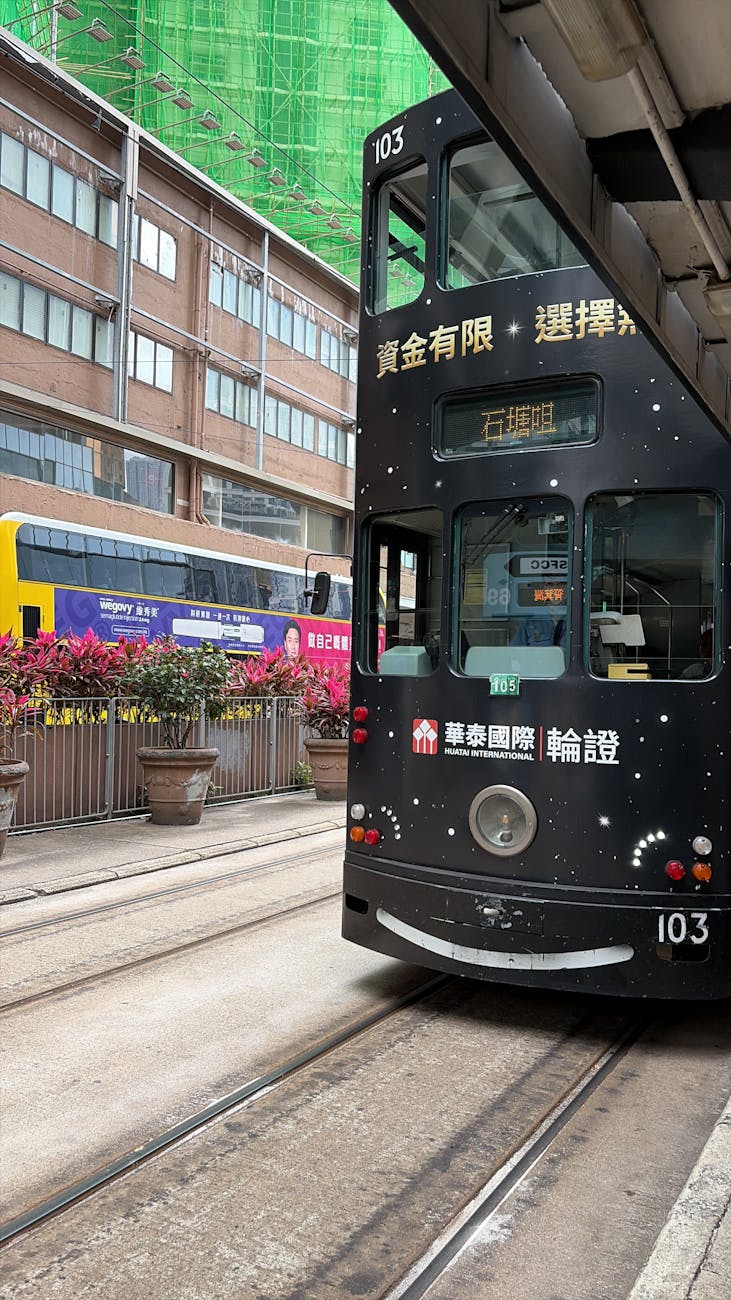
Hong Kong Island’s double-deck trams are slow, cheap, historic, and highly useful for east-west movement along the northern corridor from Kennedy Town through Central, Wan Chai, Causeway Bay, North Point, and toward Shau Kei Wan. They are not a metro substitute; they are a street-level local mode.
Key features:
Advantages:
Disadvantages:
Peak Tram
The Peak Tram is more tourist attraction than everyday transit. It links Garden Road in Central to Victoria Peak. The official Peak site lists Peak Tram Central and Peak Terminus operating hours of 7:30 am to 11:00 pm daily, with frequency around every 10–15 minutes on its location page.
As of the current official ticket page, standard Peak Tram tickets are HK$82 single and HK$116 return for adults, with lower child/senior concession rates; combined Peak Tram + Sky Terrace 428 products are higher.
Practical advice:
Mid-Levels escalator system
The Central–Mid-Levels escalator and walkway system is not a rail service, but it is a major piece of mobility infrastructure. It helps solve Central’s steep terrain and connects Central, Soho, Mid-Levels, and residential areas. Direction changes by time of day, historically down in the morning and up later, so check signs locally.
For visitors, it is useful for Soho restaurants, Tai Kwun, PMQ, Hollywood Road, and hillside hotels. For residents, it is a daily commute tool.
- Operates only on Hong Kong Island.
- Best for short scenic rides and local movement along the tram corridor.
- Board from the rear and pay when alighting at the front.
- Accepts Octopus and cash/other supported payments depending on current arrangements.
- Adult fare revised to HK$3.30 from May 12, 2025, with child and elderly fare changes also published by the Transport Department.
- First/last tram times vary by route, with some service beginning around 05:00 and ending near midnight depending on direction and section.
- Very low cost.
- Great city views from the upper deck.
- Frequent on the core corridor.
- Easy for Central–Wan Chai–Causeway Bay local trips if you are not rushing.
- Slow in traffic.
- Crowded at peak times.
- Not ideal with luggage.
- Not accessible in the same way as modern rail.
- Stops may be exposed to heat and rain.
- Lines can be long at sunset, weekends, and holidays.
- A taxi or bus can be better going down when queues are heavy.
- The Peak Tram is worth riding for the experience, but not because it is always the fastest or cheapest.
- Weather matters: fog can ruin the view.
9. Ferries and water transport
Ferries are both transport and identity in Hong Kong. The harbour, islands, and Pearl River Delta make water movement essential.
Star Ferry
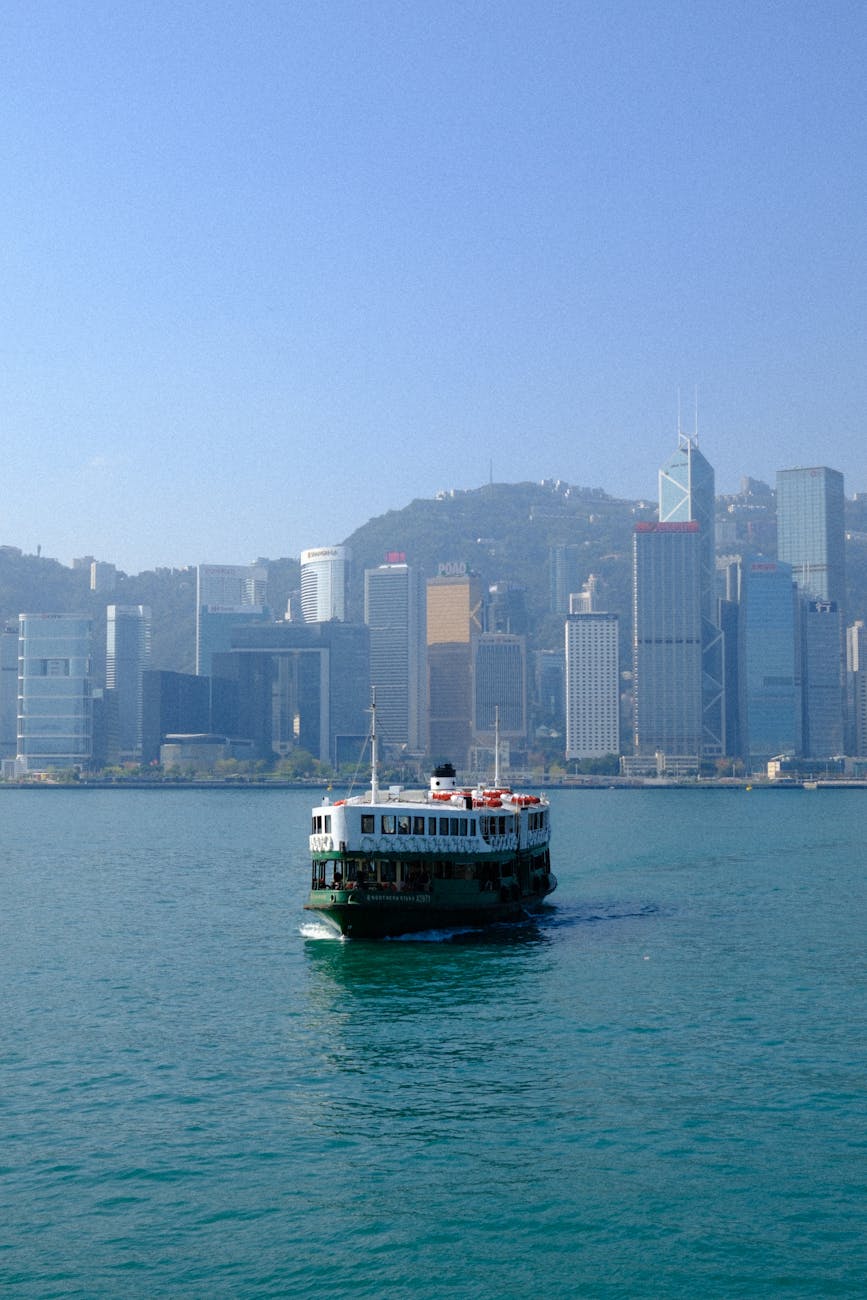
The Star Ferry links Central or Wan Chai with Tsim Sha Tsui and remains one of the most valuable short trips in Hong Kong. It is cheap, scenic, and practical for certain hotel/sightseeing movements.
Star Ferry’s published fares vary by route, deck, weekday, weekend/public holiday, and concession. For example, adult fares on the Central–Tsim Sha Tsui route are listed as HK$5.0 upper deck/HK$4.0 lower deck Monday–Friday, and HK$6.5/HK$5.6 on Saturdays, Sundays, and public holidays; a 4-day tourist ticket is listed at HK$50.
Use it when:
Avoid it when:
Outlying island ferries
Ferries from Central and other piers connect:
These ferries are lifelines for island residents and leisure routes for visitors. Fares and schedules vary by operator, route, weekday/weekend, ordinary/fast ferry, and recent fare adjustments. Sun Ferry announced new fare arrangements for several outlying island routes effective April 1, 2026, including Central–Cheung Chau, Central–Mui Wo, and inter-islands routes.
Practical advice:
Cross-boundary ferries
Ferries connect Hong Kong with Macao and some Mainland ports. TurboJET lists Hong Kong–Macao route sailing time at approximately 60 minutes, with schedules updated by route and date.
For Macao, travelers now choose among ferry, HZMB shuttle/cross-boundary bus, private car/coach, and sometimes helicopter or special services. Ferry remains useful if your Hong Kong origin is near Sheung Wan or China Ferry Terminal and your Macao destination is near a ferry terminal. HZMB can be better for airport-area or overnight travel.
Weather exposure
Ferries are more vulnerable than MTR. During typhoons, ferry operators may suspend all services. TurboJET states that when Typhoon Signal No. 8 is issued in Hong Kong or Macao, all ferry services are suspended until further notice.
- traveling between Central/Wan Chai and Tsim Sha Tsui;
- you want a harbour view;
- you are not in a rush;
- your origin and destination are close to the piers.
- you are far from the piers;
- weather is poor;
- you have tight timing;
- MTR is more direct.
- Cheung Chau;
- Lamma Island;
- Peng Chau;
- Mui Wo;
- Discovery Bay;
- inter-island routes;
- smaller or special services.
- Check the last ferry before leaving the city.
- Buy tickets early on weekends and holidays.
- Expect queues for Cheung Chau and Lamma in good weather.
- Do not plan tight onward connections after ferries in rough weather.
- Carry cash/Octopus and confirm payment options.
- Typhoons and high winds can suspend ferry services.
10. Taxis, e-payment, and ride-hailing
Hong Kong taxis are practical, dense, and usually cheaper than taxis in many global financial centers, but they come with local quirks.
Taxi colors and service areas
The Transport Department describes three taxi types:
At the airport, taxi stands are color-coded. Choose the taxi color by destination, not by which queue looks shortest.
Taxi fares
Published flagfall fares effective from July 14, 2024 include HK$29 for the first 2 km for urban taxis, HK$25.5 for New Territories taxis, and HK$24 for Lantau taxis, with subsequent distance/waiting charges by taxi type and fare stage. Tunnel tolls, luggage fees, and other surcharges may apply.
E-payment requirement from April 1, 2026
From April 1, 2026, taxi drivers are required to provide at least two e-payment means, including one QR-code payment method such as AlipayHK, WeChat Pay HK, or BoC Pay, and one non-QR method such as Octopus, credit cards, or FPS. Stickers should show available payment methods on taxi windows, and passengers may continue to pay cash.
Practical advice:
Taxi strengths
Taxi weaknesses and local complaints
Ride-hailing
Ride-hailing has been a politically and legally sensitive area in Hong Kong. In 2025, Hong Kong moved toward formal regulation of online ride-hailing platforms; reporting at the time described licensing requirements for platforms, vehicles, and drivers, with first licenses expected by late 2026.
Practical interpretation for 2026:
- Urban taxis — red. Operate in most areas of Hong Kong, except Tung Chung Road and roads in south Lantau.
- New Territories taxis — green. Mainly operate in north-eastern and north-western New Territories.
- Lantau taxis — blue. Operate only on Lantau Island and Chek Lap Kok.
- Check the window stickers or ask before boarding if you need a specific payment method.
- Keep cash backup in case of device failure or dispute.
- Use the meter; do not accept off-meter urban rides.
- For cross-harbour taxi trips, tunnel tolls and return toll rules can affect price.
- At airports, hotels, and major stands, use official queues.
- Door-to-door convenience.
- Good for hills, rain, elderly travelers, children, and luggage.
- Often excellent value for groups.
- Useful after MTR closure.
- Faster than multi-transfer routes for certain cross-harbour or hillside trips.
- Scarce during rain, shift-change periods, and late-night peaks.
- Some drivers may refuse inconvenient destinations despite rules.
- Language barriers can occur; show destination in Chinese if possible.
- Tunnel and cross-harbour routing can be confusing.
- Luggage and toll charges surprise visitors.
- E-payment adoption is improving but still worth confirming.
- Apps may exist and be used, but the regulatory environment is changing.
- Use licensed taxis where certainty matters.
- For airport and major hotels, official taxi queues are usually easier.
- For premium/private transfer needs, use licensed limousine, hotel transfer, or booked car services.
11. Private vehicles, rental cars, parking, tolls, and driving
Should a visitor rent a car?
Usually no.
Hong Kong is dense, parking is expensive, roads are stressful, and public transport is excellent. A rental car can become a liability in Central, Tsim Sha Tsui, Mong Kok, Causeway Bay, Wan Chai, Sham Shui Po, and many tourist areas.
Consider a rental car only if:
Driving legality for visitors
Transport Department guidance states that holders of full driving licences issued outside Hong Kong may drive in Hong Kong by several means, including driving on the strength of a valid overseas driving licence or international driving permit if they are visitors. The linked regulation note says a visitor with a valid international driving permit or domestic driving licence issued outside Hong Kong may drive in Hong Kong during the 12 months following the date of last entry, for vehicle classes authorized by that permit or licence, provided age requirements are met.
This is legal permission, not a recommendation. Hong Kong driving can be demanding even for experienced drivers.
Driving conditions
Parking
Parking is one of the strongest arguments against driving. The Transport Department has replaced older Octopus-only parking meters with newer meters and states there were about 11,000 parking meters territory-wide as of end-2024. From September 28, 2025, new charges for metered private car spaces took effect, with a maximum fee of HK$4 per 15 minutes, while goods vehicle/bus/coach meter fees remained at the previous maximum of HK$2 per 15 minutes.
The HKeMeter app provides real-time metered parking space information and remote payment with multiple electronic means.
Practical advice:
Tolls and HKeToll
Hong Kong’s tunnels and bridges are crucial because mountains and harbour geography channel traffic into limited corridors. HKeToll is the free-flow tolling system that lets vehicles pass through supported toll points without stopping at booths. HKeToll information notes that older Autotoll ETC and VGoPAY services terminated on March 16, 2026 and users should switch payment means.
Transport Department tunnel pages list toll-free and tolled government road tunnels, including major tunnel and bridge facilities.
For visitors in rental cars:
Car ownership concerns for locals
Residents who own cars face:
Many Hong Kong households choose no car and rely on MTR, buses, taxis, car-hailing, vans, and delivery services.
- you have mobility needs not solved by taxis;
- you are traveling with elderly relatives, children, or equipment across multiple remote stops;
- you have business in industrial or rural areas;
- you know parking at both ends;
- you are comfortable with left-side driving and dense urban roads.
- Hong Kong drives on the left.
- Roads can be narrow, steep, and congested.
- Bus lanes, tram tracks, tunnel approaches, and one-way systems require attention.
- Central, Wan Chai, Mong Kok, and Tsim Sha Tsui can be stressful.
- Parking entrances are often tight.
- Hillside roads and rural roads can be narrow with sharp bends.
- Enforcement of parking and stopping rules can be strict.
- Check parking before driving, not after arrival.
- In dense districts, garages can be expensive and full.
- Do not expect casual street parking near tourist sights.
- Hotel parking can be costly.
- Remote extension through HKeMeter is useful but does not remove time limits or enforcement risk.
- confirm with the rental company how HKeToll charges are handled;
- ask whether the vehicle has a valid tag/account;
- understand administrative fees;
- avoid unexpected tunnel routes if you are trying to control cost.
- high parking cost;
- limited home parking;
- tunnel tolls;
- congestion;
- insurance and licensing costs;
- occasional need for car despite excellent public transport, especially for family, elderly care, school logistics, remote sites, dogs/pets, equipment, and New Territories living.
12. Walking, hills, escalators, weather, and last-mile travel
Walking is essential in Hong Kong. The city is dense, compact, and full of footbridges, underground passages, elevated walkways, malls, escalators, and narrow sidewalks. But walking is not always easy.
Strengths
Challenges
Practical walking advice
Escalator etiquette
Hong Kong has a strong escalator culture. The traditional local pattern is standing to one side and leaving the other side for walkers, but safety campaigns have sometimes encouraged passengers to stand still and hold the handrail. The practical advice is to follow local flow, hold the handrail, do not block people, and be especially careful with luggage, children, and elderly travelers.
- Dense districts reward walking.
- Elevated walkways in Central and Admiralty can keep pedestrians away from traffic.
- Underground/mall connections reduce heat and rain exposure.
- Walking plus MTR is usually the fastest sightseeing mode.
- Many street-level neighborhoods are best explored on foot: Sheung Wan, Soho, Tai Hang, Wan Chai, Sham Shui Po, Mong Kok, Yau Ma Tei, Kennedy Town, Sai Ying Pun.
- Heat and humidity.
- Sudden rain.
- Steep streets.
- Stairs and footbridge detours.
- Crowded sidewalks.
- Complex station exits.
- Construction hoardings.
- Long traffic-light cycles.
- Suitcases on stairs.
- Not all routes are stroller- or wheelchair-friendly.
- Use the correct MTR exit; the wrong exit can add hills or major roads.
- Follow covered walkways in Central, Admiralty, Wan Chai, and Tsim Sha Tsui.
- Treat malls as pedestrian infrastructure, not just shopping centers.
- In summer, choose shaded routes and carry water.
- For Mid-Levels or steep hotel access, a short taxi ride may be worth it.
- During rain, MTR plus covered walkways often beats buses.
13. Cycling and micromobility
Cycling in Hong Kong is uneven. It is popular in parts of the New Territories and outlying islands, but central urban cycling is not as comfortable or normalized as in Amsterdam, Copenhagen, Tokyo suburbs, or many Taiwanese cities.
Where cycling works best
The government’s Cycling Information Centre provides cycling track and parking information, and HKeMobility includes cycle track route search.
Where cycling is difficult
Bikes on public transport
Transport Department guidance states that passengers carrying a bicycle on MTR train services must fold the bicycle so it falls within the allowable baggage size limit, with total dimensions not exceeding 170 cm and no side exceeding 130 cm. MTR has also reminded passengers that bicycles must be folded or have front wheels removed before entering paid areas, and bicycles, scooters, and skateboards must not be used on railway premises.
Practical advice:
Scooters and micromobility
Electric scooters and personal mobility devices are not a mainstream visitor transport solution in Hong Kong. Rules and enforcement are stricter than in many cities, sidewalks are crowded, and terrain is awkward. Use walking, MTR, buses, ferries, taxis, and legal bike routes instead.
- New Territories cycle tracks, especially Sha Tin–Tai Po–Tai Mei Tuk, Yuen Long–Tuen Mun, Tuen Mun, and waterfront sections.
- Outlying islands such as Cheung Chau and parts of Lamma.
- Leisure routes near rivers, waterfronts, and parks.
- Short local trips in lower-density new towns.
- Central, Admiralty, Wan Chai, Causeway Bay, Mong Kok, and Tsim Sha Tsui.
- Road tunnels and fast arterial roads.
- Hilly districts.
- Areas with heavy bus/taxi traffic.
- Narrow streets with loading/unloading.
- Do not plan a mixed MTR-bike trip without checking rules.
- Rental bikes are easiest for leisure routes where rental and return are near the cycling path.
- Avoid road cycling in dense urban districts unless experienced and confident.
14. Airport access
Hong Kong International Airport is on Chek Lap Kok, near Lantau Island. It is one of the world’s easiest major airports to reach by public transport, but the best mode depends on destination, budget, luggage, and time.
Airport Express
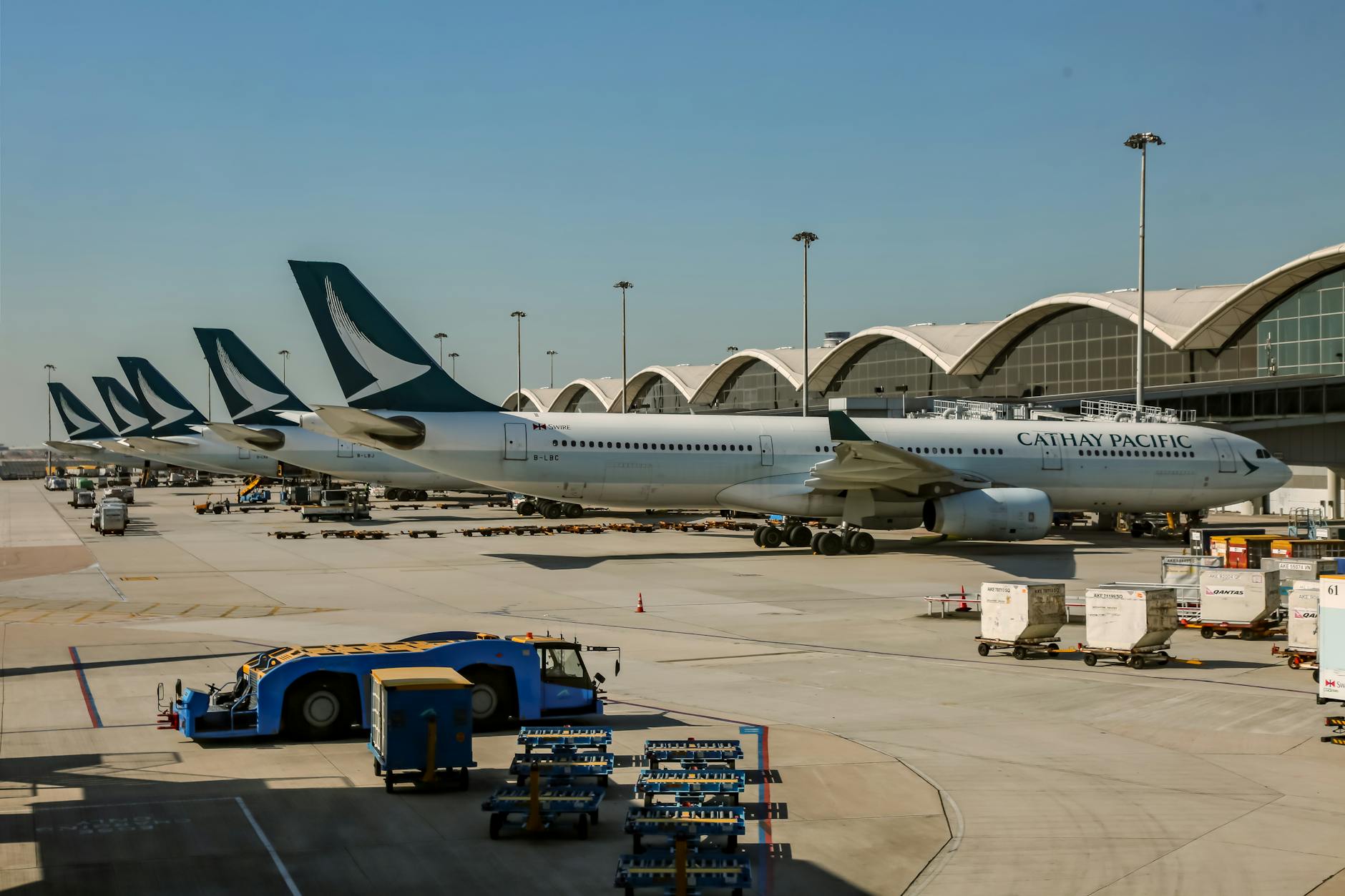
The Airport Express links Airport with Tsing Yi, Kowloon, Hong Kong Station, and AsiaWorld-Expo. MTR states that journeys between the airport and downtown Hong Kong take approximately 24 minutes.
Best for:
Weaknesses:
Airport buses
Airport buses are often the best value and may be the most direct. They serve many districts without rail transfers. Routes vary by operator and destination, and HKeMobility or bus operator apps are useful for planning.
Best for:
Weaknesses:
Taxi from airport
Taxis are straightforward when traveling with luggage, children, or groups. Choose taxi color by destination:
Airport taxi stands are organized and official. Confirm payment method if you need e-payment, though all taxis are now required to provide at least two e-payment options.
Private transfers and hotel shuttles
Useful for families, late arrivals, luxury travel, or destinations poorly served by airport bus/rail. They cost more but remove first-day friction.
Airport to Macao/Zhuhai/Mainland
Airport-area travelers may use HZMB services, cross-boundary buses, or ferries depending on destination and current schedules. Always verify visa and immigration requirements before choosing a cross-boundary option.
- Central, Sheung Wan, Admiralty via Hong Kong Station connection;
- Kowloon Station hotels or taxis from Kowloon Station;
- business travelers;
- heavy luggage where speed matters;
- predictable travel to airport.
- Not door-to-door unless your hotel is near Hong Kong/Kowloon/Tsing Yi stations.
- Higher fare than buses.
- May require a taxi or MTR transfer at the city end.
- hotels near bus stops but not Airport Express stations;
- budget travelers;
- destinations in Causeway Bay, North Point, Mong Kok, Jordan, Hung Hom, Tsuen Wan, Sha Tin, Tuen Mun, and other districts;
- night arrivals via overnight routes.
- Traffic exposure.
- Longer than Airport Express in many cases.
- Harder to use for first-time visitors if stop names are unfamiliar.
- red for most urban destinations;
- green for many New Territories destinations;
- blue for Lantau destinations.
15. Cross-boundary travel to Mainland China and Macao
Hong Kong is deeply connected to the Greater Bay Area. Cross-boundary movement has three layers: immigration/customs requirements, transport mode, and local connection at both ends.
Mainland China by rail
East Rail Line to Lo Wu or Lok Ma Chau. This is the classic rail route to Shenzhen. It is useful when your Shenzhen destination is near Luohu or Futian/Lok Ma Chau connections. The MTR Tourist Day Pass excludes travel to/from Lo Wu or Lok Ma Chau.
High Speed Rail from Hong Kong West Kowloon. The High Speed Rail Hong Kong section runs 26 km from West Kowloon and connects with Mainland China’s national high-speed rail network. MTR describes it as the fastest cross-boundary land transport in Hong Kong, with speeds of 200 km/h in the Hong Kong section and up to 350 km/h in the Mainland section.
Use HSR for:
Important:
Road crossings
The Transport Department lists nine land crossings in Hong Kong. Six are road-based—Shenzhen Bay Port, Lok Ma Chau, Man Kam To, Sha Tau Kok, Hong Kong-Zhuhai-Macao Bridge, and Heung Yuen Wai—and three are rail-based: Lo Wu, Lok Ma Chau Spur Line, and Hong Kong West Kowloon High Speed Rail Station.
Road crossings matter for:
HZMB: Hong Kong–Zhuhai–Macao Bridge
The HZMB is a major 55 km bridge-tunnel sea crossing linking Hong Kong, Zhuhai, and Macao. The official HZMB site states it operates 24 hours a day and takes only about 40 minutes to travel approximately 42 km from Hong Kong Port to Zhuhai Port or Macao Port.
Transport Department guidance notes that HZMB shuttle buses operate 24 hours, with peak headway around 5 minutes, non-peak 10–15 minutes, and overnight 15–30 minutes, serving Hong Kong–Zhuhai and Hong Kong–Macao routes.
Use HZMB when:
Macao by ferry
Ferries from Sheung Wan and Kowloon/China Ferry Terminal remain practical for many travelers. TurboJET lists Hong Kong–Macao sailing time at about 60 minutes and publishes current route schedules and adjustments.
Use ferry when:
Avoid ferry when:
Border crowding
Cross-boundary flows surge during public holidays. Immigration Department estimates for Easter/Qingming 2026, for example, highlighted heavy traffic at Lo Wu, Lok Ma Chau Spur Line, and Shenzhen Bay, with daily average forecasts of about 240,000, 220,000, and 184,000 passengers respectively at those points.
Practical advice:
- Guangzhou;
- Shenzhen North/Futian depending on itinerary;
- longer Mainland city trips;
- business travel;
- through ticketed Mainland rail journeys.
- Arrive early for immigration/security.
- Ticketing and ID requirements are more complex than ordinary MTR.
- Mainland visa/transit rules depend on nationality and itinerary.
- West Kowloon is adjacent to Austin/Kowloon stations but not the same as a normal MTR platform.
- cross-boundary coaches;
- private cars with permits;
- goods vehicles;
- buses to Shenzhen, Zhuhai, Macao, and Greater Bay destinations;
- late-night or destination-specific travel.
- traveling between the airport/Lantau side and Macao/Zhuhai;
- ferry schedules are poor;
- sea conditions are bad but road services operate;
- traveling overnight;
- you prefer bus/road immigration flow.
- staying near Sheung Wan/Central or Tsim Sha Tsui;
- final destination is near Macao Outer Harbour or Taipa terminal;
- you prefer a simple terminal-to-terminal trip;
- weather is stable.
- typhoon or rough sea risk is high;
- you are prone to seasickness;
- schedules do not match your trip;
- HZMB shuttle is more direct.
- Avoid peak holiday departure/return times if possible.
- Check control point hours and wait times.
- Build immigration time into the plan.
- Confirm visa eligibility before buying transport tickets.
- Keep passport, permits, tickets, and Mainland/Macao payment tools accessible.
16. Accessibility, seniors, families, luggage, and disabilities
Accessibility overview
Hong Kong is accessible in parts and challenging in others. Modern rail stations often have lifts, tactile guidance, audible announcements, and accessible facilities. But terrain, old buildings, crowded sidewalks, footbridges, narrow restaurants, and station complexity can make movement difficult.
MTR provides a barrier-free facilities search for station accessibility, including facilities for visually impaired, hearing impaired, and mobility impaired passengers. High Speed Rail provides accessibility information including wheelchair spaces in car 7 of the Vibrant Express and accessible toilets in the station and train.
Wheelchair users
Best options:
Challenges:
Families with children and strollers
MTR is safe and efficient but can be crowded. Buses can be easier for direct travel but harder with strollers at peak times. Taxis are often worth it for families, especially in rain, late evenings, and hotel-to-attraction trips.
Practical advice:
Luggage
Hong Kong is manageable with luggage but not always comfortable.
Best luggage modes:
Avoid:
Seniors and concessions
Hong Kong residents aged 60 or above using JoyYou Card and eligible persons with disabilities using the appropriate personalized Octopus can access the revised “HK$2 flat rate or 80% discount” scheme on participating transport from April 3, 2026.
Visitors should check individual operator senior fares. Do not assume resident concession rules apply to non-residents.
Priority seating
Priority seats are marked on public transport. Government materials emphasize offering seats to people in need, including seniors, disabled passengers, pregnant women, and those with infants.
- MTR with lift planning;
- accessible station exits;
- low-floor buses where available;
- booked accessible taxi/rehab transport where needed;
- ferries only after checking vessel and pier accessibility.
- station lift outages or replacement work;
- steep streets;
- older footbridges;
- crowded sidewalks;
- ferry gangway gradients/tides;
- narrow shop entrances;
- lack of dropped kerbs in older areas.
- Avoid peak-hour MTR with large strollers.
- Use lifts rather than escalators with strollers.
- For Disneyland, rail is fun and direct; taxi is easier with exhausted children.
- For Ocean Park, South Island Line is usually straightforward.
- For beaches or Lantau, check return transport before going.
- Airport Express;
- airport buses with luggage racks on many routes;
- taxis;
- hotel transfers;
- ferries only if terminals and walking distances are manageable.
- peak-hour MTR with large suitcases;
- trams with large luggage;
- minibuses with large luggage;
- long footbridge/stair routes;
- steep hotel approaches without confirming access.
17. Safety, etiquette, enforcement, and scams
Hong Kong public transport is generally safe, orderly, and heavily used. Most problems are practical rather than dangerous: crowding, confusion, overcharging concerns, language, luggage, wrong exits, missed last trains, or weather.
General etiquette
Taxi safety and fare issues
Lost property
MTR operates a Lost Property & Concessionary Travel Office at Admiralty Station, open 8:00 am–8:00 pm daily, and provides an online lost property registration platform through MTR Mobile or website.
For taxis, keep the receipt or record the taxi registration number. For buses/minibuses/ferries, contact the operator quickly with route, direction, time, and seat/vehicle information.
- Queue where markings are provided.
- Let passengers exit before boarding.
- Move inside train cars and buses.
- Do not block doors, stairs, or escalators.
- Offer priority seats.
- Keep noise low on public transport.
- Avoid eating/drinking in paid rail areas and trains.
- Hold handrails on buses and trams.
- Do not place luggage where it blocks aisles.
- Use official taxi stands at airport, rail stations, hotels, and ferry terminals.
- Check taxi color by destination.
- Use the meter.
- Keep the receipt if you may need to complain or retrieve lost property.
- Confirm payment methods before boarding if you require e-payment.
- Keep destination written in Chinese for less common places.
- Avoid off-meter solicitations.
18. Weather, disruptions, typhoons, and local concerns
Weather is one of the biggest transportation variables in Hong Kong.
Heat and humidity
Hong Kong summers are hot, humid, and physically draining. A 12-minute uphill walk can be worse than a 25-minute air-conditioned bus ride. Visitors should plan by comfort, not only travel time.
Rainstorms
The Hong Kong Observatory’s Red and Black Rainstorm Warning Signals indicate heavy rain likely to bring serious road flooding and traffic congestion, triggering response actions by government departments and major transport and utility operators.
During heavy rain:
Typhoons
During Tropical Cyclone Warning Signal No. 8 and above, transport changes quickly. MTR says rail service initially remains normal under Signal 8, with frequency increased if necessary to help passengers return home; trains and Light Rail maintain limited service with reduced frequency as the storm gets closer; MTR Bus suspends three hours after Signal 8; open sections of Railway, Light Rail, and MTR Bus suspend immediately if Signal 9 or above is issued.
Ferry services may suspend under Signal 8. TurboJET states all ferry services suspend when Typhoon Signal No. 8 is issued in Hong Kong or Macao.
Practical typhoon advice:
Major events
Concerts, sports events, fireworks, protests, road closures, and public holidays can reshape transport. The Transport Department and MTR often publish special arrangements. Kai Tak Sports Park events, New Year fireworks, Chinese New Year, Golden Week, Easter/Qingming, and large exhibitions can stress specific corridors.
Local concerns beyond tourism
Residents regularly deal with:
- MTR is usually more reliable than road transport.
- Buses can slow due to flooding and congestion.
- Taxis become scarce.
- Outdoor escalators/steps become slippery.
- Ferries may be uncomfortable.
- Do not plan outlying island travel near a typhoon.
- Return from islands early when warnings escalate.
- Avoid relying on taxis after a Signal 8 announcement; demand spikes.
- Keep food, water, and medication in your hotel/apartment.
- Track official announcements, not rumors.
- Flights can be delayed or cancelled; build buffers.
- peak crowding;
- rail incidents causing network-wide delays;
- high property prices forcing long commutes;
- aging population and accessibility needs;
- bus service rationalization;
- taxi supply and driver behavior;
- cross-boundary congestion;
- ferry fare increases for island residents;
- weather-related disruptions;
- cost of car ownership and parking;
- dependence on a few tunnels and rail interchanges.
19. Recommended strategies by user type
First-time tourist staying 3–5 days
Family with children
Elderly traveler or mobility-limited visitor
Budget traveler
Business traveler
Local resident or long-stay expatriate
- Get Octopus immediately.
- Stay near an MTR station if possible.
- Use MTR for most trips.
- Ride Star Ferry once for the harbour.
- Use trams on Hong Kong Island for a slow scenic ride.
- Use Airport Express if staying near Central/Kowloon; airport bus if it stops near your hotel.
- Use taxis for hills, rain, and luggage.
- Avoid car rental.
- Use MTR for Disneyland/Ocean Park if children can handle it.
- Use taxis for late returns, rain, and tired children.
- Avoid minibuses with strollers.
- Build in walking breaks and mall/indoor routes.
- Check lifts at stations.
- For beaches or Lantau, plan the return before leaving.
- Choose hotel by lift access, not only neighborhood.
- Prefer MTR stations with accessible exits or taxis.
- Avoid hillside hotels unless door-to-door transport is planned.
- Use Airport Express/taxi rather than complex bus transfers with luggage.
- Check ferry accessibility before booking island trips.
- Use Octopus.
- Use buses and trams heavily.
- Use Star Ferry instead of cross-harbour MTR when convenient.
- Choose airport buses over Airport Express when time allows.
- Avoid taxis except late night or emergencies.
- Eat and stay near MTR/bus corridors to minimize daily transport cost.
- Use Airport Express to Central/Kowloon when meetings are near those cores.
- Use taxis between dispersed meetings, but watch tunnel traffic.
- Build buffers for cross-harbour trips.
- Use MTR during peak road congestion.
- For Shenzhen/Guangzhou meetings, compare HSR versus East Rail based on destination.
- Optimize housing around commute, school, and weekly errands.
- Learn nearby bus/minibus routes, not just MTR.
- Keep Octopus auto-top-up or mobile top-up ready.
- Know late-night routes home.
- Track weather and public holiday border flows.
- Use taxis tactically, not habitually.
- Think hard before buying a car; parking cost and tunnel patterns matter.
Hong Kong Island
Hong Kong Island contains Central, Admiralty, Wan Chai, Causeway Bay, North Point, Quarry Bay, Sai Ying Pun, Kennedy Town, Mid-Levels, the Peak, Aberdeen, Wong Chuk Hang, Ocean Park, Repulse Bay, Stanley, and many business/residential districts. It is the most vertical and mode-diverse part of Hong Kong.
Core transport structure
Central and Admiralty
Central and Admiralty are the territory’s most important transport core. They connect:
What is unique:
Visitor strategy:
Local concerns:
Wan Chai and Causeway Bay
Wan Chai and Causeway Bay are dense, crowded, walkable, and well served by MTR, tram, buses, and taxis.
What is unique:
Visitor strategy:
Local concerns:
Eastern Hong Kong Island: North Point, Quarry Bay, Taikoo, Shau Kei Wan, Chai Wan
This corridor is served by Island Line, trams on much of the western/central portion, buses, and ferries at selected points. North Point and Quarry Bay are major interchange/employment areas.
What is unique:
Visitor strategy:
Western Island: Sheung Wan, Sai Ying Pun, Kennedy Town
This area combines old neighborhoods, steep slopes, harbourfront, restaurants, hotels, and residential towers.
What is unique:
Visitor strategy:
The Peak and Mid-Levels
The Peak and Mid-Levels are close to Central but vertically difficult.
Options:
Best choice:
South Island: Aberdeen, Wong Chuk Hang, Ocean Park, Repulse Bay, Stanley
South Island is where the MTR network thins and buses/taxis matter more.
What is unique:
Visitor strategy:
Local concerns:
- Island Line runs east-west along the north shore.
- Tsuen Wan Line links Central/Admiralty to Kowloon.
- South Island Line links Admiralty to Ocean Park, Wong Chuk Hang, Lei Tung, and South Horizons.
- East Rail Line now reaches Admiralty, improving New Territories to Hong Kong Island access.
- Trams run east-west along the northern corridor.
- Star Ferry links Central/Wan Chai to Tsim Sha Tsui.
- Buses and minibuses reach the Peak, Mid-Levels, South Side, beaches, and hillside areas.
- Taxis are useful for short uphill movement and late nights.
- Island Line;
- Tsuen Wan Line;
- Tung Chung Line and Airport Express through Hong Kong Station;
- East Rail Line at Admiralty;
- South Island Line at Admiralty;
- ferries from Central piers;
- elevated walkways;
- Mid-Levels escalator;
- buses to the Peak, Stanley, Aberdeen, and the South Side;
- trams along Des Voeux Road/Queensway corridor.
- Station exits matter enormously.
- Walking can be faster than transferring for short Central/Admiralty/Wan Chai trips.
- Elevated walkways connect IFC, Exchange Square, Central piers, Landmark, Jardine House, and nearby office towers.
- Taxi trips can be short but slow during office peaks.
- Airport Express is easiest from Hong Kong Station.
- Ferries from Central are essential for outlying islands.
- Use MTR for long movements.
- Use walkways for Central office/shopping/ferry connections.
- Use Star Ferry to Tsim Sha Tsui for views.
- Use bus/taxi/Peak Tram for Victoria Peak depending on queue and weather.
- Use taxi for steep hotel access above Central or Sheung Wan.
- Lunch and evening peak crowding.
- Long interchange walks between Central and Hong Kong Station.
- Escalator direction and Mid-Levels commute crowding.
- Taxi scarcity during rain.
- Road closures for events and protests/ceremonies.
- Causeway Bay MTR exits can be crowded and confusing.
- Trams are convenient for short east-west trips.
- Buses are useful to Happy Valley, Stubbs Road, Aberdeen, Stanley, and the South Side.
- Cross-harbour buses can be attractive from Wan Chai/Causeway Bay to Kowloon, depending on tunnel traffic.
- Taxis may be hard to find in shopping peaks and rain.
- MTR for speed.
- Tram for atmosphere and short local rides.
- Bus or taxi for Happy Valley and upper hillside destinations.
- Avoid driving.
- Sidewalk crowding.
- Shopping/event surges.
- Convention and Exhibition Centre event traffic.
- Tunnel congestion from Cross-Harbour Tunnel approaches.
- Island Line is the backbone.
- North Point and Quarry Bay connect to Tseung Kwan O Line services.
- Trams remain useful west of Shau Kei Wan.
- Ferries from North Point serve selected cross-harbour or island routes.
- Eastern district roads can congest, but transit is usually strong.
- Use MTR for speed.
- Use tram for a scenic ride to/from Central/Causeway Bay.
- Use buses for local hillside estates or waterfront areas.
- Island Line extension makes Sai Ying Pun and Kennedy Town easy by rail.
- Streets uphill from stations are steep; exits matter.
- Sheung Wan includes Hong Kong–Macao Ferry Terminal area.
- Trams are useful along the lower corridor.
- Taxis are valuable for uphill routes to hotels/apartments.
- Use MTR to reach the area.
- Walk downhill, taxi uphill if tired.
- For Macao ferries, confirm terminal and sailing schedule before heading to Sheung Wan.
- Peak Tram from Garden Road;
- bus to the Peak;
- taxi;
- walking/hiking for fit travelers;
- Mid-Levels escalator for Soho/Mid-Levels but not directly to the Peak.
- For first-time visitors, ride Peak Tram once if queues are acceptable.
- For sunset and holidays, consider going up by bus/taxi and down by alternative mode if tram queue is long.
- For Mid-Levels hotels, confirm whether they are near escalator, bus, or taxi access.
- South Island Line serves Ocean Park, Wong Chuk Hang, Lei Tung, and South Horizons.
- Repulse Bay and Stanley require bus, minibus, taxi, or private car.
- Coastal roads are scenic but can be congested on sunny weekends.
- Beach return trips can be crowded.
- Use South Island Line for Ocean Park.
- Use bus or taxi for Stanley and Repulse Bay.
- Start early on beach days.
- For Stanley Market, bus from Central/Admiralty/Causeway Bay is common; taxi is easier for groups.
- Weekend beach traffic.
- Limited rail coverage beyond South Island Line.
- Bus crowding on scenic southern routes.
- Typhoon/coastal weather exposure.
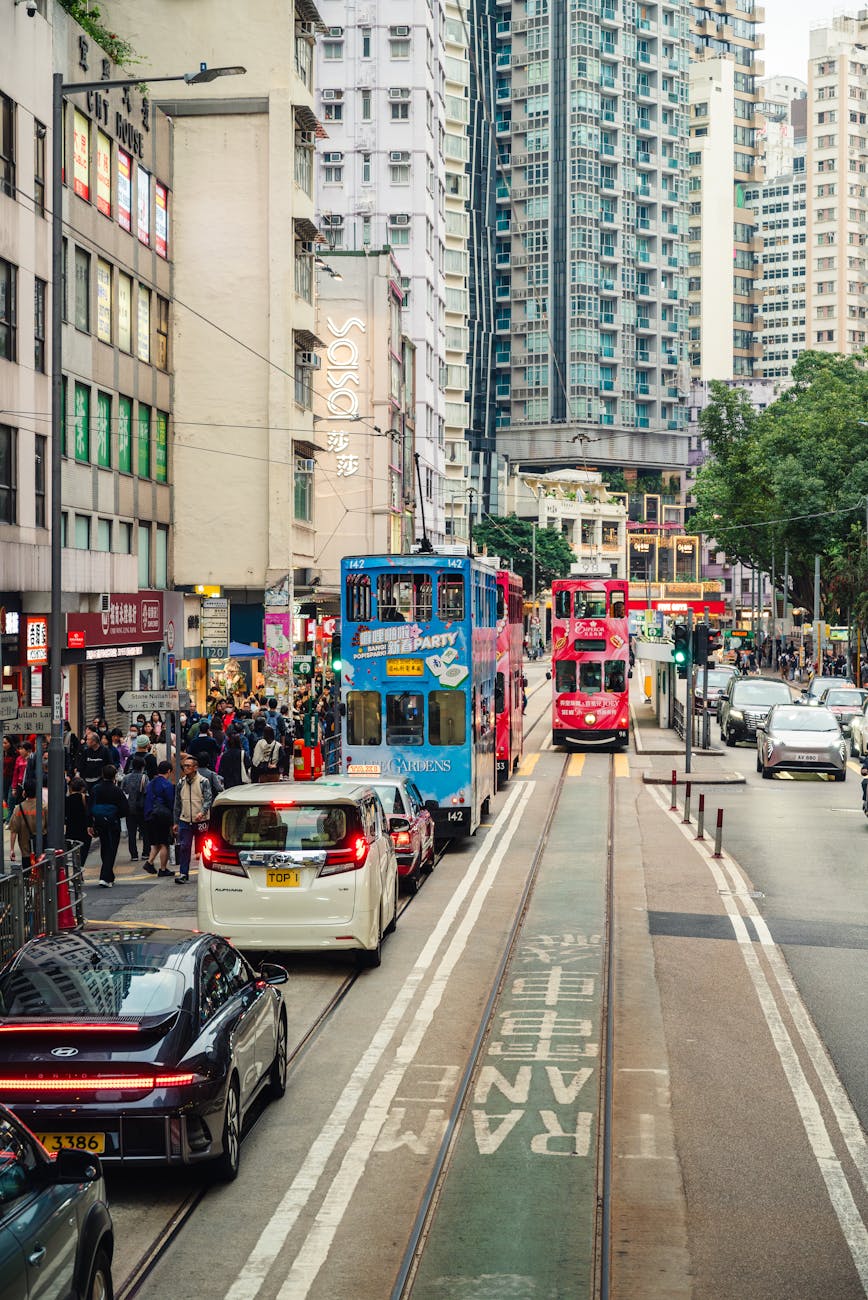
Kowloon
Kowloon is dense, flat by Hong Kong standards, and extremely transit-rich. It includes Tsim Sha Tsui, Jordan, Yau Ma Tei, Mong Kok, Prince Edward, Sham Shui Po, Hung Hom, West Kowloon, Kai Tak, Kowloon City, Kwun Tong, and many residential/commercial districts.
Core transport structure
Tsim Sha Tsui and West Kowloon
Tsim Sha Tsui is a tourist core: hotels, museums, Harbour City, Avenue of Stars, K11, Star Ferry, and harbour views. West Kowloon includes the High Speed Rail station, cultural district, Austin, and Kowloon Station.
What is unique:
Visitor strategy:
Local concerns:
Jordan, Yau Ma Tei, Mong Kok, Prince Edward
This is the Nathan Road urban spine: dense, energetic, and extremely transit-rich.
What is unique:
Visitor strategy:
Local concerns:
Sham Shui Po and western Kowloon
Sham Shui Po is excellent for street markets, electronics, textiles, food, and older urban fabric.
Transport:
Visitor strategy:
Hung Hom, To Kwa Wan, Kai Tak, and Kowloon City
This area has changed significantly with the Tuen Ma Line and Kai Tak development.
What is unique:
Visitor strategy:
Eastern Kowloon: Kwun Tong, Ngau Tau Kok, Kowloon Bay, Diamond Hill
Eastern Kowloon is a major office/residential/industrial corridor.
Transport:
Local concerns:
Visitor strategy:
- Tsuen Wan Line runs through Tsim Sha Tsui, Jordan, Yau Ma Tei, Mong Kok, Prince Edward, and northward.
- Kwun Tong Line serves eastern Kowloon and transfers at Yau Ma Tei, Mong Kok, Prince Edward, Kowloon Tong, and other points.
- Tuen Ma Line crosses Kowloon east-west and is important for West Kowloon/Austin, Hung Hom, To Kwa Wan, Sung Wong Toi, Kai Tak, Diamond Hill, and beyond.
- East Rail Line serves Hung Hom, Mong Kok East, Kowloon Tong, and onward to the New Territories and Admiralty.
- Airport Express/Tung Chung Line serve Kowloon Station, adjacent to West Kowloon.
- Star Ferry links Tsim Sha Tsui to Central/Wan Chai.
- Buses are dense and cross-harbour routes are extensive.
- Tsim Sha Tsui and East Tsim Sha Tsui are connected but involve walking.
- Star Ferry is often the best scenic link to Central/Wan Chai.
- West Kowloon HSR, Austin MTR, and Kowloon Station are close but not the same.
- Large underground and mall networks can confuse first-time visitors.
- Taxis can be slow around hotel and harbourfront congestion.
- Use Tsim Sha Tsui MTR for Nathan Road hotels.
- Use Star Ferry for Central/Wan Chai if piers fit your route.
- Use West Kowloon only for HSR or cultural district/Kowloon Station access.
- Allow extra walking time between Kowloon Station, Austin, and West Kowloon.
- Tourist crowding.
- Weekend harbourfront surges.
- HSR immigration timing.
- Road closures during fireworks and events.
- Tsuen Wan Line gives fast north-south movement.
- Mong Kok and Prince Edward connect to Kwun Tong Line.
- Mong Kok East on East Rail is a different station from Mong Kok; walking is possible but not identical.
- Buses are abundant but can crawl in traffic.
- Sidewalks are crowded.
- Use MTR for arrival/departure.
- Walk for markets, food, and street life.
- Use buses only if direct and traffic is acceptable.
- Avoid taxis for short trips inside the district; walking/MTR is usually better.
- Severe crowding.
- Loading/unloading traffic.
- Weekend shopping surges.
- Station exit confusion.
- Tsuen Wan Line at Sham Shui Po, Cheung Sha Wan, Lai Chi Kok.
- Tuen Ma Line at Nam Cheong for west-side transfer.
- Buses and minibuses for local areas.
- Use MTR.
- Walk locally.
- Carry cash for markets.
- Avoid driving.
- Hung Hom remains important for East Rail/Tuen Ma connections.
- Tuen Ma Line improved access to To Kwa Wan, Sung Wong Toi, and Kai Tak.
- Kai Tak Sports Park and Cruise Terminal areas can create event surges and special transport arrangements.
- Kowloon City may still require bus/minibus/walk depending on exact destination.
- Use Tuen Ma Line for Kai Tak/Sung Wong Toi/To Kwa Wan.
- For Kai Tak Cruise Terminal, check shuttle/bus/taxi arrangements; it is not as walkable from MTR as maps may suggest.
- For event days, follow Transport Department/MTR special arrangements.
- Kwun Tong Line backbone.
- Tuen Ma Line connection at Diamond Hill and Kai Tak side.
- Buses to Tseung Kwan O, Sai Kung, and cross-harbour destinations.
- Commute crowding.
- Redevelopment/construction.
- Road congestion.
- Office tower shuttle and minibus dependence.
- Use MTR for most trips.
- Use buses/minibuses for industrial buildings or waterfront offices far from stations.
New Territories
The New Territories are large and diverse: new towns, villages, country parks, border crossings, industrial districts, universities, beaches, and cycling routes. Visitors often underestimate travel distances here.
Core transport structure
Sha Tin, Tai Wai, Ma On Shan, and Sai Kung corridor
Sha Tin and Tai Wai are major rail nodes. Ma On Shan is served by Tuen Ma Line. Sai Kung, beaches, and country parks require buses/minibuses/taxis.
What is unique:
Visitor strategy:
Local concerns:
Tai Po, Fanling, Sheung Shui, Lo Wu, Lok Ma Chau
This northern corridor is shaped by East Rail and the Mainland border.
What is unique:
Visitor strategy:
Local concerns:
Tsuen Wan, Tsing Yi, Kwai Chung
This western urban/New Territories edge is a major residential, logistics, and transport zone.
Transport:
What is unique:
Visitor strategy:
Yuen Long, Tin Shui Wai, Tuen Mun, and Light Rail territory
The northwest New Territories have a different transport feel. MTR/Tuen Ma Line provides long-distance access, while Light Rail and buses handle local circulation.
What is unique:
Visitor strategy:
Local concerns:
- East Rail Line: Kowloon/Hong Kong Island to Sha Tin, Tai Po, Fanling, Sheung Shui, Lo Wu, Lok Ma Chau.
- Tuen Ma Line: Wu Kai Sha/Sha Tin/Tai Wai through Kowloon to Tsuen Wan West, Yuen Long, Tin Shui Wai, Tuen Mun.
- Tung Chung Line/West rail connections: access to Tsing Yi and Lantau corridor.
- Light Rail: local movement in Tuen Mun, Yuen Long, Tin Shui Wai.
- Buses/minibuses: essential for estates, villages, country parks, hospitals, beaches, and border points.
- Green taxis: New Territories taxis operate in designated NT areas.
- East Rail and Tuen Ma Line intersect at Tai Wai.
- Sha Tin is strong for shopping, residential travel, and cycling access.
- Sai Kung is not on the MTR; bus/minibus from rail stations is required.
- Hiking and beach trips can crowd buses on weekends.
- Use MTR to Sha Tin/Tai Wai/University/Heng On areas.
- Use buses/minibuses to Sai Kung or country parks.
- For Sai Kung seafood or beaches, taxi can save time for groups.
- For cycling, start near established rental areas.
- Weekend crowding to hiking and beach areas.
- Minibus queues.
- Rail crowding into Kowloon/Hong Kong Island.
- East Rail is the main spine.
- Lo Wu and Lok Ma Chau are boundary control points to Shenzhen.
- Cross-boundary passengers can overwhelm stations during holidays.
- Green minibuses/buses serve villages and rural areas.
- Use East Rail for border trips if Shenzhen destination aligns.
- Avoid border peaks if possible.
- For rural sites, plan bus/minibus carefully and return before late evening if service is infrequent.
- Border queues.
- Parallel traders and holiday flows historically affected station crowding.
- Long commutes to urban jobs.
- Tsuen Wan Line.
- Tuen Ma Line at Tsuen Wan West.
- Tung Chung/Airport Express at Tsing Yi.
- Buses to airport, container terminals, and New Territories areas.
- Tsuen Wan and Tsuen Wan West are separate stations on different lines.
- Tsing Yi is useful for Airport Express/Tung Chung Line transfer.
- Road/tunnel/bridge traffic matters for airport and northwest trips.
- Use rail for most movement.
- Use Tsing Yi for Airport Express if staying nearby.
- Use buses for industrial/logistics destinations.
- Light Rail is a local surface rail system with proof-of-payment style usage and station platforms integrated into streets/new towns.
- Tuen Ma Line connects the northwest to Kowloon and eastern New Territories.
- Buses remain essential for estates and villages.
- Cycling infrastructure is more relevant here than in central Hong Kong.
- Use Tuen Ma Line for long-distance access.
- Use Light Rail for local new-town movement if comfortable reading routes.
- Use HKeMobility for route planning.
- Do not assume central Hong Kong taxi availability patterns apply.
- Long commute times.
- Crowding on rail toward urban core.
- Estate feeder reliability.
- Light Rail platform crowding and at-grade delays.
Lantau, Hong Kong International Airport, Disneyland, Tung Chung, and South Lantau
Lantau is geographically large and transport-diverse. It includes the airport, Tung Chung, Disneyland, AsiaWorld-Expo, Ngong Ping, Tai O, Mui Wo, Discovery Bay, and South Lantau rural/beach areas.
Airport and Chek Lap Kok
Airport Express is fastest to Central/Kowloon/Tsing Yi. Airport buses are often better for direct district access. Taxis are best for door-to-door luggage trips. HZMB adds road links to Macao and Zhuhai.
Traveler advice:
Tung Chung
Tung Chung is the urban rail gateway to Lantau.
Transport:
Visitor advice:
Disneyland
Disneyland Resort Line connects Sunny Bay to Disneyland Resort. It is simple, themed, and visitor-friendly.
Best choices:
Local concern:
Ngong Ping, Big Buddha, Tai O
These areas are not MTR destinations. They rely on cable car, buses, taxis, and tour coaches.
Options:
Advice:
Mui Wo and South Lantau
Mui Wo can be reached by ferry from Central or by bus from Tung Chung/other Lantau points. South Lantau has restricted road access and relies heavily on buses, taxis, ferries, and permits.
Advice:
- Decide between Airport Express, airport bus, and taxi based on hotel location.
- If arriving late, check bus/night routes and Airport Express last train.
- Use official taxi queues.
- For Macao/Zhuhai, compare HZMB and ferry based on schedule and terminal location.
- Tung Chung Line to Hong Kong/Kowloon.
- Buses to airport, South Lantau, Tai O, and other areas.
- Ngong Ping 360 cable car nearby.
- Blue Lantau taxis and some red taxi access in specified areas.
- Use Tung Chung Line for city access.
- Use Tung Chung as the transfer point for Ngong Ping/Tai O buses or cable car.
- On weekends, queues for buses/cable car can be heavy.
- MTR via Tung Chung Line to Sunny Bay, then Disneyland Resort Line.
- Taxi for families, late returns, or hotel transfers.
- Airport/Disneyland buses if route fits.
- Crowd surges at park closing.
- Special events create train and bus queues.
- MTR to Tung Chung + Ngong Ping 360 cable car.
- MTR to Tung Chung + New Lantao Bus.
- Taxi, where permitted and available.
- Bus combinations to Tai O.
- Check cable car operating status in wind/weather.
- Start early on weekends.
- Do not miss last buses.
- Prepare for motion on mountain roads.
- Ferry from Central to Mui Wo is scenic and practical for some trips.
- Bus services to beaches and villages can crowd on weekends.
- Blue taxis are limited; do not assume instant availability.
- Plan the return trip before going to beaches or hiking routes.
Outlying islands
Hong Kong’s outlying islands are transport worlds of their own. They rely on ferries, walking, bikes, small local vehicles, and limited emergency/service vehicles. Visitors should plan by ferry schedule first.
Cheung Chau
Cheung Chau is popular for seafood, beaches, temples, bun festival culture, and cycling/walking.
Transport:
Advice:
Lamma Island
Lamma is popular for hiking, seafood, beaches, and a slower village feel.
Transport:
Advice:
Peng Chau
Peng Chau is quieter and compact.
Transport:
Advice:
Mui Wo and Lantau island communities
Mui Wo is both an outlying ferry destination and a Lantau bus hub. It is useful for hiking, beaches, and South Lantau access.
Advice:
Discovery Bay
Discovery Bay has its own ferry and bus systems, with private-car restrictions and a residential/resort character.
Advice:
- Ferry from Central.
- Walking and bicycles locally.
- No ordinary private car mobility for visitors.
- Weekends and holidays can be crowded.
- Check ordinary versus fast ferry times and fares.
- Return queues can be long after dinner or events.
- Typhoon/weather can disrupt ferries.
- Ferries from Central to Yung Shue Wan or Sok Kwu Wan.
- Walking/hiking between villages.
- Limited vehicles.
- Choose arrival/departure pier based on hiking direction.
- Bring water in hot weather.
- Check last ferries.
- Do not assume taxis exist.
- Ferry from Central.
- Walking and bicycles.
- Inter-island links depending on schedule.
- Good for low-key half-day trips.
- Check ferry frequency carefully.
- Ferry from Central may be easier than MTR+bus depending on origin.
- For South Lantau, bus schedules matter.
- Weekend beach traffic affects buses.
- Ferry from Central is often the main visitor route.
- Buses link to Sunny Bay and Tung Chung.
- Check visitor access and venue-specific transport for events.
Cross-boundary corridors: Shenzhen, Mainland China, Macao, and Zhuhai
Shenzhen by East Rail
Use East Rail to Lo Wu or Lok Ma Chau when your Shenzhen destination is near Luohu or Futian/Huanggang-style connections. This is a practical day-trip route, but border queues can be long.
Advice:
Shenzhen and Mainland by High Speed Rail
Use West Kowloon HSR for Shenzhen North, Futian, Guangzhou, and longer Mainland journeys when timing and station location work.
Advice:
Macao by HZMB
Use HZMB shuttle or cross-boundary bus for 24-hour road access between Hong Kong Port and Macao/Zhuhai ports. This is especially useful from the airport/Lantau side or when ferry schedules/weather are unfavorable.
Advice:
Macao by ferry
Use ferry when terminals suit your origin/destination. Sheung Wan is convenient from Central/Western Hong Kong Island; China Ferry Terminal can suit Tsim Sha Tsui/Kowloon.
Advice:
- Check visa eligibility.
- Avoid peak holidays.
- Use Octopus to reach the boundary, but Mainland onward travel requires Mainland payment/ticketing arrangements.
- Do not use a Tourist Day Pass expecting it to cover Lo Wu/Lok Ma Chau.
- Arrive early.
- Bring passport/required travel document.
- Check ticket name/ID matching.
- Know Mainland station names; “Shenzhen” can mean multiple stations.
- Budget extra time for security and immigration.
- The shuttle moves between ports; you still need transport to/from each port.
- Immigration happens at control points.
- Check luggage, ticketing, and payment details.
- Check exact terminal: Macao Outer Harbour vs Taipa.
- Check latest sailing schedule; schedules can change.
- Avoid tight same-day flight connections.
- Typhoon Signal 8 suspends services.
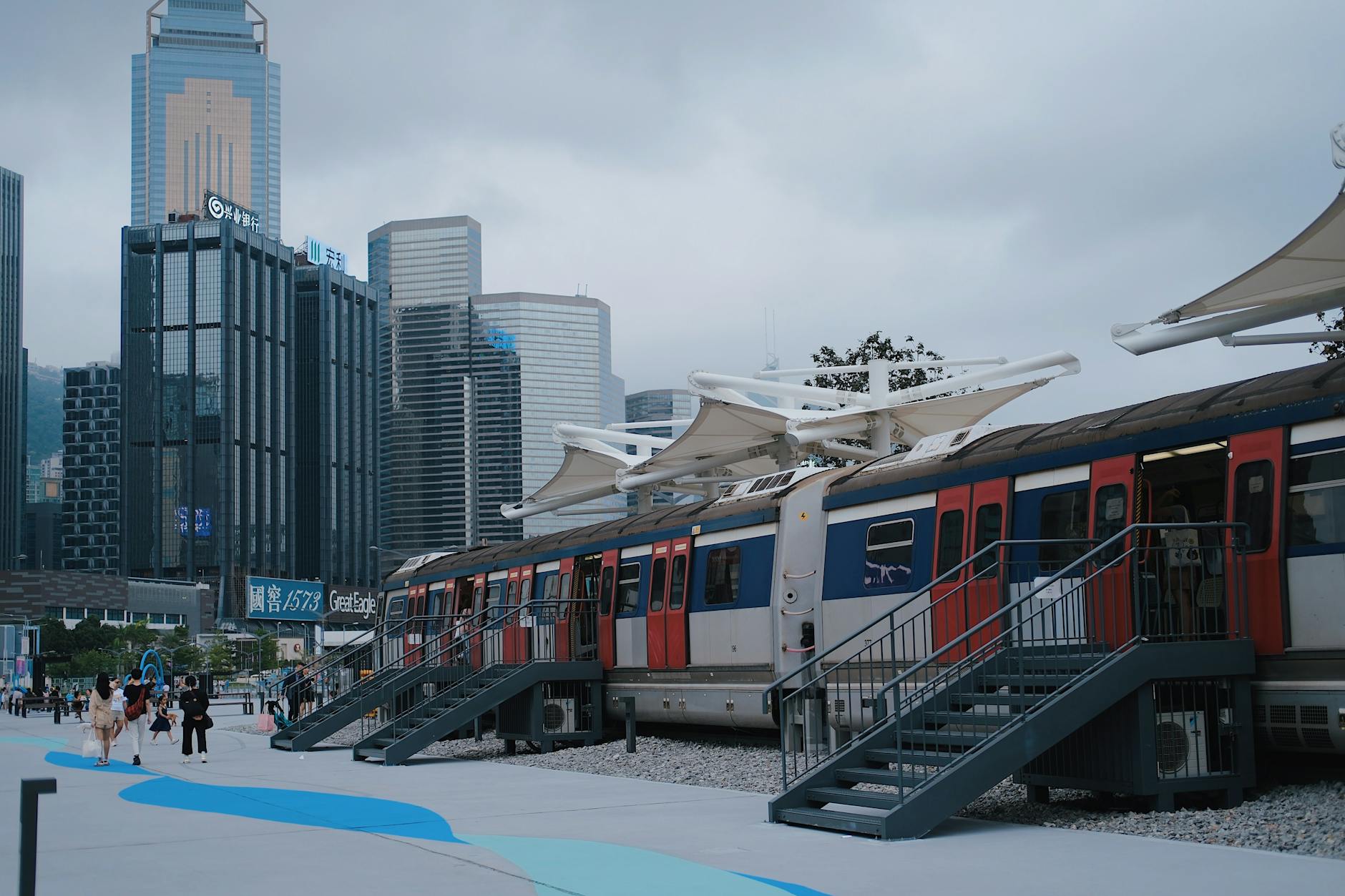
Major visitor destinations and transport choices
Victoria Peak
Options:
Best plan:
Star Ferry and Victoria Harbour
Use Star Ferry between Central/Wan Chai and Tsim Sha Tsui. It is useful and scenic, especially near sunset. Not best in heavy rain, typhoon conditions, or when your origin/destination is far from piers.
Disneyland
Use MTR to Sunny Bay + Disneyland Resort Line. Taxi is good for families, late nights, or hotel transfers.
Ocean Park
Use South Island Line to Ocean Park Station. Taxi is reasonable for families or hotel directness.
Big Buddha and Ngong Ping
Use MTR to Tung Chung + Ngong Ping 360 cable car or New Lantao Bus. Check wind/weather and queues.
Tai O
Use Tung Chung + bus, or combine Ngong Ping/Tai O routes. Return planning matters.
Stanley and Repulse Bay
Use bus or taxi from Central/Admiralty/Causeway Bay. Road traffic can be heavy on sunny weekends.
Sai Kung
Use MTR to Choi Hung/Diamond Hill/Hang Hau or other rail station + bus/minibus, or taxi for groups. Weekend hiking/beach demand can overwhelm queues.
Dragon’s Back and Shek O
Use MTR to Shau Kei Wan + bus/minibus/taxi. Check return queues after hikes or beach days.
West Kowloon Cultural District and HSR
Use Austin, Kowloon, or West Kowloon depending on destination. Allow walking time across the station/cultural district area.
Kai Tak Sports Park and Cruise Terminal
Use Tuen Ma Line stations for the broader Kai Tak area, but verify event-day arrangements. For Kai Tak Cruise Terminal, taxis, shuttle buses, or designated bus routes may be needed; walking from MTR can be longer and less intuitive than maps suggest.
- Peak Tram from Garden Road;
- bus from Central/Admiralty;
- taxi;
- hiking/walking for fit travelers.
- Go early or avoid sunset queue peaks.
- Use Peak Tram one way if you want the experience.
- Use bus/taxi if tram queues are extreme.
- Check weather visibility.
Comparative mode matrix
| Mode | Best for | Weak for | Payment | Visitor difficulty | Local concern |
|---|---|---|---|---|---|
| MTR | Fast urban trips, cross-harbour, rail corridors | Hills, beaches, last mile, late night | Octopus, tickets, contactless at designated gates | Low | Crowding, disruptions, interchange walks |
| Airport Express | Fast airport-Central/Kowloon/Tsing Yi | Budget trips, door-to-door hotels far from stations | Octopus/ticket | Low | Fare vs bus/taxi value |
| Bus | Direct neighborhoods, airport, beaches, hills | Traffic, route complexity | Octopus/exact cash/other options | Medium | Reliability, route rationalization |
| Green minibus | Local feeders, hills, villages | Luggage, first-time route uncertainty | Octopus/exact cash | Medium-high | Queues, speed, limited seats |
| Red minibus | Flexible local trips for experienced users | Visitors, language, predictability | Often cash/varies | High | Regulation, safety, route stability |
| Tram | Cheap scenic Hong Kong Island trips | Speed, luggage, accessibility | Octopus/cash/options | Low | Slow speed, crowding |
| Peak Tram | Victoria Peak experience | Queues, price, weather | Ticket/online | Low | Tourist crowding |
| Star Ferry | Harbour crossing and views | Bad weather, far-from-pier trips | Octopus/cash/ticket | Low | Fare increases, service sustainability |
| Outlying island ferry | Islands | Typhoons, schedule limits | Octopus/ticket/varies | Medium | Fare rises, reliability, last ferry |
| Taxi | Door-to-door, hills, luggage, rain, late night | Peak demand, tunnel traffic | Cash + required e-payment options | Low-medium | Availability, refusals, driver quality |
| Private/rental car | Special needs, remote multi-stop trips | Urban districts, parking, cost | Rental/tolls/parking | High | Parking, congestion, tolls |
| Cycling | New Territories leisure routes, islands | Dense core, hills, road safety | Rental/cash/card | Medium | Infrastructure gaps |
| Walking | Dense districts and sightseeing | Heat, rain, hills, accessibility | Free | Low-medium | Sidewalk crowding, barriers |
| High Speed Rail | Mainland city trips | Local Hong Kong travel | Ticket/ID-based | Medium | Border processing, ticket complexity |
| HZMB shuttle | Macao/Zhuhai, 24-hour road crossing | Terminal-to-terminal transfers | Ticket/varies | Medium | Border queues, onward connections |
Practical trip-planning examples
1. Airport to Central hotel
Best default: Airport Express to Hong Kong Station, then walk/taxi depending on exact hotel. If the hotel is uphill in Mid-Levels or far from the station, a taxi from Hong Kong Station may be worth it. Airport bus may be cheaper if it stops near the hotel.
2. Airport to Tsim Sha Tsui hotel
Options: Airport Express to Kowloon Station + taxi/shuttle/walk, airport bus direct to Nathan Road/Tsim Sha Tsui corridor, or taxi. For heavy luggage and a hotel not near Kowloon Station, airport bus or taxi may beat rail transfer complexity.
3. Central to Tsim Sha Tsui sightseeing
Use Star Ferry if near Central Pier and going to harbour/Tsim Sha Tsui. Use MTR if your exact origin/destination is closer to stations or weather is bad.
4. Causeway Bay to The Peak
MTR/tram/bus to Central, then Peak Tram/bus/taxi. Taxi from Causeway Bay can be convenient for a group but may slow in traffic.
5. Tsim Sha Tsui to Ocean Park
MTR from Tsim Sha Tsui/Admiralty transfer to South Island Line, alight Ocean Park. This is usually easier than taxi during road congestion.
6. Central to Stanley
Bus from Central/Exchange Square or taxi. Bus is scenic and cheaper. Taxi is easier for groups or hot/rainy days. Avoid sunny weekend peak if possible.
7. Mong Kok to Disneyland
MTR via Tsuen Wan Line/Tung Chung Line to Sunny Bay, then Disneyland Resort Line. Taxi is easier if traveling with children after fireworks/closing.
8. Central to Cheung Chau
Ferry from Central. Check fast vs ordinary ferry, weekday/weekend fare differences, last return, and weather.
9. Central to Lamma Island hike
Ferry to Yung Shue Wan or Sok Kwu Wan depending on hiking direction. Return from the other pier if doing a through-walk. Check last ferry before starting.
10. Hong Kong to Shenzhen shopping day
Option A: East Rail to Lo Wu/Lok Ma Chau, then Shenzhen metro/taxi. Option B: HSR from West Kowloon to Futian/Shenzhen North if that station fits your final destination. Check visa/payment needs and border crowding.
11. Hong Kong to Macao day trip
Option A: Ferry from Sheung Wan or Tsim Sha Tsui to Macao Outer Harbour/Taipa. Option B: HZMB shuttle/cross-boundary bus, especially from airport/Lantau or when ferry schedules are inconvenient. Build immigration time into both directions.
12. Rainy evening from Causeway Bay to Mid-Levels
MTR/tram to Central then taxi uphill, or taxi directly if available. Walking uphill with umbrellas can be miserable. MTR plus short taxi is often more reliable than waiting for a direct taxi in rain.
13. Late night after MTR closes
Use taxi or night bus. Check N/NA route if going to airport or major districts. Keep cash and phone battery. Demand for taxis rises sharply after nightlife peaks and during rain.
14. Family trip to Big Buddha
MTR to Tung Chung, then cable car or bus. Check cable car weather/maintenance. For return, do not wait until the final bus/cable car wave with tired children.
15. Local commute decision: one-seat bus vs MTR transfer
A one-seat bus that takes 45 minutes may be better than a 35-minute rail trip with a 12-minute walk, two transfers, and crowding. Comfort, reliability, and weather matter as much as scheduled time.
Bottom-line recommendations
For most visitors:
For locals and longer-stay residents:
Hong Kong’s transport system rewards people who are flexible. The fastest traveler is not the one who memorizes every route; it is the one who knows when to switch from MTR to ferry, from bus to taxi, from walking to escalator, from ferry to HZMB, or from “fastest route” to “most reliable route today.”
- Get Octopus or Mobile Octopus.
- Use MTR as the backbone.
- Use airport bus or Airport Express based on hotel location, not prestige.
- Use Star Ferry and trams at least once because they are both useful and culturally important.
- Use buses for South Island, Stanley, Repulse Bay, Sai Kung, beaches, and local direct routes.
- Use taxis for hills, luggage, rain, late nights, and family comfort.
- Avoid car rental unless there is a strong reason.
- Check ferries and typhoon warnings before island trips.
- For Shenzhen/Macao/Mainland trips, plan border procedures as carefully as transport.
- Choose accommodations near an MTR station or a very strong bus corridor.
- Optimize housing around daily commute and school/elderly-care routes.
- Learn bus/minibus alternatives to rail.
- Track last trains and night bus/taxi options.
- Keep e-payment and cash backup.
- Build weather buffers into summer and typhoon-season plans.
- Treat car ownership as a specialized household tool, not a default mobility upgrade.
- Keep control point and holiday-flow information in mind for cross-boundary life.
References
: MTR Corporation, “System Map.” https://www.mtr.com.hk/en/customer/services/system_map.html
: MTR Corporation, “Service hours.” https://www.mtr.com.hk/en/customer/services/service_hours_search.php
: MTR Corporation, “Last Train.” https://www.mtr.com.hk/alert/last_train_m.html
: MTR High Speed Rail, “Homepage.” https://www.highspeed.mtr.com.hk/en/main/index.html
: MTR High Speed Rail, “High Speed Rail.” https://www.highspeed.mtr.com.hk/en/about/hsr-intro.html
: Octopus, “What is Octopus?” https://www.octopus.com.hk/en/consumer/tourist/what-is-octopus/index.html
: Octopus, “Where to get it?” https://www.octopus.com.hk/en/consumer/tourist/channels/index.html
: Octopus, “Octopus App for Tourists.” https://www.octopus.com.hk/dl/tourist-app/index.html
: MTR Corporation, “Tap to ride with Contactless Bank Cards at the Light Blue gates.” https://www.mtr.com.hk/en/customer/main/about_contactless.html
: MTR Corporation, “Tourist Day Pass.” https://www.mtr.com.hk/en/customer/tickets/day_pass_tourist.html
: MTR Corporation, “Airport Express Timetable.” https://www.mtr.com.hk/en/customer/services/timetable_index.html
: MTR Corporation, “Tickets and Fares – Airport Express.” https://www.mtr.com.hk/en/customer/tickets/tf_index.html
: MTR Corporation, “Light Rail Route Map.” https://www.mtr.com.hk/en/customer/services/routemap_index.html
: Hong Kong Transport Department, “Franchised Buses.” https://www.td.gov.hk/en/transport_in_hong_kong/public_transport/buses/index.html
: Hong Kong Transport Department, “Minibuses.” https://www.td.gov.hk/en/transport_in_hong_kong/public_transport/minibuses/index.html
: Hong Kong Transport Department, “Taxis.” https://www.td.gov.hk/en/transport_in_hong_kong/public_transport/taxi/index.html
: Hong Kong Transport Department, “Taxi fare of Hong Kong.” https://www.td.gov.hk/en/transport_in_hong_kong/public_transport/taxi/taxi_fare_of_hong_kong/index.html
: HKSAR Government Press Release, “Taxi drivers required to provide e-payment means for passengers from April 1.” https://www.info.gov.hk/gia/general/202603/15/P2026031300594.htm
: Star Ferry, “Service.” https://www.starferry.com.hk/en/service
: Hong Kong Transport Department, “Franchised and Licensed Ferry Service Details.” https://www.td.gov.hk/en/transport_in_hong_kong/public_transport/ferries/service_details/index.html
: Sun Ferry, “New Arrangements of Fares of Outlying-island Ferry Services Takes Effect from 1st April 2026.” https://www.sunferry.com.hk/en/sun-ferry/news-update/new-arrangements-of-fares-of-outlying-island-ferry-services-takes-effect-from-1st-april-2026/238
: TurboJET, “Travel with Us – Sea (Ferry).” https://www2.turbojet.com.hk/travel-with-us-sea-ferry/
: TurboJET, “Typhoon Arrangement Regarding Ferry Services.” https://www.turbojet.com.hk/en/whats-new/sailing-adjustment-07092025.aspx
: Hong Kong Transport Department, “Revision of Tram Fares.” https://www.td.gov.hk/en/traffic_notices/index_id_80263.html
: Hong Kong Tramways, “Schedules and Fares.” https://www.hktramways.com/en/schedules-fares
: The Peak Hong Kong, “Location.” https://www.thepeak.com.hk/en/getting-to-the-peak/location
: The Peak Hong Kong, “Ticket and Services.” https://www.thepeak.com.hk/en/ticket-and-booking/purchase-ticket/peak-tram-sky-pass
: Hong Kong Transport Department, “All-in-one Mobile Application HKeMobility.” https://www.td.gov.hk/en/public_services/hong_kong_emobility/index.html
: Hong Kong Transport Department, “Holders of Driving Licence Issued Outside Hong Kong to Drive in the City.” https://www.td.gov.hk/en/public_services/licences_and_permits/driving_licences/how_to_apply_for_a_driving_licence/driving_in_hong_kong_for_overseas_driving_licence_/index.html
: Hong Kong Transport Department, “Parking Meters – Introduction.” https://www.td.gov.hk/en/transport_in_hong_kong/parking/parking_meters/npm/index.html
: Hong Kong Transport Department, “Parking Meters.” https://www.td.gov.hk/en/transport_in_hong_kong/parking/parking_meters/index.html
: HKeMeter app listing, “HKeMeter.” https://play.google.com/store/apps/details?id=hktd.flowbirdapp.com
: HKeToll, official website. https://www.hketoll.gov.hk/
: Hong Kong Transport Department, “Toll Rates of Road Tunnels and Lantau Link.” https://www.td.gov.hk/en/transport_in_hong_kong/tunnels_and_bridges_n/toll_matters/toll_rates_of_road_tunnels_and_lantau_link/index.html
: GovHK, “Cycling in Hong Kong.” https://www.gov.hk/en/residents/culture/recreation/activities/cycling.htm
: HKeMobility, “Cycle Track and Route Search.” https://www.hkemobility.gov.hk/en/cycling/search
: Transport Department Cycling Information Centre, “Bicycle Carriage Arrangement on Public Transport.” https://www.td.gov.hk/mini_site/cic/en/cycling-infrastructure/cycling-with-public-transport.html
: MTR Corporation press release, “MTR Strengthens Promotion on Rules for Carrying Large Items.” https://www.mtr.com.hk/archive/corporate/en/press_release/PR-25-054-E.pdf
: Hong Kong Transport Department, “Land-based Cross Boundary Transport.” https://www.td.gov.hk/en/transport_in_hong_kong/land_based_cross_boundary_transport/index.html
: Hong Kong-Zhuhai-Macao Bridge, official website. https://www.hzmb.gov.hk/en/
: Hong Kong Transport Department, “Access To Hong Kong-Zhuhai-Macao Bridge Hong Kong Port.” https://www.td.gov.hk/en/transport_in_hong_kong/land_based_cross_boundary_transport/access_to_hzmb_hong_kong_port/index.html
: Hong Kong Immigration Department, “Cross-boundary passenger traffic estimation and arrangements.” https://www.immd.gov.hk/eng/press/press-releases/20260331b.html
: MTR Corporation, “Barrier-free facilities search.” https://www.mtr.com.hk/en/customer/services/free_search.php
: MTR High Speed Rail, “Barrier-free Train Trip.” https://www.highspeed.mtr.com.hk/en/guide/accessibility.html
: Hong Kong Transport Department, “Government Public Transport Fare Concession Scheme for the Elderly and Eligible Persons with Disabilities.” https://www.td.gov.hk/en/gov_public_transport_fare_concession/index.html
: MTR Corporation, “$2 Scheme changes from a flat $2 fare per trip to HK$2 Flat Rate or 80 Per cent Off.” https://www.mtr.com.hk/en/customer/main/JoyYou-Card.html
: Hong Kong Transport Department, “Take Care of People in Need Offer Priority Seats.” https://www.td.gov.hk/filemanager/en/content_4695/priority_seats_script_en.pdf
: MTR Corporation, “Lost Property.” https://www.mtr.com.hk/en/customer/services/lost.html
: MTR Corporation, “MTR Online Lost Property Platform.” https://www.mtr.com.hk/en/customer/main/lost_property_platform_promotion.html
: Hong Kong Observatory, “Rainstorm Warning System.” https://www.hko.gov.hk/en/wservice/warning/rainstor.htm
: MTR Corporation, “Travel tips during typhoons.” https://www.mtr.com.hk/en/customer/main/typhoon_readiness.html
: Associated Press, “Hong Kong lawmakers pass bill to regulate ride-hailing services like Uber.” https://apnews.com/article/73e367860cd71100c4cd88e32d17143a