*A practical analysis for visitors, foreign residents, and local users* Prepared: April 22, 2026
Scope and audience
This paper explains how transportation works in Egypt at both the national and city scale. The first part covers the countrywide transport model: domestic aviation, intercity rail, long road transfers, Cairo metro and urban movement, taxis and ride-hailing, hotel cars and private drivers, river transport, resort transfers, payment habits, accessibility, and disruption patterns. The second part applies those principles to the Egyptian destinations and trip structures that most shape real travel decisions, with particular attention to Cairo as the country's main urban transport problem and transport gateway.
Egypt is not a country where the transport question can be answered with one slogan. It is too layered for that. Cairo behaves like a giant traffic-dense capital whose map lies about effort. Upper Egypt behaves like a sequence of high-value historical zones connected by rail, road, domestic air, river cruise logistics, and private transfer choices. The Red Sea behaves like a resort-access problem. A good Egypt trip does not simply ask what exists. It asks which mode produces the cleanest version of the trip you are actually trying to have.
Contents
- Executive summary
- Part I - National transportation in Egypt
- 1. The Egyptian transportation model
- 2. The practical decision framework
- 3. Cairo as the country's transport hinge
- 4. Domestic aviation
- 5. Intercity rail
- 6. Coaches, private buses, and long road transfers
- 7. Cairo metro, urban rail, and city transit
- 8. Taxis, ride-hailing, drivers, and hotel-arranged cars
- 9. Nile transport, ferries, cruises, and tourism logistics
- 10. Private vehicles, rental cars, roads, parking, and driving culture
- 11. Walking, climate, fatigue, and distance illusion
- 12. Tickets, payment, language, and information friction
- 13. Accessibility, luggage, families, and older travelers
- 14. Heat, traffic, security controls, and disruption management
- 15. Main concerns for residents and local users
- 16. Recommended strategies by traveler type
- Part II - City and route analysis
- Cairo
- Cairo arrival and first transfer
- Cairo to Giza and the pyramids
- Cairo to Alexandria
- Cairo to Luxor and Aswan
- Cairo to Red Sea resorts
- Nile cruise embarkation logic
- Practical route examples
- References
Executive summary
Egypt is a high-reward transport country with a high penalty for sloppiness. This does not mean it is impossible. It means that transport quality changes the trip more than many first-time visitors expect. A weak transfer, a badly timed cross-city move, or an overambitious overland jump can make the country feel harsher than it is. A clean arrival, a well-chosen hotel, a sensible domestic flight, or a properly planned driver arrangement can make the same country feel manageable and even elegant.
The national travel logic is simple:
Egypt works best when every major move has a purpose. The country is too rich to rush and too tiring to improvise lazily. The traveler who edits the route usually gets a more powerful Egypt than the traveler who tries to prove stamina.
- Use controlled airport transfers on arrival, especially in Cairo.
- Use domestic flights for long internal jumps when time, energy, or trip quality matter.
- Use rail selectively, especially where the route is realistic and the traveler accepts that the train is a useful tool rather than a luxury fantasy.
- Use private drivers, hotel cars, or ride-hailing tactically for Cairo and other urban transfers where control matters more than theory.
- Use road transfers carefully. Many are common and workable, but they should earn their place.
- Treat Cairo as a transport management problem, not as a free-roaming walking city.
- Treat Upper Egypt and Red Sea travel as different products with different movement logic.
- Build in margin for heat, congestion, checkpoints, and operational friction.
1. The Egyptian transportation model
Egypt works through overlapping systems that do not always feel equally polished, but which together can support a very strong trip if used correctly.
The national model rests on a few key realities:
This is why Egypt often feels less like a unified system and more like a series of transport problems that need to be solved well one by one.
- Cairo dominates the national transport experience. Even when it is not the whole trip, it often sets the tone.
- Domestic air matters more than many travelers first assume. Egypt is not enormous on a world map, but the practical cost of long surface travel can still be high.
- Rail matters, especially in the Nile corridor, but should be chosen with realistic expectations.
- Private transport fills many of the gaps. Drivers, hotel cars, and tactical point-to-point arrangements are part of normal high-quality Egypt travel.
- Tourism logistics and local daily transport are not the same thing. A move that works for locals may not be the best move for a visitor with luggage, fatigue, or a narrow schedule.
2. The practical decision framework
Choose control over ideology
Egypt punishes travelers who become too doctrinaire about using the cheapest or most "authentic" transport option every time. The better question is not whether a mode is theoretically available. The better question is whether it preserves energy, timing, and mood.
Choose flights for major internal jumps
If the trip includes Cairo plus Upper Egypt, or Cairo plus a Red Sea resort, flights often make the route much cleaner. They may not always be the cheapest choice, but they are often the strongest trip-quality choice.
Choose rail for the right corridor, not as a national fantasy
Rail can be useful and meaningful in Egypt, but only when the route, timing, and traveler temperament fit it. Rail is a tool, not a blanket national answer.
Choose drivers and managed transfers when the cost of disorder is high
Airport arrivals, very early departures, archaeological day trips, and family logistics are all moments when controlled transport earns its keep.
Choose fewer big moves
Egypt often becomes better the moment the traveler deletes one unnecessary transfer from the first draft.
3. Cairo as the country's transport hinge
Cairo is the emotional and operational center of transport in Egypt because it is both gateway and obstacle. Many travelers enter through Cairo, stay in Cairo, or pass through Cairo on the way to somewhere else. The city therefore shapes not just one leg of the trip but the entire perception of Egyptian transport.
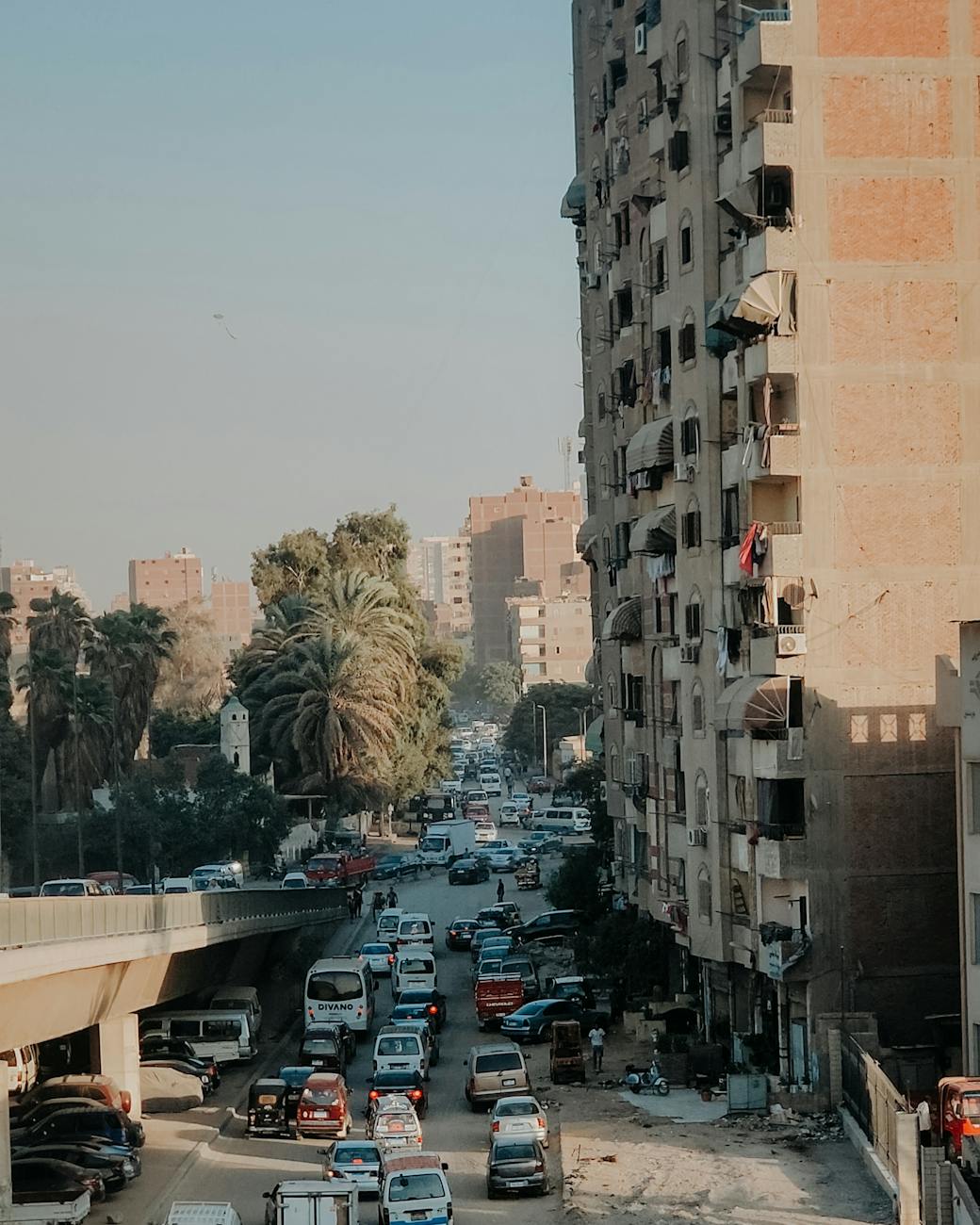
The main truth about Cairo is simple: map distance is not the point. Traffic, intersections, district logic, river crossings, event patterns, and the sheer size of the urban fabric all matter more than the map's apparent neatness. A short trip can become tiring. A well-timed hotel car can feel like luxury. A badly chosen hotel base can make every day feel harder than it needs to be.
Cairo works best when the traveler stops pretending it should behave like a casual walking capital. It is a routing city, a base city, and a transfer city.
4. Domestic aviation
Domestic flights are among the most useful transport tools in Egypt because they compress friction. They are especially valuable when the trip is short, when the traveler is trying to preserve energy for historical sites, or when the route would otherwise require a long and mood-draining surface leg.
Flights are strongest for:
The main downside is not conceptual. It is operational: airport timing, possible delays, security layers, luggage handling, and the fact that an airport day in Egypt still needs management. Flights reduce friction. They do not eliminate it. But on many itineraries they are still the cleanest move available.
- Cairo to Luxor
- Cairo to Aswan
- Cairo to Red Sea resort zones
- short premium itineraries
- business or mixed-purpose trips
- family travel where transfer fatigue matters
5. Intercity rail
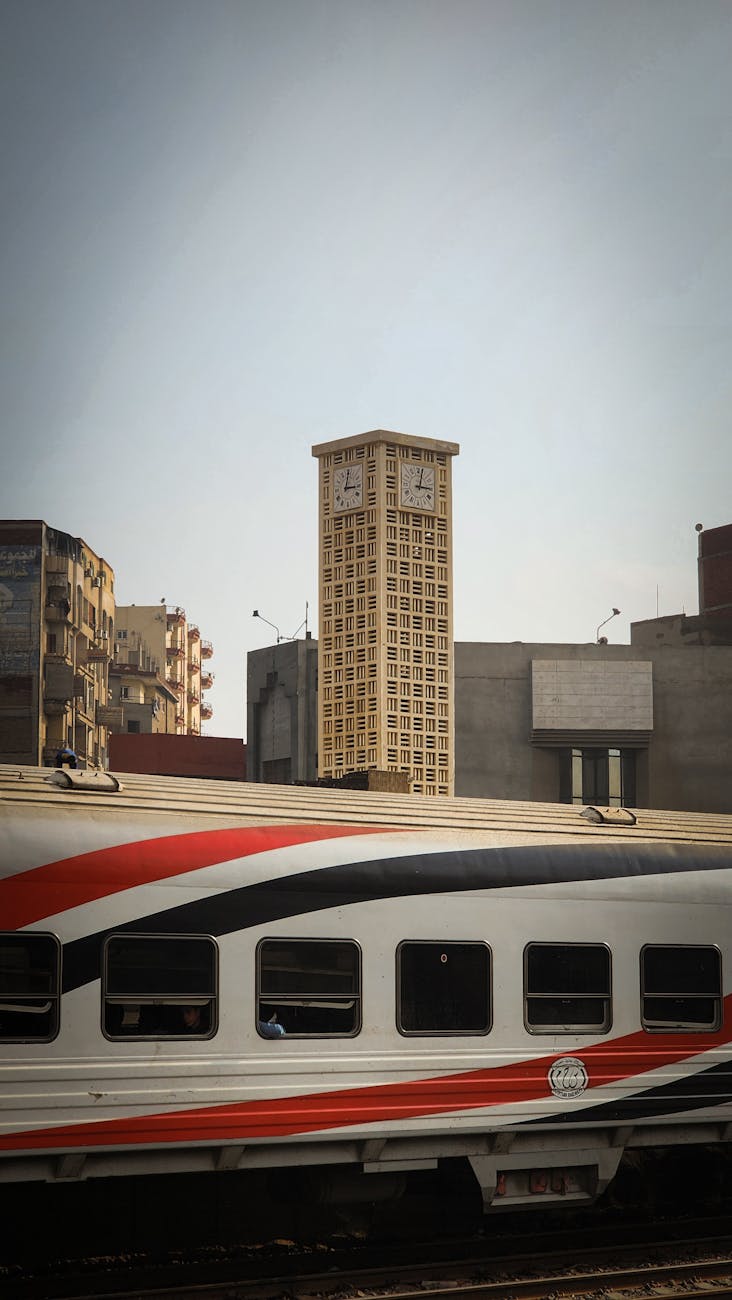
Rail has real value in Egypt, especially along the Nile corridor and for travelers who want to connect major historical cities without always flying. But it should be chosen soberly. This is not a system that should be romanticized into doing more than it reliably does for your exact trip.
Rail is strongest when:
Rail is weaker when:
Egyptian rail can absolutely be part of a good trip. It is just rarely the only answer.
- the traveler values city-to-city continuity
- the route sits on a meaningful corridor
- the traveler has enough time margin
- station arrival and departure points fit the hotel logic
- the itinerary is already tight
- the traveler is fatigued or arriving after a long-haul flight
- the onward connection at the destination is itself complicated
- the traveler is expecting a premium rail culture rather than a practical one
6. Coaches, private buses, and long road transfers
Road movement is everywhere in Egypt, whether through formal coaches, private tourist vehicles, hotel-arranged transfers, or driver-led day trips. The quality varies less by whether the road transfer exists and more by how carefully it is chosen.
Road transport is strongest for:
Road transport is weakest when:
The main lesson is that road transfers should be judged as energy events, not just mileage events.
- point-to-point movements not worth flying
- site days outside dense urban cores
- hotel-to-hotel transfers where control matters
- families, groups, or higher-comfort travelers
- resort and archaeological patterns that reward direct movement
- the traveler underestimates heat, fatigue, and traffic
- the transfer is too long for the value it creates
- the route duplicates a cleaner domestic flight
7. Cairo metro, urban rail, and city transit
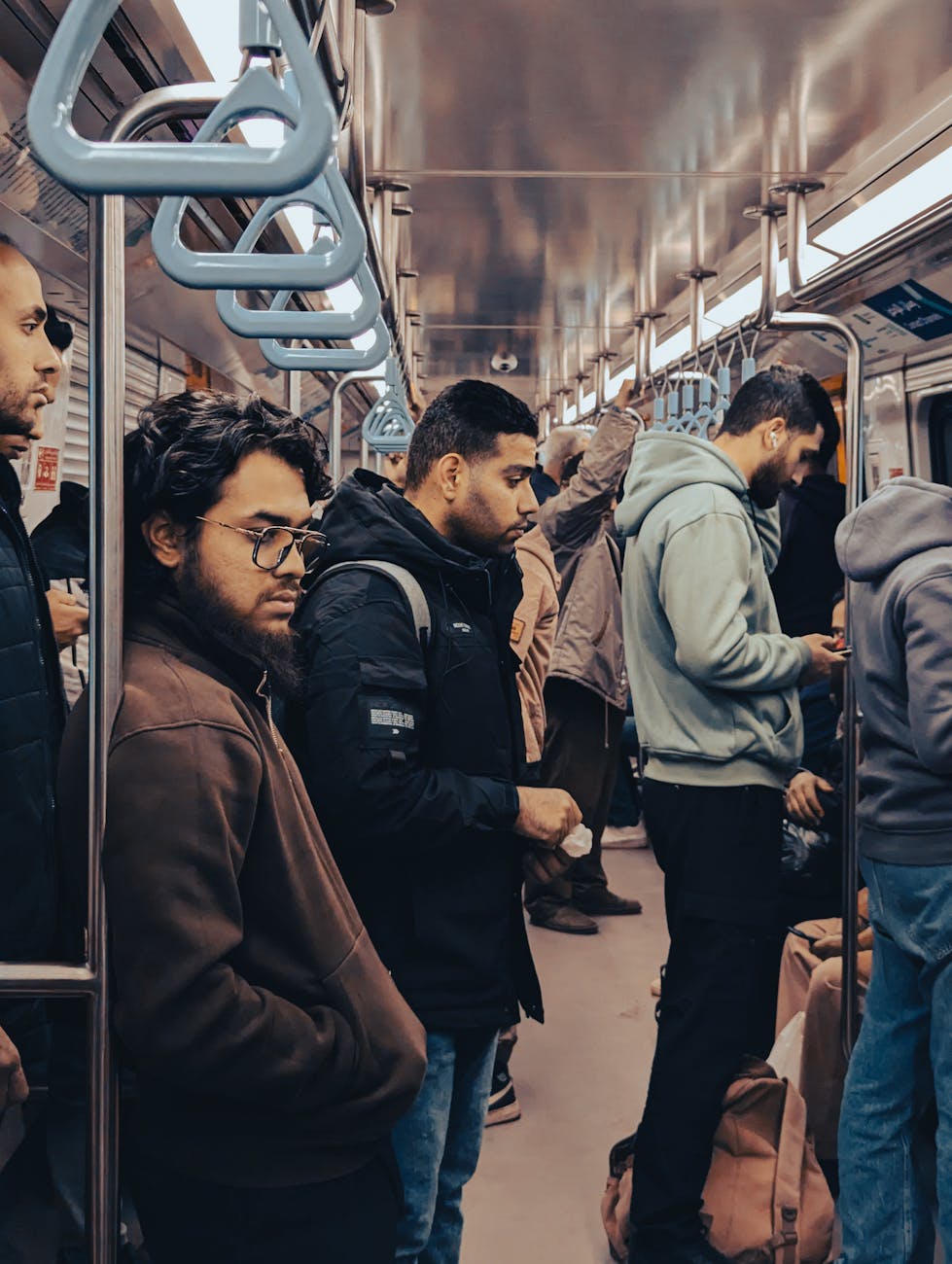
The Cairo metro is an important part of the city's real transport life, especially for locals and for certain practical urban movements. It can be useful to visitors in selected circumstances, but it is not the whole answer to Cairo mobility. The city is too large, too unevenly convenient, and too dependent on exact origin-destination logic for rail to solve everything elegantly.
For visitors, the metro is strongest when:
It is weaker when:
In practice, many higher-quality Cairo trips use a hybrid model: metro as an occasional tool, cars as the default urban connector.
- the route clearly fits a metro-served movement
- the traveler is comfortable with a more local urban transport environment
- the trip is simple, light, and not luggage-heavy
- the metro meaningfully beats surface traffic
- the destination still needs a messy last-mile transfer
- the traveler is carrying bags
- the day is already long and high-friction
- comfort or exact timing matter more than cost
8. Taxis, ride-hailing, drivers, and hotel-arranged cars
This is one of the most important categories in Egypt because it is where abstract transport availability becomes real trip quality. Taxis, ride-hailing, hotel cars, and private drivers do a large share of the work in making Egypt manageable for visitors.
They are especially useful for:
The strongest Egypt trip often uses these services more than a traveler originally expected, not because the country lacks public transport, but because control is valuable.
- airport transfers
- hotel-to-site movements in Cairo
- early departures
- long museum or archaeological days
- families and groups
- travelers who want fewer negotiations and less cognitive load
9. Nile transport, ferries, cruises, and tourism logistics
Egypt has a special transport layer that many countries do not: river movement as part of the travel experience. But travelers should be careful here. Nile cruises and river-adjacent movement are not simply scenic transport. They are part transport, part hotel, part schedule architecture.
The practical lesson is that river logistics should be treated as a structured product. Embarkation timing, transfer timing, port access, luggage, and onward airport or station movement all matter. A cruise can make the trip feel elegant, but only if the land-side logistics are clean.
Short river crossings and local boat movements also exist in parts of Egypt, but they are highly context-dependent. They should be evaluated for the specific day, not assumed as a universal travel layer.
10. Private vehicles, rental cars, roads, parking, and driving culture
Self-driving is rarely the best answer for most foreign travelers in Egypt. This is not because roads are universally impossible. It is because the trip quality gains are often much smaller than people imagine and the friction costs are much higher.
Driving becomes weaker when:
Driving becomes more plausible only in narrower cases, usually where the traveler has a very specific reason, strong local knowledge, or a route whose value lies in total private control. Even then, a hired driver often remains the stronger choice.
For most visitors, Egypt is a country where being driven is more useful than driving yourself.
- the route is Cairo-heavy
- the traveler is unfamiliar with local road culture
- parking and navigation matter
- hotel access and urban congestion are already complex
11. Walking, climate, fatigue, and distance illusion
Walking matters in Egypt, but not in the same carefree way it matters in some European capitals. Climate, dust, heat, traffic, crossing patterns, and district form all change the equation.
Walking is strongest when:
Walking is weakest when:
Egypt often feels much easier once the traveler stops expecting long open-ended urban walking to carry the trip.
- the traveler is inside a compact historical or hotel zone
- the route is intentionally short
- the weather is manageable
- the day is not already overloaded
- the traveler is trying to connect large Cairo zones casually
- midday heat is high
- the road environment is tiring
- the day relies on repeated large site movements
12. Tickets, payment, language, and information friction
Egypt is not a country where all transport decisions are solved by one elegant app ecosystem. Information can be fragmented. Payment expectations can vary. Language friction can appear at exactly the moments when the traveler is tired.
The best approach is:
This is one of the reasons higher-quality Egypt travel often looks slightly overprepared on paper. In reality, that preparation protects the trip.
- keep hotel names and destination details clear and visible
- confirm transfers in advance
- use managed bookings where the cost of confusion is high
- simplify rather than over-optimize
13. Accessibility, luggage, families, and older travelers
Egypt can absolutely work for travelers with additional needs, but it requires more intentional route design than easier countries. Heat, long site days, uneven surfaces, transfers, and traffic all compound.
The strongest approach for users with luggage, strollers, or mobility constraints is usually:
Families and older travelers often do very well in Egypt once the route is narrowed and transport is made boringly clear.
- reduce the number of hotel changes
- choose stronger hotels with real transfer support
- use controlled cars rather than layered public-transport experimentation
- protect airport and archaeological days from last-minute improvisation
14. Heat, traffic, security controls, and disruption management
Egyptian transport is shaped by friction more than by formal breakdown. The most common problem is not dramatic collapse. It is the accumulation of modest operational burdens: traffic, heat, waiting, security checks, slow departures, road fatigue, and overly optimistic daily sequencing.
The practical realities are:
The traveler who builds margin usually finds Egypt far more manageable than its reputation implies.
- heat narrows daily usable bandwidth
- Cairo traffic changes everything
- security layers can add time unexpectedly
- archaeological or resort transfer days need more margin than the map suggests
15. Main concerns for residents and local users
Locals in Egypt experience transport not as a museum-travel puzzle but as a daily reality shaped by congestion, affordability, commute time, reliability, and urban sprawl. Their concerns often center on:
That matters because the visitor is entering a real transport environment, not a tourist-only overlay. The more the traveler respects that, the better their own decisions become.
- traffic and time loss
- overcrowding or service pressure on core urban systems
- the gap between formal infrastructure and lived convenience
- the cost of preserving comfort through private transport
- daily unpredictability
16. Recommended strategies by traveler type
First-time traveler
Use Cairo as a controlled base, use managed airport transfers, and keep the internal route narrower than your first impulse.
Luxury or high-comfort traveler
Use private transfers, domestic flights where sensible, stronger hotels, and fewer big moves. Egypt rewards comfort spending because it reduces friction disproportionately.
Budget traveler
Stay realistic. Use rail and lower-cost transport where it truly fits, but do not let low-cost improvisation destroy the entire structure of the trip.
Family traveler
Prioritize directness, air-conditioned waiting, and fewer hotel changes. Egypt can be excellent for families if the logistics are edited hard.
Business traveler
Treat Cairo movement conservatively, protect airport buffers, and do not confuse apparent distance with actual transfer time.
Cairo
Cairo is the country's main transport test because it combines airport gateway status, giant-city friction, and the emotional weight of being many travelers' first point of contact with Egypt. The city is not best understood through generic categories like "walkable" or "not walkable." It is best understood as a city where route structure matters more than most first-timers assume.
For most visitors, Cairo works best through a combination of hotel-led transfers, ride-hailing or drivers, selective metro use, and disciplined day planning. The city rarely rewards wandering transport choices. It rewards clear daily geography.
The right Cairo hotel can make the city feel far more manageable. The wrong one can turn every movement into a negotiation with traffic, distance, and fatigue.
Cairo arrival and first transfer
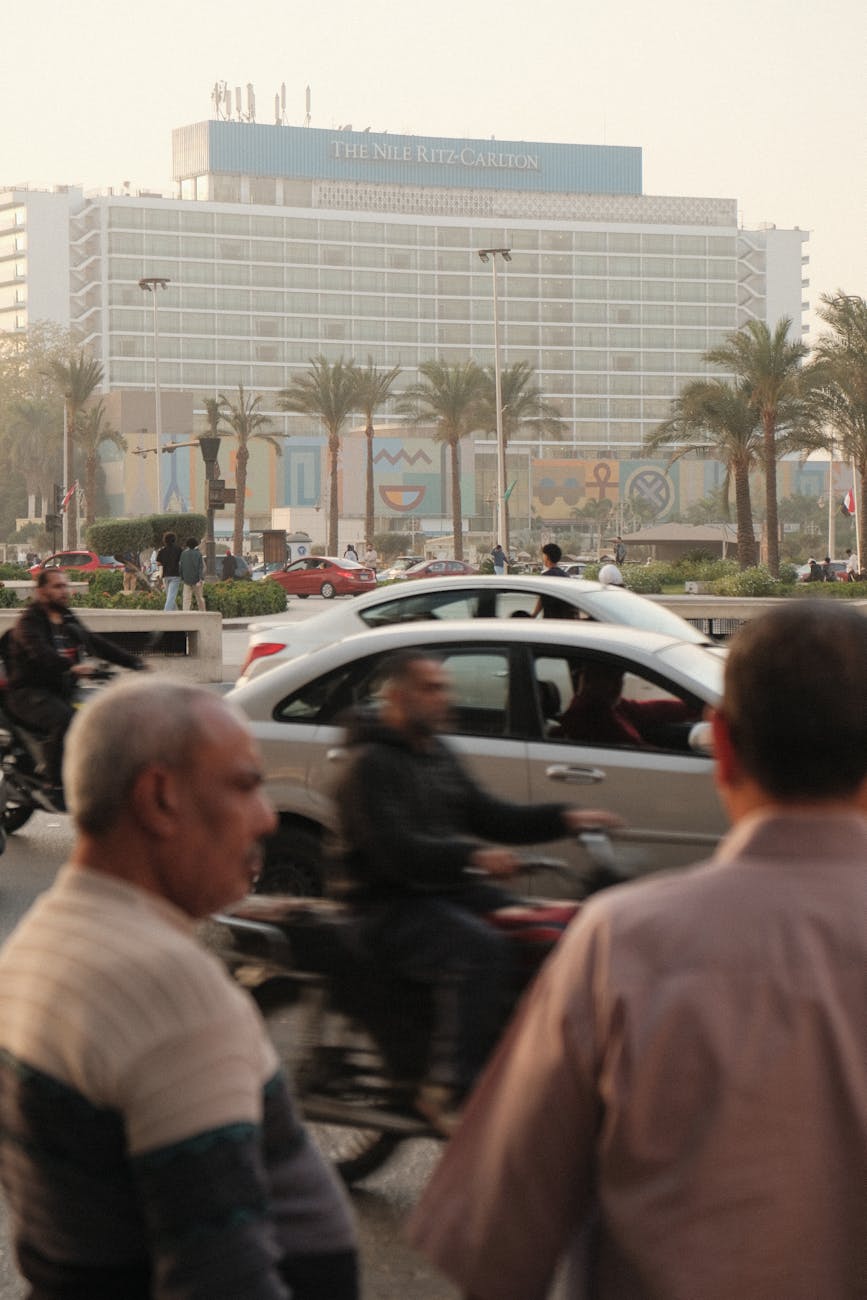
A controlled first transfer into the city is one of the highest-value transport decisions in Egypt. After a long-haul flight, the wrong arrival can make Cairo feel harsher than it is. A clean pickup, clear hotel destination, and low-friction first evening are worth far more here than in easier destinations.
This is not the moment to optimize aggressively for small savings. It is the moment to secure control.
Cairo to Giza and the pyramids
This route looks simpler on a map than it feels in real life. Traffic, timing, hotel location, and the structure of the site day all matter. For most visitors, car-based movement is the practical answer. The real question is not how to get there in theory. It is how to get there in a way that preserves the day.
The strongest move is often to build Giza as a defined half-day or full-day block with controlled transfers and a proper recovery plan afterward.
Cairo to Alexandria
This route is one of the more plausible surface connections in Egypt, but it still needs to be judged against the quality of the wider trip. Rail can be attractive when timing and station logic fit. Road transfer can make sense when hotel-to-hotel directness matters. The key is not choosing the most romantic mode. It is choosing the one that keeps the route clean.
Cairo and Alexandria are close enough to be linked, but not so close that the day should be built lazily.
Cairo to Luxor and Aswan
This is one of the core Egypt routing decisions. Flights often win on overall trip quality, especially for shorter stays, comfort-led trips, or itineraries where the historical work needs to happen after arrival rather than after an exhausting travel day.
Rail can still be part of the answer, especially for travelers who want the overland continuity and have sufficient time. But it must be chosen on purpose. Egypt is too rewarding at the destination end to arrive there depleted for the sake of transport ideology.
Cairo to Red Sea resorts
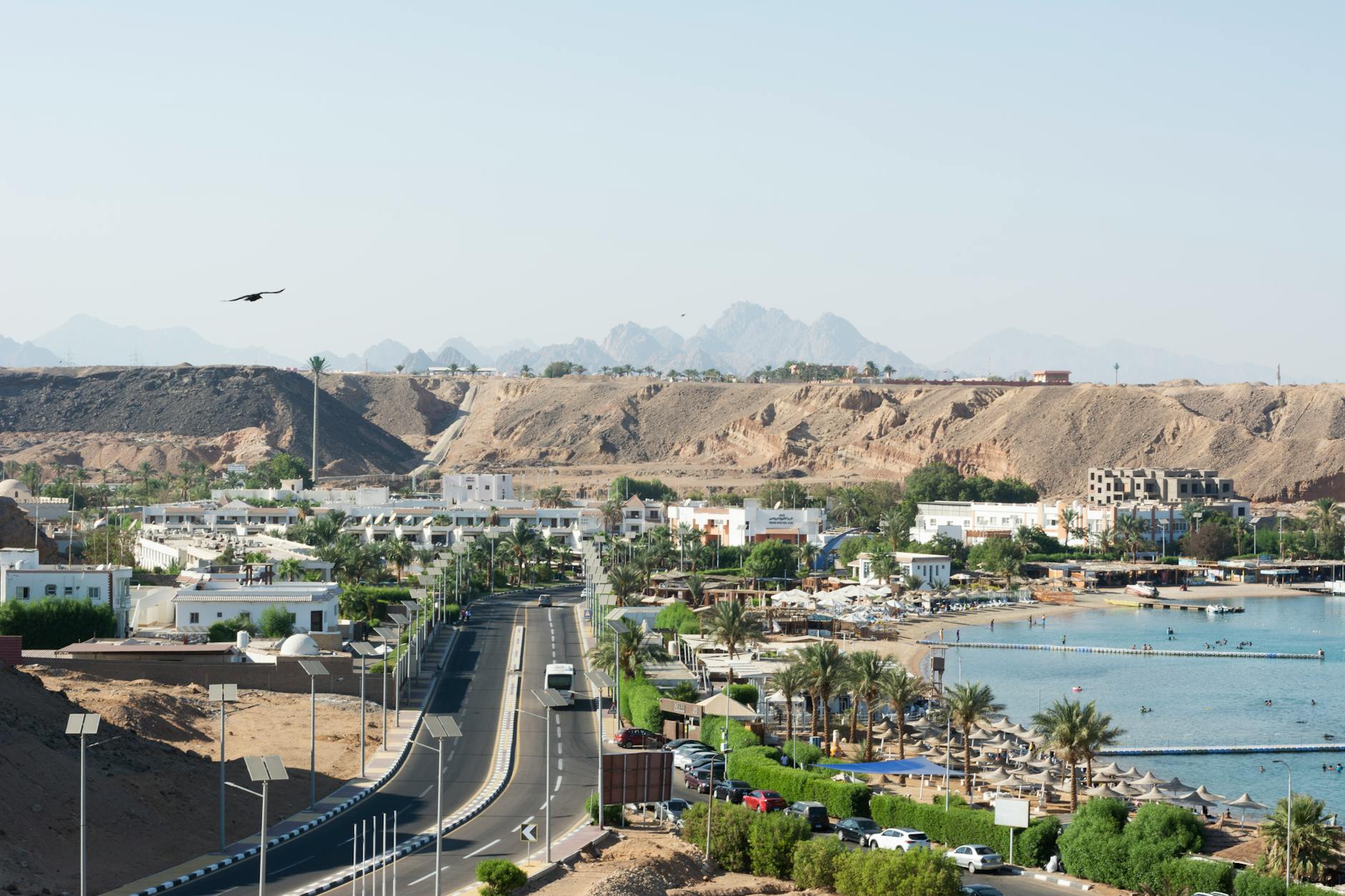
This is a different Egypt product entirely. The route usually works best when treated as a clean transfer problem rather than an adventurous surface challenge. Flights often make strong sense. Resort transfers also matter because the goal is usually not merely arrival, but arrival with enough energy for the resort version of Egypt to begin immediately.
The traveler should think of this route as a shift in mode and mood, not merely as another leg.
Nile cruise embarkation logic
Cruise embarkation is one of the places where Egypt can feel either highly elegant or needlessly messy. The cruise itself may be sold as the central product, but the transfer into it matters just as much. Airport timing, station timing, port access, hotel checkouts, luggage, and waiting windows all need to be aligned.
A clean embarkation is not glamorous, but it is one of the hidden foundations of a good Egypt trip.
Practical route examples
Cairo-only first trip
This is often stronger than travelers assume. With a strong hotel, controlled transfers, and a disciplined site structure, Cairo can support an extremely rich trip without the cost of constant onward movement.
Cairo + Luxor
This is one of the strongest high-value Egypt combinations. It works because Cairo gives the urban and museum intensity while Luxor shifts the trip into direct archaeological concentration. Flights often make this pairing much cleaner.
Cairo + Nile cruise
This works well when the transfer into the cruise is handled carefully and the traveler lets the river segment change the pace of the trip rather than treating it as one more rushed leg.
Cairo + Red Sea recovery
This is a very strong Egypt pattern for travelers who want wonder followed by decompression. It usually benefits from air travel and clean resort transfer logic.
References
- Official airport, airline, railway, metro, and tourism operator resources should be checked for live operational details before travel.
- In Egypt, transport systems can be broadly understandable while individual day-of-travel conditions still change the real quality of a route.