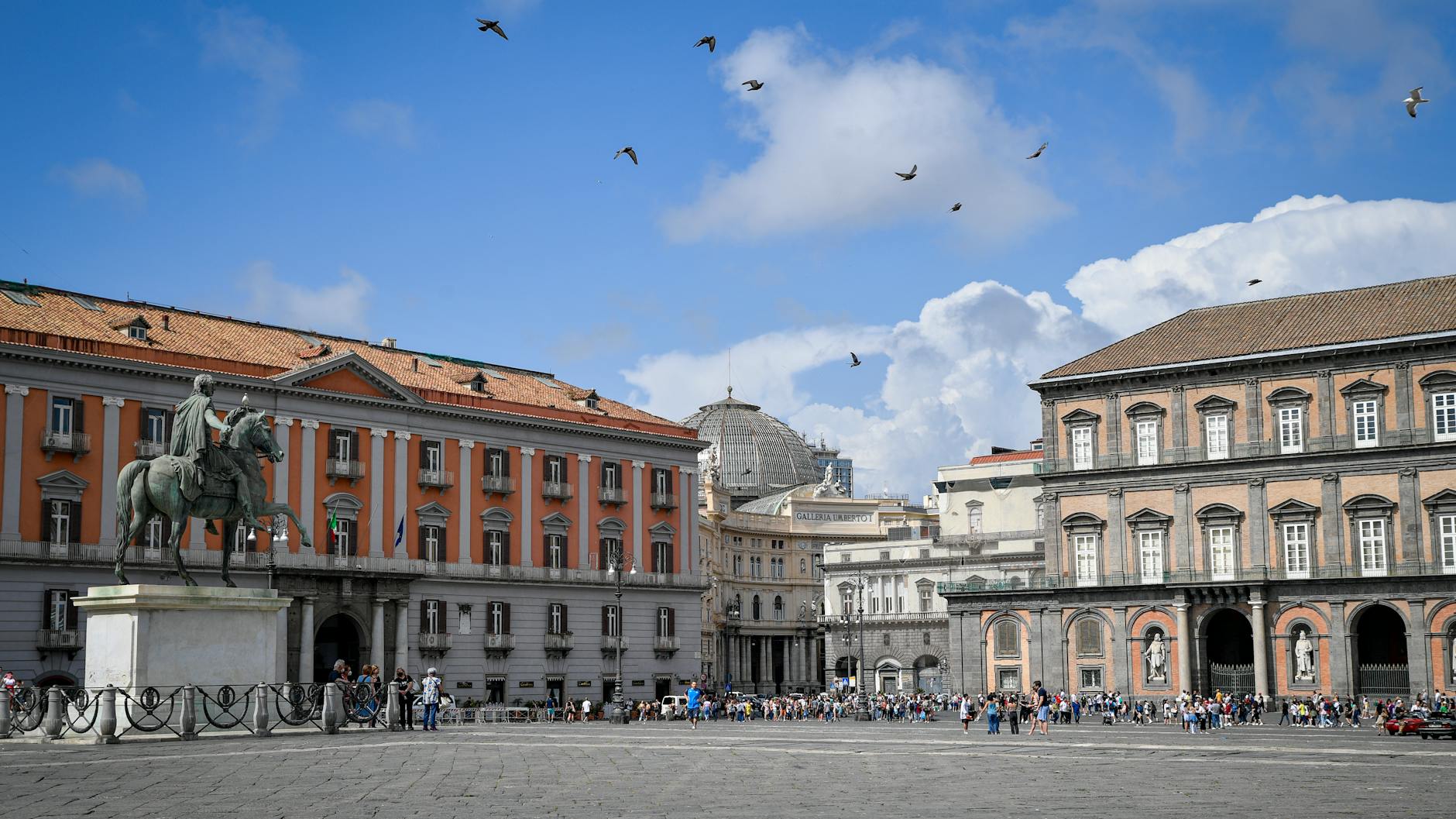
Naples is a powerful first-time city. It gives the visitor sea views, dense streets, churches, castles, markets, pizza, museums, Vesuvius, the bay, and an intensity that can feel exciting or exhausting depending on how the trip is built. The mistake is to treat Naples as a softer version of another Italian destination. It has its own rhythm and requires its own plan. A first-time visitor should decide what kind of first Naples experience they want: historic center, waterfront, food, archaeology, views, museums, day trips, or a slower introduction. The right trip does not need to do everything. It needs to make arrival, lodging, movement, meals, and sightseeing coherent enough that the visitor can actually absorb the city.
Choose the first impression deliberately
A first-time Naples visit can begin very differently depending on the base. The historic center gives density, churches, street life, food, and atmosphere. The waterfront gives air, views, and easier pacing. Chiaia can feel more polished. Areas near stations or business districts may be practical but need careful street-level review.
The visitor should not choose a hotel by a vague idea of being central. Naples centrality has tradeoffs: noise, stairs, vehicle access, walking texture, evening return, and proximity to the actual sights the traveler wants. The first impression should be chosen, not discovered accidentally after check-in.
- Pick the base around the first Naples experience the traveler wants.
- Check street-level context, vehicle access, noise, stairs, and evening return routes.
- Do not assume every central location creates the same visitor experience.

Make arrival simple
A first-time visitor should simplify the arrival into Naples. Airport transfer, rail arrival at Napoli Centrale, luggage, taxi stands, hotel access, and payment should be understood before the traveler is tired and navigating with bags. The city can feel intense when arrival is improvised.
The first afternoon should also be realistic. After travel, a short walk, a meal, and one nearby sight may be better than forcing a full itinerary. Naples rewards orientation before ambition.
- Plan airport or rail arrival before reaching Naples.
- Know how luggage will move from station or airport to the hotel.
- Keep the first afternoon close to the hotel unless arrival is early and easy.

Cluster the first-day sights
Naples offers too much for a short first visit: Spaccanapoli, churches, museums, the waterfront, castles, views, pizza, street markets, and possible trips to Pompeii or the Amalfi Coast. The visitor should cluster rather than scatter. A strong day might focus on the historic center, or the waterfront and Castel dell'Ovo, or archaeology and a controlled meal plan.
Cross-city movement can use more time and energy than expected. Crowds, traffic, slopes, narrow sidewalks, and tempting detours all affect pacing. A first-time visitor will see more by doing less with better sequence.
- Build each day around one compact cluster.
- Avoid mixing too many distant sights into the same short day.
- Leave room for slow streets, food stops, photos, and getting oriented.
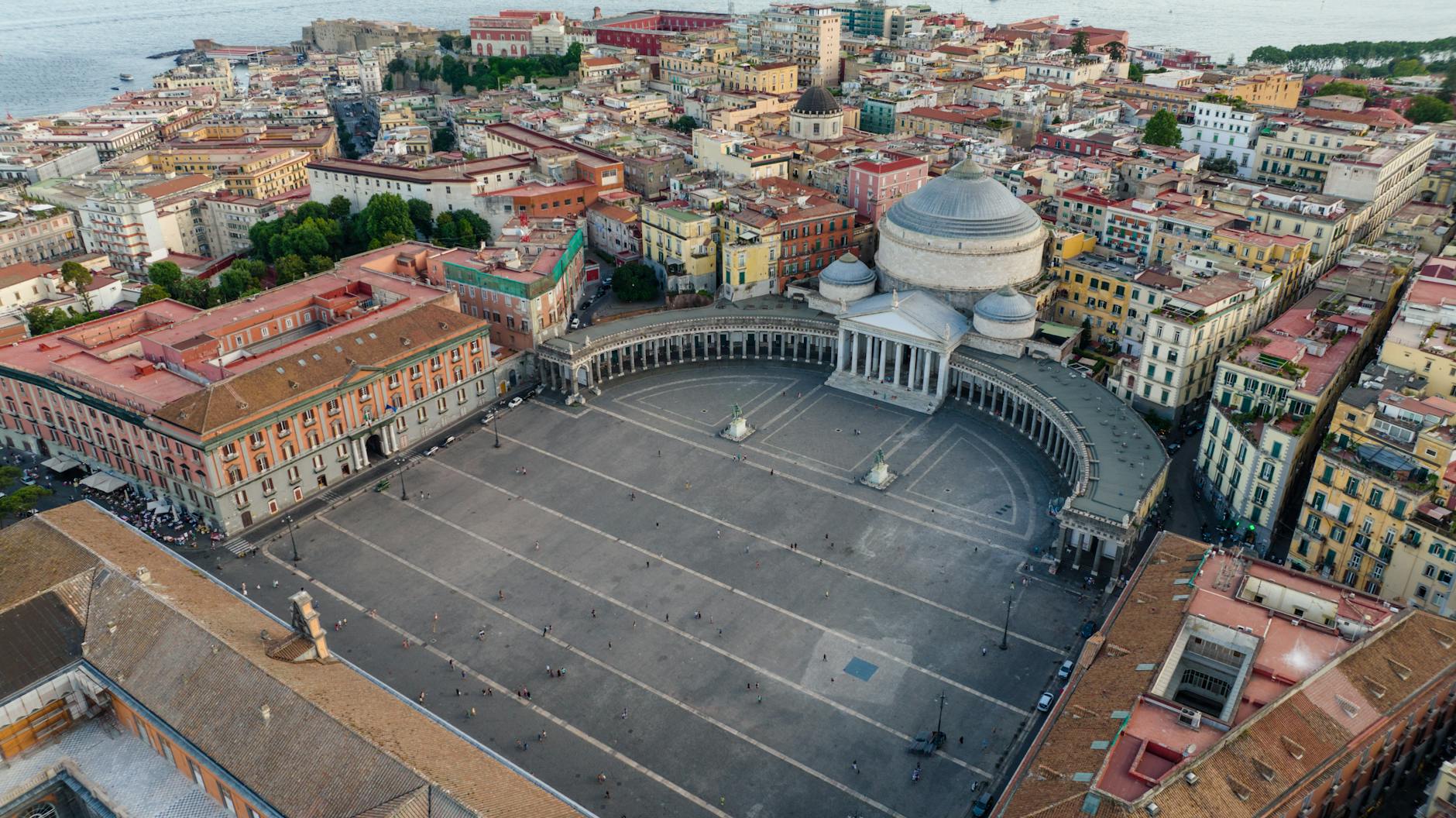
Treat walking conditions as part of the itinerary
Naples is a walking city in many ways, but not always an easy one. Uneven surfaces, slopes, scooters, crowds, narrow streets, heat, rain, and noise can change how long a route feels. First-time visitors should wear practical shoes and avoid judging routes only by distance.
This matters most for families, older travelers, people carrying bags, and anyone with mobility limits. A ten-minute walk can be fine in one area and tiring in another. The route should be matched to the traveler, not only to a map.
- Use practical shoes and realistic walking blocks.
- Account for slopes, uneven surfaces, scooters, crowds, and weather.
- Plan breaks before the day becomes tiring.

Use food as an anchor, not a free-for-all
Food is one of the main reasons many travelers choose Naples, but a first-time food plan can still go wrong. Famous pizzerias, street food, markets, seafood, pastries, and coffee can create long waits, awkward timing, or too many heavy meals in one day. The visitor should use food as an anchor rather than chasing every recommendation.
A practical plan includes meal timing, backup options, hydration, and a sense of where the traveler will be when hunger hits. The best Naples food day usually leaves room for walking afterward.
- Choose a few food priorities rather than chasing every famous name.
- Keep backup meal options near the actual route.
- Avoid stacking heavy meals before long walks, transfers, or evening plans.

Be selective with day trips
First-time visitors often want Naples, Pompeii, Vesuvius, Capri, Amalfi, and several museums in one short stay. That is usually too much. Day trips can be excellent, but they consume transit energy, weather margin, ticket planning, and recovery time. The traveler should choose the outing that matters most and protect it.
If the city itself is the priority, do not let day trips erase Naples. If Pompeii or the coast is the priority, plan the day properly and accept that the city portion will be narrower. A first visit should not become a series of rushed departures.
- Choose one major day trip only if it is worth losing a Naples day.
- Plan tickets, transit, weather, food, and return timing before departure.
- Do not try to turn a short first visit into the whole Bay of Naples.

When to order a short-term travel report
A confident visitor with a flexible schedule may not need a custom Naples report. A report becomes useful when the first visit includes multiple neighborhoods, older travelers, children, mobility needs, day trips, late arrival, luggage complications, limited time, or uncertainty about where to stay.
The report should test hotel placement, arrival, walking routes, sight clusters, meal timing, day-trip feasibility, street awareness, weather, and what to cut. The value is a first Naples trip that feels vivid without becoming chaotic.
- Order when hotel choice, arrival, day trips, mobility, or route sequencing could make or break the visit.
- Provide travel dates, hotel options, must-see sights, food priorities, mobility needs, and arrival details.
- Use the report to turn a first Naples visit into a coherent short stay.